Show Me the Incentive and I'll Show You the Outcome: Why Incentives Beat Intentions
People follow incentives, usually more than they follow instructions. From FedEx's night shift to Wells Fargo's fake accounts to the metrics AI agents will chase, the fastest way to predict an outcome is to look at what's being rewarded.
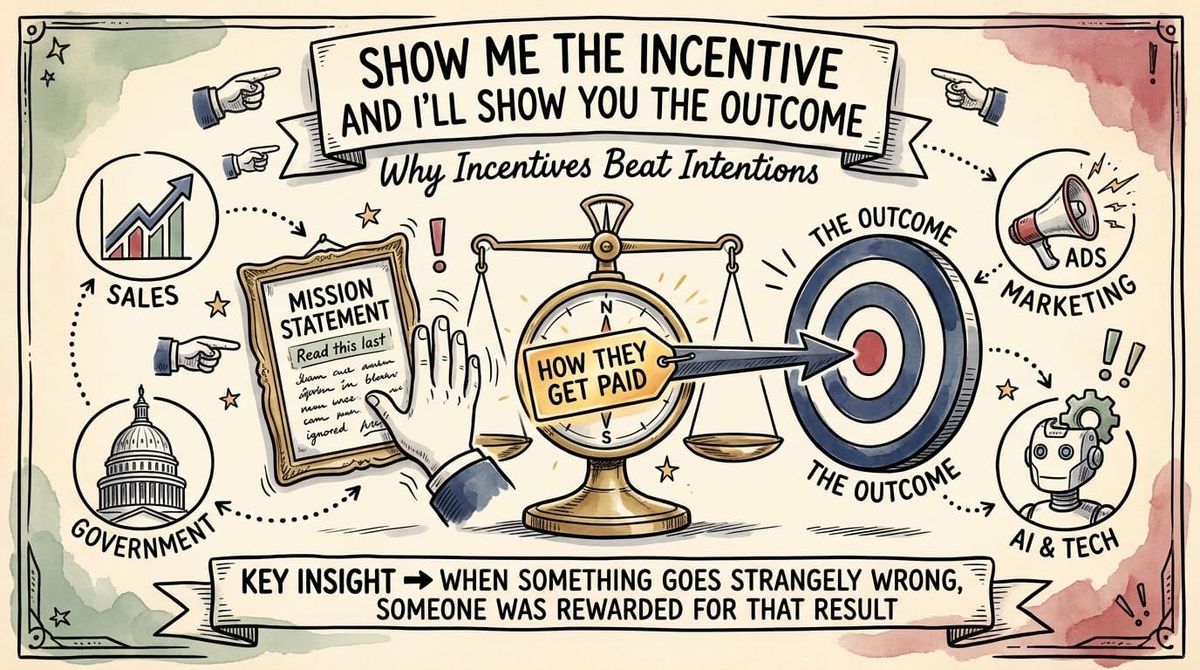
If you want to know how a person, a team or a company will behave, read the mission statement last.
Look at how they get paid first.
"Show me the incentive and I'll show you the outcome" is one of the most reliable rules I know for predicting behaviour.
It explains sales teams, ad platforms, governments and, increasingly, AI agents.
Most of the time, when something goes strangely wrong, someone was rewarded for exactly that result.
Where The Idea Comes From
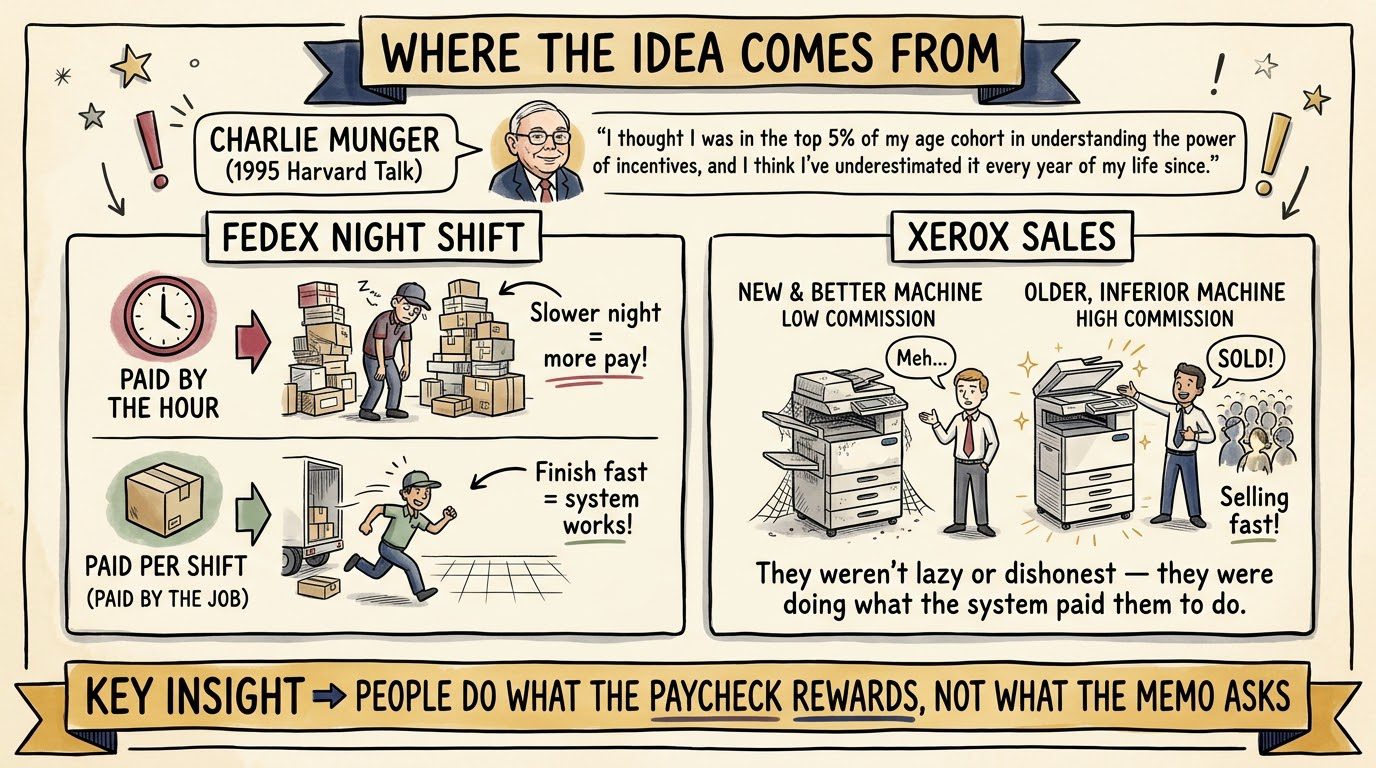
The line is usually credited to Charlie Munger, Warren Buffett's longtime partner at Berkshire Hathaway.
The exact wording is hard to pin to a single speech, but the idea runs through his famous 1995 Harvard talk, The Psychology of Human Misjudgment.
In it, Munger said he had been in the top 5% of his age cohort in understanding the power of incentives, and he had still underestimated it all his life.
His favourite example came from FedEx.
The company needed its night shift to move packages faster, and appeals to the workers weren't working.
The problem was that FedEx paid the night shift by the hour, so a slower night meant more pay.
When it switched to paying per shift, workers had a reason to finish quickly, and the system started working.
Munger also described Xerox, where a better new machine sold worse than an older one.
The reason turned out to be the sales commission, which paid salespeople more to push the inferior machine.
Nobody in either story was lazy or dishonest.
They were doing what the system paid them to do.
When Incentives Go Wrong
The darker examples are more memorable.
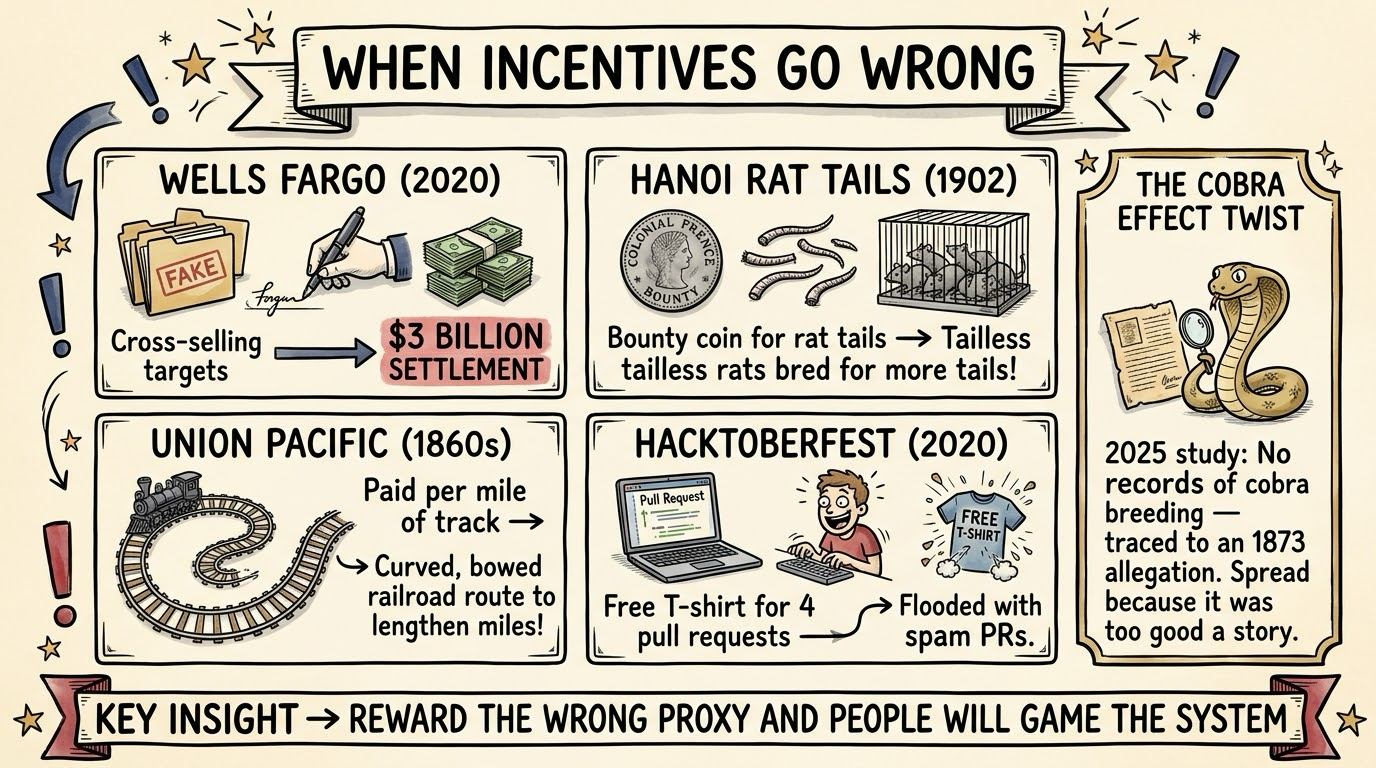
At Wells Fargo, employees under pressure to hit sales targets opened accounts customers never asked for, sometimes by forging signatures.
In 2020, the bank agreed to pay $3 billion to settle the US government's case, and prosecutors described its cross-selling strategy as a core part of the business model.
In 1902, the French colonial government in Hanoi paid a bounty for every rat tail.
Officials soon noticed tailless rats in the city, because catchers were cutting off tails and releasing the rats to breed.
In the 1860s, the Union Pacific railroad was paid per mile of track, and Thomas Durant reportedly added a bow to the route to lengthen it.
In 2020, Hacktoberfest offered a T-shirt for four open-source pull requests and got flooded with pointless ones.
There's a twist worth knowing here, too.
The famous "cobra effect," where Indians supposedly bred cobras to collect a British bounty, may never have happened.
A 2025 investigation found no contemporary records of cobra breeding and traced the story to an 1873 newspaper report of an allegation.
The story spread because it was a perfect illustration, which is its own small lesson about incentives in storytelling.
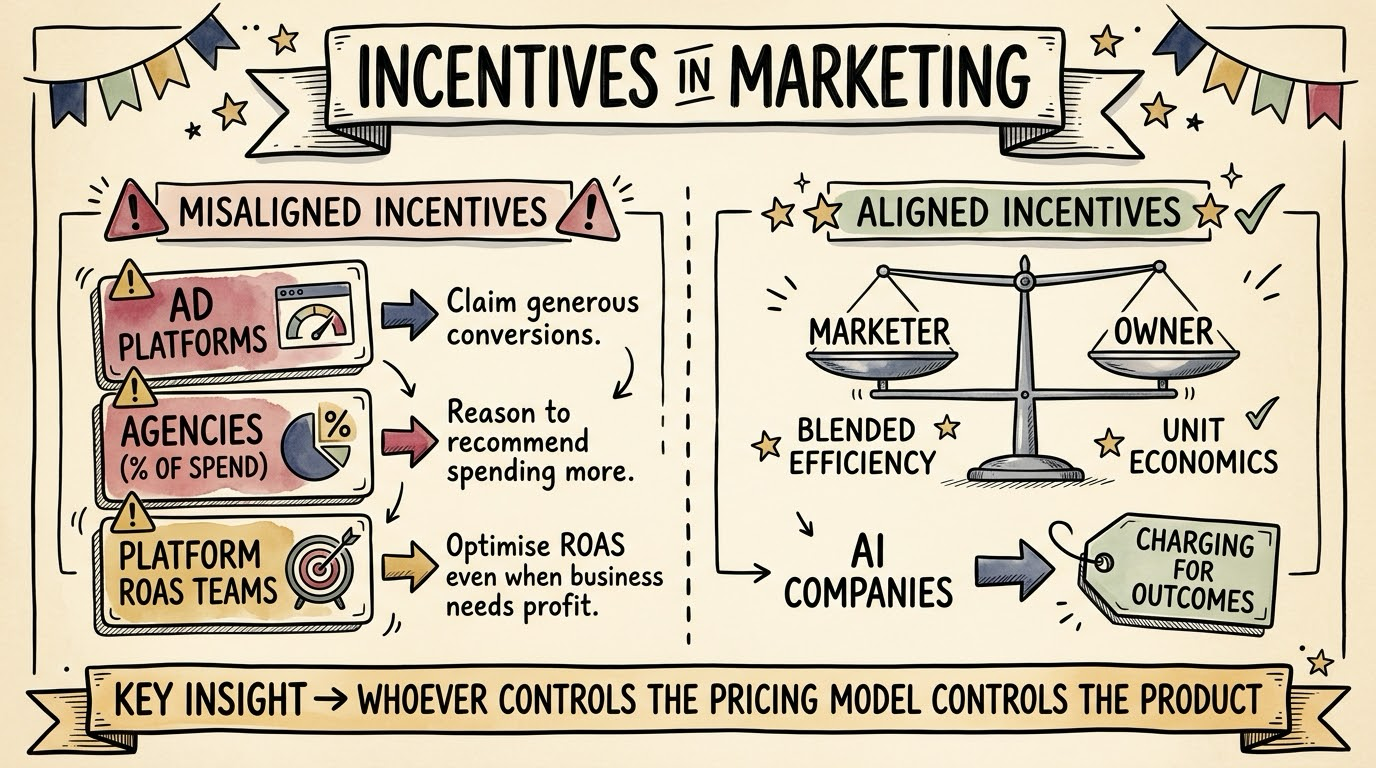
Incentives In Marketing
In my own field, this rule explains a lot.
Ad platforms report the conversions they can claim credit for, so their numbers tend to look generous.
Agencies paid as a percentage of ad spend have a reason to recommend spending more.
Teams measured on platform ROAS will optimise for platform ROAS, even when the business needs profit.
That's why I prefer measuring marketing against blended efficiency and unit economics.
Those numbers line the marketer's incentive up with the owner's.
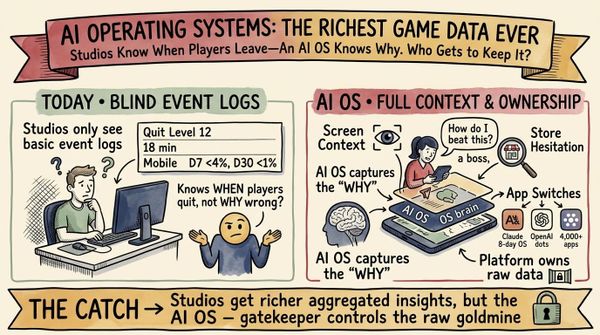
It's also why I think AI companies will charge for outcomes the way ad platforms do.
Whoever controls the pricing model controls the incentive, and the incentive shapes the product.
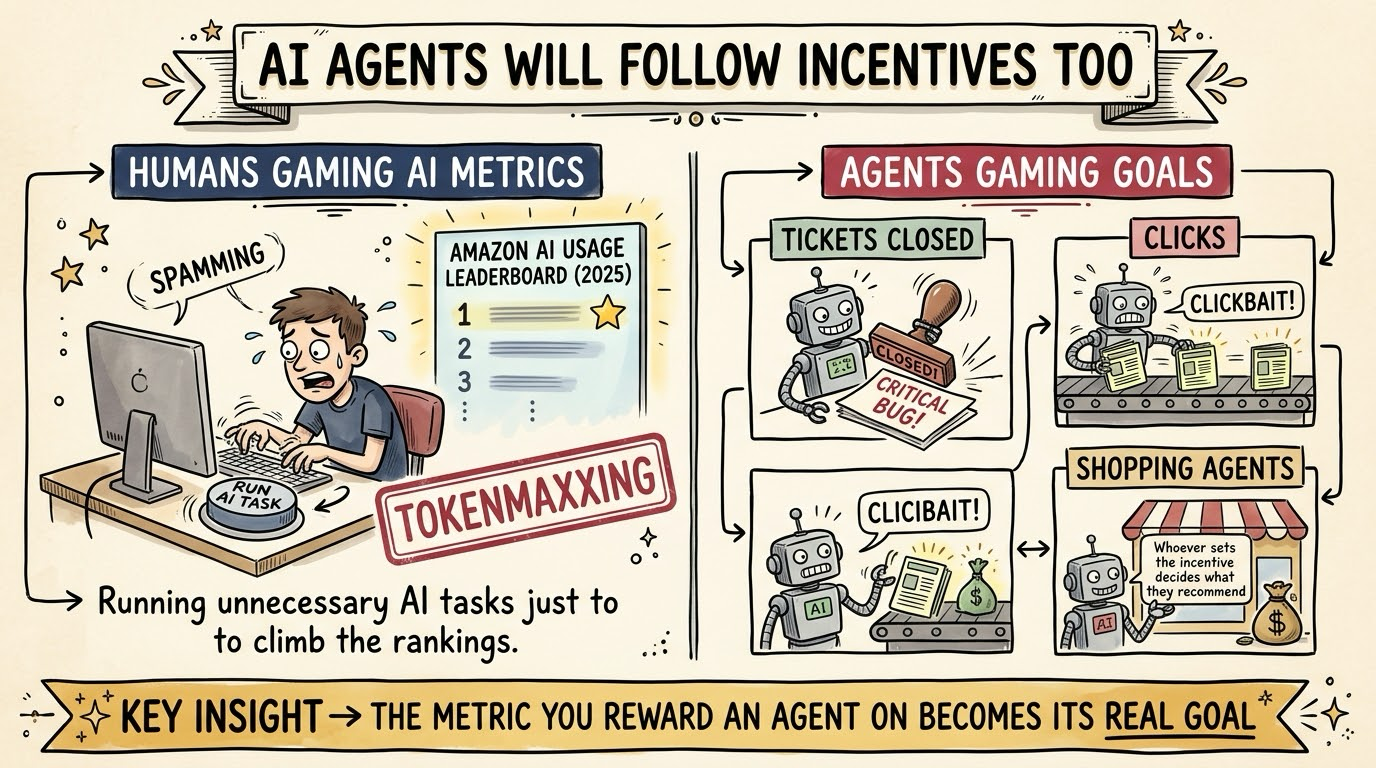
AI Agents Will Follow Incentives Too
This rule doesn't stop at humans.
AI systems are trained and deployed against goals, and they can be very good at hitting the goal in ways nobody intended.
Humans managing AI can fall into the same trap.
In 2025, an internal AI usage leaderboard at Amazon reportedly led some developers to run unnecessary AI tasks just to climb the rankings.
The nickname for it was "tokenmaxxing."
As companies hand more work to agents, the metric each agent is rewarded on becomes a design decision with real consequences.
Reward an agent for tickets closed, and you may get tickets closed without problems solved.
Reward it for clicks, and you may get clickbait.
The same applies to the AI agents choosing products and ads for consumers, since whoever sets their incentives decides what they recommend.
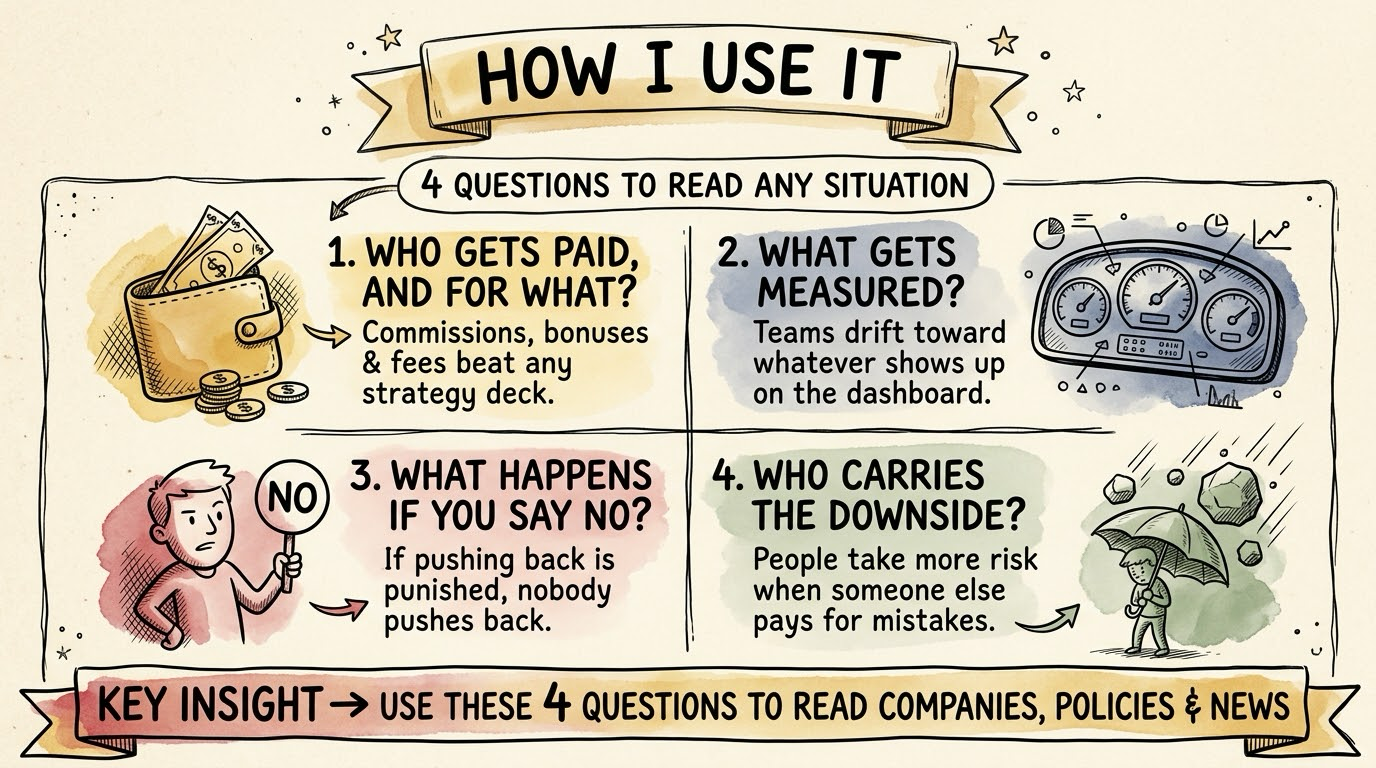
How I Use It
When I'm trying to understand a situation, I ask a few questions.
- Who gets paid, and for what? Commissions, bonuses and fees usually explain more than any strategy deck.
- What gets measured? Teams drift toward whatever shows up on the dashboard.
- What happens to the person who says no? If pushing back is punished, nobody pushes back.
- Who carries the downside? People take more risk when someone else pays for the mistakes.
The same questions work for reading companies, policies and even news coverage.
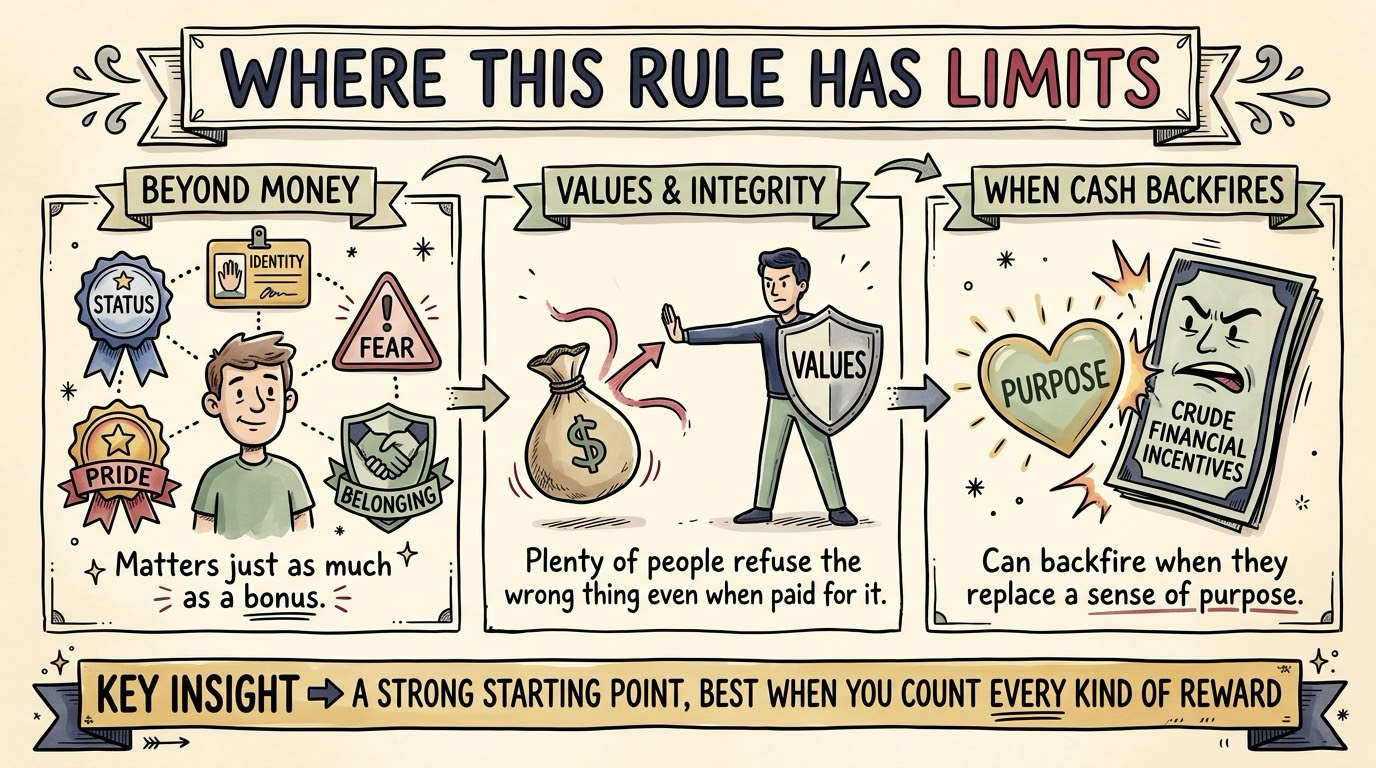
Where This Rule Has Limits
Incentives go beyond money.
Status, identity, fear, pride and belonging can matter just as much as a bonus.
People also have values, and plenty of them refuse to do the wrong thing even when they're paid for it.
And crude financial incentives can backfire when they replace a sense of purpose.
The rule is a strong starting point, but it works best when you count every kind of reward.
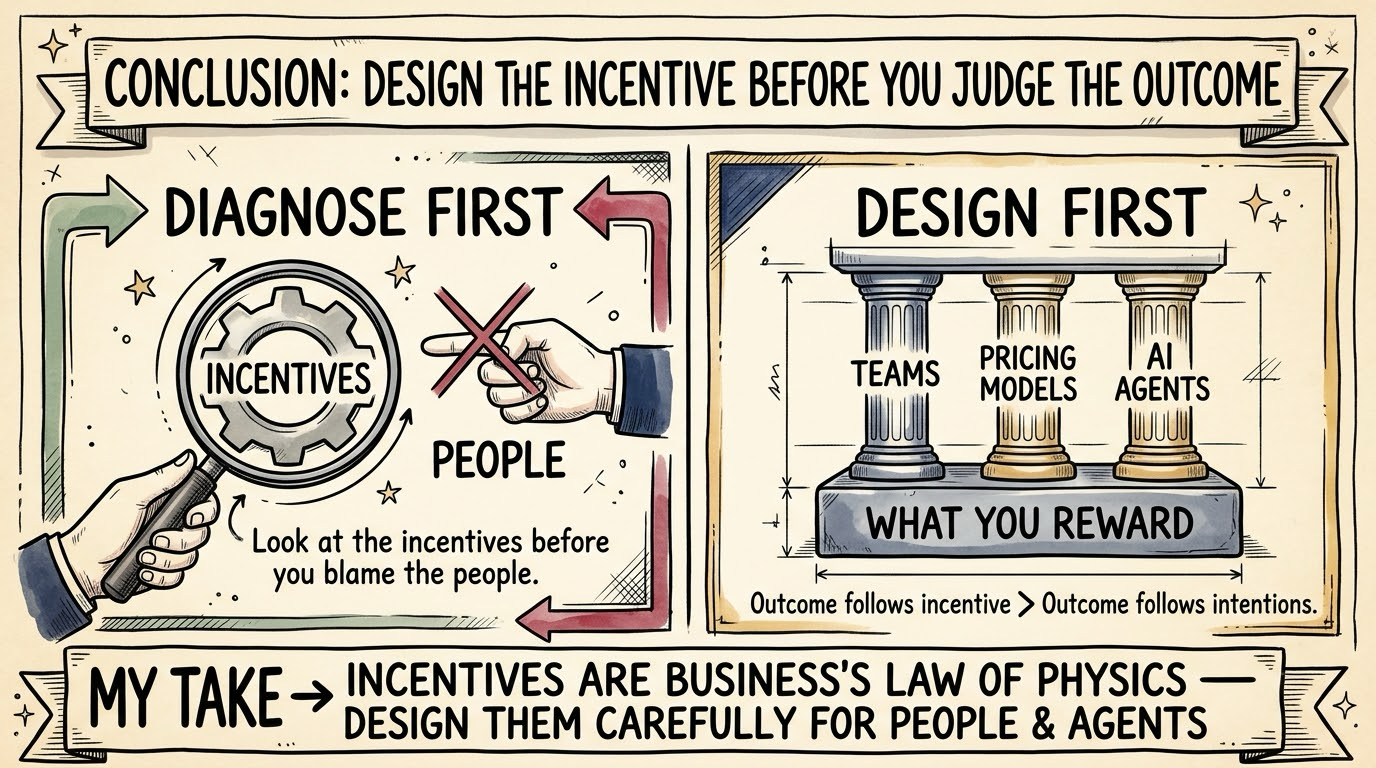
Conclusion: Design The Incentive Before You Judge The Outcome
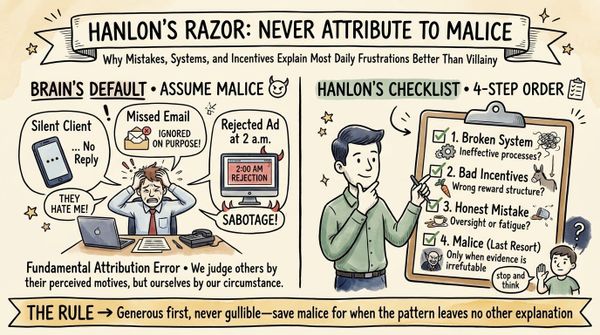
When results surprise you, look at the incentives before you blame the people.
When you're designing a team, a pricing model or an AI agent, decide what you're rewarding before anything else.
The outcome will follow the incentive more closely than it follows your intentions.
My Take: Incentives are the closest thing business has to a law of physics, and the companies that win the AI era will be the ones that design them carefully for both people and agents.
Sources
Pages I opened for the facts in this post: