When Code Is Free, Customer Connection Becomes the Moat
Apple's App Store is on pace for over a million new apps this year, many of them AI-built copycats. When anyone can ship software, the scarce thing is trust. Here's why marketing and real customer connection, not just support, will decide which tech companies win.
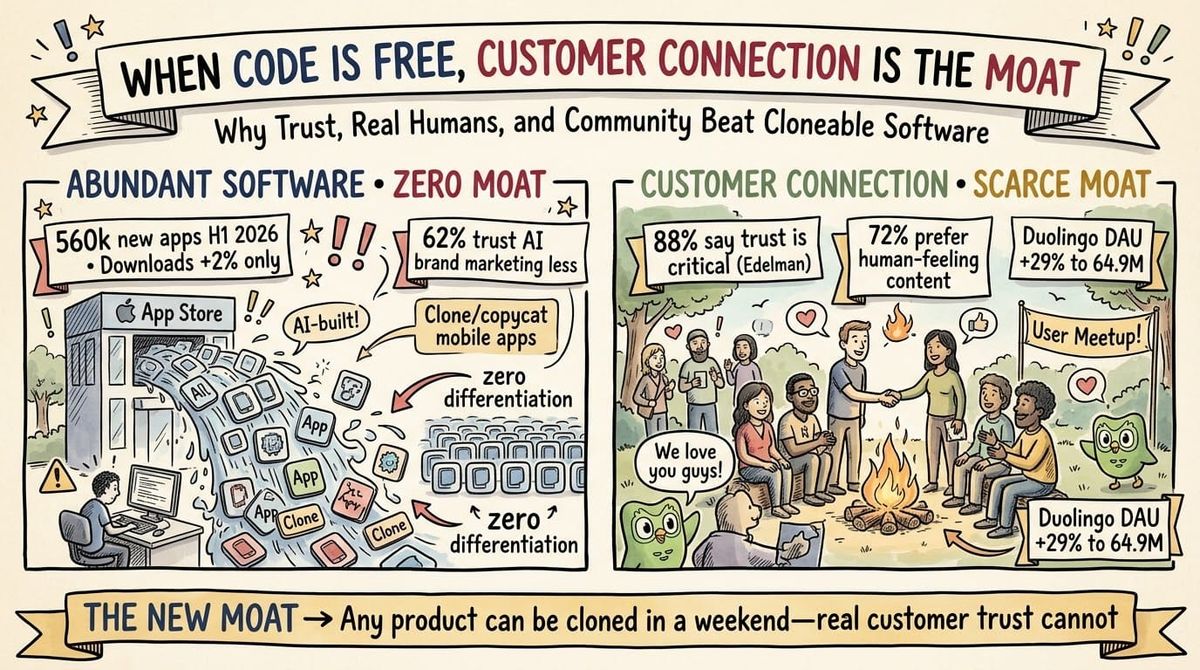
For most of the history of tech, the hardest part was building the thing.
If you could ship great software, you had an advantage most competitors couldn't match.
AI is removing that advantage.
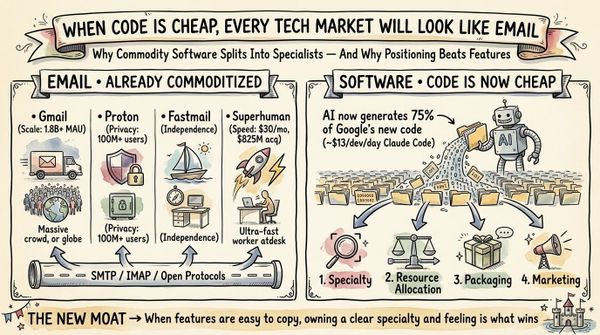
When anyone can build a decent product in days, the scarce resource shifts from code to trust.
I think the winners of the next decade will be the companies that build real connections with their customers, and I mean something deeper than good customer service.
Software Is Becoming Abundant
The App Store shows what happens when building gets easy.
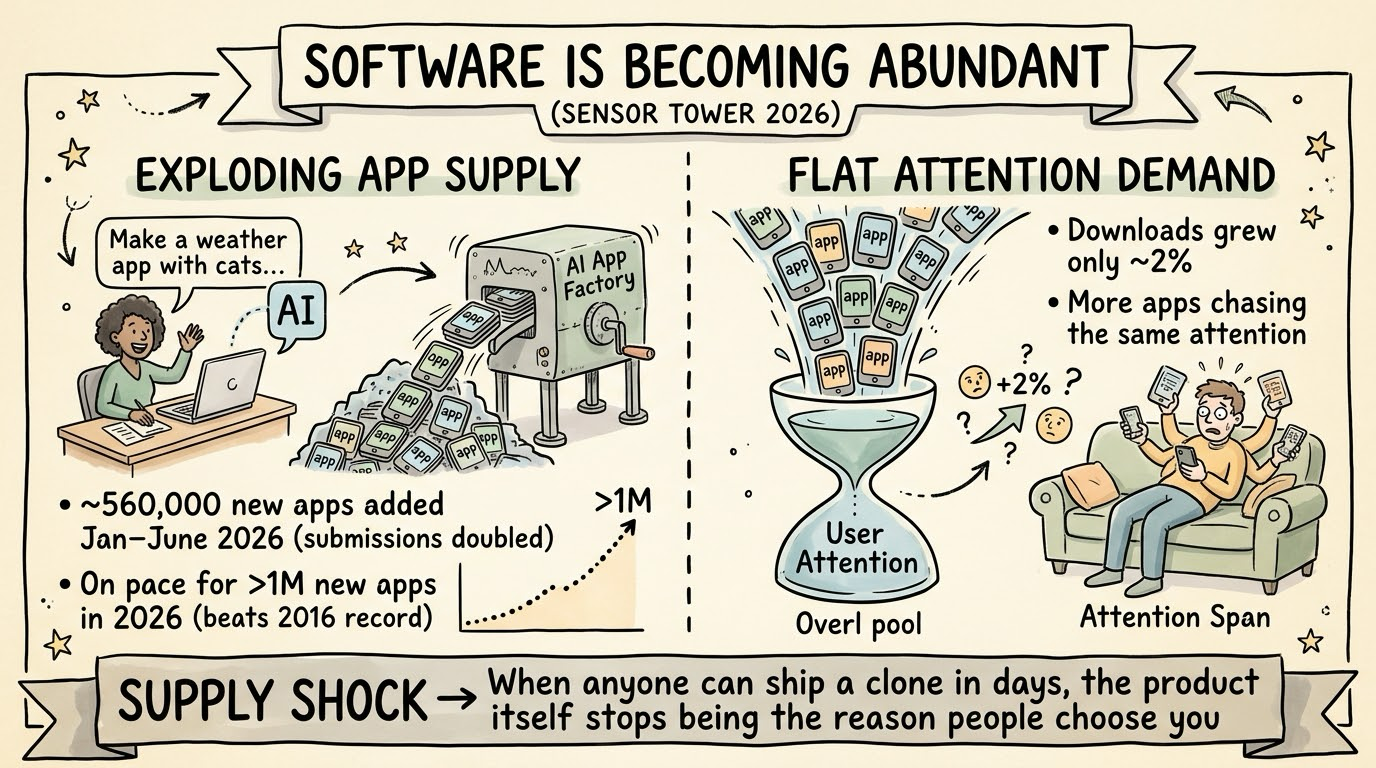
About 560,000 new apps were added between January and June 2026, according to Sensor Tower data, and submissions doubled in the first half of the year.
At that pace, the App Store is on track for more than a million new apps this year, beating the 2016 record.
Much of that surge comes from people with little or no coding experience using AI tools.
Many of the new apps are copycats of established ones.
Meanwhile, downloads grew only about 2% so far this year.
More apps are chasing roughly the same amount of attention.
When supply explodes and demand doesn't, the product itself stops being the reason people choose you.
Trust Is What People Buy
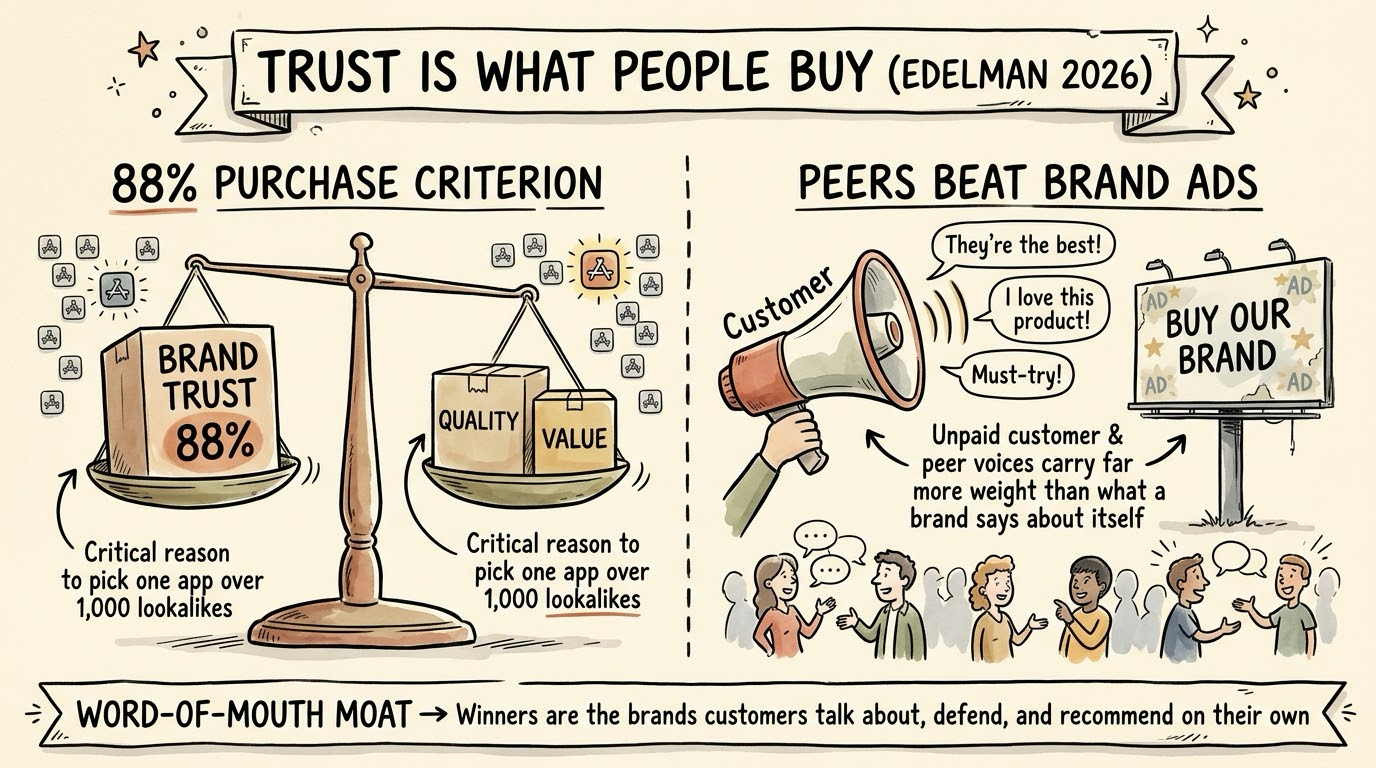
People still need a reason to pick one product over a thousand lookalikes.
Increasingly, that reason is trust.
In Edelman's 2026 Trust Barometer report on brands, 88% of people said trusting a brand is an important or critical purchase criterion, on par with quality and value.
Edelman also found that unpaid voices, like customers and peers, carry more weight in building trust than what a brand says about itself.
That's the core of my argument.
The companies that win will be the ones customers talk about, defend and recommend on their own.
AI Is Making Trust Scarcer
There's a twist here.
The same AI that makes building cheap also makes marketing cheap, and customers can feel it.
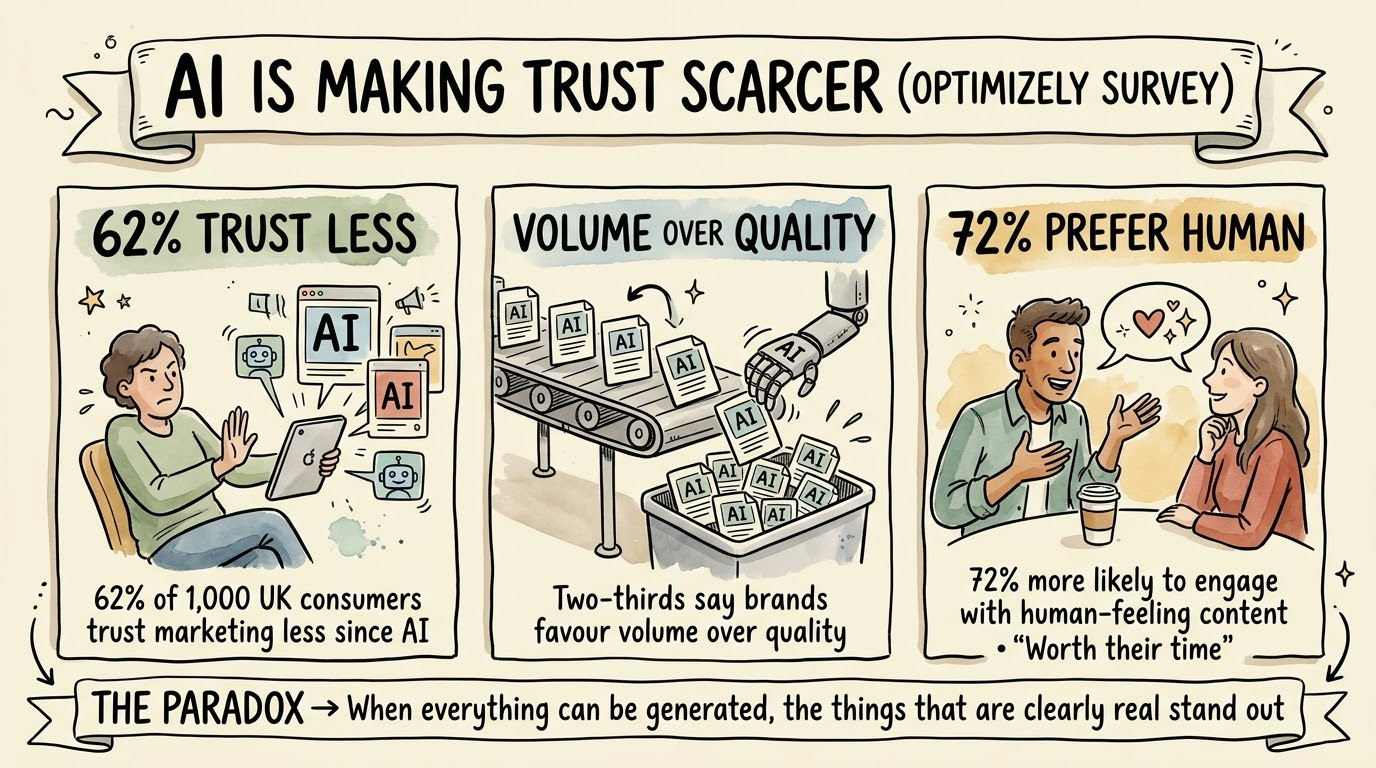
In an Optimizely survey of 1,000 UK consumers published in September, 62% said they trust marketing content less since brands began using AI.
Two-thirds think brands favour volume over quality.
And 72% said they're more likely to engage with content that feels human rather than automated.
As Optimizely's marketing chief put it, "Consumers aren't looking for more marketing, they're after marketing that's worth their time."
I wrote about how the dead internet makes human-to-human engagement more valuable, and the same logic applies to brands.
When everything can be generated, the things that are clearly real stand out.
Connection Is More Than Service
Customer service fixes problems after they happen.
Customer connection is the relationship that makes people stick with you, forgive your mistakes and bring their friends.
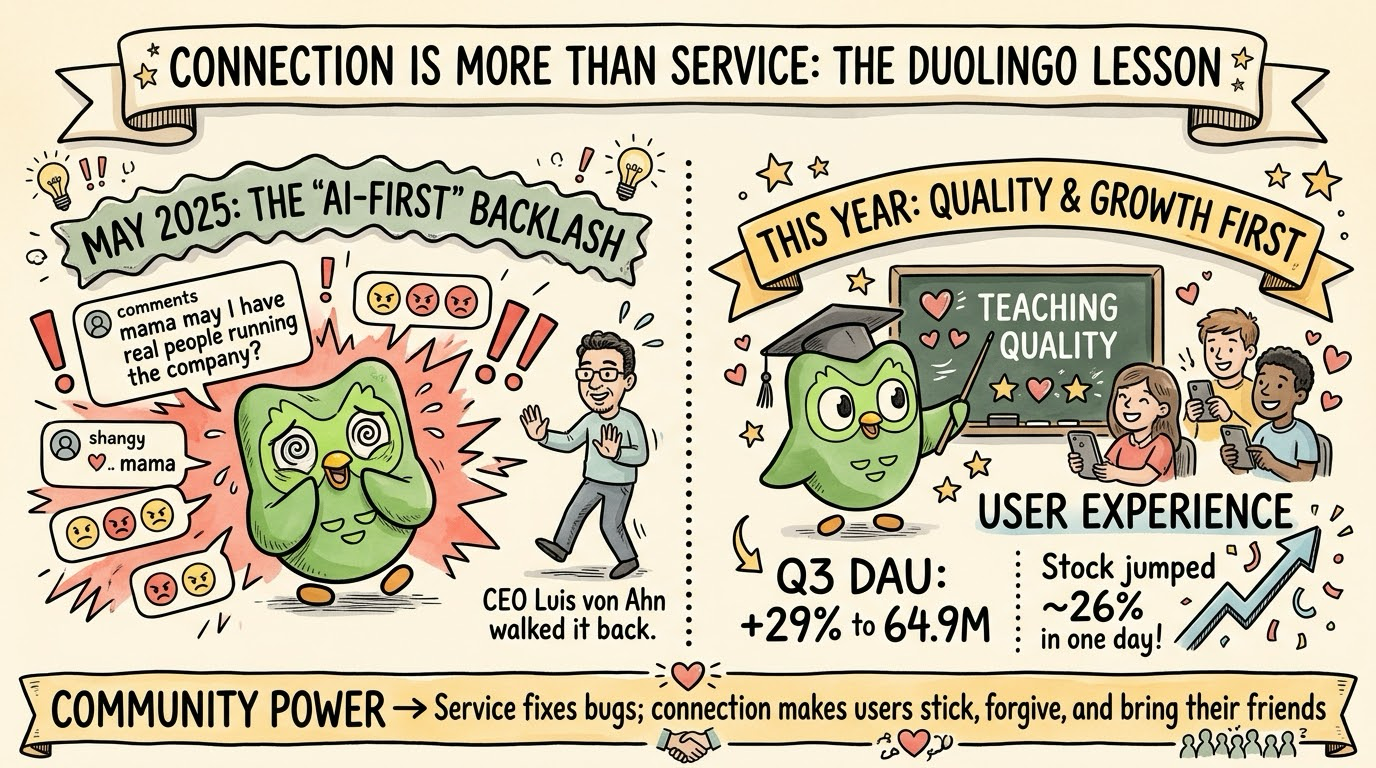
Duolingo shows both sides of this.
In May 2025, it announced it would gradually stop using contractors for work AI can handle, as part of becoming "AI-first."
Its own community turned on it, piling into the comments on its TikTok and Instagram posts.
One top comment read: "mama may I have real people running the company."
CEO Luis von Ahn had to walk it back, writing that he does not see AI as replacing what Duolingo's employees do.
This year, Duolingo said it was prioritising teaching quality and user growth over monetisation.
In Q3, its daily active users grew 29% to 64.9 million, and its stock jumped about 26% on the day.
I can't prove the community relationship caused that growth, but it shows how much a loyal user base can punish or reward a company.
What Connection Looks Like In Practice
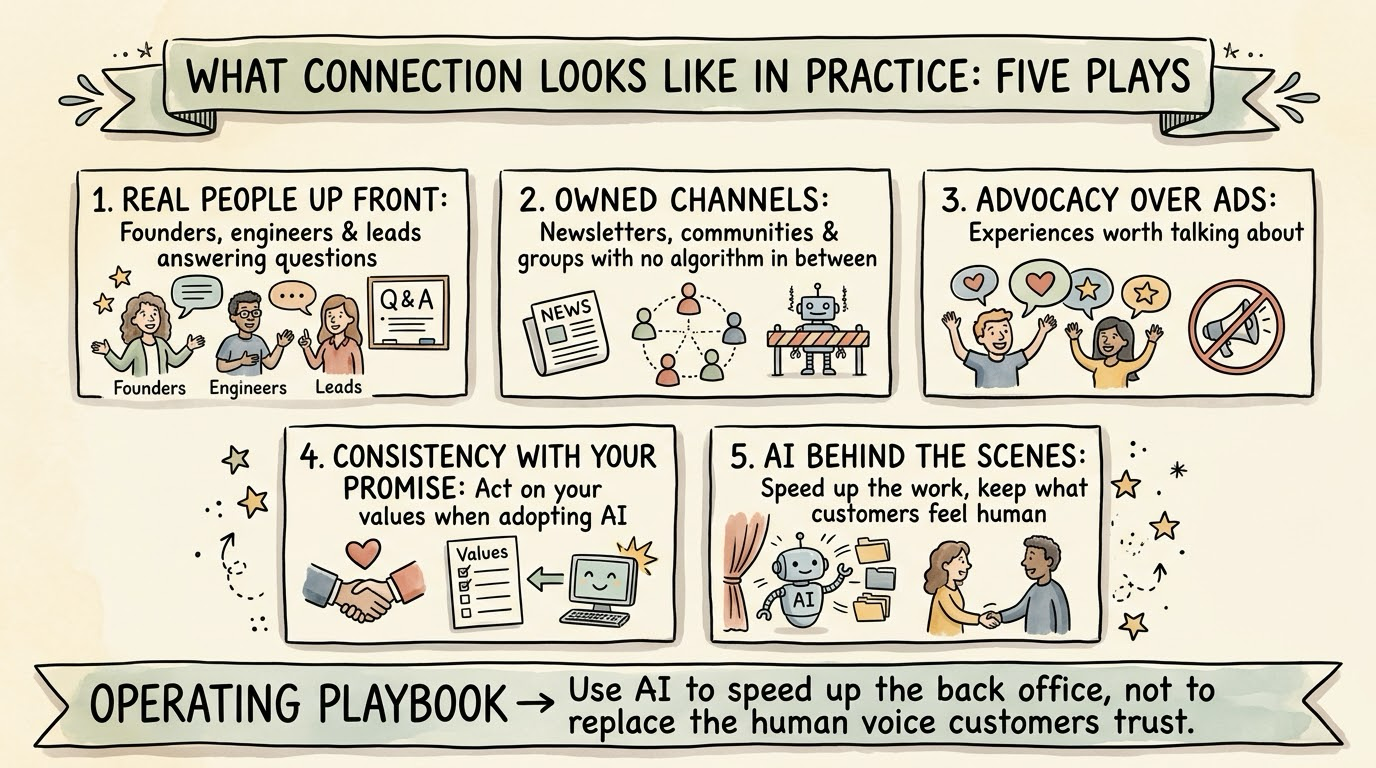
As a marketer, here's what I think companies should invest in.
- Real people in front of customers. Founders, engineers and product leads who show up, answer questions and explain decisions.
- Owned channels. Newsletters, communities and messaging groups where a company can talk to customers directly, without an algorithm in between.
- Advocacy over advertising. Products and experiences worth talking about, since customer voices carry more weight than brand messages.
- Consistency with your promise. A company that says it values privacy, quality or people has to act that way, especially when it adopts AI.
- Using AI behind the scenes. Let AI speed up the work, but keep the parts customers feel human.
Where This Argument Has Limits
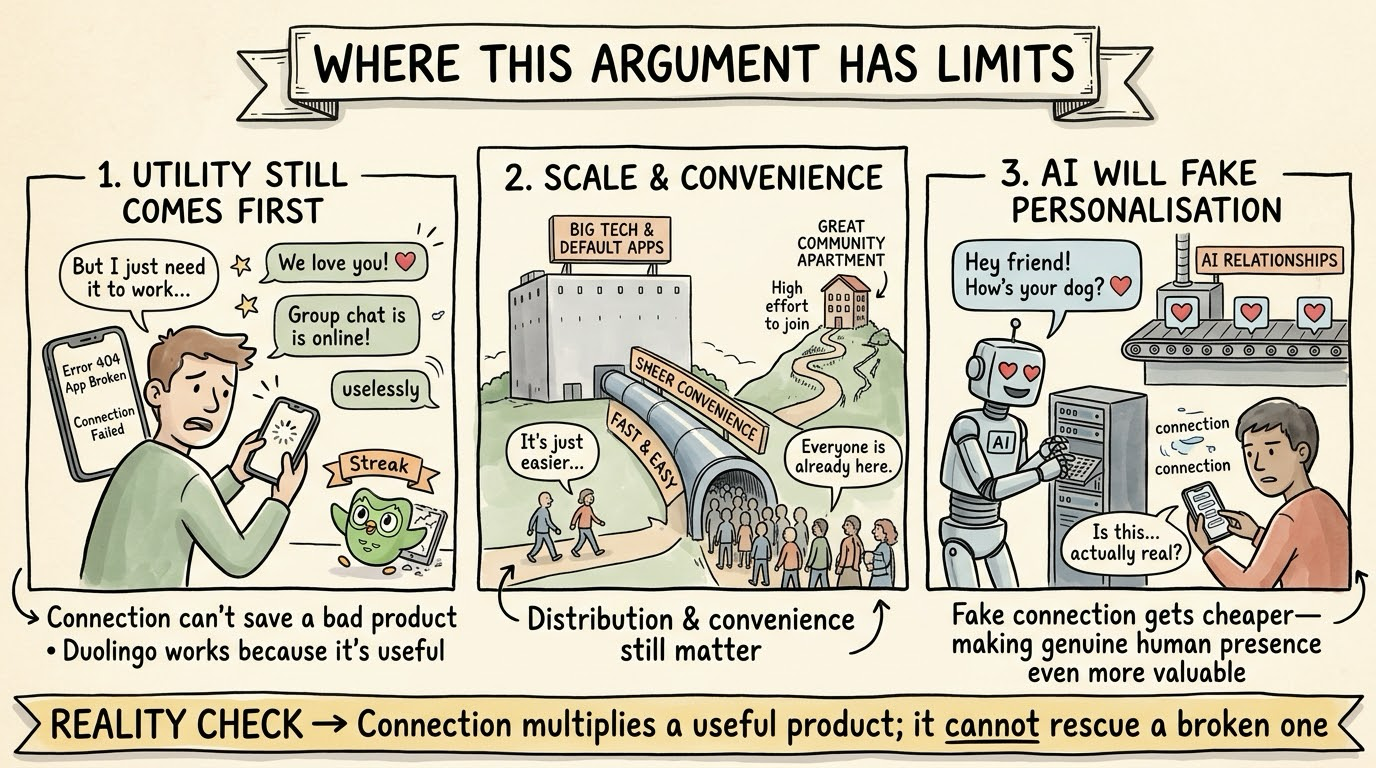
Connection can't save a bad product.
I'd argue Duolingo's community cares because the app is genuinely useful to them.
Scale and distribution still matter too, and big platforms can win on convenience alone.
And AI itself will get better at personalising relationships, which could make some forms of connection easier to fake.
That's exactly why I think genuine human presence will become more valuable over time.
Conclusion: Build Relationships, Not Just Products
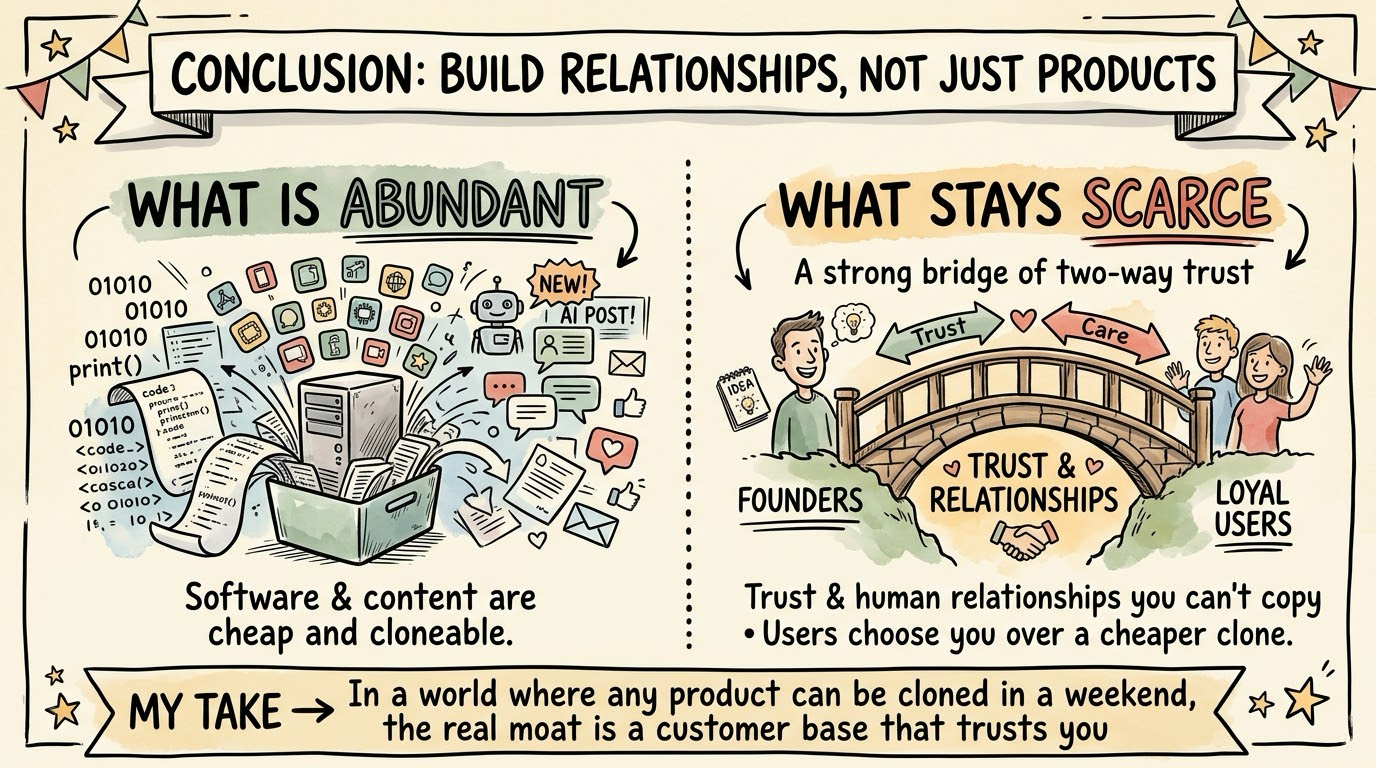
AI is making software abundant and marketing content cheap.
What stays scarce is trust, and trust comes from relationships people believe in.
The companies that treat marketing as a two-way connection with their customers will be the hardest to copy.
My Take: In a world where any product can be cloned in a weekend, the real moat is a customer base that knows you, trusts you and chooses you even when a cheaper copy is one tap away.
Sources
Pages I opened for the facts in this post:
- TechSpot: Apple's App Store inundated with low-quality vibe-coded apps
- Edelman: 2026 Trust Barometer Special Report, Brand Growth in an Insular World
- Optimizely: Six in 10 consumers say AI has made brand marketing less trustworthy
- Fortune: Duolingo's AI-first memo and backlash
- The Motley Fool: Why Duolingo stock skyrocketed