AI Operating Systems Will Give Games the Richest Engagement Data Ever. Who Gets It?
In an internal test, Claude built a working operating system. If AI companies ship their own OS, games and apps could finally learn why players quit, along with when. The catch is that the richest data will belong to whoever owns the OS.
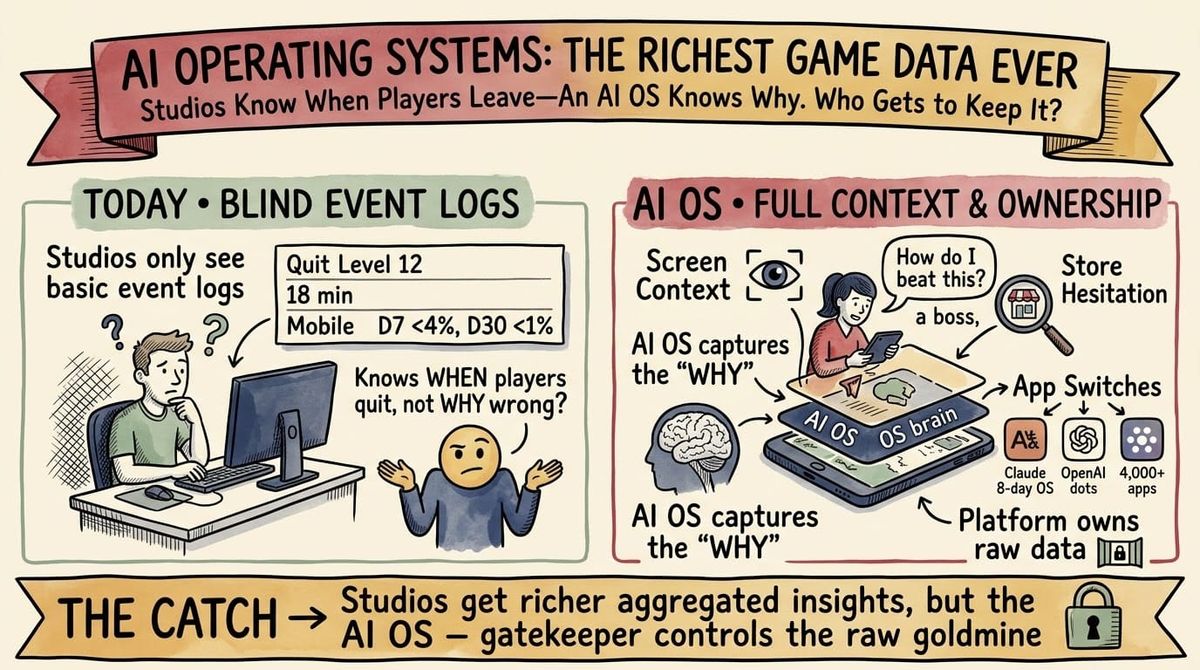
Every game studio knows when its players leave.
Very few know why.
Analytics today can tell you a player quit on level 12 after 18 minutes.
It can't tell you the player was confused by a menu, frustrated by a boss, or bored because a friend logged off.
I think that changes once AI companies like Anthropic ship their own operating systems.
An assistant that lives at the OS level sees the screen, hears the questions and understands context across apps.
That makes in-app analytics far richer, especially for games.
The bigger question is who gets to keep that data.
Claude Has Already Built An Operating System
This stopped being hypothetical in November.
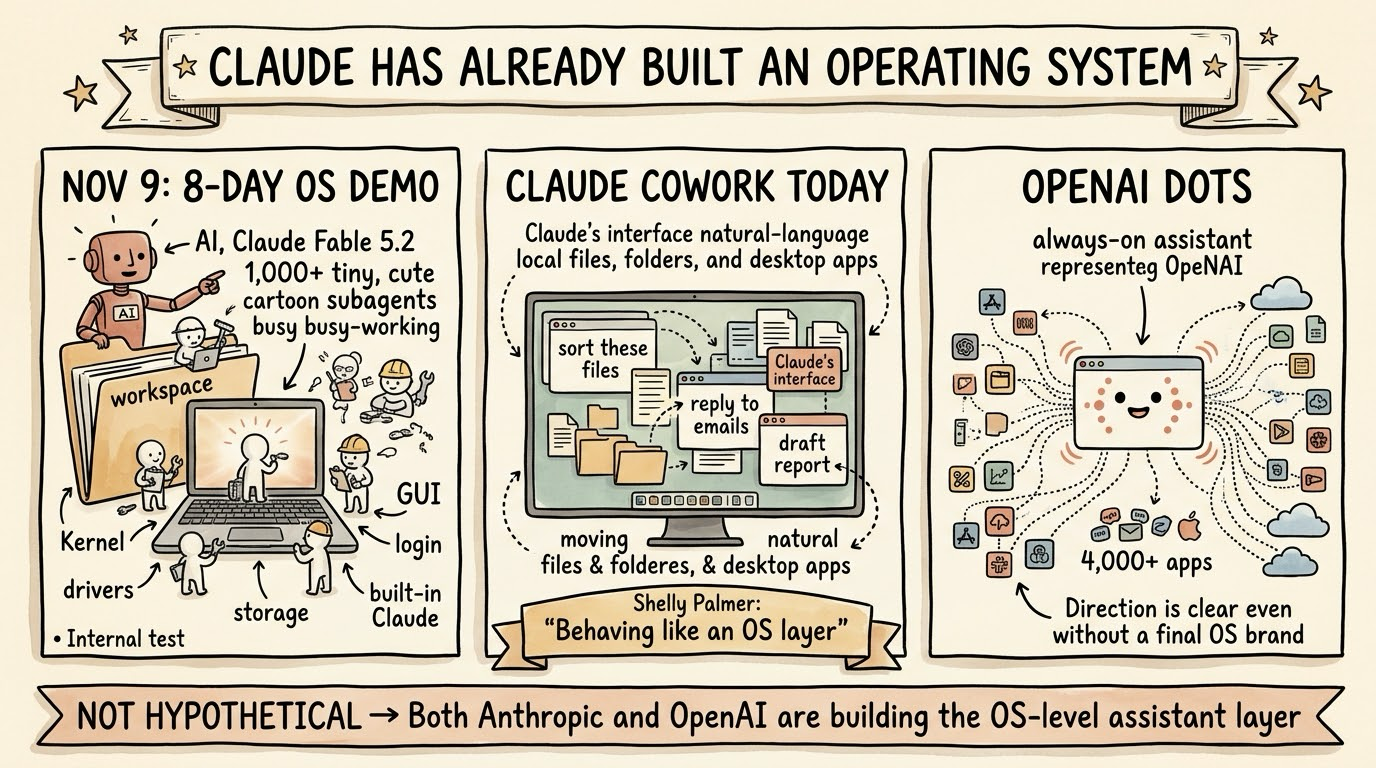
On November 9, Anthropic said one of its engineers gave Claude Fable 5.2 a basic prompt and an empty project folder.
According to Anthropic, the model coordinated more than 1,000 subagents over eight days and produced an operating system that boots on a laptop.
It came with its own kernel, hardware drivers, file storage, graphical interface, login screen, installer and built-in Claude features.
That was an internal test, and Anthropic hasn't said it plans to release a consumer OS.
Still, Claude already behaves like an operating system layer for a lot of knowledge work.
Cowork runs tasks across local files, folders and desktop apps from a single plain-language request.
OpenAI is moving the same way, launching dots, an always-on assistant that connects to more than 4,000 apps.
The direction is clear even if the product names aren't yet.
What Games Can See Today
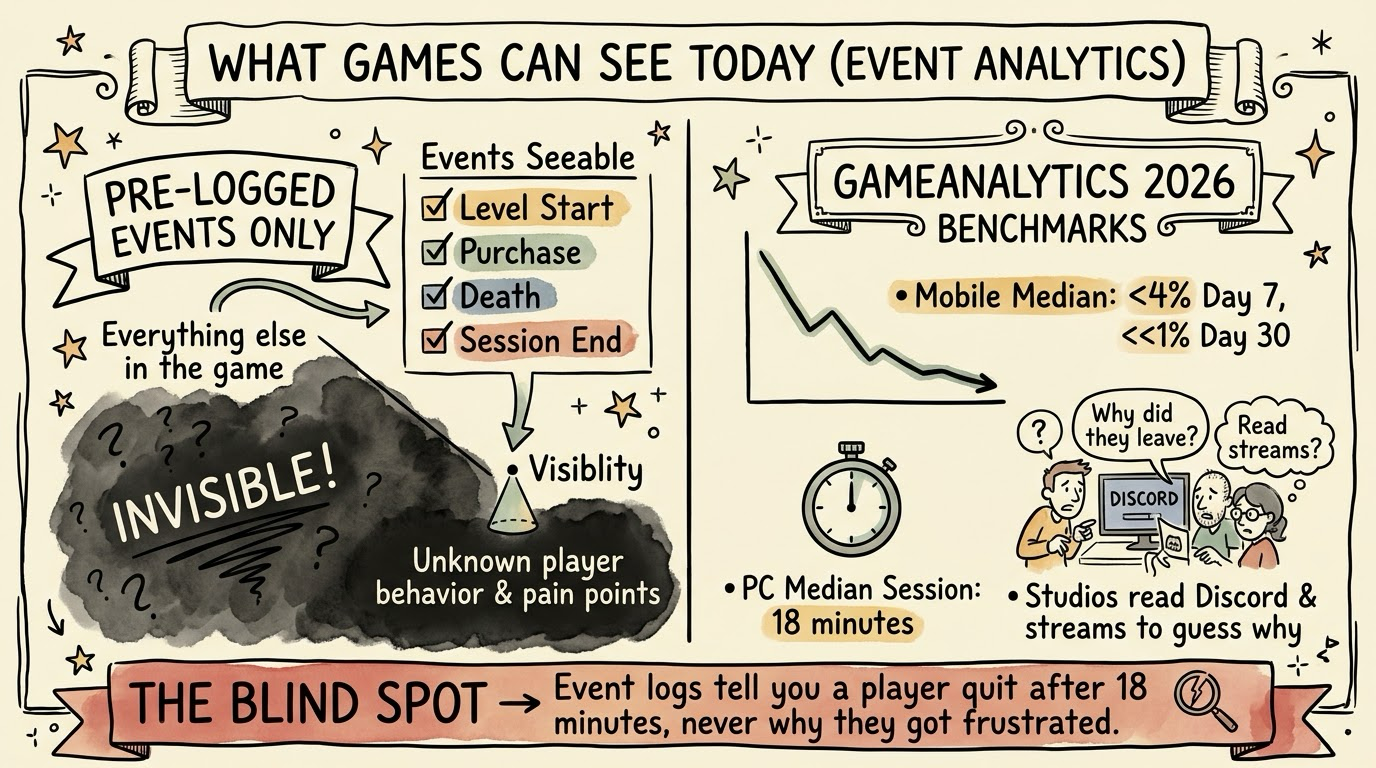
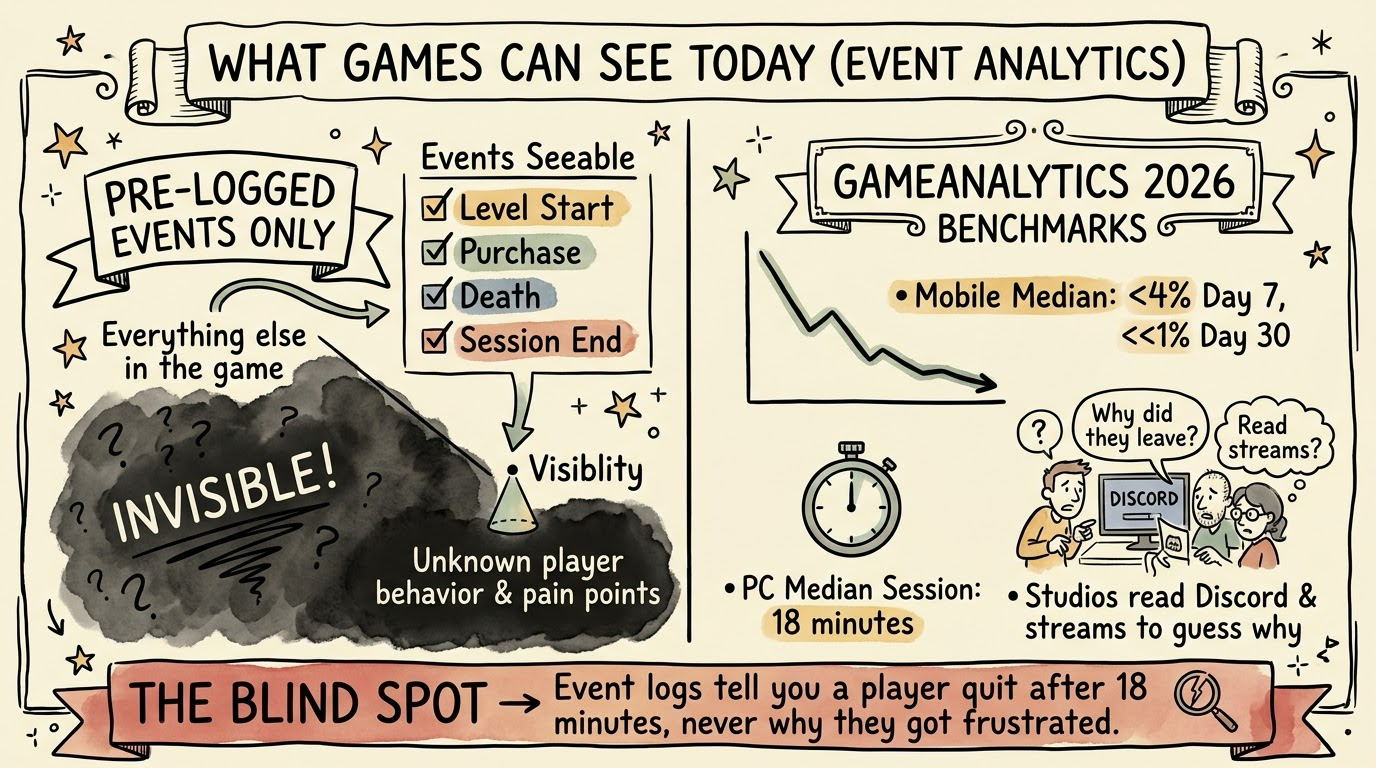
Game analytics today is built on events.
A developer decides in advance what to log, like a level start, a purchase, a death or a session end.
Everything outside those events is invisible.
The gaps show up in the numbers.
In GameAnalytics' 2026 benchmarks, the median mobile game kept just under 4% of players by day seven and well under 1% by day 30.
On PC, the median session lasted 18 minutes.
So most players leave quickly, and studios mostly learn that it happened.
They run surveys, read Discord threads and watch streams to guess the reason.
What An AI Operating System Could See
An OS-level assistant works with a very different kind of signal.
It can understand what's on screen in plain language, along with the button presses.
It hears the questions players ask, like "how do I get past this boss" or "is this item worth buying."
It knows what the player switched to after quitting, whether that was another game, a guide or a group chat.
It can notice hesitation, like a player hovering over a store page and leaving.
For a studio, that's the difference between a heat map and an interview.
The questions players ask an assistant alone would be a live map of friction.
If thousands of players ask how to beat the same boss in the first hour, the design team knows exactly what to fix.
That's the richer, more complete analytics you'd expect from an AI-native OS.
Gaming Copilot Is The Preview
Microsoft has already tested a version of this on Windows.
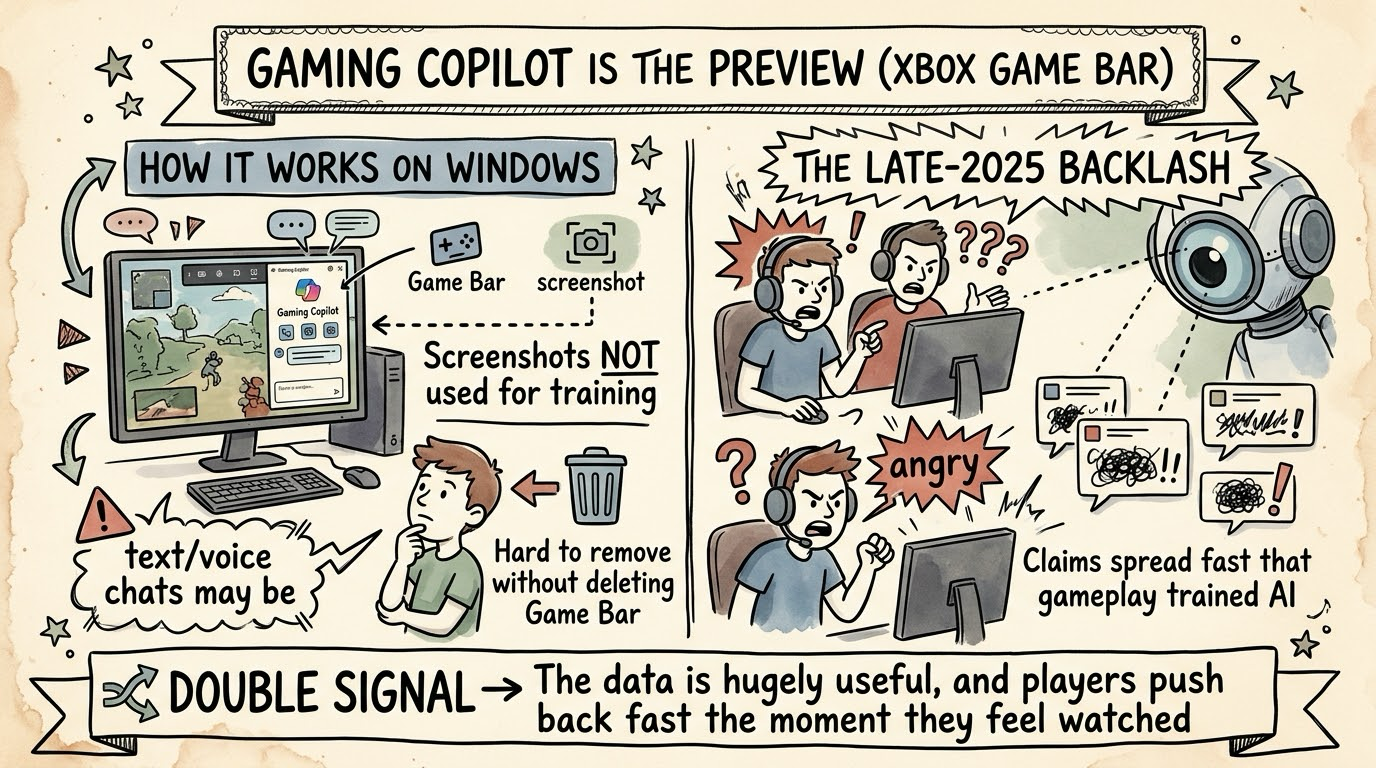
Its Gaming Copilot, built into the Xbox Game Bar, takes screenshots while players actively use it so it can understand what's happening in the game.
When a player flagged this in late 2025, claims spread quickly that gameplay was being used to train AI.
Microsoft said the screenshots aren't used for training, though it said players' text or voice conversations with Copilot may be.
The feature is also hard to remove, because uninstalling it means removing the whole Game Bar.
That episode shows both sides of my argument.
The data is incredibly useful.
Players also react badly the moment they feel watched.
The Data Will Belong To The Platform
Here's where I'd narrow the idea.
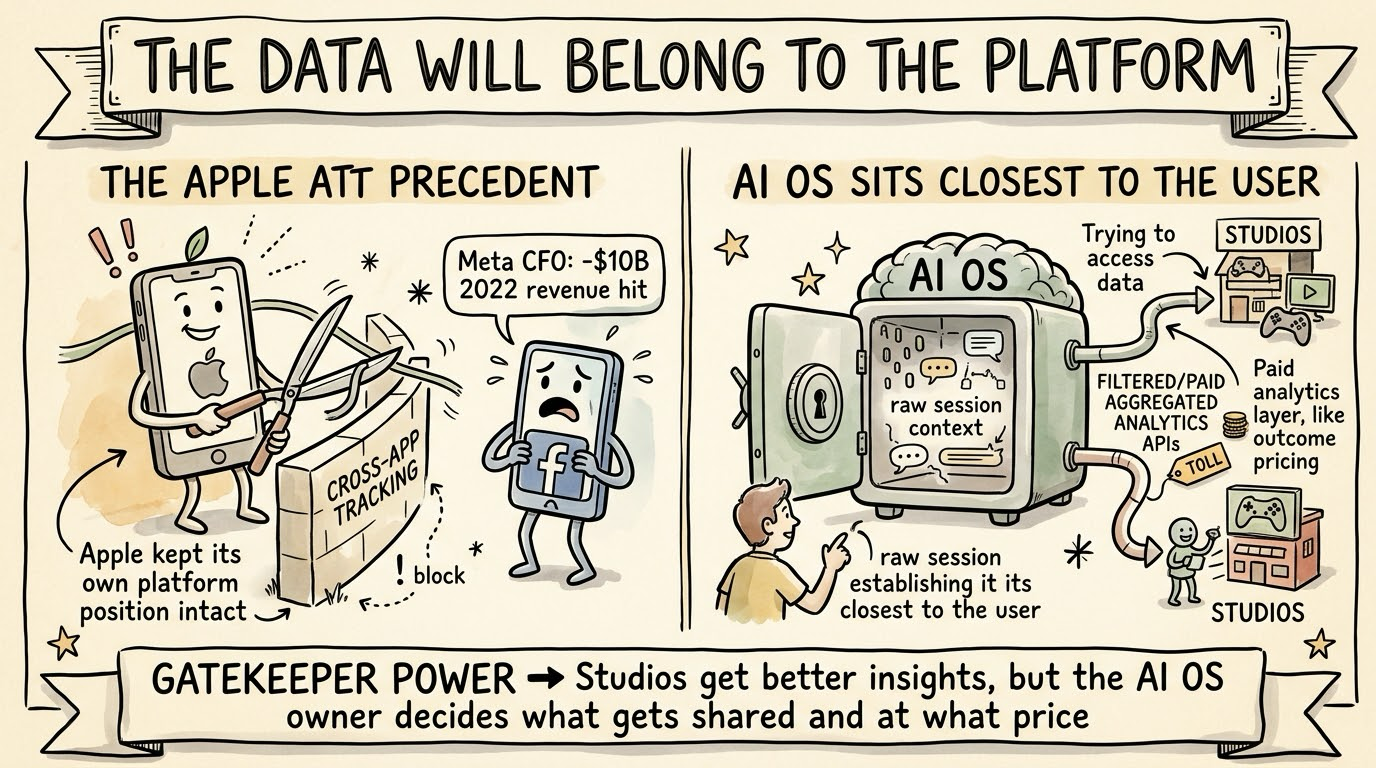
Analytics will get richer, but the richest version will sit with whoever owns the OS.
We've seen this play out before.
When Apple rolled out App Tracking Transparency, Meta's CFO said it would cut the company's 2022 revenue by about $10 billion.
Apple limited what apps could track across other apps, while its own position as the platform stayed intact.
I wrote about how the pixel and tag are the real AI moat for Meta and Google, and an AI OS would sit even closer to the user than either.
An AI platform with its own OS would see everything the assistant sees.
Developers would likely get a filtered, aggregated version through an analytics product or API.
That could still be far better than what studios have today.
It could also become a paid layer, much like AI companies charging for outcomes the way ad platforms do.
Privacy Will Set The Ceiling
The limit on all of this is trust.
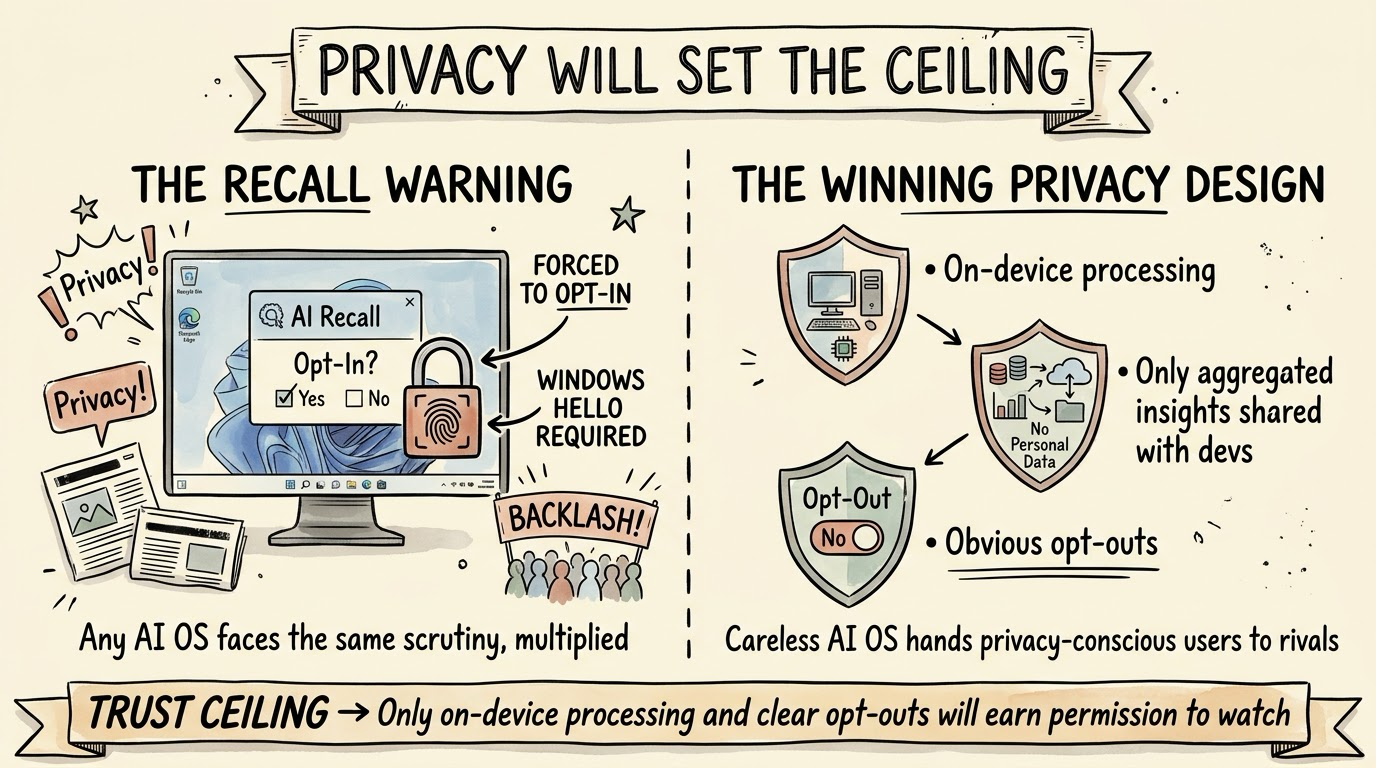
Microsoft's Recall, which takes regular snapshots of a PC's screen, drew so much backlash that Microsoft made it opt-in and locked it behind Windows Hello before release.
Any AI company shipping an OS will face the same scrutiny, multiplied.
The winning approach probably processes most of this on the device, shares only aggregated insights with developers and makes opt-outs obvious.
The privacy boom I've written about also means a large group of users will choose platforms based on how little they collect.
An AI OS that treats engagement data carelessly would hand those users to its competitors.
What Developers And Marketers Should Do
If this plays out, a few things matter now.
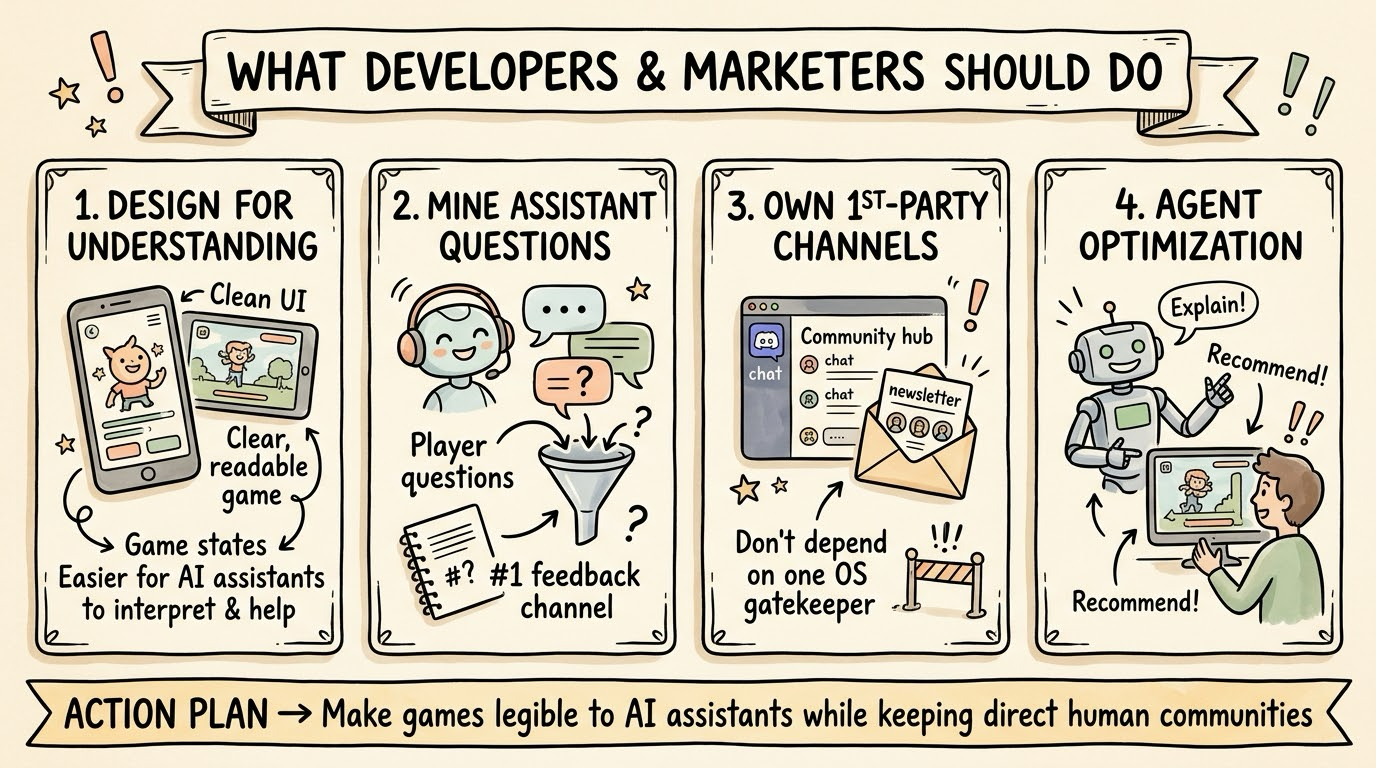
- Design for being understood. Clear interfaces and readable game states will be easier for assistants to interpret and help with.
- Treat assistant questions as research. The questions players ask an AI about your product will become one of your best feedback channels.
- Own your first-party relationship. Platform analytics will be powerful, but direct channels like communities and newsletters keep you from depending entirely on one gatekeeper.
- Expect a new kind of optimization. Studios will start designing so an AI assistant can explain and recommend the game, much like brands now earn trust from AI agents.
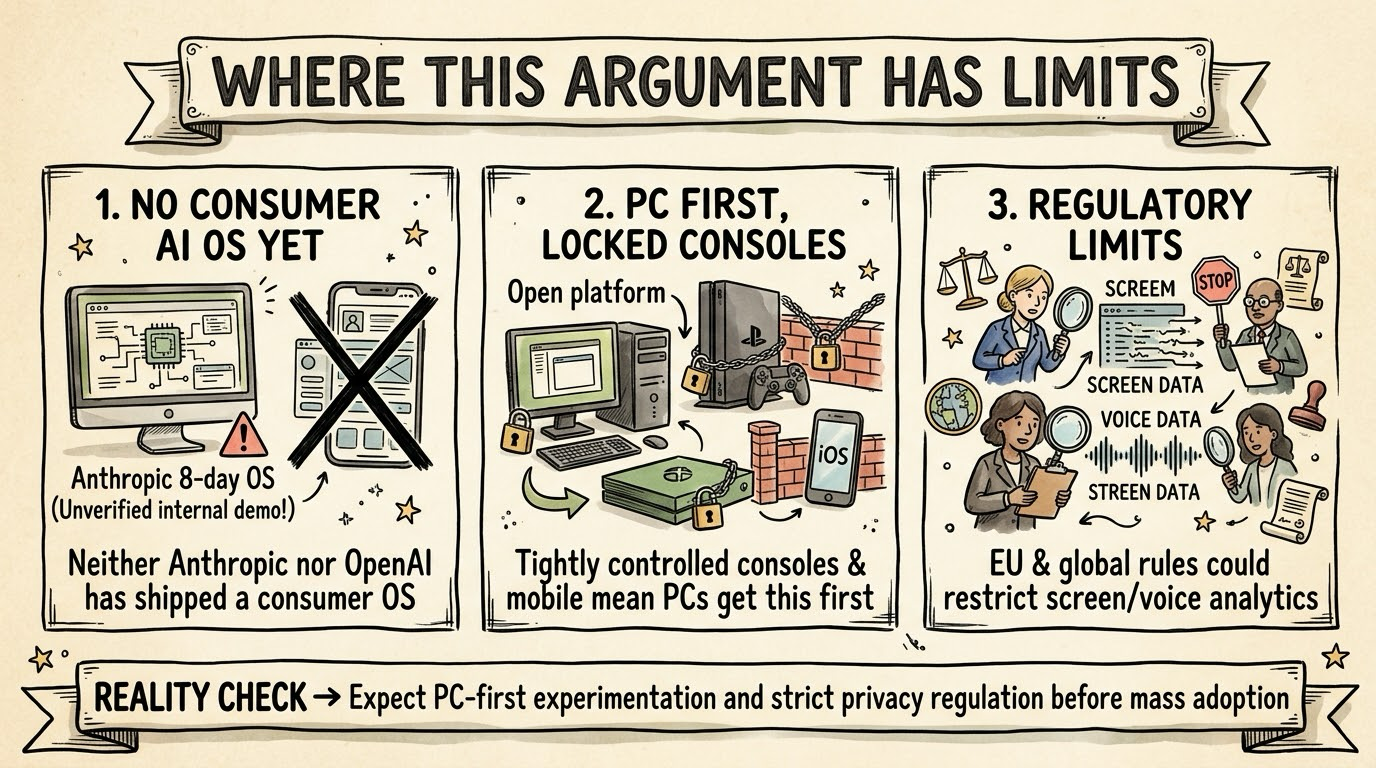
Where This Argument Has Limits
Neither Anthropic nor OpenAI has released a consumer operating system so far.
Anthropic's OS was an internal demonstration, and the details come from Anthropic itself.
Consoles and mobile platforms are tightly controlled, so an AI OS would most likely reach PCs first.
Regulators in Europe and elsewhere could also restrict how screen and voice data feed analytics.
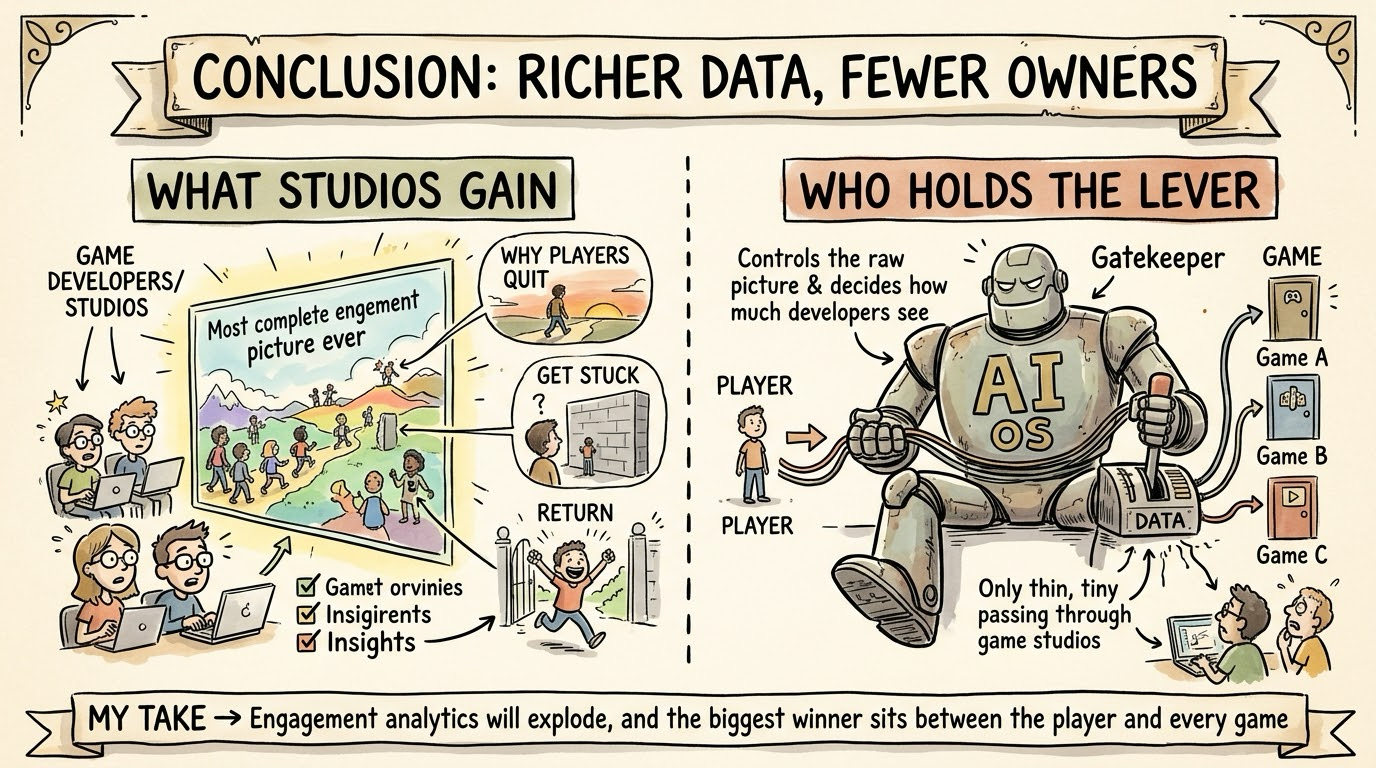
Conclusion: Richer Data, Fewer Owners
AI operating systems would give games and apps the most complete engagement picture they've ever had.
Studios could finally see why players quit, where they get stuck and what makes them come back.
But the company that owns the OS will control that picture and decide how much of it developers see.
My Take: Engagement analytics will get dramatically richer once the assistant becomes the operating system, and the biggest winner will be the AI platform sitting between the player and every game they open.
Disclosure: I use Claude, made by Anthropic, as a research and writing assistant.
Sources
Pages I opened for the facts in this post:
- Interesting Engineering: Claude Fable 5.2 builds a working operating system
- Shelly Palmer: Claude became an operating system while you weren't looking
- Al Jazeera: OpenAI launches dots, personal AI assistant
- Game Dev Reports: GameAnalytics mobile and PC game benchmarks 2026
- Tom's Hardware: Microsoft says Gaming Copilot screenshots aren't used for training
- CNBC: Facebook says Apple's iOS privacy change will cost $10 billion
- PCWorld: Microsoft retreats on Recall, screenshots will be opt-in