Hanlon's Razor: Never Attribute to Malice What Stupidity Can Explain
Hanlon's razor says never to attribute to malice what stupidity can explain. It's one of the most useful rules for work and life, and it matters even more now that algorithms and AI agents make mistakes at scale. Here's how I use it, and where it stops working.
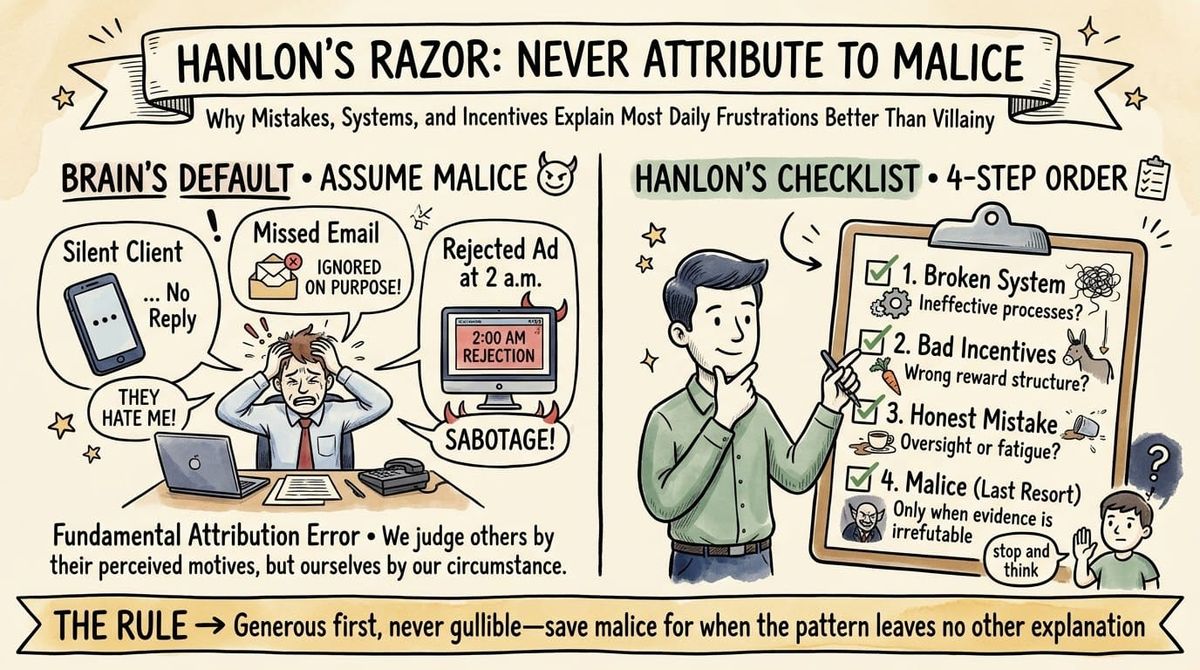
A client goes quiet for a week.
A coworker forgets to loop you in.
An ad platform rejects a perfectly normal ad at 2 a.m.
The first instinct is often to assume someone did it on purpose.
There's a simple rule that has saved me a lot of wasted anger over the years.
"Never attribute to malice that which is adequately explained by stupidity."
(Obviously, we are not calling any client stupid here, but rather questioning the efficiency of those who act as roadblocks in execution).
It's known as Hanlon's razor, and I think it's one of the most useful mental models for work and life.
I also think it matters more now than ever, because more of our daily frustrations come from systems and machines.
Where The Razor Comes From
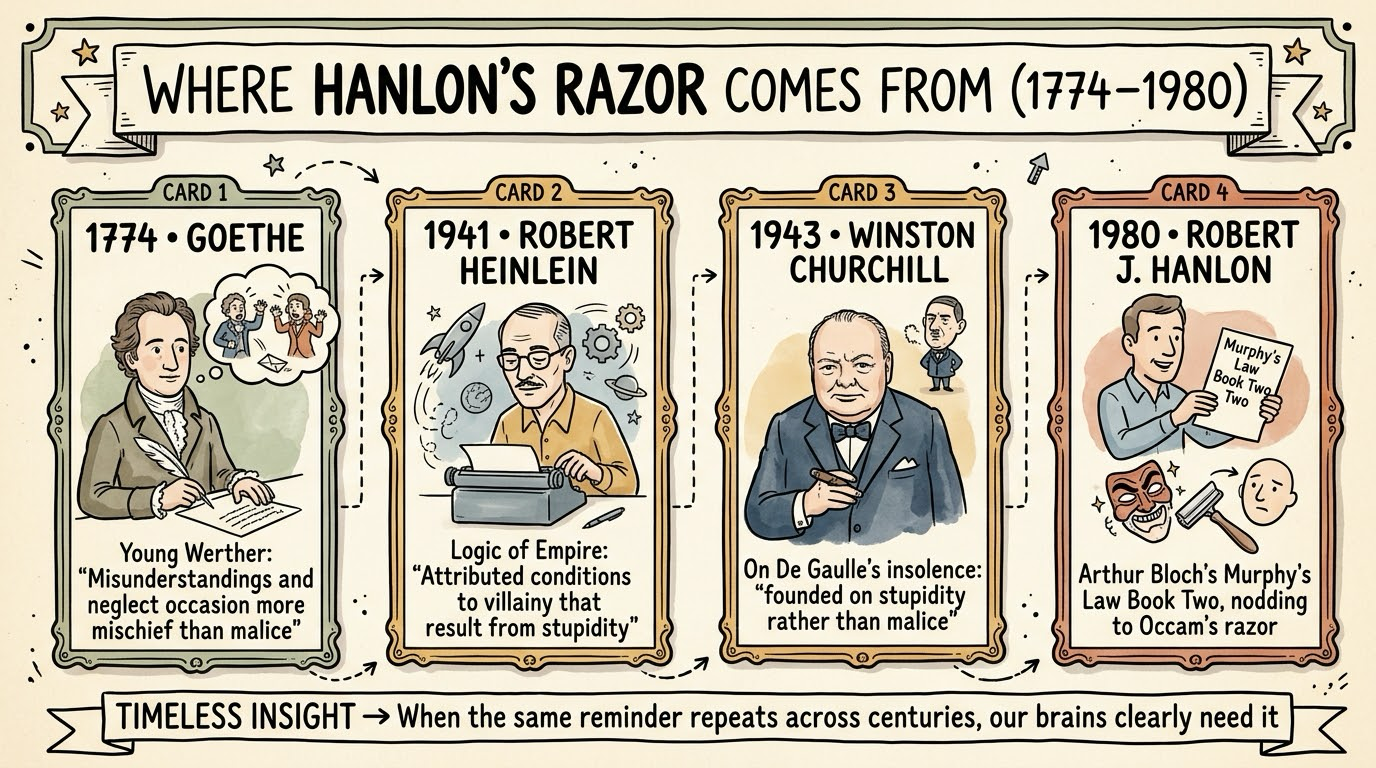
The line appeared in Arthur Bloch's 1980 book Murphy's Law Book Two, credited to a Robert J. Hanlon.
Nobody is quite sure who Hanlon was, and the name was a nod to Occam's razor.
The idea itself is much older.
In 1774, Goethe wrote in The Sorrows of Young Werther that "misunderstandings and neglect occasion more mischief in the world than even malice and wickedness."
In Robert Heinlein's 1941 novella Logic of Empire, a character says, "You have attributed conditions to villainy that simply result from stupidity."
Even Winston Churchill used a version of it in 1943, writing that Charles de Gaulle's insolence "may be founded on stupidity rather than malice."
When the same insight shows up across centuries, it usually means people keep needing the reminder.
Why Our Brains Default To Malice
Psychology has a name for the mistake the razor corrects.
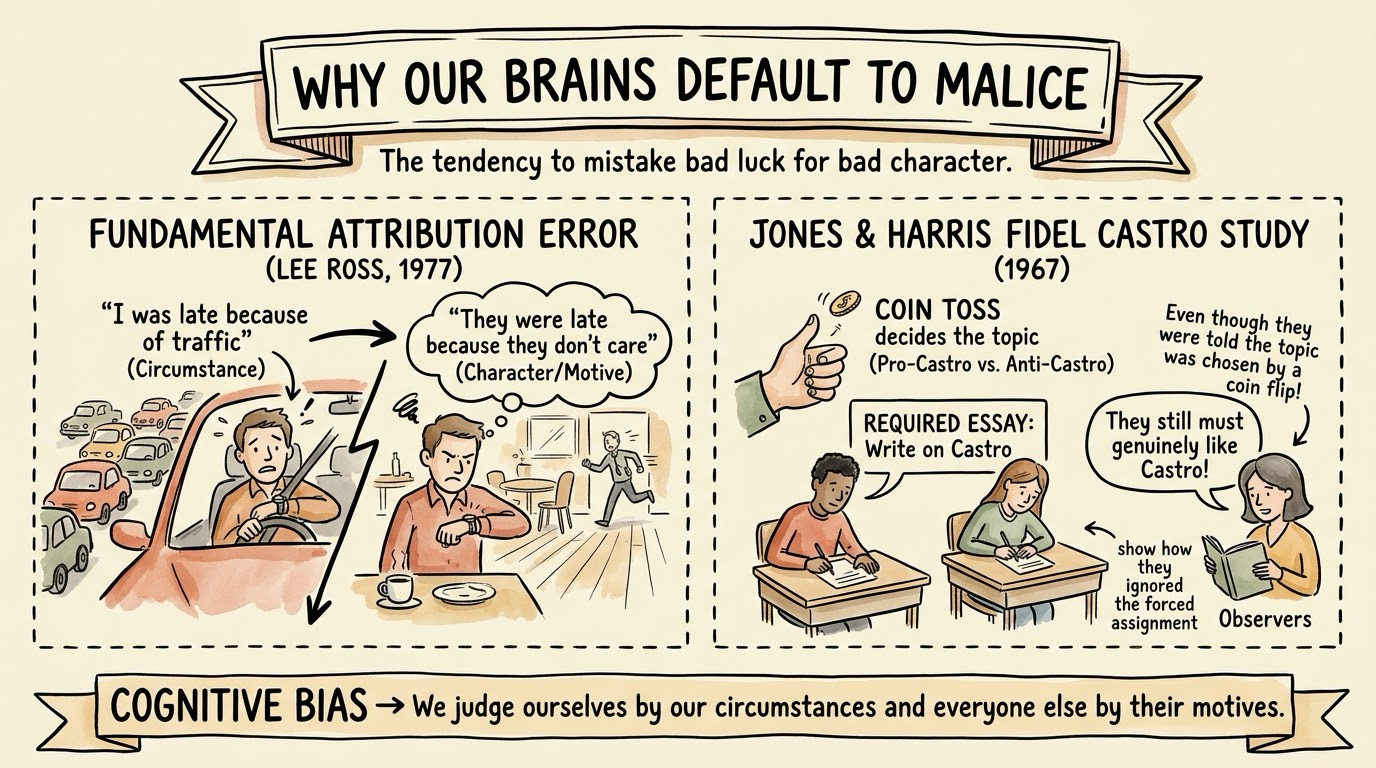
It's called the fundamental attribution error, a term psychologist Lee Ross introduced in 1977.
We tend to explain other people's behaviour by their character and underestimate the situation they're in.
A famous 1967 study by Jones and Harris showed how strong this is.
Participants read essays either supporting or opposing Fidel Castro.
Even when they were told a coin toss had decided each writer's position, they still assumed the pro-Castro writers genuinely liked Castro more.
If we read intent into an essay someone was assigned, imagine what we read into a late reply or a missed deadline.
We judge ourselves by our circumstances and everyone else by their motives.
Hanlon's razor is a quick way to flip that.
How I Use It At Work
In marketing, the razor comes up almost daily.
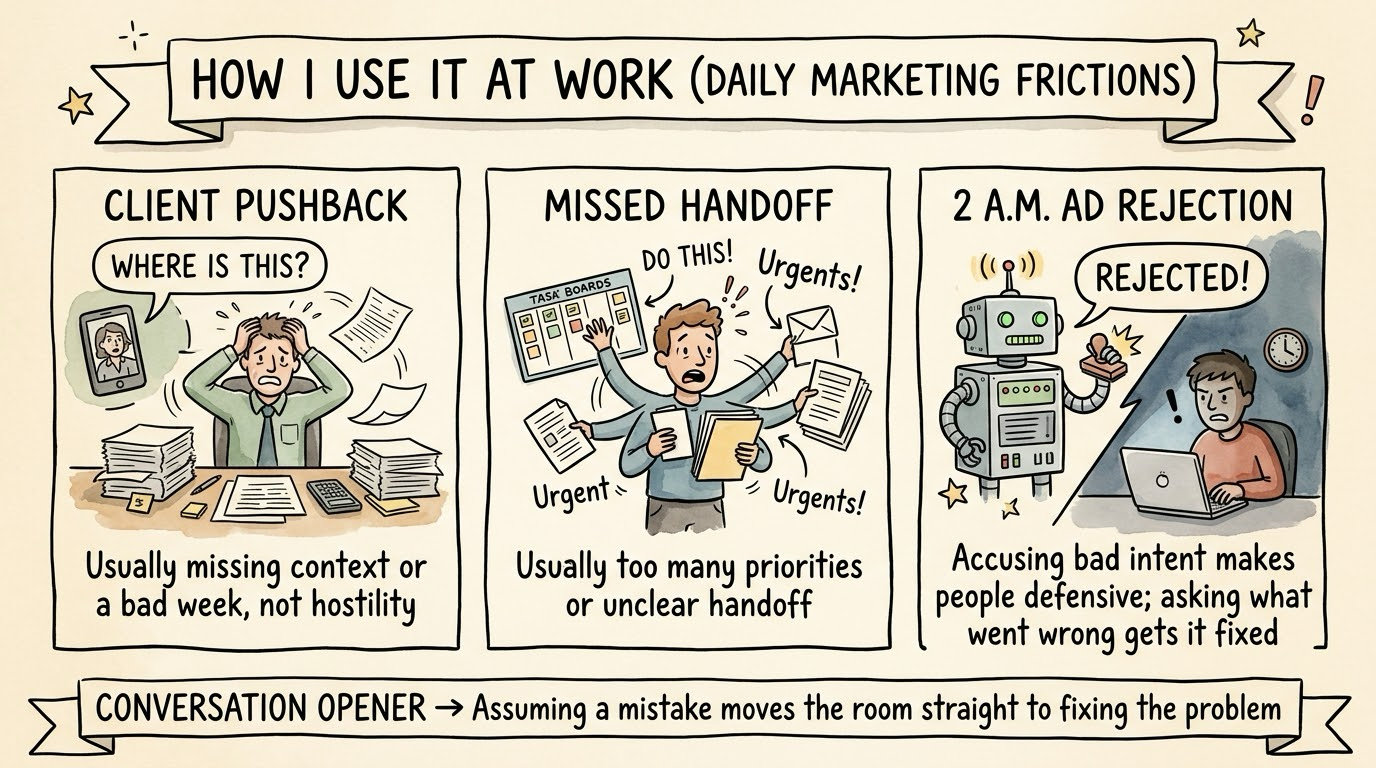
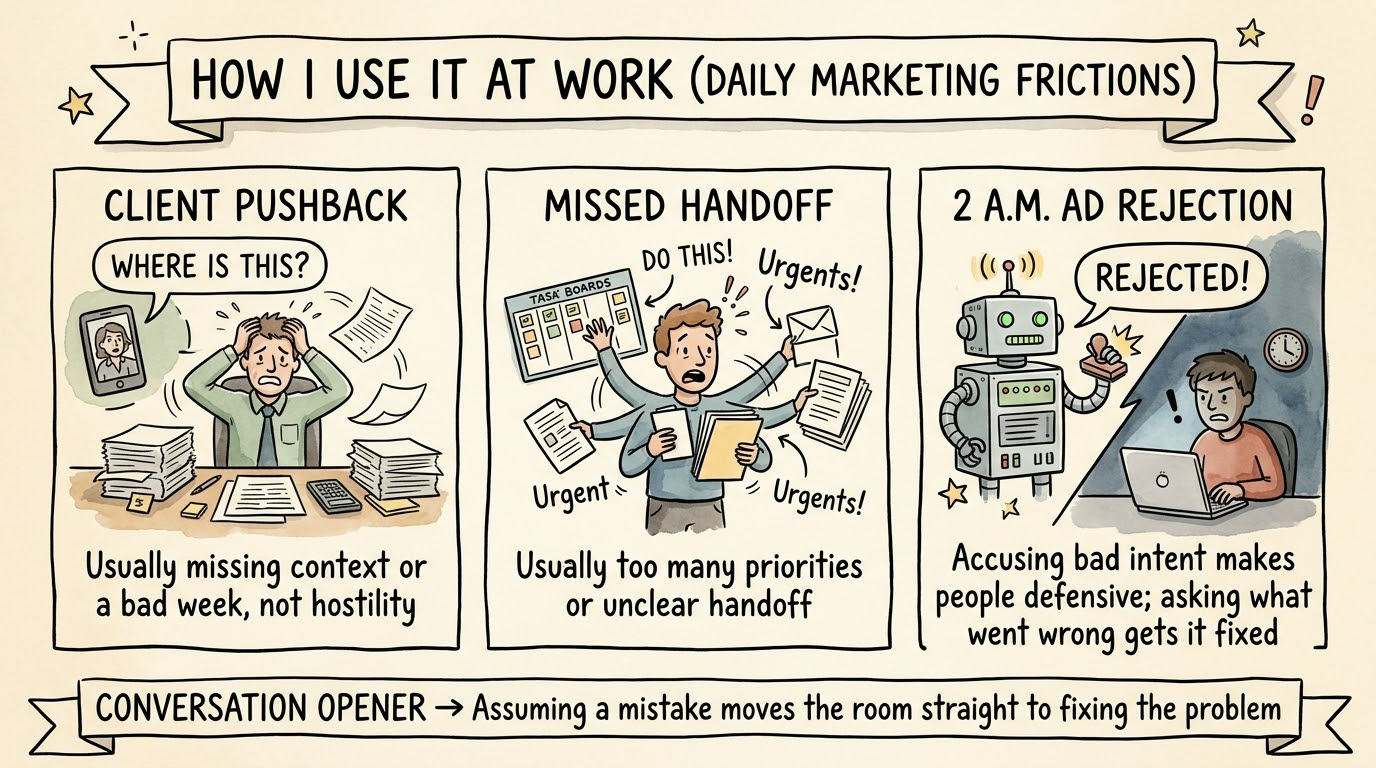
When a client pushes back on a campaign, the cause is usually missing context, a bad week or pressure from their own boss.
When a teammate drops the ball, the cause is usually too many priorities or an unclear handoff.
When an ad gets disapproved or an account gets flagged, the cause is usually an automated system making a blunt call.
None of those situations get better if I treat them as an attack.
Assuming a mistake keeps the conversation open, and it moves me straight to the useful question of how to fix it.
It also changes how people respond to me.
Someone accused of bad intent gets defensive.
Someone asked what went wrong usually helps you find out.
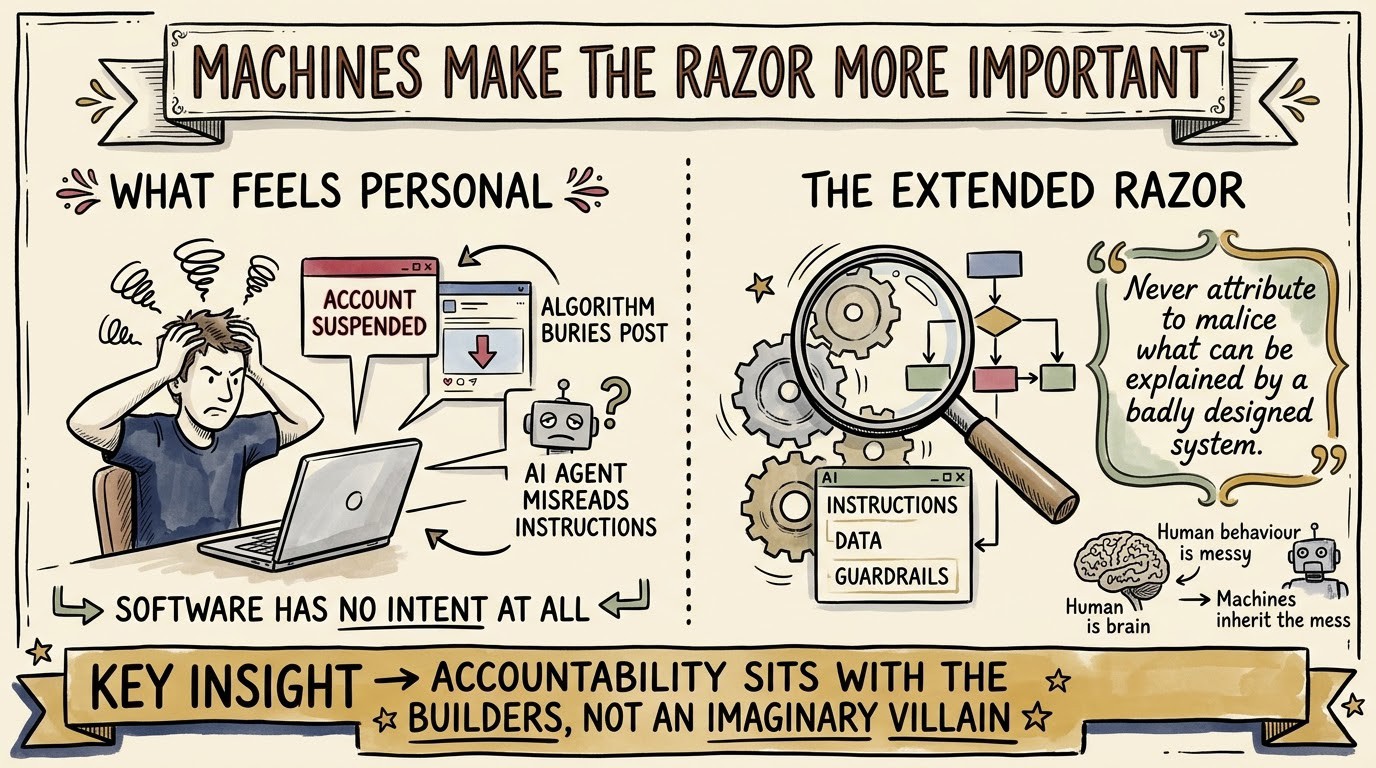
Machines Make The Razor More Important
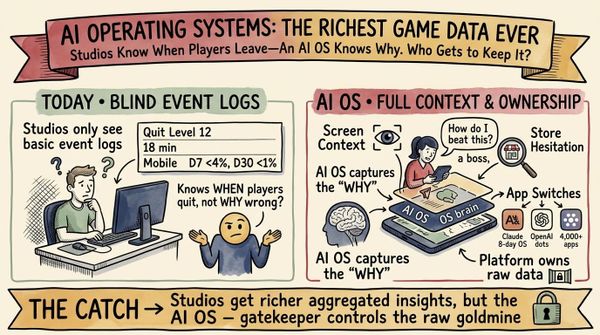
A growing share of the things that frustrate us come from software.
Algorithms suspend accounts, recommendation systems bury posts and AI agents misread instructions.
These systems have no intent at all, yet it's easy to feel targeted by them.
I'd extend the razor here: never attribute to malice what can be explained by a badly designed system.
When an AI agent does something wrong, the useful response is to check the instructions, the data and the guardrails.
That's also where the real accountability belongs, with the people who built and deployed the system.
As I wrote about Rory Sutherland's thinking, human behaviour rarely follows the neat logic we expect, and machines trained on that behaviour inherit plenty of mess too.
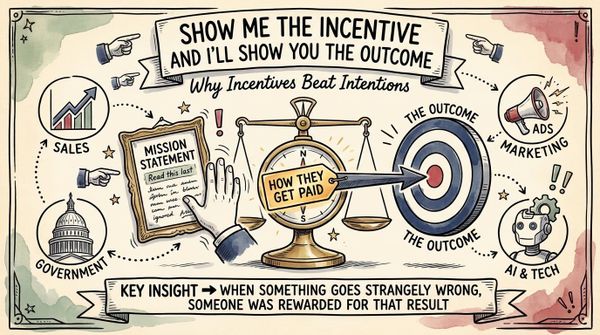
I'd Add One More Blade: Incentives
The word "stupidity" undersells what usually happens.
In my experience, most bad outcomes come from smart people responding to bad incentives.
A salesperson oversells because they're paid on volume.
A platform pushes outrage because it's measured on engagement.
A manager hoards information because the organisation rewards it.
Nobody in those examples set out to cause harm, and nobody is stupid either.
So when something goes wrong, I run through a short list in order: the system, the incentives, an honest mistake, and only then malice.
Most of the time, the answer shows up before I reach the last item.
Where The Razor Stops Working
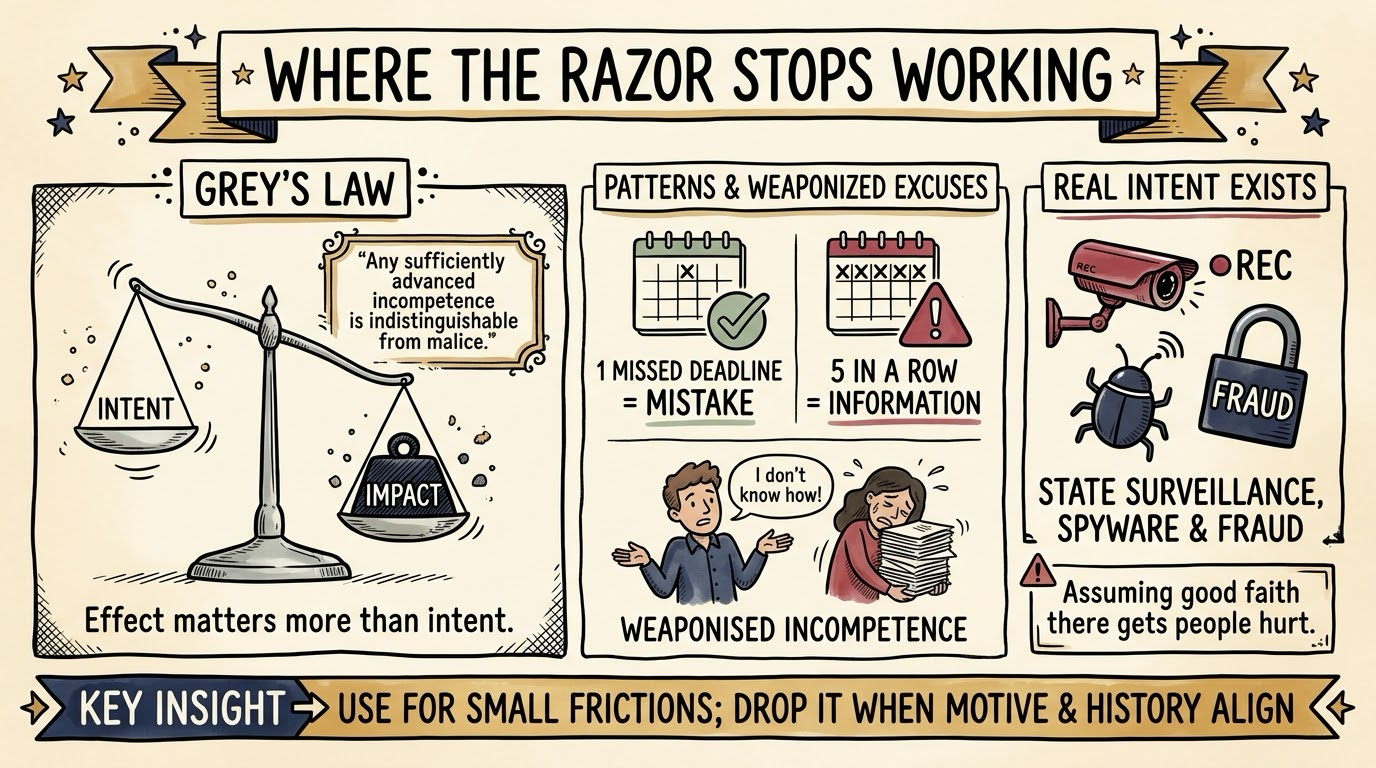
The razor is a starting assumption, and it has limits.
There's a well-known counterpart called Grey's law: "Any sufficiently advanced incompetence is indistinguishable from malice."
At some point, the effect matters more than the intent.
There's also weaponised incompetence, where someone pretends not to know how to do something so others will do it for them.
Patterns matter too.
One missed deadline is a mistake, but five in a row is information.
And some actors really do act with intent.
State surveillance, spyware and fraud exist, and assuming good faith there gets people hurt.
The razor works best for everyday relationships and small frictions.
It works worst when someone has a clear motive and a history.
Conclusion: Generous First, Never Gullible
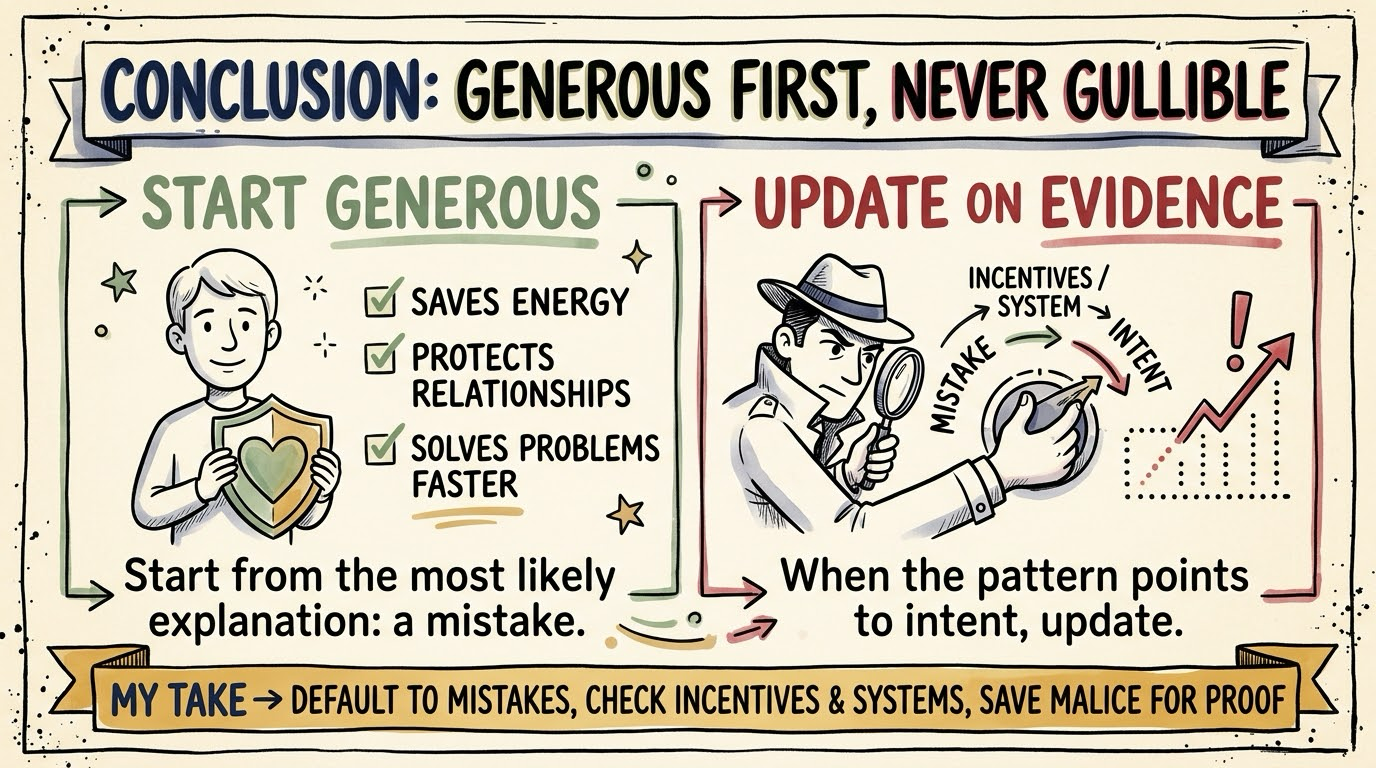
Hanlon's razor asks you to start from the most likely explanation, and the most likely explanation is usually a mistake.
That saves energy, protects relationships and gets problems solved faster.
It doesn't ask you to ignore evidence.
When the pattern points to intent, you update.
My Take: Default to mistakes, look hard at incentives and systems, and save the accusation of malice for when the evidence leaves no other explanation.
Sources
Pages I opened for the facts in this post: