When Code Is Cheap, Every Tech Market Will Look Like Email
Every email provider sends the same messages, yet Gmail wins on scale, Proton on privacy, Fastmail on independence and Superhuman on speed. As AI makes code cheap, the rest of tech will split the same way, and specialty, packaging and marketing will decide who wins.
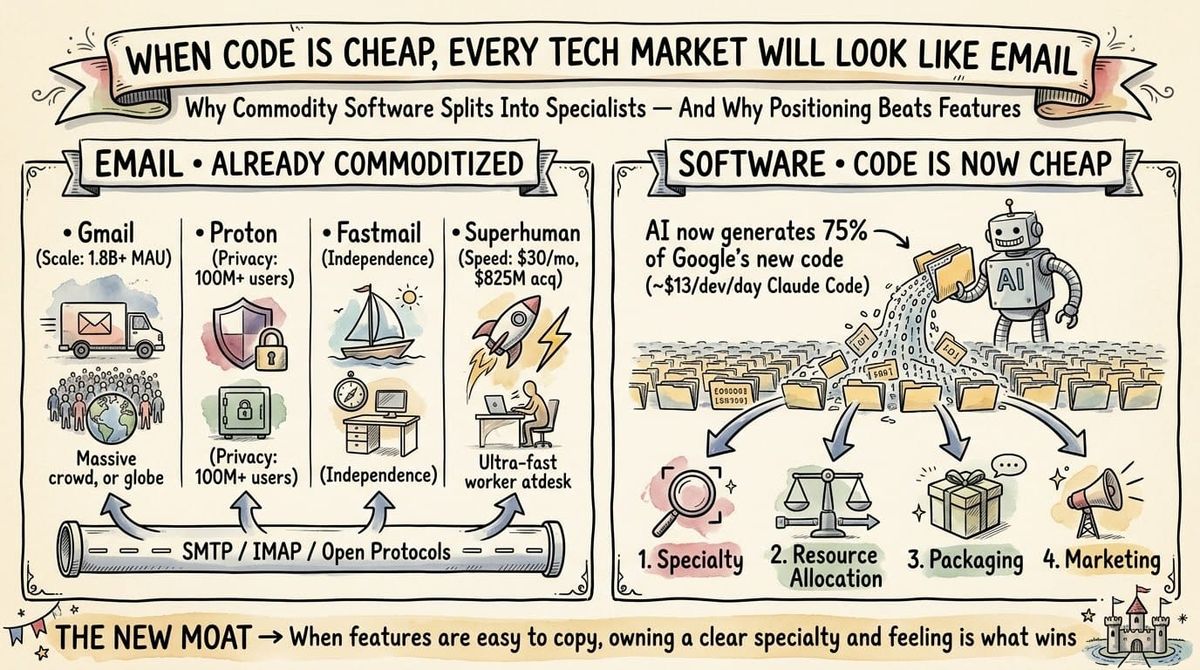
Email is one of the oldest and most standardised products on the internet.
Every provider sends and receives the same messages using the same open protocols.
And yet the market didn't collapse into one winner.
It split into specialists, each owning a different reason to choose them.
I think that's exactly where the rest of the tech industry is heading.
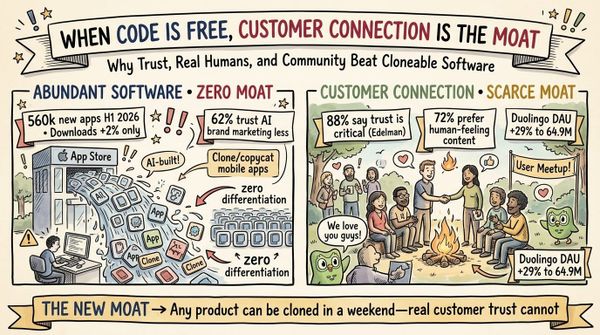
As AI makes code cheap, the product itself stops being the moat.
What matters is which specialty you own, how you put your resources behind it, and how well you package and market it.
Email Is The Preview
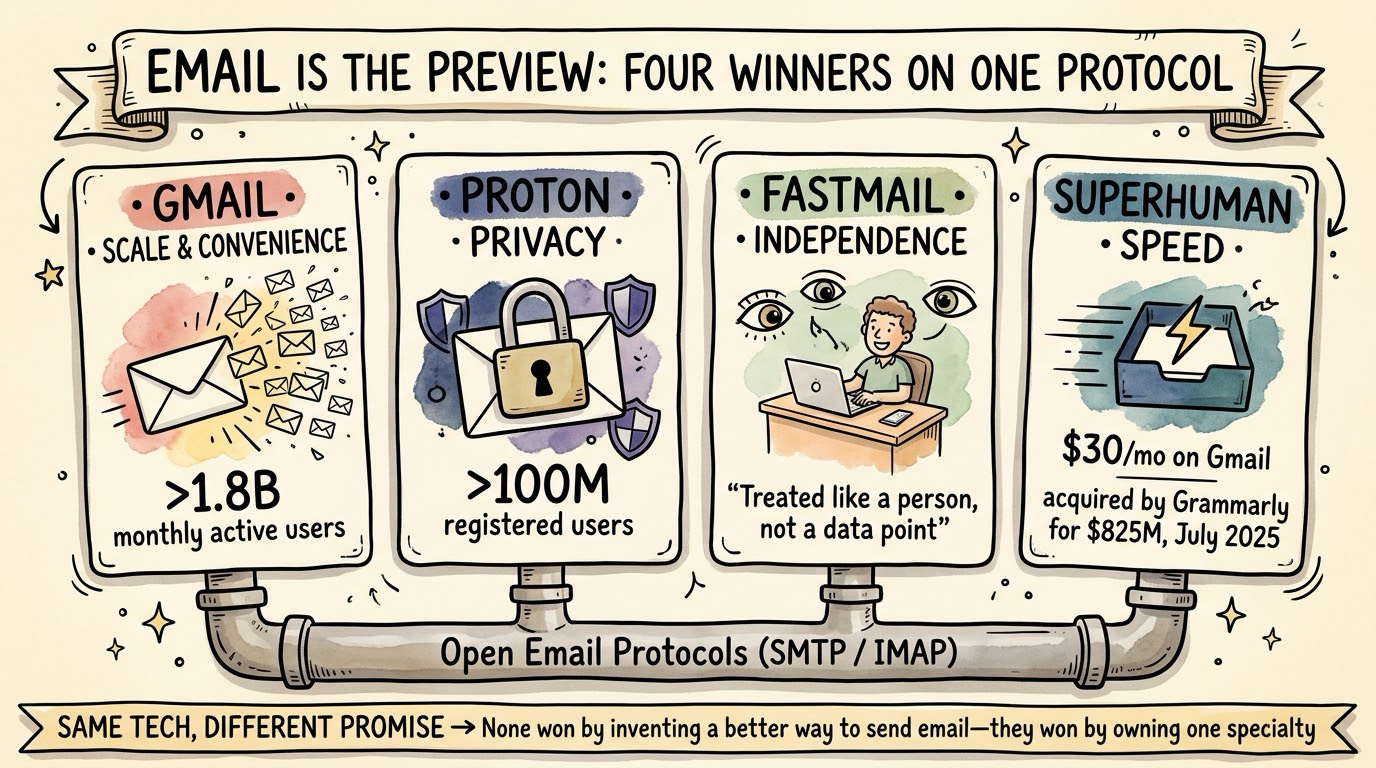
Look at how the email market is divided.
Gmail wins on scale and convenience, with more than 1.8 billion monthly active users by one widely cited estimate.
Proton wins on privacy, and it announced in February that it had passed 100 million registered users.
Fastmail wins on independence, calling itself "the leading independent email service" and saying users are "treated like a person with us, not a data point."
Superhuman built its business on speed, charging $30 a month for an email client that sat on top of Gmail, with a waitlist of several hundred thousand people.
Grammarly bought Superhuman in July 2025, after it had reached a valuation of $825 million.
None of these companies won by inventing a better way to send an email.
They won by choosing one thing to be best at, and making sure the right customers knew it.
Code Is Becoming Cheap
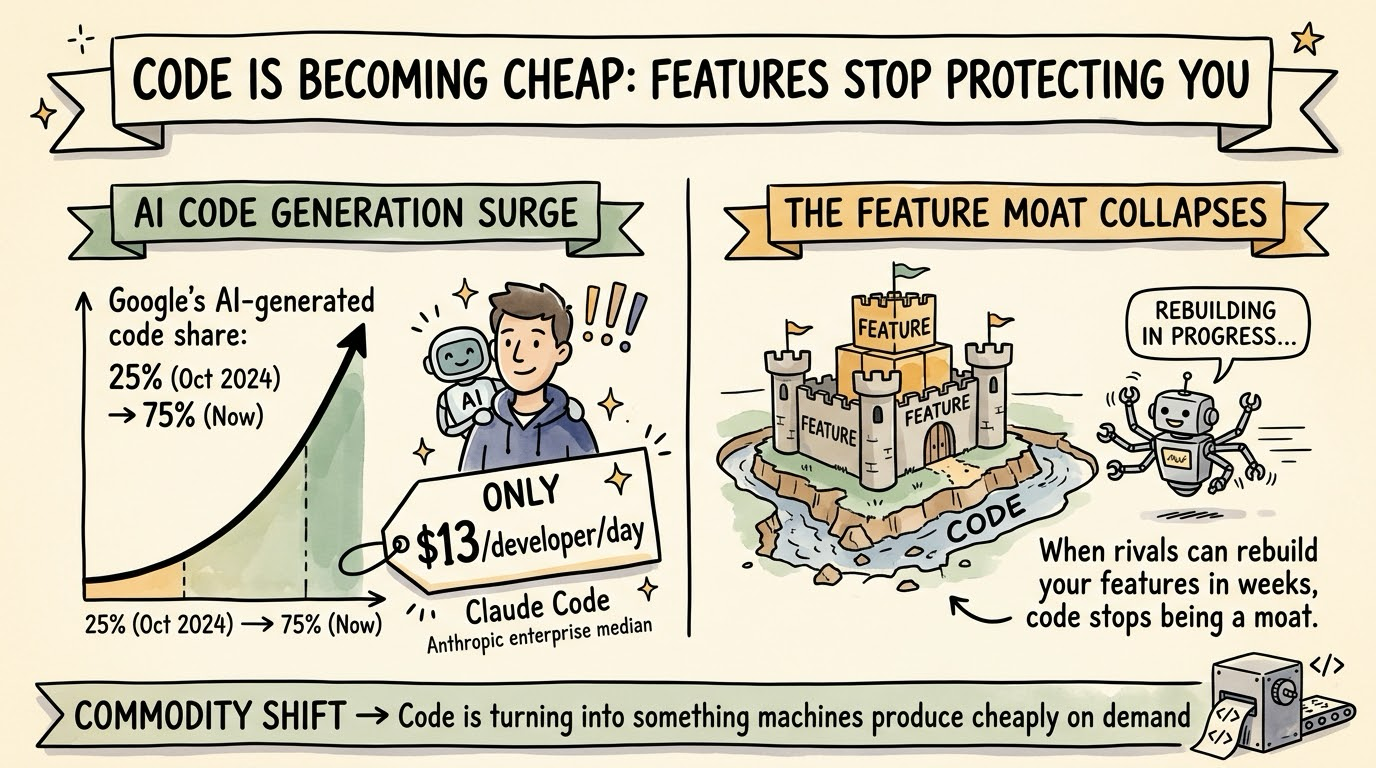
That pattern used to be unusual in software, because code itself was hard to build and hard to copy.
That's changing fast.
Google says about 75% of its new code is now generated by AI and reviewed by engineers, up from about 25% in October 2024.
Anthropic's enterprise data reportedly shows Claude Code costs a median of about $13 per developer per active day.
When a competitor can rebuild your features in weeks, features stop protecting you.
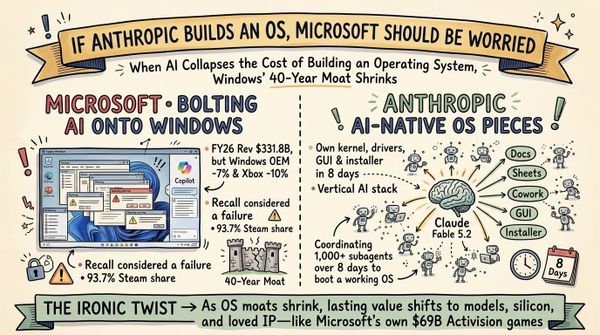
I wrote about how AI agents could build their own programming language, and that's the direction of travel: code becomes something machines produce cheaply.
Specialty Becomes The Moat
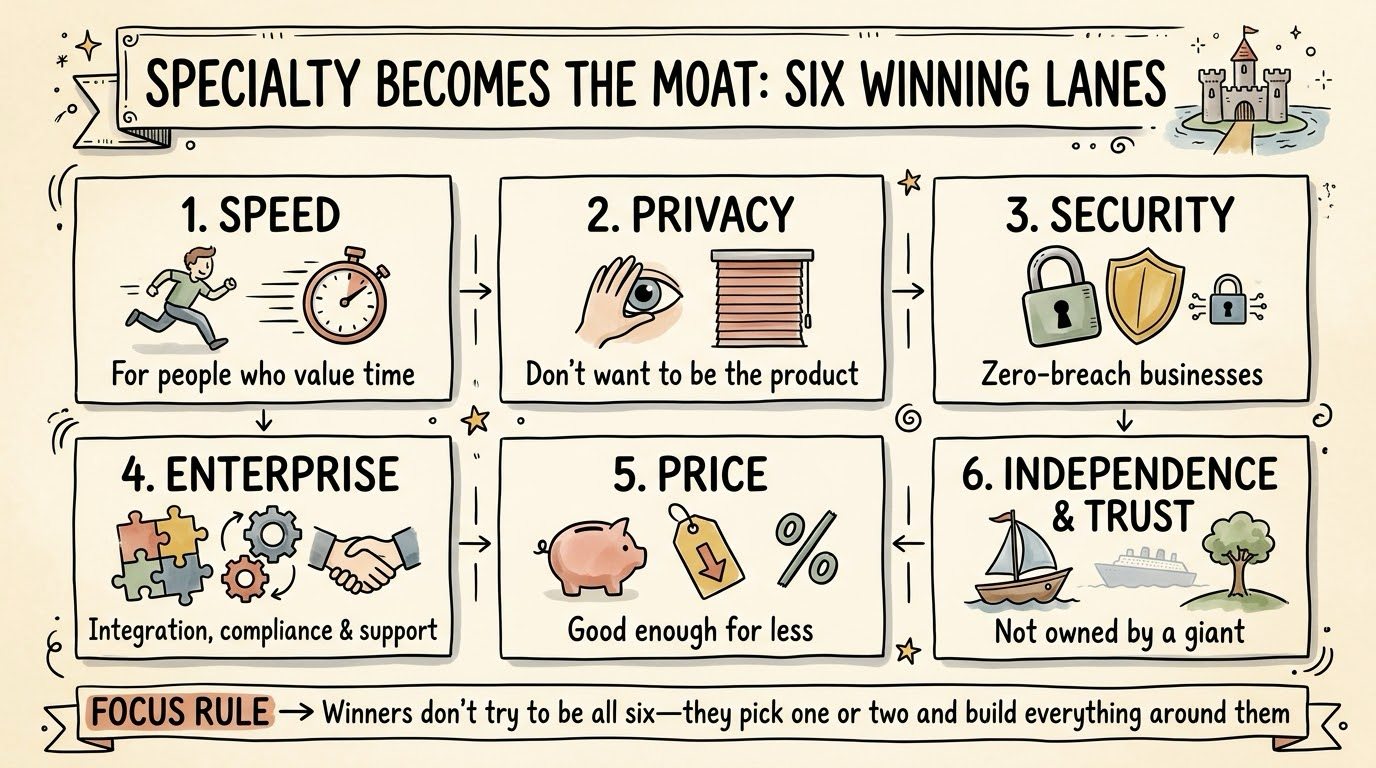
If every company can build roughly the same product, the question becomes what the product is for.
I see a few specialties that will define most tech categories, just like email.
- Speed, for people who value their time above everything else.
- Privacy, for people who don't want to be the product.
- Security, for businesses that can't afford a breach.
- Enterprise and productivity, for companies that need integration, compliance and support.
- Price, for people who want the good-enough option for less.
- Independence and trust, for people who want a company that isn't owned by a giant.
The winners won't try to be all of these at once.
They'll pick one or two and build everything around them.
Allocating Resources Is Strategy
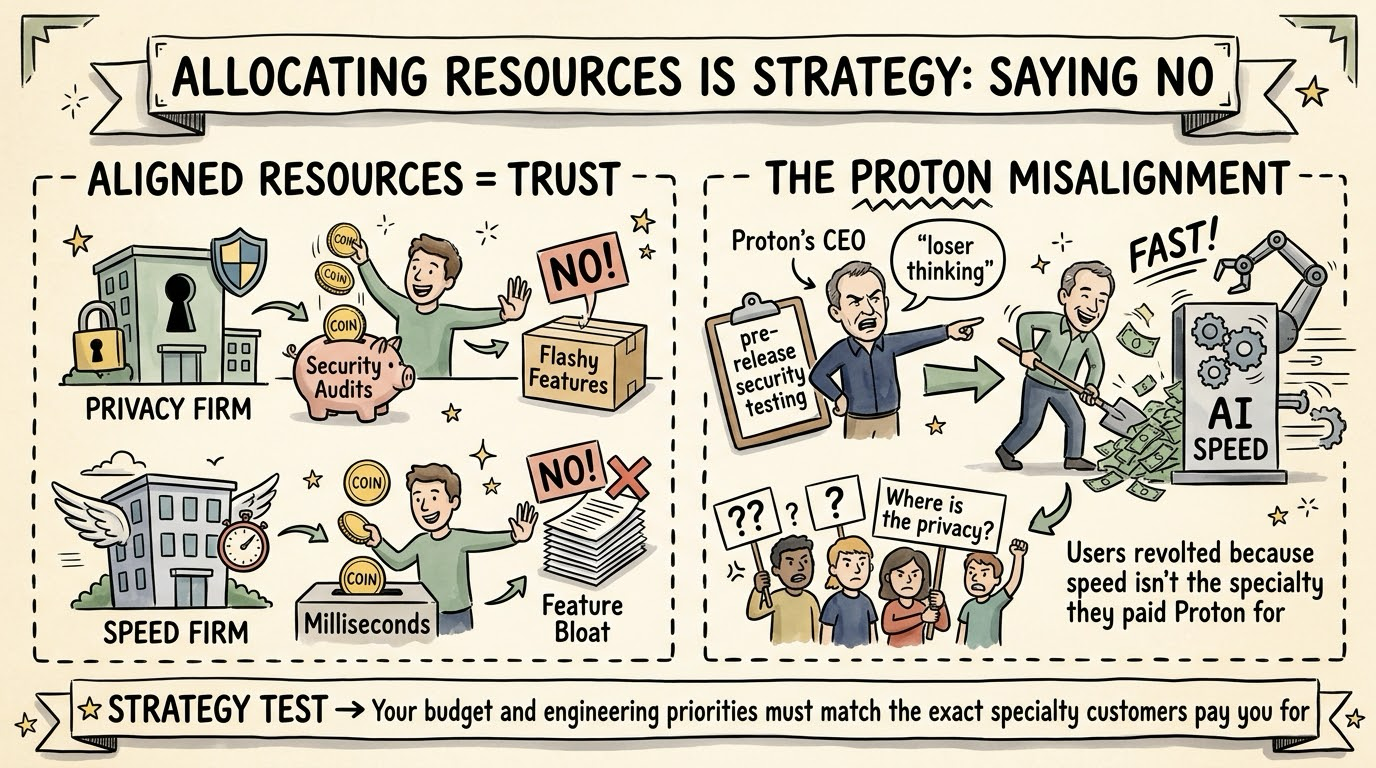
Picking a specialty means saying no to things.
A privacy company should spend more on audits and less on flashy features.
A speed company should obsess over milliseconds, even if that means fewer integrations.
Getting this wrong is expensive.
Proton is a good example.
Its brand is built on privacy and caution, but this month its CEO was reported to have called a request for extra security testing "loser thinking" while pushing staff to ship AI-written code faster.
Users revolted because the company seemed to be putting resources behind speed, which isn't the specialty they were paying for.
Packaging Becomes Product
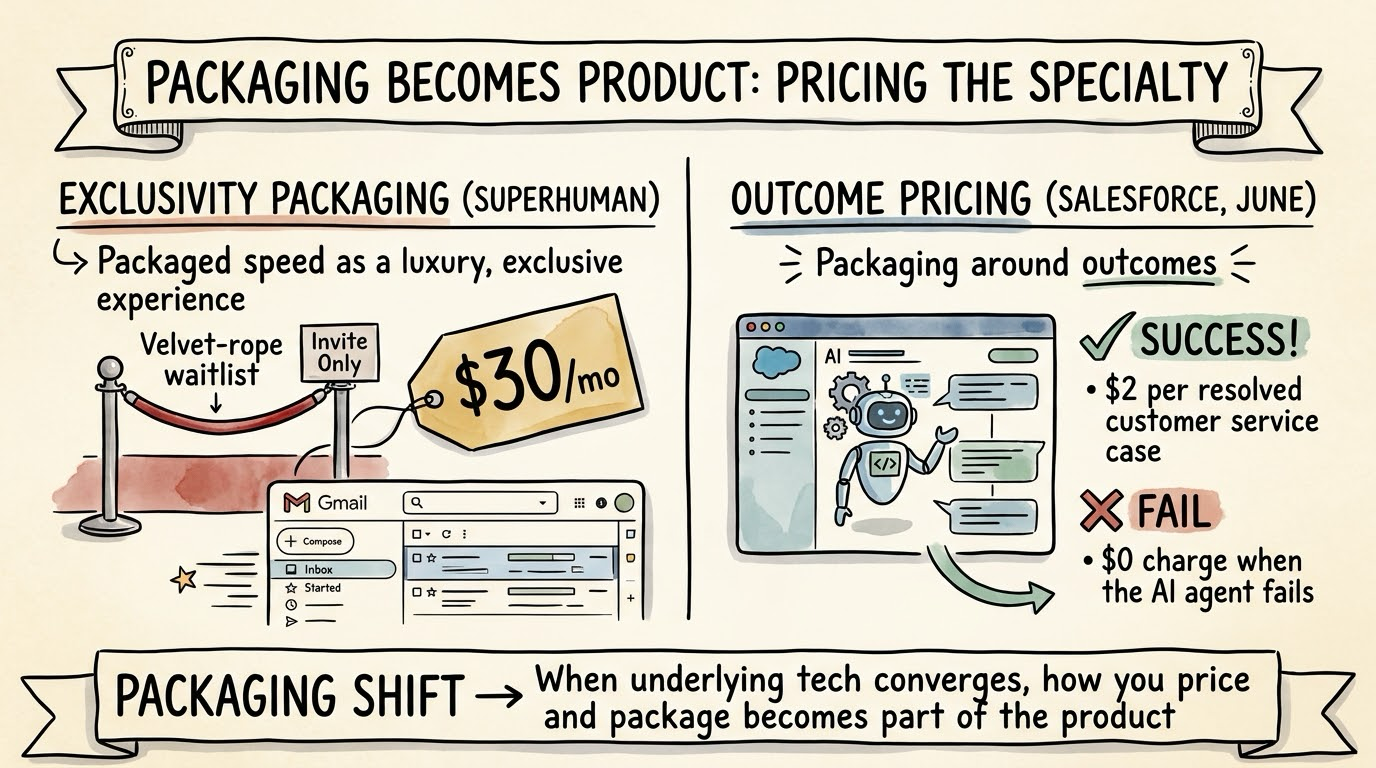
When the underlying technology is similar, how you package it matters more.
Superhuman packaged speed as a premium experience.
It did that through a $30 monthly price and a long waitlist that made the product feel exclusive.
Pricing models are changing too.
Salesforce moved in June to charging $2 per resolved customer service case, with no charge when its AI agent fails.
I've argued that AI companies will charge for outcomes, just like ad platforms, and packaging around outcomes is part of owning a specialty.
Marketing Becomes A Core Product Skill
As a marketer, this is the part I find most exciting.
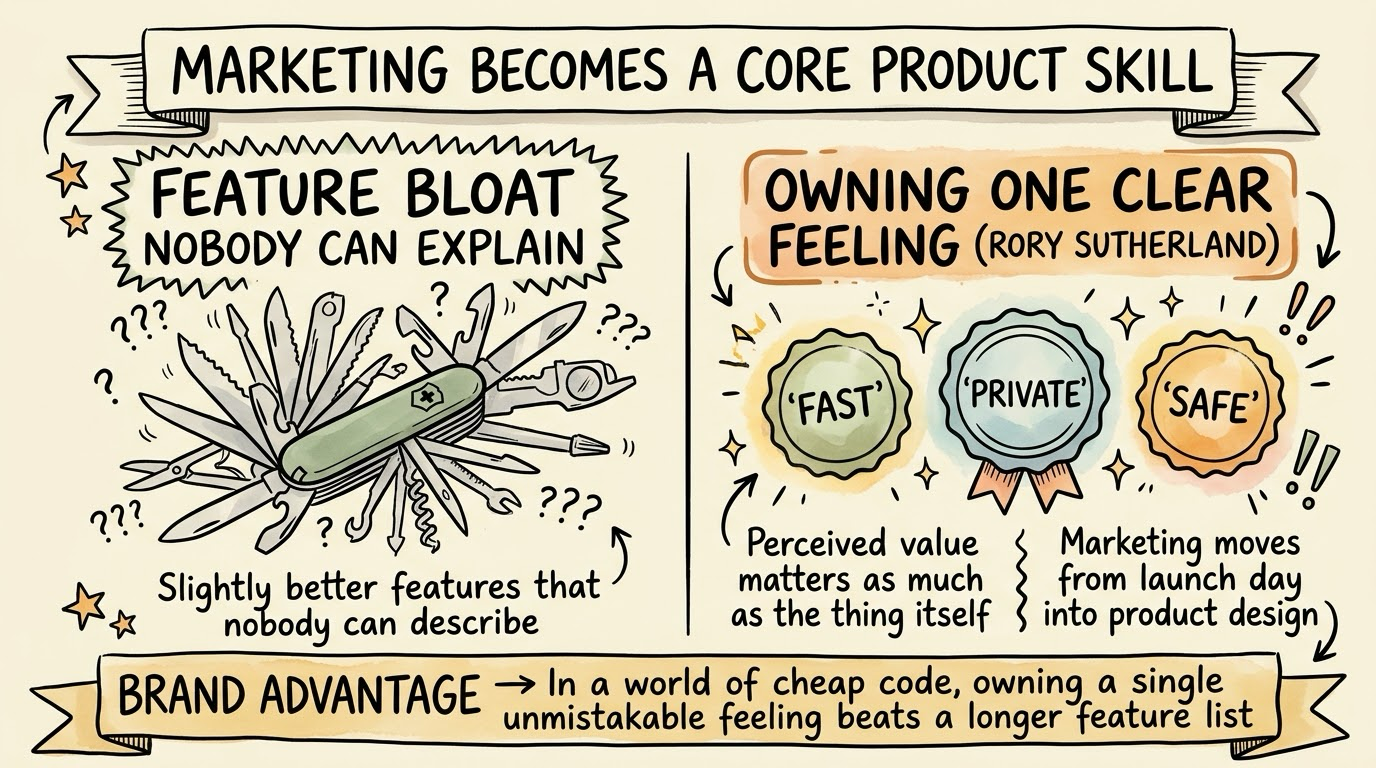
If products converge, perception does a lot more of the work.
Rory Sutherland has spent years arguing that the value people perceive can matter as much as the thing itself, which I covered in my post on his podcast blitz.
In a world of cheap code, the companies that clearly own a feeling, like "fast," "private" or "safe," will beat companies with slightly better features that nobody can describe.
Marketing stops being something you add at launch and becomes part of how the product is designed.
Where The Analogy Breaks
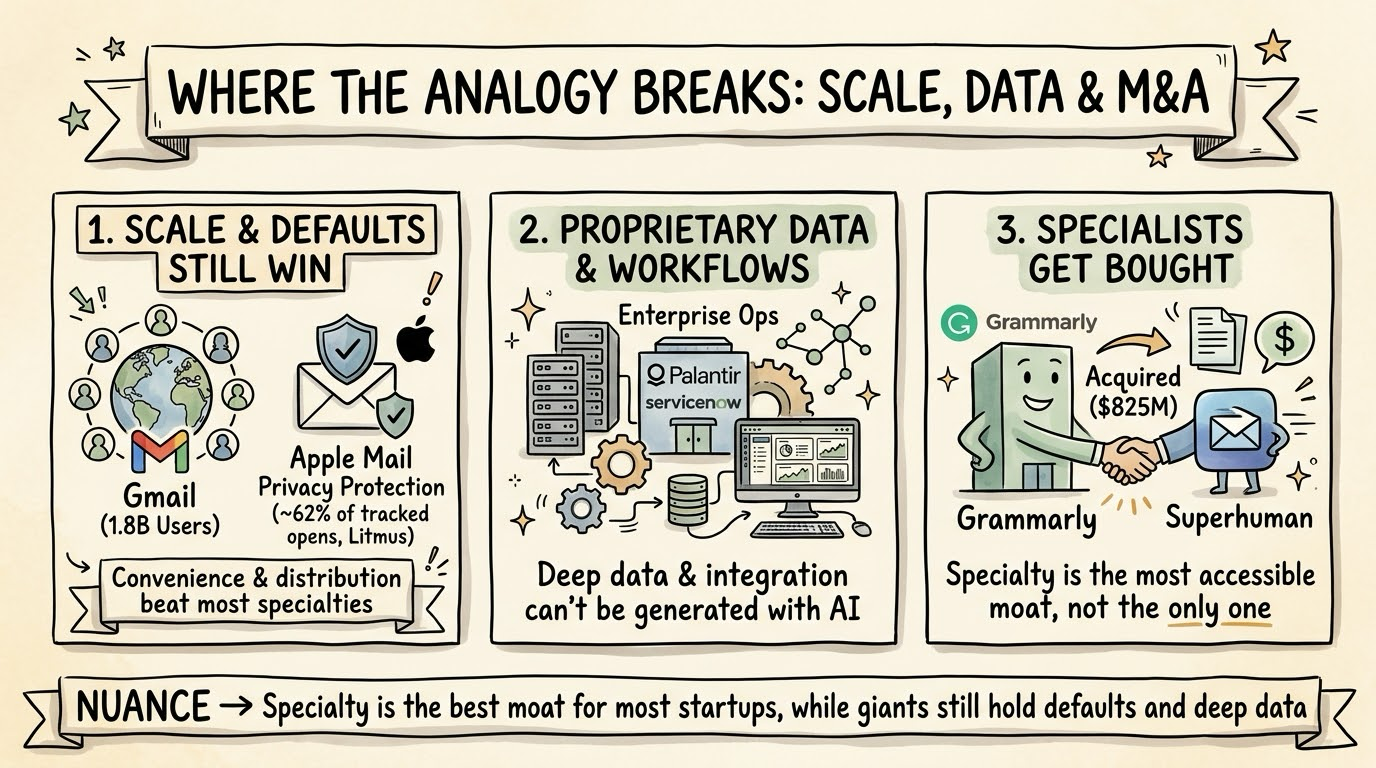
The email comparison isn't perfect.
Scale still matters, and Gmail's dominance shows that convenience and defaults can beat any specialty.
Distribution is also concentrated: Litmus data cited by DemandSage shows Apple's Mail Privacy Protection accounting for about 62% of tracked email opens.
Some moats can't be generated with AI at all.
The Motley Fool's Micah Zimmerman argues that proprietary data and deep integration into customer operations, like Palantir's or ServiceNow's, become the lasting advantages.
And specialists can be bought, as Superhuman was.
So I see specialty as the most accessible moat for most companies, not the only one.
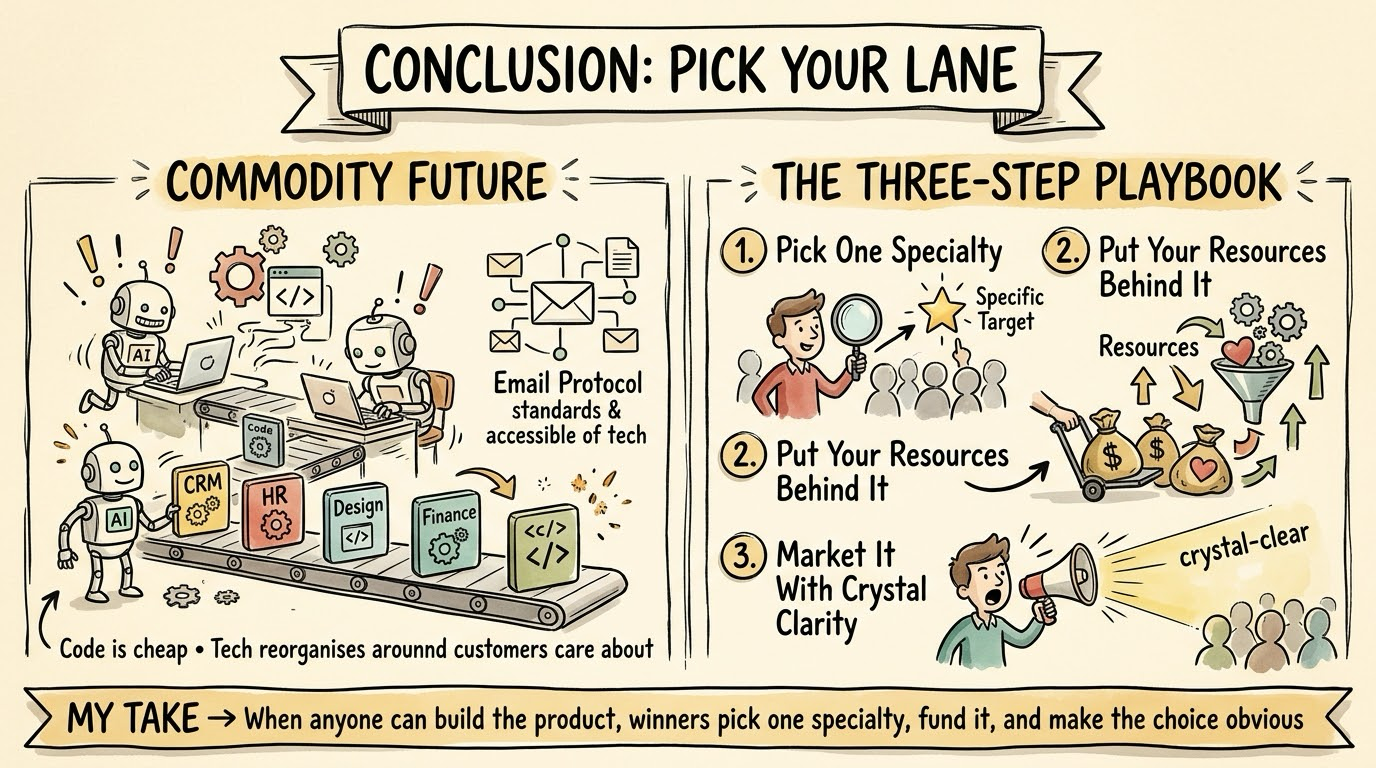
Conclusion: Pick Your Lane
Email showed us what happens when the technology becomes a commodity.
The market reorganised around what customers care about.
AI is about to do the same thing to most of the software industry.
My Take: When anyone can build the product, the winners will be the companies that pick one specialty, put their resources behind it and market it so clearly that customers know exactly why they're choosing them.
Sources
Pages I opened for the facts in this post:
- DemandSage: Gmail statistics
- European Purpose: Proton passes 100 million users
- Fastmail: About us
- Every: Superhuman, the fastest email experience
- TechCrunch: Grammarly acquires AI email client Superhuman
- TechSpot: Google says AI now generates 75% of its new code
- Nasdaq (The Motley Fool): AI makes software cheaper to build, so data and distribution become the moat
- Decrypt: Proton users revolt after CEO calls security caution "loser thinking"