Why OpenAI And Anthropic Will Win The Personal Agent War
Google and Meta have the users, but advertisers pay their bills. A personal agent needs your inbox, your calendar and your credit card, and the people with the most to lose will pay for one that answers only to them.
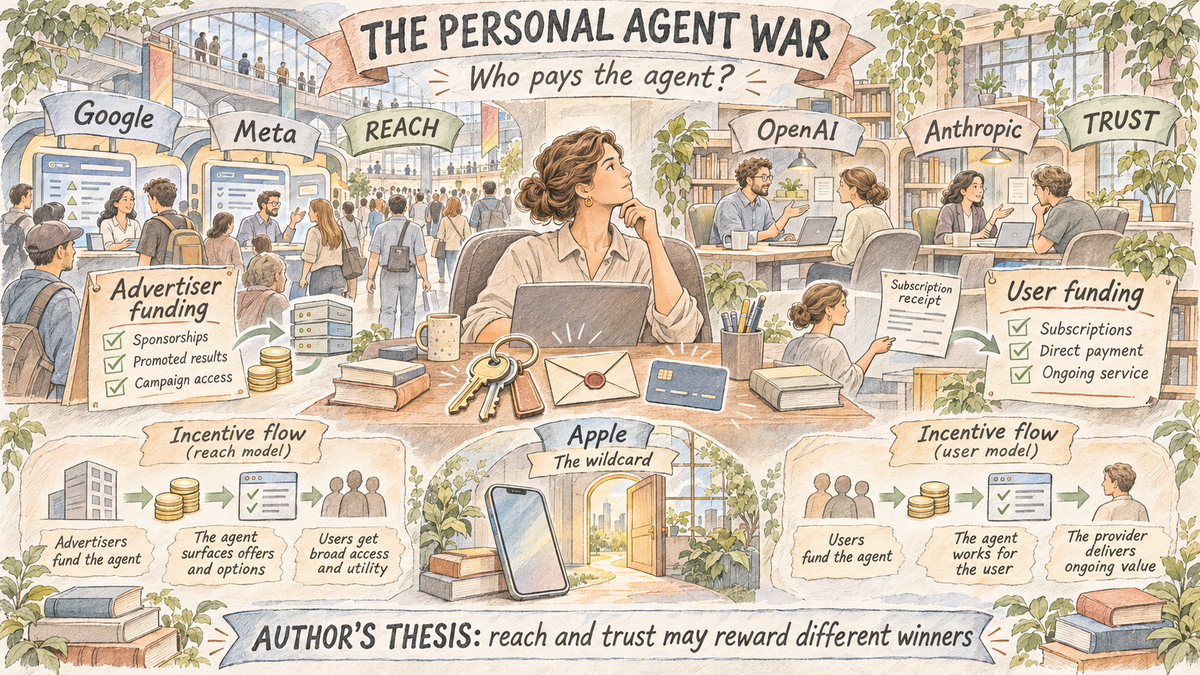
I buy ads on Google and Meta for a living, and I wouldn't hand either company's agent my inbox and my credit card.
That's an odd thing to admit about two platforms I rely on every week.
I've argued that chatbots won't break Google's ad machine, and I still believe it.
That same machine is why I think OpenAI and Anthropic win the personal agent war.
Google and Meta will probably have more users.
I think OpenAI and Anthropic get the users worth the most, because their paying customer is the person using the agent.
An Agent Holds The Keys
The race got serious this fall.
Meta launched Muse on September 8, OpenAI launched dots on September 29, and Anthropic opened a preview of Claude Duet in late October.
Google showed Gemini Spark in May and says its Gemini agent reaches consumers later this year.
These products ask for far more than a chatbot does.
Muse can connect to your email, calendar, payments and health apps.
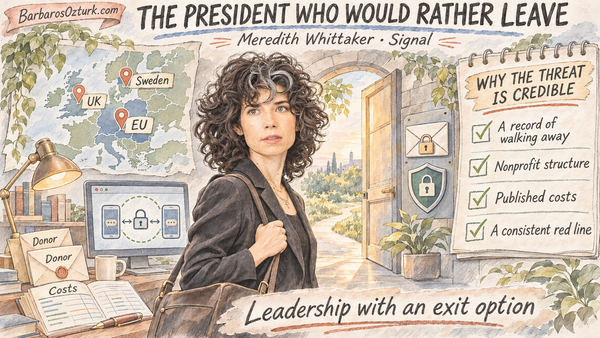
Meredith Whittaker, who I profiled recently, described what an agent needs as "something that looks like root permission."
The judgment matters as much as the access.
In Google search, I can see the sponsored label and scroll past it.
An agent narrows the options before I ever look at them.
So the question I care about is who the agent works for.
Every ad platform I've used has two customers, and the advertiser is the one paying the bill.
Google Already Described The Ad Slot
Google's leaders have been unusually open about this.
In January, Demis Hassabis said Google had "no plans" for ads in Gemini and was skeptical of advertising in a deeply personal assistant.
In March, Nick Fox told WIRED that Google was "not ruling them out."
Then came Alphabet's October earnings call.
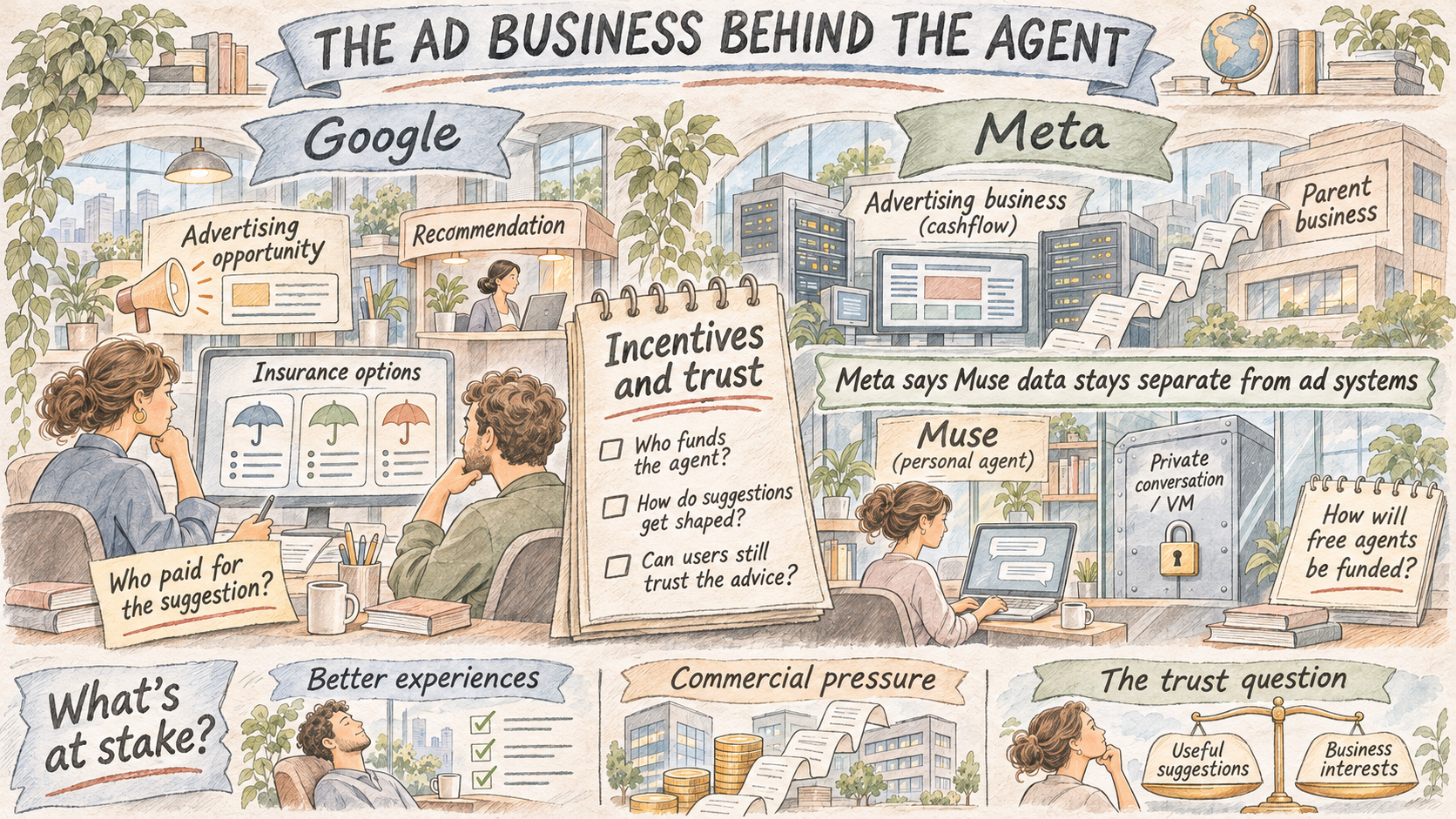
Philipp Schindler described an agent saying "Here is the insurance product we found," then offering a higher-premium alternative with a special discount.
He said Google is "confident" it can build compelling advertising models for agentic use cases.
He has a point that most decisions have more than one strong option.
As someone who buys ads, I also know exactly how I'd pitch that second slot to a client.
Advertising brought in about $82 billion of Alphabet's $127.6 billion in revenue last quarter, so that slot will be hard to leave empty.
Google doesn't have to rig anything for this to be a problem.
If my agent suggests a pricier policy, I'd have to wonder who paid for the suggestion.
Meta's Muse Promise Proves The Point
Meta is even more dependent on advertisers.
Ads were $63.1 billion of its $64.6 billion in revenue last quarter.
Since December 2025, Meta has used chats with Meta AI to personalize ads outside the EU, UK and South Korea, and users can't fully opt out.
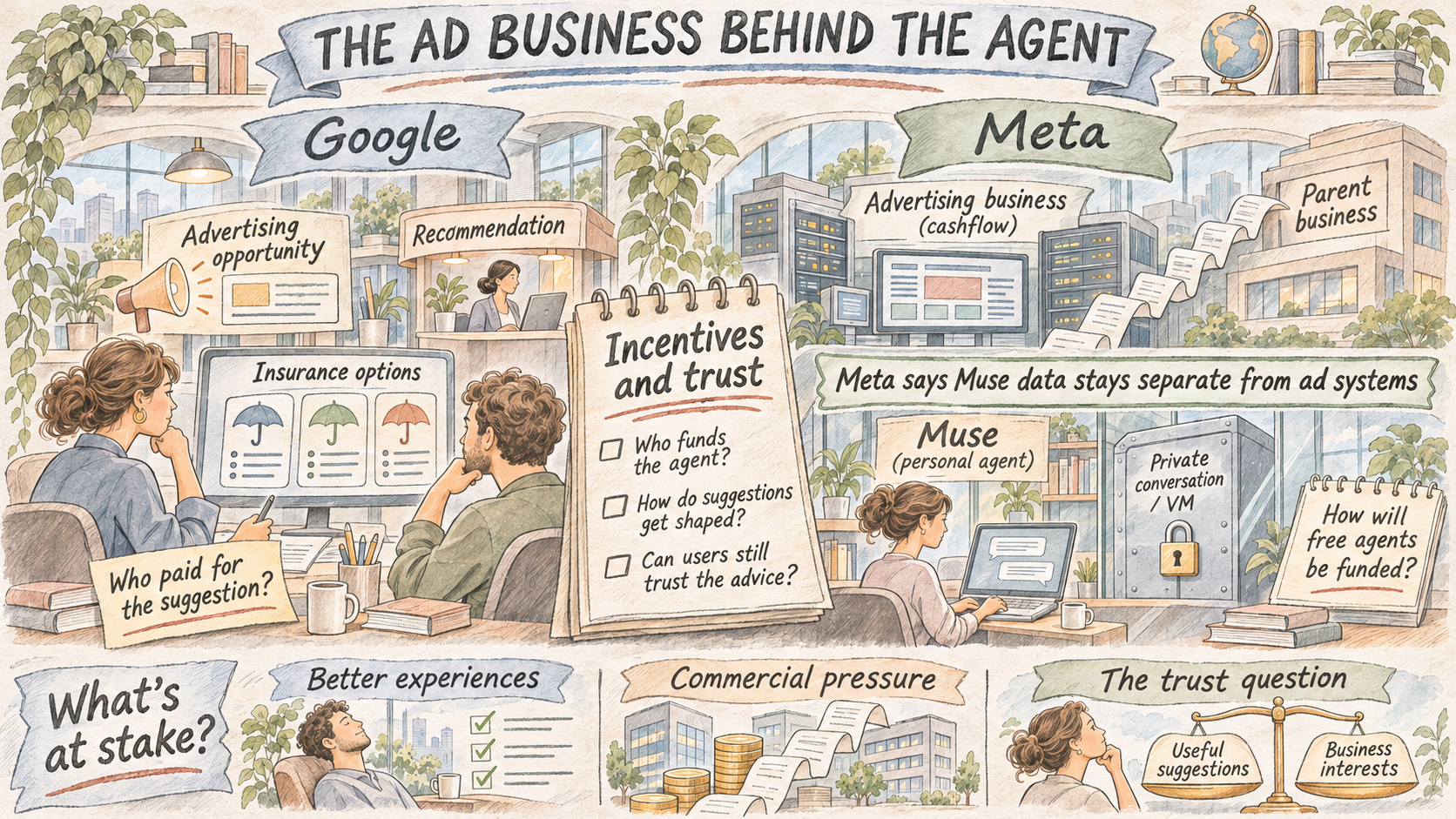
Nine months later, its Muse announcement said, "Muse doesn't share a person's conversations or the data in their VM with Meta's ad systems."
That sentence is the most useful thing I've read about this market.
The company with the strongest reason to feed an agent into its ad system decided it had to promise the opposite on launch day.
The promise is also hard to take at face value.
TechCrunch's launch coverage lists Meta's 2011 FTC privacy settlement and $5 billion FTC penalty in 2019.
Meta also expects most people to stay on Muse's free tier, and free agents still cost money to run.
It says it's exploring commerce and subscriptions, but advertising is what pays for nearly everything else it does.
The market hasn't punished Meta for any of this.
Meta says more than 10 million people set up Muse agents in about six weeks, and the app reached number one on the US App Store and Google Play.
An April survey from Cloaked even found 36% of Meta AI users trusted it to keep their data secure, against 20% for ChatGPT users, though the platform sample sizes weren't reported.
And I've written before about the distribution edge WhatsApp gives Meta.
People say they care about privacy, then take the free thing.
I've built campaigns on that habit for years.
OpenAI Is The Hole In My Argument
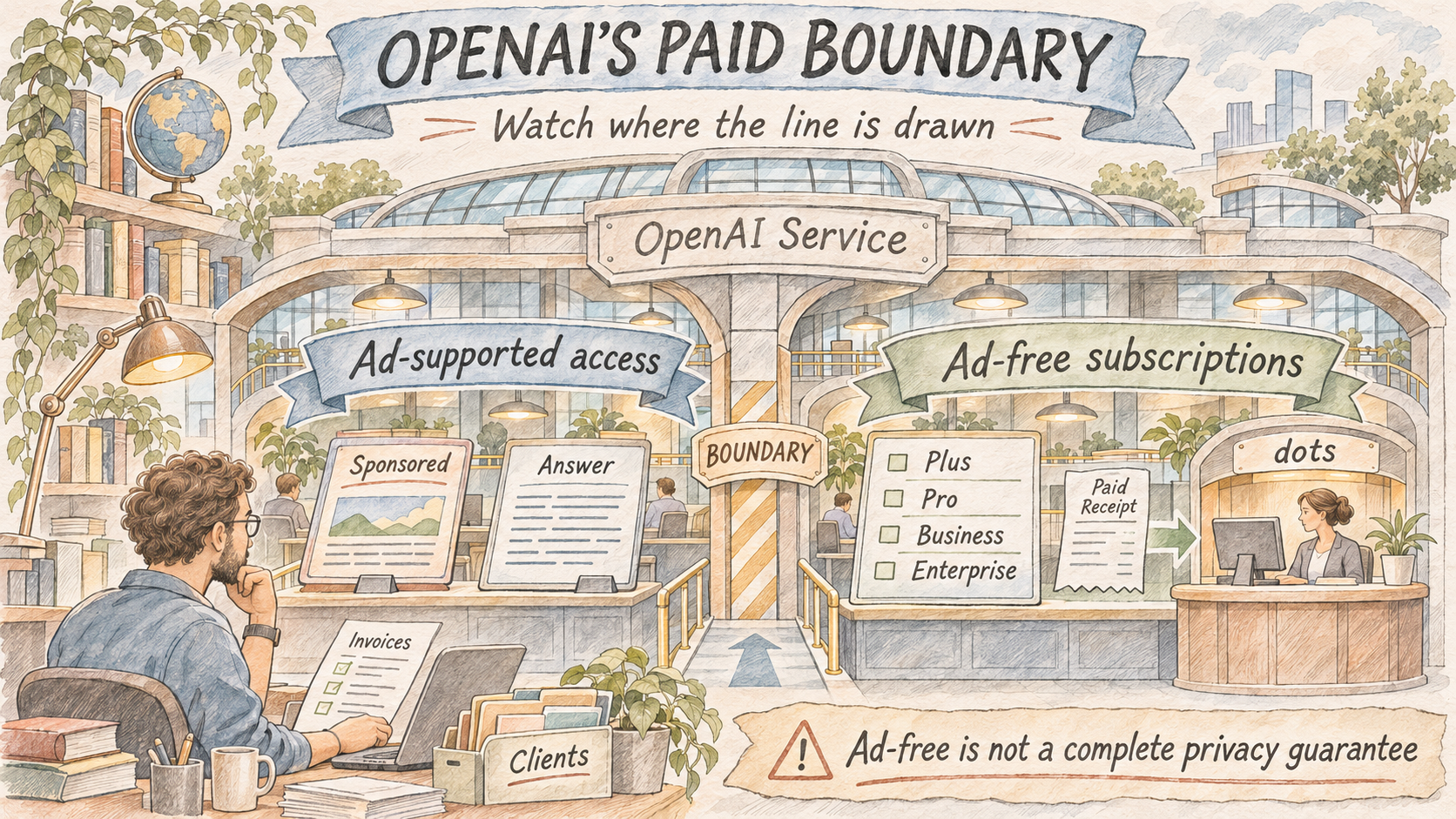
OpenAI sells ads now, so it doesn't get a clean pass.
Sam Altman once called ads a "last resort" and said "ads-plus-AI is sort of uniquely unsettling to me."
ChatGPT started testing ads in February, and by August OpenAI said the business had reached a $1 billion annualized run rate.
In July, an "Agent" campaign type was spotted in its ads manager for select advertisers.
Its privacy language says ads may be personalized using the context of a user's chat.
OpenAI says ads don't influence ChatGPT's answers and that advertisers can't see conversations.
Still, if that were all of OpenAI, it wouldn't belong in my title.
What keeps it there is where it drew the line.
Plus, Pro, Business and Enterprise stay ad-free, and OpenAI says it will "always offer a way to not see ads in ChatGPT."
Dots launched for Pro and Business Premium users, and Pro costs $200 a month.
So the person using OpenAI's agent today is the person paying for it.
The ad business is also tiny next to Google's, which gives OpenAI room to keep it away from the agent.
I'd watch that line closely, because Altman's own reversal shows how quickly a position on ads can change.
Anthropic Has The Cleanest Position And The Smallest Reach
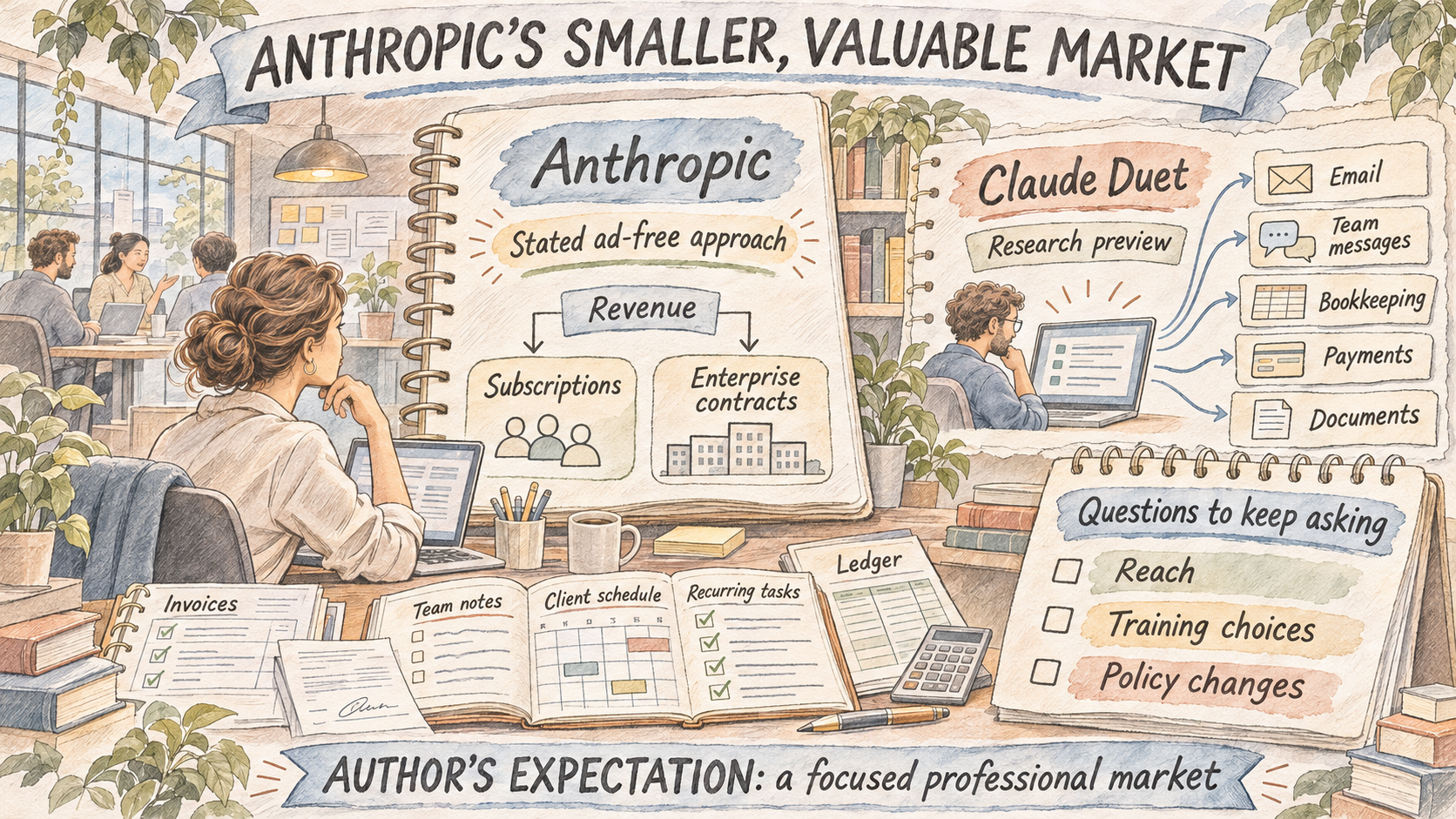
Anthropic is the only one of the four that has publicly said no to ads in its assistant.
It said a "conversation with Claude" is not one of the "many good places for advertising," then ran Super Bowl ads mocking the idea.
I thought the mockery was a misstep with marketers, and I still do.
The promise underneath it matters more here, even though it comes with an exit: "Should we need to revisit this approach, we'll be transparent about our reasons for doing so."
Its record has a mark on it too.
In 2025, Anthropic moved away from its promise not to train on consumer chats, asking users to choose and keeping shared data for up to five years.
Reach is the bigger problem.
Duet is a waitlisted preview for US Pro and Max subscribers, while Gemini has 1 billion users and OpenAI reports 1.2 billion weekly users for ChatGPT.
I expect Anthropic to win a small, valuable group first.
Duet's reported connections include Gmail, Slack, QuickBooks, Stripe and DocuSign, which tells me it's aimed at people running something.
Apple Is The Real Threat
If I'm wrong, I doubt it will be because of Google or Meta.
It will be because of Apple.
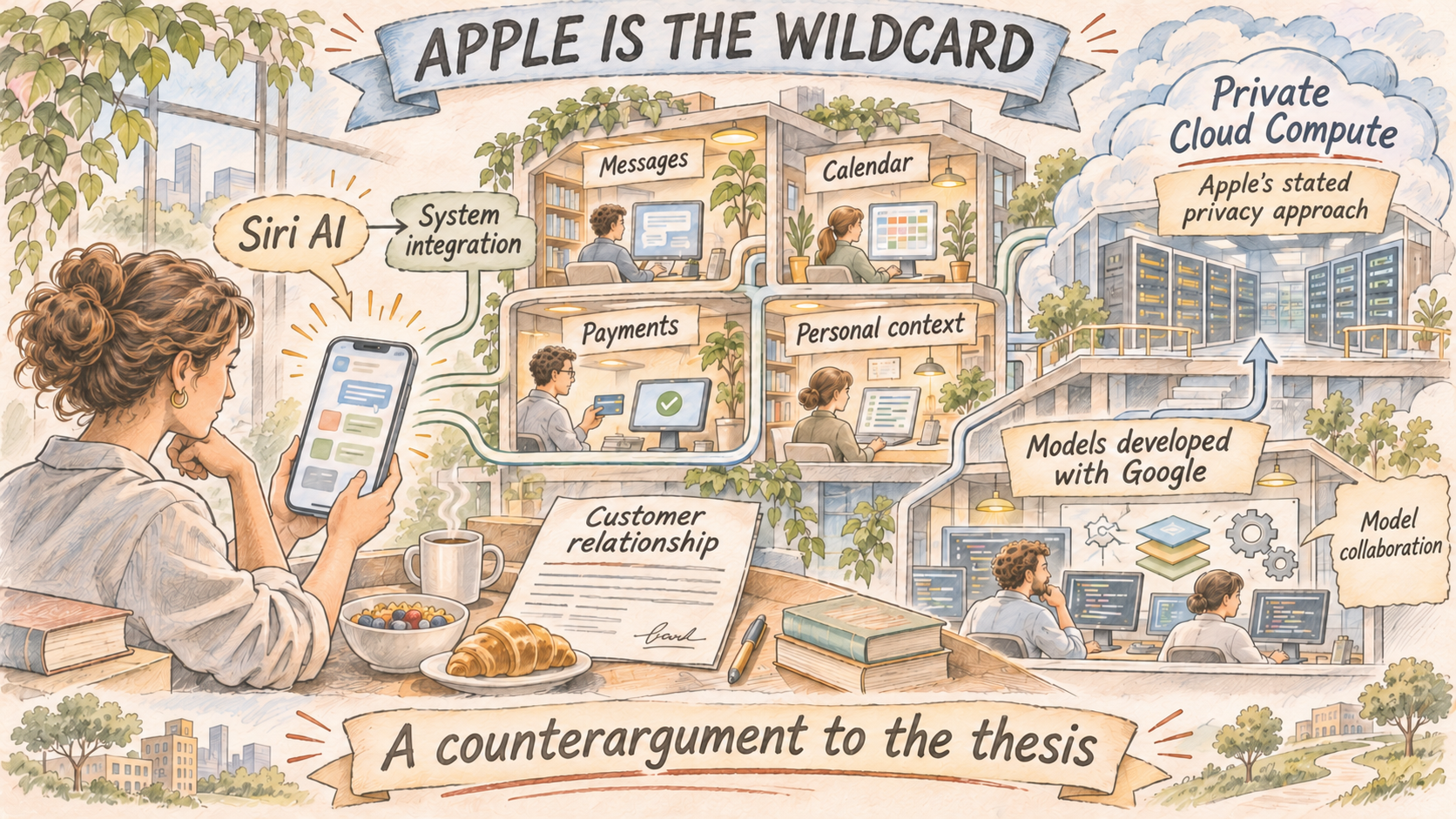
Siri AI arrived on September 14, already sitting on the phone that holds most of your life.
Apple says data handled by Private Cloud Compute is "not stored nor made accessible to Apple or anyone else."
Its foundation models were built with Google's Gemini models, but Apple keeps the customer relationship, and it plans to charge for expanded access.
That's a paying customer and a privacy story on one device.
It's still a beta, English first, and not initially available on iPhone in the EU.
I'd watch it more closely than Muse.
Who Gets My Credit Card
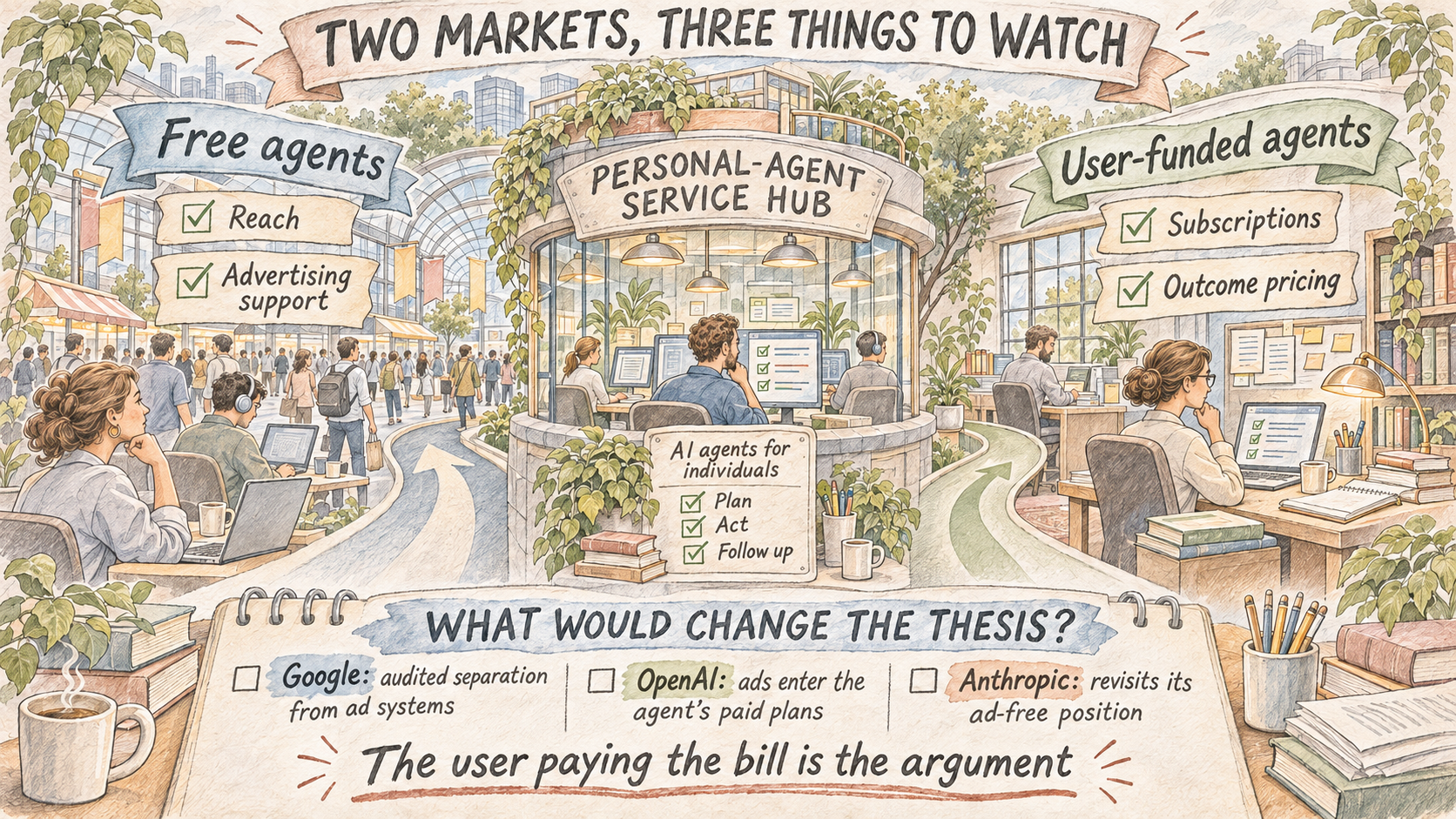
I expect this market to split in two.
Most people will use a free agent, and sponsored options will help pay for it.
Google and Meta can win that market on numbers, and free ChatGPT will compete there too.
A smaller group will pay for an agent that answers only to them, such as people running businesses, handling client data or already paying for privacy tools.
That's the market I think OpenAI and Anthropic win.
I've written that ad giants must earn trust from agents.
They also have to earn it from the people handing agents the keys, and that's a much harder sell when an advertiser is in the room.
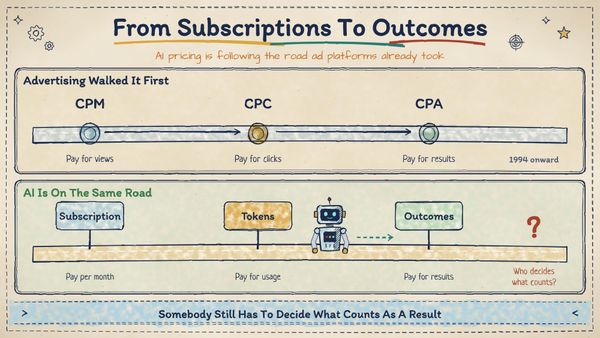
A subscription is the simplest way to keep the incentives straight, and outcome pricing could work too, as long as the user is the one paying.
Three things would change my mind.
Google could sell a paid agent with independently audited separation from its ad systems.
OpenAI could bring ads to the plans that run dots.
Anthropic could use that exit clause.
Until then, the agent that gets my credit card will be one I pay for myself.
Sources
Pages I opened for the facts in this post:
- TechCrunch: Meta debuts Muse
- Meta: Introducing Muse
- TechCrunch: Muse adoption
- TechCrunch: OpenAI launches dots
- Tech Insider: Dots, Muse and Claude compared
- Tech Insider: Claude Duet
- TechCrunch: Gemini Spark
- Android Headlines: Gemini agent and ads
- Alphabet Q3 2026 earnings call transcript
- Search Engine Land: Google on ads in Gemini
- Media News 4U: Meta Q3 2026 results
- Tom's Guide: Meta AI chats and ads
- PPC Land: Cloaked survey
- Search Engine Land: Sam Altman on ads
- TechCrunch: ChatGPT ads test
- Shopifreaks: OpenAI's ad run rate
- Search Engine Roundtable: ChatGPT Agent campaign type
- Search Engine Land: OpenAI privacy policy and ads
- OpenAI: Our approach to advertising
- MacRumors: Anthropic on keeping Claude ad-free
- Bitdefender: Anthropic's consumer data change
- Yahoo Finance: The consumer AI agent race
- Apple: Siri AI
- Search Engine Land: Google leaves the door open to Gemini ads