The Pricing Power of Google Ads: Why Chatbots Will Not Break the Monopoly
We assume generative chatbots will inevitably destroy Google search volume and cripple their advertising business. The reality is their unmatched attribution tracking and forced algorithmic bidding guarantee their pricing power will only increase.
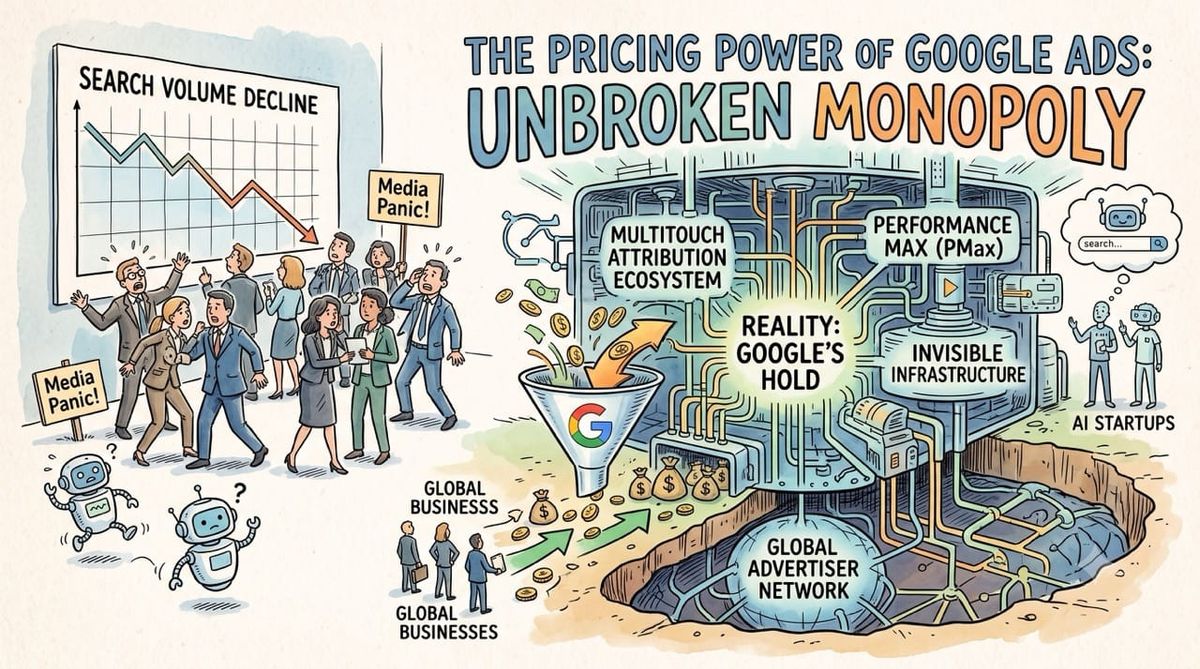
The market is completely focused on the threat of declining search volume while ignoring the invisible infrastructure that makes Google indispensable to global advertisers.
Inspiration: Analyzing the media panic over declining search volume versus the reality of Google's multitouch attribution ecosystem and their aggressive push into Performance Max. Realizing that AI startups completely misunderstand what performance marketers actually buy.
The Search Volume Illusion
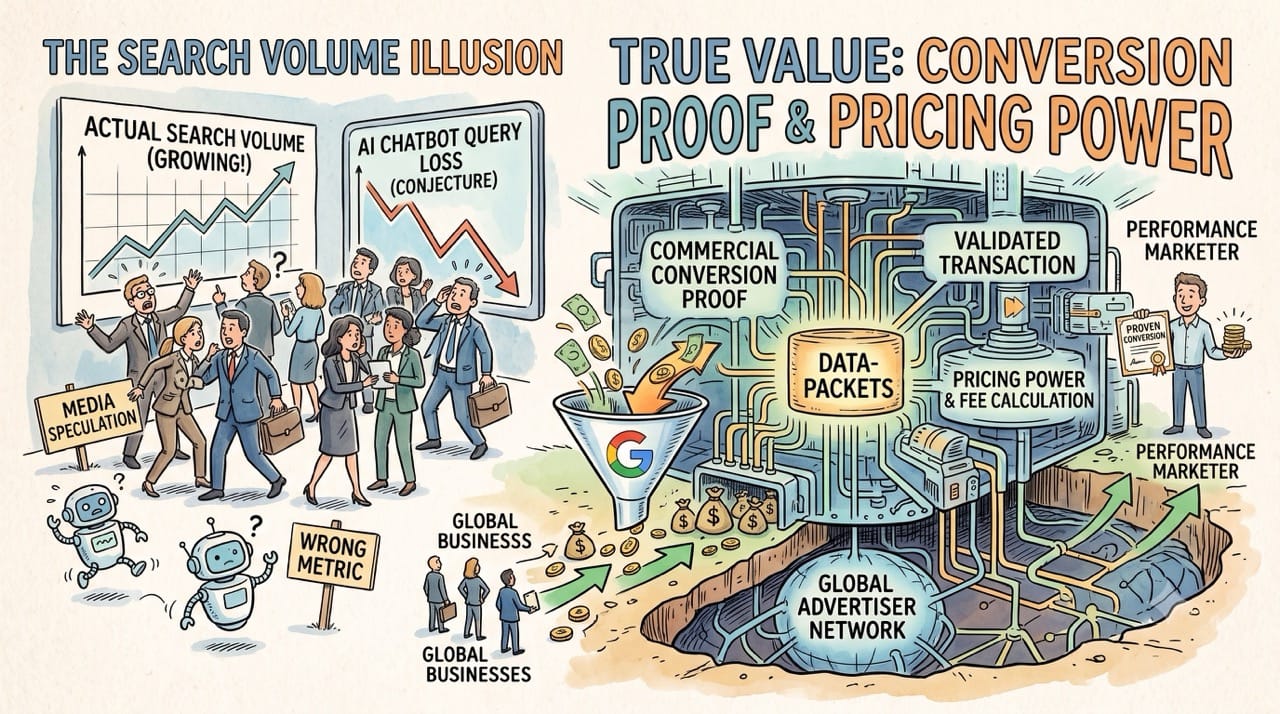
Financial media constantly speculates that artificial intelligence will steal significant query volume away from traditional search.
Google explicitly reports that their search volume continues to grow despite the rapid adoption of generative chat interfaces.
Investors are fixating on the wrong metric entirely.
The true value of an advertising network is not just how many people search.
The value is based entirely on how effectively the platform can prove a commercial conversion happened and how much they can charge you for it.
The Algorithmic Squeeze
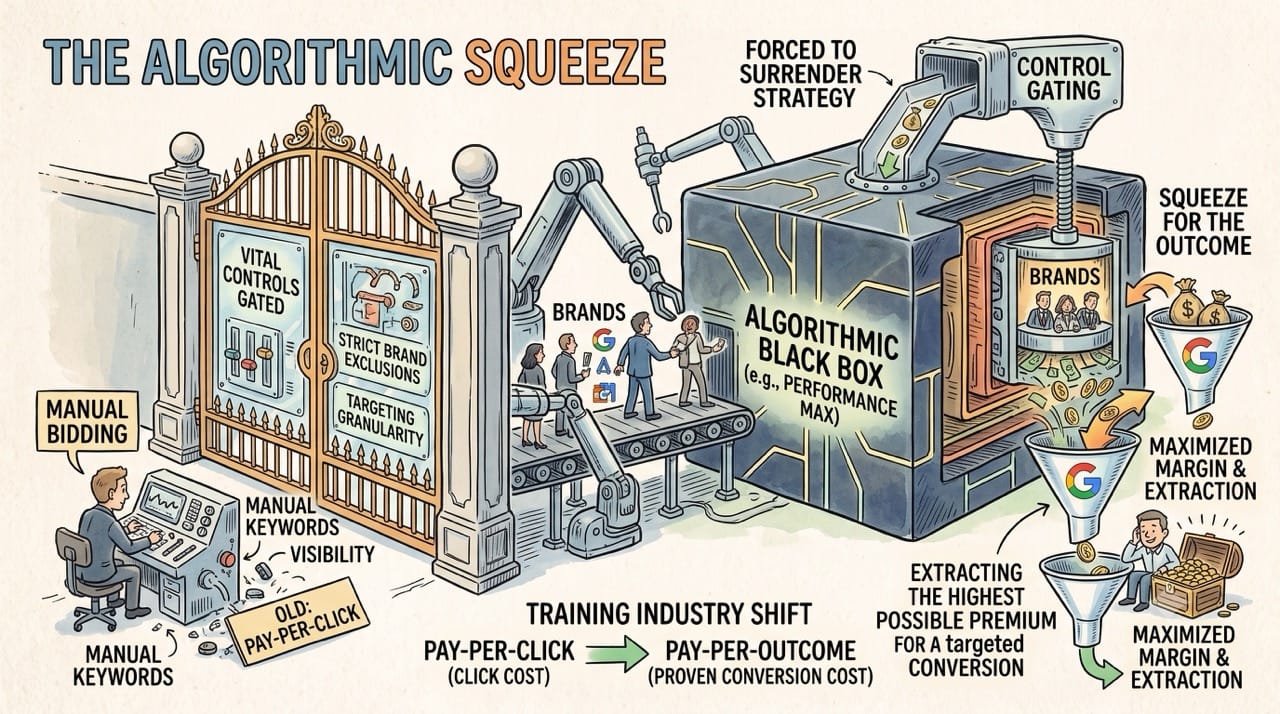
Google is quietly executing a brilliant strategy to maximize their margin on every single ad dollar spent.
They are aggressively pushing marketers away from manual keyword bidding and forcing them into automated black boxes like Performance Max.
Vital controls like strict brand exclusions are increasingly gated behind these algorithmic products.
This forces brands to surrender their bidding strategy entirely to Google so the platform can extract the highest possible premium for a targeted conversion. They are training the industry to pay for the outcome rather than the click.
The Botched Chatbot Rollout
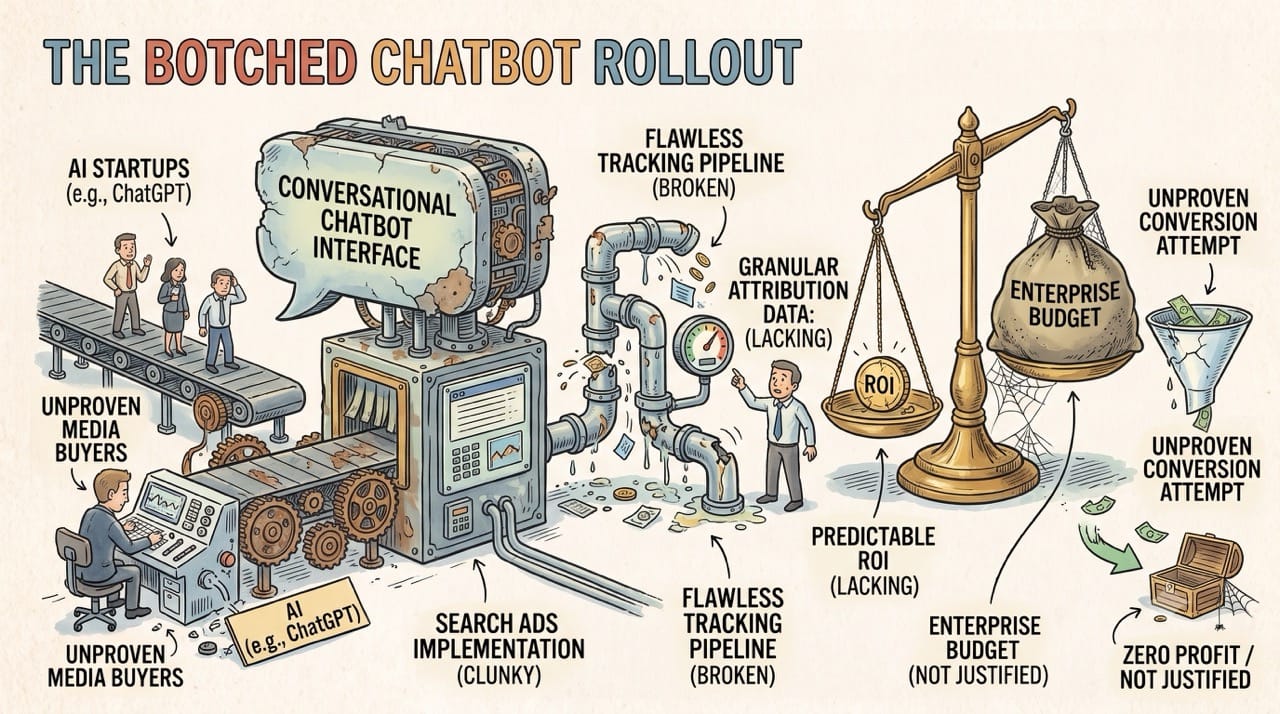
While Google optimizes its cash engine the prominent artificial intelligence startups are struggling to build a viable advertising product.
ChatGPT recently attempted to roll out search ads but the implementation remains incredibly clunky and highly unproven for media buyers.
Advertisers require predictable return on investment and a flawless tracking pipeline.
A conversational chatbot interface simply cannot provide the granular attribution data required to justify a heavy enterprise budget.
The Branding Misstep
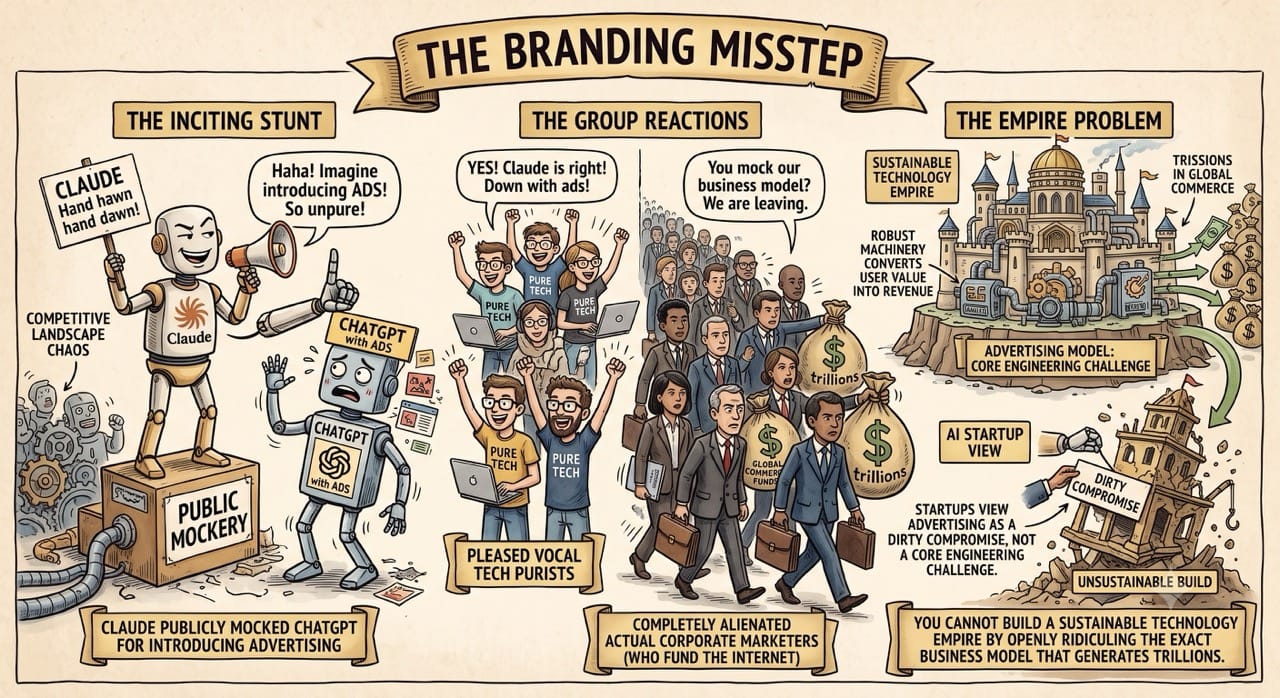
This competitive landscape became even more chaotic when Claude publicly mocked ChatGPT for introducing advertising.
That specific marketing stunt pleased vocal tech purists on social media but completely alienated the actual corporate marketers who fund the internet.
You cannot build a sustainable technology empire by openly ridiculing the exact business model that generates trillions of dollars in global commerce.
It proves these startups view advertising as a dirty compromise rather than a core engineering challenge.
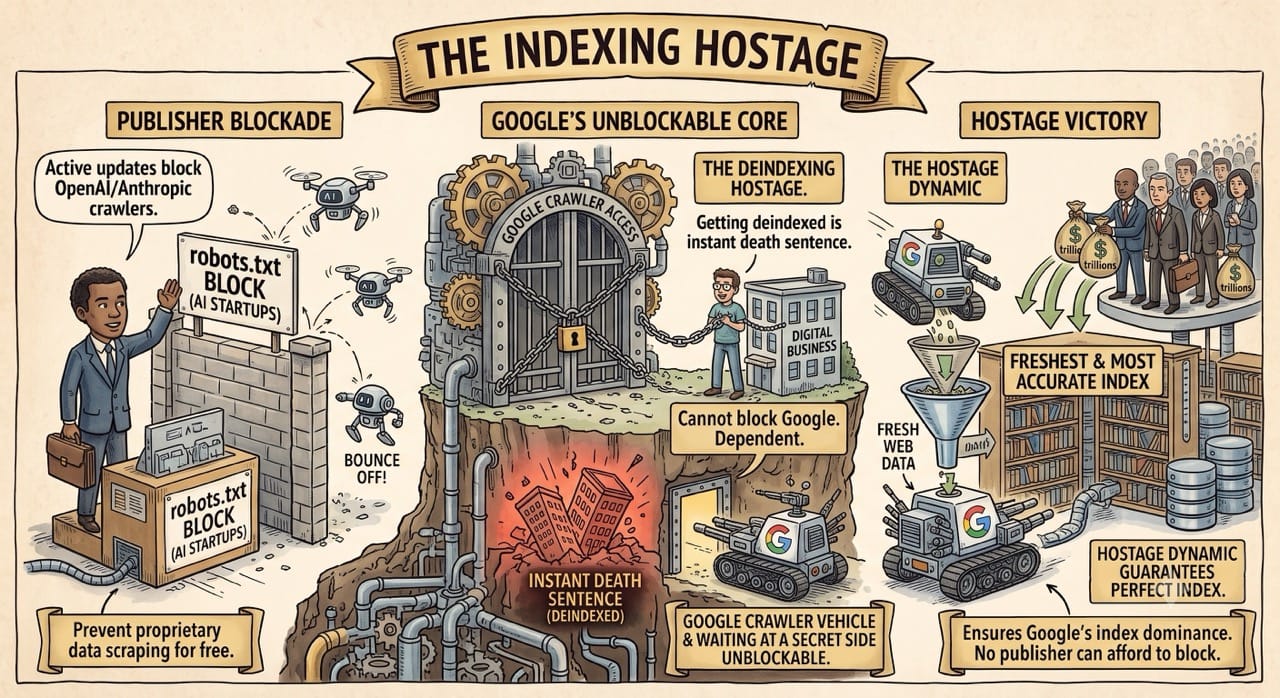
The Indexing Hostage
The true moat protecting Google is buried deep in the backend plumbing of the internet.
Web publishers are actively updating their site files to block web crawlers from OpenAI and Anthropic to prevent their proprietary data from being scraped for free.
No publisher on earth can afford to block the Google crawler. Getting deindexed from their search engine is an instant death sentence for a digital business.
This hostage dynamic guarantees Google will always have the freshest and most accurate index of the web.
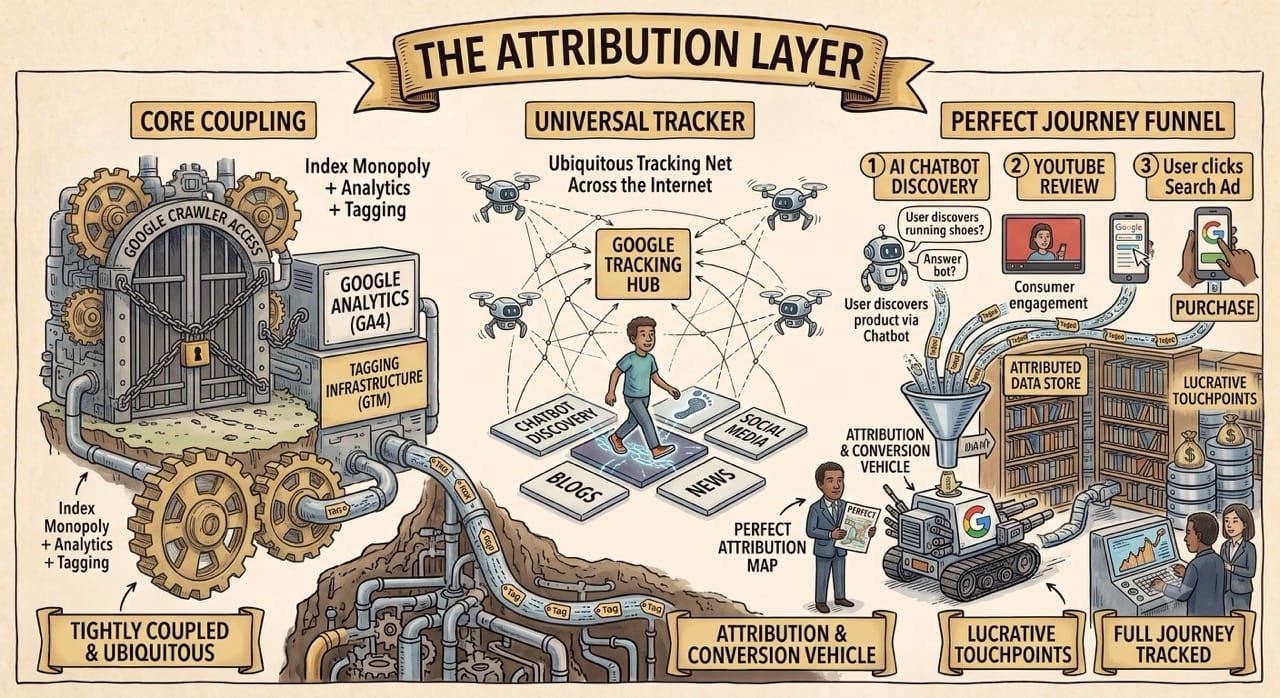
The Attribution Layer
This indexing monopoly is tightly coupled with Google Analytics and their ubiquitous tagging infrastructure.
When a consumer discovers a product they leave a digital footprint that Google tracks across the entire internet.
A user might initially ask a chatbot about a new running shoe but they will inevitably watch a review on YouTube before finally clicking a traditional search ad to purchase it.
Google owns every single lucrative touchpoint in that specific funnel and perfectly tracks the entire journey.
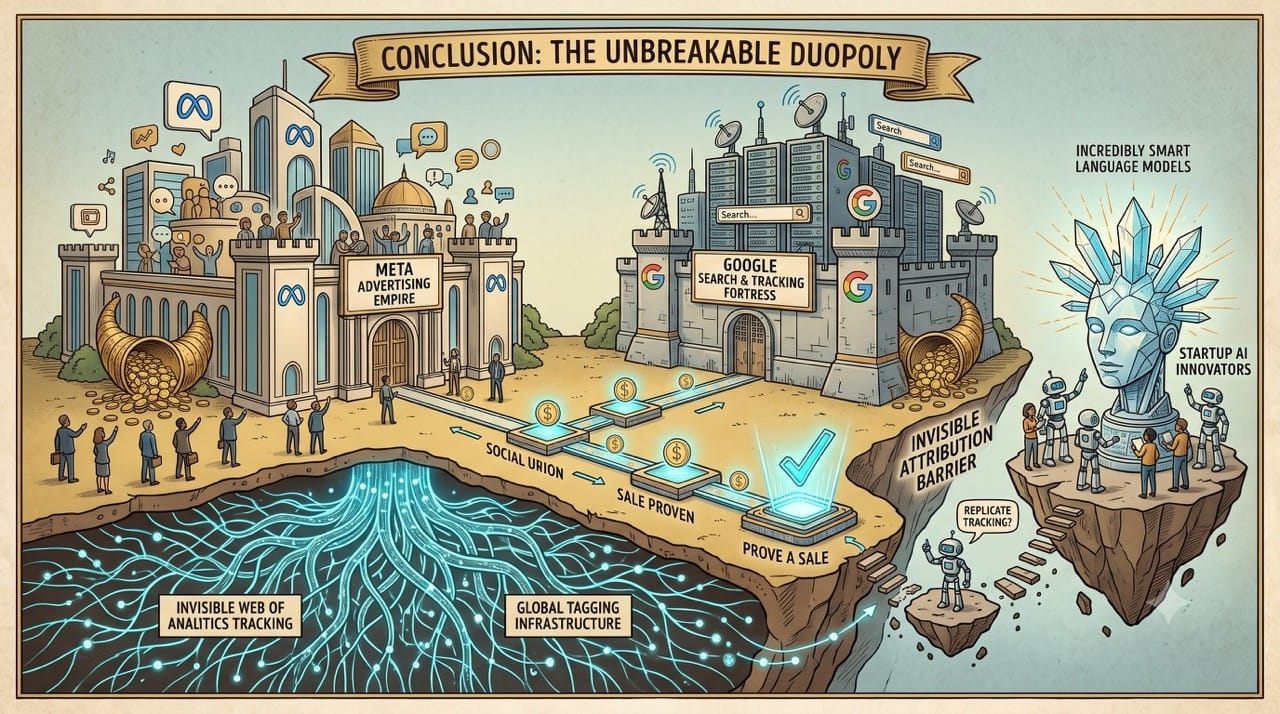
Conclusion: The Unbreakable Duopoly
The digital advertising market will remain a highly profitable duopoly controlled entirely by Meta and Google.
Startups can build incredibly smart language models but they cannot easily replicate the invisible web of analytics tracking required to actually prove a sale happened.