Can Trump Still Escalate After Losing Congress?
Democrats won the House and Senate, but they don't take over until January 3. Trump can still order strikes, veto bills and spend money already approved, so the real limits on him may be gas prices, Gulf allies and his own party.
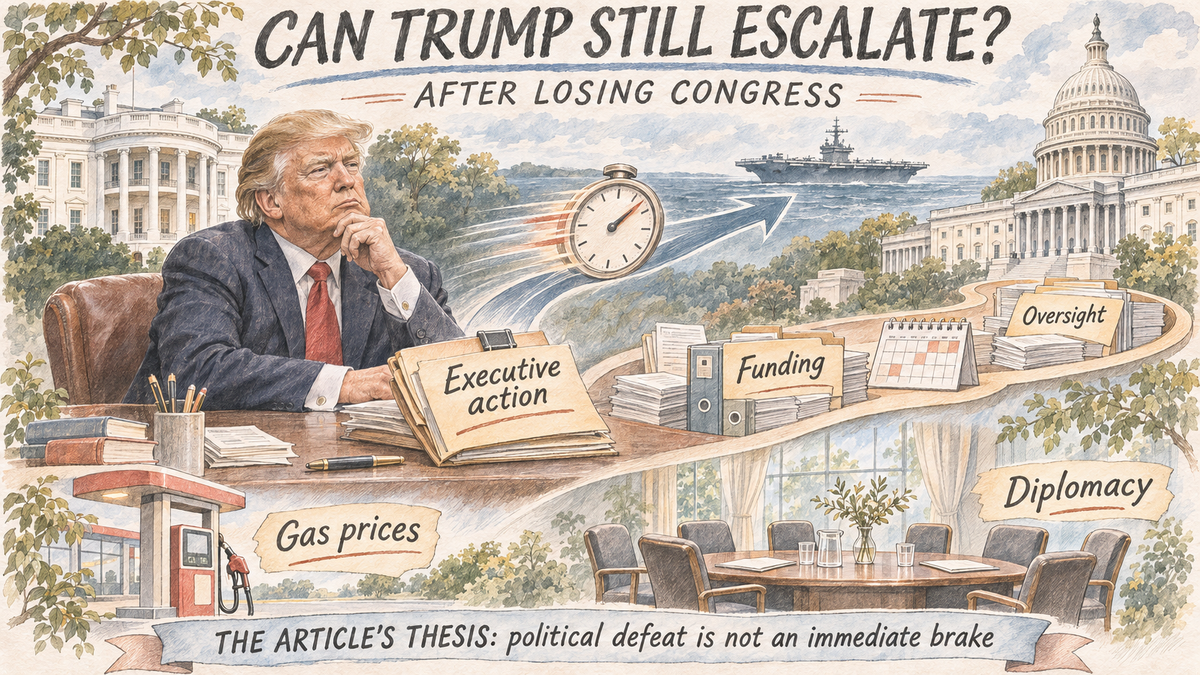
Republicans lost both chambers of Congress on November 3.
The AP called the House and the Senate for Democrats, who now have at least 54 Senate seats.
The obvious question is whether that makes Trump more restrained or less.
A YouTube breakdown I watched argues he could turn to foreign military action to drown out investigations and gridlock.
I agree that he can escalate, but I doubt distraction would be the reason.
The Two-Month Window
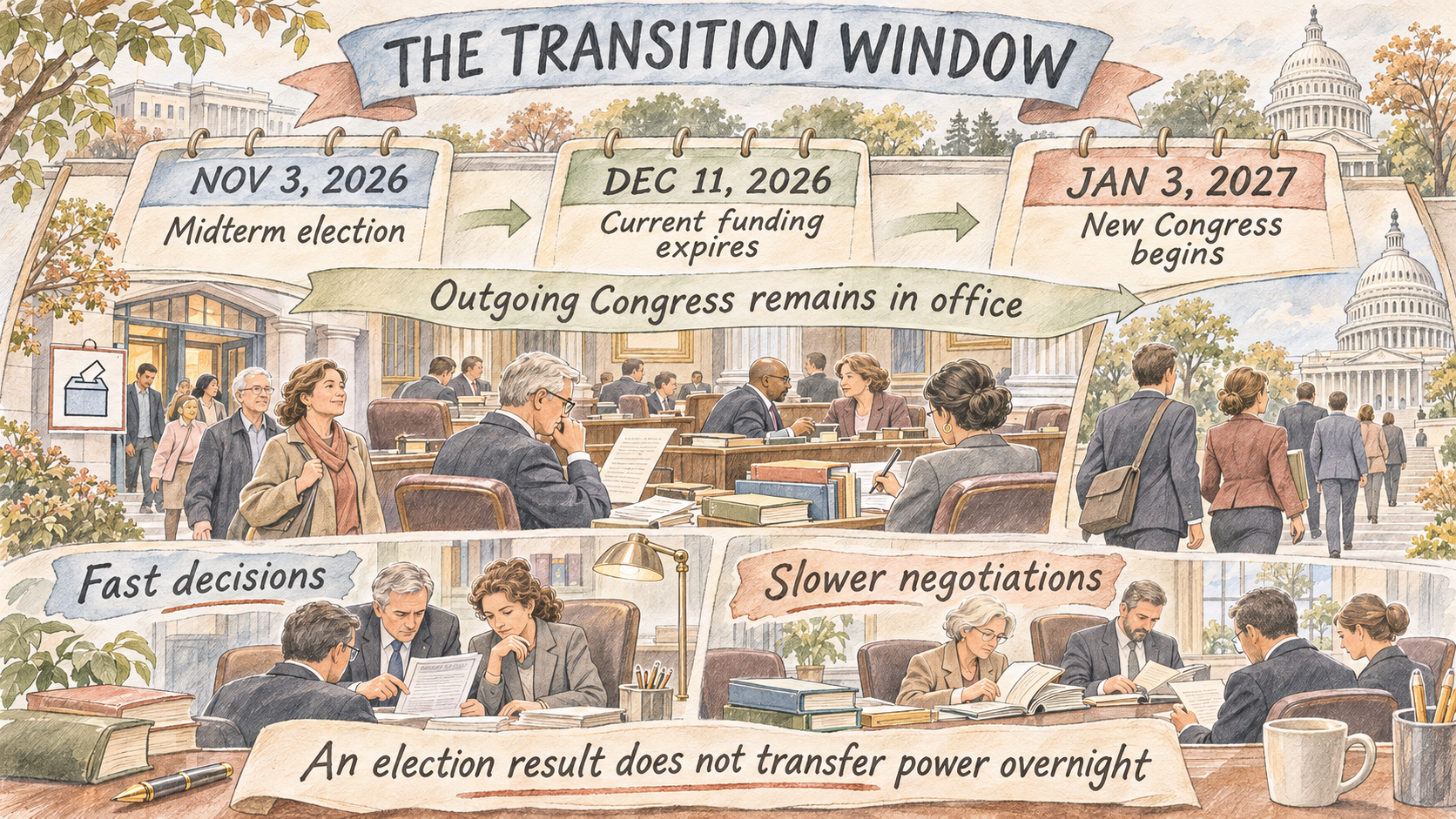
The new Senate majority doesn't take control until January 3.
Until then, Republicans still run both chambers, and the Iran war is heating up again.
The US struck Qeshm Island on November 2, part of a series of limited strikes carried out quietly over recent weeks, according to the Wall Street Journal.
The Journal also reported that Trump had leaned toward a large attack after the midterms but hadn't decided.
On November 4, he told Fox News, "We have to do something large," and said it could involve a "heavy hit."
He also said "no" when asked before the vote about striking after the election, and told Axios he was "in no rush."
Analyst Trita Parsi warned that Trump "becomes more reckless" after defeats.
Whatever you make of that read, nothing on the calendar stops him before January.
Congress Has Already Tried This
Control of Congress sounds like a brake, and on war it's a weak one.
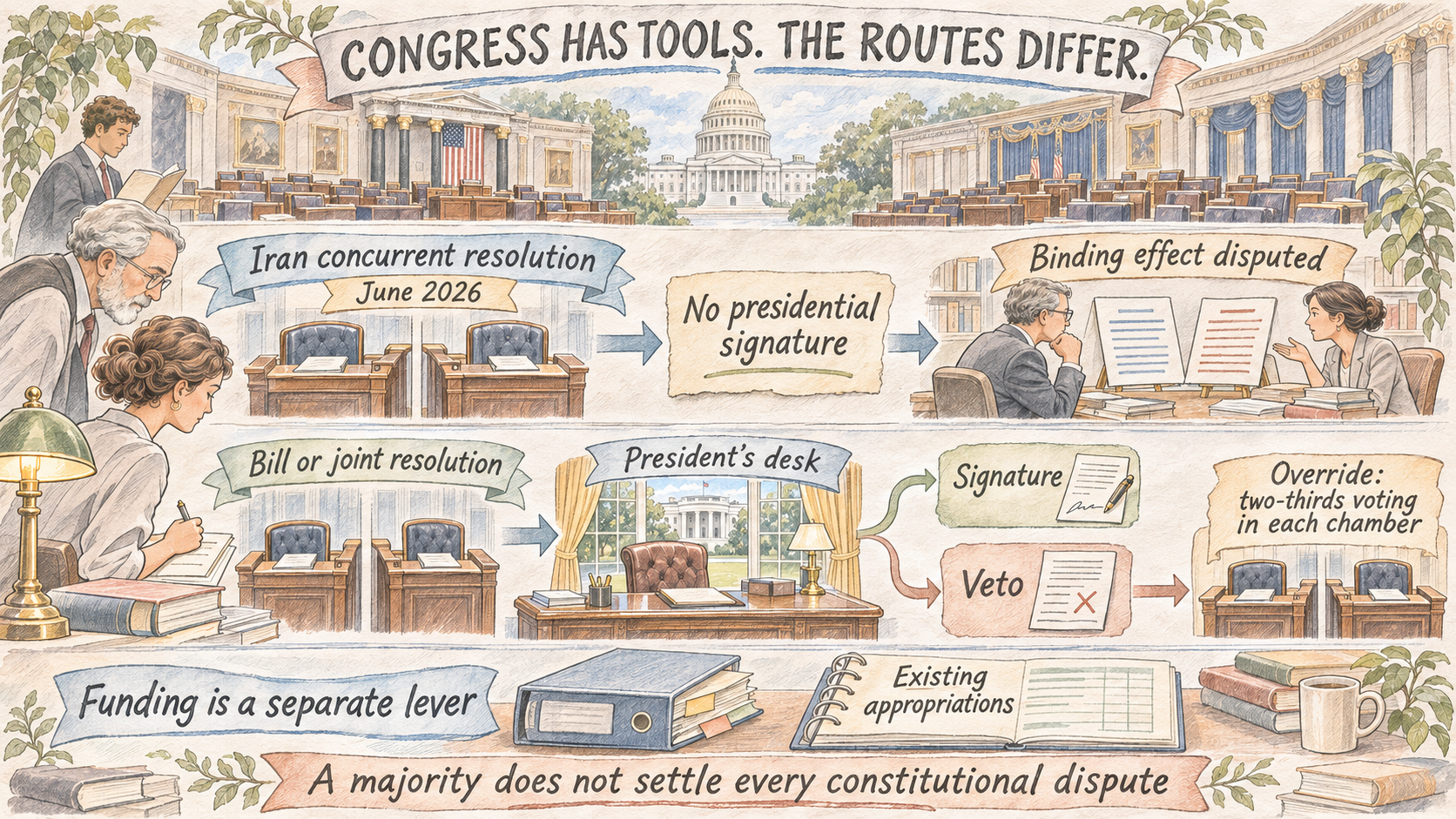
In June, both chambers adopted a war powers resolution on Iran, the first such measure to clear both, with the Senate voting 50 to 48.
It was a concurrent resolution, so it never went to Trump's desk.
He called it "poorly timed and meaningless," and the administration argues US forces aren't engaged in hostilities.
Rep. Gregory Meeks, who introduced it, says it's binding, and strikes have continued anyway.
A stronger bill would need his signature.
Trump told CBS, "I have the ultimate power — it's called 'veto.'"
An override takes two-thirds of both chambers, so Democrats would need Republican votes.
The administration can also keep spending money already allocated, and Democrats have historically been reluctant to cut military funding.
Their real leverage is slower.
Government funding runs out on December 11, while the outgoing Congress is still in charge.
After that comes the $41.1 trillion debt limit, which the Bipartisan Policy Center expects the US to hit between late winter and mid-summer 2027.
The debt passed $40 trillion in August.
Last year's 43-day shutdown permanently cost the economy about $11 billion by the CBO's estimate, so that leverage isn't free.
A president can order a strike in an afternoon, and a budget fight takes months.
The Distraction Theory Doesn't Fit
The idea that leaders use force to change the subject has some evidence behind it.
A 2021 study found that a successful drone strike raised presidential approval even when the economy was weak, though the authors called that preliminary.
Iran has gone the other way.
JD Vance wrote on X, "The reason we lost is the war."
Asked about that, Trump said, "Well, I think it's largely true because it drove the gasoline up a little bit short-term."
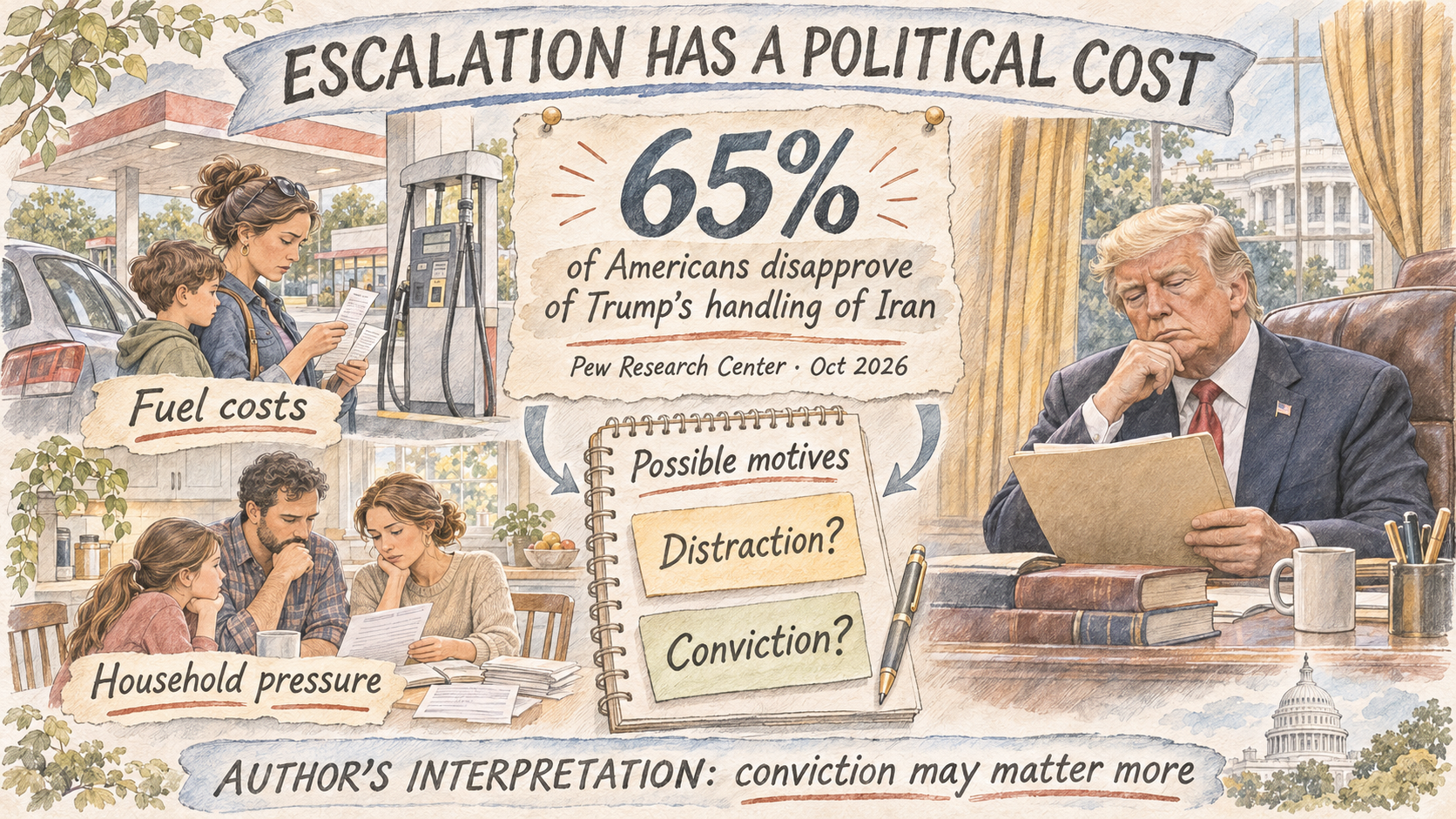
Exit polls found about 60% of voters called attacking Iran the wrong decision.
In October, Pew had 65% disapproving of how he's handled it.
A war that helped cost him Congress is a strange tool for distraction.
If he escalates, I think the reason is simpler: he believes in it.
"If I had it to do again, I'd have to do it again," he said, adding, "You can't let Iran have a nuclear weapon."
That's the case for the war in his own words, and 65% of Republicans still told Pew the decision to use force was right.
He also can't run again, so voters can only punish his party.
Where It Could Go
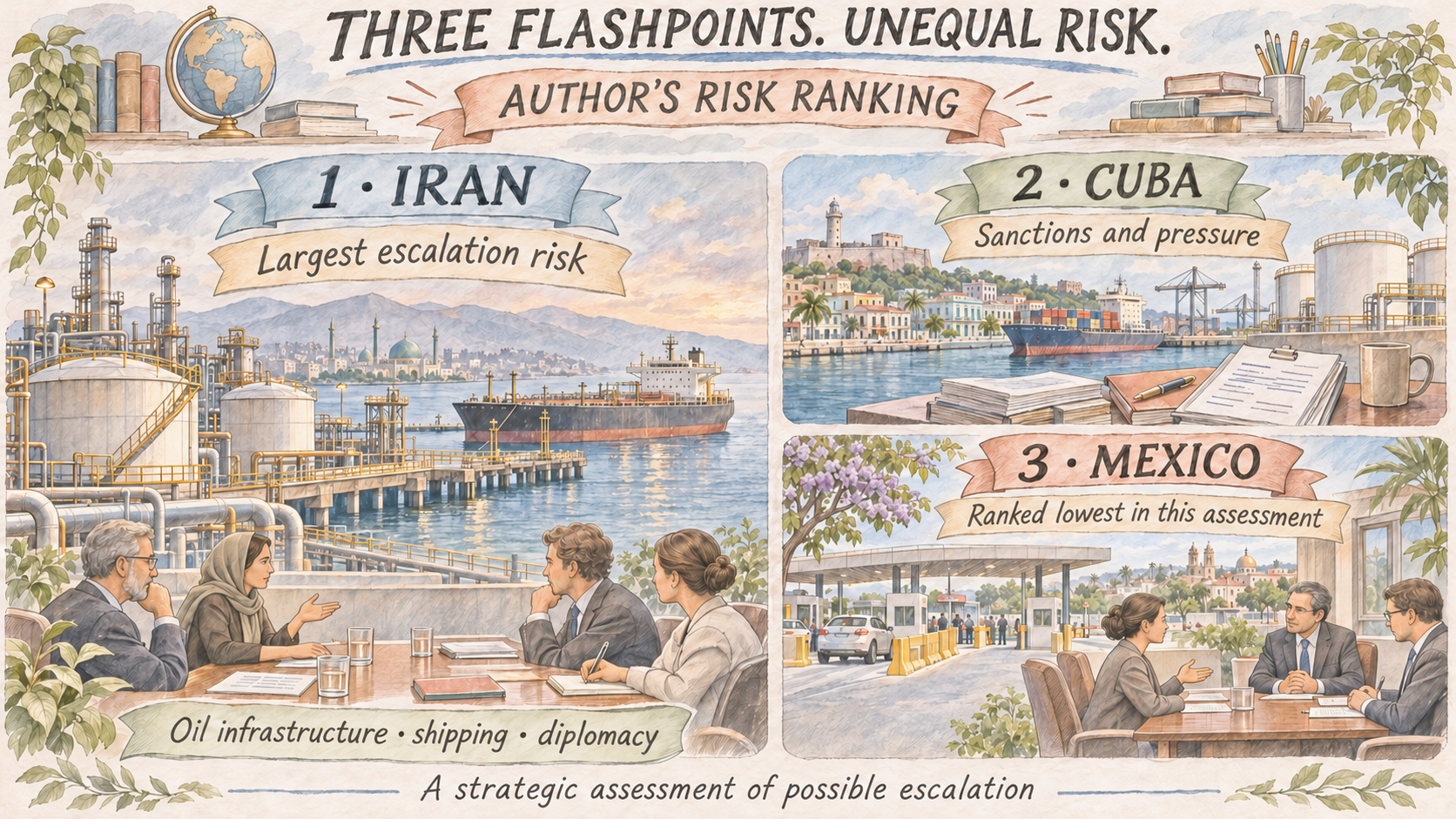
Iran is the biggest risk by a wide margin.
Kharg Island handles up to 90% of Iran's oil exports, and the US bombed military sites there in March without seizing it.
Analysts have called a ground seizure high-risk, and Gulf allies are reportedly pushing to de-escalate.
I've written about who might fill a vacuum in Tehran, and a bigger war makes that question harder to avoid.
Cuba is next on the list.
Washington has cut off Venezuelan oil supplies to the island, and Trump suggested at an October rally that warships returning from Iran would stop off its coast.
Still, Bloomberg reported in August that the strategy was shifting toward sanctions, and Rubio has called for "strategic patience."
Mexico is the one I'd rank last.
The video's count of boat strikes is out of date, because the total is now over 70 strikes with at least 240 killed.
Trump said in January, "we are gonna start now hitting land," but I couldn't find a confirmed US military strike on Mexican soil.
Claudia Sheinbaum and the CIA have both rejected reports of direct CIA involvement in killings there.
The Escalation At Home
I expect most of the fight to happen in Washington.
Trump told CBS the Supreme Court's Slaughter ruling gives the president "tremendous powers," and CBS reported White House talks on more executive action on immigration and trade.
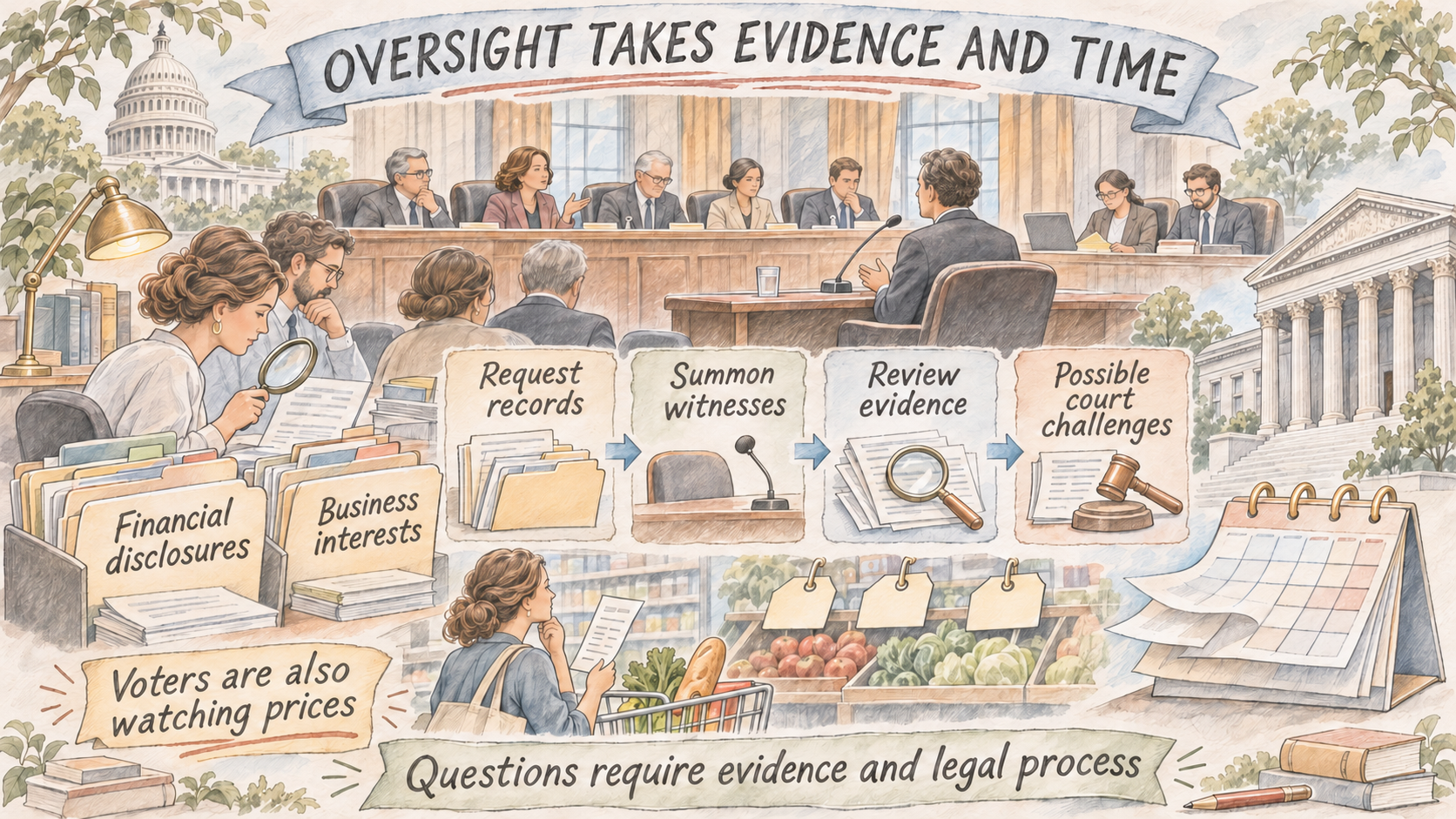
Oversight is where Democrats gain real power.
Committees can demand documents and summon witnesses, and they'll have plenty to ask about.
Bloomberg counted about 28,700 trades in 17 months in Trump's accounts.
The video mentions a blind trust, but Fortune doesn't report one.
The White House says third-party institutions run index-tracking models and "There are no conflicts of interest," and Fortune notes that disclosures alone can't show anyone traded on government information.
The Wall Street Journal also reported that a company backed by Abu Dhabi's Sheikh Tahnoon bought 49% of World Liberty Financial for $500 million before the inauguration, and Trump said, "I don't know about it."
None of this moves quickly.
The administration can fight subpoenas in court for months or years, and the Justice Department decides who gets charged.
Trump has also floated pre-emptive pardons for members of his administration.
Removing him would take 67 senators, which puts impeachment out of reach without Republican votes.
Democrats also risk spending their majority on Trump while voters ask about prices, which is why Sheldon Whitehouse says they must be "thoughtful and strategic."
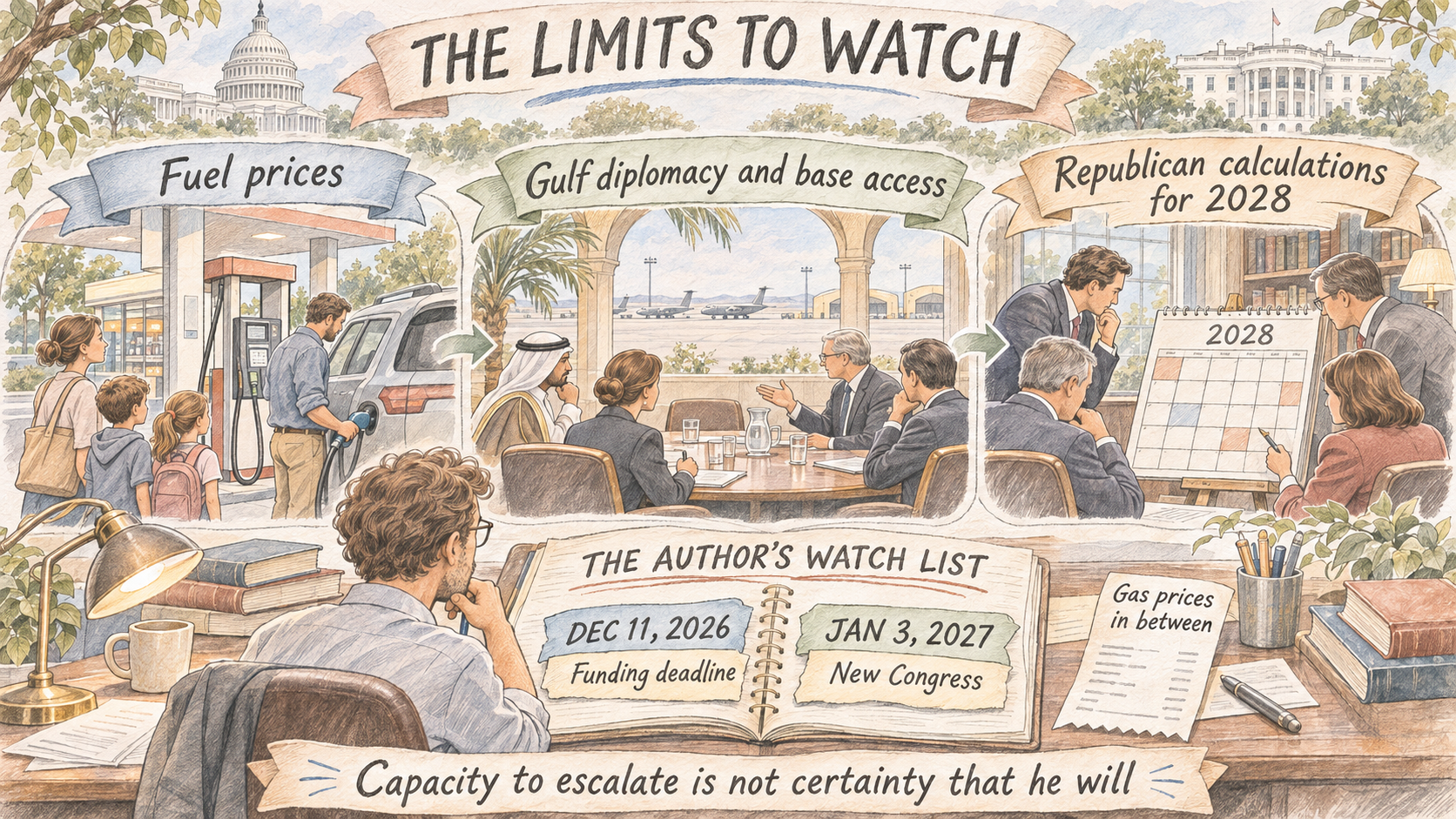
What Actually Limits Him
So yes, he can escalate.
The legal limits are thin, and the new Congress doesn't arrive until January.
The limits I'd take seriously are the ones he's already run into.
Gasoline got an admission out of him the day after the election.
Gulf states host the bases he'd want to use.
And Republicans now have to think about 2028, which is why Vance's post mattered as much as any committee.
Democrats will argue that they have to end the war, and Parsi warned that if they don't act, "They will also co-own it."
Trump's supporters will argue that stopping an Iranian bomb matters more than one election.
I'm not sure yet which argument holds up over two years.
The dates I'm watching are December 11 and January 3, and the price of gas in between.
Sources
Pages I opened for the facts in this post:
- Forbes: Midterm results and exit polls
- PBS: Democrats take control of the Senate
- Al Jazeera: What the Democratic win means
- Iran International: Qeshm strikes and the WSJ report
- Gulf News: Trump's "heavy hit" warning
- The Daily Beast: Trump weighs new strikes
- CFR: Conflict with Iran
- CBS News: War powers resolution
- CBS News: Trump interview on Election Day
- Holland & Knight: Year-end deadlines
- Bloomberg Government: Debt limit projection
- PBS: National debt reaches $40 trillion
- Wikipedia: 2025 federal government shutdown
- Research & Politics: Diversionary drone force and public support
- Fox News: Vance on the Iran war
- The Tribune: Trump's "largely true" remarks
- Pew Research Center: Iran war opinion
- Wikipedia: 2026 Kharg Island attack
- Newsweek: US-Cuba status
- Bloomberg Government: Cuba strategy shift
- Fox Baltimore: Boat strike totals
- Gulf News: Trump on land strikes
- Al Jazeera: Sheinbaum and the CIA reports
- Fortune: Trump's trades
- Cointelegraph: World Liberty stake and Trump's response