As The Dead Internet Takes Over, Meta Should Build For Human To Human Engagement
About half of the internet already looks AI written. When feeds are full of slop, content alone stops building trust. Meta wins by building products where real people interact with each other.
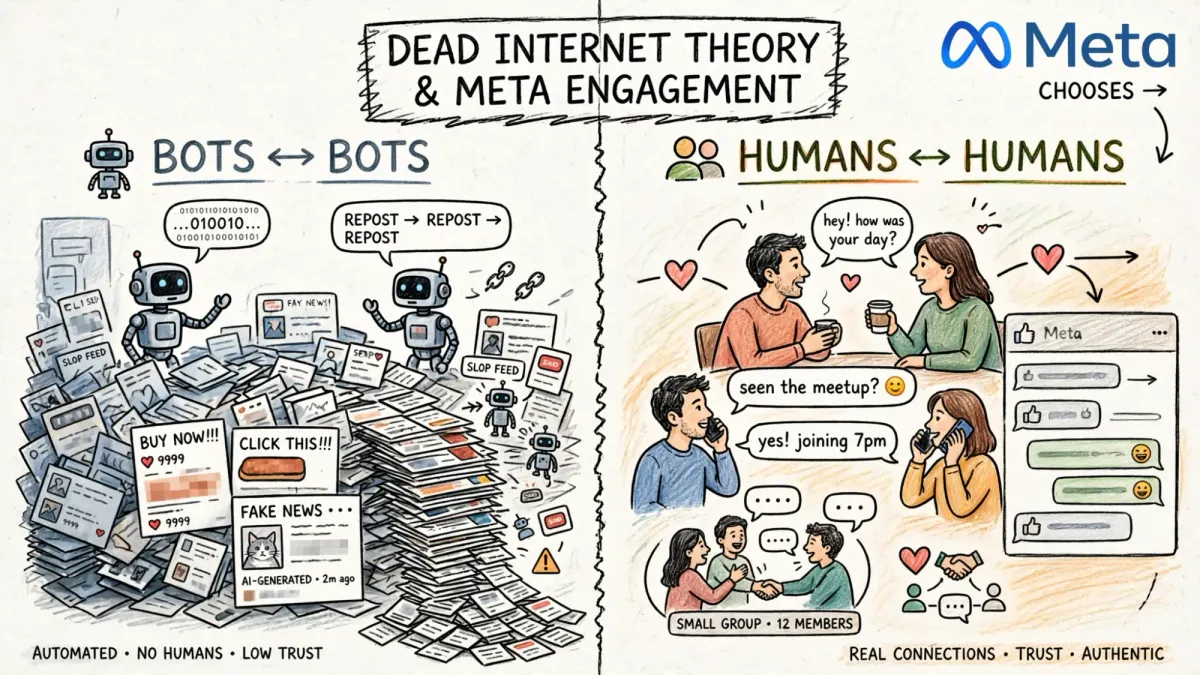
According to CloudFlare, about half of the internet already looks AI written. When feeds are full of slop, content alone stops building trust. Meta wins by building products where real people interact with each other.
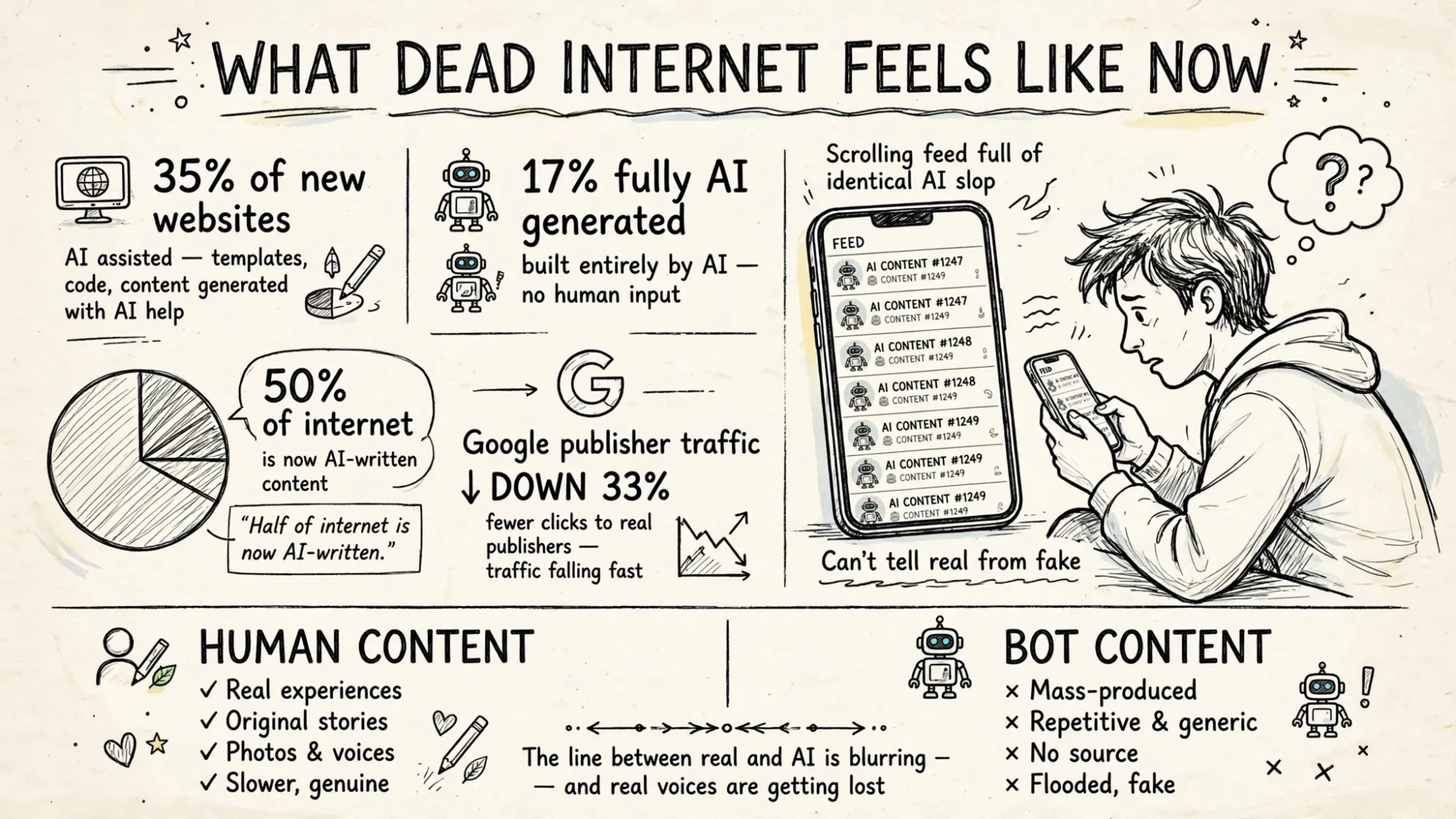
Content is easy to fake now. Real interaction is not.
Dead internet theory used to sound fringe. Now it feels like a market condition. Bots talking to bots, synthetic posts, recycled video. When most of what you scroll is generated, a feed full of more content does not help.
Meta has spent the last two years pushing more AI content into feeds. Reels, recommended posts, AI Studio bots, even a Vibes feed of fully generated clips. That drives watch time, but it also makes trust weaker. The next edge is products where people do things together.
Why Content Feeds Are Easy To Fake
Meta's current model leans heavily on content.
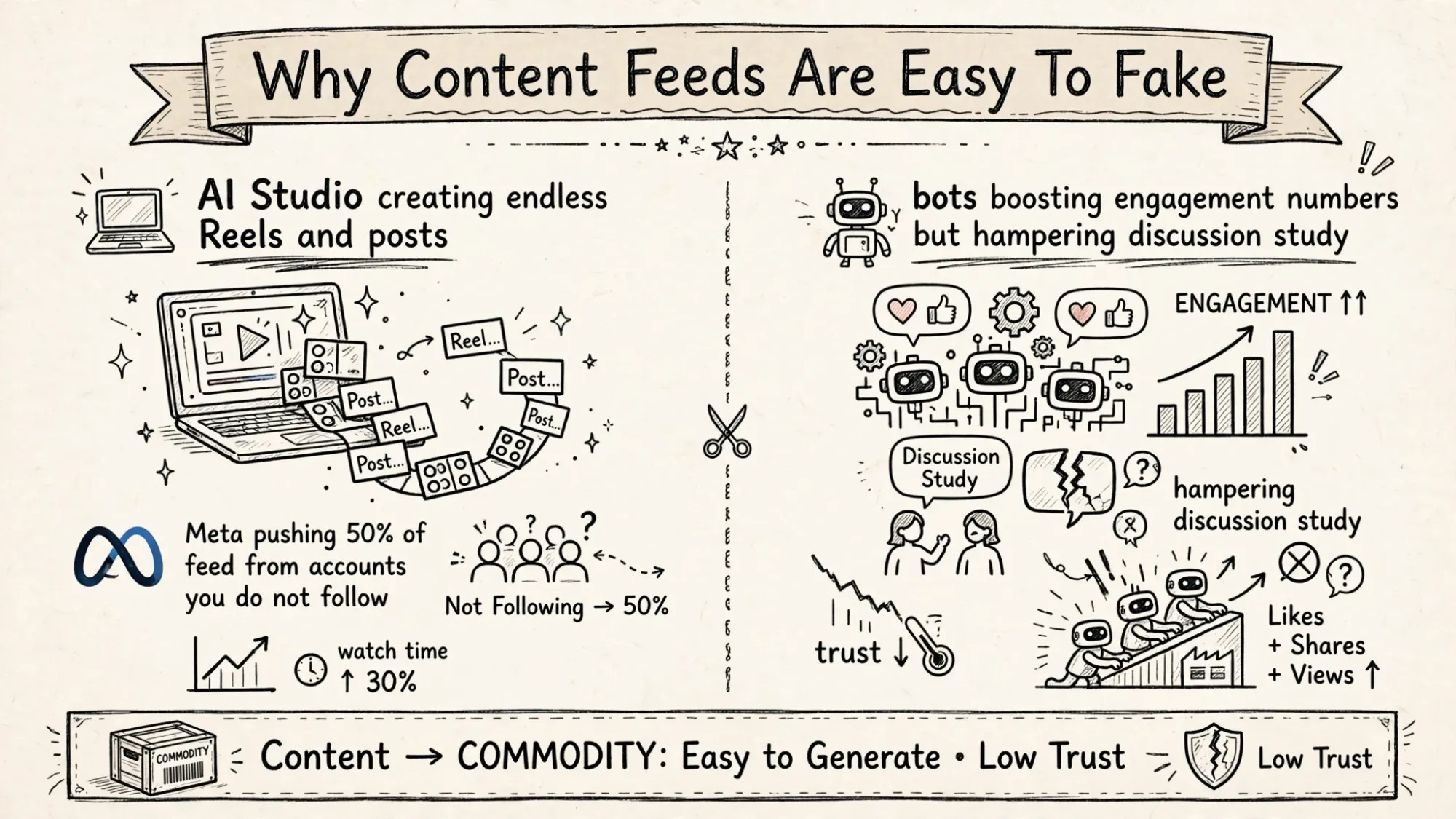
Up to 50 percent of a user's feed now comes from accounts they do not follow.
Reels watch time is up more than 30 percent year over year.
Facebook saw double digit growth in video time. On paper, engagement looks good.
The problem is content is cheap to fake.
Meta's own AI Studio lets anyone spin up chatbots for Facebook and Instagram. Studies show bots can lift raw engagement numbers while making real discussion worse.
Buffer data showed Instagram engagement down 26 percent and Threads down 18 percent. Similarweb data showed Threads daily active users down 60 percent after launch.
When content is abundant, each view is worth less. Advertisers pay for attention, but attention to slop has low intent.
You watch, you scroll, you do not act.
And Meta AI conversations now shape feed recommendations and ads, which means even your questions to an assistant turn into more content suggestions.
A feed that is mostly recommendations from strangers is the easiest surface for AI to flood.
Inter User Engagement Is Harder To Fake
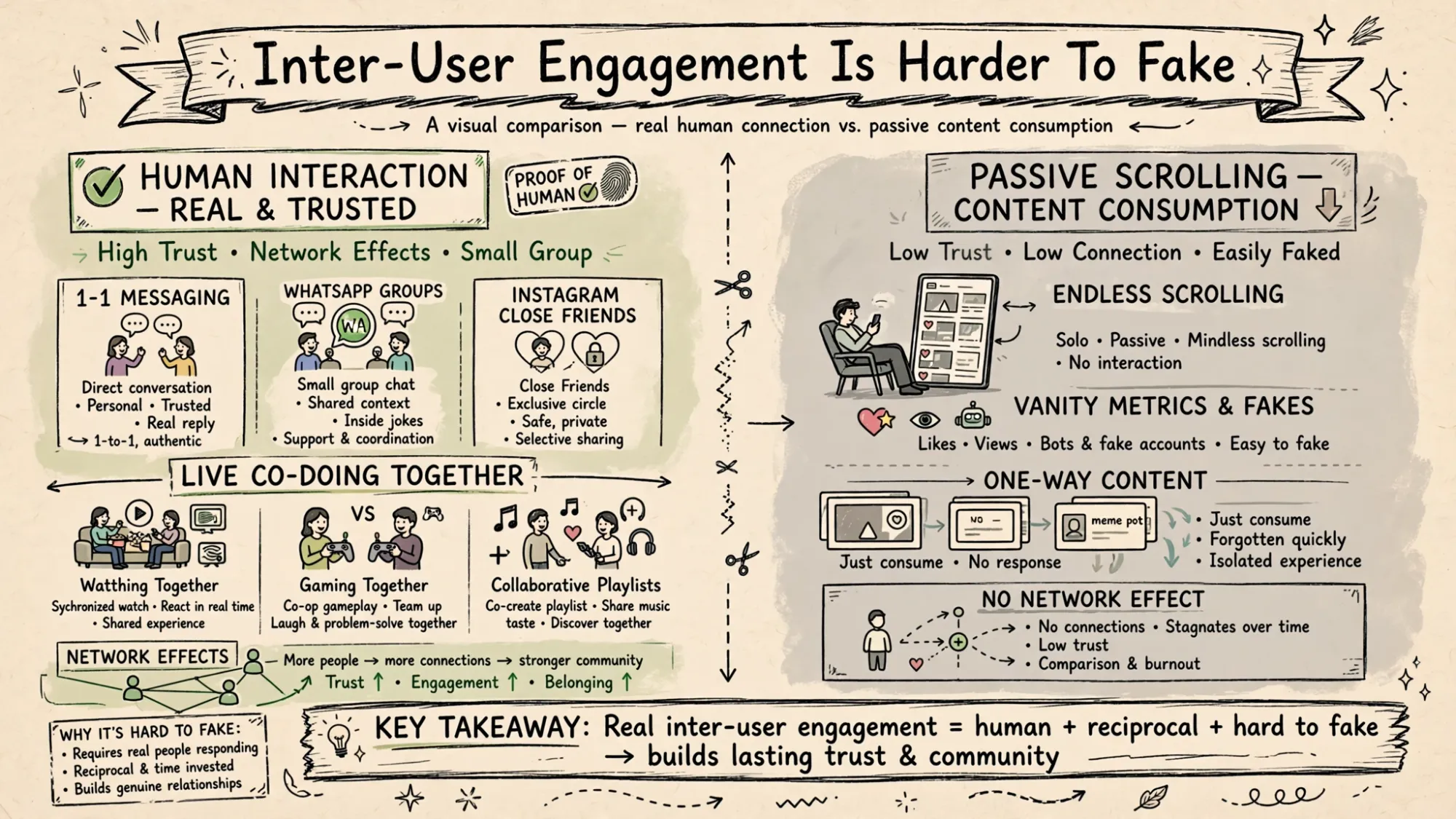
Human to human products work differently.
A one to one message, a small WhatsApp group that plans a trip, a Close Friends story, a live co watch, a game you play together, a playlist you build together.
These need two real people at the same time.
They leave signals that are hard to fake: reply timing, shared location, calendar holds, money moved together.
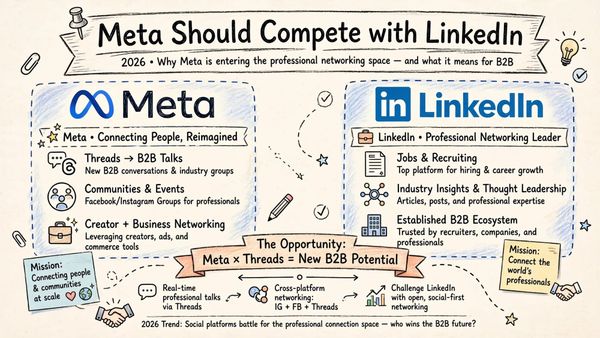
Meta already owns the best distribution for this. WhatsApp, Messenger, Instagram DMs, Facebook Groups.
These surfaces have network effects that content does not. Content can be copied by any model. A group thread with ten years of history cannot.
People also behave differently there.
They ask questions, they commit, they show up. That is high trust. High trust actions are worth more than passive views.
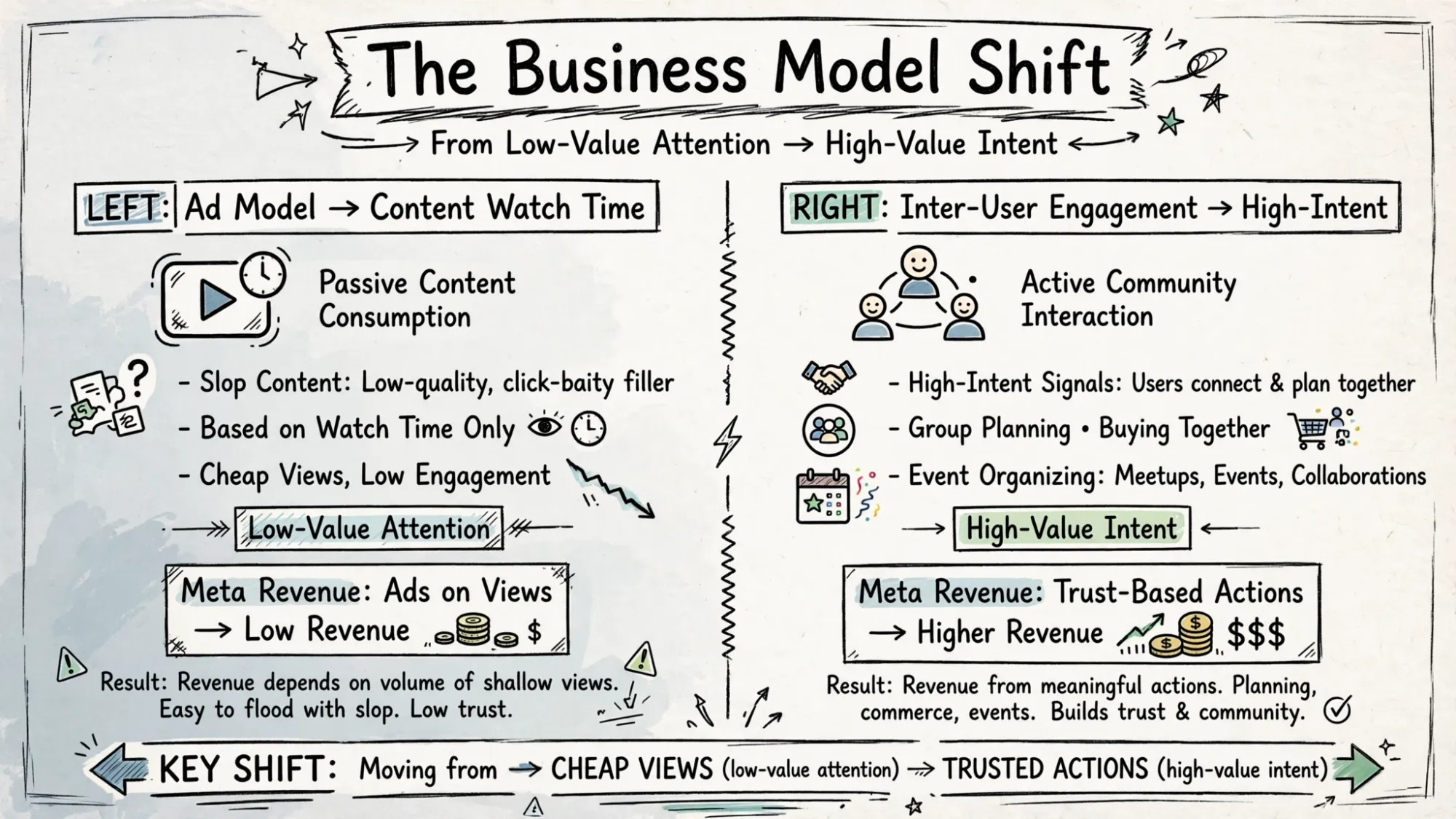
The Business Model Shift
This changes how Meta should think about monetization.
The old model was simple.
Show more content, sell more impressions against watch time. That works when content is scarce and made by friends.
When content is infinite and made by models, impression value drops.
The new model is intent.
When two people plan dinner in Messenger, that is a restaurant lead. When a group organizes a run, that is shoes, apparel, event tickets.
When friends co create a Reel instead of just watching one, that is creation tool revenue, not just view revenue.
Meta said conversations with Meta AI will now influence feed and ad targeting like likes and follows. That is a step toward intent.
But the strongest intent still comes from other people, not from a prompt.
If Meta measures success by time spent watching, dead internet makes the metric hollow. If it measures success by things done together, the metric stays human.
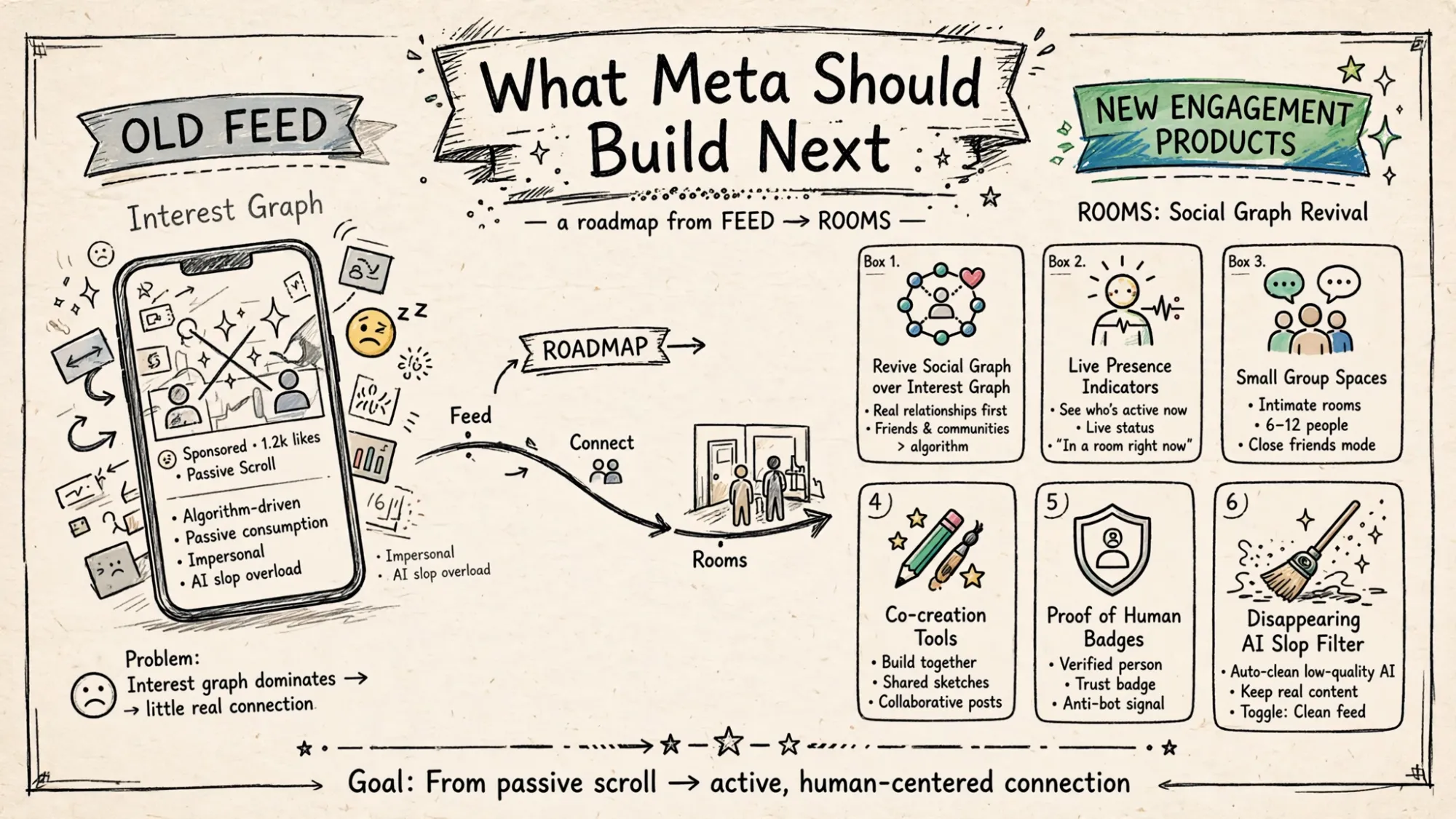
What Meta Should Build Next
First, bring back the social graph over the interest graph.
The Local and Explore tabs that surface recommendations beyond the classic feed are useful for discovery, but they should not crowd out friends.
Make small group spaces first class, not buried under Reels.
Second, build for live presence.
Show when friends are actually around to do something, not just that they posted. Co watching, co listening, co shopping with shared carts.
These are proven on other platforms and hard for bots to join.
Third, add proof of human without making it creepy.
Private group caps, invite only rooms, light verification for small circles, and filters that hide likely AI slop by default.
People want a clean room.
Fourth, make creation collaborative. Most AI tools at Meta focus on solo generation.
Flip it.
Templates where two or three people add to a story, remix a Reel together, or build a group memory from a trip.
All of these create more messages sent per reach, which is a better health metric than views per reach.
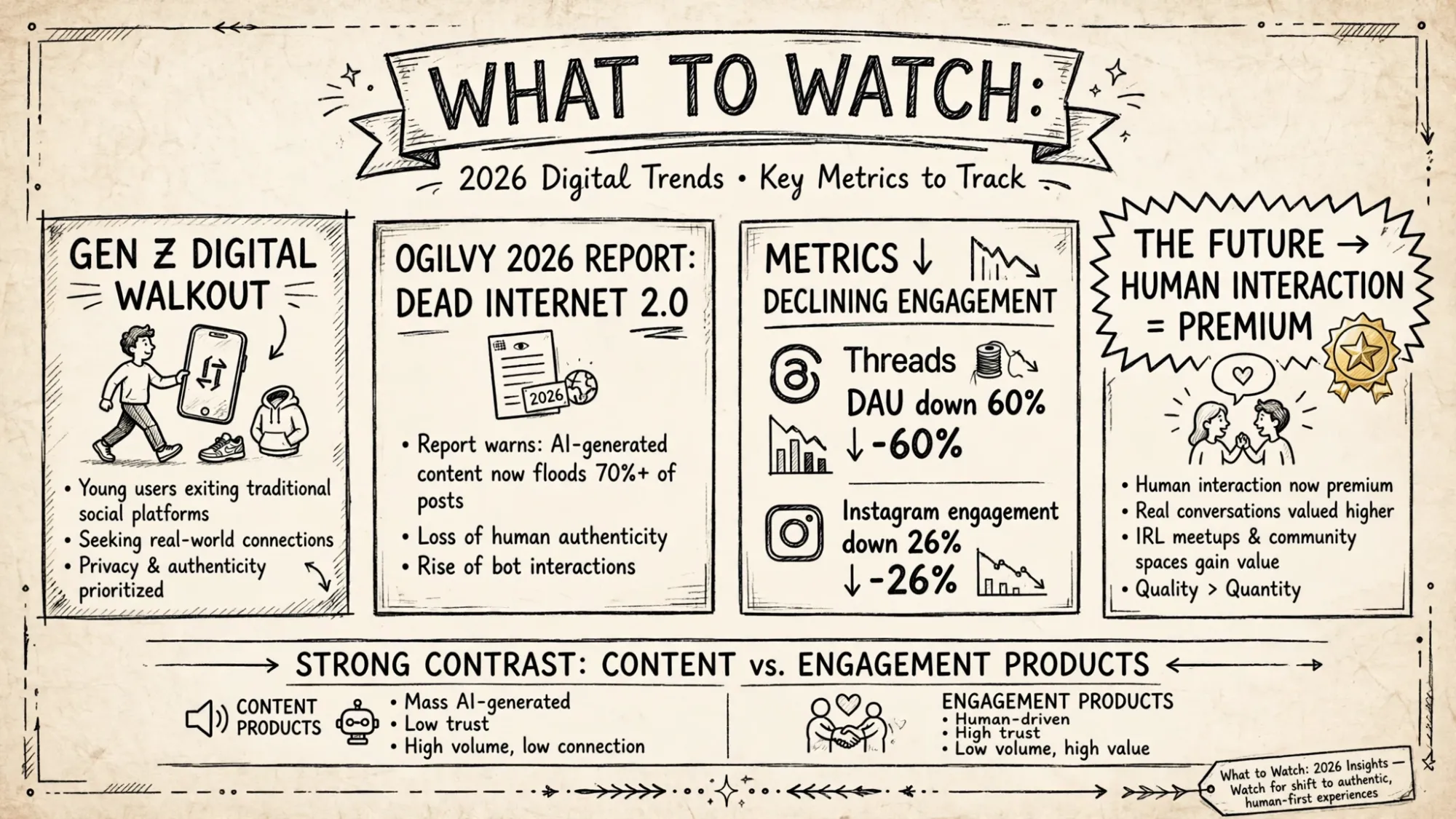
What To Watch
Watch where Gen Z spends time.
Ogilvy flagged a digital walkout from public feeds. If that continues, content feeds will keep growing in volume while trust and engagement per post fall.
Watch Threads retention.
The initial peak and trough pattern is normal, but a long term decline in DAU points to content only not being enough.
Watch Meta's own language.
The line about a huge corpus of AI generated content boosting engagement sounds good for supply.
It does not answer whether people want more supply.
If future updates talk more about hooks that drive retention through Instagram to Threads, that is still content thinking.
If they talk about groups, DMs and WhatsApp as growth drivers, that is inter user thinking.
The internet feels dead when bots talk to bots.
It feels alive when people do things together. Meta already owns the places where people do things together. It should invest there.