WhatsApp Focus Schedules: Why a Wellbeing Feature Behind a Paywall Feels Wrong
WhatsApp's new Focus Schedules let you mute or hide chats on a timetable, but only if you pay for WhatsApp Plus. Here's why a wellbeing tool feels odd behind a paywall, and the features it needs to be worth paying for, starting with telling senders you're busy.
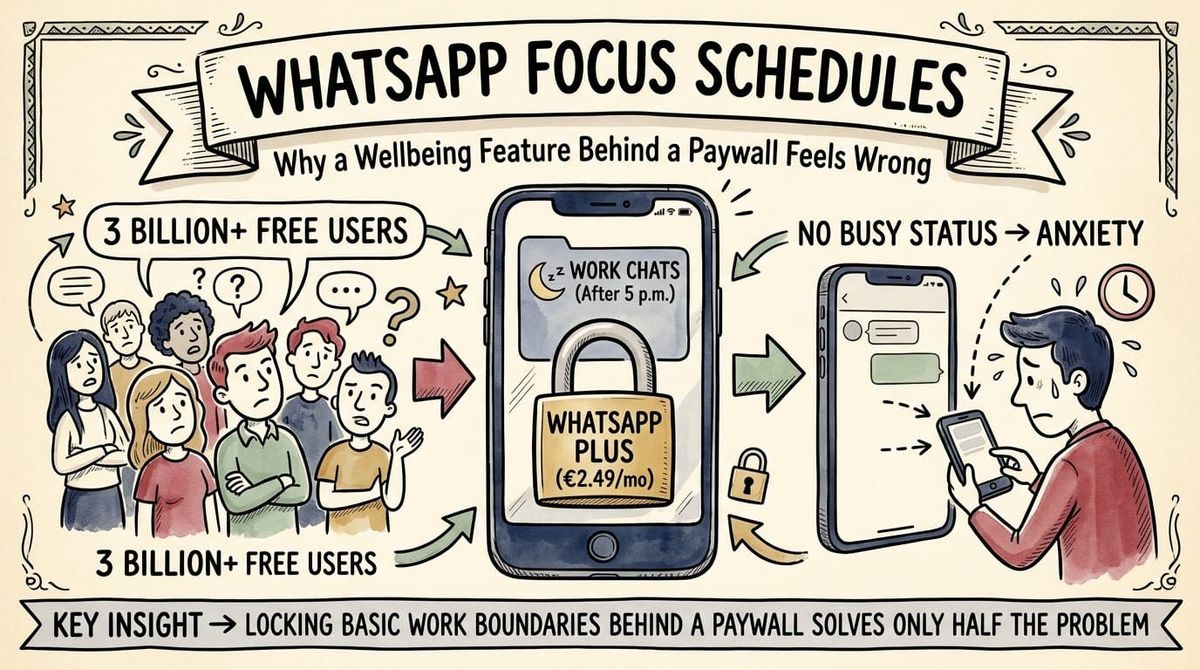
WhatsApp finally has a way to put work chats to sleep after 5 p.m.
It's called Focus Schedules, and it's a genuinely useful idea.
The catch is that you have to pay for it.
Focus Schedules is part of WhatsApp Plus, Meta's new paid tier for an app that more than 3 billion people use for free.
I think that's the wrong feature to lock away, and the version behind the paywall is missing the part that would make it work.
What Focus Schedules Actually Does
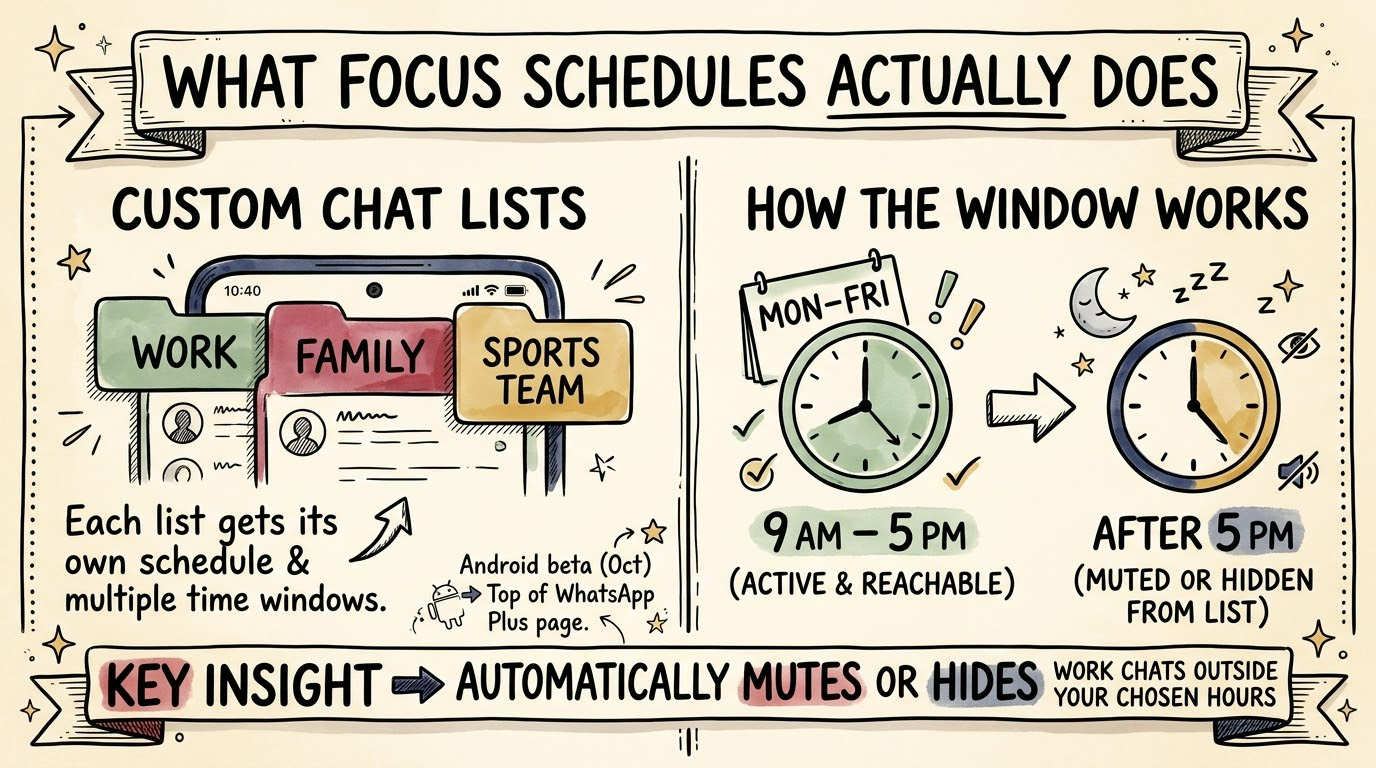
Focus Schedules works with WhatsApp's chat lists, the custom groupings like Work, Family or Sports Team.
According to WABetaInfo, Plus subscribers can set the times a chat list is allowed to reach them.
Outside those windows, WhatsApp can automatically mute the chats or hide them from the list entirely.
A Work list might be active Monday to Friday from 9 to 5 and disappear the rest of the time.
Each list can have its own schedule, and a schedule can include several time windows.
It started rolling out to Android beta testers in October and now sits at the top of the WhatsApp Plus feature page.
What WhatsApp Plus Is
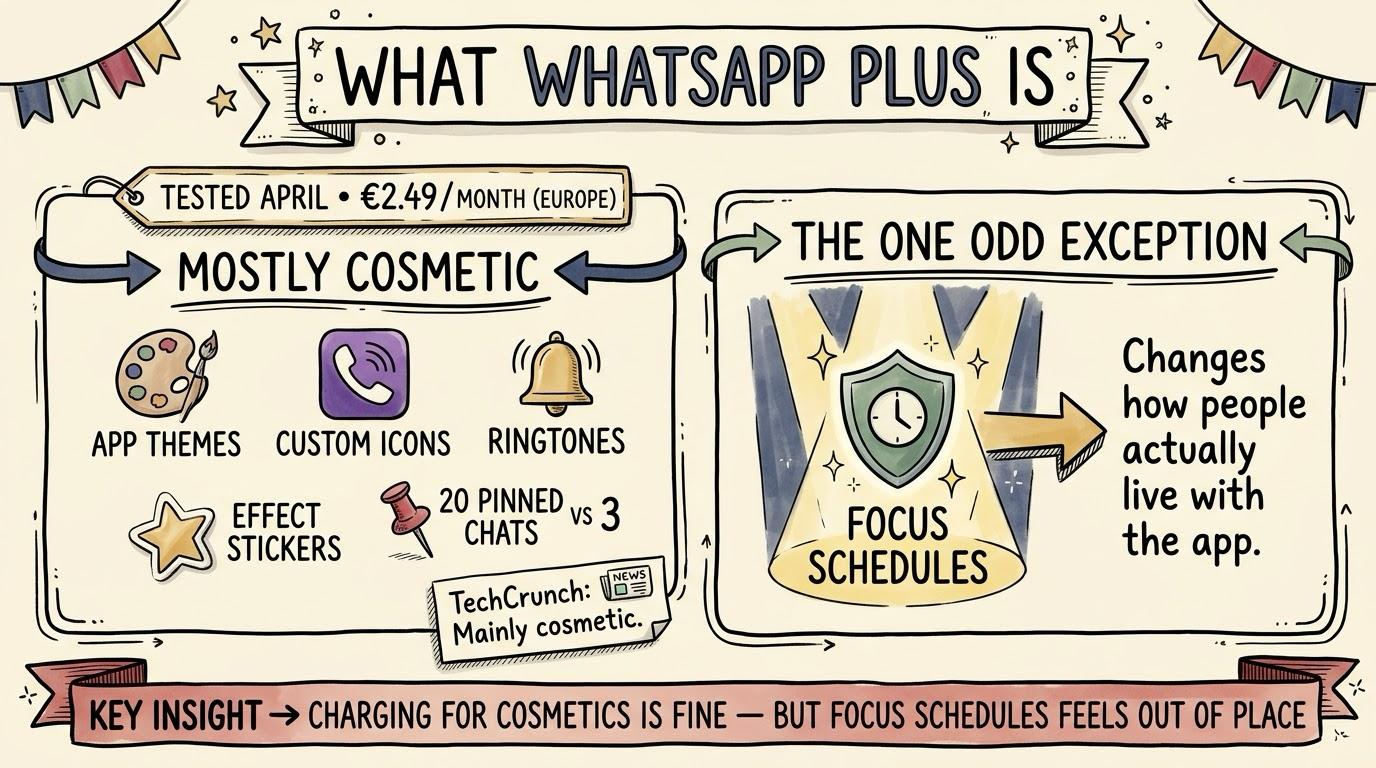
Meta started testing WhatsApp Plus in April, calling it a "new, optional subscription" for people who want more ways to organize and personalize the app.
In Europe, it's been reported at €2.49 a month.
Most of the bundle is cosmetic: app themes, custom icons, exclusive ringtones, effect stickers and up to 20 pinned chats instead of three.
TechCrunch summed it up as mainly cosmetic, and I'd agree.
Focus Schedules is the one feature in the bundle that changes how people actually live with the app.
That's exactly why it feels out of place there.
Why The Paywall Feels Wrong
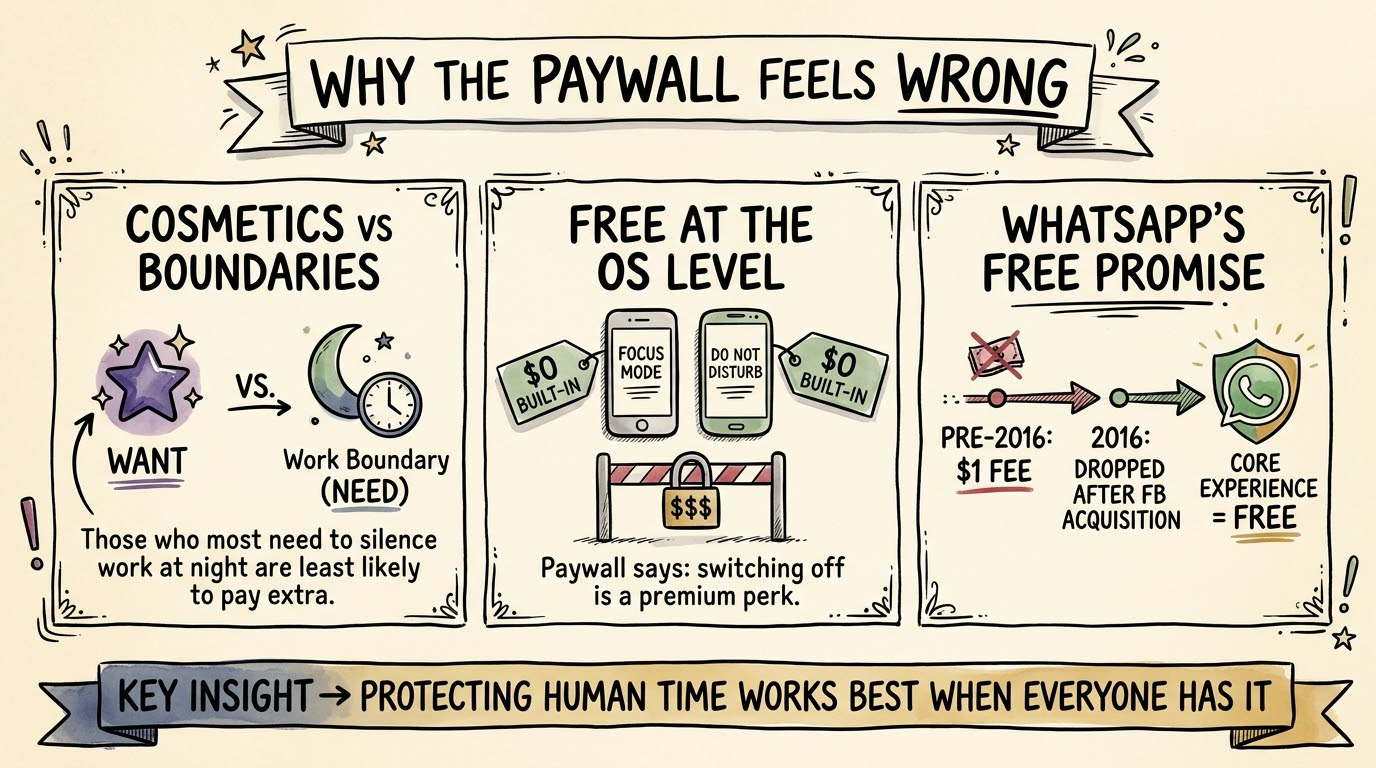
Cosmetics are a natural thing to charge for.
Nobody needs a purple app icon, so paying for one is a clear, harmless choice.
Boundaries are different.
The people who most need a way to silence work chats at night are often the people least likely to pay for an extra subscription.
On iPhone and Android, Focus and Do Not Disturb modes are built into the operating system at no extra cost.
Putting WhatsApp's version behind a paywall sends an odd message: switching off from work is a premium perk.
There's also some history here.
WhatsApp once charged a $1 subscription fee in some regions and dropped it in 2016 after Facebook bought the company.
The app's huge reach was built on the promise that the core experience is free.
I wrote about how Meta should build for human-to-human engagement as the internet fills with bots.
Helping people protect their time with the humans they care about is part of that, and it works best when everyone has it.
The Missing Piece: Telling The Sender You're Busy
The bigger problem is that Focus Schedules only works on one side of the conversation.
From what's been reported, the person messaging you gets no signal that your chats are muted.
They see their message delivered and hear nothing back.
That's exactly the kind of silence that creates anxiety and follow-up messages.
Apple solved this years ago in Messages.
With Share Focus Status turned on, people who text you see that you have notifications silenced.
Apple keeps the details private, so they don't see which Focus you're in or why.
It's a small line of text that resets expectations on both sides.
The sender knows not to expect a quick reply, and the recipient doesn't feel pressure to break their focus.
WhatsApp has the perfect place for it, right next to "last seen" and "online."
Other Features It Should Have
If Meta wants people to pay for Focus Schedules, it should be the best focus tool in messaging.
Here's what I'd add.
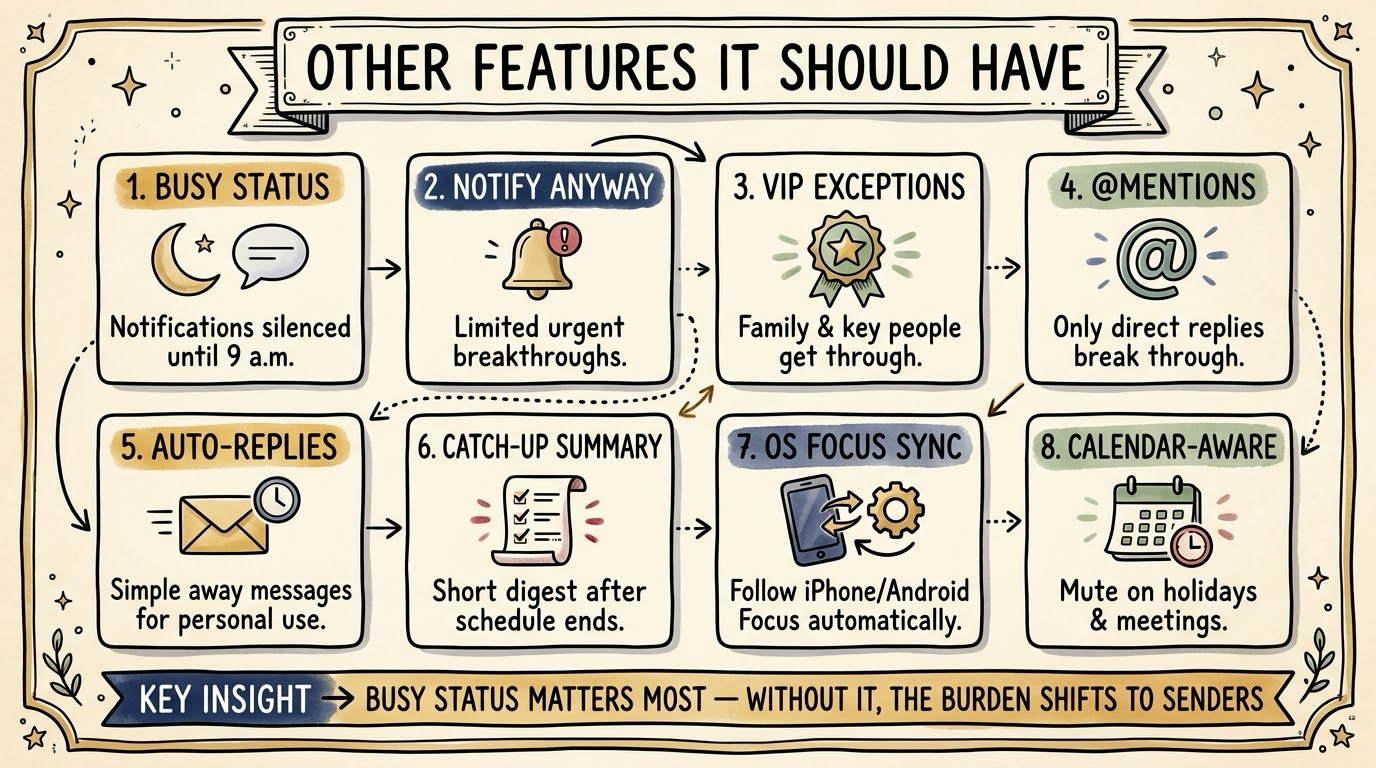
- A busy status for senders. An optional line like "Notifications silenced until 9 a.m.," controlled by the recipient.
- Notify anyway for real emergencies. Let senders push one urgent message through, with limits so it isn't abused.
- VIP exceptions. Let family or a few key people always break through, even inside a muted list.
- Mentions that break through. In busy groups, only direct @mentions or replies should get past the schedule.
- Auto-replies for personal accounts. WhatsApp Business already supports away messages, and personal users could use a simpler version.
- A catch-up summary. When a schedule ends, show a short digest of what you missed instead of a wall of unread messages.
- Sync with the phone's Focus mode. If your iPhone or Android is already in Work or Sleep mode, WhatsApp should follow it automatically.
- Calendar-aware schedules. Mute work chats on holidays and during meetings without setting rules by hand.
The first item matters most.
Without it, Focus Schedules quietly shifts the burden onto everyone messaging you.
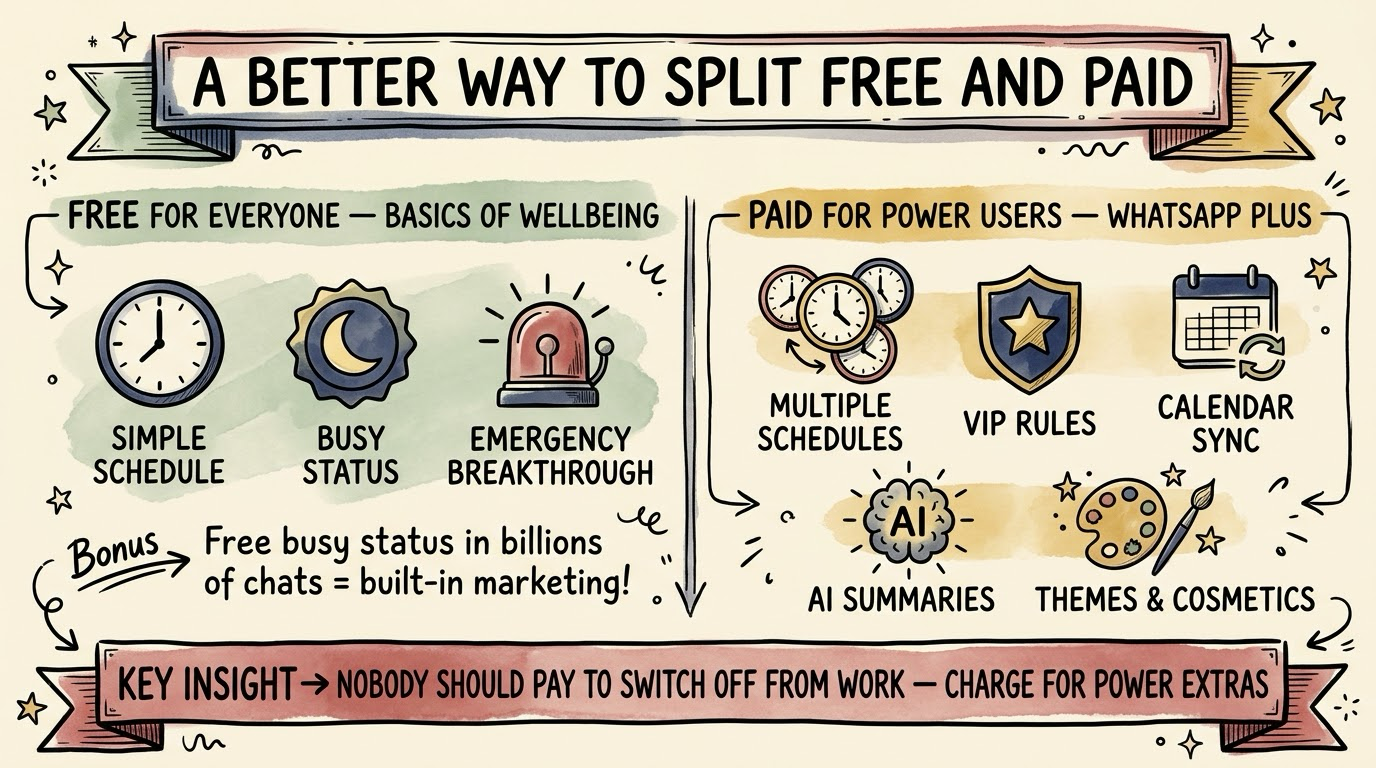
A Better Way To Split Free And Paid
Meta needs WhatsApp to make money, and a subscription for power users is fair.
The split just needs to follow a clear principle.
The basics of wellbeing should be free: a simple schedule, a busy status and emergency breakthrough.
The extras can be paid: multiple schedules, VIP rules, calendar sync, AI summaries and themes.
That way, nobody pays to switch off from work, and power users still get plenty worth paying for.
It would also be better marketing.
A free busy status would show up in billions of conversations and quietly advertise the feature to everyone who sees it.
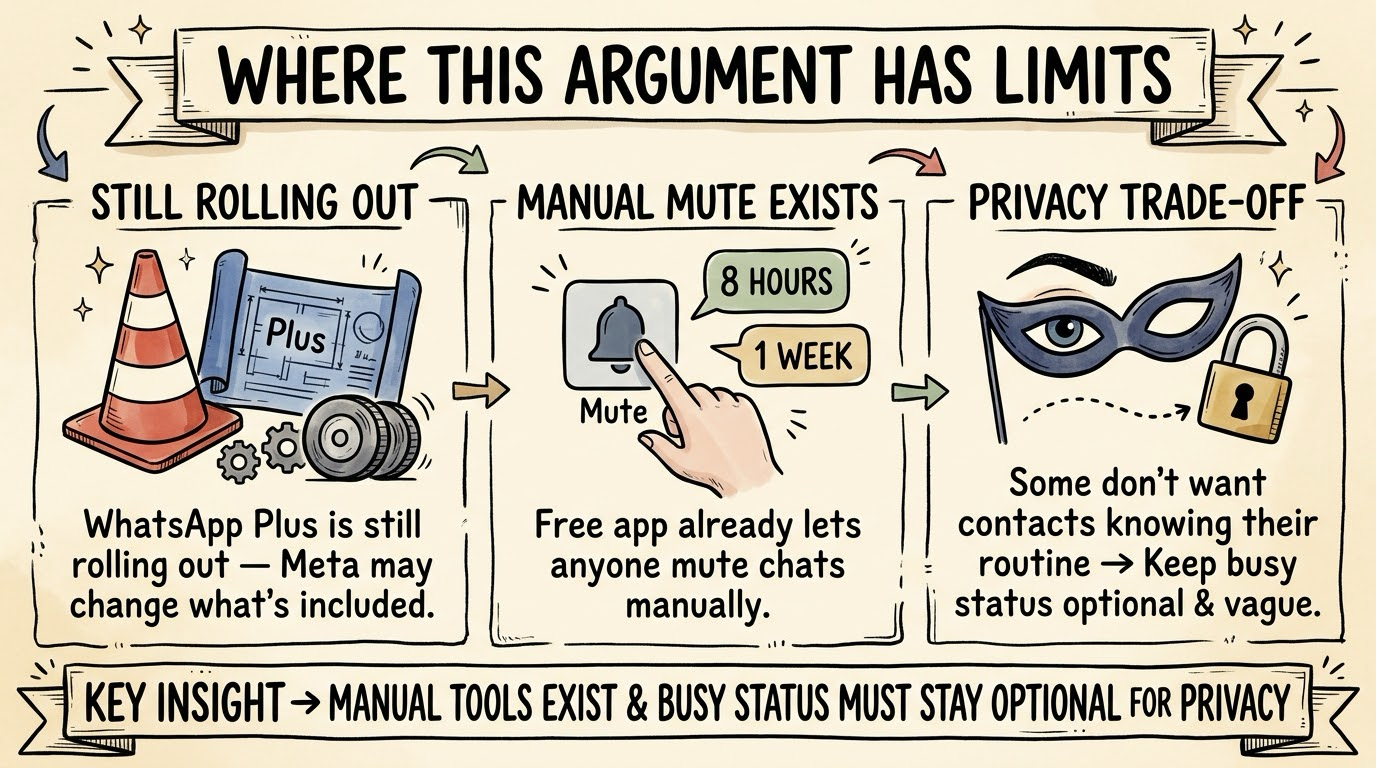
Where This Argument Has Limits
WhatsApp Plus is still rolling out, and Meta may change what's included.
The free app also already lets anyone mute a chat manually for a set time, so nobody is fully stuck.
And a busy status has privacy trade-offs, since some people don't want contacts knowing their routine.
That's why it should stay optional and vague, the way Apple handles it.
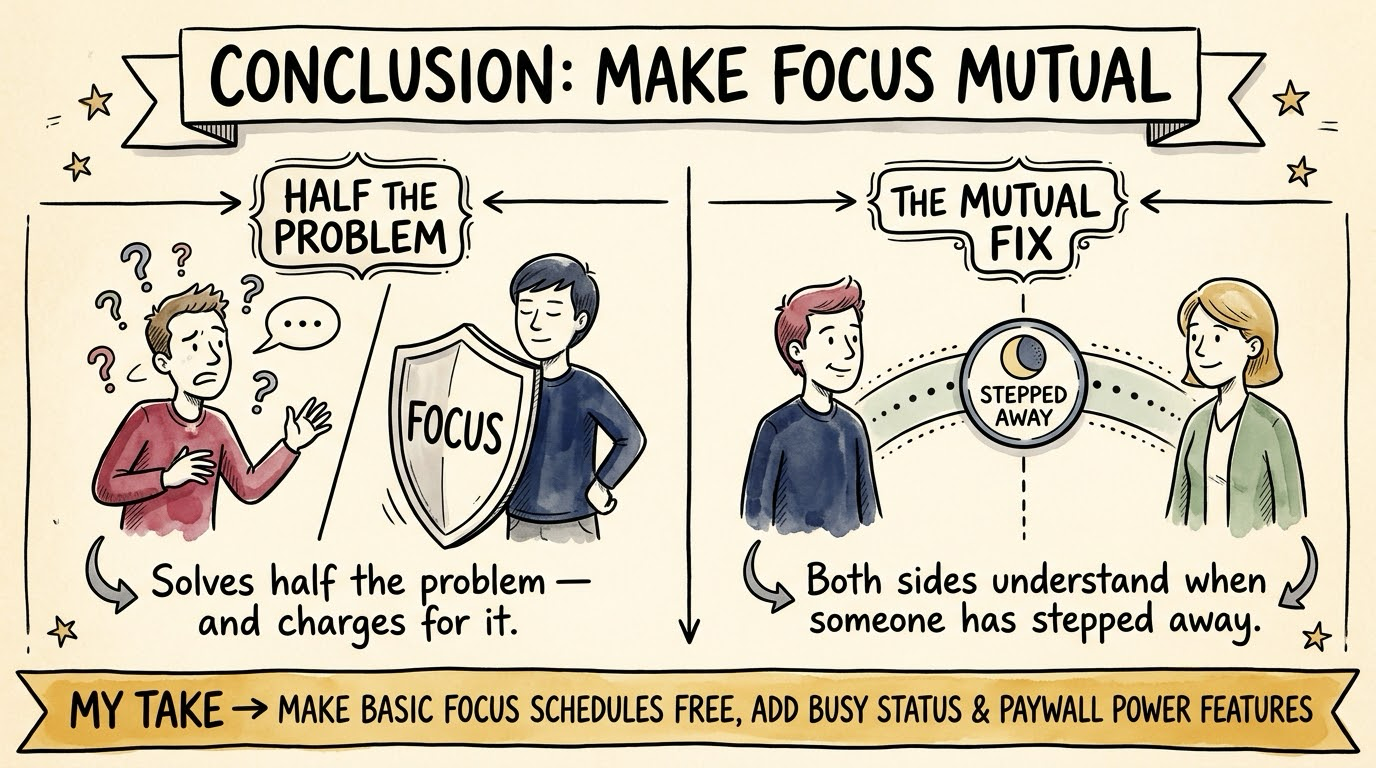
Conclusion: Make Focus Mutual
Focus Schedules is a smart addition to WhatsApp.
It just solves half the problem and charges for it.
The real value comes when both people in a conversation understand that one of them has stepped away.
My Take: WhatsApp should make basic focus schedules free, add an Apple-style busy status for senders, and save the paywall for the power features that make Plus worth paying for.
Sources
Pages I opened for the facts in this post: