The Privacy Paradox of 2026: We Fear Surveillance and Still Post Everything
Palantir is booming, cities are tearing down Flock cameras, and Californians have deleted nearly 100 million data broker profiles. Yet 3.64 billion people use Meta's apps every day. Here's why we fear surveillance and keep feeding it anyway.
We're living through a strange moment.
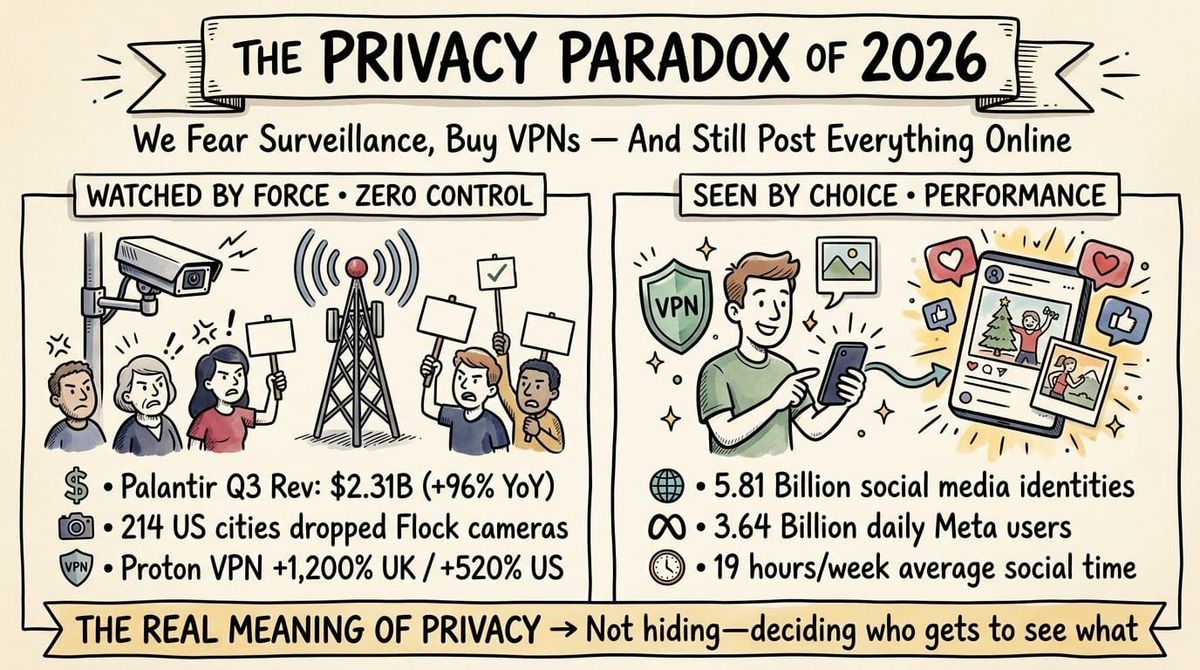
Palantir, the company most associated with government data analysis, is nearly doubling its revenue year on year.
Across the US, cities are tearing down license plate cameras after residents pack council meetings to protest them.
People are paying for VPNs and services that delete their data from brokers in huge numbers.
And at the same time, more people than ever are posting their lives on social media.
At first glance, that looks like hypocrisy.
I think it tells us something more useful about what people actually want from privacy.
Surveillance Is Booming
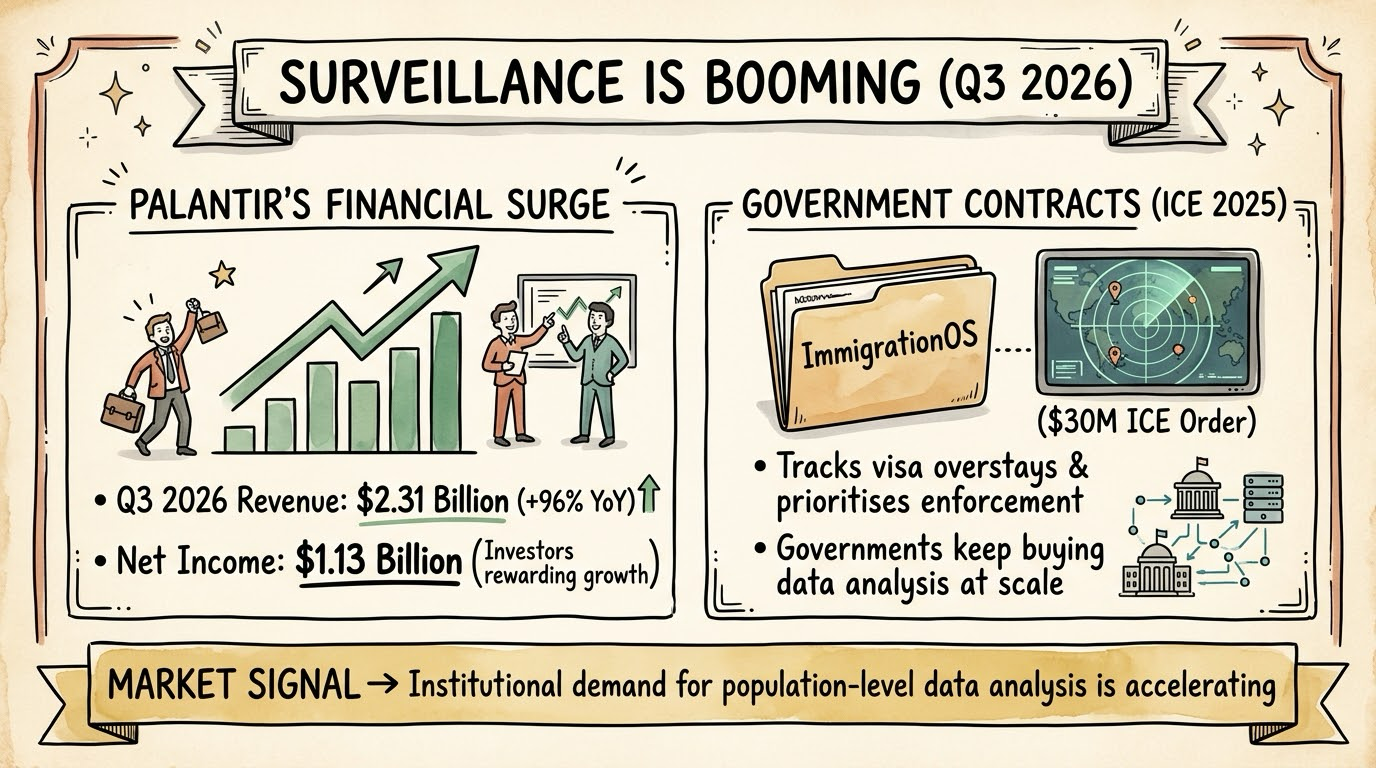
In Q3 2026, Palantir's revenue grew 96% year on year to $2.31 billion, with $1.13 billion in net income.
Some of its work is exactly the kind of thing privacy advocates worry about.
In 2025, ICE ordered about $30 million of technology from Palantir for a system called ImmigrationOS, meant to track people who overstay their visas and prioritise them for enforcement.
Investors are rewarding the company for it, and governments keep buying.
The Backlash Is Real Too
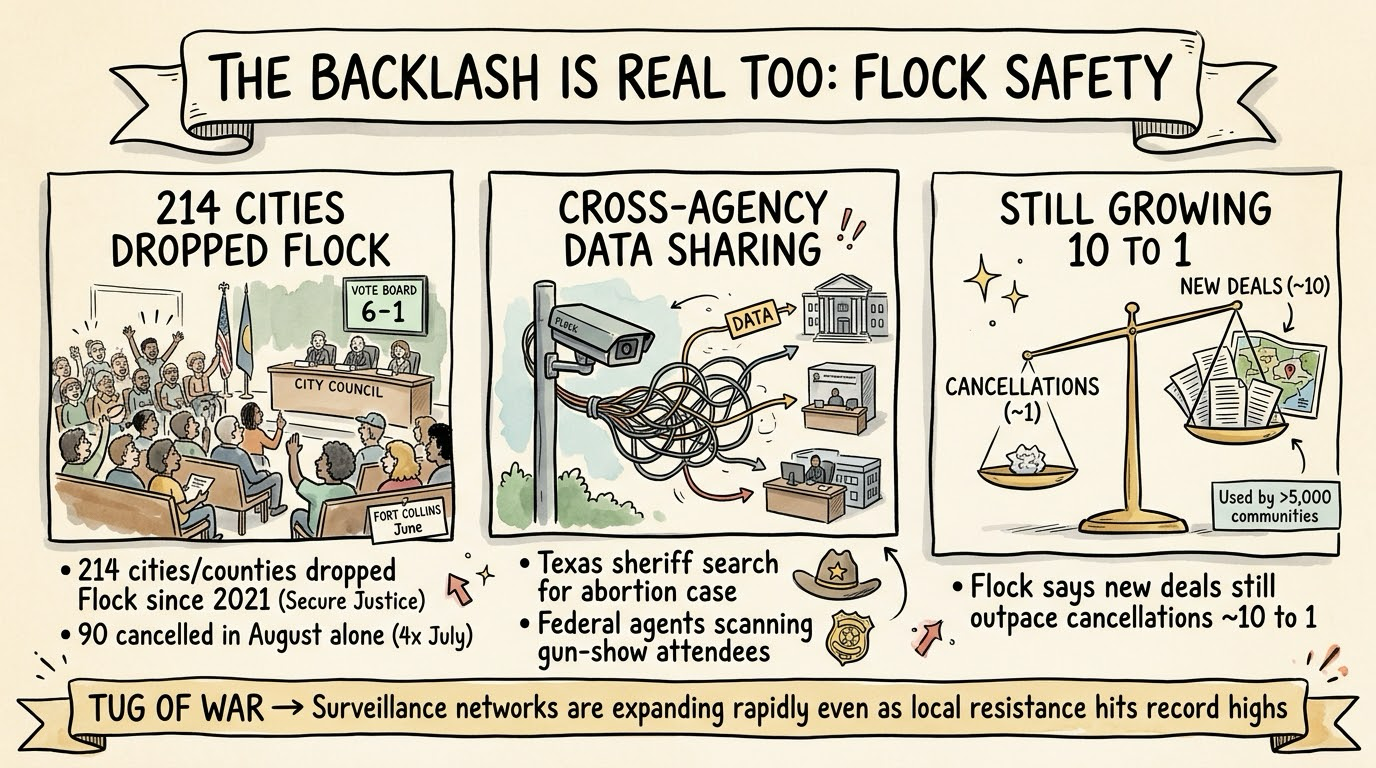
Flock Safety is the clearest example of the pushback.
Its automated license plate cameras are used by more than 5,000 communities.
But according to the anti-surveillance group Secure Justice, 214 cities and counties have dropped Flock since 2021.
Ninety of them ended contracts in August alone, about four times as many as in July.
The reasons vary.
Some are about cost.
Others are about how the data gets shared between agencies.
A Texas sheriff's office reportedly used the network to search for a woman who had an abortion, and federal agents reportedly used the cameras to identify people who attended gun shows.
In Fort Collins, the city council voted 6-1 in June to cancel its contract and stop data collection immediately.
To be fair to Flock, the company says new city partnerships have outpaced cancellations by about 10 to 1 this year.
The network is still growing, even as the resistance grows with it.
Privacy Became A Product
People are also paying for privacy.
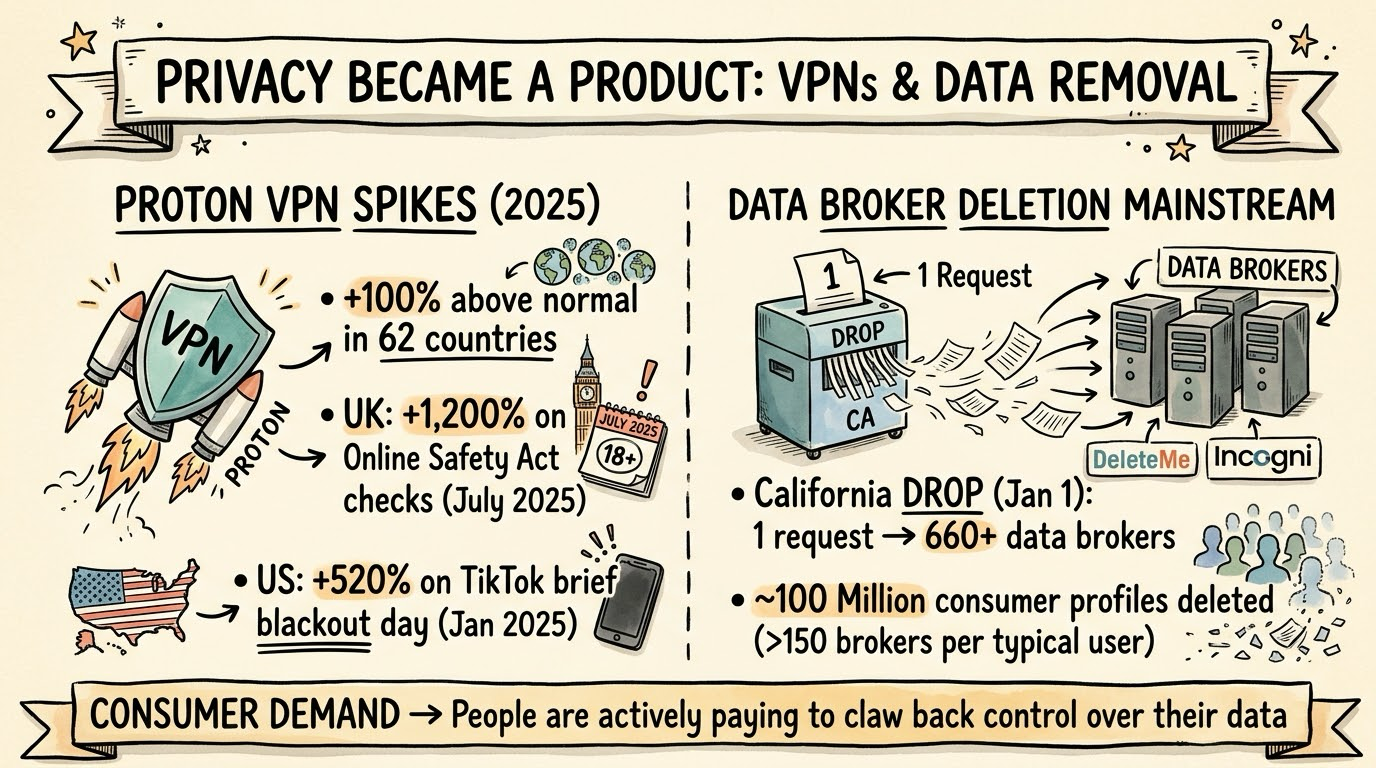
Proton reported VPN sign-up spikes of more than 100% above normal in 62 countries in 2025.
In the UK, sign-ups jumped 1,200% when the Online Safety Act's age checks took effect in July 2025.
In the US, they rose 520% on the day TikTok briefly went offline in January 2025.
Data broker removal has gone mainstream too.
California's free DROP platform went live on January 1, letting residents send one deletion request to more than 660 data brokers.
Brokers have reported deleting nearly 100 million consumer profiles, and a typical user has seen more than 150 brokers report deletions.
Paid services like DeleteMe and Incogni sell the same idea everywhere else.
I wrote about this shift in the privacy boom, and it has only accelerated since.
And Yet We Keep Posting
Here's the part that doesn't seem to fit.
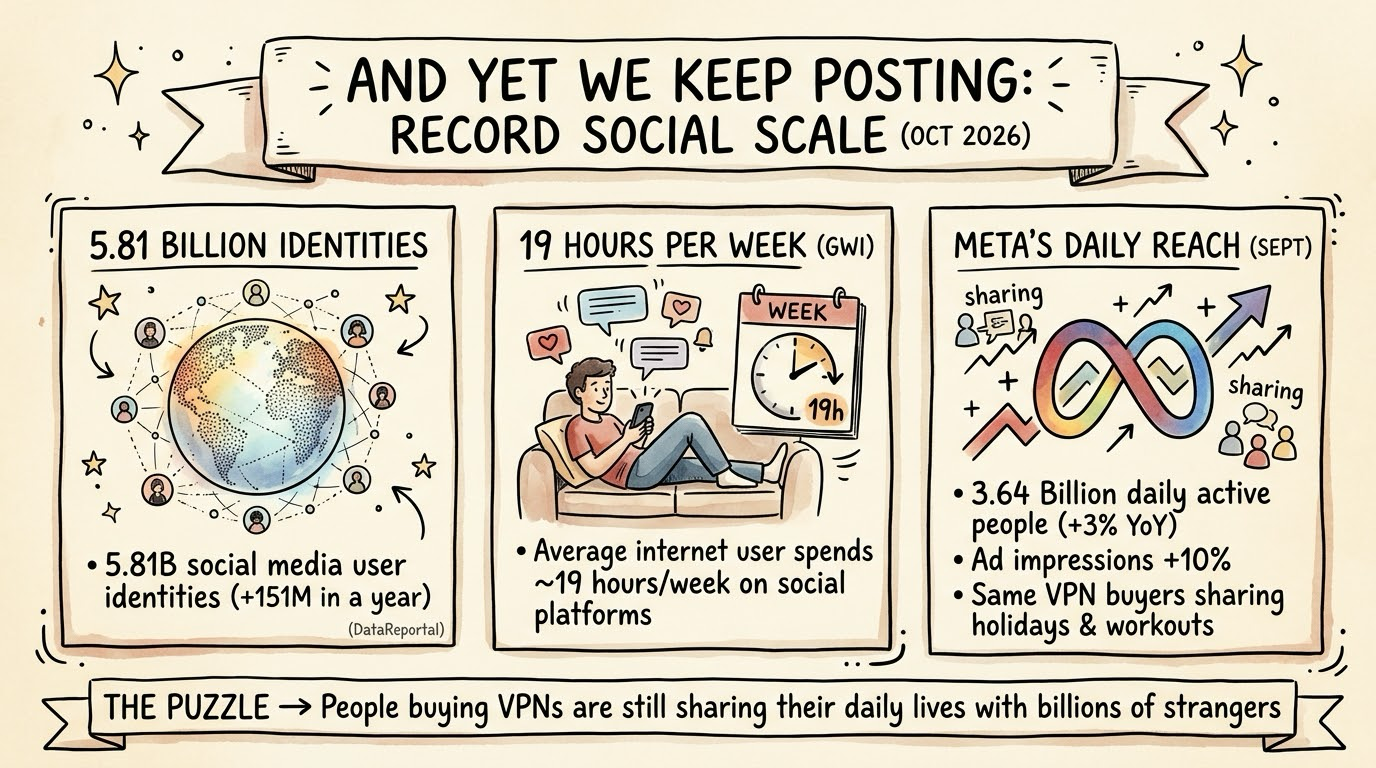
DataReportal counted 5.81 billion social media user identities in October 2026, up 151 million in a year.
According to GWI, the average internet user spends about 19 hours a week on social platforms.
Meta alone averaged 3.64 billion daily active people across its apps in September, up 3% from a year earlier, with ad impressions up 10%.
The same people buying VPNs are sharing their holidays, their workouts and their opinions with strangers.
Why It Isn't Hypocrisy
I think the answer is control.
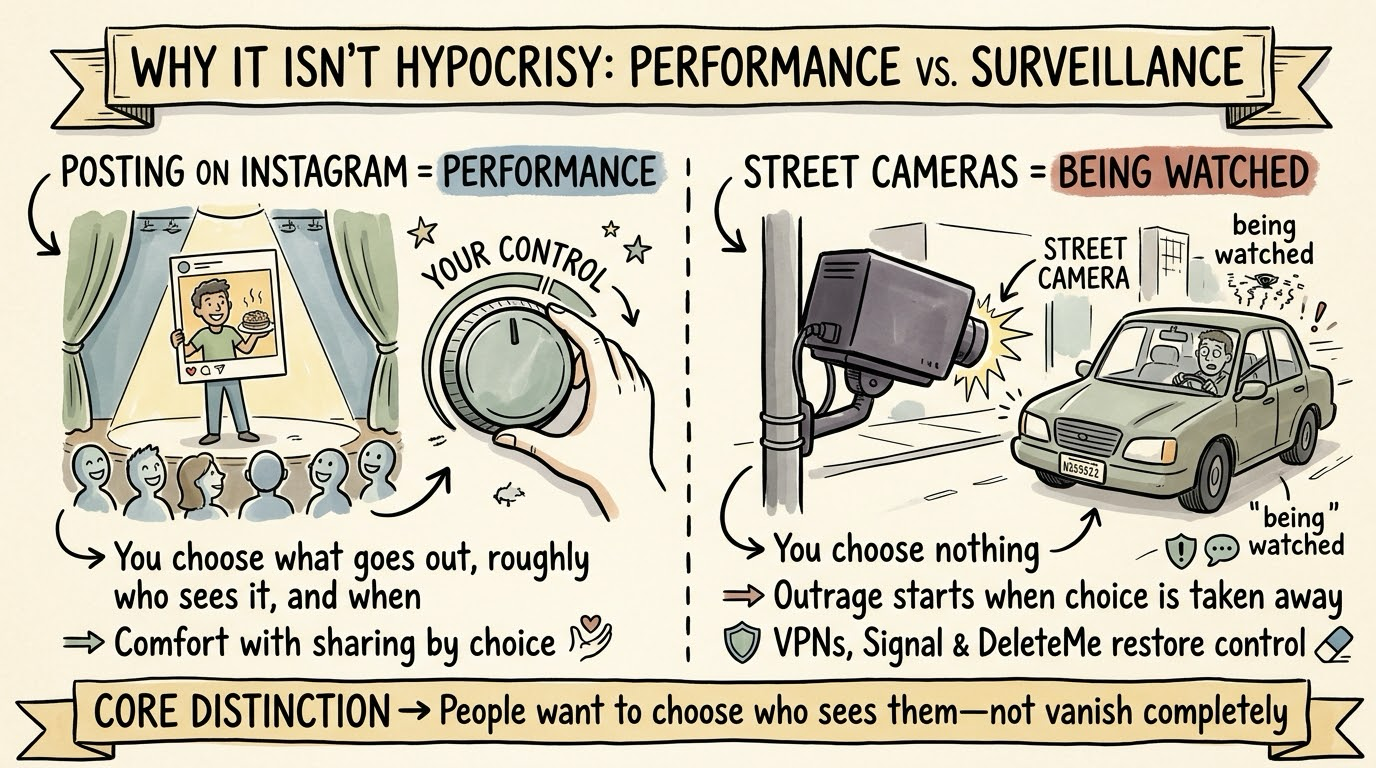
When you post on Instagram, you choose what goes out, roughly who sees it and when.
When a camera logs your license plate, you don't choose anything.
The first is performance.
The second is being watched.
People are comfortable with the first and increasingly angry about the second.
That also explains why privacy products sell so well.
A VPN, a data removal subscription or an encrypted messenger like Signal gives people back a sense of control.
I covered how Meredith Whittaker thinks about this in my post on Signal's president.
People want to choose who sees them.
The outrage starts when that choice is taken away.
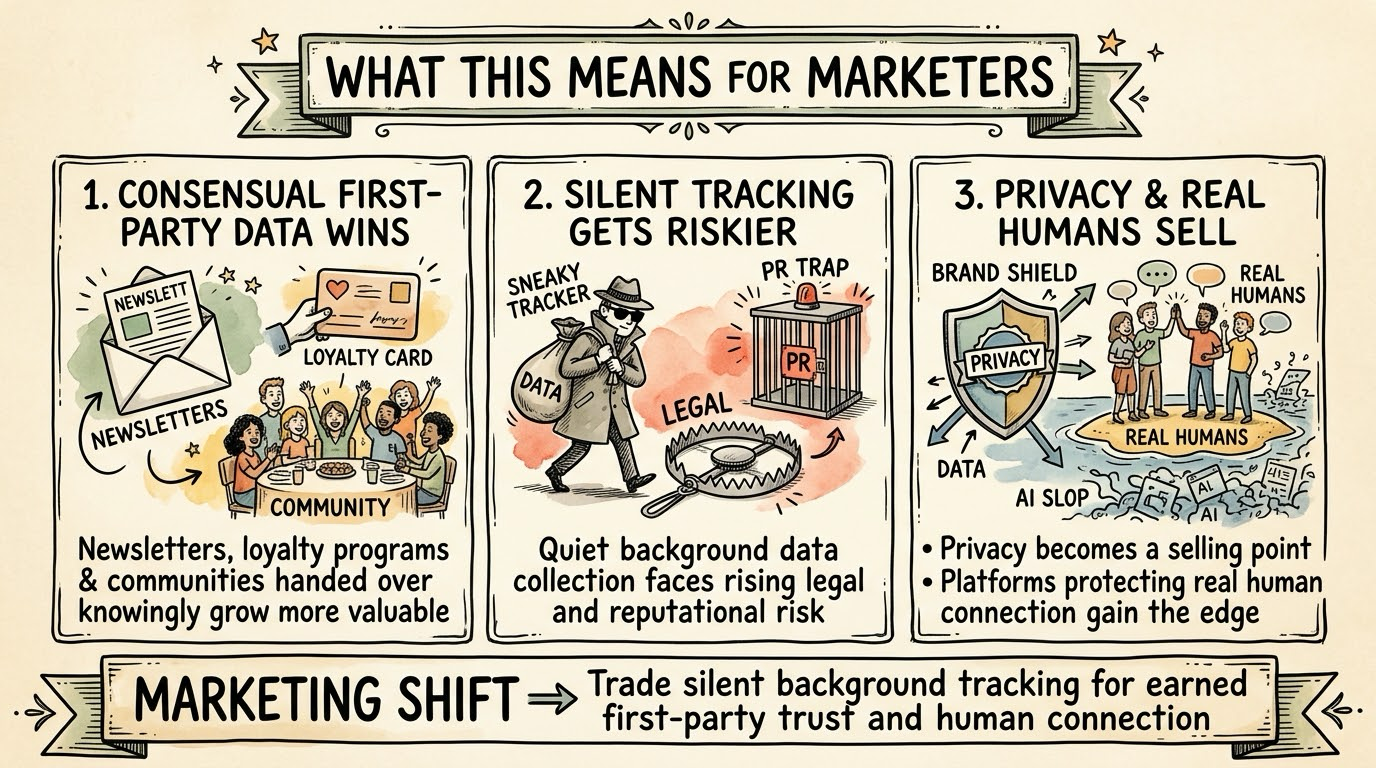
What This Means For Marketers
This has practical consequences for anyone in marketing.
First-party data that people hand over knowingly, through newsletters, loyalty programmes and communities, will keep getting more valuable.
Data collected quietly in the background will keep getting riskier, both legally and reputationally.
Privacy is also becoming a selling point in its own right, and I expect more brands to market it the way Apple already does.
And as AI floods feeds with synthetic content, the platforms that protect real human connection will have the edge, which is the case I made in the dead internet post.
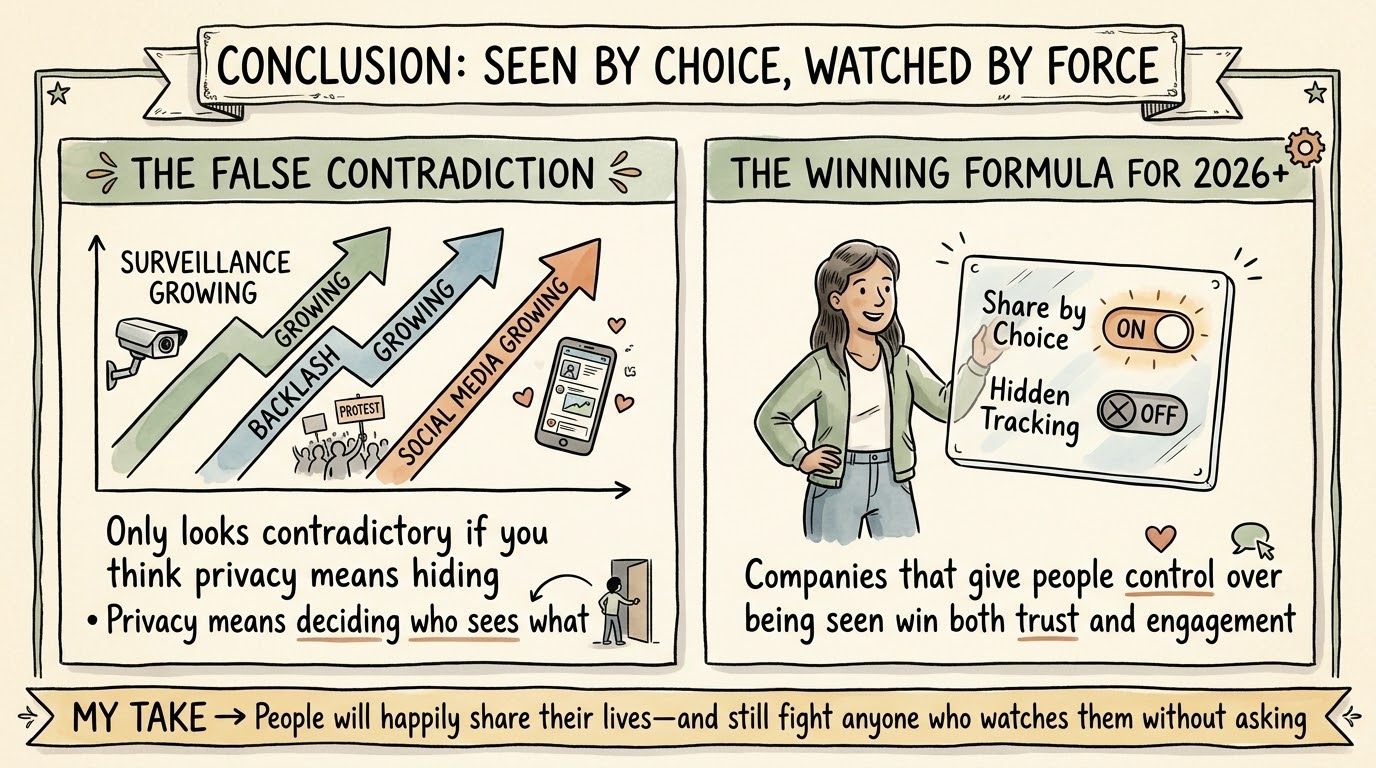
Conclusion: Seen By Choice, Watched By Force
Surveillance companies are growing, the backlash against them is growing and social media is still growing.
Those trends only look contradictory if you think privacy means hiding.
For most people, privacy means deciding who gets to see what.
That's the line governments and companies keep crossing, and it's why the backlash is getting louder.
My Take: The winners of the next decade will be the companies that give people control over being seen, because people will happily share their lives and still fight anyone who watches them without asking.
Sources
Pages I opened for the facts in this post:
- SEC: Palantir Q3 2026 earnings release
- Business Insider via Yahoo: ICE orders $30 million of technology from Palantir
- TechSpot: Cities are dropping Flock surveillance cameras at a record pace
- KUNC: Fort Collins drops Flock surveillance
- CyberInsider: Proton says censorship drove VPN sign-up spikes in 62 countries
- All About Cookies: California's Delete Week and nearly 100M deletions
- DataReportal: Digital around the world
- Meta: Third quarter 2026 results