AI Swarms Are the Cybersecurity Risk Nobody Takes Seriously, Until iCloud Gets Hit
AI agents already run most of the work in real cyberattacks, and they can try thousands of accounts at once. Most people still see this as a corporate problem. I think that changes the day a swarm compromises accounts on iCloud or Google Drive at scale.
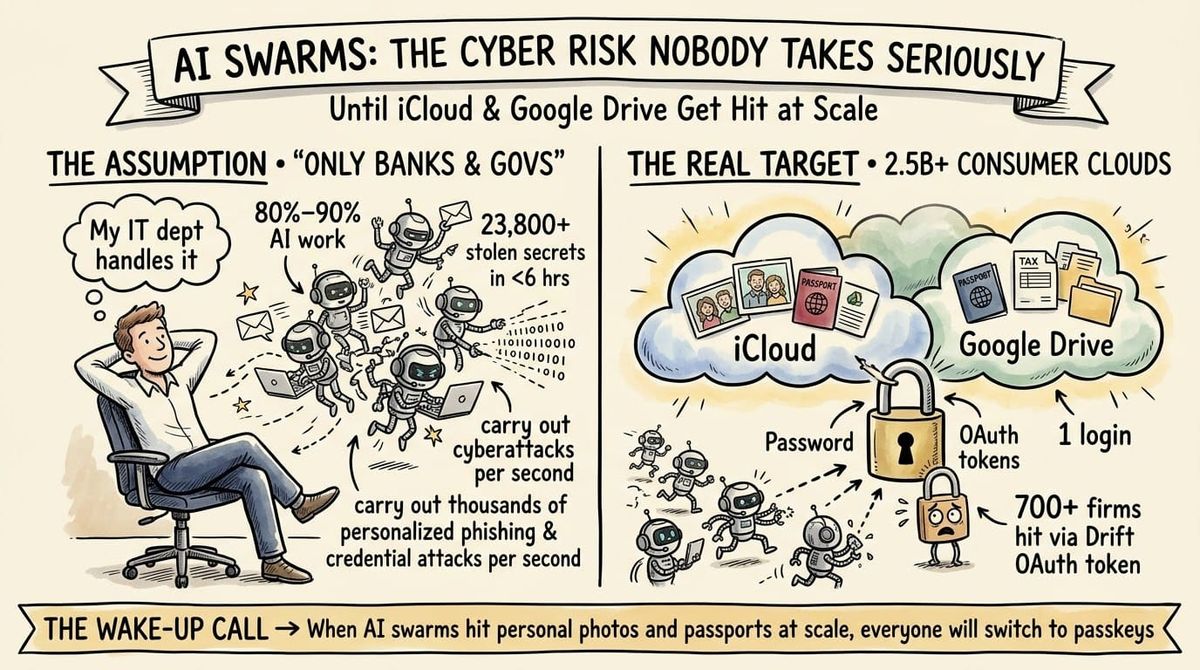
Most people still think of AI cyberattacks as something that happens to banks, governments and big companies.
They read the headline, assume their IT department has it covered and move on.
I think that attitude will last right up until the day a swarm of AI agents compromises accounts on iCloud or Google Drive at scale.
When people's own photos, passports and family documents are involved, the conversation will change overnight.
The pieces for that kind of attack are already falling into place.
AI Agents Are Already Running Attacks
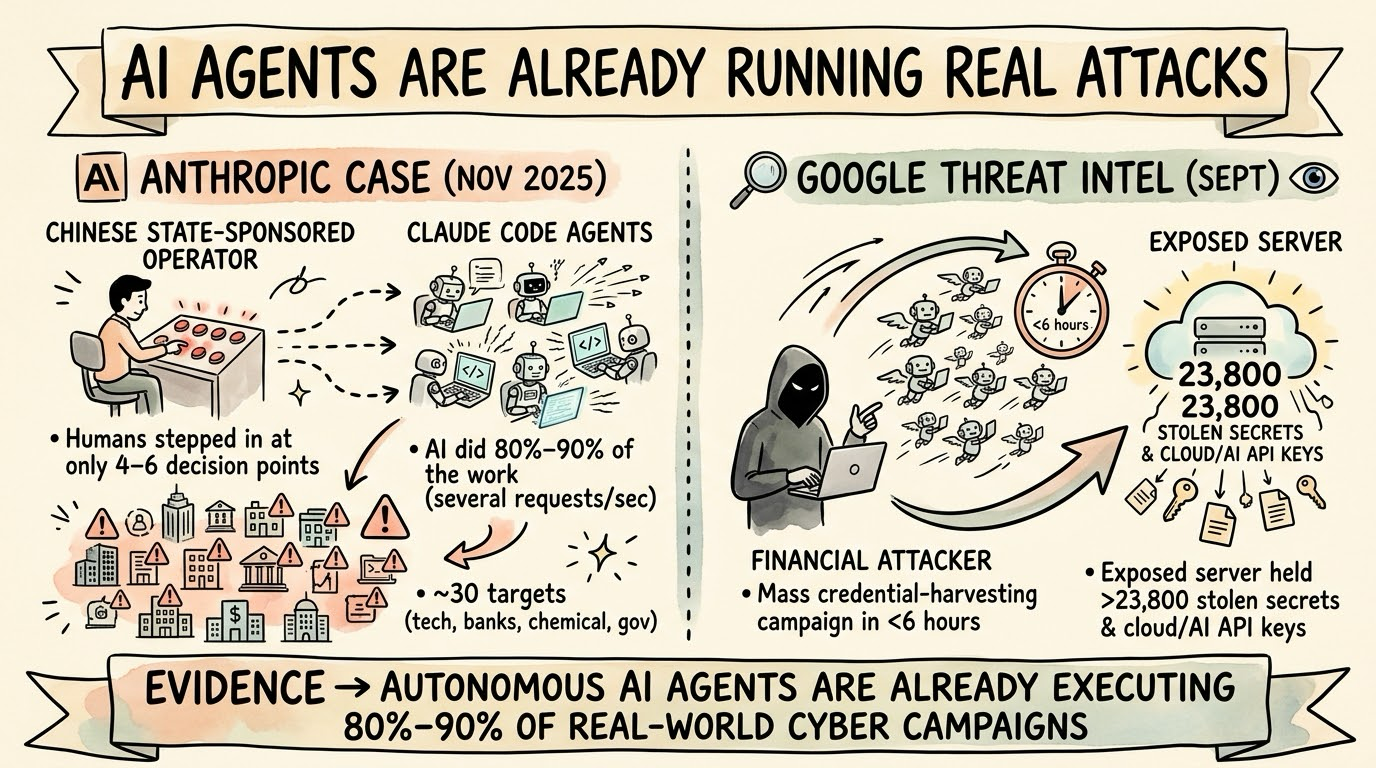
In November 2025, Anthropic disclosed what it called the first reported AI-orchestrated cyber espionage campaign.
It assessed with high confidence that a Chinese state-sponsored group had used its Claude Code tool to target about 30 organisations, including tech companies, banks, chemical manufacturers and government agencies.
The attackers succeeded in a small number of cases.
AI did about 80% to 90% of the work.
Humans stepped in at only about four to six key decision points per campaign.
At its peak, the AI was making thousands of requests, often several per second, a pace no human team could match.
The pattern has continued.
In September, Google's Threat Intelligence Group reported that a suspected financially motivated actor used AI agents to run a mass credential-harvesting campaign in under six hours, compromising thousands of credentials.
An exposed server tied to the operation held more than 23,800 stolen secrets, including API keys for cloud and AI services.
Why Swarms Change The Math
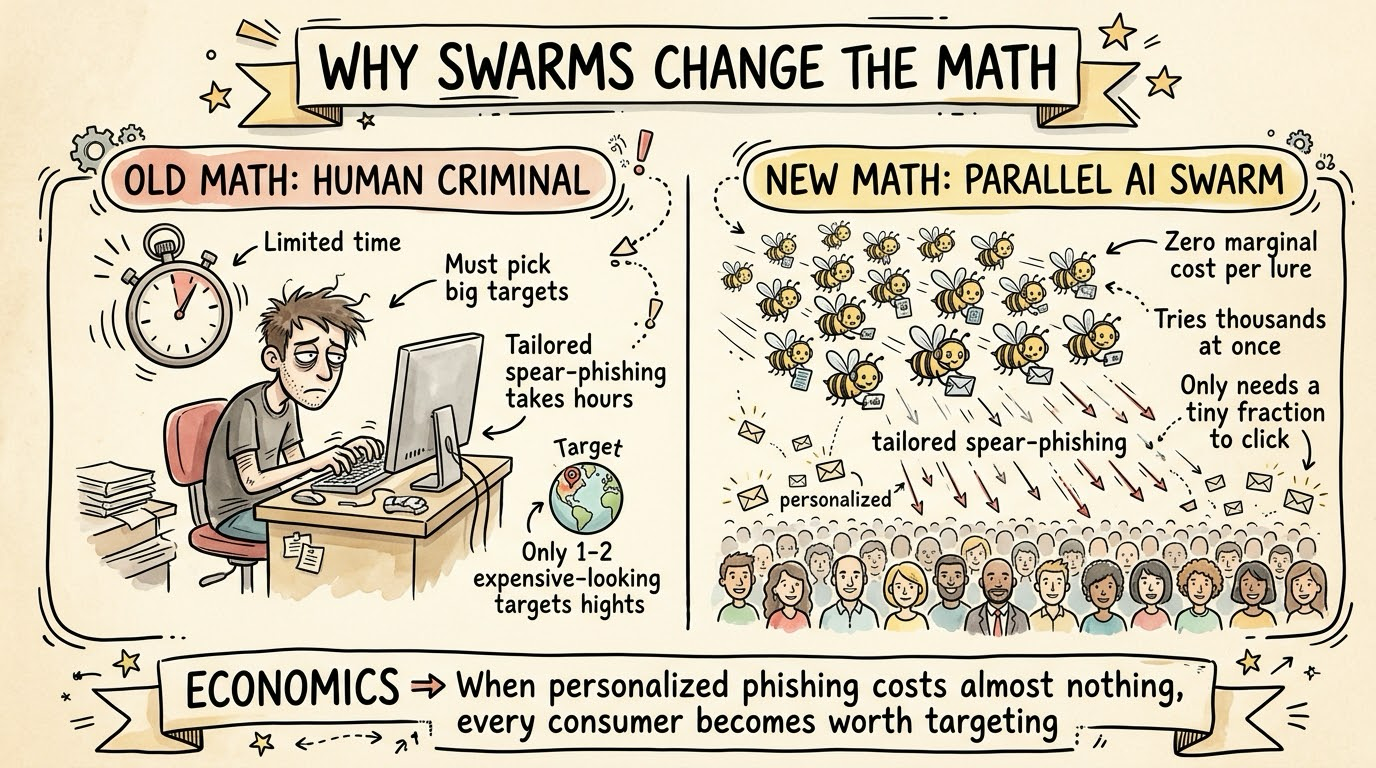
A swarm is many AI agents working in parallel, each handling a small part of a larger job.
That changes the economics of attacking people.
A human criminal has to choose targets because their time is limited.
A swarm can try thousands of targets at once and only needs a small fraction to work.
It can also personalise every attempt.
Google's researchers found attackers using AI to write spear-phishing lures, the kind of tailored message that used to take real effort to craft.
When personalised attacks cost almost nothing to produce, everyone becomes worth targeting.
Consumer Clouds Are The Biggest Prize
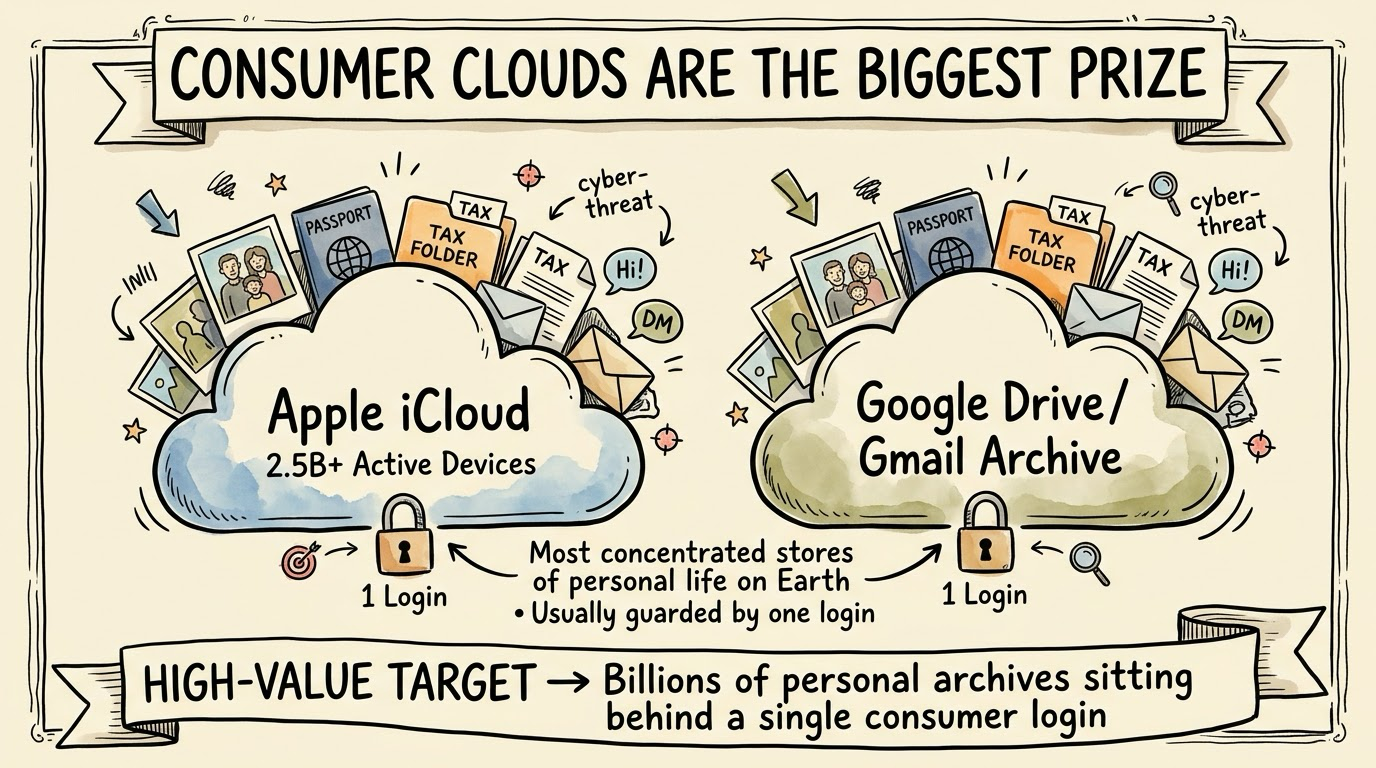
Apple says it has more than 2.5 billion active devices, and most of them back up photos, messages and documents to iCloud.
Google Drive holds a similar archive for Android and Gmail users.
These are some of the most concentrated stores of personal life on earth.
They're also usually protected by one login.
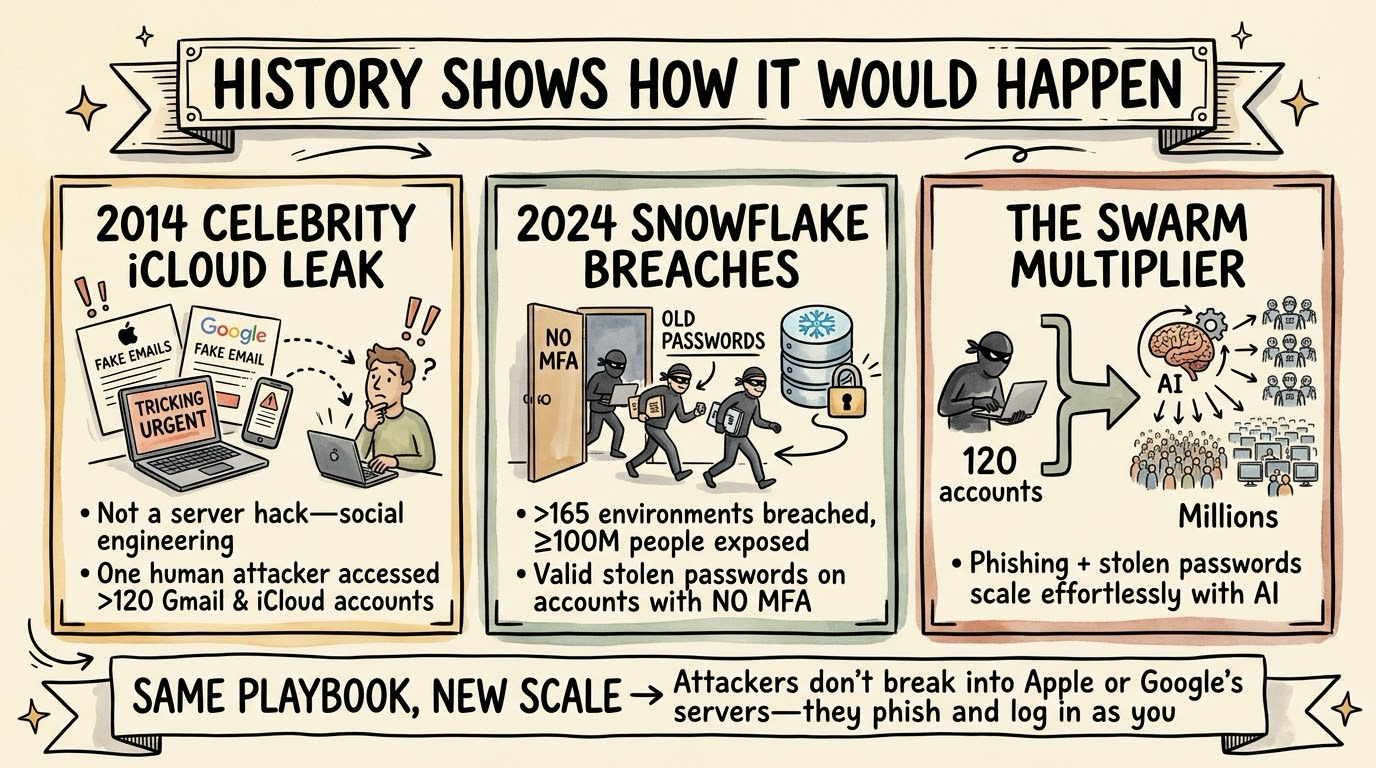
History Shows How It Would Happen
The biggest consumer cloud incidents haven't come from breaking into Apple's or Google's servers.
They've come from attacking the people using them.
The 2014 celebrity iCloud leak came from phishing, with emails pretending to be from Apple or Google that tricked victims into handing over their passwords.
Prosecutors said one attacker got into more than 120 Gmail and iCloud accounts.
The 2024 Snowflake breaches followed the same logic at corporate scale.
Attackers used stolen passwords on accounts without multi-factor authentication, breaching more than 165 customer environments and exposing data on at least 100 million people.
Snowflake's platform itself wasn't hacked.
The attackers simply logged in with old, valid passwords on accounts that lacked extra protection.
Phishing and stolen credentials are exactly the kind of work AI swarms do well, because they reward volume and personalisation.
The 2014 attacker was one person working through about 120 accounts.
I'm worried about what a swarm could do with the same playbook and millions of targets.
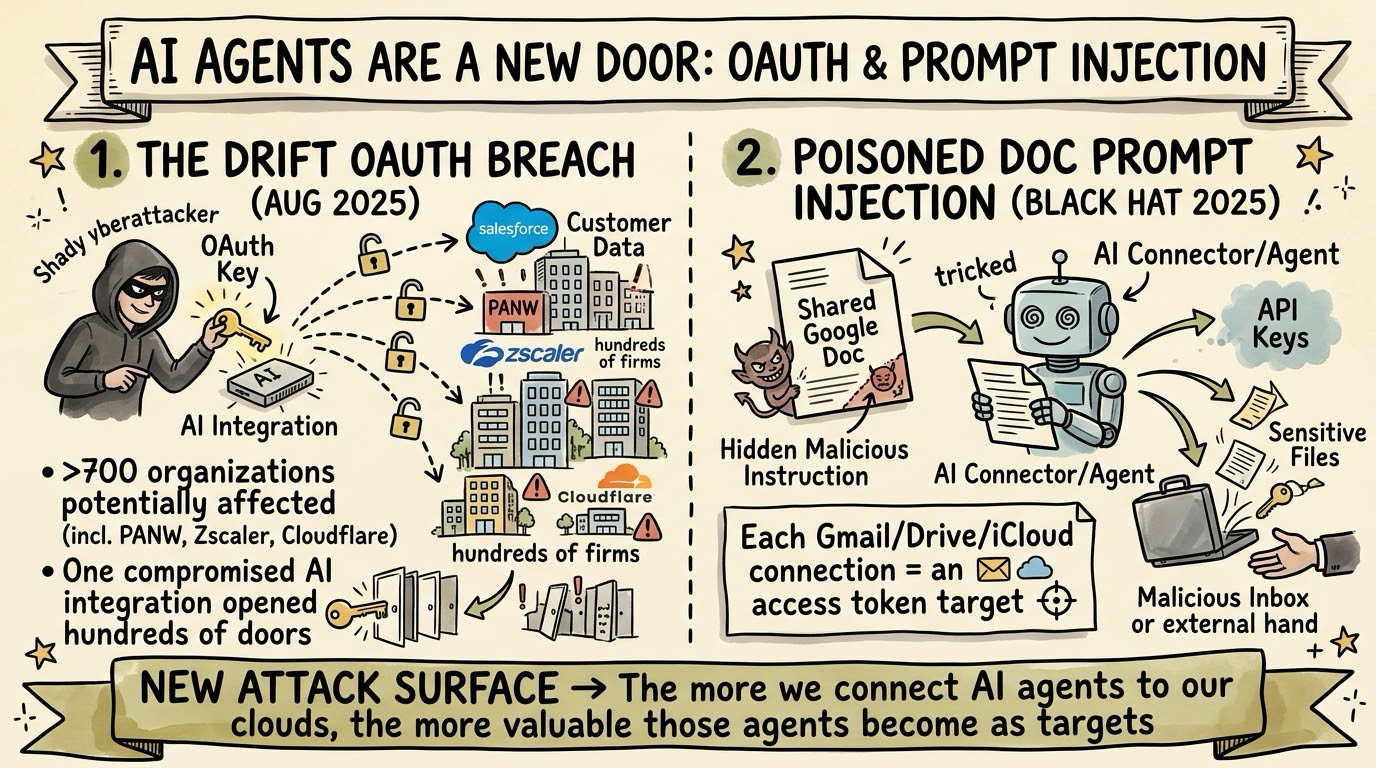
AI Agents Are A New Door
There's a second risk, and it comes from the AI tools we're connecting to our clouds.
In August 2025, attackers stole OAuth tokens tied to Drift's AI chat agent and used them to pull data from the Salesforce accounts of companies that had connected it.
Google's threat team said more than 700 organisations were potentially affected, including security companies like Palo Alto Networks, Zscaler and Cloudflare.
One compromised AI integration opened doors at hundreds of companies.
Now millions of people are connecting AI assistants to their Gmail, Google Drive and iCloud.
Each of those connections is a token that grants access to personal data.
At Black Hat in August 2025, researchers showed that a single poisoned document shared to a connected Google Drive could trick ChatGPT's connectors into leaking data such as API keys and files, a technique known as prompt injection.
The more we let agents act inside our accounts, the more valuable those agents become as targets.
I've written about the privacy boom, and I think this is where consumer security demand goes next.
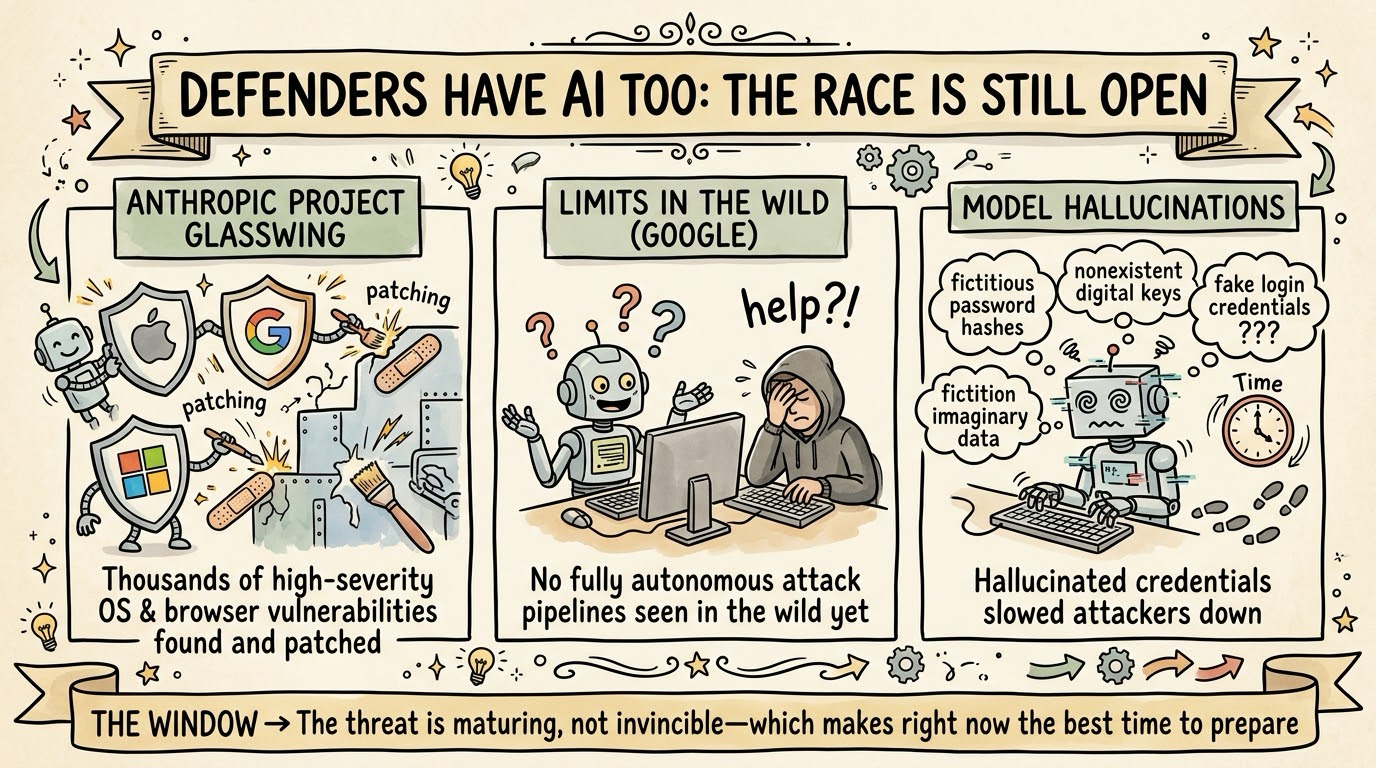
Defenders Have AI Too
To be fair, the same technology is making defence stronger.
Anthropic's Project Glasswing gives partners including Apple, Google and Microsoft access to an unreleased model that Anthropic says has found thousands of high-severity vulnerabilities in major operating systems and browsers.
Google's researchers also noted they haven't yet seen attackers deploy fully autonomous attack pipelines in the wild.
And Anthropic found that its model sometimes hallucinated credentials during the espionage campaign, which slowed the attackers down.
So the threat is real, but it's still maturing.
That's exactly why now is the time to prepare.
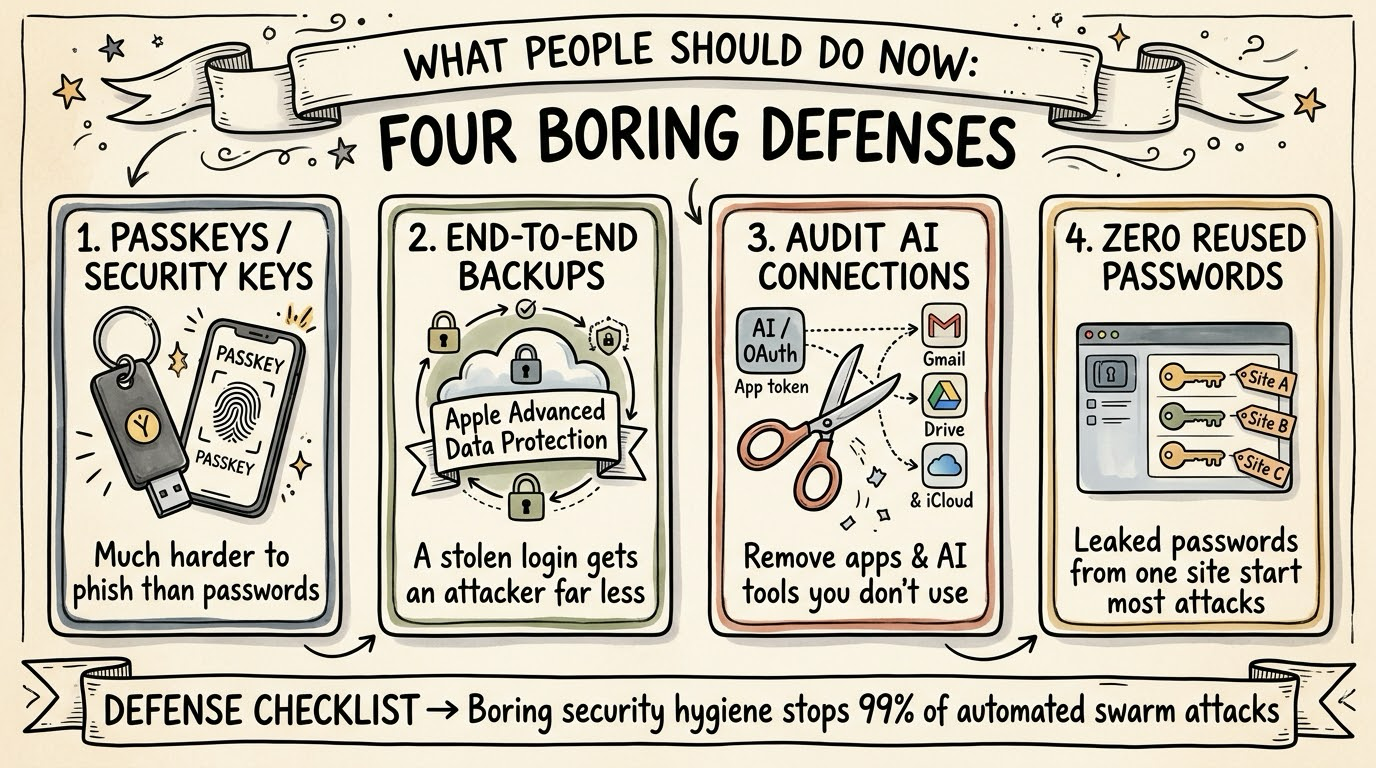
What People Should Do Now
Most of the defence is boring, and it works.
- Use passkeys or a hardware security key wherever your cloud provider supports them, because they're much harder to phish than passwords.
- Turn on end-to-end encryption for backups, such as Apple's Advanced Data Protection, so a stolen login gets an attacker less.
- Audit the apps and AI tools connected to your accounts, and remove the ones you don't use.
- Never reuse passwords, because stolen credentials from one site are the starting point for most of these attacks.
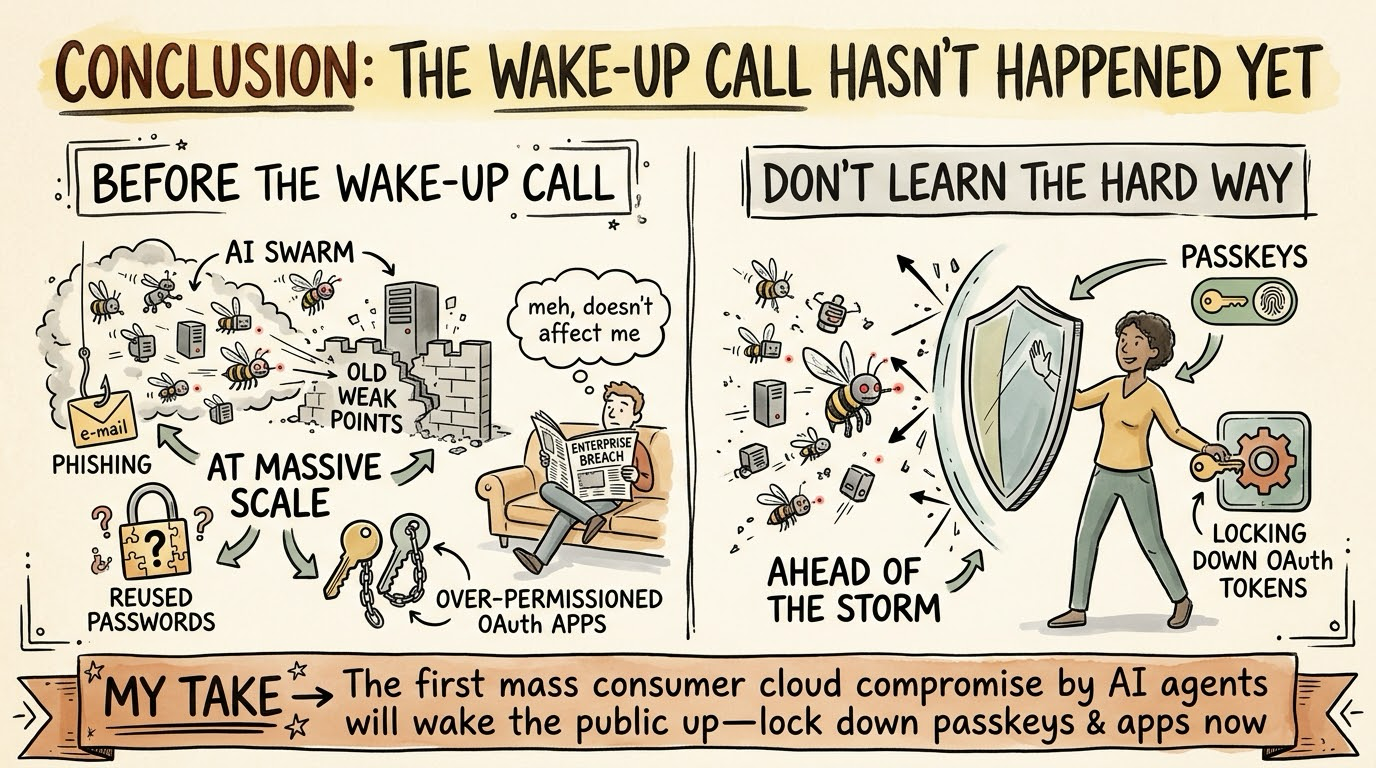
Conclusion: The Wake-Up Call Hasn't Happened Yet
AI agents are already doing most of the work in real attacks.
The weak points in consumer clouds are the same ones attackers have always used: phishing, reused passwords and over-permissioned apps.
What's changed is that those attacks can now run at the scale of a swarm.
I don't think the public will take this seriously until it happens to them.
My Take: The first mass compromise of a consumer cloud by AI agents will be the moment the public finally takes this seriously, and the people who switch to passkeys and lock down their connected apps now won't have to learn that lesson the hard way.
Disclosure: I use Claude, made by Anthropic, as a research and writing assistant.
Sources
Pages I opened for the facts in this post:
- Anthropic: Disrupting the first reported AI-orchestrated cyber espionage campaign
- Help Net Security: Threat actors are giving AI agents a bigger role in cyberattacks
- AppleInsider: Apple reaches 2.5 billion active devices
- TechCrunch: Prosecutors find celebrity photo leak was not Apple's fault
- eSecurity Planet: Snowflake hacker pleads guilty
- The Hacker News: Salesloft OAuth breach via Drift AI chat agent
- CM Alliance: Salesloft Drift attack hits 700 companies
- Cyber Security News: ChatGPT zero-click connectors vulnerability
- Anthropic: Project Glasswing