The Market Is Falling, but Amazon and Google Are Sitting on a Giant Anthropic Windfall
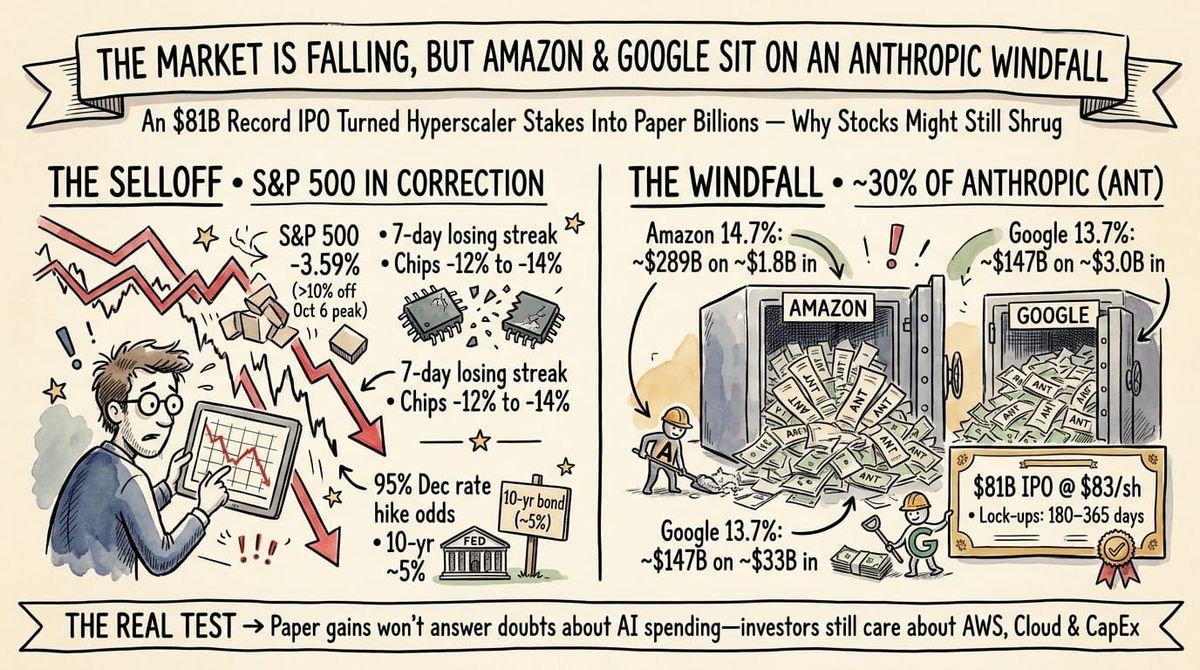
The S&P 500 fell into a correction the same week Anthropic raised $81 billion in the largest IPO ever. Amazon and Google own nearly 30% of it, so their next earnings could show huge paper gains. Here's why those gains may not lift their stocks as much as you'd think.
This was a strange week for the stock market.
Anthropic completed the largest IPO in history, and then the market fell into a correction anyway.
But there's a twist most people are missing.
The biggest tech companies own huge stakes in Anthropic, and the IPO has turned those stakes into hundreds of billions of dollars on paper.
That money will show up in their next earnings reports.
The question is whether it will actually lift their stocks.
A Week Of Panic Selling
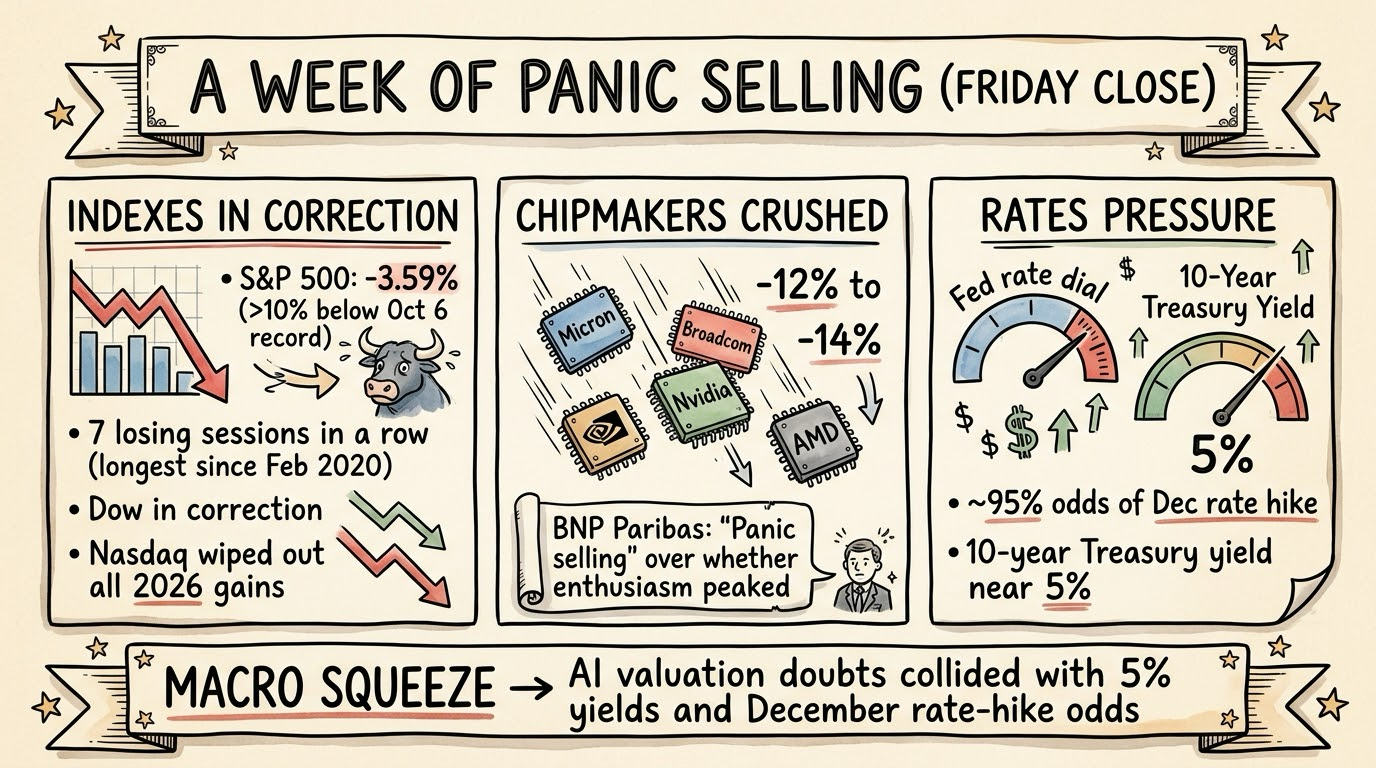
On Friday, the S&P 500 fell 3.59% to close more than 10% below its October 6 record, which puts it in correction territory.
It was the seventh losing session in a row, the longest streak since February 2020.
The Dow also closed in a correction, and the Nasdaq Composite wiped out all of its gains for 2026.
Chipmakers took the worst of it, with Micron, Broadcom, Nvidia and AMD each falling roughly 12% to 14%.
A BNP Paribas strategist described it as "panic selling" as investors tried to work out whether enthusiasm for AI had peaked.
There were other pressures too.
Futures were pricing in about a 95% chance of a December rate hike, and the 10-year Treasury yield was near 5%.
The Biggest IPO Ever
In the middle of all this, Anthropic priced its IPO on November 18 at $83 per share, above its expected range.
It sold 980 million shares, raising about $81 billion, the largest IPO on record.
Its shares started trading on Nasdaq under the ticker ANT on November 19.
They opened at $111.50 and closed the first day at $97.17, up about 17%.
On Friday, they fell about 9%, giving back much of that first-day gain.
The IPO seemed to lift AI sentiment for a day, and then the second session added to worries about valuations across the sector.
Who Owns Anthropic
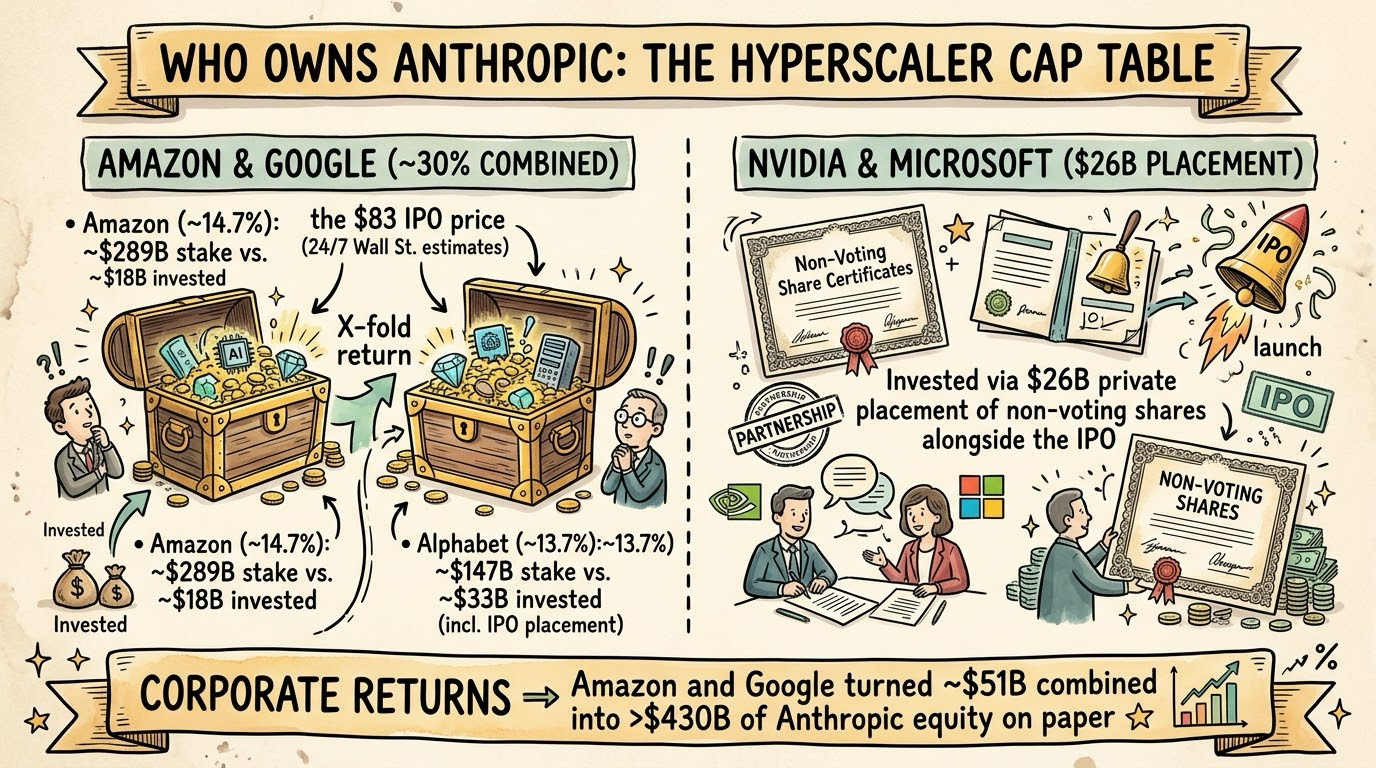
Amazon and Google will together own nearly 30% of Anthropic after the IPO.
Amazon will hold about 14.7%, and Google about 13.7%.
Nvidia and Microsoft are also investors, through a $26 billion private placement of non-voting shares that ran alongside the IPO.
At the $83 IPO price, 24/7 Wall St. estimated Amazon's stake at about $289 billion, against roughly $18 billion invested.
It estimated Alphabet's stake at about $147 billion, against roughly $33 billion invested, including its purchase in the IPO placement.
Those are extraordinary returns on a corporate investment.
These Gains Are Already Shaping Earnings
This isn't new.
Accounting rules require companies to revalue private stakes when a new funding round sets a price.
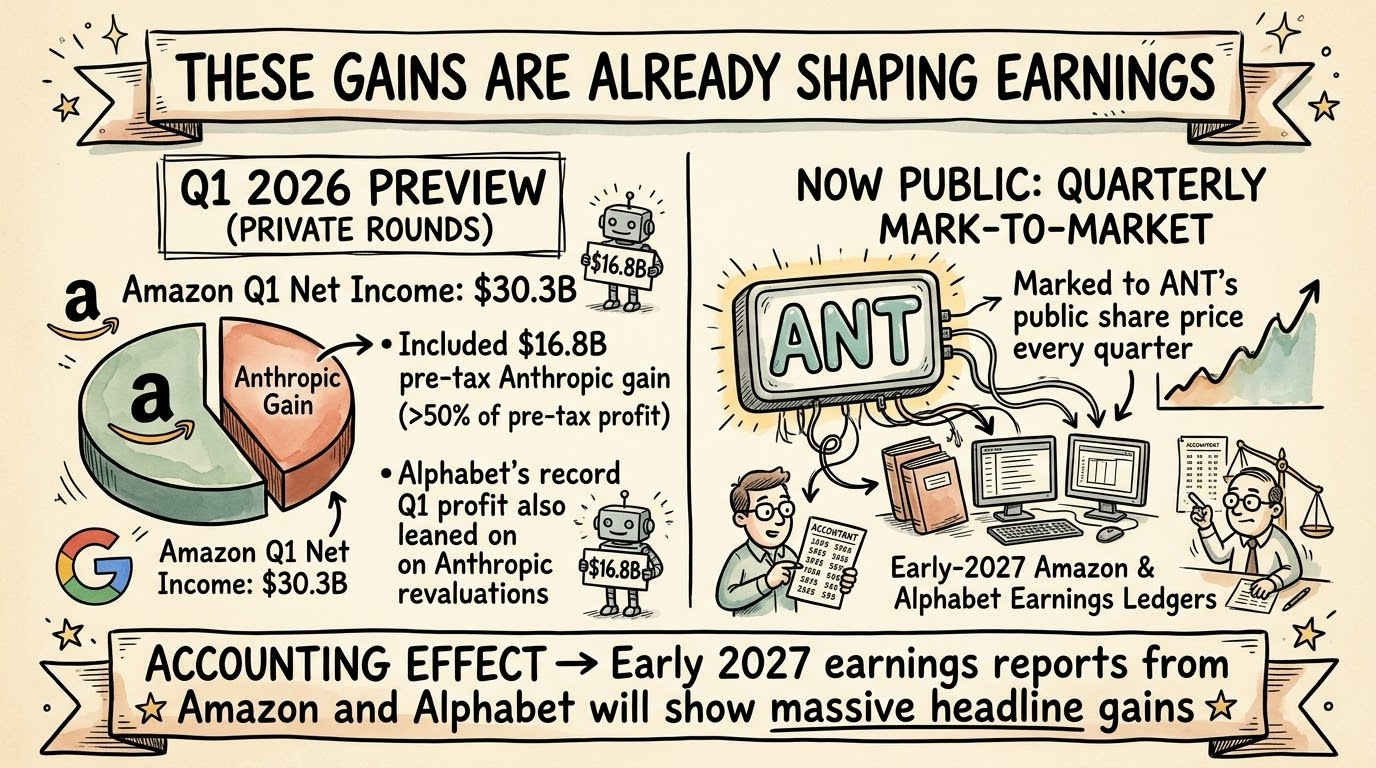
In Q1 2026, Amazon reported net income of $30.3 billion, which included $16.8 billion of pre-tax gains from its Anthropic investments.
That was more than half of its pre-tax income for the quarter.
Alphabet's record Q1 profit also leaned heavily on equity revaluations, mainly from Anthropic.
Now that Anthropic trades publicly, these stakes will be marked to the market price every quarter.
So the next earnings reports from Amazon and Alphabet, due in early 2027, could show very large gains.
Why Those Gains May Not Lift The Stocks
This is where I'd add some caution.
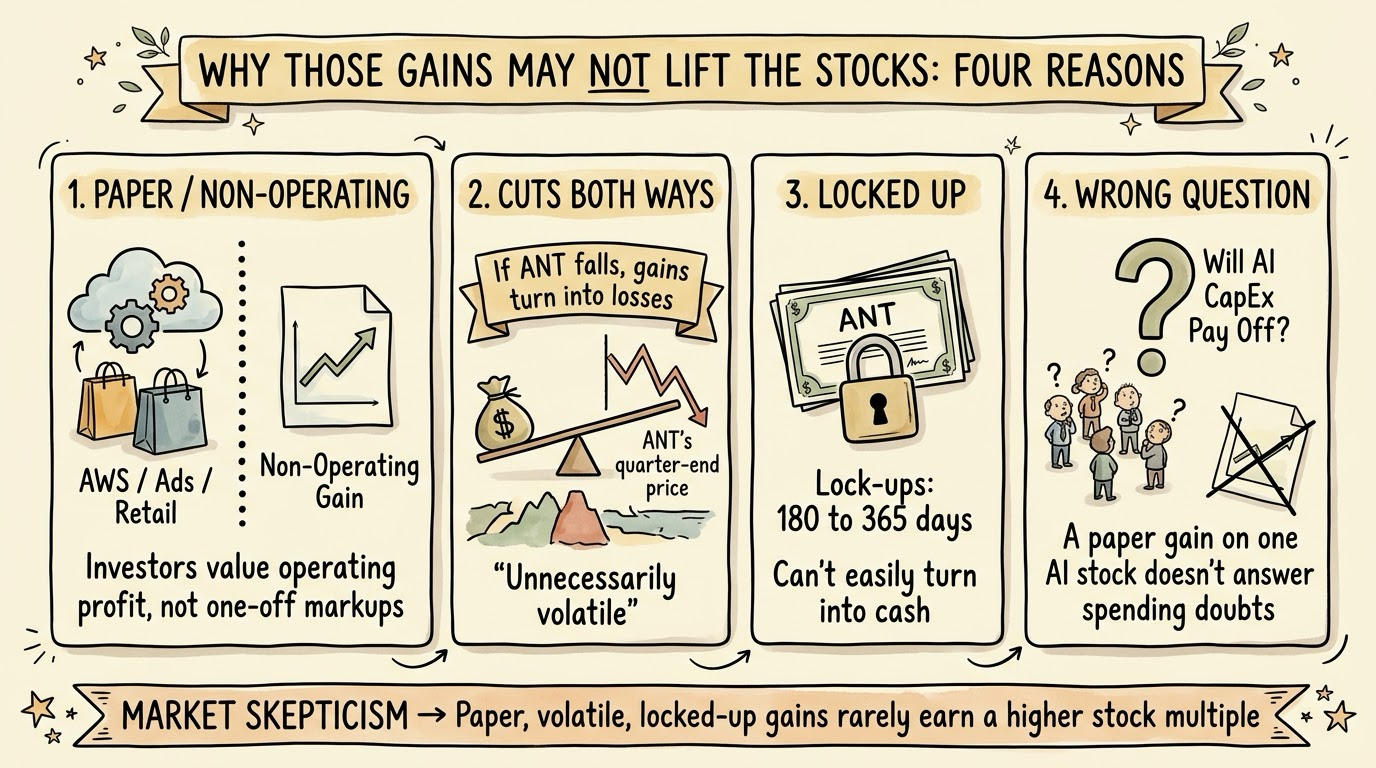
First, the gains are on paper.
Amazon reports them as non-operating income, separate from the profit it makes from AWS, advertising and retail.
Investors tend to value tech companies on their operating businesses, so a one-time revaluation gain doesn't usually earn the same multiple as recurring profit.
Second, mark-to-market cuts both ways.
The gain each quarter depends on where ANT closes on the last day of that quarter.
If ANT keeps falling with the rest of AI stocks, the gains shrink, and in a later quarter they could become losses.
As an accounting expert told Fortune, critics warned when the rule took effect in 2018 that it would make earnings "unnecessarily volatile."
Third, most of the value is locked up.
Most holders face lock-ups of up to 180 days, and some large holders face up to 365 days.
Much of this value can't easily be turned into cash any time soon.
Fourth, investors are already focused on something else.
This selloff is about whether AI spending will pay off, and Amazon and Alphabet are two of the biggest spenders.
A big Anthropic gain won't answer that question, because it's partly a gain on the same AI boom investors are worried about.
I wrote about why OpenAI and Anthropic will win the personal agent war, and the hyperscalers' stakes are one way that bet is already showing up on their balance sheets.
Conclusion: A Windfall With Strings Attached
The market is in a correction, and AI stocks are leading the way down.
At the same time, Amazon and Google are sitting on enormous investment gains.
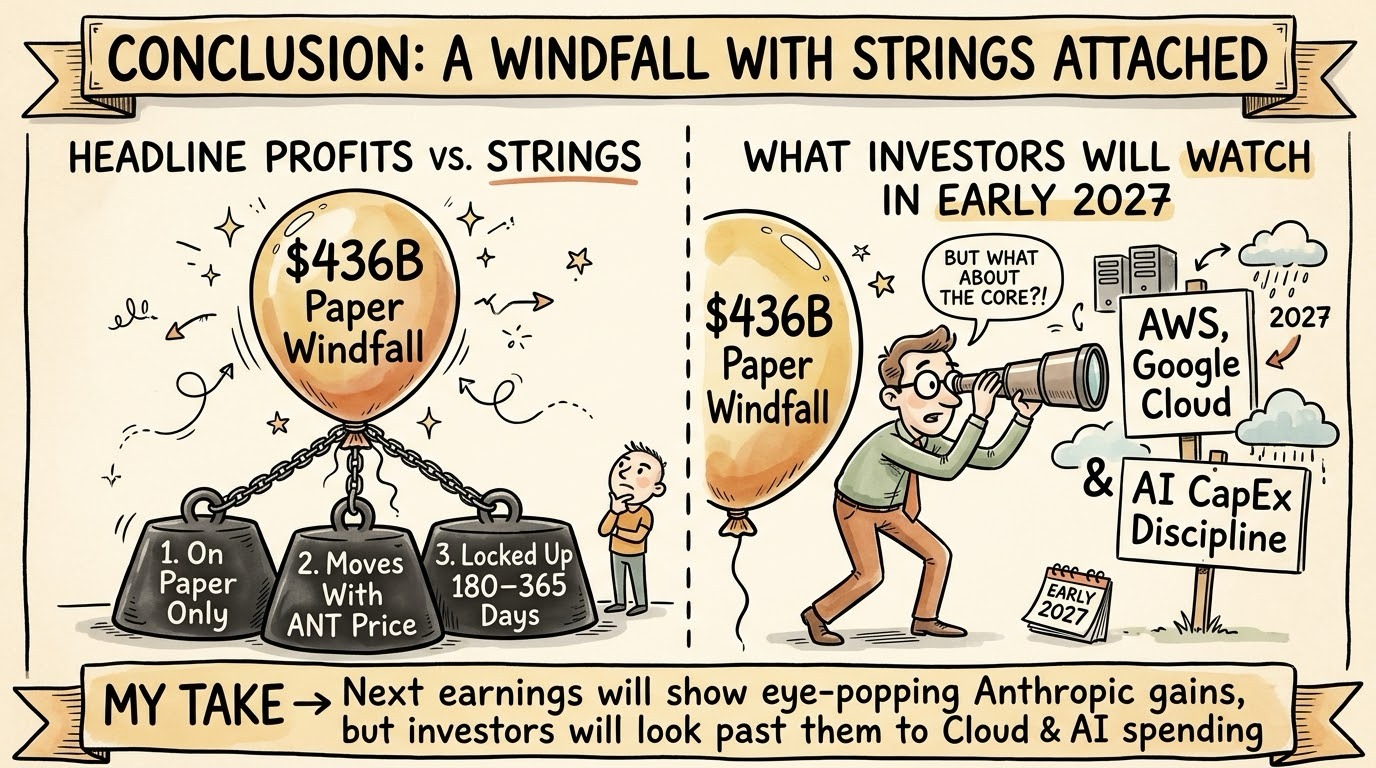
Those gains will make their headline profits look spectacular, but they're on paper, they move with ANT's share price and they're mostly locked up for now.
My Take: Amazon's and Alphabet's next earnings will probably show eye-popping Anthropic gains, but I'd expect investors to look past them to AWS, Google Cloud and AI spending, because a paper gain on one AI stock is a weak answer to doubts about the whole AI trade.
Disclosure: I use Claude, made by Anthropic, as a research and writing assistant. This post is my opinion and isn't investment advice.
Sources
Pages I opened for the facts in this post:
- Fortune: BNP Paribas sees panic selling as the S&P 500 enters a correction
- Beinsure: Dow, S&P 500 and Nasdaq 100 sink on AI selloff after Anthropic IPO
- Anthropic: Anthropic prices initial public offering
- Stock Titan: ANT's first day of trading
- TechCrunch: Amazon and Google will together own nearly 30% of Anthropic
- 24/7 Wall St.: Amazon and Google are sitting on a $411 billion Anthropic windfall
- Fortune: Google and Amazon AI profits and their Anthropic stakes
- The Next Web: Amazon's Q1 2026 Anthropic gain