After Office, Anthropic Is Coming for the Operating System and Cybersecurity
Anthropic has Claude Docs, Sheets and Slides aimed at Microsoft 365. I think Office is only the first target. Claude already operates Mac and Windows desktops, and its security models find bugs humans missed for decades. Here's why the OS and cybersecurity come next.
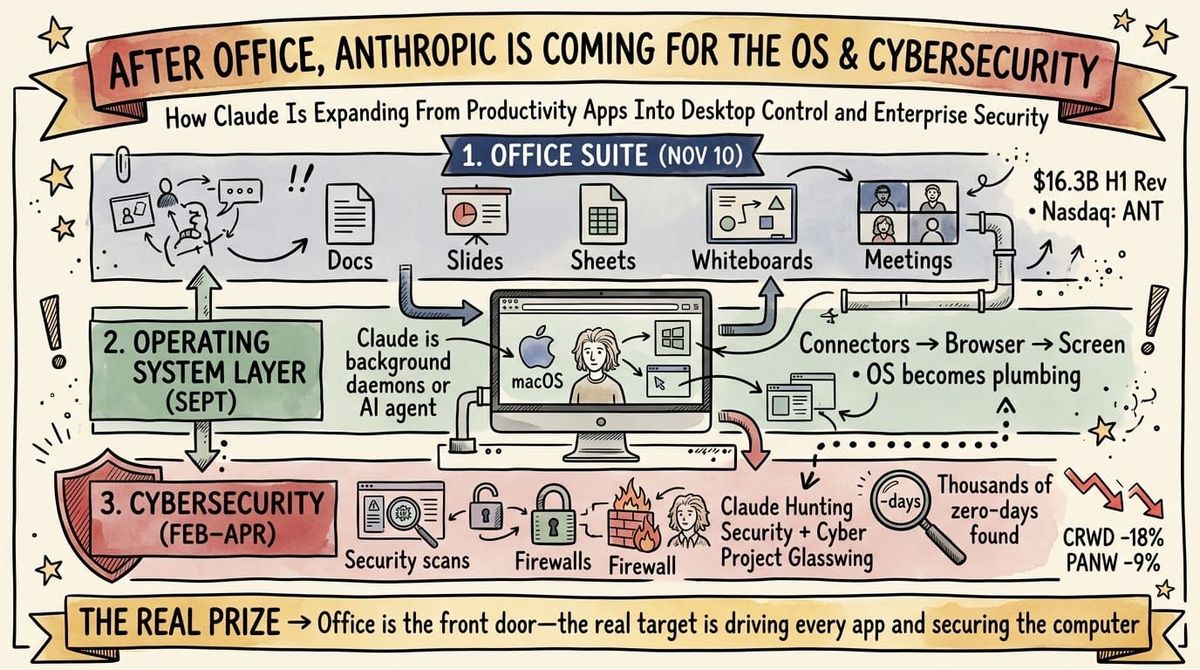
On November 10, Anthropic added Claude Sheets and Claude Whiteboards to the documents and presentations it already makes.
Claude Meetings is reportedly next.
Everyone is reading this as Anthropic going after Microsoft 365, and it is.
I think Office is only the first layer.
The bigger targets are the operating system, where all work starts, and cybersecurity, which protects everything running on top of it.
Anthropic has already shipped the early versions of both.
Office Was The Obvious Start
Office software is where knowledge workers spend their day, so it's the natural place for an AI company to show what agents can do.
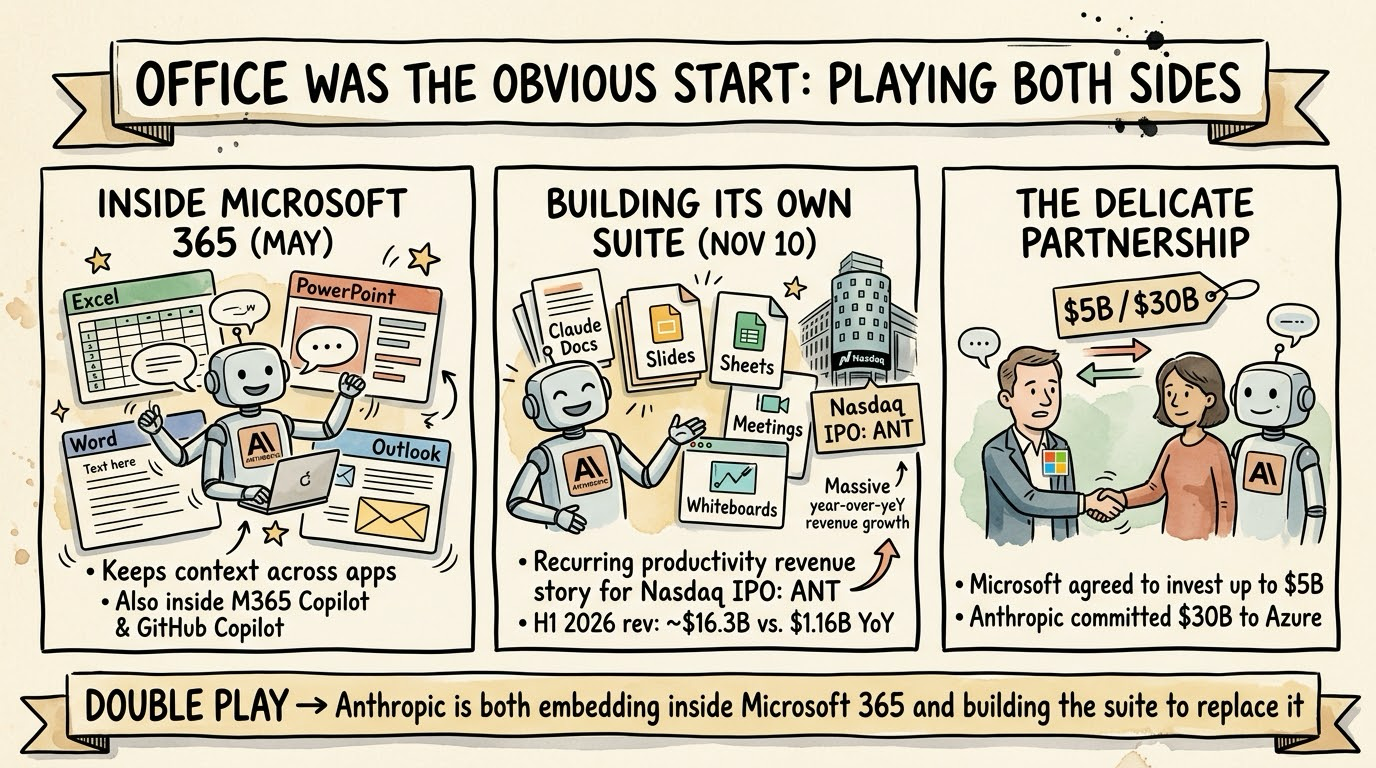
Anthropic has played both sides of it.
In May, Claude for Microsoft 365 became available in Excel, PowerPoint and Word on all paid Claude plans, with Outlook in beta.
It keeps context across those apps, so you can move from an email to a model to a deck without starting over.
At the same time, Anthropic is building its own versions of those apps.
That's a delicate position, because Microsoft is also a partner.
In November 2025, Microsoft agreed to invest up to $5 billion in Anthropic, and Anthropic committed to buy $30 billion of Azure compute.
Microsoft also offers Claude inside Microsoft 365 Copilot and GitHub Copilot.
The timing makes sense.
Anthropic filed its S-1 for a Nasdaq listing under the ticker ANT on October 26.
Its revenue in the first half of 2026 was about $16.3 billion, up from $1.16 billion a year earlier.
Recurring software revenue from productivity apps is an easy story to tell public market investors.
I wrote about why OpenAI and Anthropic will win the personal agent war, and owning the apps where work happens is a big part of that.
The Operating System Is Next
I don't think Anthropic will build its own Windows or macOS.
It doesn't need to.
What matters is who controls the layer where you start your work, and that layer is moving from the desktop to the agent.
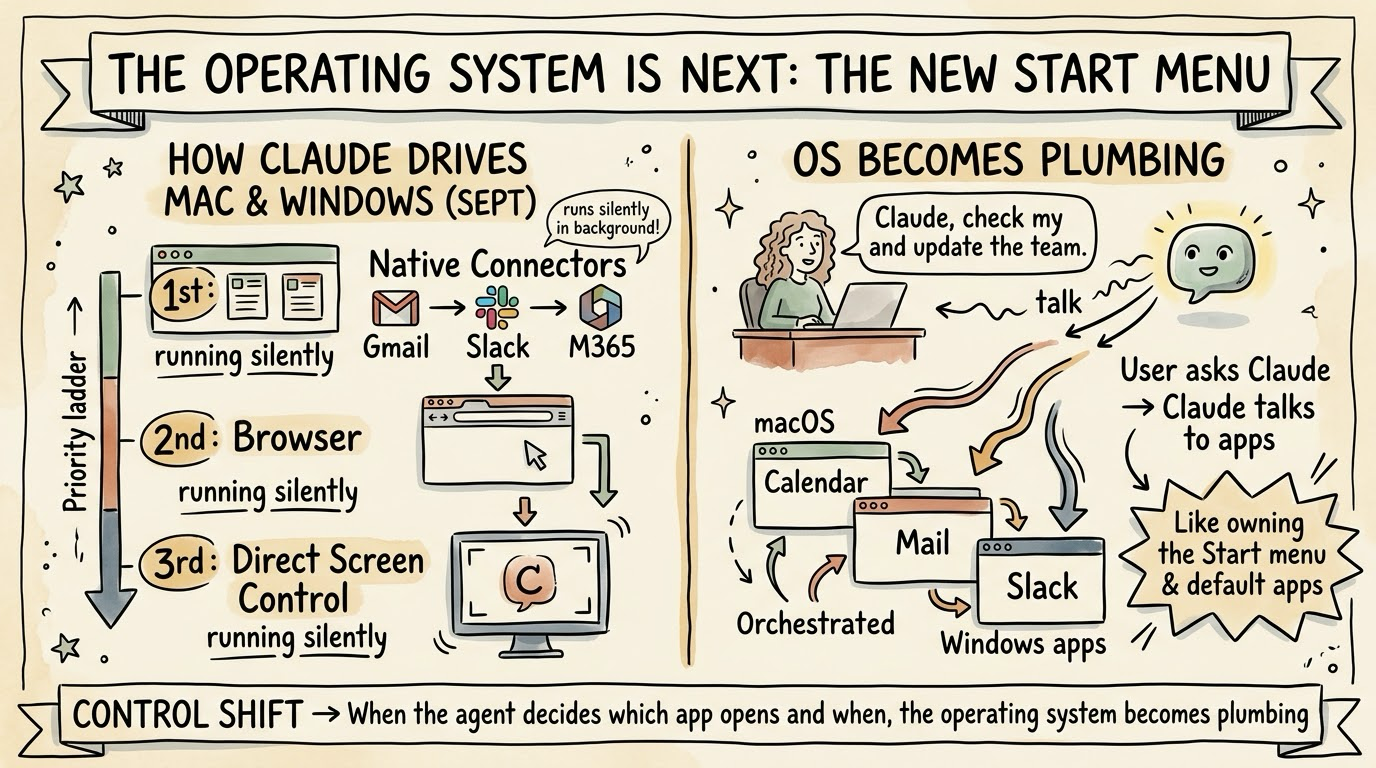
In September, Anthropic let Claude operate Mac and Windows desktops in the background through its desktop app.
Claude can click, type and open apps while you keep working on something else.
On Macs, it runs apps in background windows without taking over your screen.
It picks its tools in order: native connectors to apps like Gmail, Slack and Microsoft 365 first, then a browser, and direct screen control only when nothing else works.
That ordering is the important part.
It means Claude decides which app gets used and when.
The user asks Claude, and Claude talks to the apps.
When that happens often enough, the agent becomes the real interface and the operating system becomes plumbing underneath it.
Microsoft got enormous power from owning the Start menu and the default apps.
Whoever owns the agent that opens the apps could end up with that same power.
Cybersecurity Is The Third Front
This is the part I think most people underestimate.
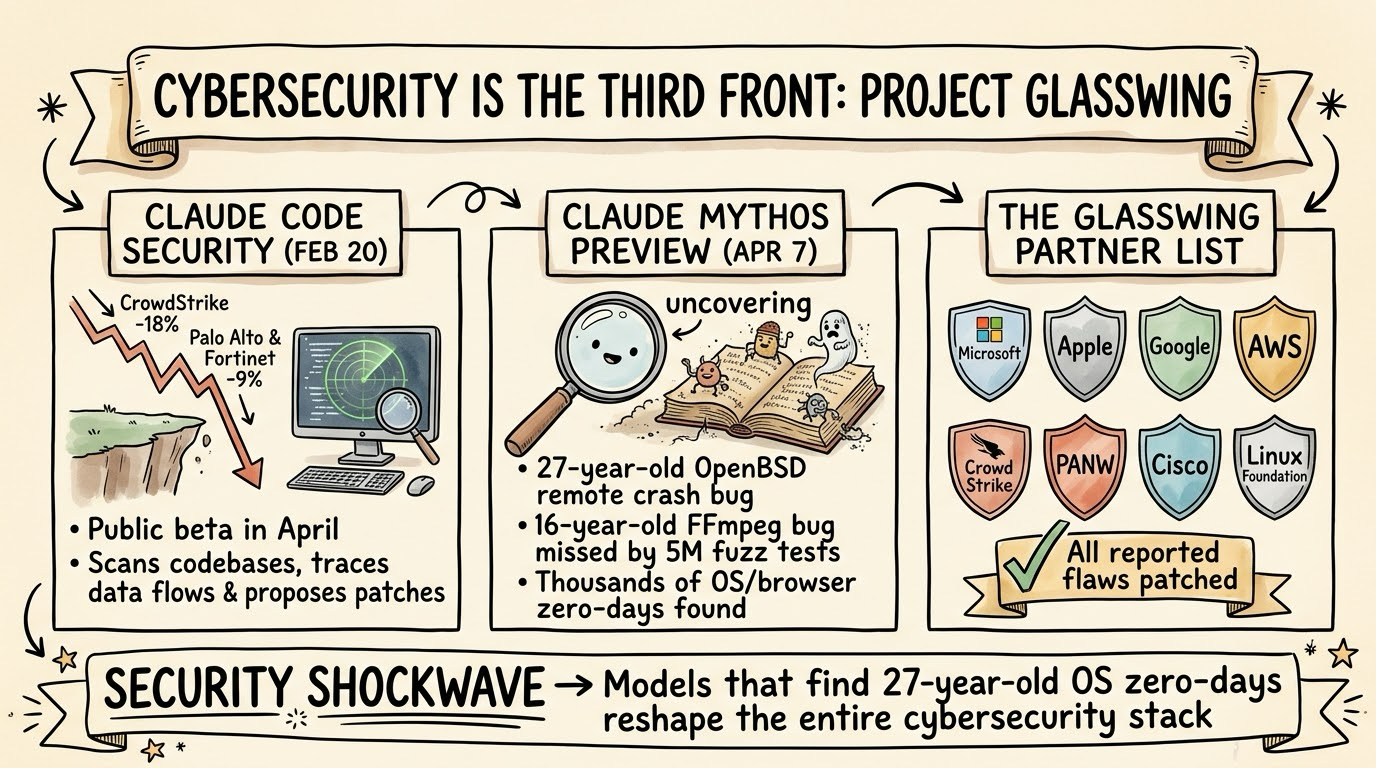
On February 20, Anthropic launched Claude Code Security as a research preview.
In the days after, CrowdStrike shares fell about 18%, and Palo Alto Networks and Fortinet fell about 9%.
In April, it opened Claude Security to enterprise customers as a public beta.
It scans whole codebases like a security researcher, traces how data flows between components and proposes patches.
The bigger signal was Project Glasswing, launched on April 7.
Anthropic gave partners access to Claude Mythos Preview, an unreleased model it says can find and exploit software vulnerabilities at a level that rivals all but the most skilled humans.
Anthropic says the model has found thousands of high-severity zero-days across major operating systems and browsers.
One was a 27-year-old flaw in OpenBSD, an operating system known for its security, that let an attacker remotely crash any machine running it.
Another was a 16-year-old FFmpeg bug in code that automated testing tools had hit five million times without catching it.
All the reported vulnerabilities have been patched.
The partner list tells you how seriously the industry takes this.
It includes Microsoft, Apple, Google, Amazon Web Services, CrowdStrike, Palo Alto Networks, Cisco and the Linux Foundation.
Why The Three Connect
These aren't three separate businesses to me.
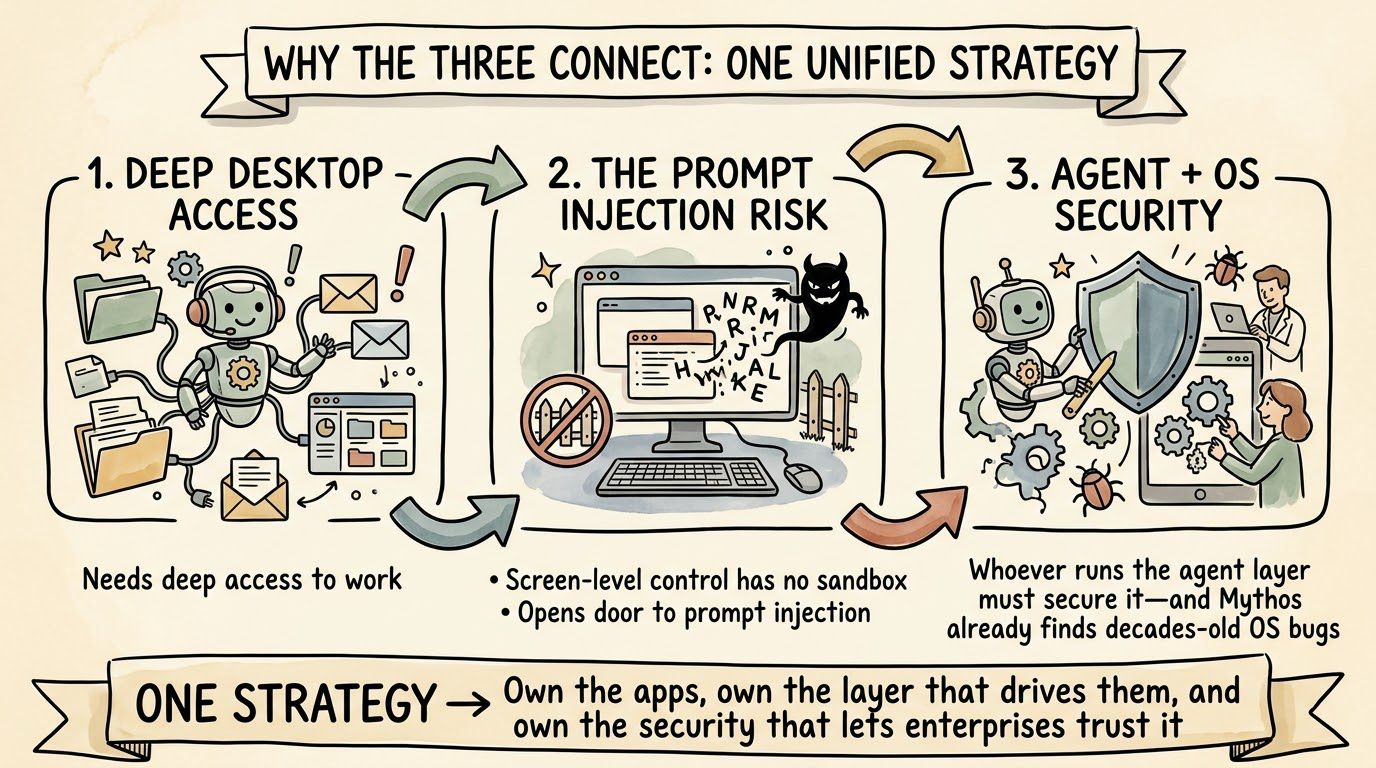
An agent that runs your desktop needs deep access to your files, email and internal tools.
That creates a new security problem.
The September coverage pointed out that screen-level control has no sandbox between the model and whatever is open on the desktop, which opens the door to prompt injection.
The company that runs the agent layer will have to secure it.
And a company whose models already find decades-old bugs in operating systems is well placed to sell that security.
So I see one strategy: own the apps, own the layer that drives them, and own the security that makes enterprises comfortable letting an agent drive.
What Could Stop It
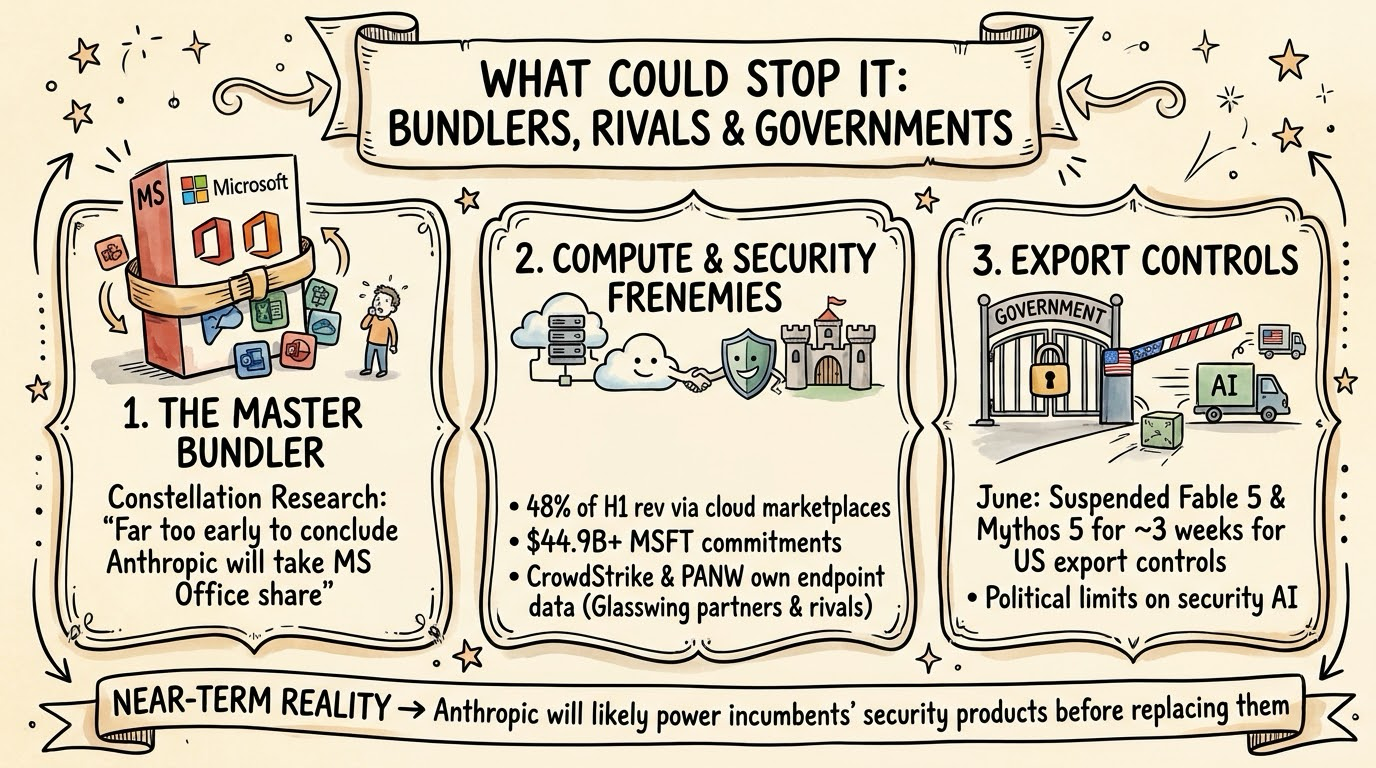
Microsoft is still a master bundler.
Constellation Research, which covered the Sheets launch, put it plainly: "It's far too early to conclude that Anthropic will take Microsoft Office share."
Anthropic also depends on the companies it's competing with.
Its S-1 says Amazon, Google and Microsoft increasingly see it as a competitor and may not supply all the compute it needs.
Cloud marketplaces accounted for about 48% of its first-half revenue, and it has at least $44.9 billion in purchase commitments with Microsoft.
In security, CrowdStrike and Palo Alto Networks are Glasswing partners as well as potential rivals, and they own the endpoint data and customer relationships.
I think the more likely near-term outcome is that Anthropic powers a lot of other companies' security products before it replaces any of them.
And governments are watching.
In June, Anthropic suspended access to its Fable 5 and Mythos 5 models for almost three weeks to comply with U.S. export controls.
Models this capable in security will always come with political limits on who can use them.
Conclusion: The Office Suite Is The Front Door
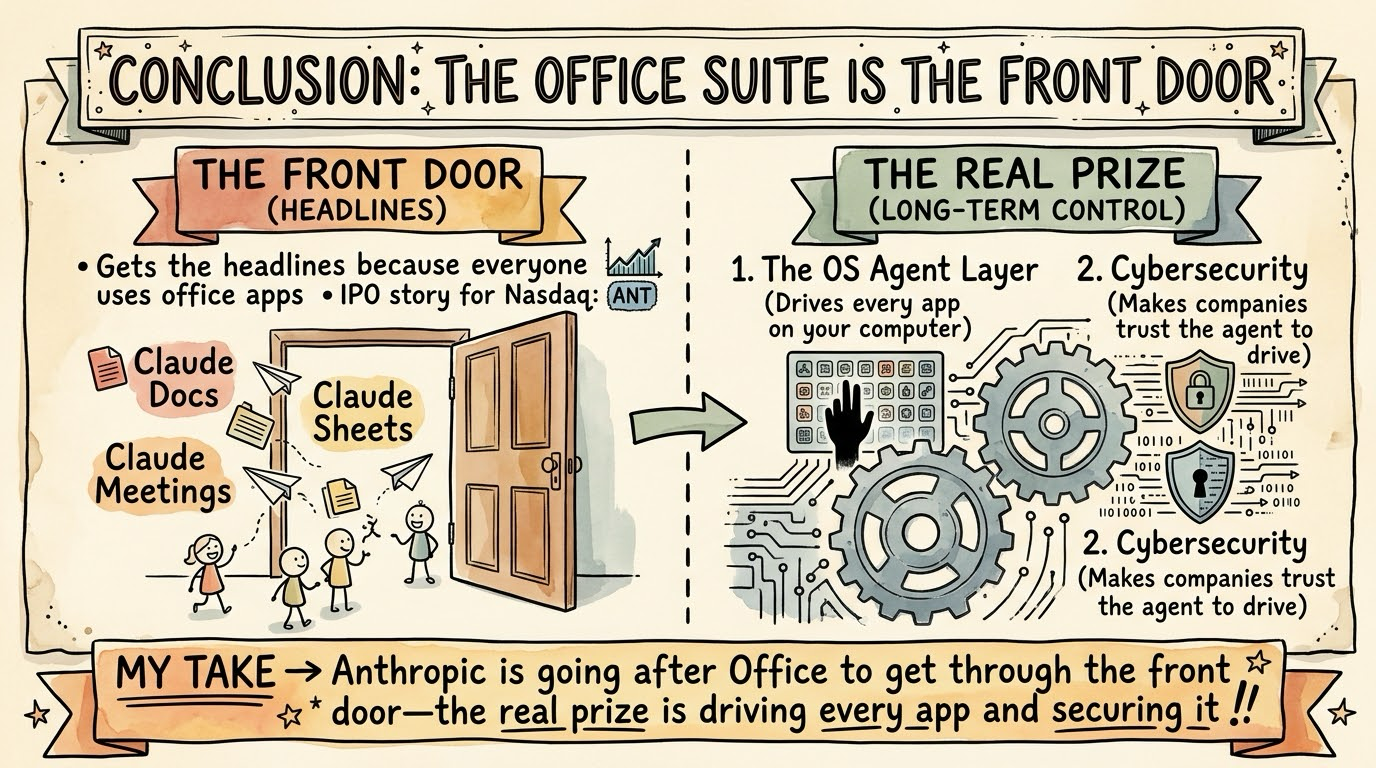
The office apps get the headlines because everyone uses them.
The operating system layer and cybersecurity are where the long-term control sits.
Anthropic already has early products in all three, and an IPO coming to fund the push.
My Take: Anthropic is going after Office to get through the front door, but the real prize is becoming the layer that drives every app on your computer and the security that makes companies trust it to do so.
Disclosure: I use Claude, made by Anthropic, as a research and writing assistant.
Sources
Pages I opened for the facts in this post:
- Constellation Research: Anthropic rounds out its office ambitions with Claude Sheets, Whiteboards and more
- Lead with AI: Work with Claude across Microsoft 365 apps
- Pure AI: Microsoft and Nvidia deepen ties with Anthropic
- PPC Land: Anthropic files for Nasdaq IPO with $16.3bn in first-half revenue
- Cyber Security News: Claude controls macOS and Windows
- Cointelegraph: Cybersecurity stocks tank following launch of Claude Code Security
- SiliconANGLE: Claude Security public beta
- Anthropic: Project Glasswing
- Anthropic: Statement on Fable and Mythos access