Will AI Kill The Full-Time Job? Why I'm Betting On The Gig Economy
AI is already shrinking entry-level hiring in jobs built on routine work, and more skilled people are going freelance. I think work is drifting from fixed titles to people who orchestrate AI agents across several clients, and the business models around that shift are still wide open.
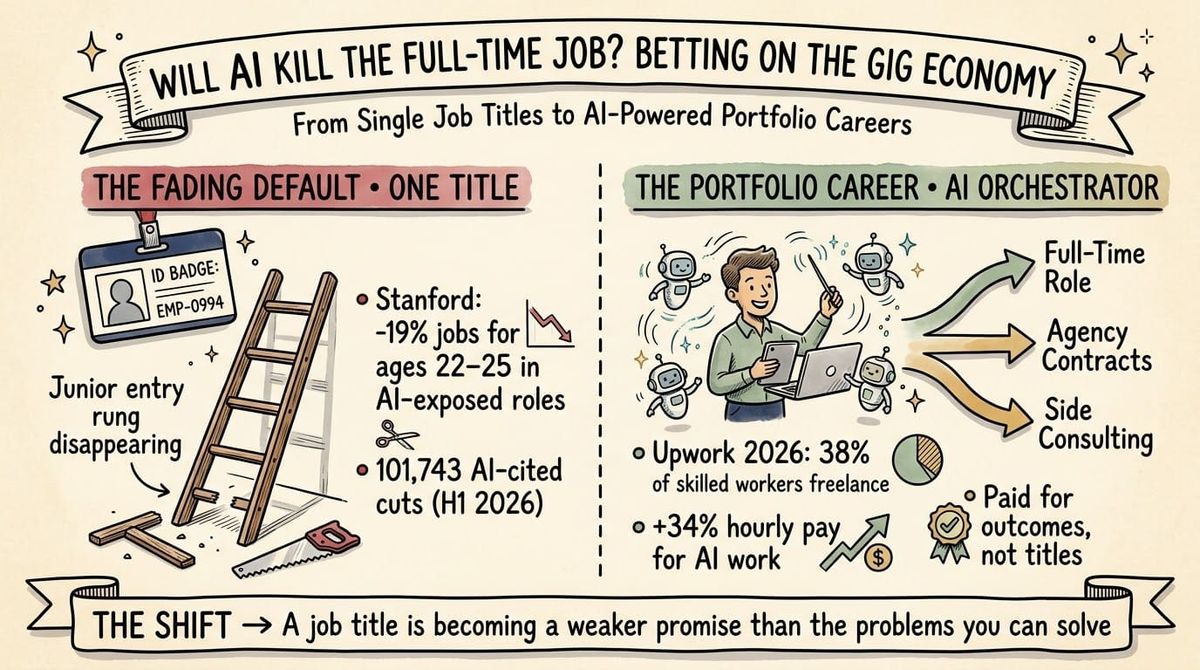
I already work the way I think most knowledge workers will soon.
I hold a full-time role, take contract work through an agency and run my own consulting on the side.
I see them as parts of one career that runs on my judgment and a lot of AI tools.
I think AI will push far more people toward this setup, and fewer people will hold a single job with a single title.
The evidence supports part of that, and it pushes back on another part.
Where The Losses Are Showing Up
The cleanest data I've found comes from Stanford.
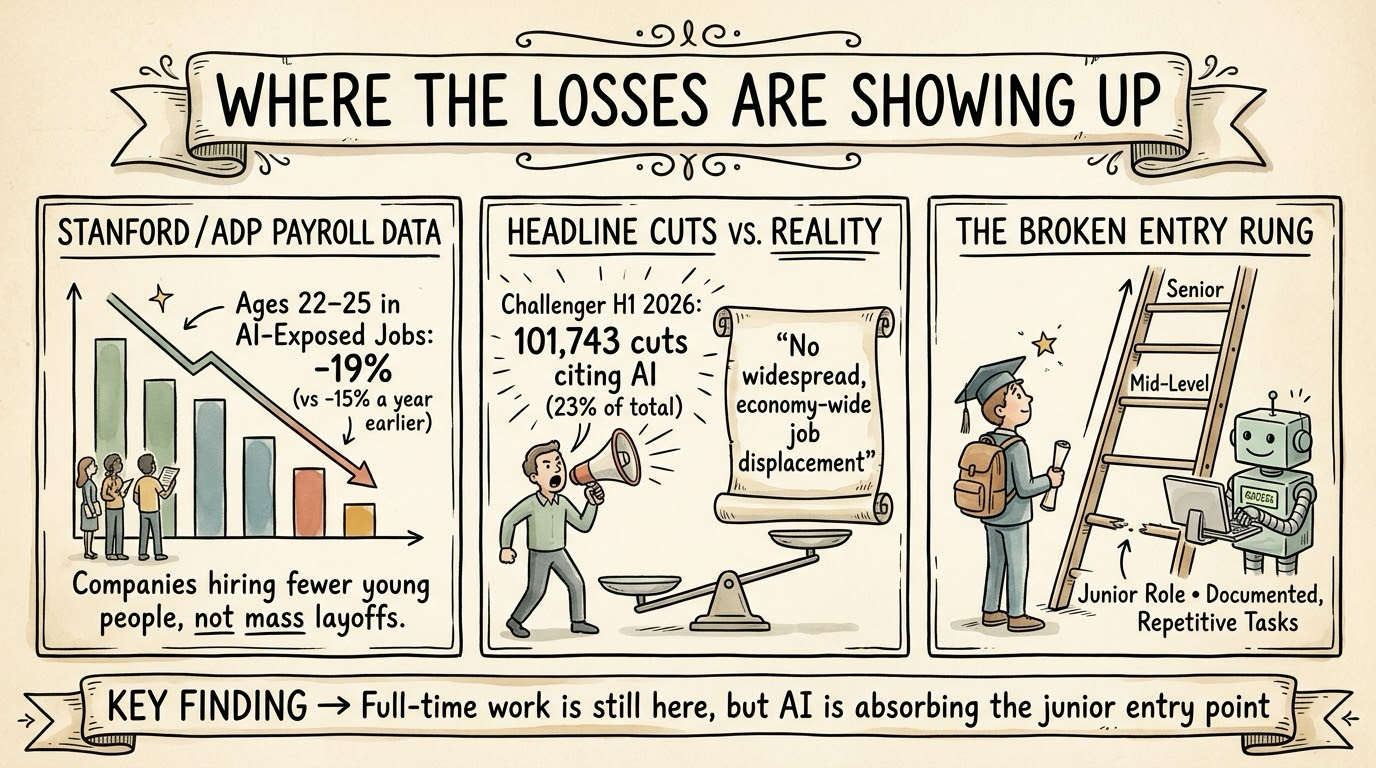
Using ADP payroll records, Erik Brynjolfsson and his colleagues found that employment for 22- to 25-year-olds in the most AI-exposed jobs is about 19% below where it would be if it had kept pace with less-exposed jobs.
That gap was 15% a year earlier.
The drop shows up in jobs where AI is used to automate tasks, especially work built on documented, teachable knowledge.
It mostly comes from companies hiring fewer young people, rather than laying off the ones they have.
The same study also says, "We do not see widespread, economy-wide job displacement associated with AI."
Layoff announcements tell a louder story.
Challenger, Gray & Christmas counted 101,743 job cuts citing AI in the first half of 2026, about 23% of all announced cuts.
That counts the reason companies gave, which isn't always the real one.
So full-time work is still here for now.
The first thing to go looks like the entry point, the junior role where people used to learn the job by doing the repetitive parts.
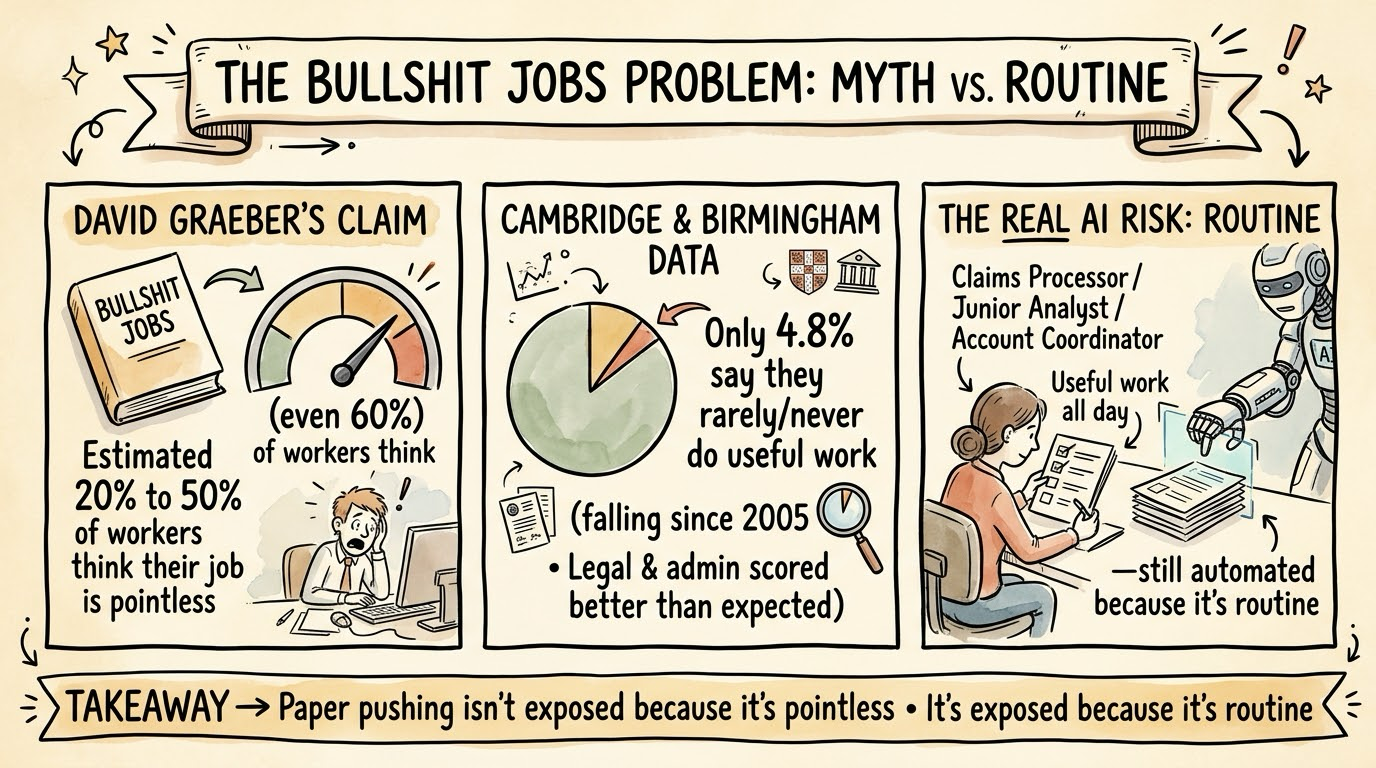
The Bullshit Jobs Problem
David Graeber's idea of "bullshit jobs" feels like the obvious target for AI.
He estimated that 20% to 50% of workers, maybe even 60%, held jobs that even they considered pointless.
The data hasn't been kind to that estimate.
A Cambridge and Birmingham team analysed European surveys and found only 4.8% of workers said they rarely or never did useful work, and that share had fallen since 2005.
The jobs where people felt least useful included refuse collectors and cleaners, while legal and administrative professionals scored lower than Graeber expected.
I still think paper pushing is exposed to AI, but for a different reason.
The risk is that the work is routine, whether or not anyone thinks it's pointless.
A claims processor, a junior analyst or an account coordinator can do useful work all day, and still see most of it automated.
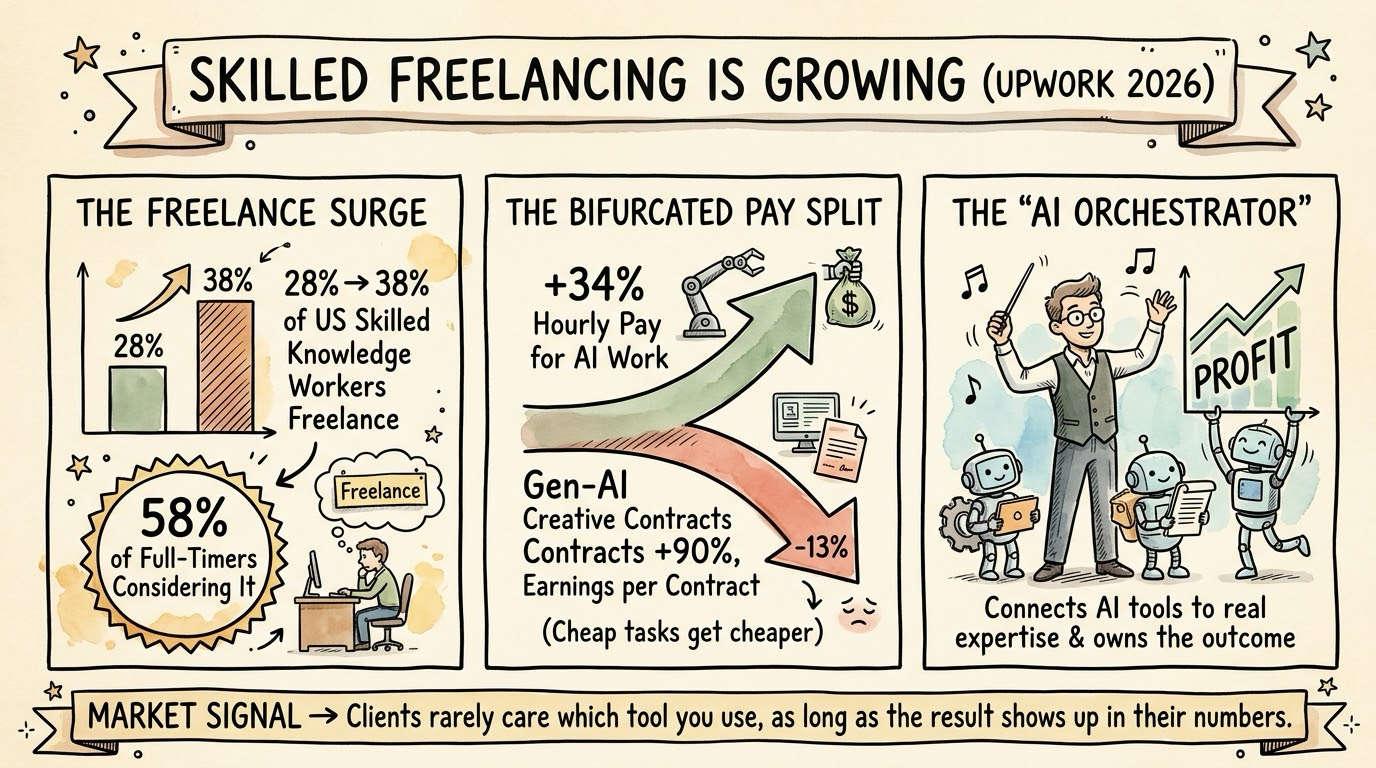
Skilled Freelancing Is Growing
The freelance side of my argument looks stronger.
Upwork's 2026 survey found that 38% of US skilled knowledge workers now freelance, up from 28% a year earlier, and 58% of full-time employees are considering it.
Upwork sells freelance work, so I read those figures as a strong signal rather than a neutral count.
The pay data inside the same report is more interesting to me.
Freelancers doing AI work on Upwork earn 34% more per hour.
Meanwhile, contracts for generative AI creative production rose 90%, but earnings per contract fell 13%.
Cheap tasks are getting cheaper, and complex work is getting more valuable.
Upwork's name for the people winning is the "AI Orchestrator," someone who connects AI tools to real expertise and owns the outcome.
That matches what I see in my own work.
Clients rarely care which tool I use, as long as the result shows up in their numbers.
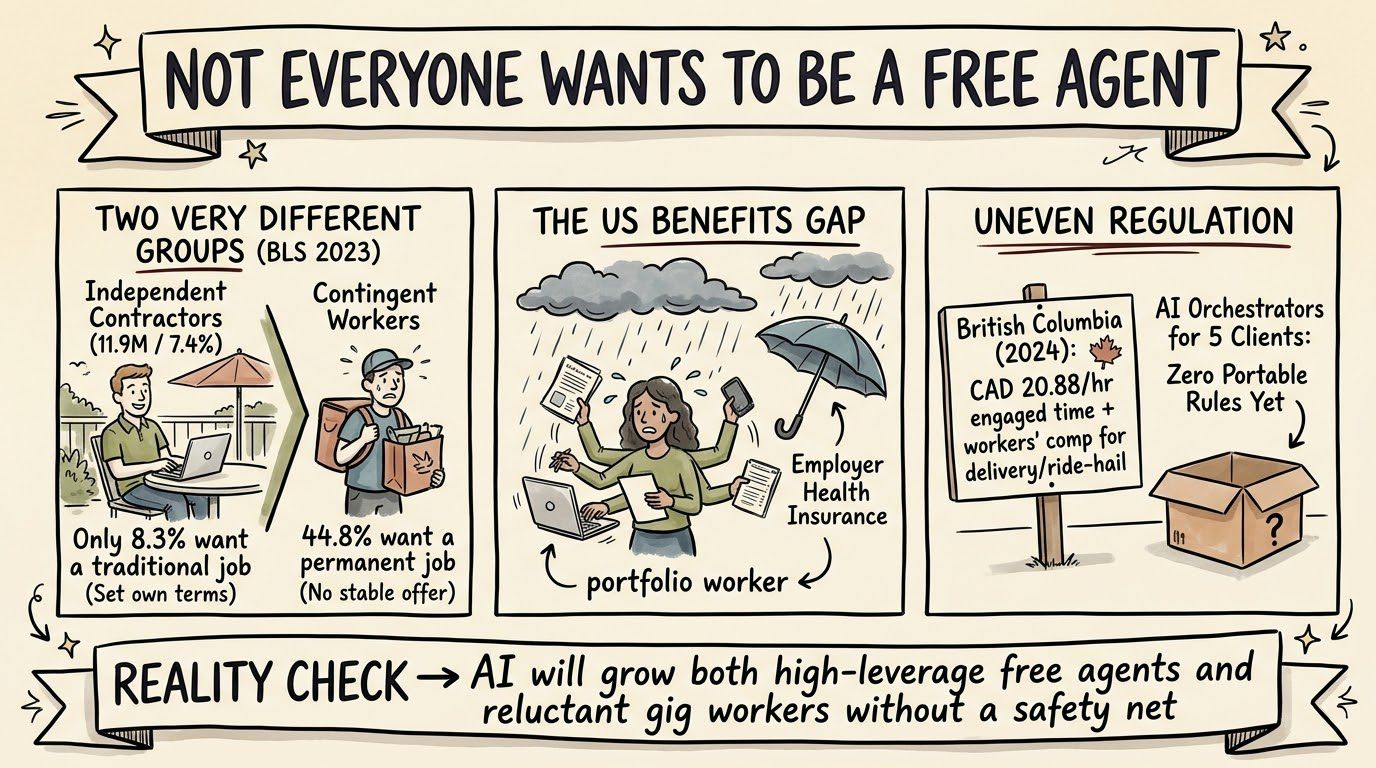
Not Everyone Wants To Be A Free Agent
This is where I'd soften my own prediction.
The last full US government count, from July 2023, found 11.9 million independent contractors, 7.4% of employment, and only 8.3% of them wanted a traditional job instead.
Among contingent workers, whose jobs aren't expected to last, 44.8% would have preferred a permanent one.
Those are two different groups of people.
Some freelance because they're good enough to set their own terms.
Others do it because nobody offered them anything stable.
AI will grow both groups, and only the first one is the future I'm excited about.
Benefits are the other problem.
In the US, health insurance usually comes through an employer, and a part-time portfolio career can leave people exposed.
Rules are starting to catch up in some places.
British Columbia has required a CAD 20.88 minimum per hour of engaged time for ride-hail and delivery workers since 2024, with workers' compensation coverage.
Nothing like that exists yet for people orchestrating AI agents for five clients at once.
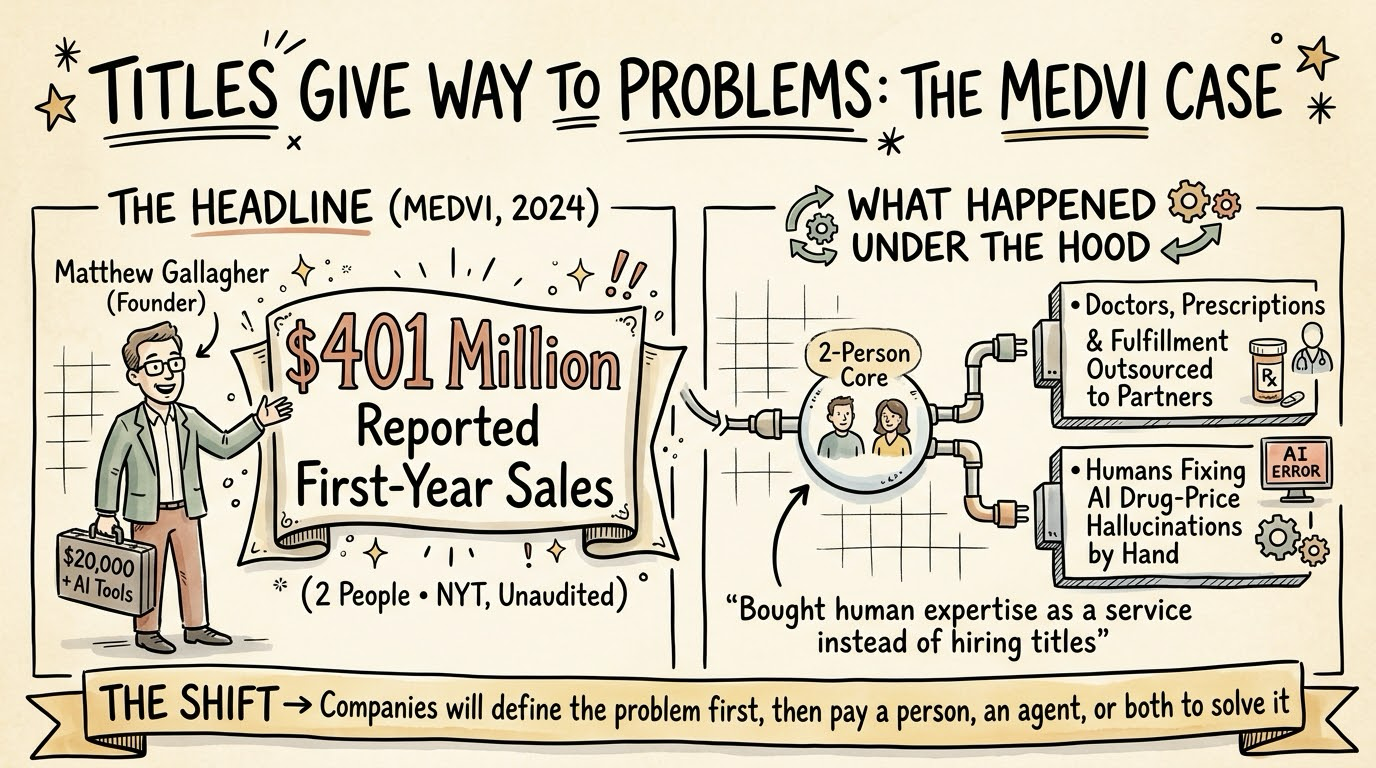
Titles Give Way To Problems
The best example of where this could go is Medvi.
Matthew Gallagher started the GLP-1 telehealth company in 2024 with $20,000 and AI tools, and reported $401 million in sales in its first full year with two people.
The New York Times reported those numbers, and they haven't been independently audited.
The details matter more than the headline.
Doctors, prescriptions and fulfillment were outsourced to partner companies, and AI customer service invented drug prices that had to be fixed by hand.
So even the leanest company in the world still bought a lot of human expertise.
It just bought it as a service, rather than hiring it.
That's the shift I expect.
Companies will define the problem first, then pay a person, an agent or both to solve it.
The person might never have a title at that company.
The Business Models Around It
I think the most interesting opportunities sit around this shift, rather than inside any one job.
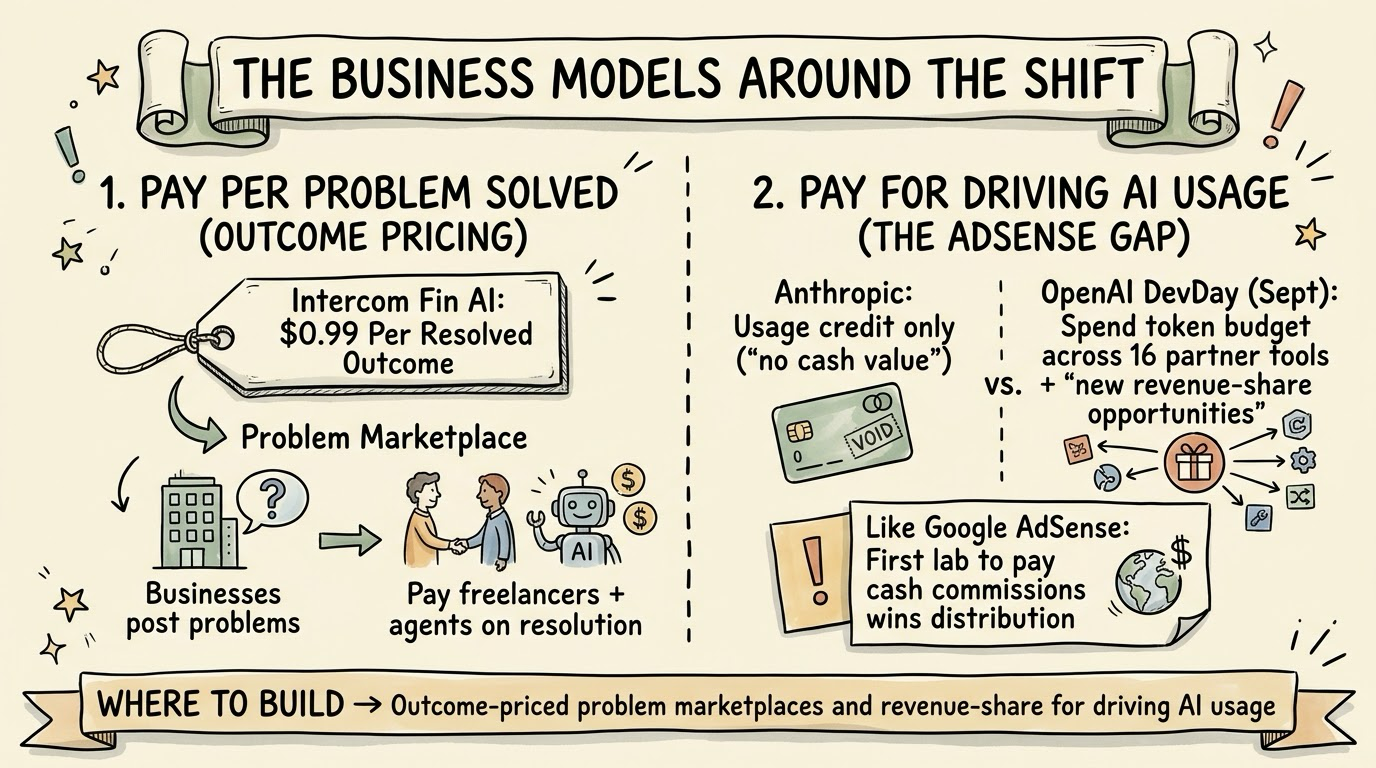
The first is paying per problem solved.
Intercom already charges $0.99 per outcome for its Fin AI agent, such as a customer's question being resolved.
I've argued that AI companies will move to outcome pricing, and freelancers who orchestrate agents could price the same way.
A marketplace where businesses post problems and pay on resolution feels like a natural next step for gig platforms.
The second is paying people for driving usage.
Frontier labs don't pay cash commissions for this today.
Anthropic's referral program gives usage credit with "no cash value" and bans selling referral links.
OpenAI is getting closer.
At DevDay in September, it let ChatGPT subscribers spend their token budget across 16 partner tools, and Sam Altman talked about "new revenue-share opportunities" without publishing terms.
This is the gap I'd watch most closely.
Google built much of its reach by paying publishers to show its ads.
I expect a frontier lab to try something similar for the people who bring it usage, and whoever moves first will gain a lot of distribution.
Conclusion: The Job Becomes A Portfolio
I don't think the full-time job disappears in the next few years.
I do think it stops being the default, starting with the entry-level roles AI is already absorbing.
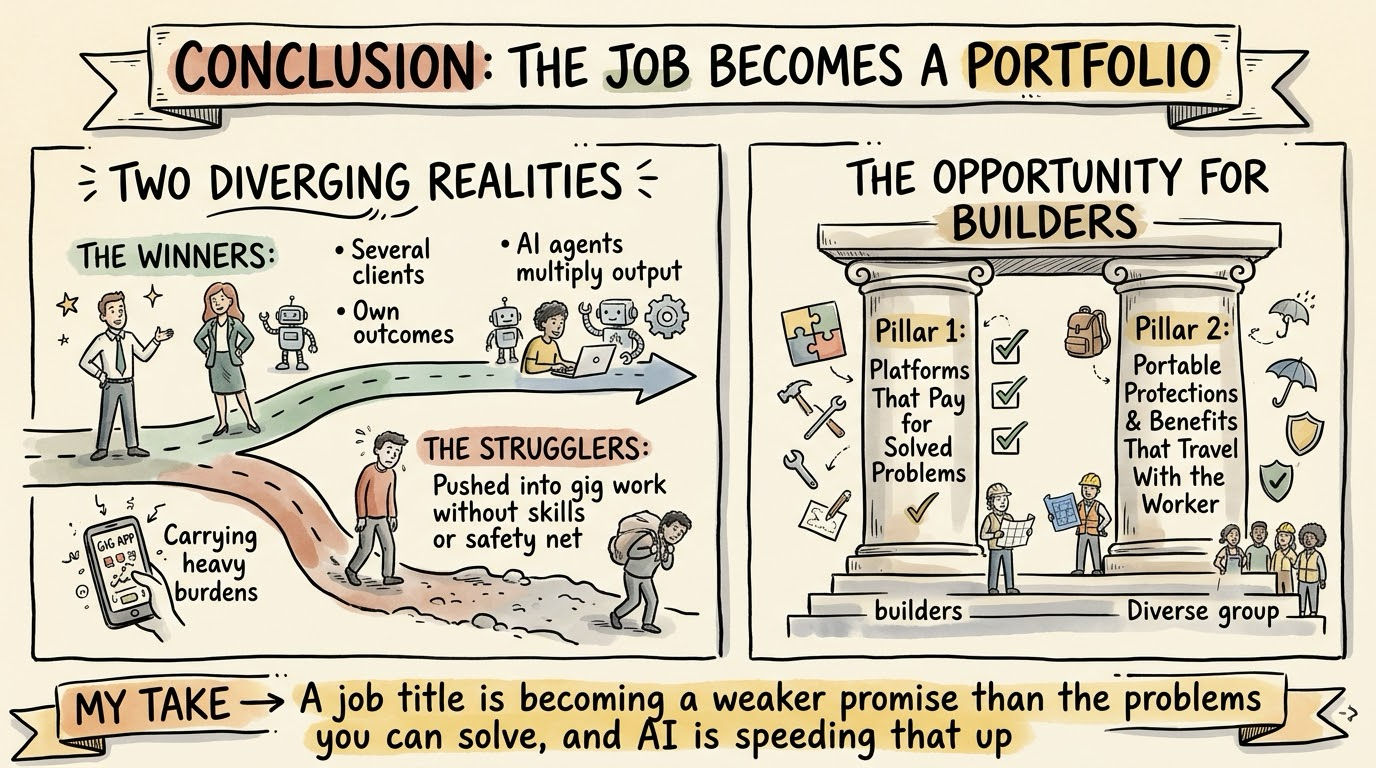
The people who do well will hold several clients, own outcomes rather than tasks and use agents to deliver more than a single employee could.
The people who struggle will be pushed into gig work without the skills or the safety net to make it a choice.
The opportunity for builders is to serve both groups, through platforms that pay for solved problems and protections that travel with the worker.
My Take: A job title is becoming a weaker promise than the problems you can solve, and AI is speeding that up.
Sources
Pages I opened for the facts in this post:
- Stanford Digital Economy Lab: The AI employment gap for young workers
- Challenger, Gray & Christmas: June 2026 job cuts report
- Phys.org: One in 20 workers are in 'useless' jobs
- Upwork: Future Workforce Index 2026
- US Bureau of Labor Statistics: Contingent and alternative employment arrangements
- DLA Piper: British Columbia gig worker regulations
- PYMNTS: The one-person billion-dollar company
- Intercom: Pricing explained
- Anthropic: Guest pass terms
- The SaaS News: OpenAI's app marketplace and subscription sharing