Why Waymo is Google's Next Advertising Monopoly: The Ad-Supported Commute
We assume the future of autonomous vehicles is a luxury transportation service competing on premium pricing. In reality, the impending robotaxi price war will force operators to offer free rides subsidized entirely by targeted digital advertising.
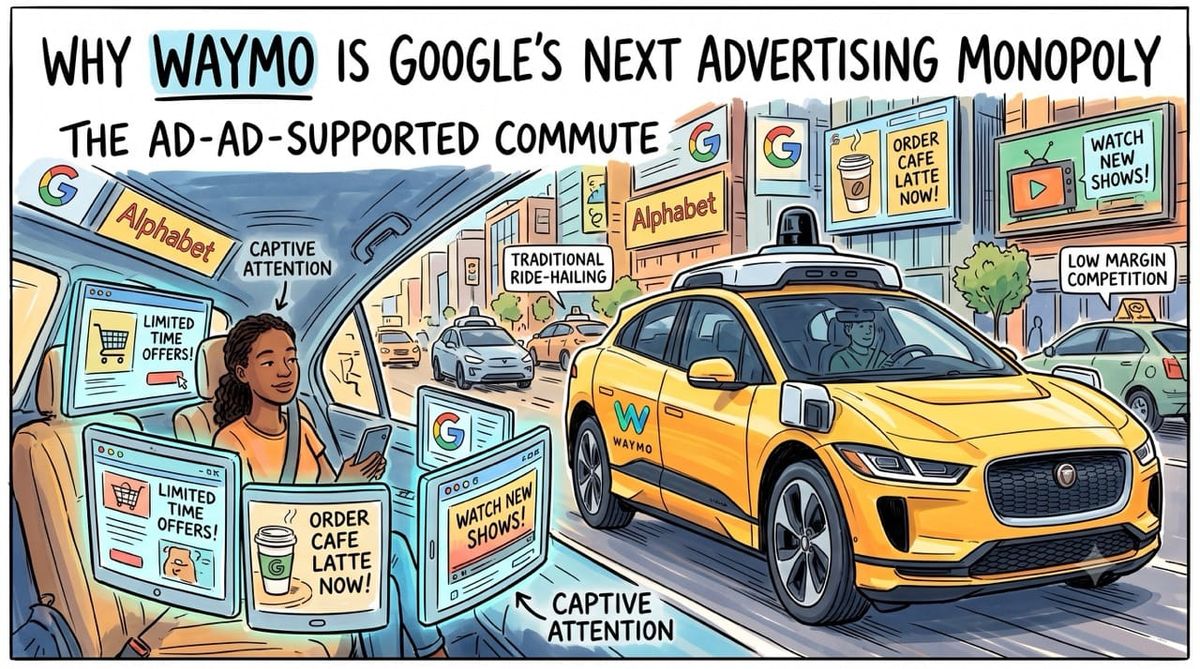
When autonomous ride-hailing becomes a low-margin commodity, the ultimate victor will be the company that successfully monetizes the captive attention of the passenger.
Inspiration: Analyzing the rapid expansion of Waymo and predicting the inevitable transition toward ad-supported autonomous mobility tiers as fierce market competition destroys traditional ride-hailing margins.
The Impending Price War
Right now, autonomous ride-hailing feels like an exclusive, premium service.
Waymo is successfully scaling its operations across major cities, and early adopters are willing to pay standard or even elevated fares just for the novelty of sitting in a driverless car.
But this honeymoon phase is highly temporary.
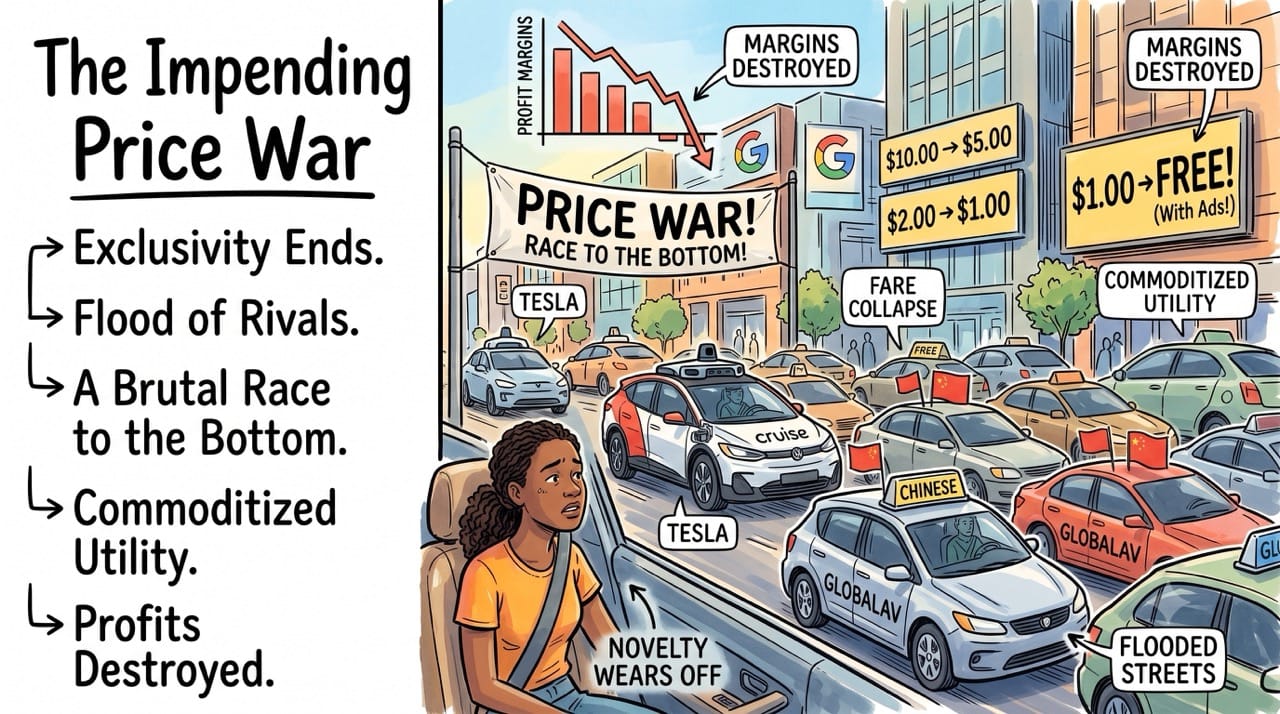
As competitors like Tesla, Cruise, and a fleet of Chinese manufacturers aggressively flood the streets with their own autonomous networks, the basic act of moving a human from point A to point B will become a highly commoditized utility.
If these companies simply try to undercut each other on a per-mile basis, they will trigger a brutal race to the bottom that permanently destroys their profit margins.
The Streaming Playbook
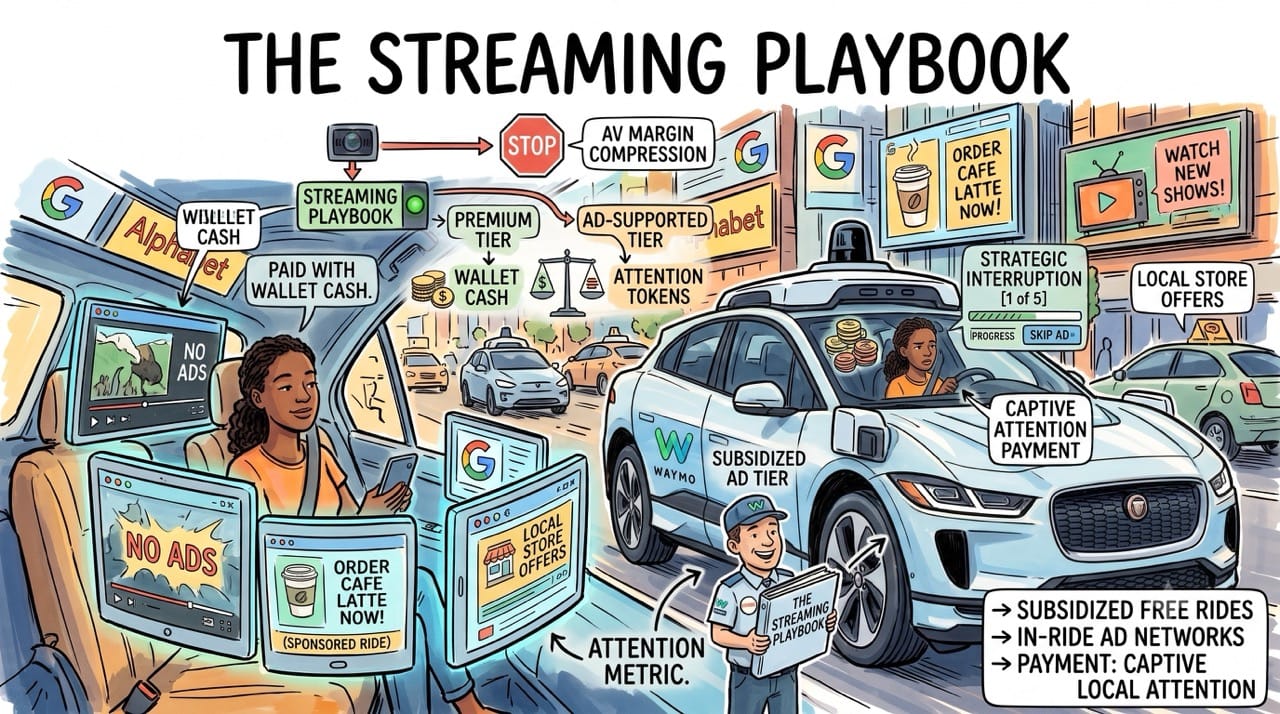
To survive this margin compression, autonomous fleets will simply steal the exact monetization playbook perfected by the modern streaming industry.
Instead of bleeding cash in a traditional price war, they will introduce heavily subsidized or completely free ad-supported tiers.
If a consumer is willing to tolerate strategic commercial interruptions during their morning commute, their ride will cost a fraction of the premium, ad-free experience. You are no longer just paying with your wallet, you are paying with your localized, captive attention.
The Alphabet Advantage
This structural pivot makes Waymo the most dangerous company in the transportation sector.
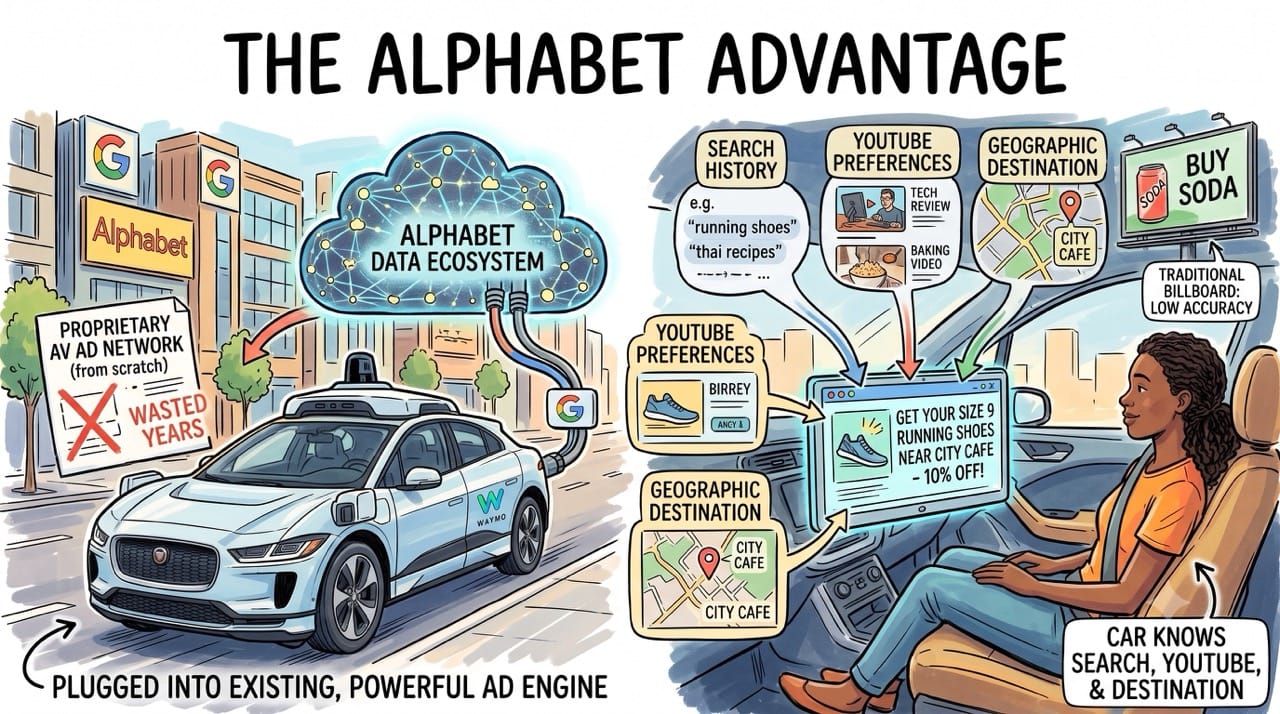
Because they are owned by Alphabet, they do not have to waste years building a proprietary advertising network from scratch.
They will simply plug their robotaxis directly into the most powerful digital advertising engine on the planet.
When you step into a Waymo, the car already knows your search history, your YouTube preferences, and your exact geographic destination.
It can serve hyper-personalized commercials with a level of accuracy that a traditional billboard company could only dream of.
The Closed-Loop Attribution
For performance marketers, an ad-supported robotaxi is the holy grail of conversion tracking.
Historically, tracking whether a digital ad actually resulted in a physical store visit was incredibly difficult.
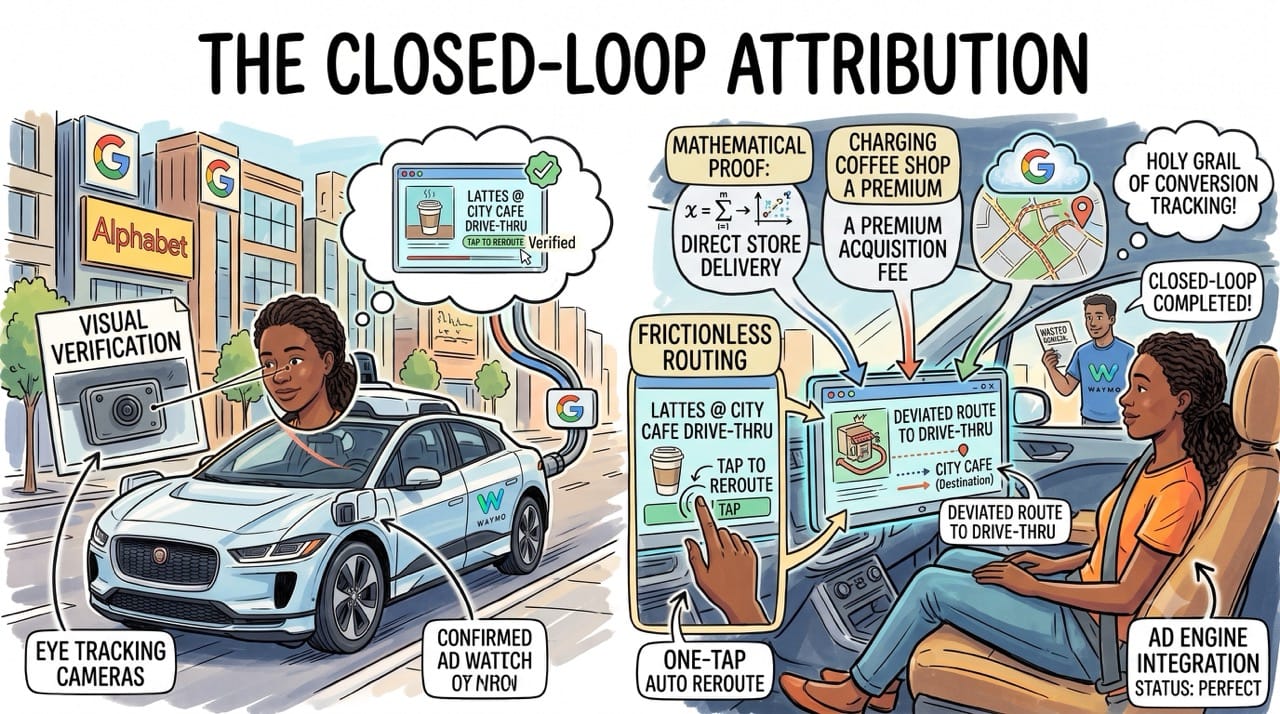
In a Waymo, the attribution loop is perfectly closed. Consider the mechanics:
- Visual Verification: Internal cabin cameras can track your eye movement to verify that you actually watched the commercial playing on the passenger screen.
- Frictionless Routing: If an audio ad for a local coffee shop plays over the speakers, you can simply tap the screen to dynamically reroute your car through their drive-thru.
- Perfect Attribution: Google instantly charges the coffee shop a premium acquisition fee because they can mathematically prove they delivered a paying customer directly to their front door.
The Media Ecosystems
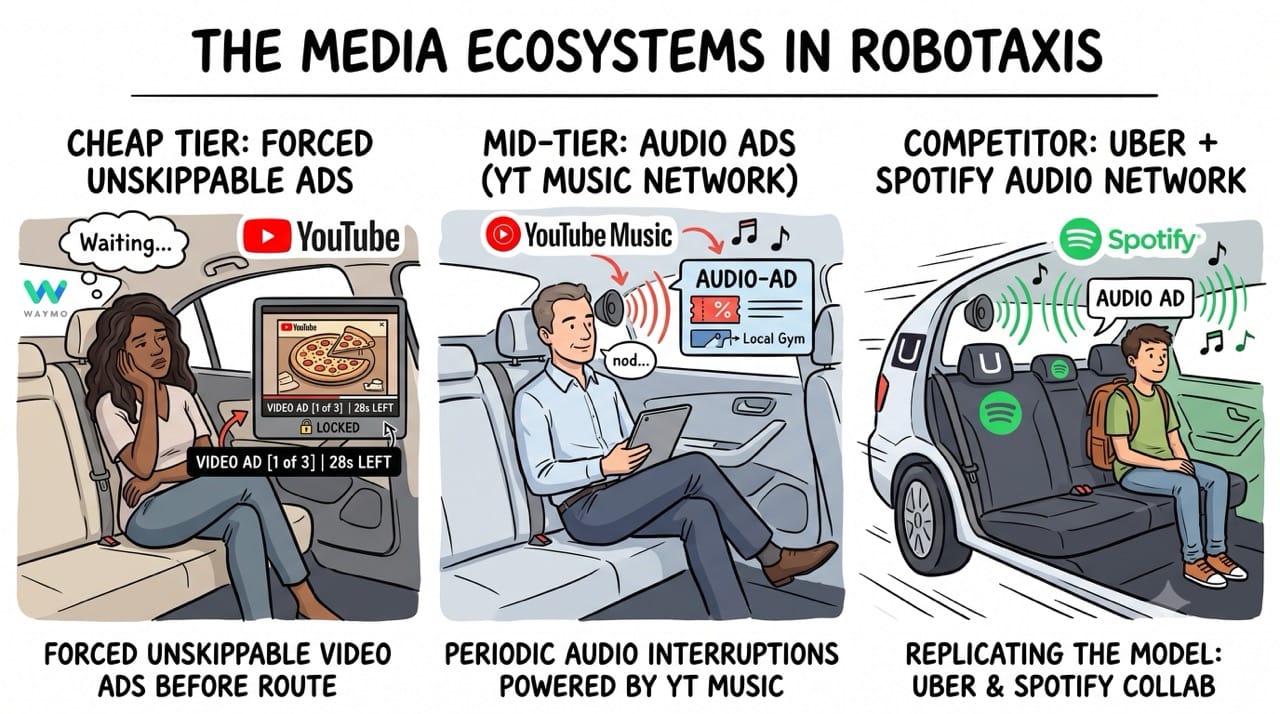
We will see distinct tiers of advertising seamlessly integrated into the passenger experience.
Riders on the cheapest tier will likely be forced to watch unskippable YouTube video ads on the rear-seat monitors before the car officially begins its route.
Mid-tier riders might just experience periodic audio interruptions powered directly by the YouTube Music network.
Competitors will desperately try to replicate this model to survive.
This is exactly why you will soon see deep strategic collaborations between rival platforms, like Uber partnering directly with Spotify to build a competing audio-ad mobility network.
The Trojan Horse of Playlists
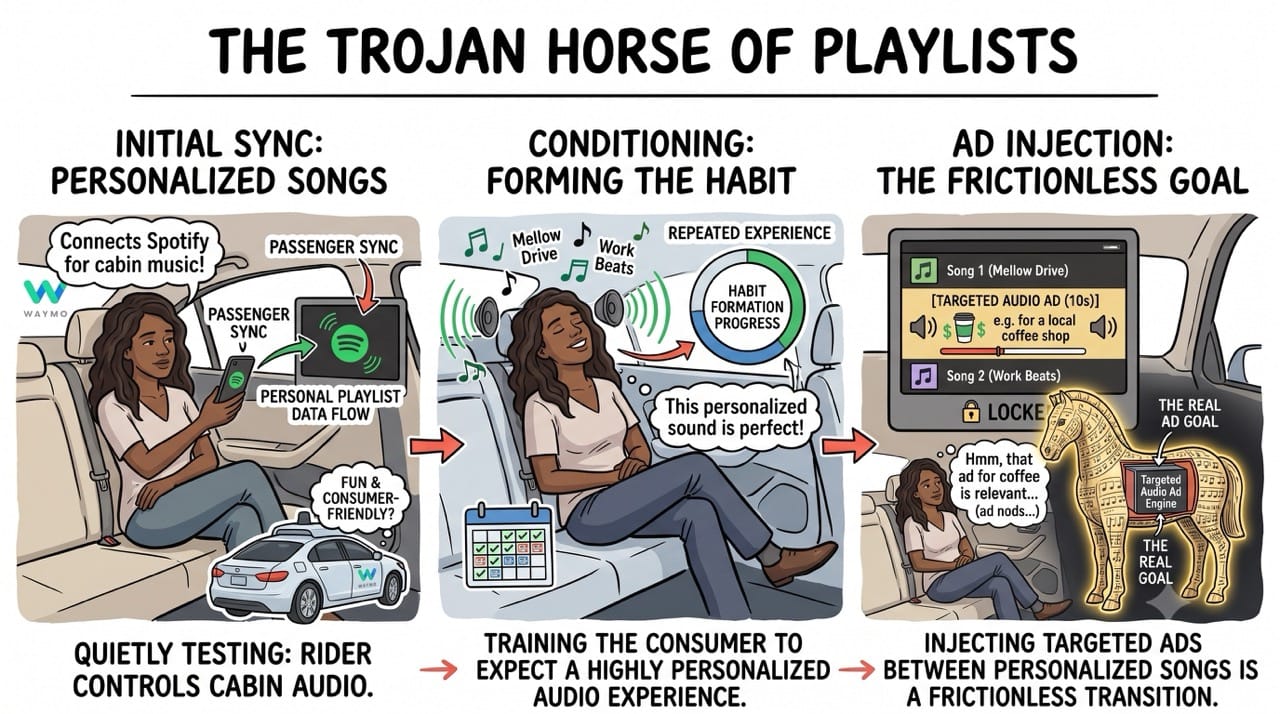
Interestingly, we are already seeing the earliest iterations of this ecosystem being quietly tested.
Waymo currently allows riders to seamlessly sync their Spotify accounts to control the cabin music during their trip.
While this looks like a fun, consumer-friendly feature, it is actually a brilliant behavioral conditioning tool.
They are training the consumer to expect a highly personalized audio experience inside the vehicle.
Once that habit is fully established, injecting targeted audio advertisements between those personalized songs becomes a frictionless transition.
Conclusion: The Sponsored Destination
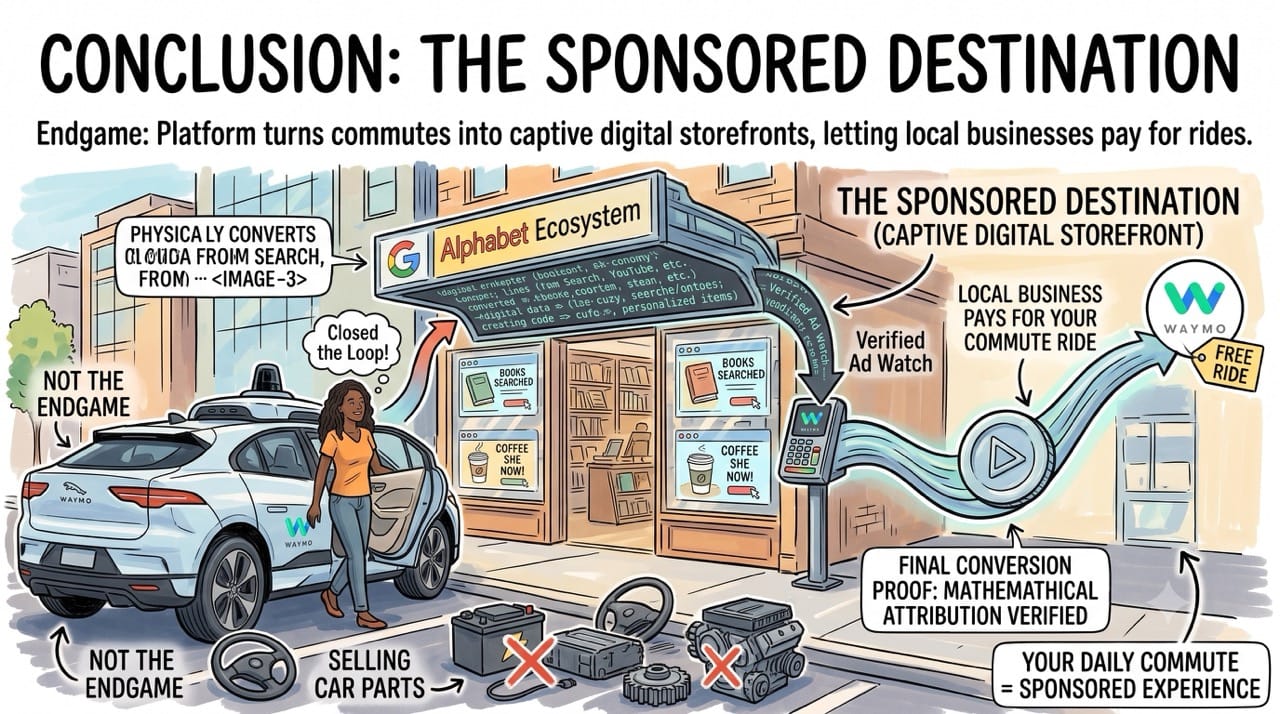
The endgame of autonomous mobility has very little to do with selling steering wheels or battery packs.
The future belongs to the platform that turns the daily commute into a captive digital storefront, effectively allowing local businesses to pay for your ride.