How Eli Lilly Validates the Peter Thiel Blueprint
We assume major pharmaceutical companies only acquire safe, traditional chemical compounds. Eli Lilly just dropped nearly four billion dollars on a Peter Thiel-backed psychedelics maker, proving that the smartest venture capital targets heavily regulated taboos before the mainstream catches on.
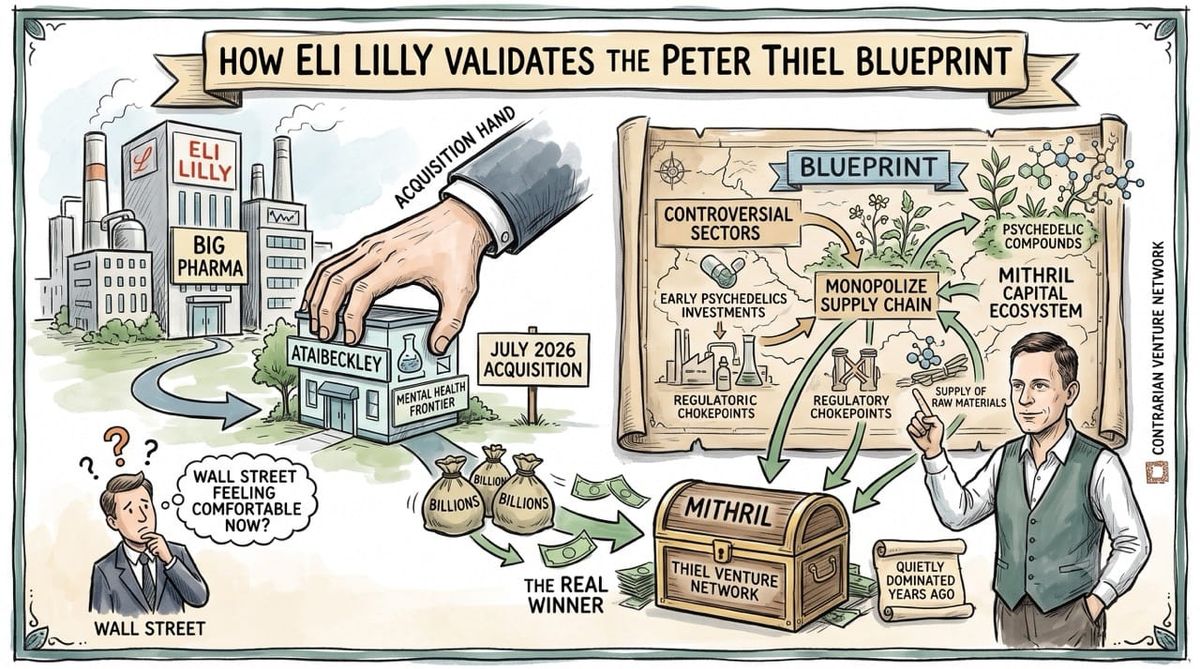
Big pharma is aggressively buying up the mental health frontier, but the real winner is the contrarian venture network that quietly monopolized the supply chain years ago.
Inspiration: Analyzing the July 2026 acquisition of AtaiBeckley by Eli Lilly. Realizing that the Peter Thiel and Mithril Capital ecosystem has perfected the art of generating billions by investing in heavily regulated, controversial sectors long before Wall Street feels comfortable.
The Pharmaceutical Pivot
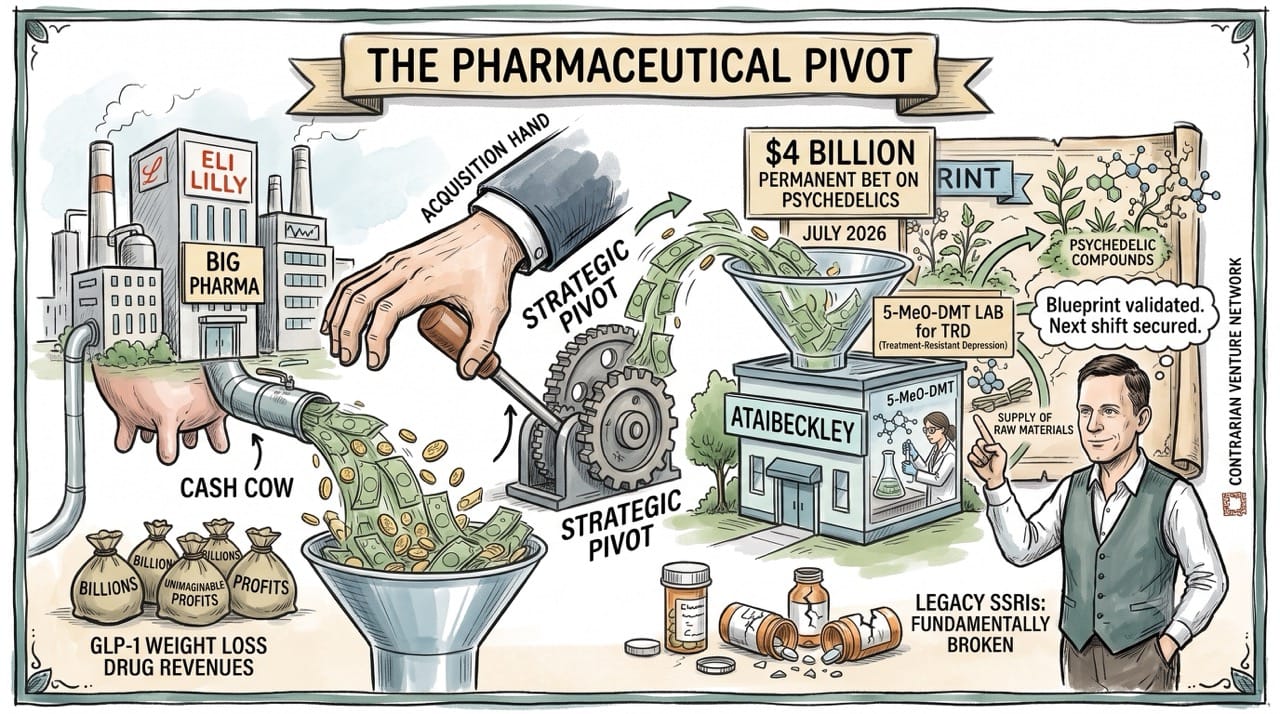
The pharmaceutical industry is currently flush with unimaginable amounts of cash thanks to the recent explosion of GLP-1 weight loss drugs.
Companies like Eli Lilly are aggressively looking for the next major macroeconomic shift to deploy those profits, and they just found it in the most unlikely place imaginable.
By agreeing to acquire AtaiBeckley for nearly four billion dollars, Eli Lilly is making a highly permanent bet on the commercialization of psychedelics.
AtaiBeckley, formed by the recent merger of Atai Life Sciences and Beckley Psytech, specializes in compounds like 5-MeO-DMT designed specifically for treatment-resistant depression.
Big pharma has finally realized that legacy SSRIs are fundamentally broken, and they are willing to pay a premium to absorb the companies rewriting the rules of modern psychiatry.
The Contrarian Blueprint
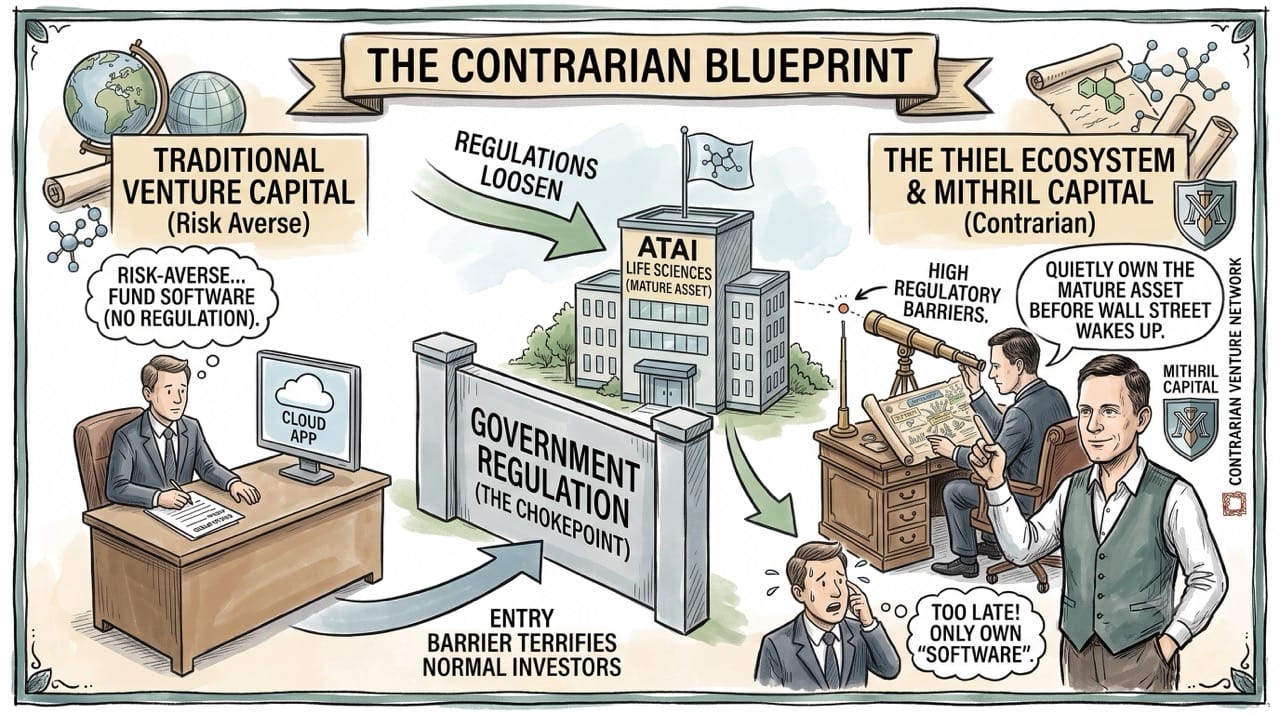
While the financial media is obsessing over the clinical trial data, the real story here is the underlying venture capital mechanics.
The original backing for Atai Life Sciences came directly from Peter Thiel, perfectly illustrating the broader investment philosophy of his network and affiliated firms like Mithril Capital.
Traditional venture capital firms are incredibly risk-averse when it comes to regulatory hurdles, they prefer funding basic software companies that can scale instantly without government interference.
The Thiel ecosystem operates on the exact opposite logic.
They intentionally hunt for highly controversial, deeply regulated, or heavily stigmatized sectors where the barrier to entry terrifies normal investors.
By the time the government finally loosens the regulations, this specific network already owns the only mature asset in the space.
A History of Heavy Exits
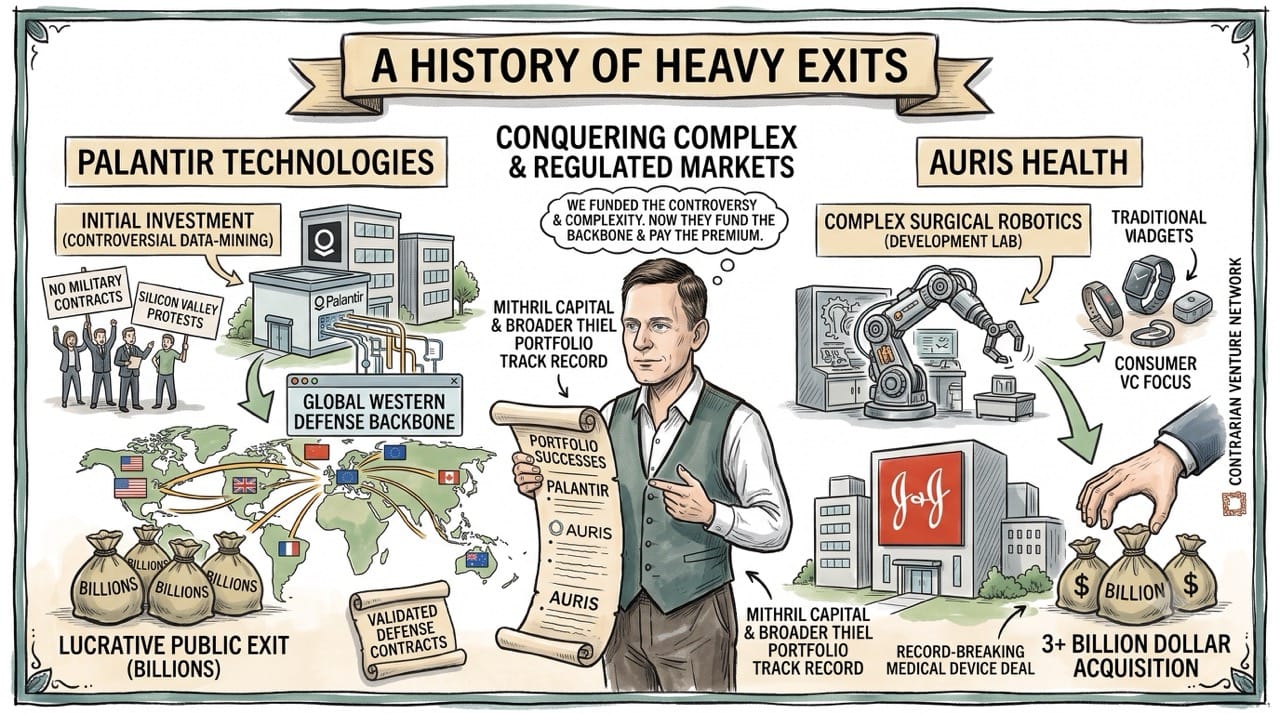
This exact same regulatory arbitrage has consistently produced some of the quietest but most lucrative exits in Silicon Valley history.
If you look at the track record of Mithril Capital and the broader Thiel portfolio, a distinct pattern of conquering complex physical and regulated markets emerges.
- Palantir Technologies: They funded a highly controversial data-mining operation for the intelligence community when Silicon Valley was actively protesting military contracts. It is now the foundational software backbone for global Western defense.
- Auris Health: While competitors funded consumer gadgets, Mithril backed incredibly complex surgical robotics. They eventually sold the company to Johnson & Johnson for over three billion dollars, marking one of the greatest medical device acquisitions in history.
The Next Generational Winners
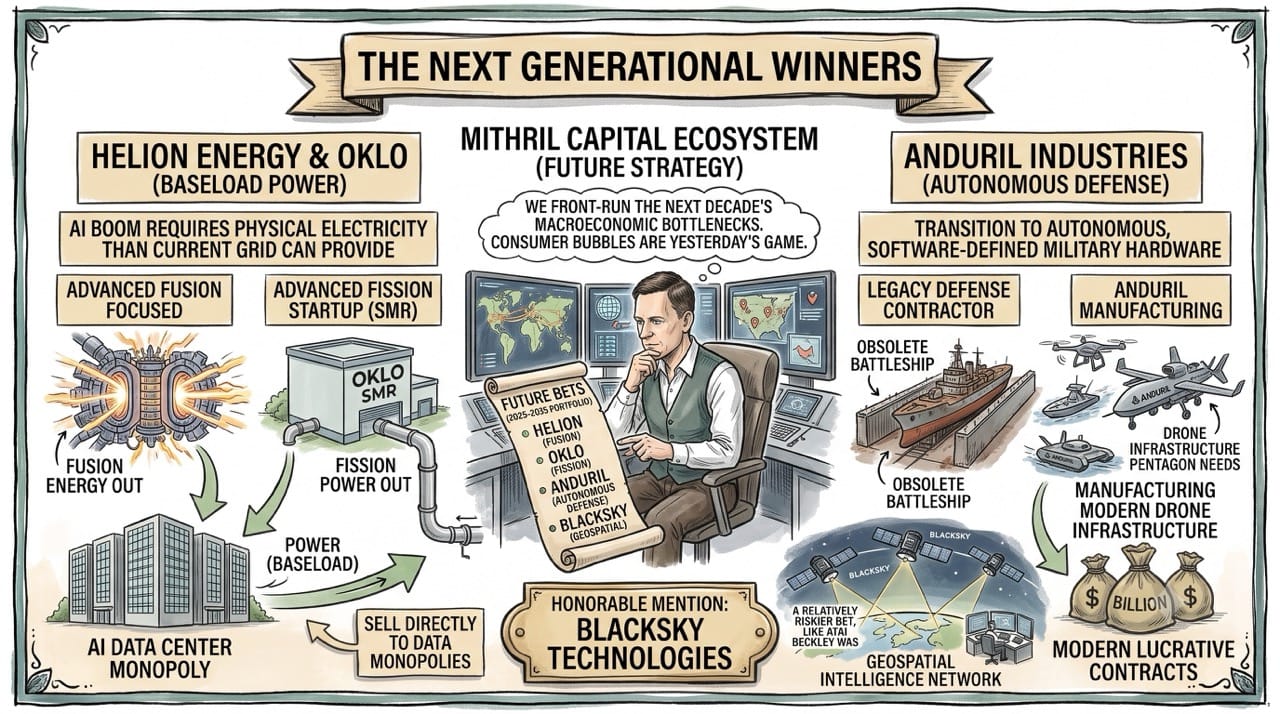
If the AtaiBeckley acquisition proves that this contrarian strategy works for psychedelics, we should immediately look at where this exact same capital network is deploying its money today.
The Thiel and Mithril ecosystem is currently front-running the next decade of macroeconomic bottlenecks, entirely ignoring the consumer software bubble.
- Helion Energy and Oklo: The artificial intelligence boom is going to require more physical electricity than the current global grid can possibly provide. By heavily backing advanced nuclear fission and fusion startups, this network is preparing to sell the ultimate commodity—baseload power—directly to the data center monopolies.
- Anduril Industries: They are aggressively funding the transition to autonomous, software-defined military hardware. While legacy defense contractors continue building obsolete battleships, this portfolio is manufacturing the exact drone infrastructure the Pentagon desperately needs for modern warfare.
Another honorable mention goes to BlackSky Technologies.
Although, that remains a relatively riskier bet, like Atai was.
Conclusion: The Patience Premium
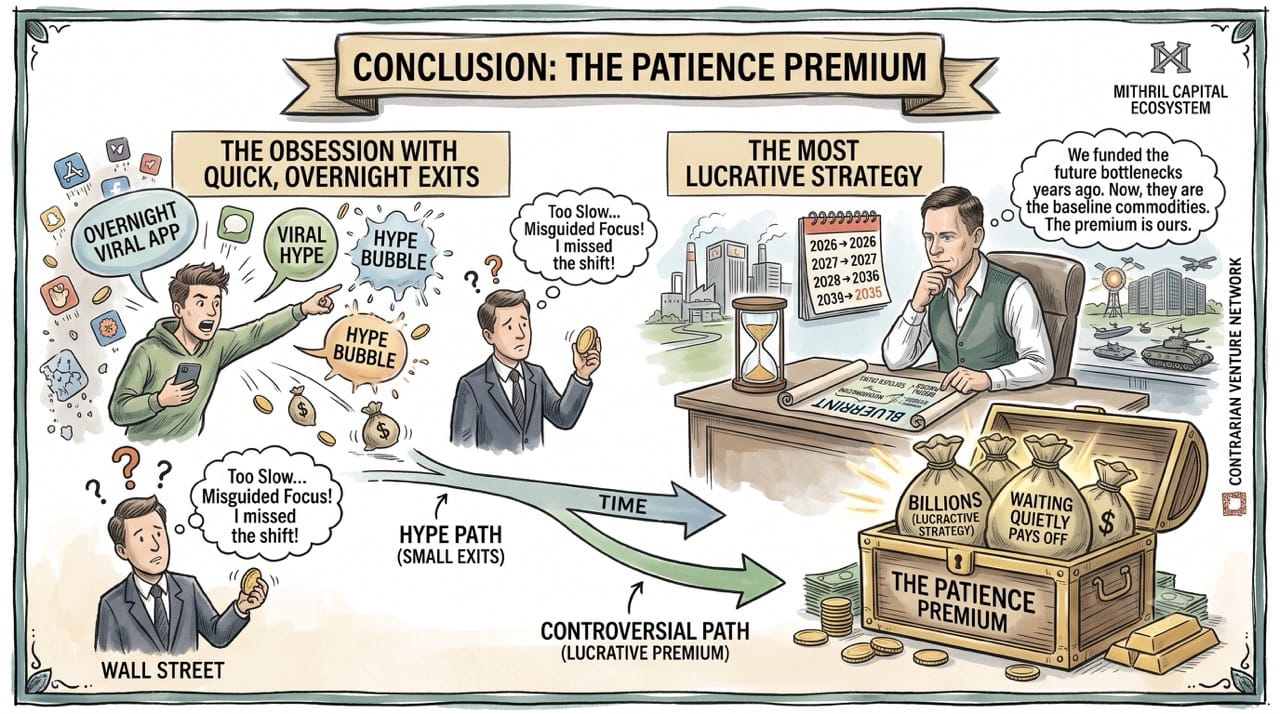
The technology industry is obsessed with finding quick exits through overnight viral consumer applications.
The AtaiBeckley buyout proves that the most lucrative strategy is simply having the patience to fund a controversial idea and waiting quietly for the rest of the world to finally catch up.
It is also pretty interesting that this video got released the same day this acquisition went through, which shows how prepared some of the marketing campaigns are, even more so than we realize.