Why Apple’s Chinese AI Deal Traps the US Government: The Trojan iPhone
We assume Apple registering its artificial intelligence in China is just a standard regulatory compromise to sell hardware. In reality, it turns the iPhone into a geopolitical Trojan horse that smuggles foreign language models directly across Western borders.
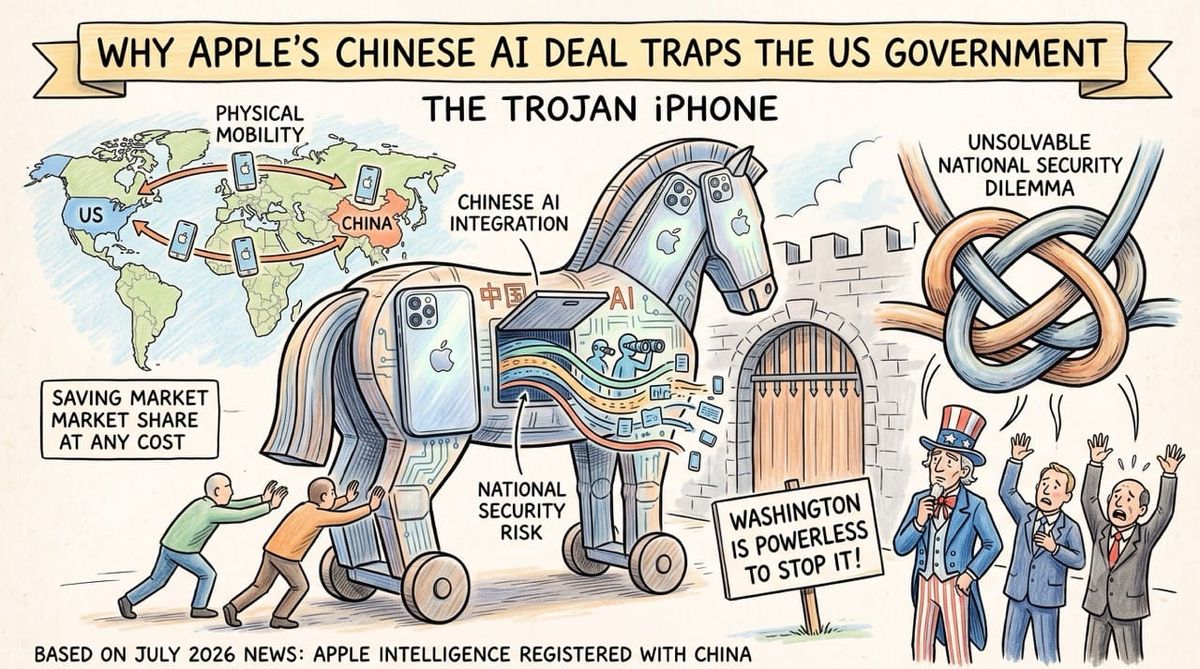
By integrating local models to save their eastern market share, Apple accidentally created an unsolvable national security dilemma, and Washington is completely powerless to stop it.
Inspiration: Analyzing the July 2026 news that Apple Intelligence officially registered with China's cyberspace regulator. Realizing that the physical mobility of smartphones makes traditional national security trade bans practically impossible to enforce.
The Geopolitical Compromise
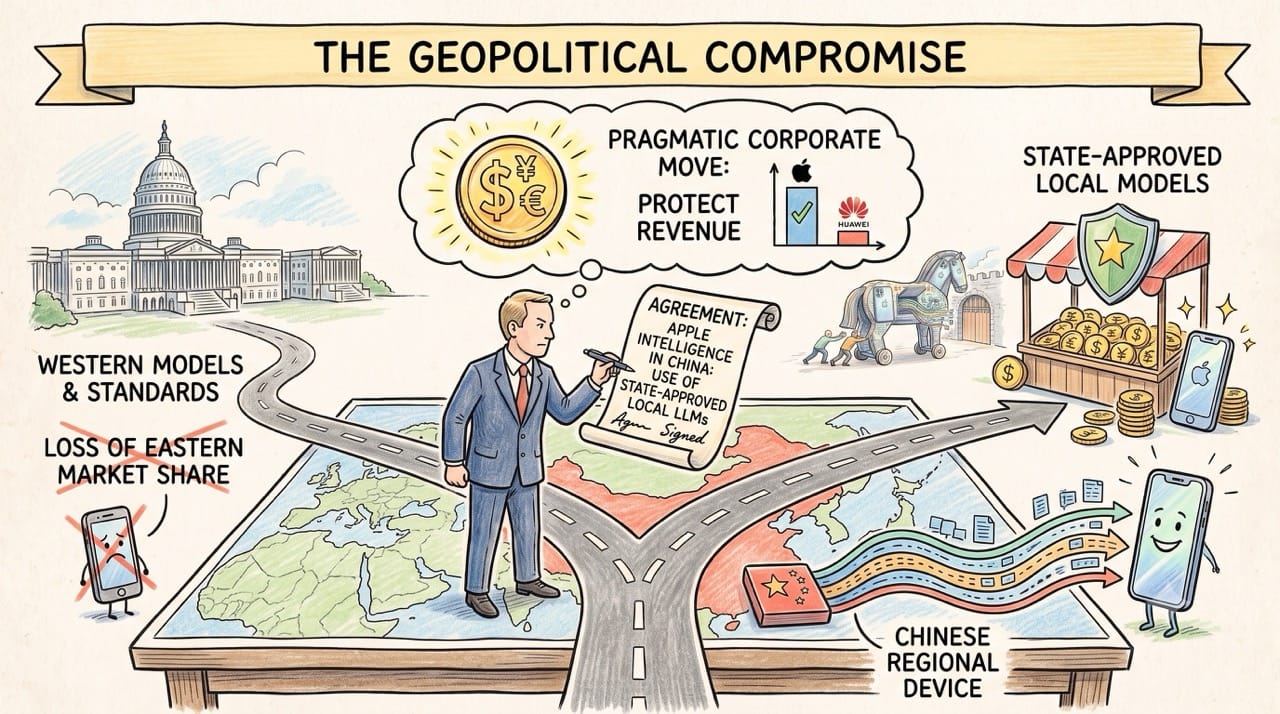
Apple recently secured regulatory approval to launch Apple Intelligence inside China.
To achieve this, they had to legally agree to utilize state-approved, localized language models to power the cognitive features on regional devices.
From a pure revenue perspective, this is a highly pragmatic corporate move.
It protects their lucrative hardware sales in the East by playing nicely with local regulators, ensuring they do not lose ground to aggressive domestic competitors like Huawei.
The Borderless Algorithm
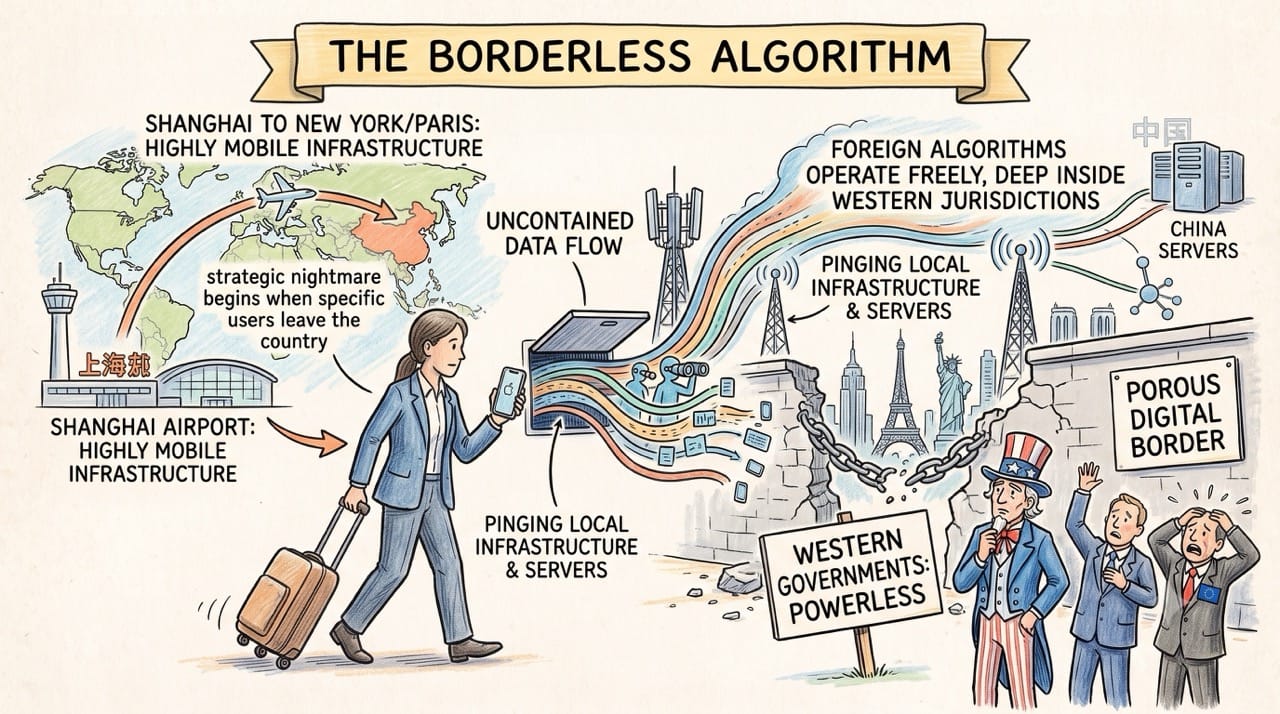
The strategic nightmare for Western governments begins the exact moment those specific users leave the country.
Unlike heavy industrial equipment or localized software networks, an iPhone is a highly mobile piece of consumer infrastructure.
When a tourist or business executive from Shanghai lands at an airport in New York or Paris, they bring those natively integrated Chinese language models directly into Western commercial hubs.
This forces Apple to essentially maintain a porous digital border.
They are legally forced to allow foreign algorithms to operate freely, pinging servers and processing environmental data, deep inside American and European jurisdictions.
The European Battleground
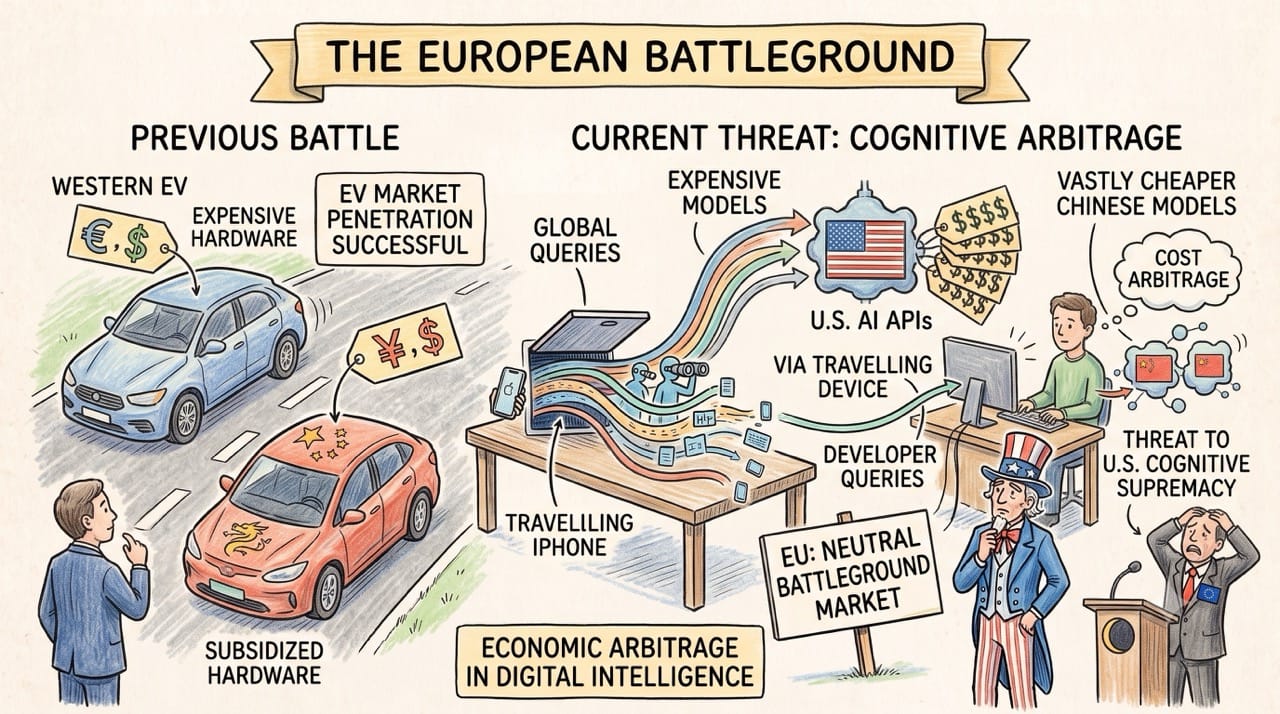
This dynamic poses a severe threat to the global supremacy of American software, particularly in heavily regulated regions like the European Union.
We are already seeing Chinese electric vehicle manufacturers successfully penetrate the European market by offering premium hardware at highly subsidized prices.
The exact same economic arbitrage is about to happen with digital intelligence. Chinese models operate at a fraction of the cost of their Western counterparts.
If third-party developers or cost-conscious consumers realize they can route complex queries through vastly cheaper Chinese models available on these traveling devices, they will naturally bypass expensive American APIs.
It threatens to unseat US cognitive supremacy in neutral markets.
The Unsolvable Security Blindspot
Washington has spent years aggressively trying to ban foreign hardware and software from critical domestic infrastructure.
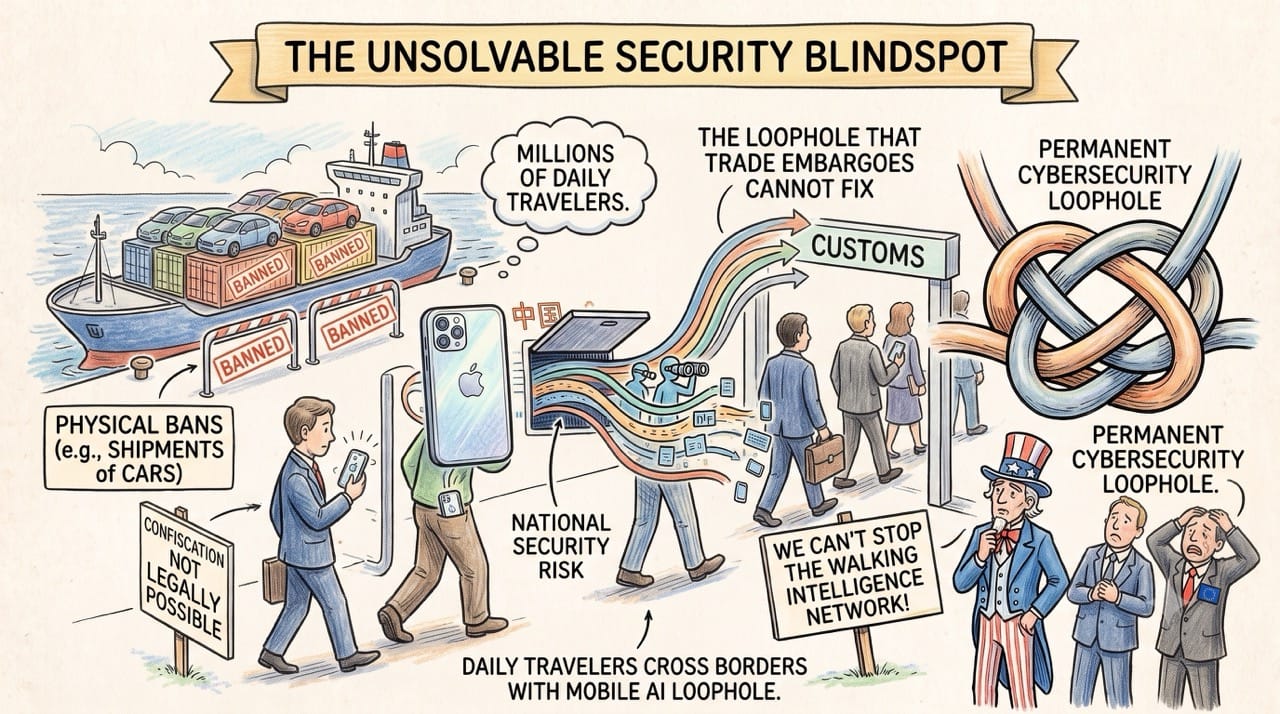
But the federal government is facing a completely unsolvable logistical problem with the modern smartphone.
You can easily ban a shipping container full of electric vehicles at a physical port, you cannot legally confiscate the personal smartphone of every single international traveler.
The iPhone creates a permanent, highly mobile cybersecurity loophole that physical trade embargoes simply cannot fix.
The intelligence network literally walks right through customs in the pockets of millions of daily travelers.
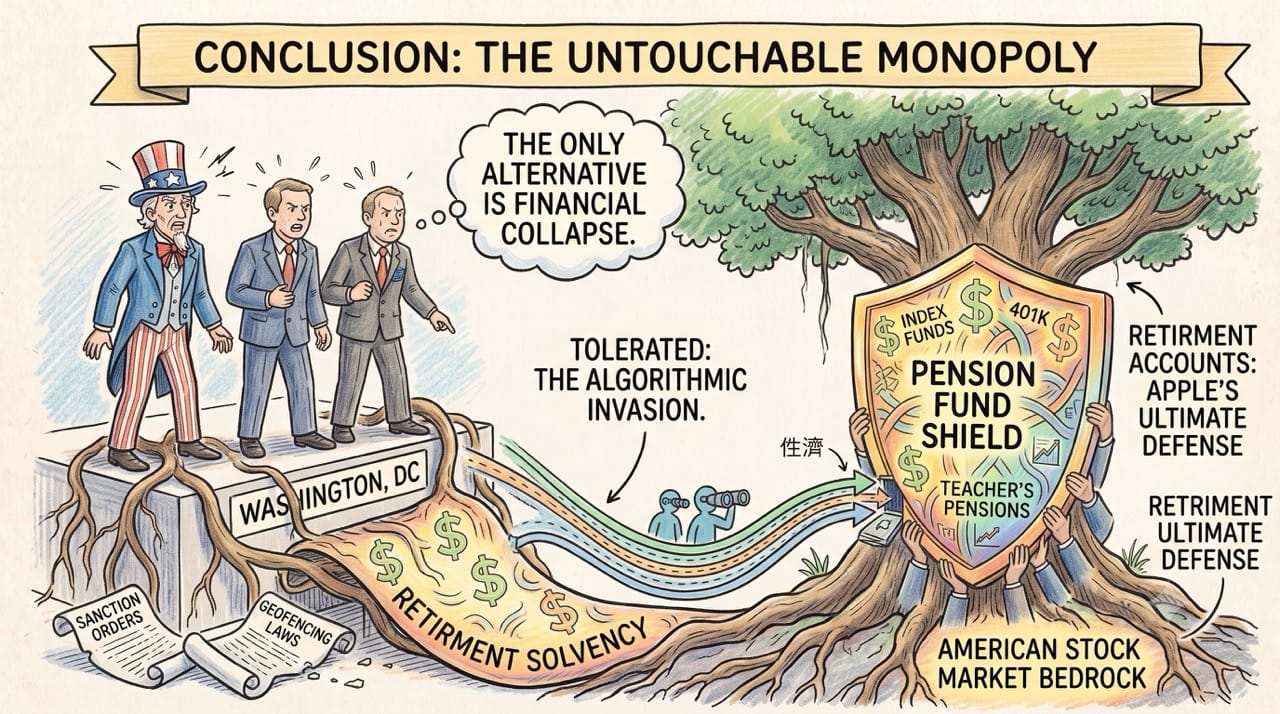
The Pension Fund Shield
Lawmakers will inevitably be furious when they realize Apple is quietly facilitating the global expansion of Chinese artificial intelligence.
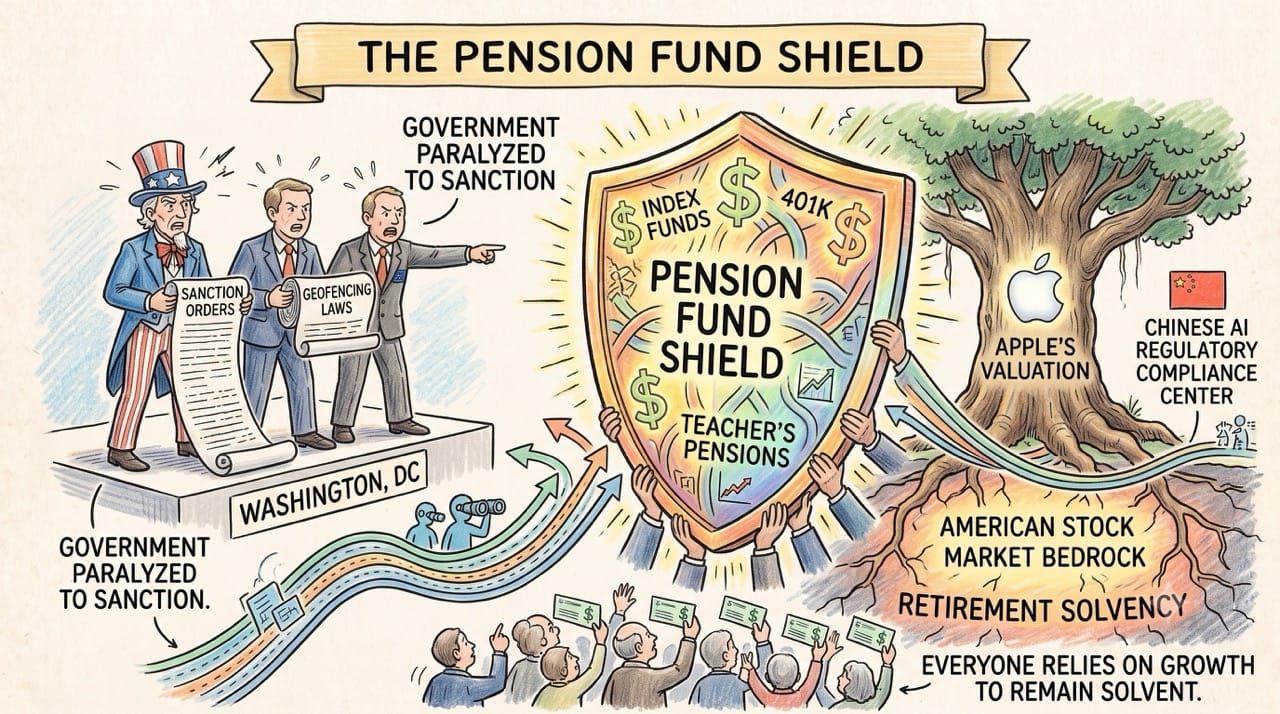
You would expect the government to heavily sanction the company or mandate strict geofencing laws, but they are practically paralyzed.
Apple is no longer just a consumer electronics brand. Its multi-trillion-dollar valuation forms the underlying bedrock of the entire American stock market.
Every major index fund, 401k, and teacher’s pension heavily relies on the continuous growth of Apple equity to remain solvent.
Conclusion: The Untouchable Monopoly
If regulators aggressively punish Apple for this geopolitical compromise, they directly destroy the retirement accounts of the American middle class.
The United States government is forced to quietly tolerate this algorithmic invasion simply because they cannot afford the domestic financial collapse that would inevitably follow.