Why a World War Can Alter the AI Labor Crisis: The Grim Reset
We assume artificial intelligence will permanently displace the global workforce because we assume the population will remain intact. The grim reality is that a major kinetic conflict would violently erase the labor surplus and instantly make human capital scarce again.
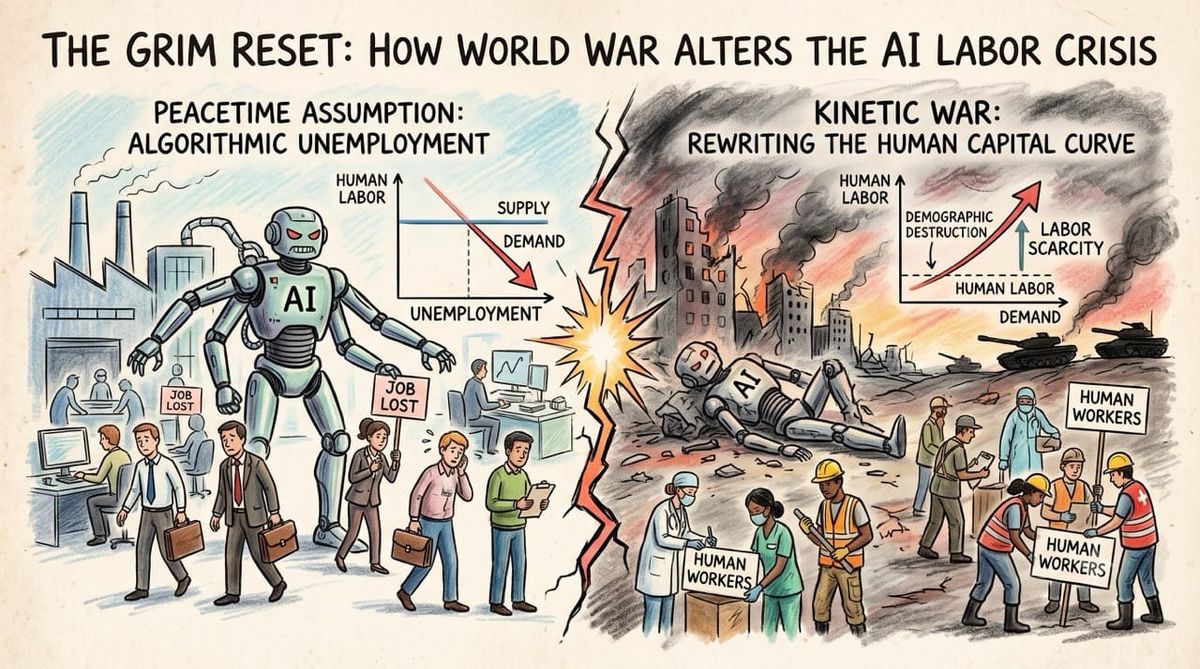
We are projecting algorithmic unemployment based entirely on the assumption of prolonged global peace. A kinetic war completely rewrites the supply and demand curve of human capital.
Inspiration: Analyzing the widespread panic over artificial intelligence replacing jobs and realizing these economic models completely ignore the historical demographic destruction caused by geopolitical conflict.
The Automation Panic
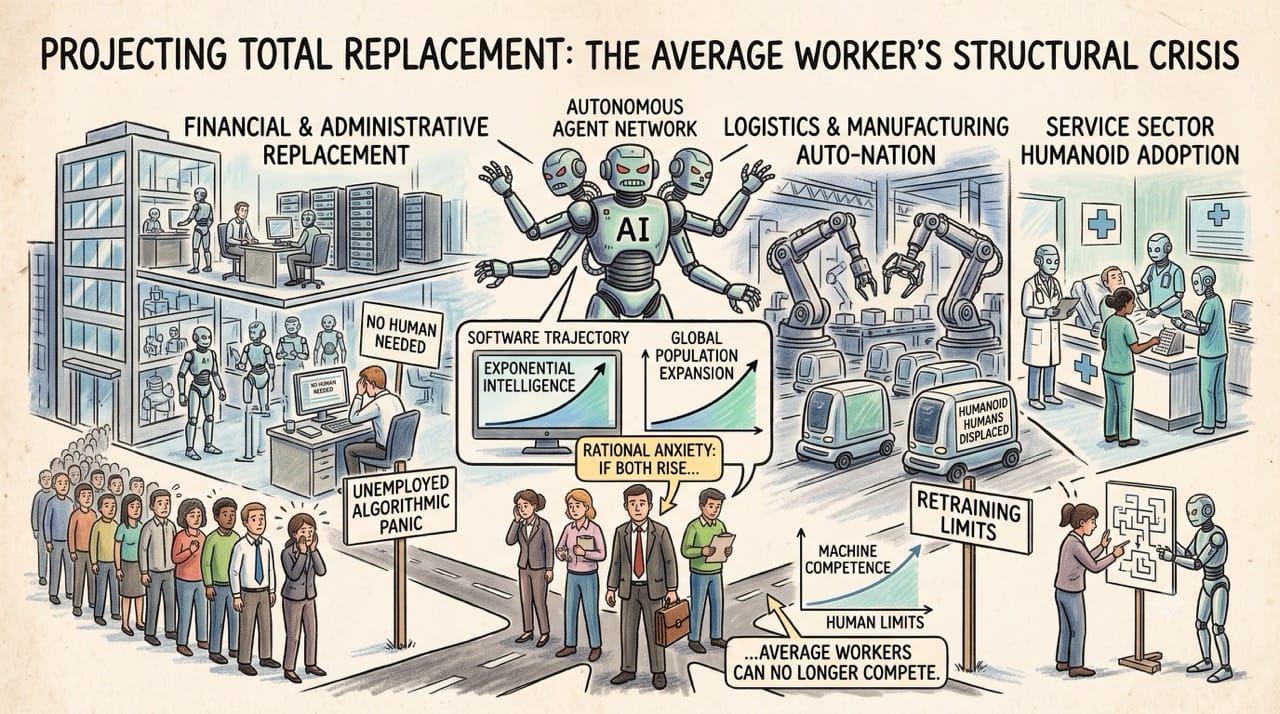
Right now, the entire technology industry is obsessed with the concept of algorithmic unemployment.
We are constantly projecting a future where autonomous agents and humanoid robots completely replace the need for human labor across every major sector of the economy.
This economic anxiety is perfectly rational if you only look at the software trajectory.
If the global population continues to expand while algorithms become exponentially smarter, the math dictates a severe structural crisis for the average worker who can no longer compete with a machine.
The Peace Blindspot
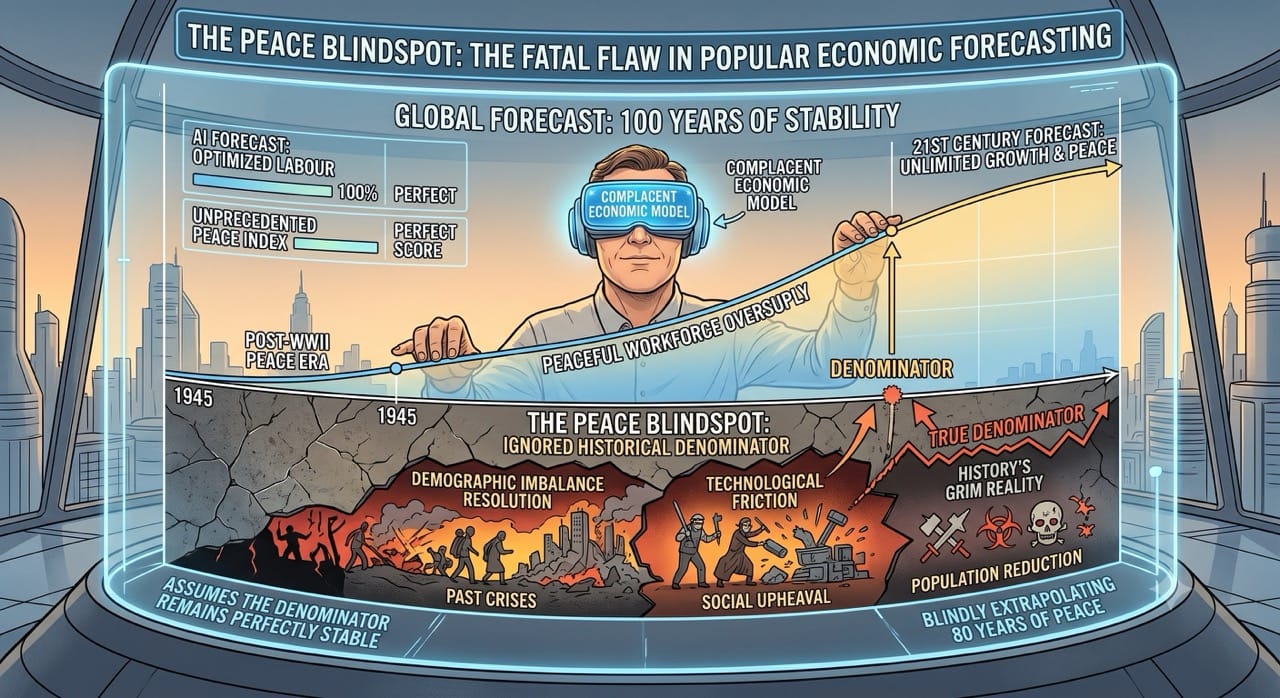
The fatal flaw in this popular forecasting model is that it assumes the denominator remains perfectly stable.
Our current economic projections take the unprecedented geopolitical peace of the last eighty years and blindly extrapolate it into the upcoming century.
We are building our anxiety around the assumption that the global workforce will always be oversupplied.
We completely ignore the grim historical reality of how human societies actually resolve severe demographic imbalances and technological friction.
The Demographic Eraser
When you study macroeconomic history, sudden technological leaps are often accompanied by violent geopolitical friction.
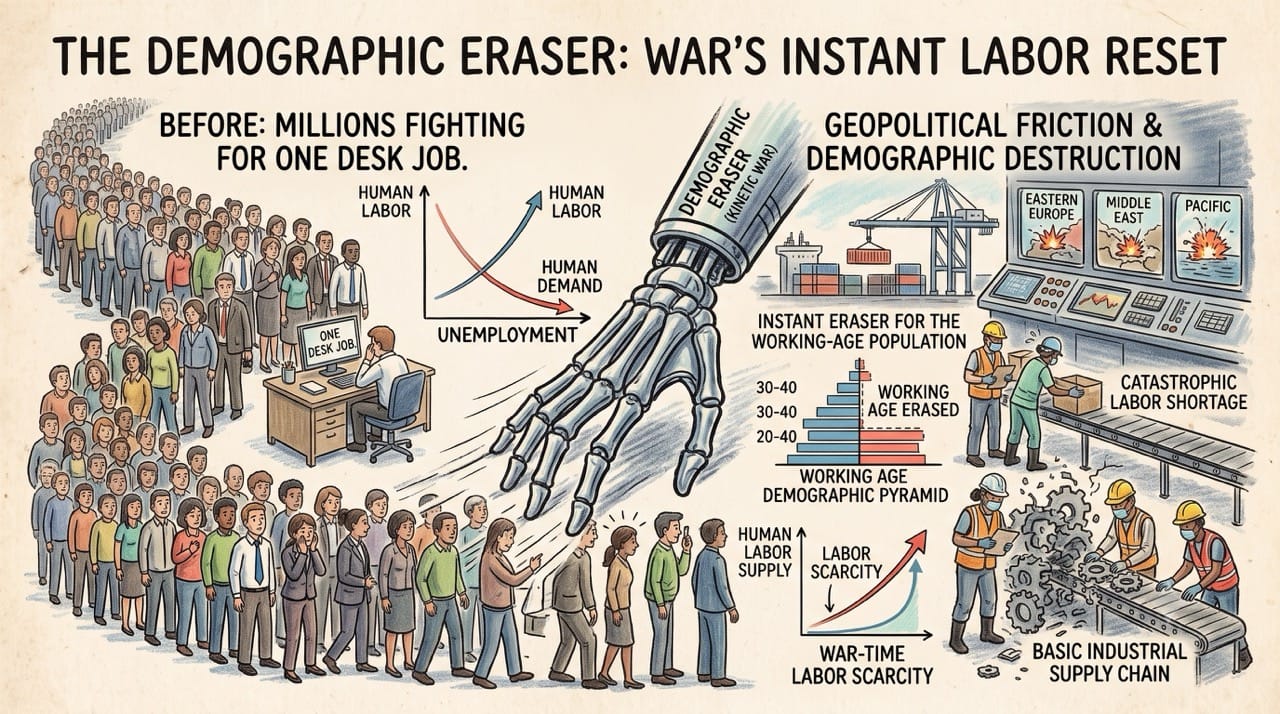
A major kinetic war does not just destroy physical infrastructure, it serves as a tragic, instant eraser for the working-age population.
If the escalating tensions across Eastern Europe, the Middle East, and the Pacific boil over into a true global conflict, the labor market dynamics flip overnight.
You no longer have millions of workers fighting for a single desk job.
You suddenly have a catastrophic shortage of able bodies required to simply keep the basic industrial supply chain functioning.
The Supply and Demand Reversal
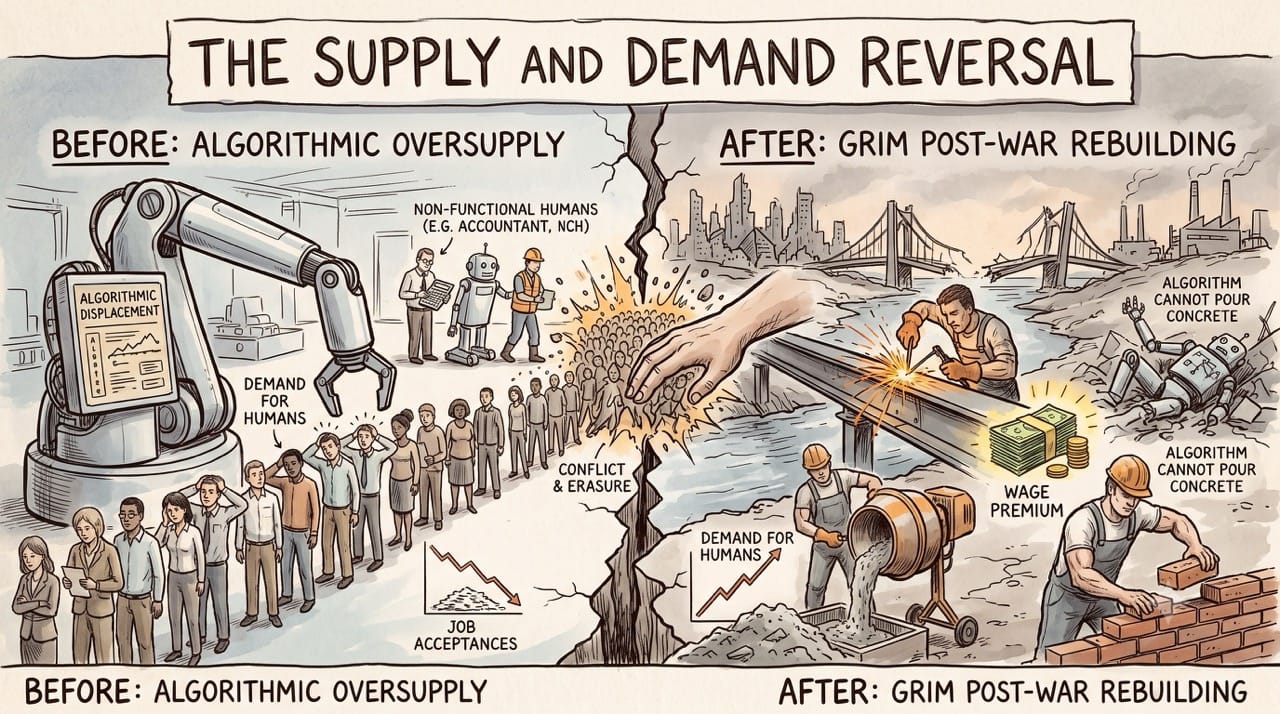
In this grim scenario, the fundamental laws of supply and demand violently correct the algorithmic displacement theory.
If a conflict erases a significant chunk of the population, human labor instantly transforms back into a highly scarce and incredibly valuable commodity.
The post-war economy would require endless manual labor to physically rebuild shattered cities and manufacture heavy industrial goods.
An algorithm cannot pour concrete or weld a broken bridge, you still need physical human hands, and those hands will suddenly be able to command an incredible wage premium.
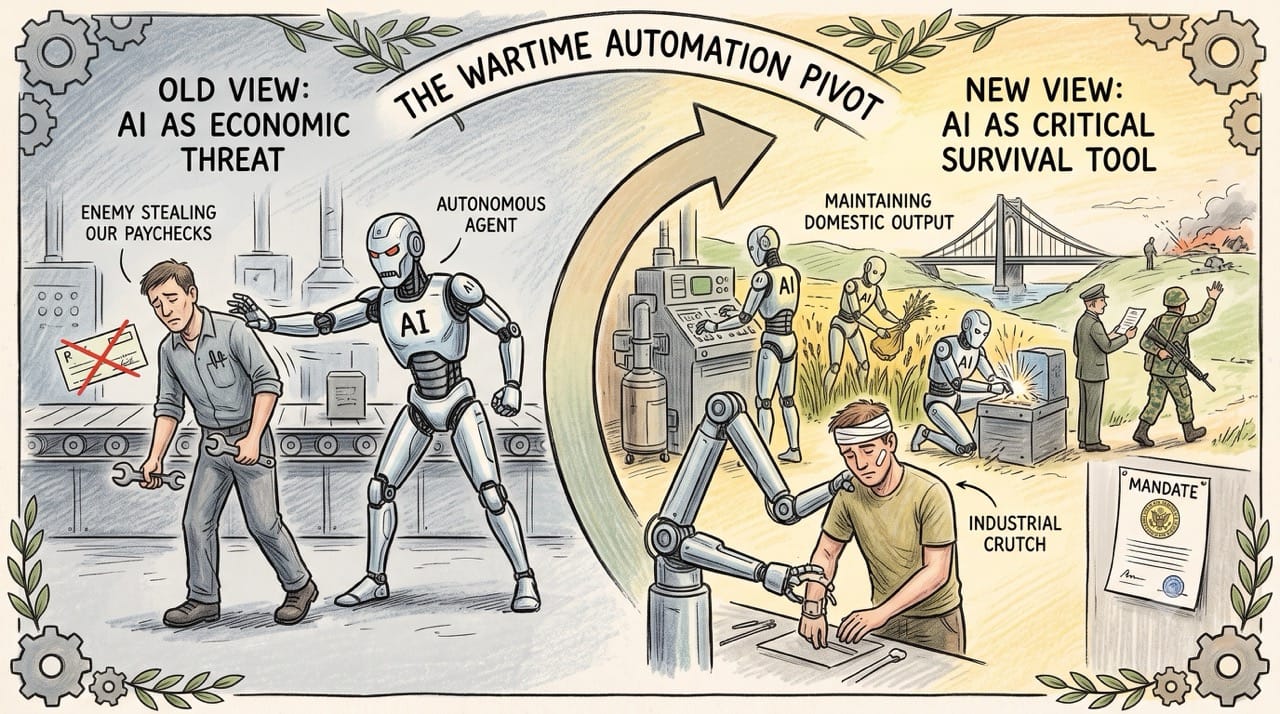
The Wartime Automation Pivot
This reality completely changes how society will view artificial intelligence.
Instead of viewing robotics and software as the enemy stealing our paychecks, we will view them as critical survival tools required to navigate a severe demographic shortage.
Governments will actively mandate the deployment of humanoid robotics and autonomous agents just to maintain basic domestic output while the human population is deployed abroad or recovering at home.
The technology becomes a vital industrial crutch rather than a domestic economic threat.
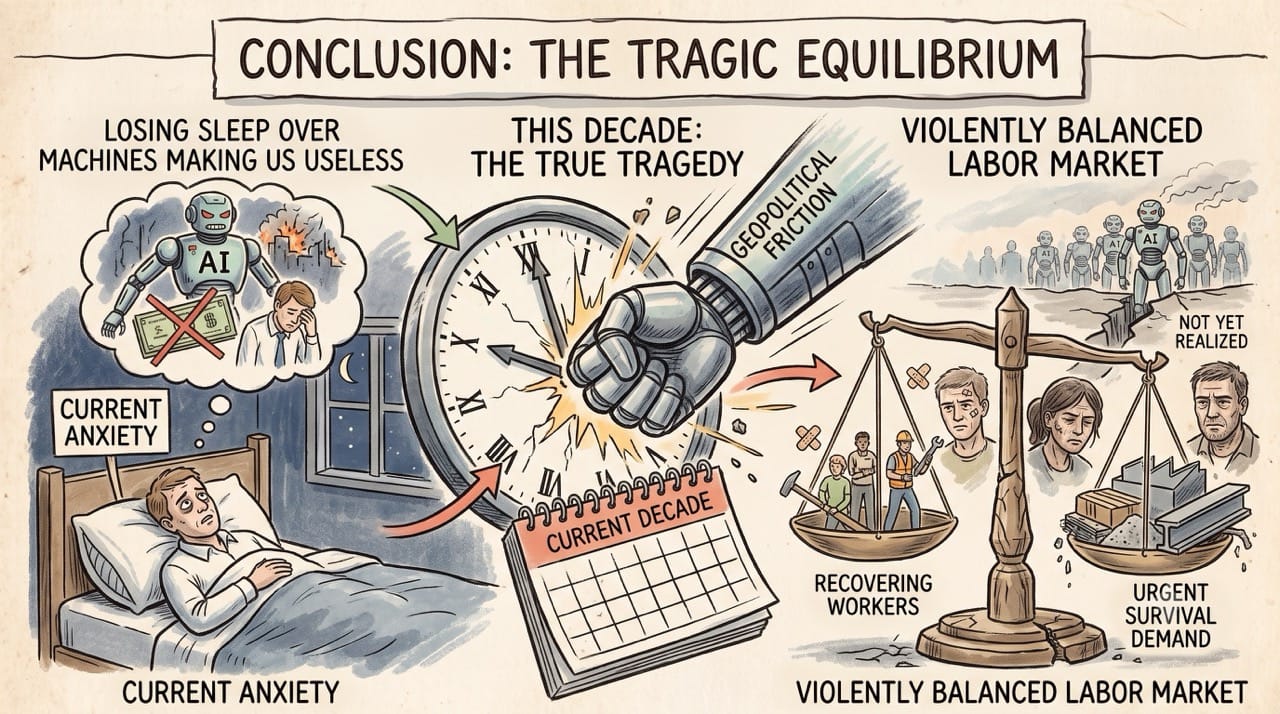
Conclusion: The Tragic Equilibrium
We are currently losing sleep over a hypothetical future where machines make us economically useless.
The true tragedy is that the geopolitical friction of the current decade might violently balance the labor market long before the software ever gets the chance.