Why China Should Not Restrict Its AI Models: The Open-Source Own Goal
We assume China restricting access to its artificial intelligence models protects their national security. In reality, it is a catastrophic unforced error that destroys their greatest economic leverage over the American technology sector.
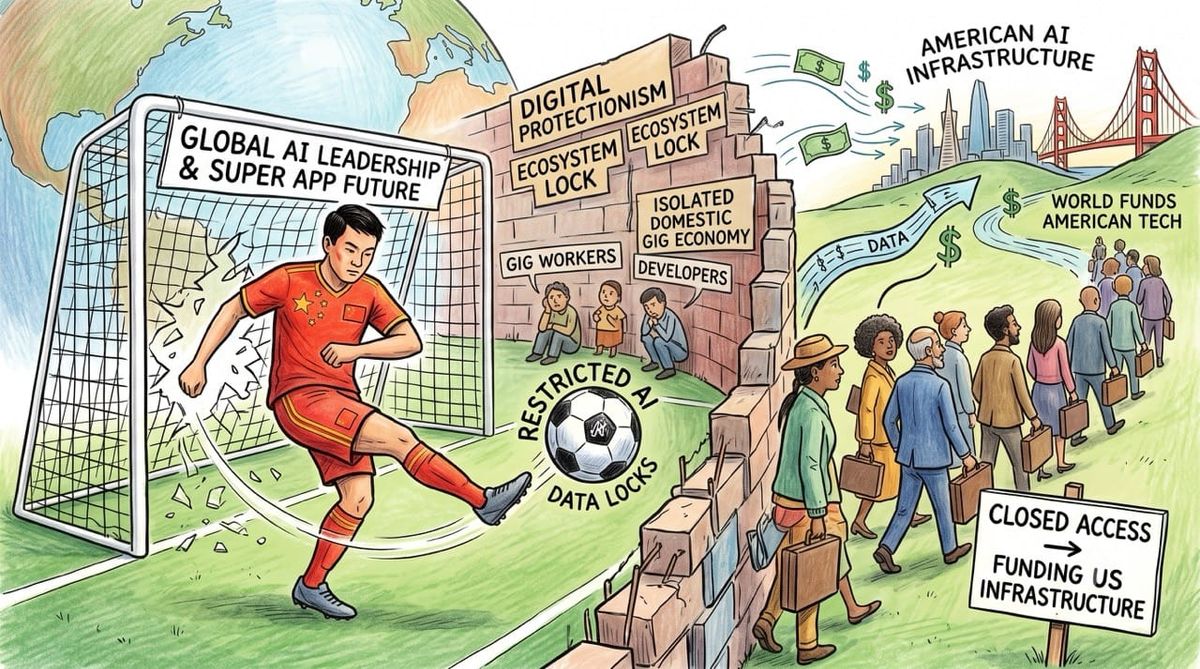
Beijing was quietly winning the global pricing war for cognitive compute. By suddenly locking their ecosystem, they are forcing the rest of the world to fund American infrastructure.
Inspiration: Analyzing the recent news of China restricting foreign access to their open-source AI models and intervening in the Manus AI deal. Realizing that digital protectionism will ultimately isolate their domestic gig economy and destroy their chances of building a global agentic super app.
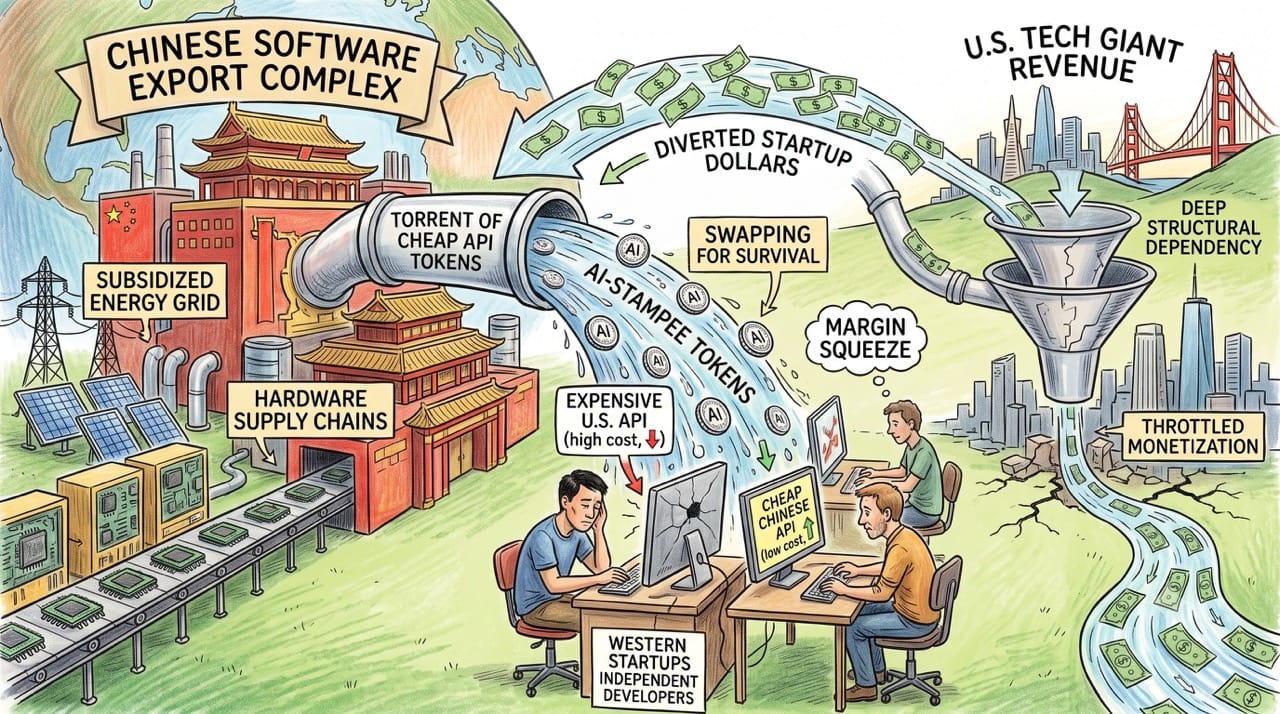
The Token Arbitrage
For the last year, China was quietly executing the greatest software export strategy in history.
By heavily subsidizing their domestic energy grid and hardware supply chains, Chinese labs were able to flood the global market with incredibly cheap API token costs.
Western startups and independent developers were eagerly swapping out expensive domestic APIs for these highly capable Chinese alternatives just to survive the venture capital margin squeeze.
This was a brilliant geopolitical move.
It created deep structural dependency on Chinese digital infrastructure while directly throttling the monetization of American tech giants.
Every dollar a US developer spent on a cheap overseas model was a dollar actively stolen from the revenue projections of Silicon Valley.
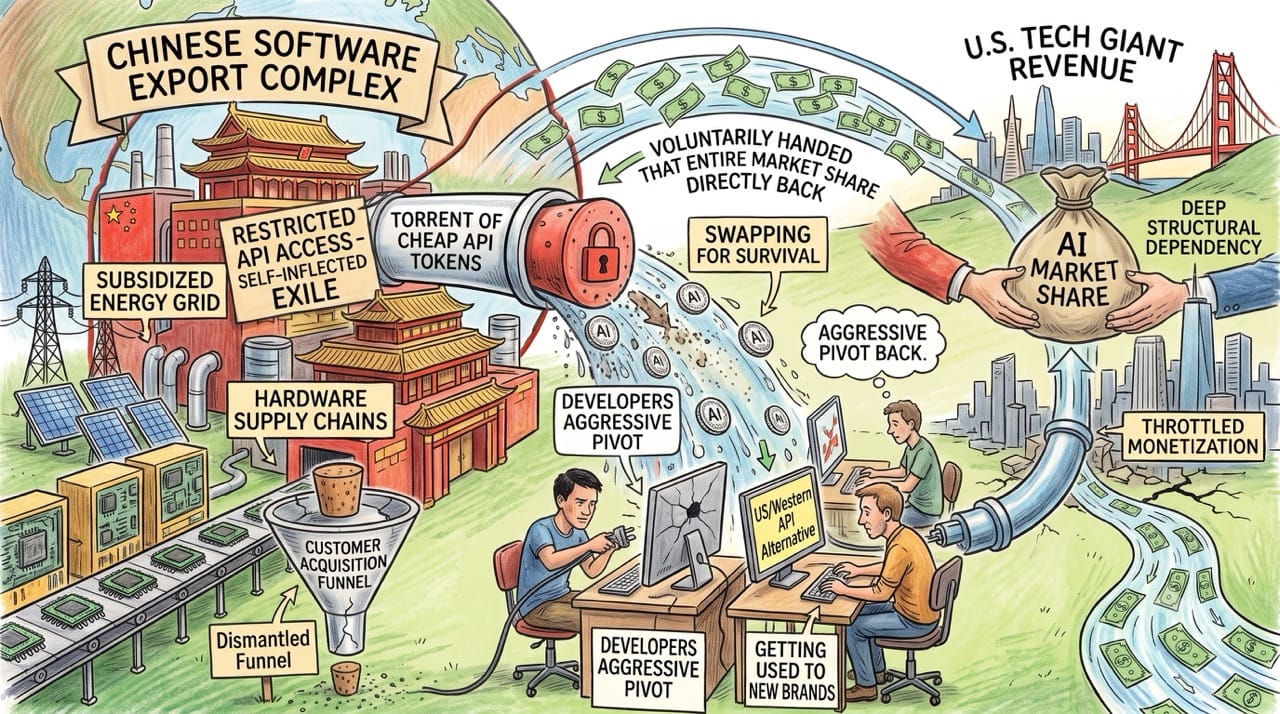
The Self-Inflicted Exile
Now, Beijing is reversing course by actively restricting foreign access to these exact models.
By pulling the plug on international API availability, they are not protecting a secret, they are simply destroying their own customer acquisition funnel.
When you restrict a developer, they do not stop building.
They aggressively pivot back to domestic alternatives and quickly get used to the quirks of those competing brands.
China had the entire western startup ecosystem hooked on their pricing, and they just voluntarily handed that entire market share directly back to their rivals.
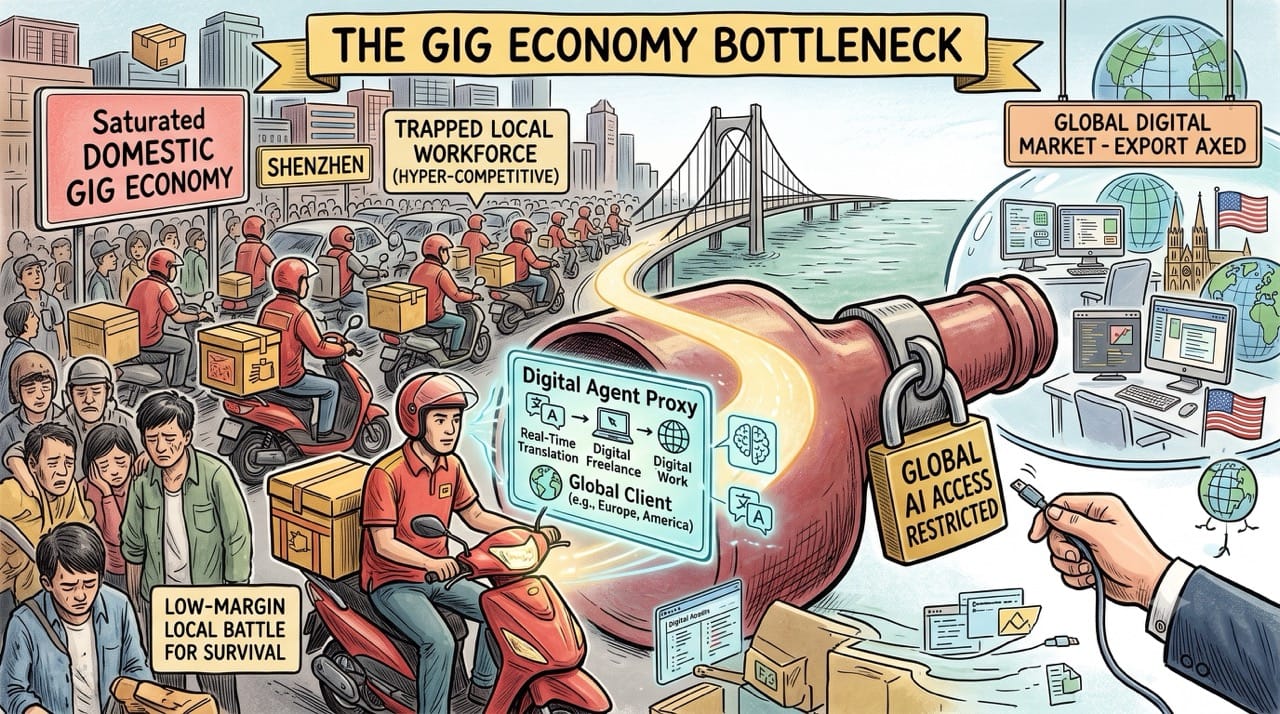
The Gig Economy Bottleneck
The collateral damage of this isolation extends far beyond software developers.
China possesses a staggering domestic gig economy that is completely saturated, hyper-competitive, and strictly limited to local physical borders.
Advanced language models and digital agents were the perfect bridge to take this trapped labor force global.
With real-time translation and autonomous digital agents acting as a proxy, a local delivery driver in Shenzhen could theoretically transition into doing digital freelance work for European or American clients.
Restricting global AI access permanently axes this lucrative export of human capital, keeping their workforce trapped in a low-margin, localized battle for survival.
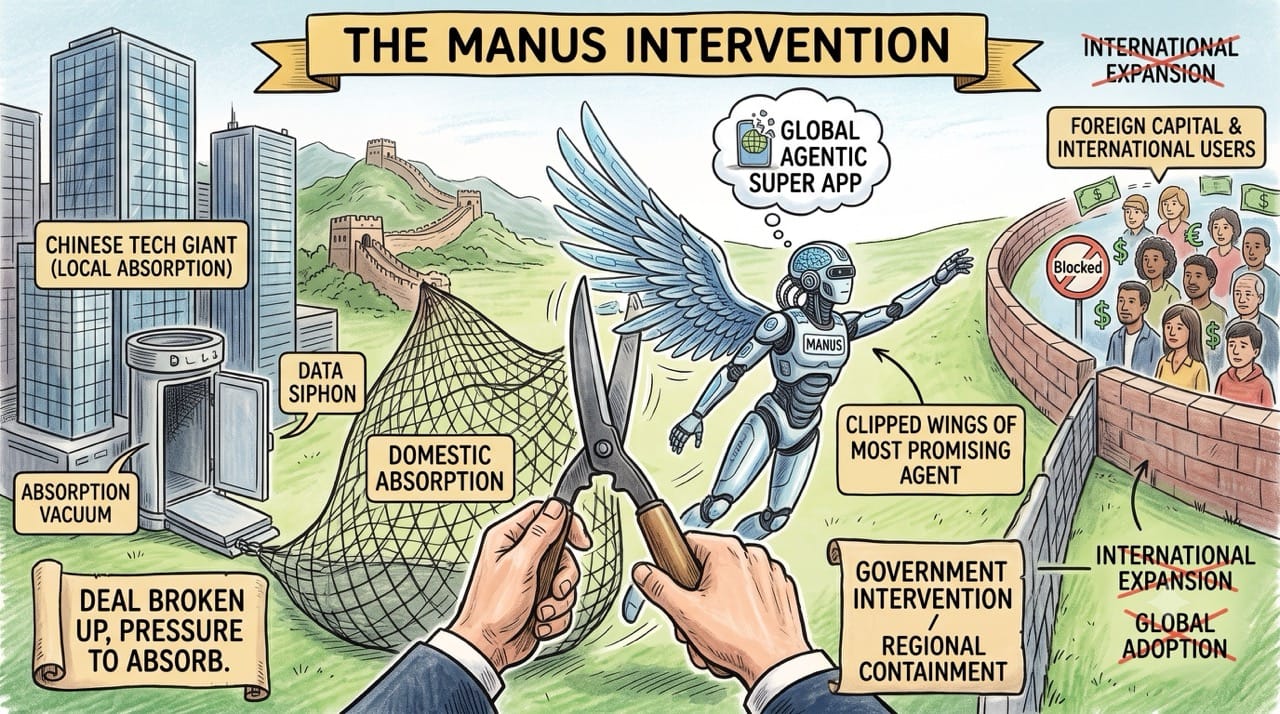
The Manus Intervention
We are seeing this exact same protectionist instinct ruin individual corporate deals on the global stage.
Look at how the government recently intervened to break up the international expansion of Manus, choosing instead to pressure a local tech giant into absorbing the technology.
By preventing the startup from freely integrating with foreign capital and international user bases, they are essentially clipping the wings of their most promising autonomous agent.
You cannot build a global consumer product when your overarching strategy prioritizes strict regional containment over actual user adoption.
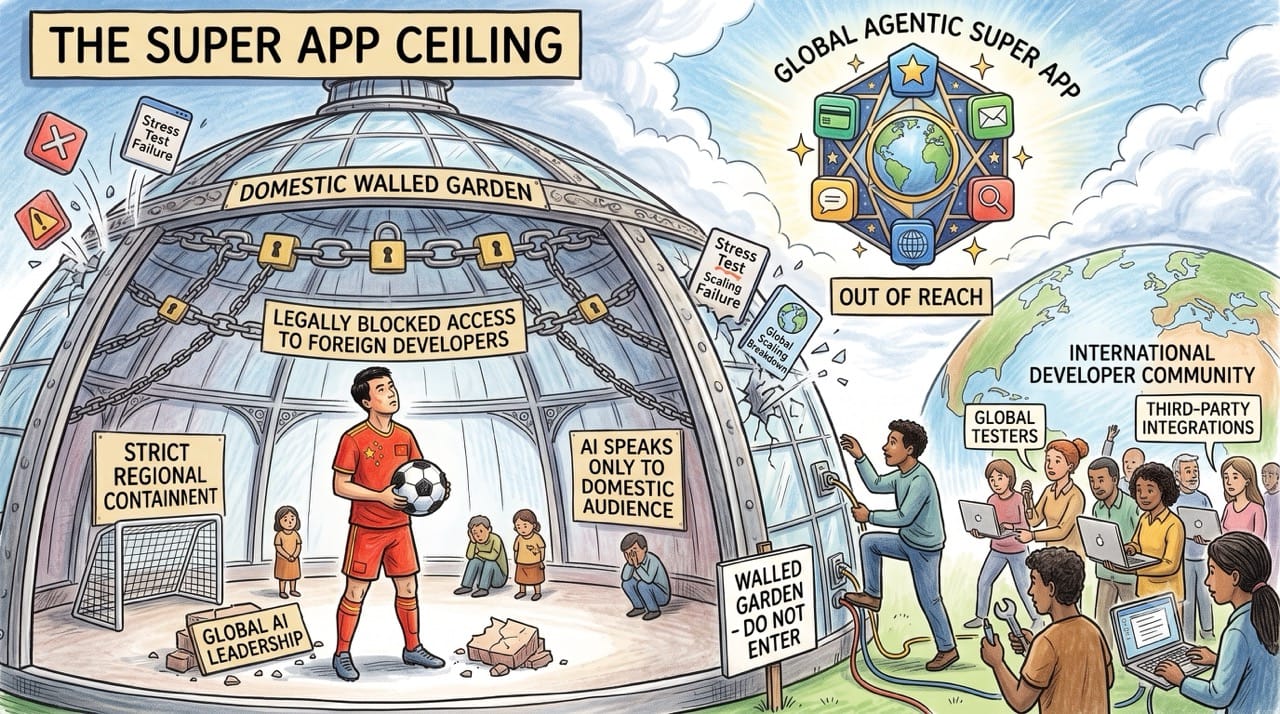
The Super App Ceiling
The ultimate goal for a platform like Manus was clearly to build the next evolution of WeChat, a global super app powered entirely by agentic capabilities.
But a super app simply cannot conquer the world if foreign developers are legally blocked from testing, building, and expanding on its open-source foundation.
Successful digital ecosystems require a diverse, international developer community to stress-test the product and build third-party integrations.
By keeping the technology locked tightly inside a walled garden, China guarantees their smartest artificial intelligence will only ever speak to a domestic audience.
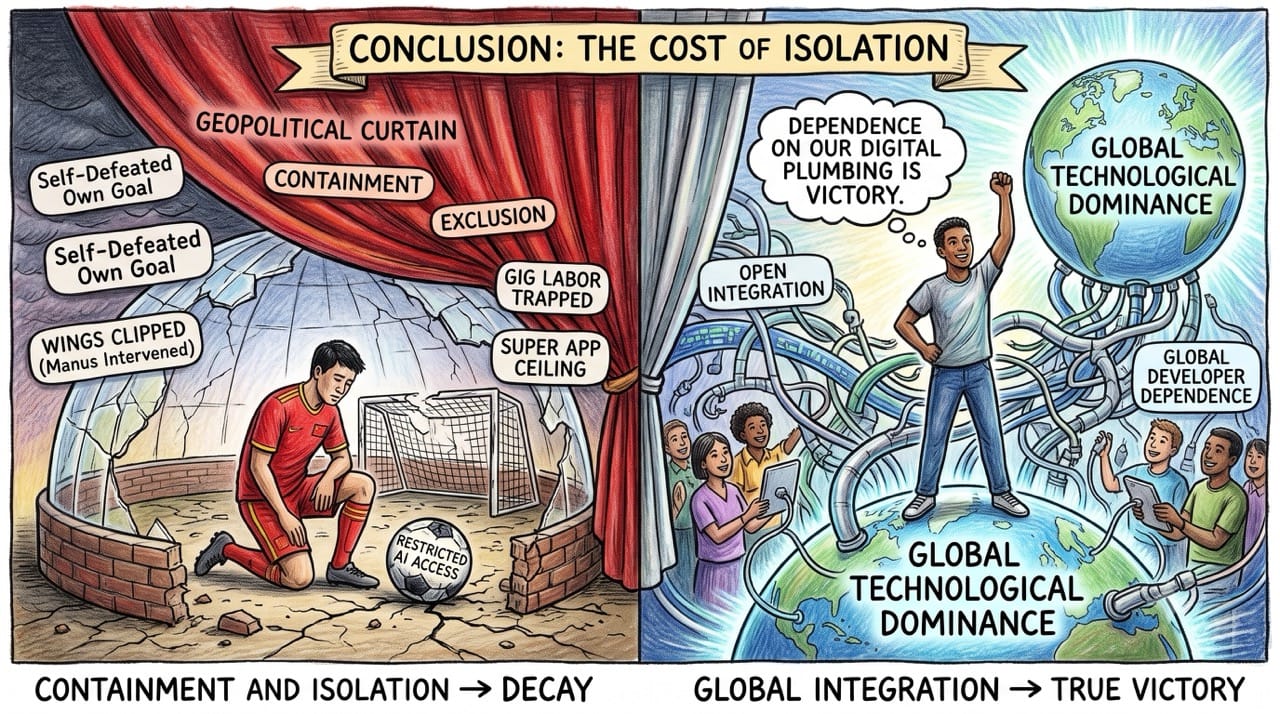
Conclusion: The Cost of Isolation
You cannot establish global technological dominance by hiding your best products behind a geopolitical curtain.
The ultimate victor in the intelligence era will be the nation that gladly lets the rest of the world become completely dependent on their digital plumbing.