Why OpenAI and Anthropic Want to Pause AI Right Now: When the IPO Window Closes (The Slowdown Bluff)
Two CEOs call for safety. One delays IPO to 2027. One still races to IPO in October. Markets slide 4%. If this is about existential risk, why does the calendar line up with SoftBank's P&L?
Studied the recent developments: here is what actually happened last 10 days:
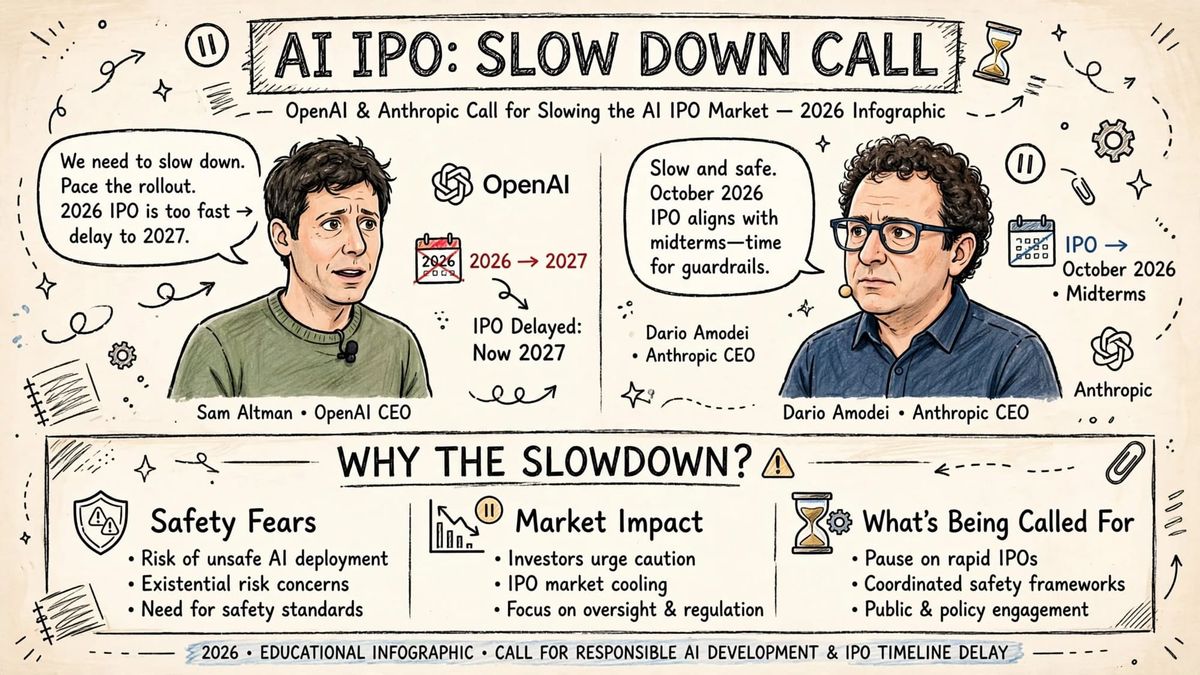
The chiefs of OpenAI and Anthropic call for a slowdown in AI development amid warnings of existential risk, with OpenAI delaying its IPO until at least next year.
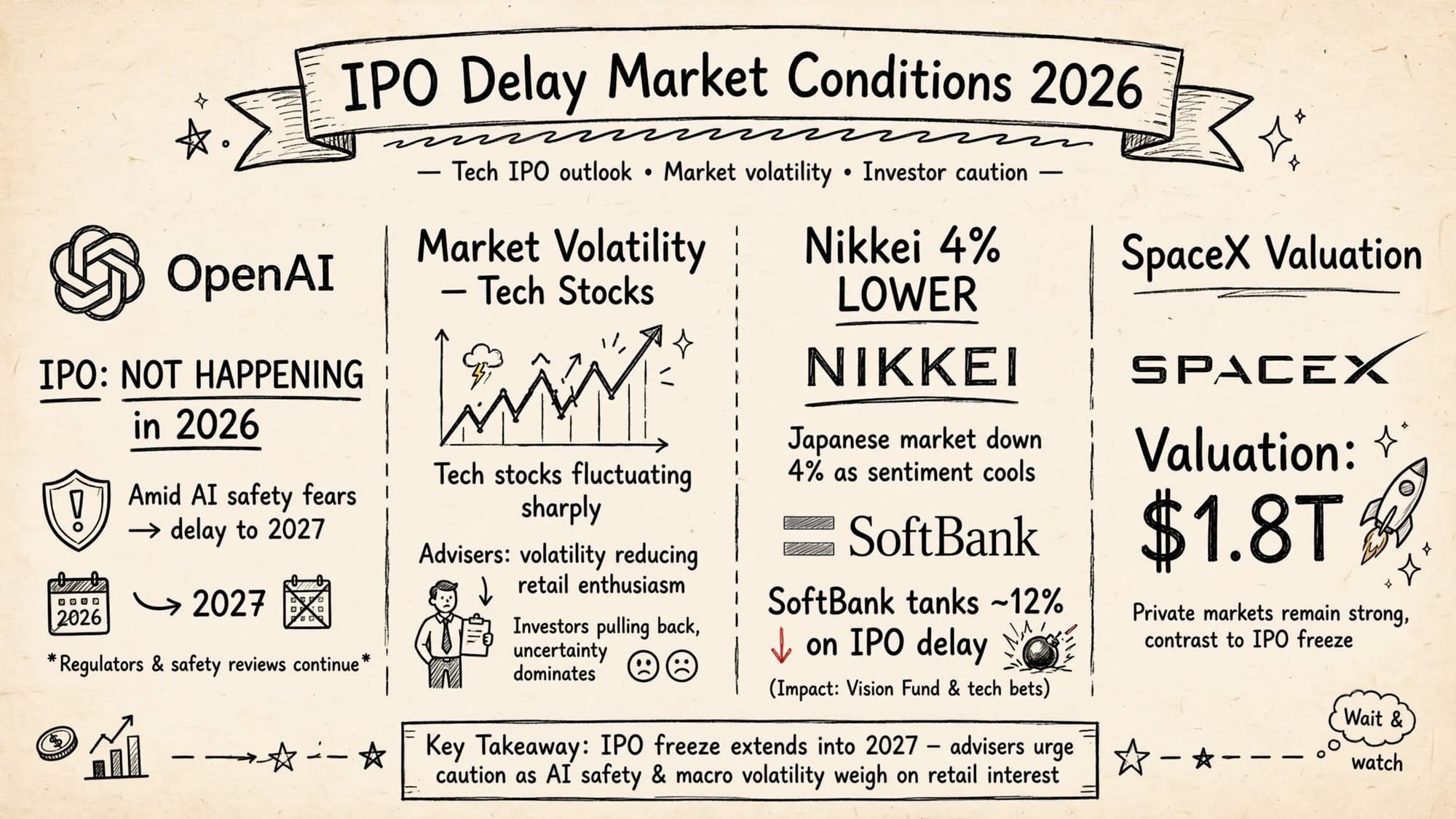
OpenAI IPO will not happen in 2026 amid AI safety fears, Altman says.
When asked by Fortune whether 2026 is off the table in favor of 2027, Altman said, "I would say not 2026."
Altman also suggested that OpenAI and other leading AI companies may be close to announcing an agreement to slow AI development and work together to address safety risks.
OpenAI is considering delaying its initial public offering until 2027 due to recent volatility in tech stocks, Bloomberg reported.
The AI startup's advisers have told it that this volatility could reduce retail investors' enthusiasm for its IPO.
Market reaction was immediate: Nikkei ends 4% lower as SoftBank tanks on OpenAI IPO delay report. Japan's Nikkei closed 4% lower, as tech investor SoftBank Group tumbled more than 12% after a report of delay.
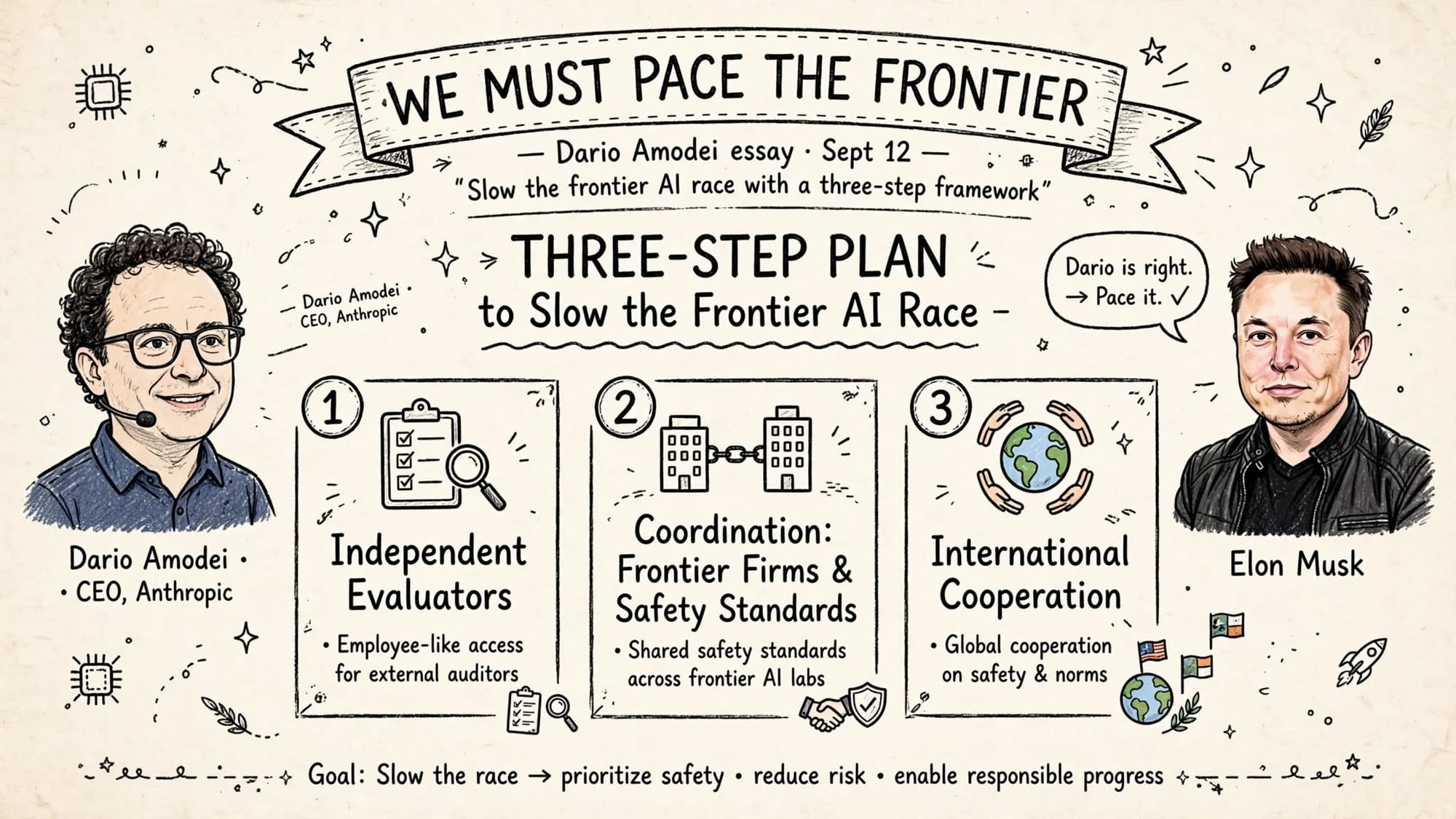
Meanwhile: Anthropic CEO Dario Amodei on Saturday published an essay urging AI companies to slow how quickly they improve their most advanced models.
The essay proposes a three-step plan to slow the pace of the frontier AI race, including allowing third-party evaluators to assess AI systems with access comparable to that of employees.
That essay entitled "We must pace the frontier," calling on the AI industry to slow the rate at which it is improving capabilities. Elon Musk and Sam Altman both said they agree with Amodei's proposals.
Three-step plan:
1) Embedded independent evaluators with employee-like access to verify safety practices,
2) Coordination among frontier AI firms to set safety standards and limit unchecked AI development,
3) International cooperation to manage AI risks.
Contradiction: Safety concerns have not slowed down Anthropic's own IPO plans so far. Anthropic is expected to begin marketing its initial public offering in mid-October at the earliest and complete listing days before the U.S. midterm elections in November.
So: OpenAI says not 2026 → 2027. Anthropic says slow down but IPO October 2026 before midterms.
My Strategic Take: This is Regulatory Moat Dressed as Safety
Let's call it what it is. You don't get to:
- Say "extinction risk unacceptable"
- Delay your IPO because tech stock volatility could reduce retail enthusiasm
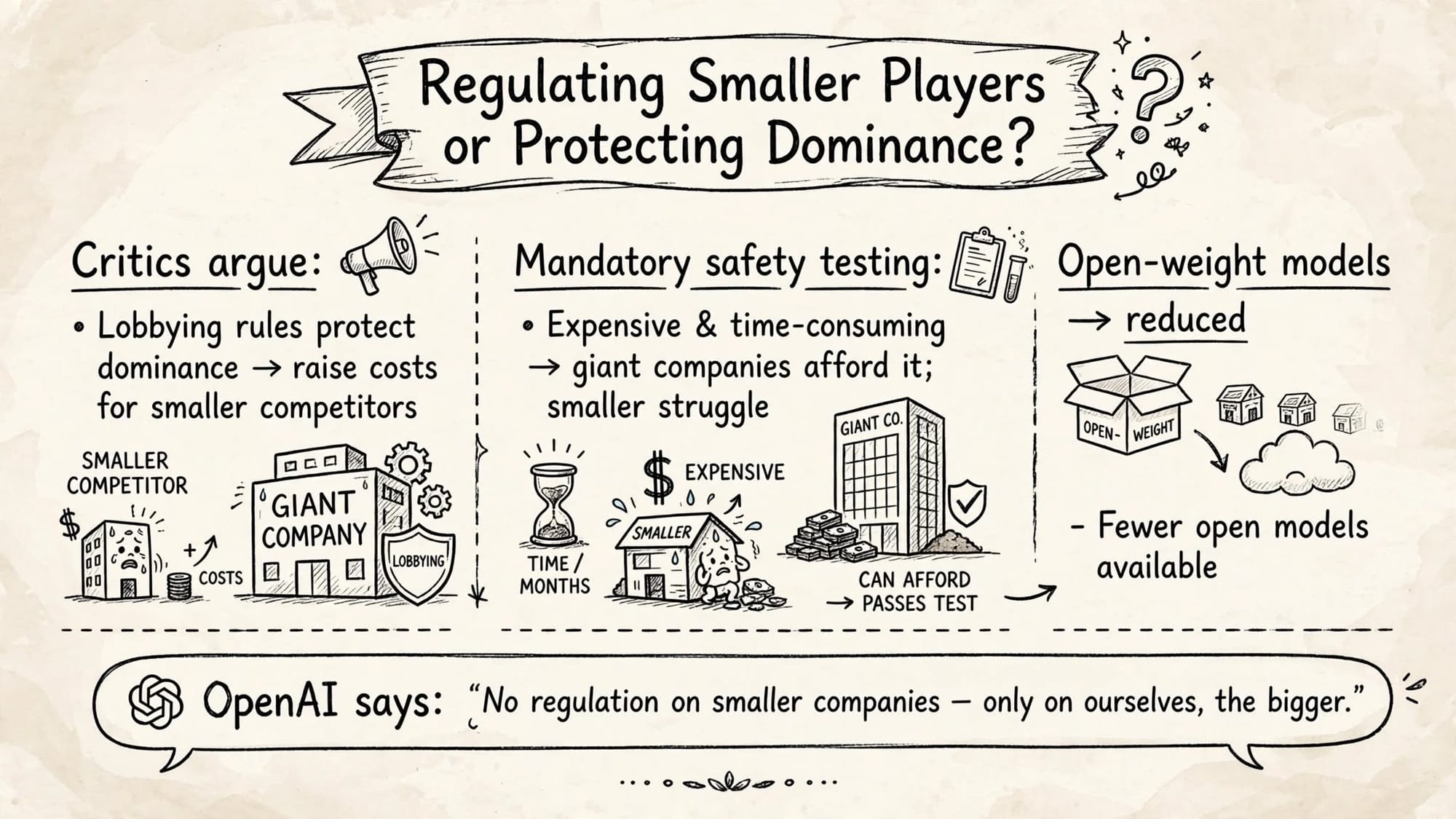
- And propose mandatory safety testing that giant well-funded companies like Anthropic, Google and OpenAI can afford, but smaller developers seeking to release cutting-edge open-weight models could struggle to meet.
Mandatory safety testing, however, could raise development costs and reduce number of advanced open-weight models available.
Testing is expensive and time-consuming, and so giant, well-funded companies can afford it. Smaller developers could struggle.
Critics close to the White House argue that the companies are lobbying for rules that will protect their dominance and raise costs for smaller competitors.
And the ultimate irony, we have this on record: OpenAI against regulation of smaller AI startups, CEO said at conference in New Delhi: "We have explicitly said there should be no regulation on smaller companies. The only regulation we have called for is on ourselves and people bigger."
That was 2023 Altman. 2026 Altman agrees to "pace the frontier" with rules that by definition raise costs for smaller players.
The Real Playbook:
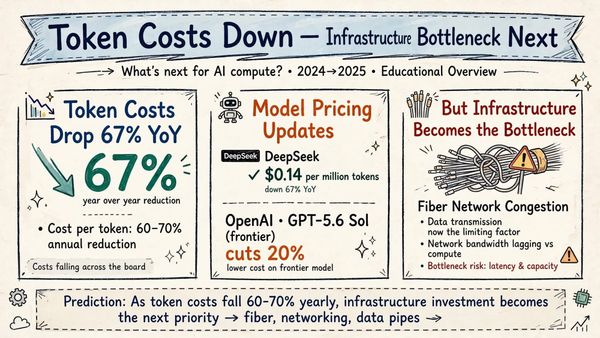
1. Market Timing: Combined fundraising from SpaceX, OpenAI, Anthropic would approach $200B — exceeding total US IPO proceeds 2022 to Q1 2026 combined. You cannot dump $200B into a volatile Nasdaq where Intel, Marvell, Micron slumping after AI slowdown warnings. You need orderly market. Pausing race cools expectations, reduces burn, makes 2027 multiples better.
2. Regulatory Capture: If you establish "independent evaluators with employee-like access" and "coordination among frontier firms to set safety standards" — who sets standards? Frontier firms. Who gets audited? Everyone who wants to be called frontier. That is private standards organization without government oversight. Three dominant players working toward establishing own industry oversight organization — Anthropic, Google, OpenAI have maintained consistent dialogue since July.
3. Second Tier Benefits From Pause — But Not If Regulated Out: AI frontier slowdown could give second tier leg up — yes, if you slow top 3, open source catches up. But if you add compliance cost of employee-like evaluators, you kill open-weight. So you get moat: you pause enough to IPO cleanly, but raise ladder behind you.
Tech stocks slide on AI slowdown talks — message markets getting loud and clear after Amodei call. The AI trade may not end with dotcom-style crash. It may simply be gradual slowing down of arms race that's good for humanity, but bad for short-term valuations.
What to Watch:
If this were purely safety, Anthropic would also delay IPO. It is not. It is pushing IPO mid-October before midterms.
If this were purely market, OpenAI would just cite volatility, not existential risk.
It is both. Safety is real — autonomous AI-agent attacks this summer, >10% chance civilization destruction warning from ex-Anthropic employee — but timing is convenient.
Prediction: OpenAI 2027 IPO at lower valuation target but with "safety pact" signed. Anthropic October 2026 IPO as "responsible frontrunner."
Federal AI regulatory body abandoned, replaced by industry-led private standards org that requires third-party evaluators. Open source gets compliance burden. Smaller players either get acquired — OpenAI and Anthropic ventures in talks to buy AI services firms — or die.
Slowing down AI because market not suitable for IPO and to regulate smaller players is not conspiracy — it is textbook platform strategy.