AI Will Make Humanity Taller
We think AI makes us smarter. The first visible effect will be it makes us taller — especially where we need it most.
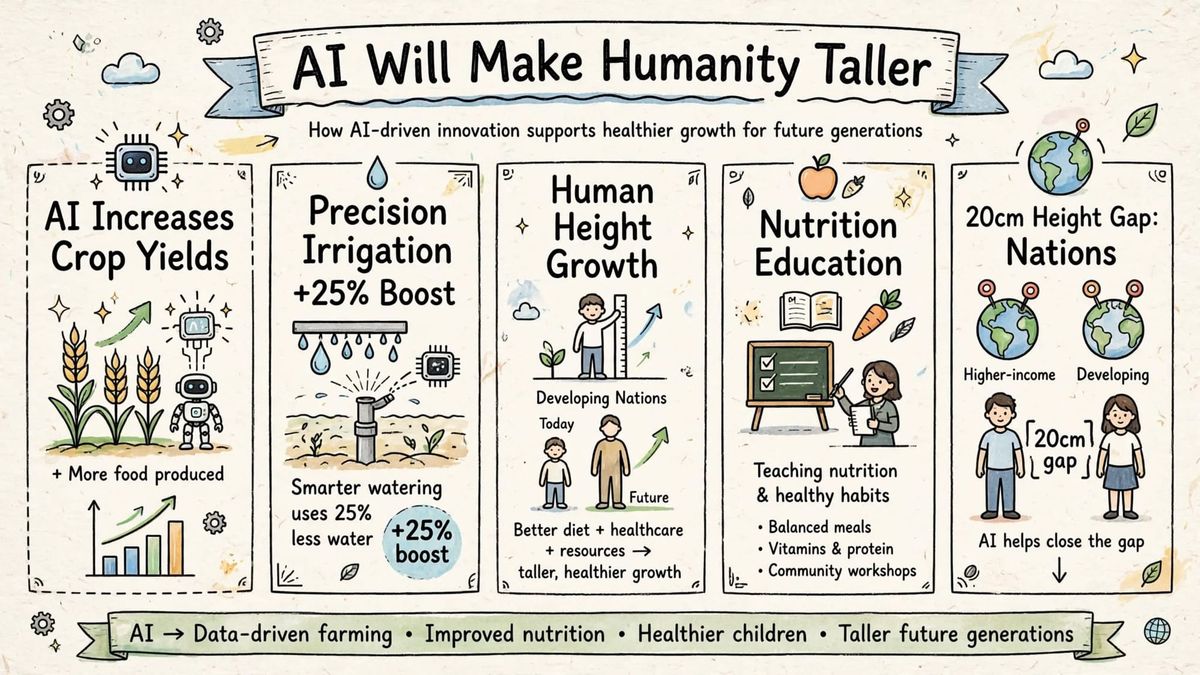
My contrarian take: The first physical proof that AI is working will not be in GDP charts. It will be in height charts in developing nations.
Height is not genetics. In poorer environments, heritability of body height is lower and socioeconomic height gap larger.
The most important non-genetic factors affecting growth and adult body height are nutrition and diseases.
Average values of children's height and weight accurately represent the condition of a nation's public health and average nutritional status particularly in developing countries.
And we have a 20cm problem: Poor nutrition during a child's school years may account for a 20cm height gap across nations — study led by Imperial College London analyzing 65 million school-aged children in 193 countries.
In most developing countries, rising levels of nutrition and improvements in public health have led to declines in infant mortality and rising adult heights.
The gap between rich and poor countries increased by 1.5cm in last three decades because nutrition gap increased.
Height Z-score increased with education level even under controlling economic level. Adult height is also associated with early-life experiences and with longevity, education and earnings.
So if AI fixes nutrition, it fixes height. It will do it via two paths — one direct, one long tail.
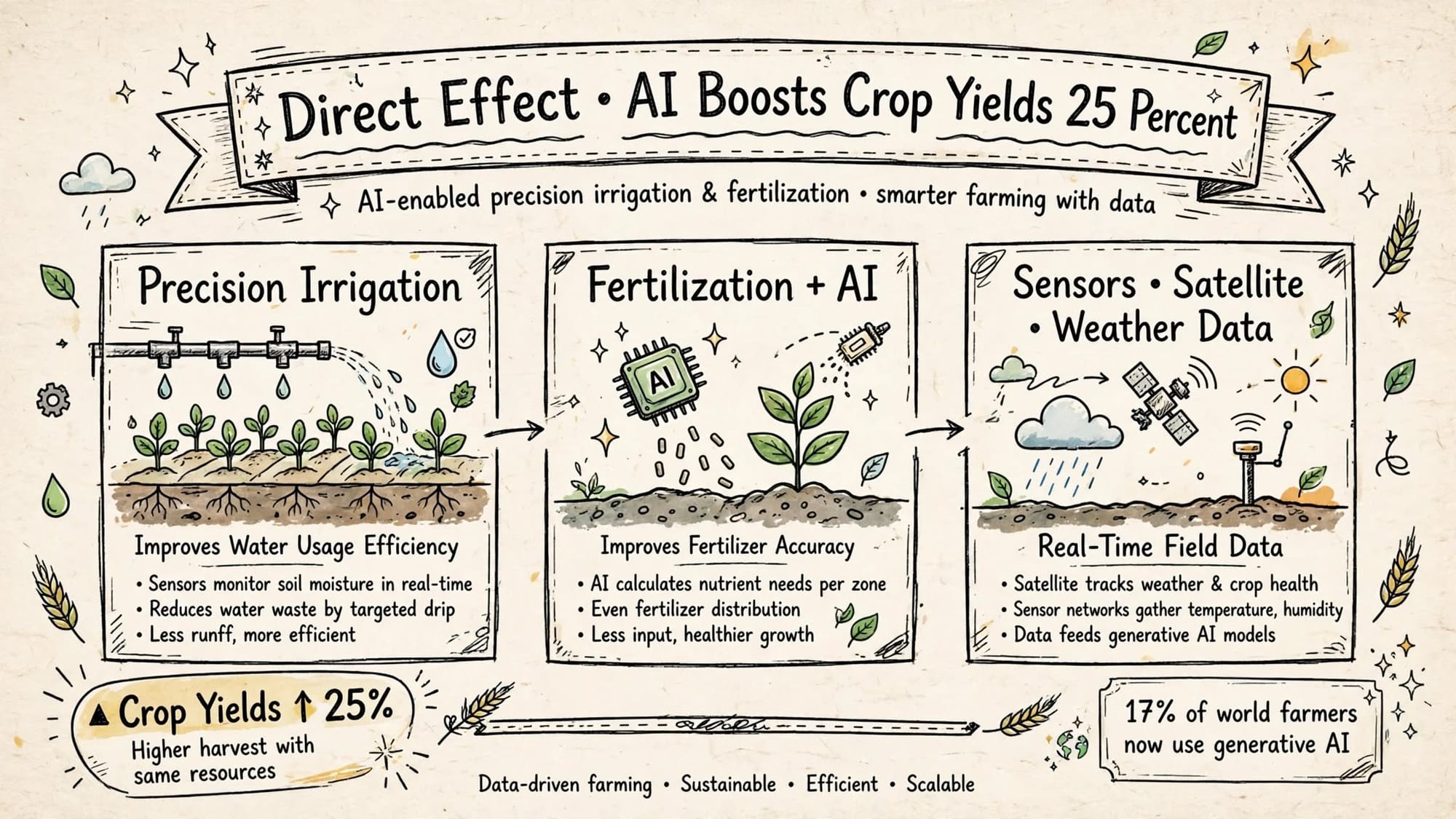
Direct: AI → More Food, Better Food, 25% More
AIenabled precision irrigation and fertilization can raise crop yields by 25%. AI improves water usage efficiency and fertilizer application accuracy.
Sensors, robotic systems, satellite imagery and weather data now allow real-time monitoring while image analysis enables early detection of crop diseases.
17% of the world's farmers now use generative AI in farm-related tasks — fastest growing tech in agriculture.
What this means for height:
- More calories — 25% yield boost on same land = food security
- More N and P intake — the bio-elements that favor rapid protein synthesis and maximizes genetic capacity for maximal height
- Less disease — early detection reduces aflatoxins, crop diseases that stunt growth
- Water + fertilizer accuracy → more varied diet, not just rice
Tessera AI tool now identifies crop types more accurately on sub-hectare plots that feed many of world's poorest people — the exact plots previous satellite tools missed.
Direct effect: In Ethiopia, India, Peru, Vietnam — where children's height growth was tracked 2002-2016 — increasing energy intake increases both height and weight. AI gets them that energy.
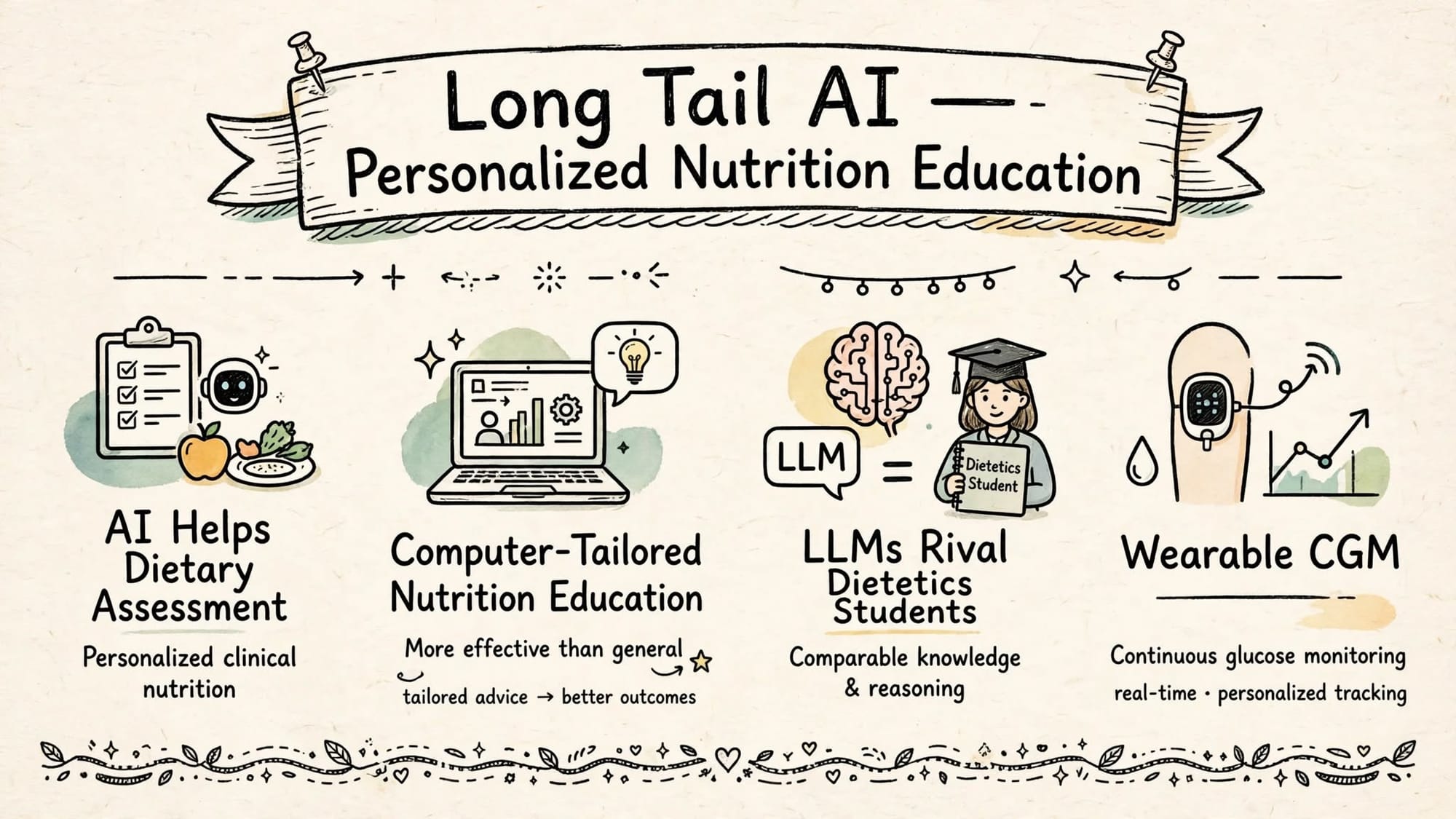
Long Tail: AI → Nutrition Education That Actually Works
This is bigger.
Computer-tailored nutrition education may be more effective than general nutrition education because messages are tailored to individual behavior, needs and beliefs.
AI is reshaping the field of nutrition.
AI helps in tracing and offering solutions in dietary assessment, personalized and clinical nutrition.
These AI systems can produce personalized recommendations that align more precisely with individual's physiological, metabolic, and lifestyle requirements. Wearable sensors and continuous glucose monitoring further empower AI-based nutritional planning to adapt rapidly.
LLMs showed proficiency in nutrition knowledge, rivaling or even surpassing dietetics students in certain sections.
Why this matters for height: General advice "eat protein" fails.
Personalized advice "your child is low on N:P ratio, add 2 eggs + lentils 3x week, here is local market price and recipe in your dialect, tracked via photo" works.
- AI dietary assessment via photo → knows what child actually ate, oldest challenge in nutrition
- Computer-tailored education → better adherence than pamphlets
- LLMs = dietetics student level knowledge → available in every village via phone
- Wearable CGM → real-time feedback loop
And education itself increases height. Z-score height increases with education level. More schooling = better nutrition knowledge, higher milk consumption frequency, better hygiene, fewer infections.
So AI education does double duty: teaches nutrition + keeps kids in school longer via AI tutors. Both increase height.
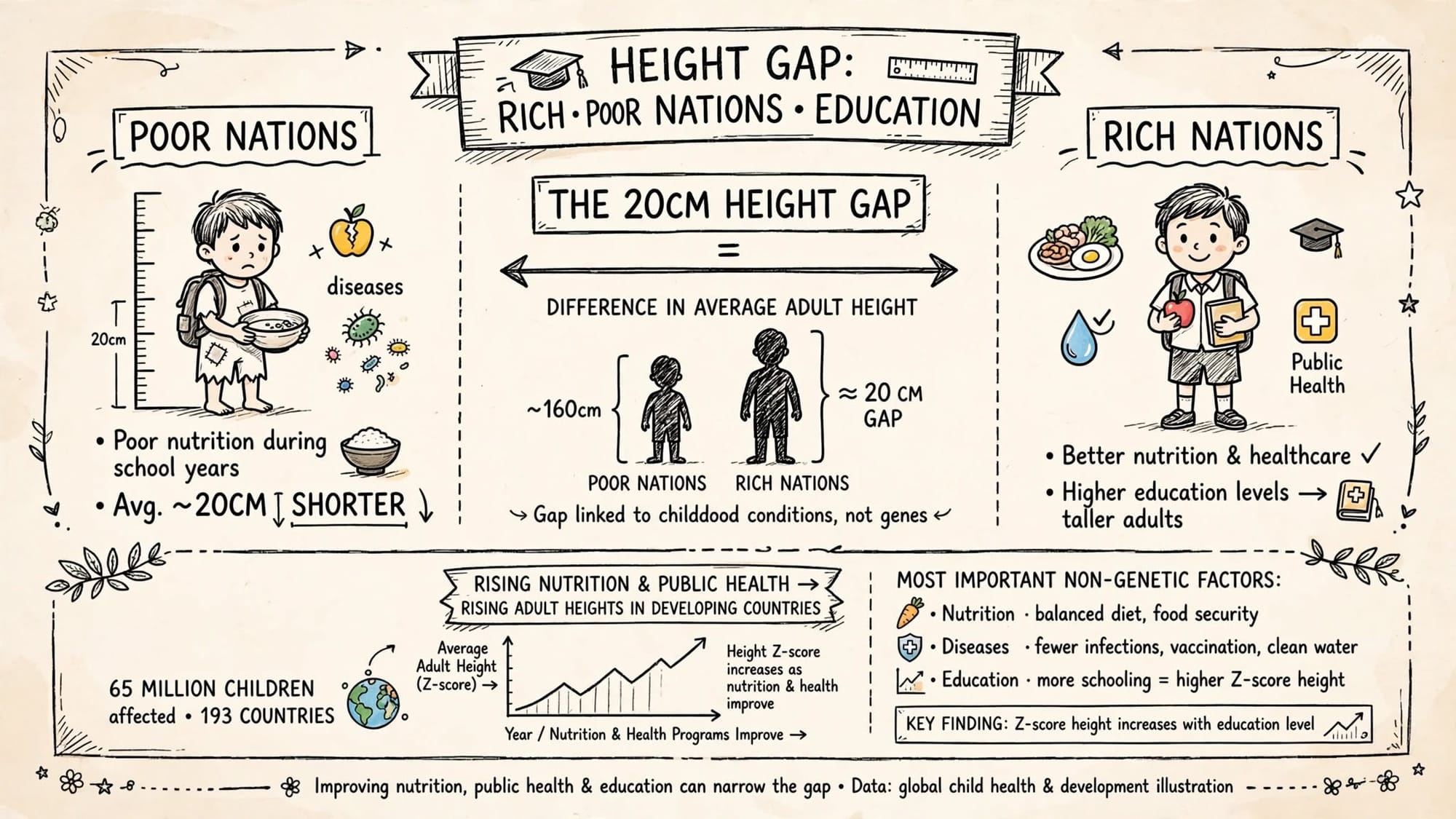
The Strategic Take: The Tall Convergence
My thesis: Developed nations will not get much taller — we already maximized genetic capacity. Developing nations will.
Gap today: 20cm shorter on average due to poor nutrition during school years. Rich vs poor male height gap increased 1.5cm last 30 years because nutrition gap increased.
AI reverses both:
- Yield +25% closes calories gap
- Precision N,P closes protein gap
- Personalized nutrition education closes knowledge gap
- Education level increase closes behavior gap
Result: In 15-20 years, we will measure AI impact not by tokens, but by centimeters.
The Lancet will publish 100 million kids study and find that height gap narrowed first time in 40 years, driven by countries that adopted AI in agriculture + education earliest.
Taller humanity = not vanity. Taller = proxy for less stunting, fewer infections, better cognitive development, higher longevity, education and earnings — all correlated with height.
AI will not just make us smarter. It will make us physically bigger, healthier, and more capable of being smart.
And it will start in fields in Kenya with CGIAR + Google.org AI Collaborative developing stronger, more climate-resilient crops for farmers in Global South — March 2026 — not in San Francisco labs.