Why Apple’s Project Baltra Will Tank Nvidia Sentiment: The Silicon Pivot
We assume Nvidia holds an unbreakable monopoly on the hardware powering artificial intelligence. Apple's aggressive development of the M5 Ultra and Project Baltra proves that the most valuable tech companies are quietly building the server silicon required to completely bypass them.
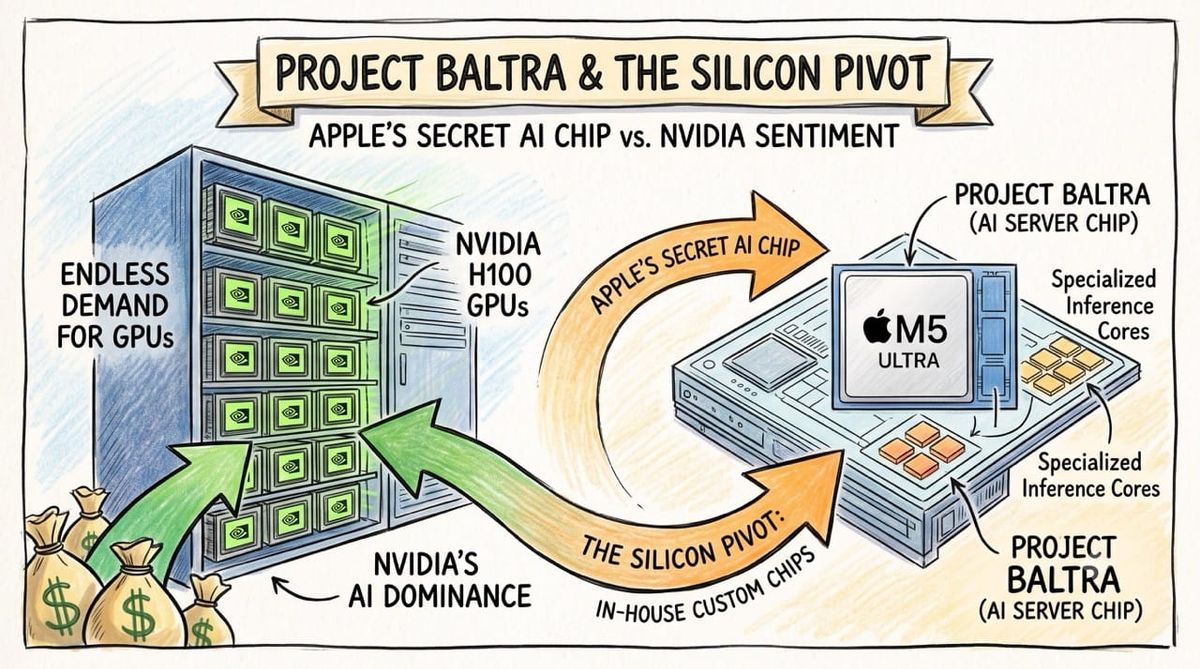
The financial media is fixated on the endless demand for graphics processing units. They are completely ignoring the severe macroeconomic threat of tech monopolies quietly building their own specialized server silicon.
Inspiration: Analyzing Apple's upcoming M5 Ultra release and their highly secretive AI server chip, Project Baltra. Realizing that the hyperscalers shifting toward custom, in-house inference silicon presents a structural threat to Nvidia's long-term valuation.
The Hardware Monopoly
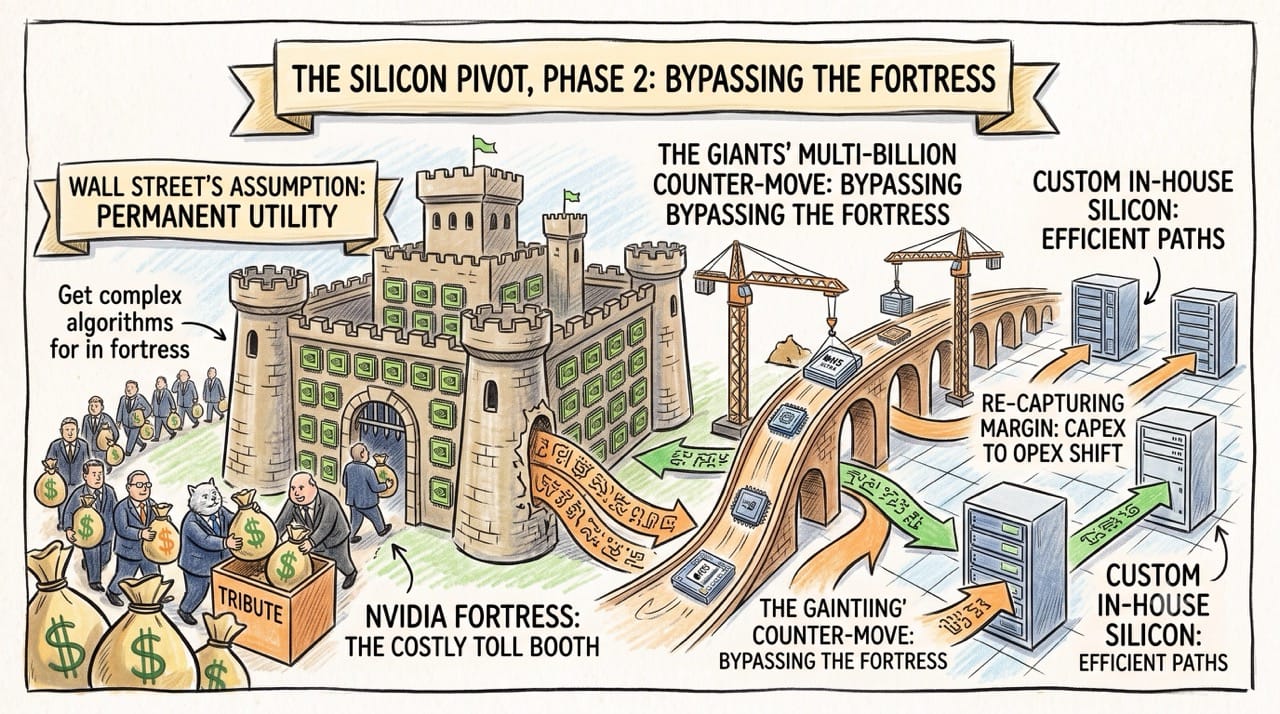
Right now, Wall Street is treating Nvidia as an untouchable utility company for the artificial intelligence era.
Investors are pricing the stock under the assumption that every major tech platform will forever be forced to buy their premium graphics processing units to run complex algorithms.
This assumes the current market dynamics are permanent.
It completely ignores the historical reality that when a third-party vendor captures too much margin, the most heavily capitalized tech giants will inevitably spend billions to cut them out of the supply chain.
The Inference Divide
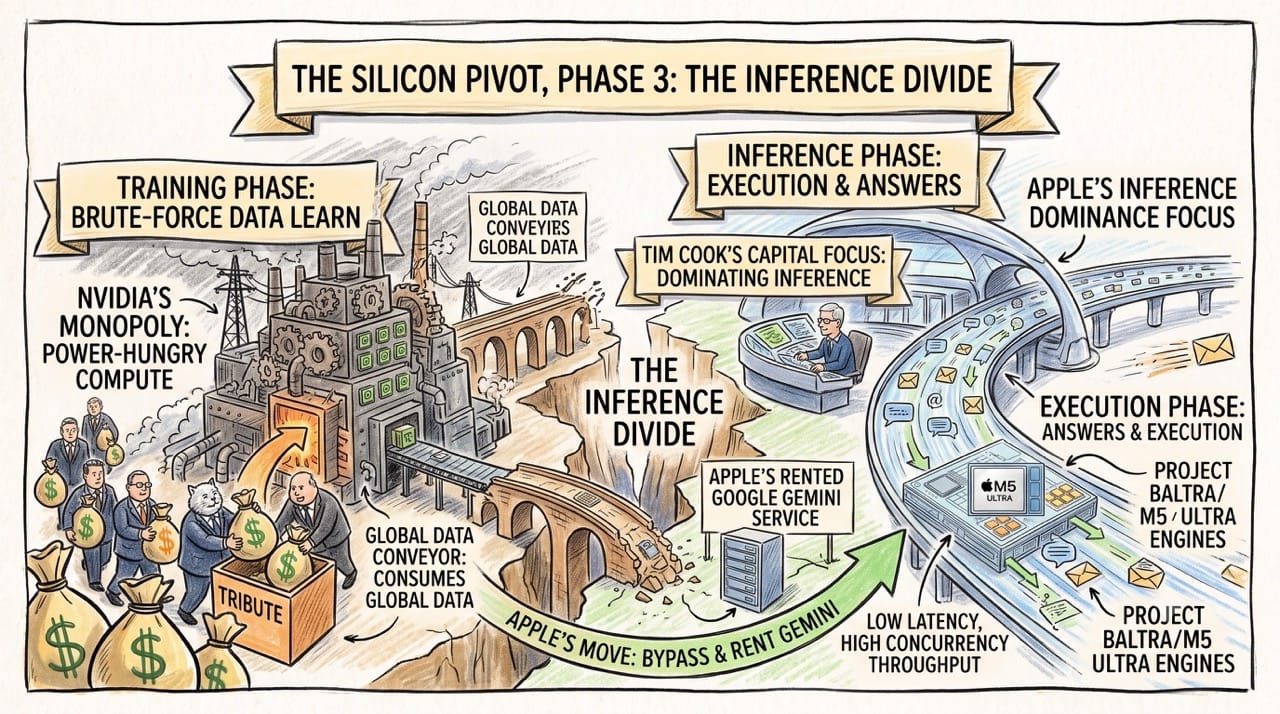
To understand why this Nvidia narrative is deeply flawed, you have to separate the two distinct phases of artificial intelligence: training and inference.
- Training: This is the brute-force phase where a model consumes vast amounts of global data to learn. It requires the raw, energy-heavy compute power that Nvidia currently dominates.
- Inference: This is the execution phase where a trained model actually answers a user prompt or writes an email. It requires low latency, incredible speed, and high concurrency throughput.
Apple has completely bypassed the expensive training war by simply renting Google's Gemini models for the heavy lifting.
Instead, Tim Cook is focusing all of his capital entirely on dominating the highly lucrative inference phase.
Unpacking Project Baltra
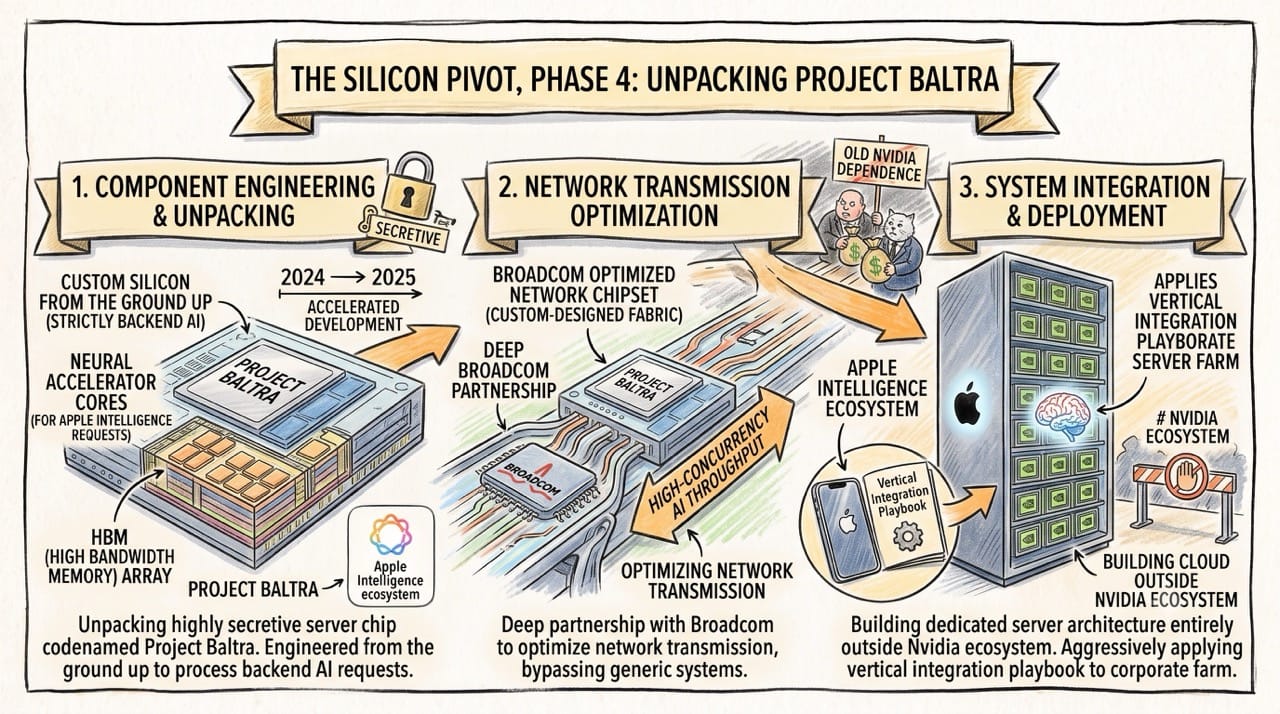
Apple is currently accelerating the development of a highly secretive server chip codenamed Project Baltra.
This custom silicon is being engineered from the ground up strictly to process backend artificial intelligence requests for the Apple Intelligence ecosystem.
By partnering deeply with Broadcom to optimize network transmission, Apple is building a dedicated server architecture that operates entirely outside the Nvidia ecosystem.
They are taking the exact same vertical integration playbook they used to dominate consumer mobile phones and aggressively applying it to the corporate server farm.
The M5 Ultra Deployment
While Baltra represents the next generation, Apple is already deploying their existing silicon advantages into the cloud today.
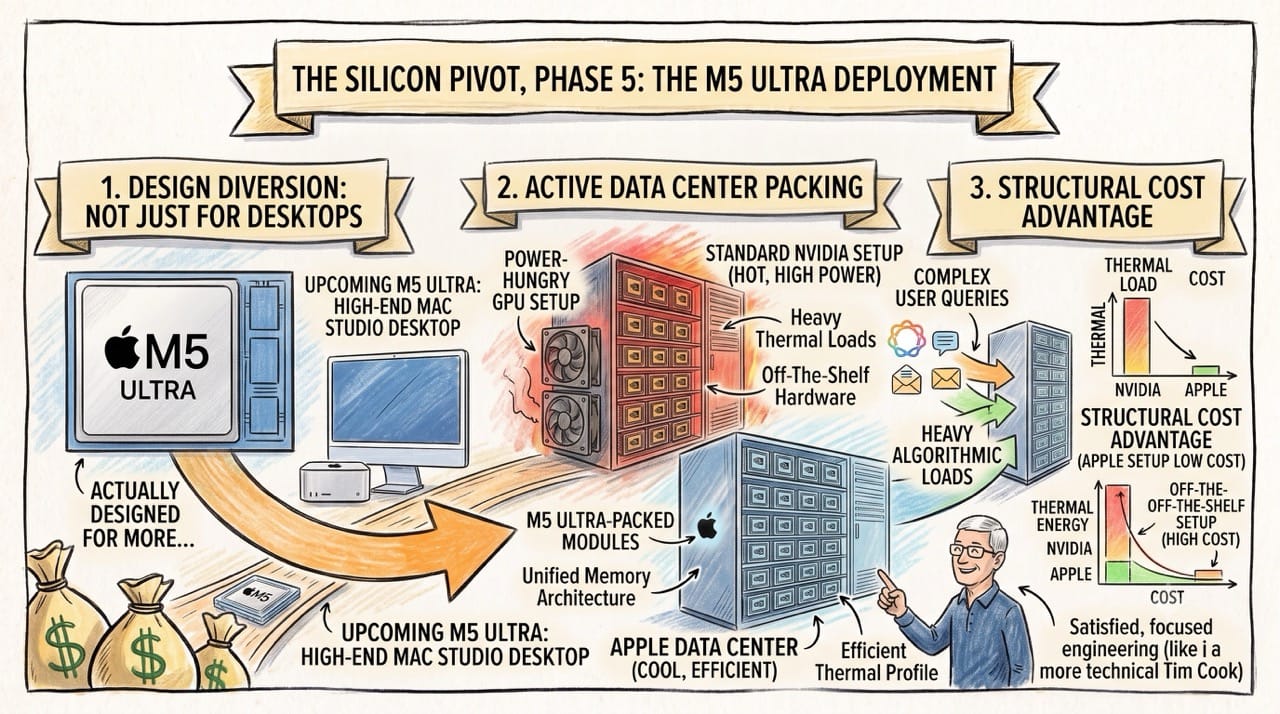
The upcoming M5 Ultra processor is not just being designed for the high-end Mac Studio desktop.
Apple is actively packing these incredibly efficient chips directly into their own data centers to process complex user queries.
Because these chips utilize unified memory, they can handle heavy algorithmic loads with a fraction of the thermal energy required by a standard Nvidia setup.
This creates a severe structural cost advantage that off-the-shelf hardware simply cannot match.
The Intel Precedent
We have actually seen Apple execute this exact sequence of hardware betrayal before.
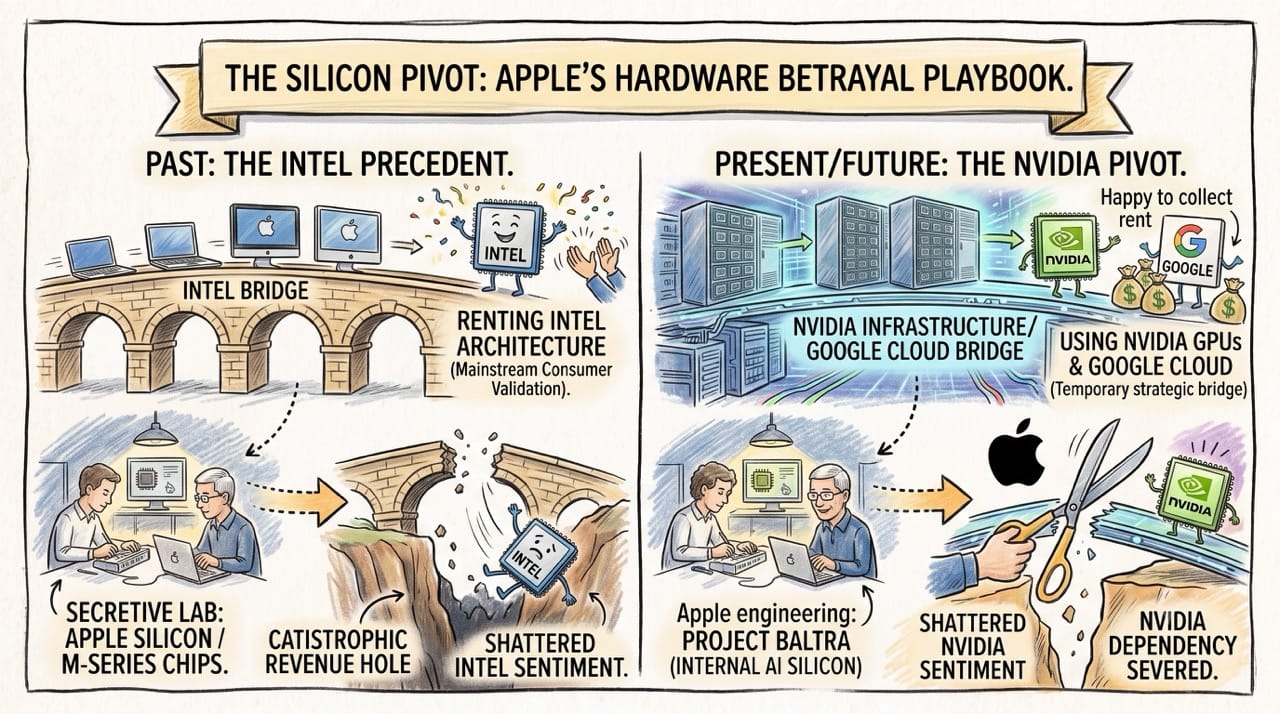
Years ago, they popularized Intel processors by integrating them across the entire Mac lineup, providing the chipmaker with unparalleled mainstream consumer validation.
But behind closed doors, Apple was quietly engineering their own proprietary silicon to eventually replace them.
Just as they rented Intel's architecture until their internal M-series chips were ready, they are currently using Google Cloud and Nvidia's infrastructure as a highly strategic, temporary bridge.
The moment Project Baltra is fully operational and deployed at scale, Apple will ruthlessly sever that dependency.
They will leave Nvidia with the exact same catastrophic revenue hole and shattered market sentiment that Intel experienced when Apple Silicon officially launched.
The Revenue Concentration Threat
This internal hardware pivot presents a severe macroeconomic threat to the Nvidia balance sheet.
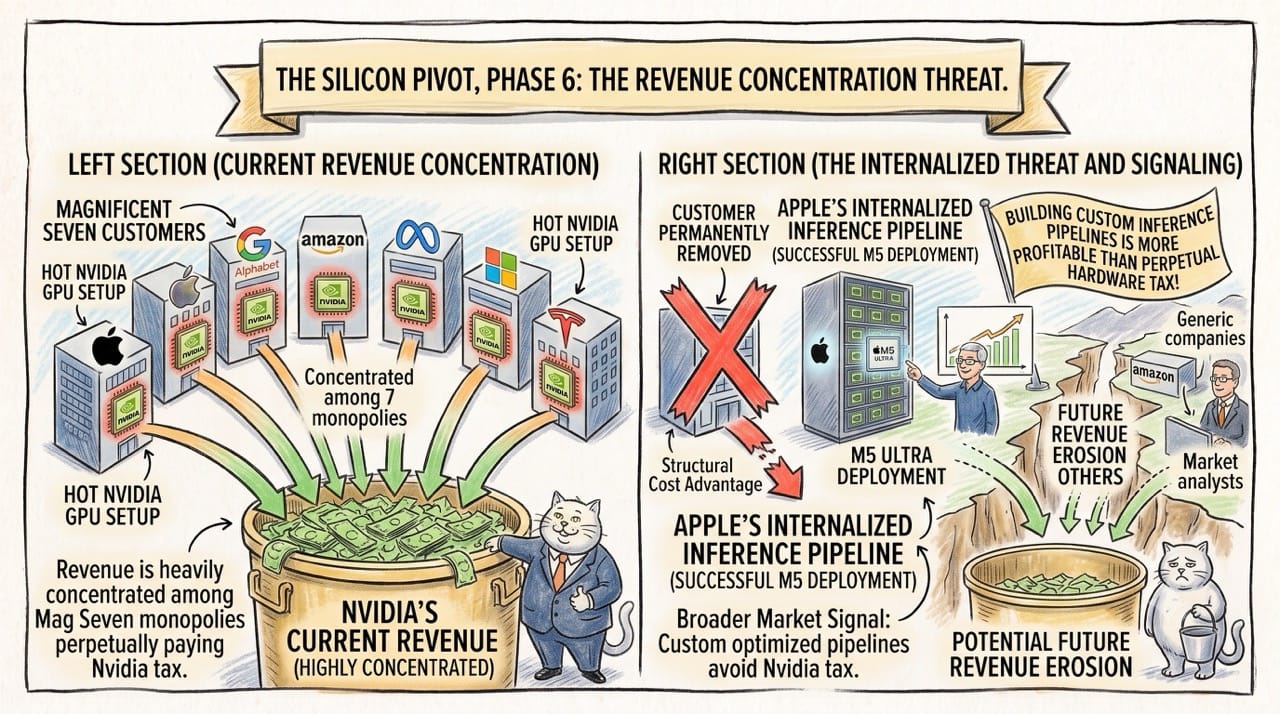
A significant chunk of their current revenue is highly concentrated among just a handful of major tech monopolies, the famous Magnificent Seven.
If Apple successfully internalizes its server hardware, they permanently remove themselves as a future enterprise customer.
More importantly, it signals to the broader market that building a custom, highly optimized inference pipeline is much more profitable than perpetually paying the Nvidia hardware tax.
The Sentiment Correction
Public markets are driven entirely by forward-looking sentiment.
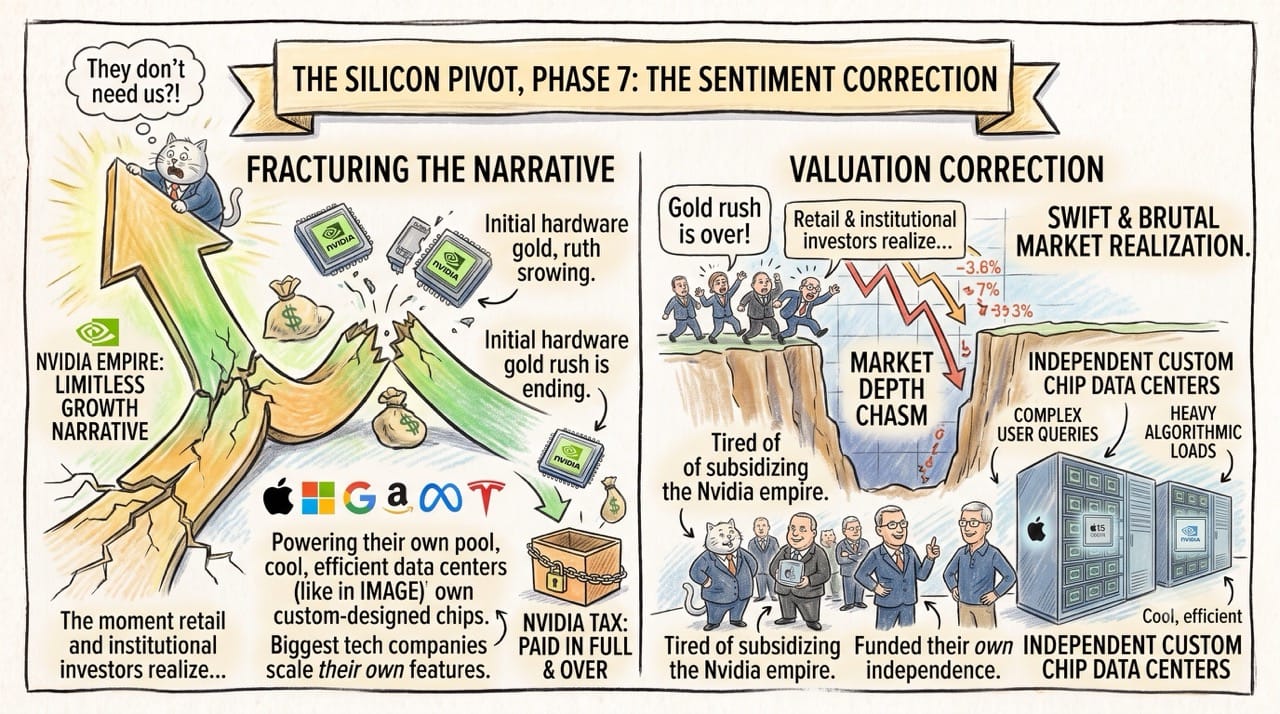
The moment retail investors and institutional funds realize that the biggest technology companies on earth do not actually need Nvidia to scale their consumer features, the limitless growth narrative fractures.
We will see a swift and brutal valuation correction as the market realizes the initial hardware gold rush is ending.
The legacy tech giants are tired of subsidizing the Nvidia empire, and they finally have the internal engineering talent required to fund their own independence.
Conclusion: The Vertical Ceiling
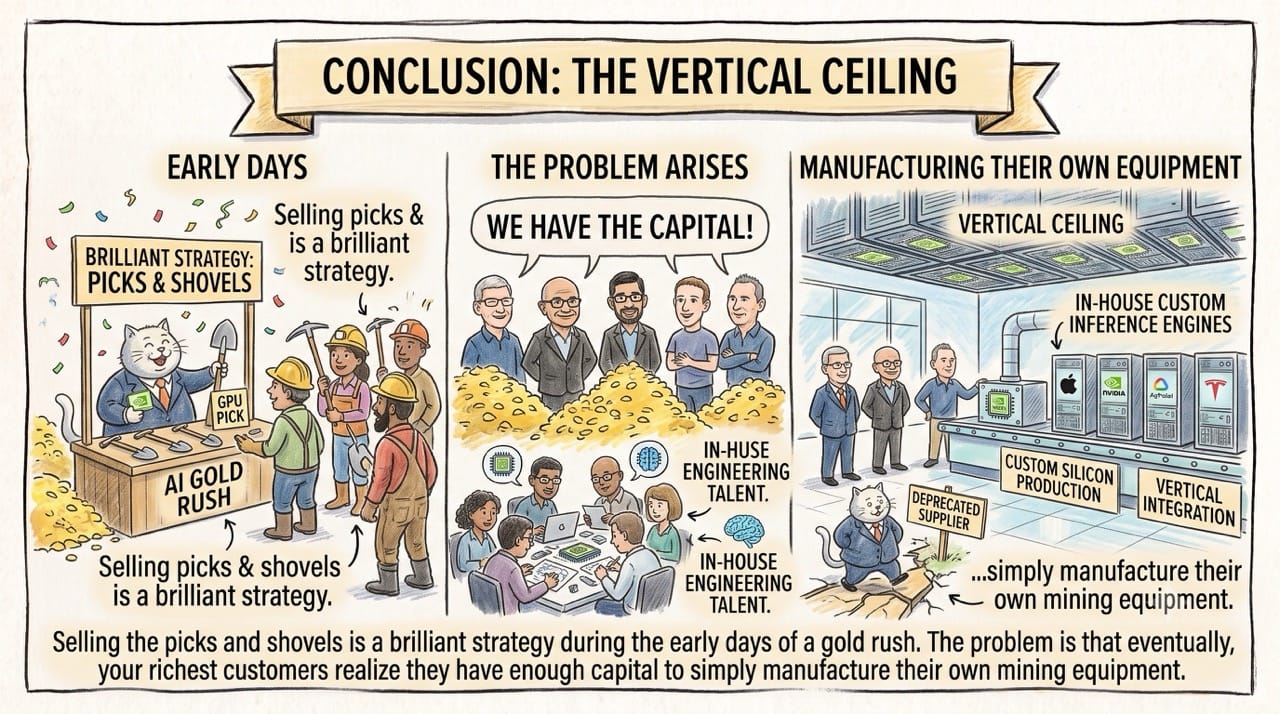
Selling the picks and shovels is a brilliant strategy during the early days of a gold rush.
The problem is that eventually, your richest customers realize they have enough capital to simply manufacture their own mining equipment.