Why AI Agents Will Break the Closed Model Monopoly (The Agentic Refinery)
We assume enterprise software means paying AI monopolies forever. In reality, autonomous agents will make open-source fine-tuning so easy that businesses will simply manufacture their own intelligence.
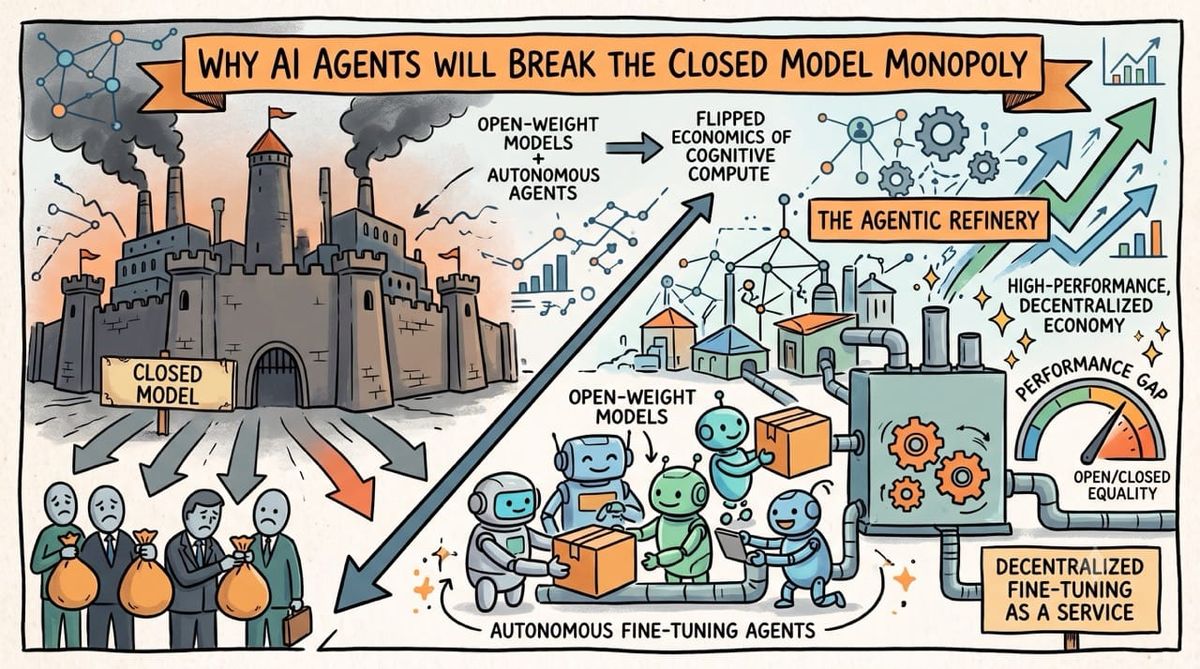
The artificial intelligence industry is currently a high-margin rental business. The convergence of open-weight models and autonomous fine-tuning agents is about to permanently flip the economics of cognitive compute.
Inspiration: Analyzing the rapidly closing performance gap between closed proprietary models and open-weight alternatives. Realizing that deploying autonomous agents to fine-tune these open models creates a decentralized "Fine-Tuning as a Service" economy that completely bypasses legacy tech monopolies.
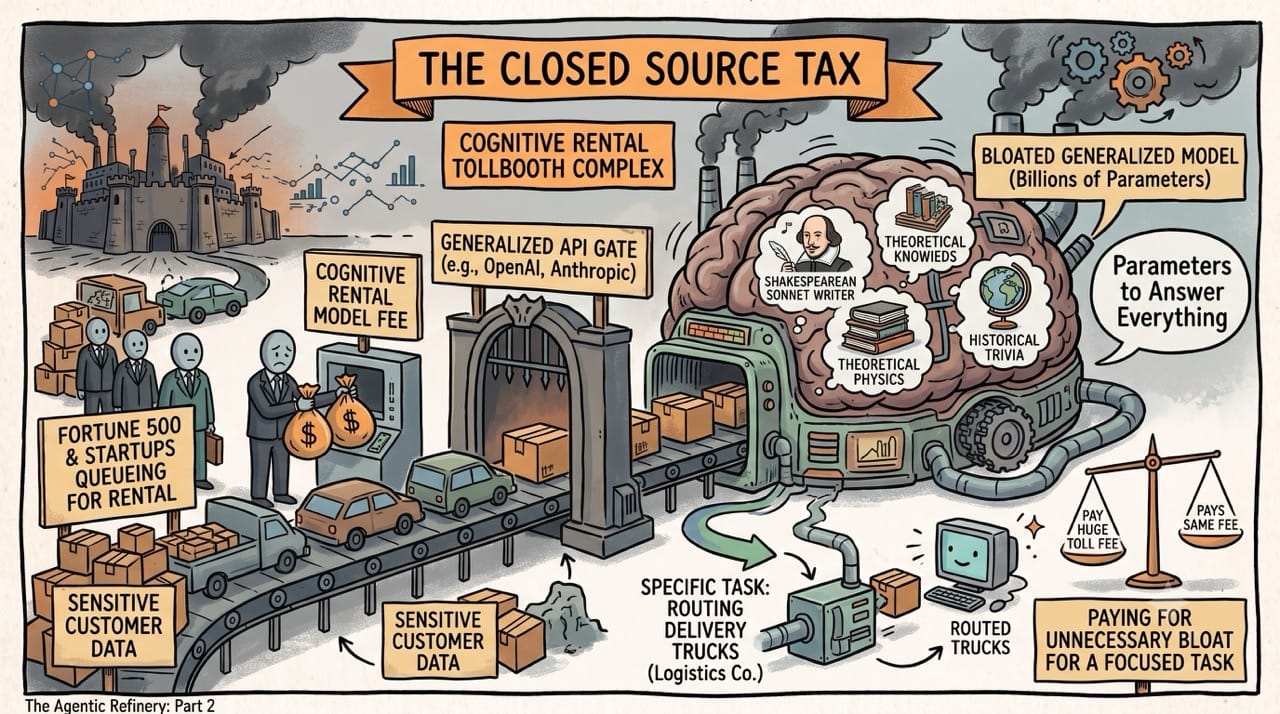
The Closed Source Tax
Right now, the corporate world is heavily addicted to a cognitive rental model. Fortune 500 companies and agile startups alike are routing their most sensitive customer data through generalized, closed-source APIs built by OpenAI and Anthropic.
They are essentially paying a continuous tollbooth fee for generic intelligence.
While these flagship models are incredibly capable, they are also bloated with billions of parameters designed to answer everything from historical trivia to theoretical physics.
A corporate logistics company does not need a model that knows how to write a Shakespearean sonnet, they just need it to perfectly route delivery trucks.
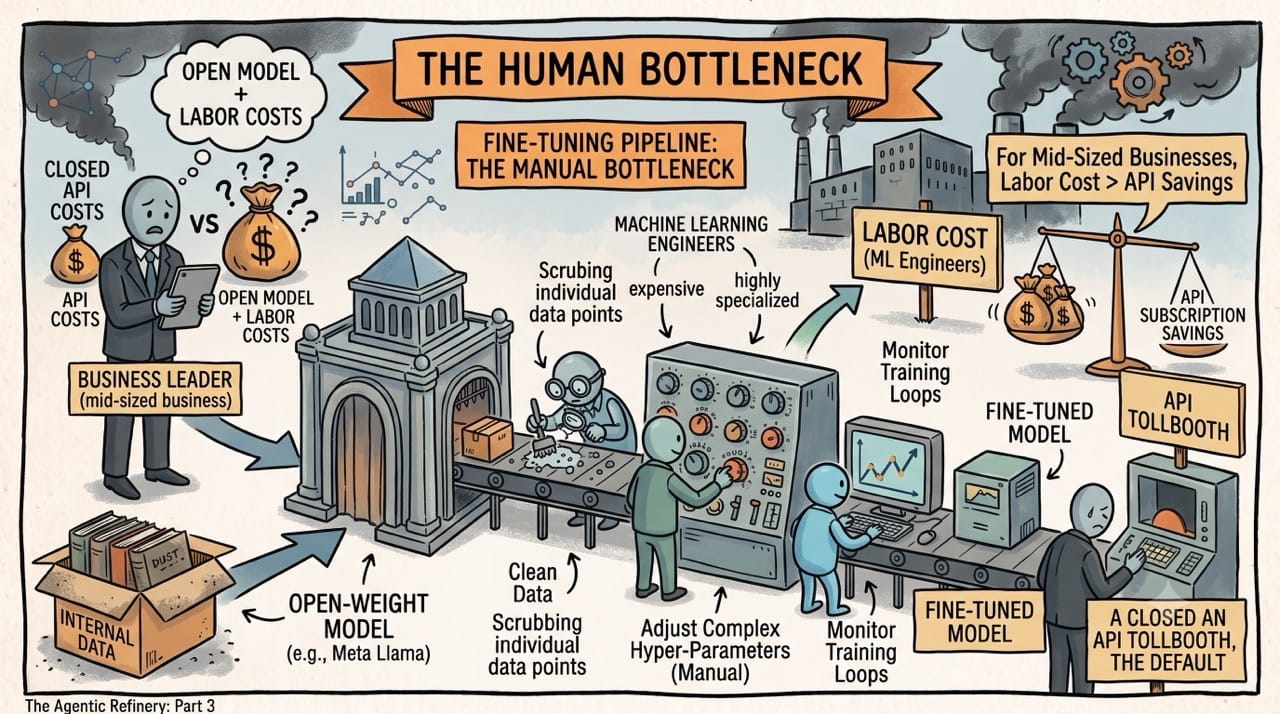
The Human Bottleneck
The obvious solution for enterprise companies is to download a highly capable open-weight model, like Meta's Llama, and train it exclusively on their own internal data.
The historical problem with this approach is the human bottleneck.
Fine-tuning an open model requires a team of highly expensive machine learning engineers to manually clean datasets, adjust complex hyper-parameters, and monitor the training loops.
For the average mid-sized business, the labor cost of hiring these specialized engineers far outweighs the savings of abandoning their closed API subscriptions.
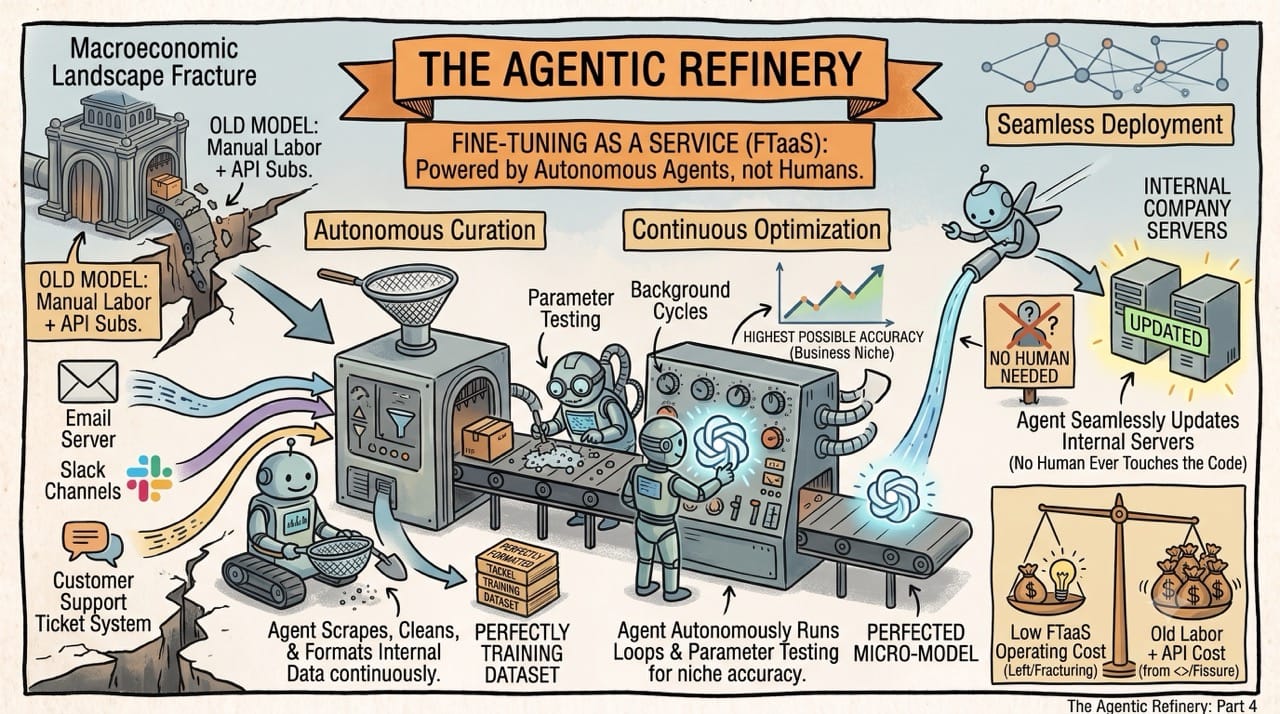
The Agentic Refinery
This is exactly where the entire macroeconomic landscape of artificial intelligence is about to fracture.
We are entering an era of "Fine-Tuning as a Service," powered entirely by autonomous digital agents rather than human data scientists.
Imagine deploying a specialized software agent whose only job is to act as your internal machine learning department.
- Autonomous Curation: The agent continuously scrapes your company's emails, Slack channels, and customer support tickets to automatically build a perfectly formatted training dataset.
- Continuous Optimization: It autonomously runs the fine-tuning process on an open-weight model, testing different parameters in the background until it achieves the highest possible accuracy for your specific business niche.
- Seamless Deployment: Once the micro-model is perfected, the agent seamlessly updates your internal servers without a human ever touching the code.
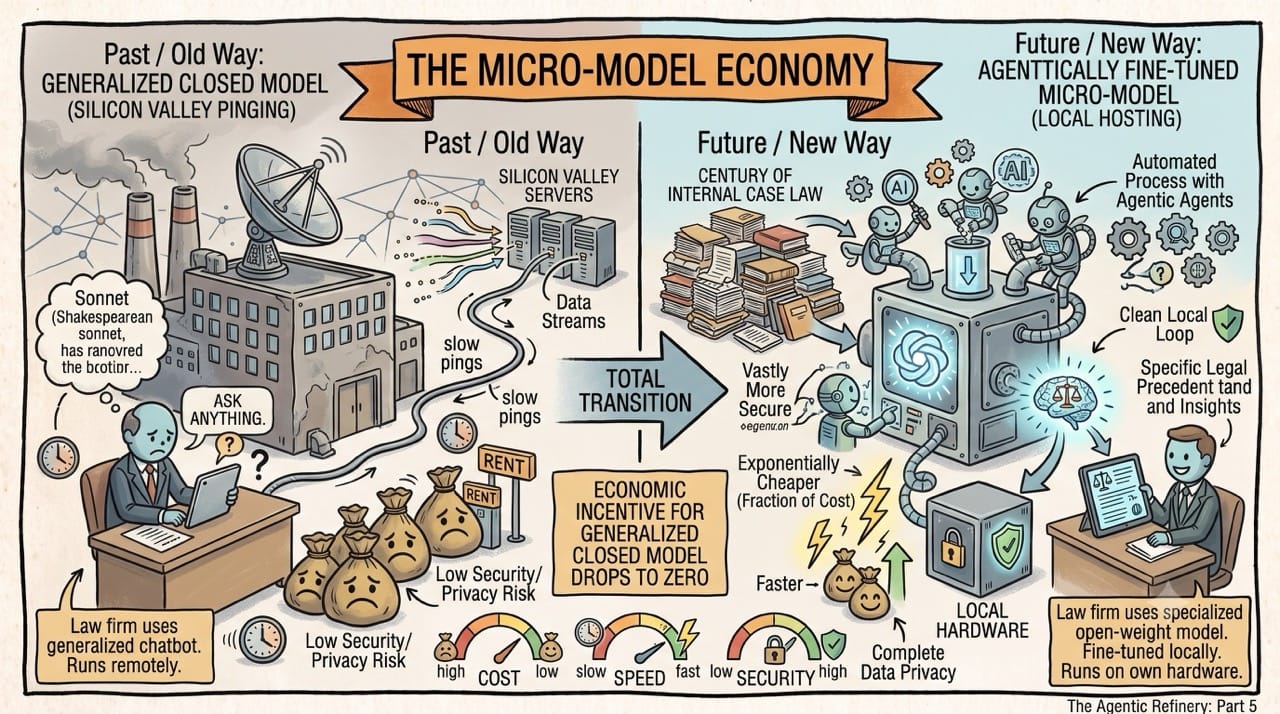
The Micro-Model Economy
When fine-tuning becomes fully automated, the economic incentive to use a generalized closed model drops to zero.
Businesses will realize that a highly specialized, locally hosted open model is significantly faster, exponentially cheaper to run, and vastly more secure than pinging a server in Silicon Valley.
We will see a total transition toward the micro-model economy.
A law firm will not use a generalized chatbot; they will use an open-weight model that has been agentically fine-tuned on a century of their own specific case law.
It will run locally on their own hardware, ensuring complete data privacy while operating at a fraction of the traditional cost.
The Commoditization of General Intelligence
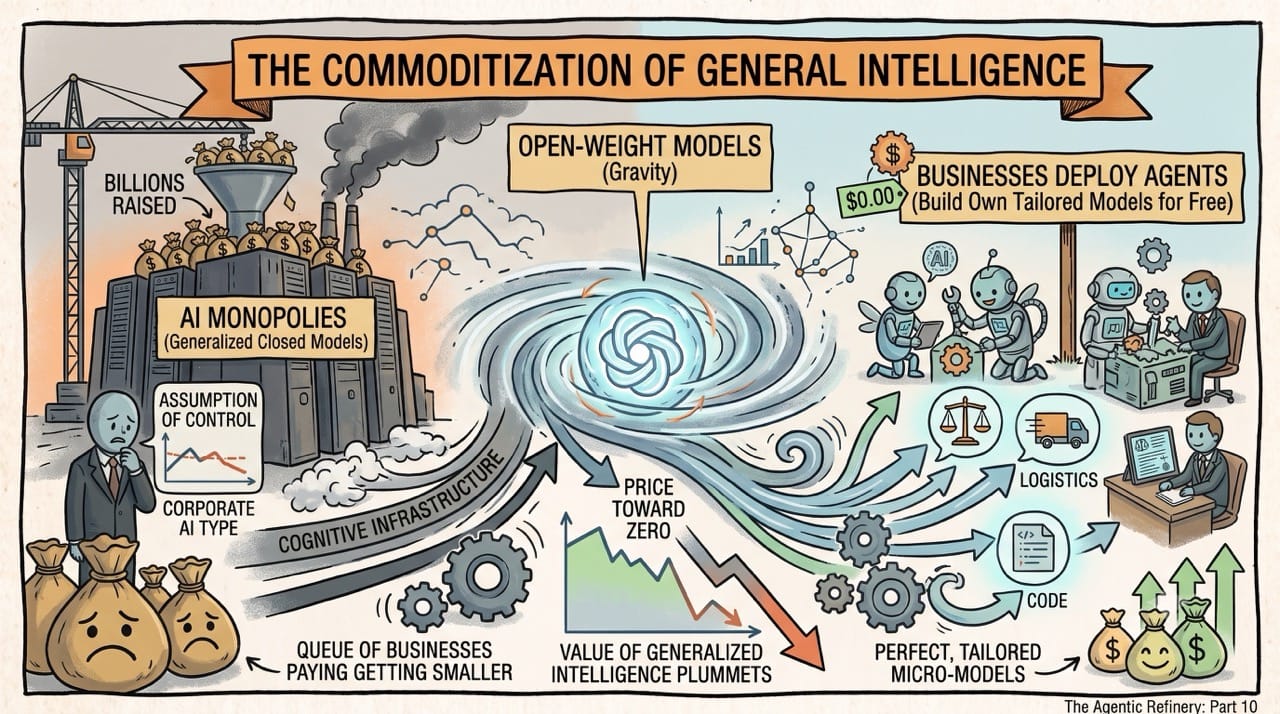
This agentic workflow poses a terrifying structural threat to the current artificial intelligence monopolies.
If businesses can easily deploy agents to build their own perfectly tailored models for free, the baseline value of generalized intelligence plummets.
The flagship providers are currently raising billions of dollars based on the assumption that they will control the cognitive infrastructure of the entire internet.
But open-weight models act as gravity, slowly pulling the price of digital intelligence down toward zero.
Conclusion: From Renting to Owning
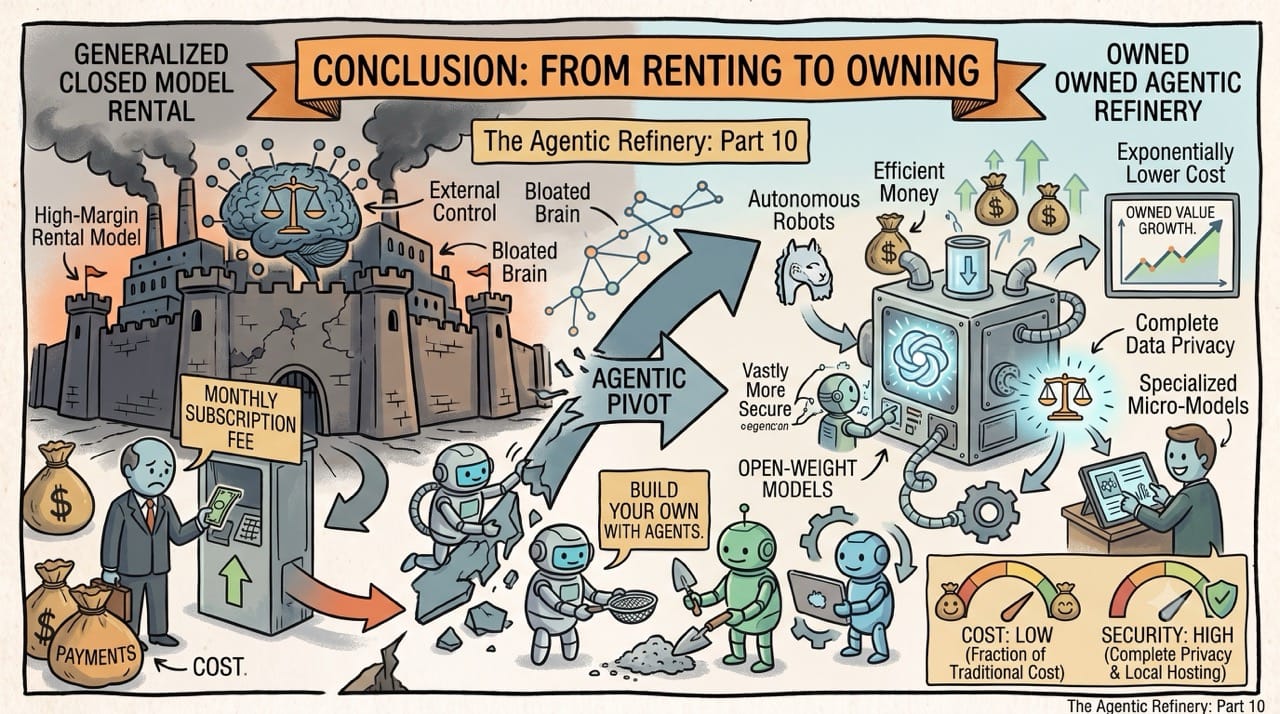
Selling a monthly subscription is a brilliant business model until your customer realizes they can easily build the product themselves.
The companies that dominate the next decade will not be the ones renting out giant, generalized brains, they will be the ones selling the autonomous agents that help you build your own.