Julie Yoo: The Healthcare Tech Disruptor
The person who went from 0 to 20M patients now decides who builds the next system. Julie Yoo bet that healthcare is in 1999 internet moment — and her portfolio is how we get to 2026.
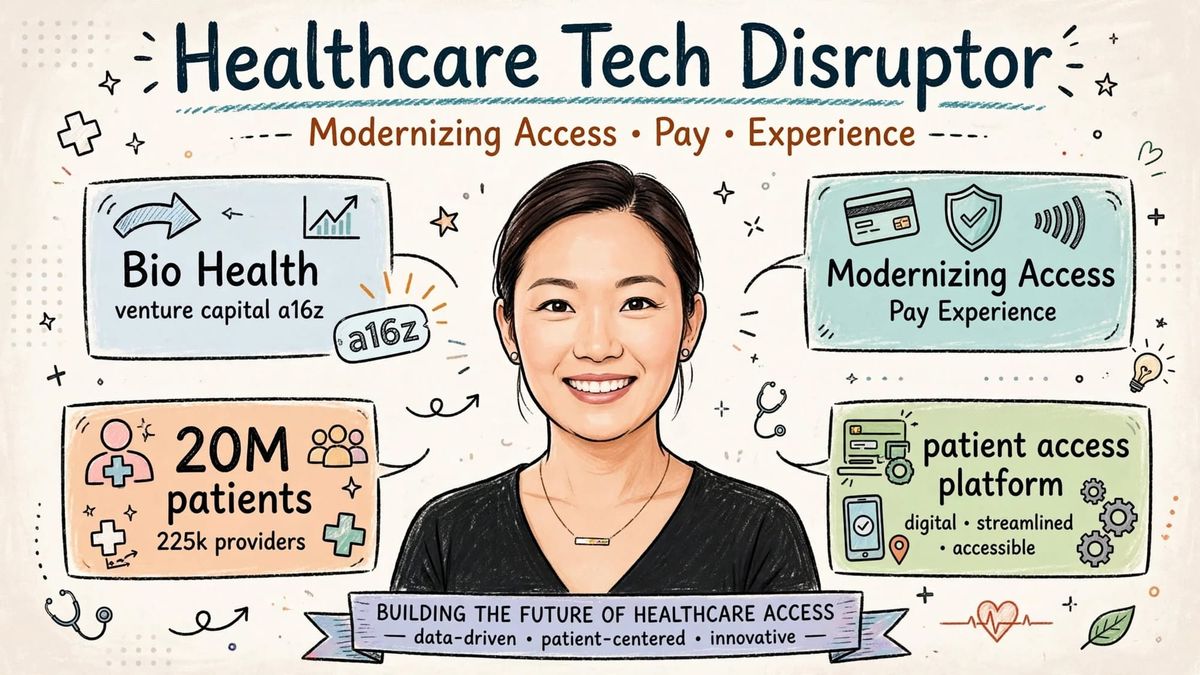
Julie Yoo is a general partner at Andreessen Horowitz (a16z), where she leads investments in health care technology, with a focus on companies modernizing how we access, pay for, and experience the health care system.
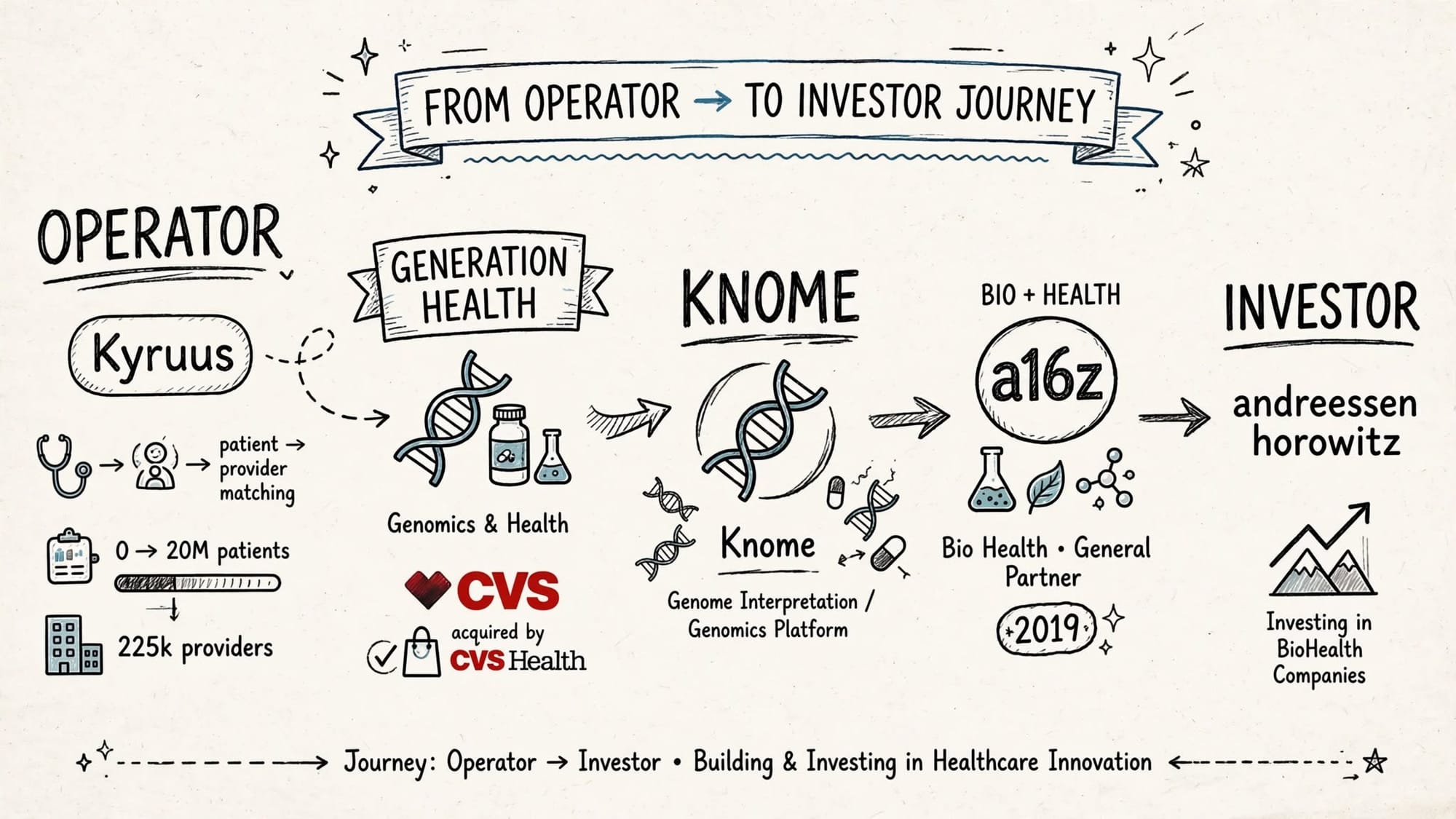
Before that, she was co-founder, chief product officer, and board director at healthtech Kyruus, leading product management, engineering, and sales and marketing.
She helped build and scale the business from 0 to 20M patients and over 225,000 healthcare providers across the US using their platform. That company is now recognized as a market leader in patient access, later acquired by RevSpring.
Prior path: VP of Product at Generation Health (acquired by CVS Health) and Product Manager at Knome, genome interpretation platform. Operator first, investor second.
Yoo, who joined the venture capital firm in 2019, leads investments in startups looking to disrupt and transform the healthcare industry.
The Operator → Investor Edge
Most healthtech VCs have never built in healthcare.
Yoo did — in 2010 before there was anything close to a robust digital health industry.
Kyruus was patient-provider matching at scale. 0 → 20M patients, 225k providers.
That teaches you what building a software company in healthcare actually requires — unique challenges no other entrepreneurs face. HIPAA, EHR integrations, provider directories, payor complexity.
That is why CEOs say Yoo's deep understanding of how to build a health care technology company makes her a compelling partner.
She lived the sales cycles, the integration hell, the "patient access platform" that has to work nationwide.
When she moved to a16z Bio + Health as General Partner in 2019, she brought that playbook.
Portfolio Disruptors: Access, Pay, Experience
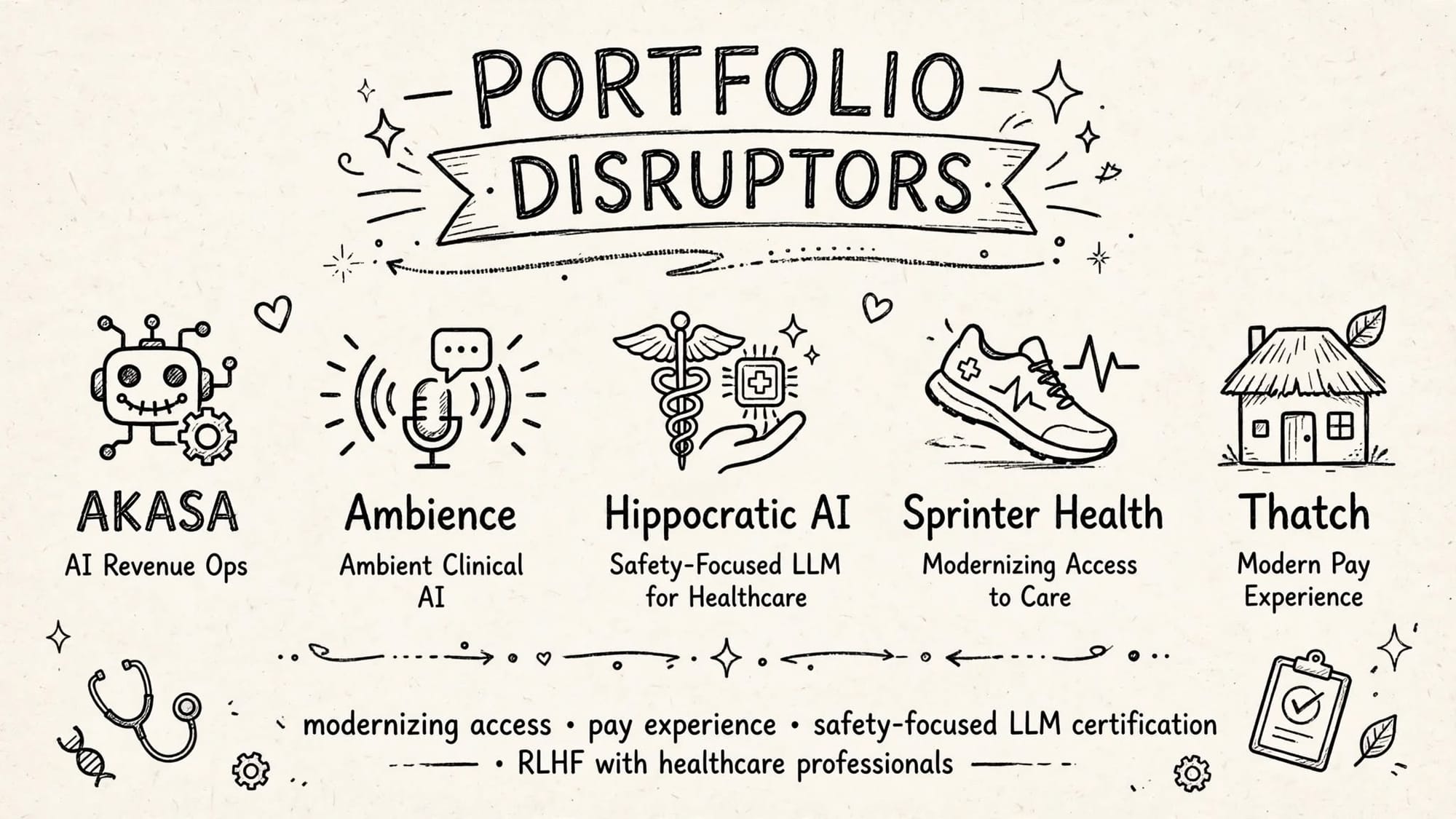
Her thesis is simple and maps exactly to the image above: modernizing how we access, pay for, and experience healthcare.
Her portfolio includes companies such as AKASA, Ambience, Hippocratic AI, Sprinter Health, and Thatch.
- AKASA — AI Revenue Ops: Automates revenue cycle. Billing, claims, prior auth. The unsexy backend that makes pay possible.
- Ambience — Ambient Clinical AI: Real-time clinical documentation. Doctor talks, AI writes. Reduces burnout, improves experience.
- Hippocratic AI — Safety-Focused LLM for Healthcare: We believe Hippocratic AI's cross-disciplinary, safety-first approach is what the healthcare industry needs to be able to maintain trust in the power of responsible deployment of generative AI solutions. Built on three things: certification, RLHF via healthcare professionals, and bedside manner.
- Sprinter Health — Modernizing Access to Care: At-home care, labs, mobile phlebotomy. Tomorrow Health is setting a new, patient-first standard — that patient-first standard is the Yoo filter.
- Thatch — Modern Pay Experience: ICHRA, new way to pay. Fixing how employers pay for health.
Each maps to ACCESS (patient access platform, digital onboarding, telehealth, 20M patients connected), PAY (instant claims & billing, transparent pricing, secure payments), EXPERIENCE (AI-powered triage, real-time support, unified records).
Scaling nationwide care access across the US — 225k+ providers, 20M+ patients.
The 1999 Internet Thesis
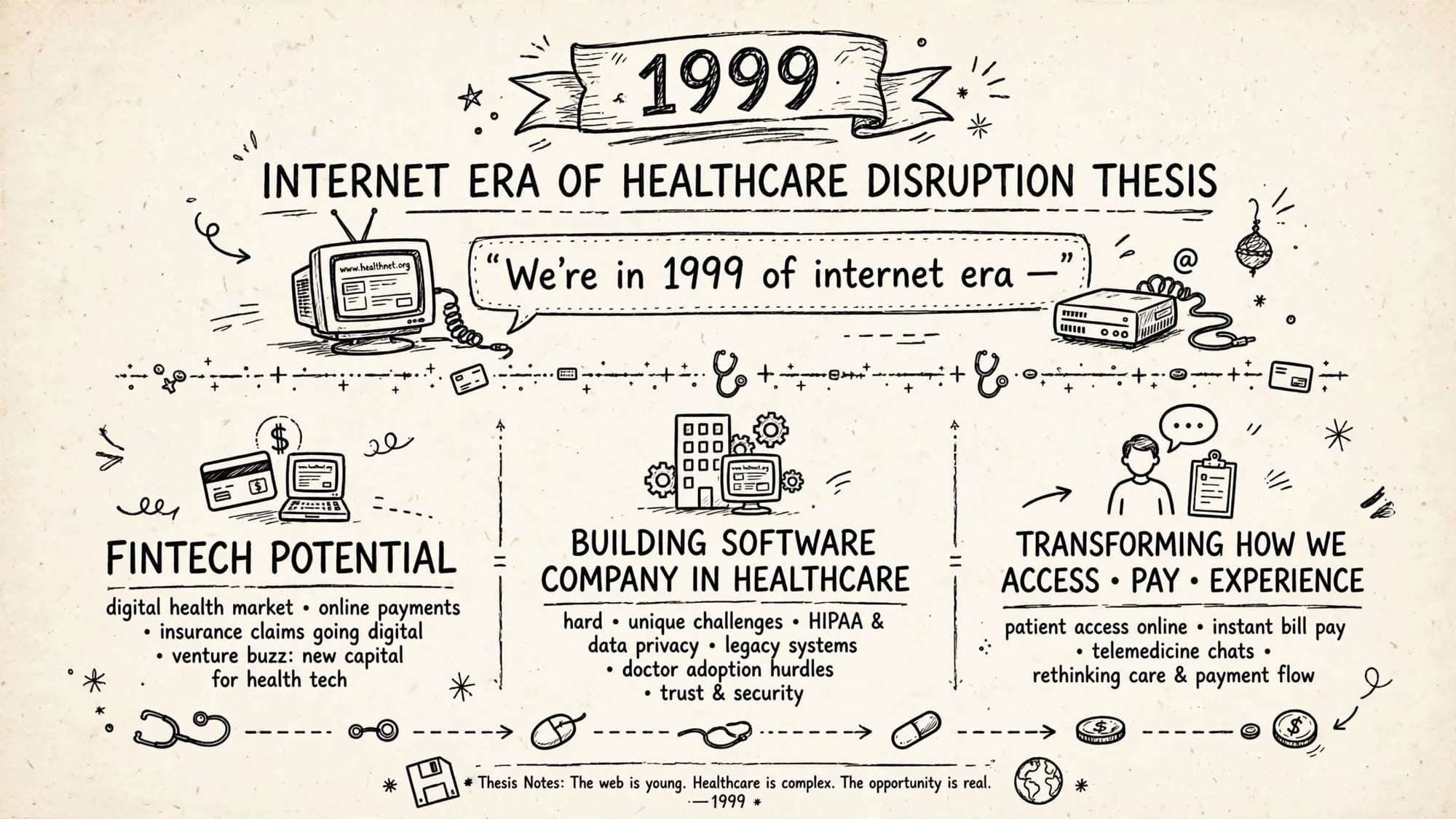
We're in the 1999 of the internet era — a16z's Julie Yoo on fintech's potential and the digital health market.
That quote defines her.
In 1999, internet had infrastructure, but no apps.
In 2019-2024, healthcare had EHRs (infrastructure), but no modern access/pay/experience layer.
Yoo's bet: Fintech proved you can rebuild pay rails.
Now do it for healthcare. Reimbursement, eligibility, patient financial experience — all broken, all software-able.
She says building a software company in healthcare is hard and comes with unique challenges — but 1999 is when outsized companies are built.
So you wanna build a software company in healthcare?
Her answer: Start with operator pain you lived, focus on one of three pillars, and make it 10x easier to access, pay, or experience. Safety first for clinical AI.
From Kyruus (patient-provider matching) to Ribbon Health (API-based provider data), to AKASA and Hippocratic — same throughline: make the system searchable, payable, and humane.
That is the disruptor profile. Not disrupting healthcare by blowing it up, but by making the rails it already runs on actually work.