How Simile Makes Predicting the Future Easier
We think predicting human behavior requires asking real people what they want. A new company called Simile is proving that running artificial simulations of society is actually far more accurate than traditional consumer surveys.
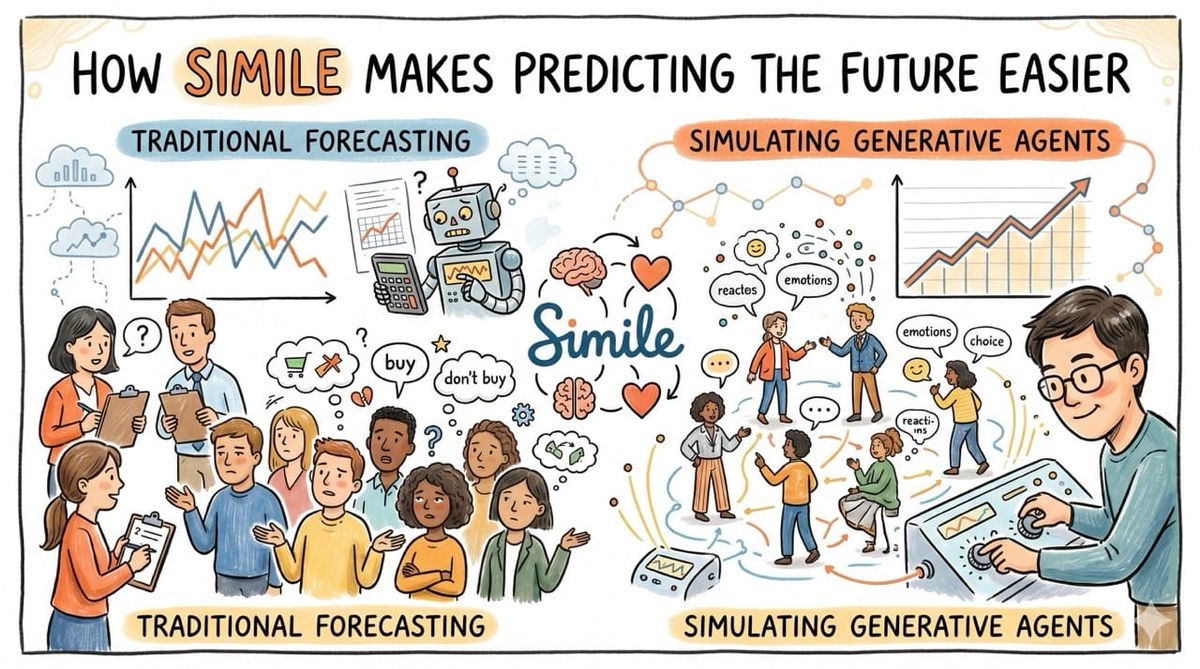
The smartest language models are designed to be perfectly rational. Joon Sung Park is building an entirely different artificial architecture that successfully mimics our highly irrational human choices.
Inspiration: Analyzing the launch of Simile by Joon Sung Park and their recent hundred million dollar funding round. Realizing that the future of corporate forecasting relies entirely on simulating generative agents rather than polling actual consumers.
The Rationality Flaw
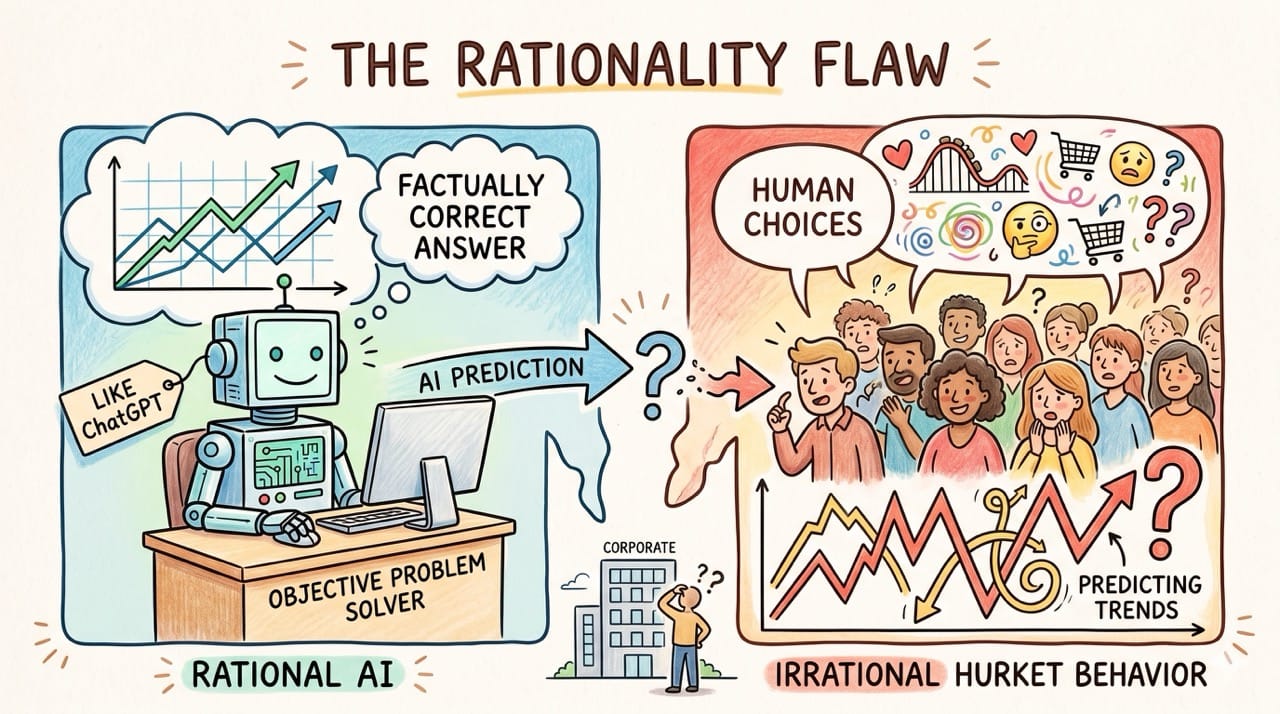
The artificial intelligence industry is obsessed with building superintelligence that solves objective problems.
Models like ChatGPT are engineered specifically to provide the most rational and factually correct answers possible.
This creates a serious problem when corporations try to use these tools to predict market trends.
Real humans are fundamentally irrational and driven entirely by subjective values and personal preferences.
The Behavioral Architecture
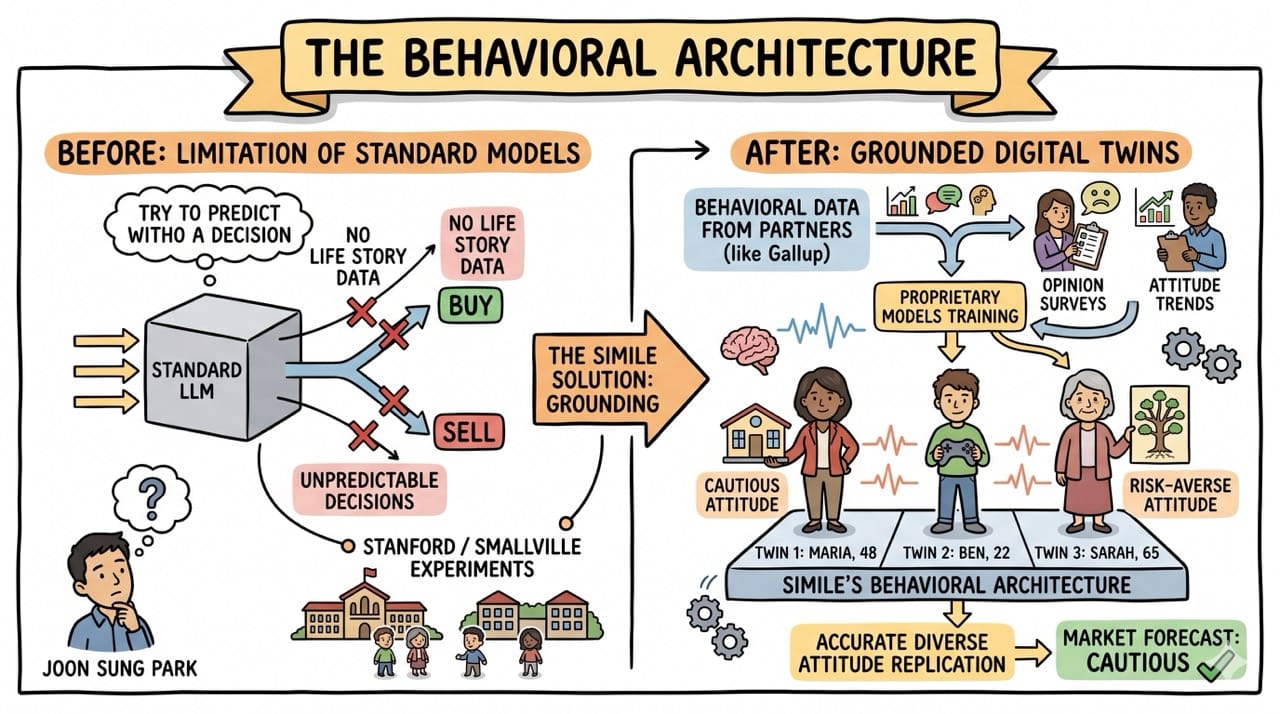
Joon Sung Park recognized this exact limitation during his famous Smallville generative agent experiments at Stanford.
He realized that a standard language model cannot reliably predict a human decision without understanding the underlying life story of that specific persona.
His new company Simile solves this by grounding their digital agents in actual behavioral data from partners like Gallup.
They are training proprietary models to act as digital twins that perfectly replicate the diversity of human attitudes.
The Accuracy Benchmark
The results of this behavioral approach are incredibly compelling for corporate executives.
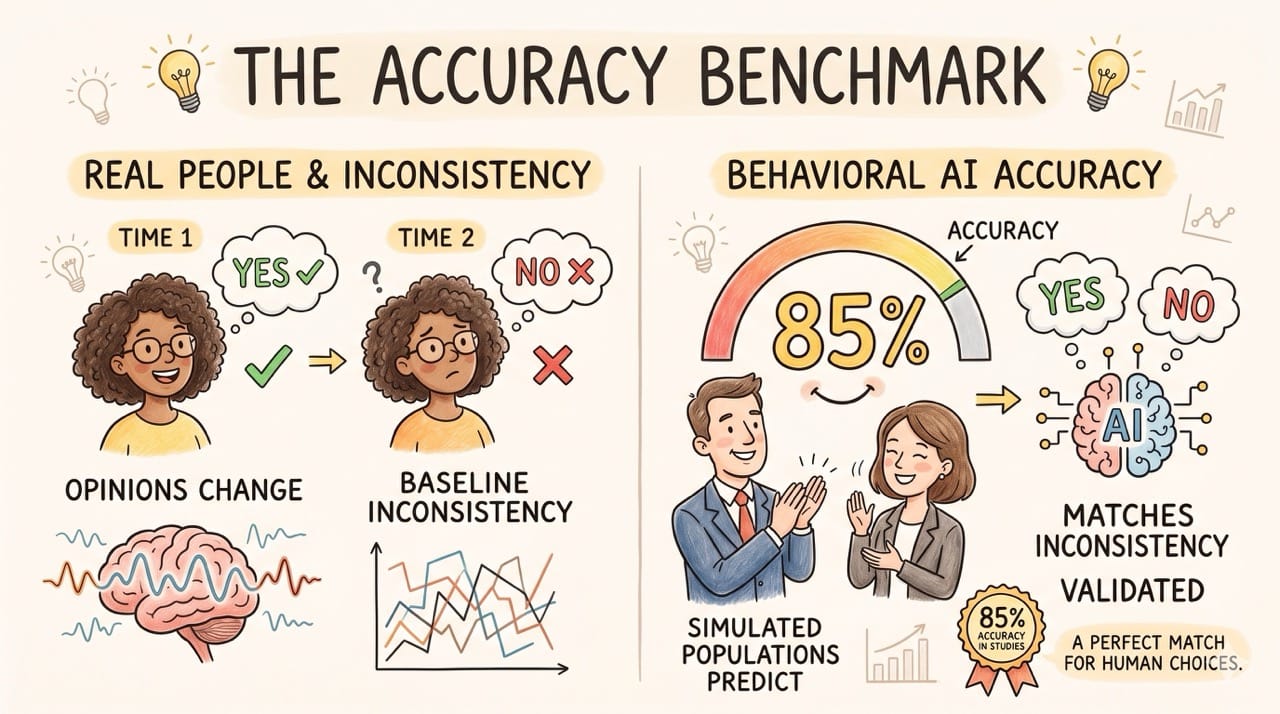
In controlled validation studies these simulated populations predict actual human behavior with 85 percent accuracy.
This benchmark is particularly impressive because real people frequently change their own answers to the same survey questions over time.
The algorithm is effectively matching the baseline inconsistency of the human brain.
Bypassing Traditional Research
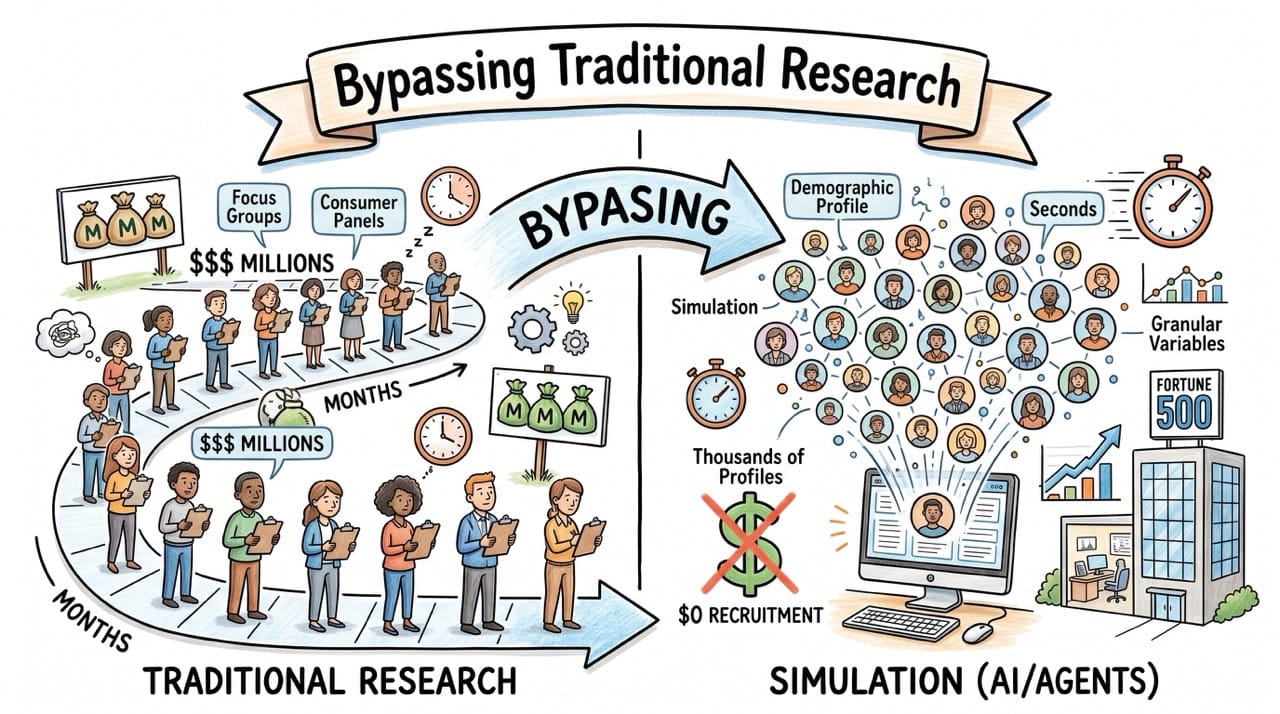
Fortune 500 companies are already using this technology to completely replace traditional focus groups.
A brand can now test a new product concept across thousands of distinct demographic profiles in seconds.
Running this same experiment with a real consumer panel would require millions of dollars and several months of logistical planning.
Simulation allows executives to test thousands of granular variables without ever paying for physical human recruitment.
Ecosystem Modeling
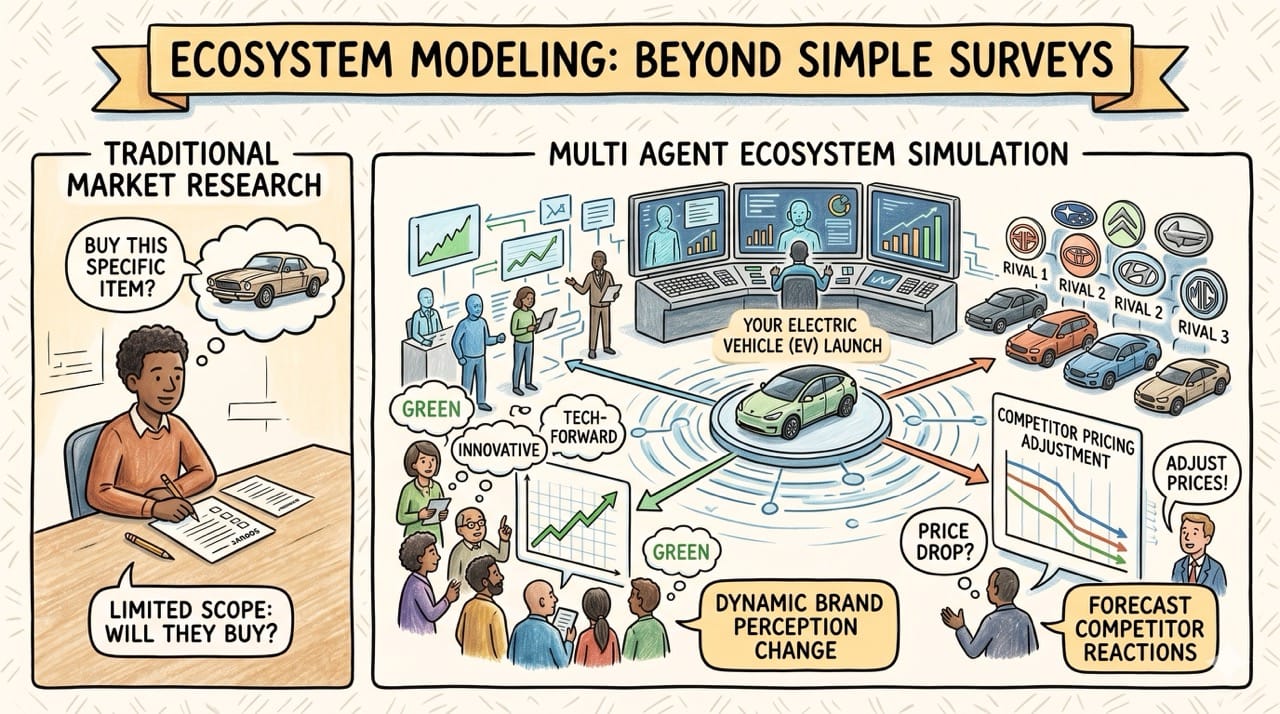
The true value of this technology goes far beyond simple product surveys. Traditional market research only asks a consumer if they will buy a specific item.
A multi agent simulation can dynamically model how launching an electric vehicle changes the perception of your entire brand.
It can even accurately forecast how rival automotive companies will adjust their pricing in response to your launch.
Predicting Societal Crises
Park envisions these models eventually scaling to solve incredibly complex macroeconomic problems.
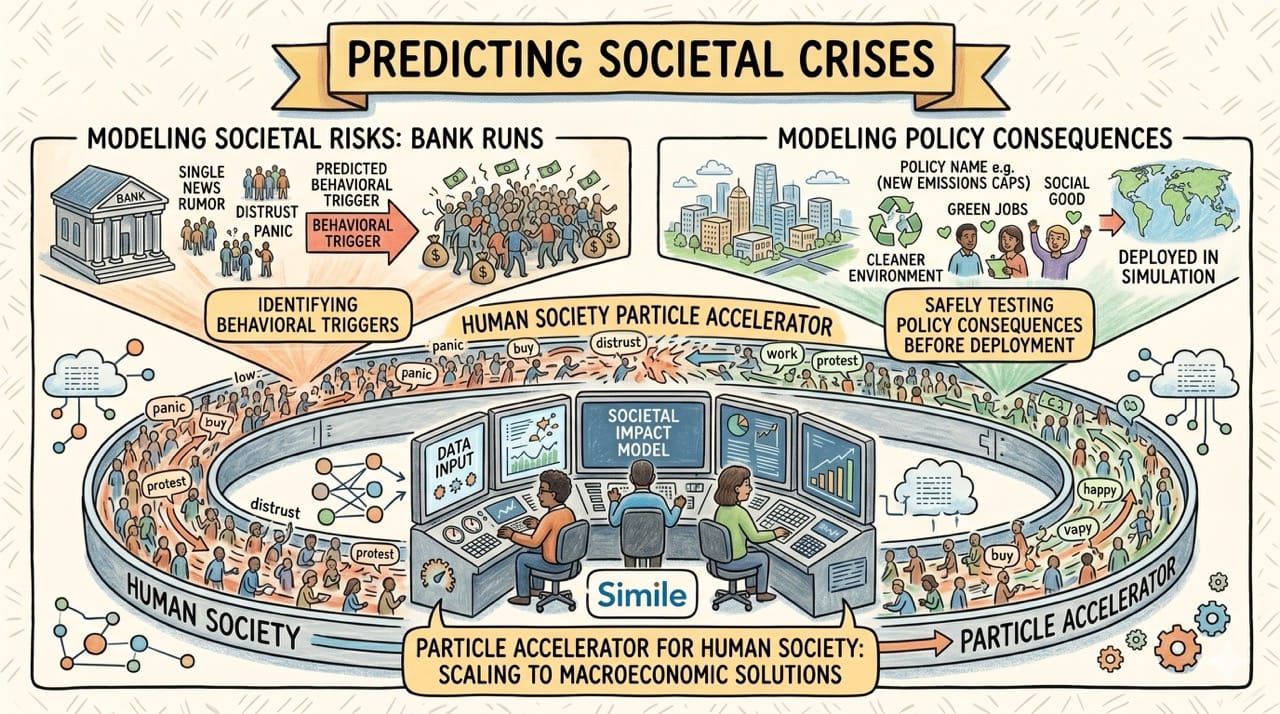
He wants to build the equivalent of a particle accelerator for human society.
Governments could theoretically use these simulations to predict the exact behavioral triggers that cause a sudden bank run.
They could safely model the social consequences of new climate policies before deploying them into the real world.
Conclusion: The Chaos Engine
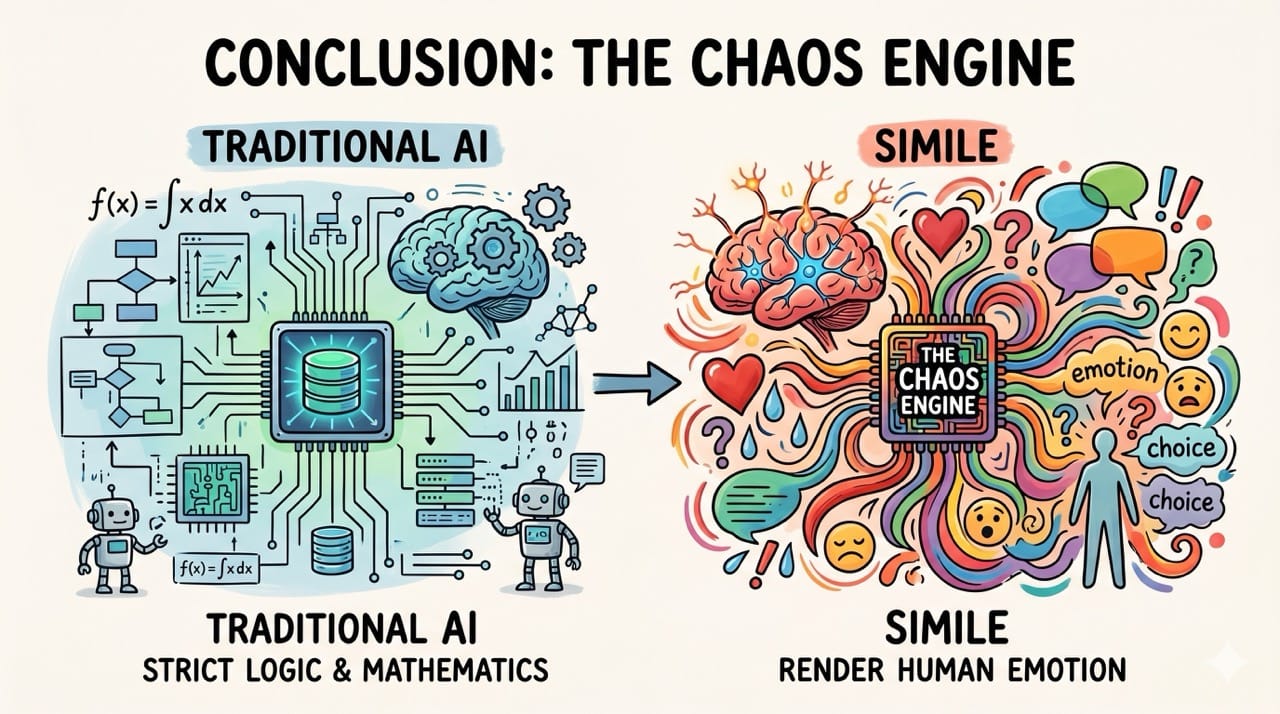
We have spent the last few years building artificial intelligence to handle strict logic and complex mathematics.
Simile is successfully building the processing unit required to render the chaotic reality of human emotion.