Everyone Will Have Autonomous Drivers In Their Pockets
Your driver will not live in the car anymore. It will live in your pocket. Like R2-D2 docking into a fighter jet, your personal driving AI will ride with you and plug into any Uber, Waymo or RoboTaxi with an NFC tap.
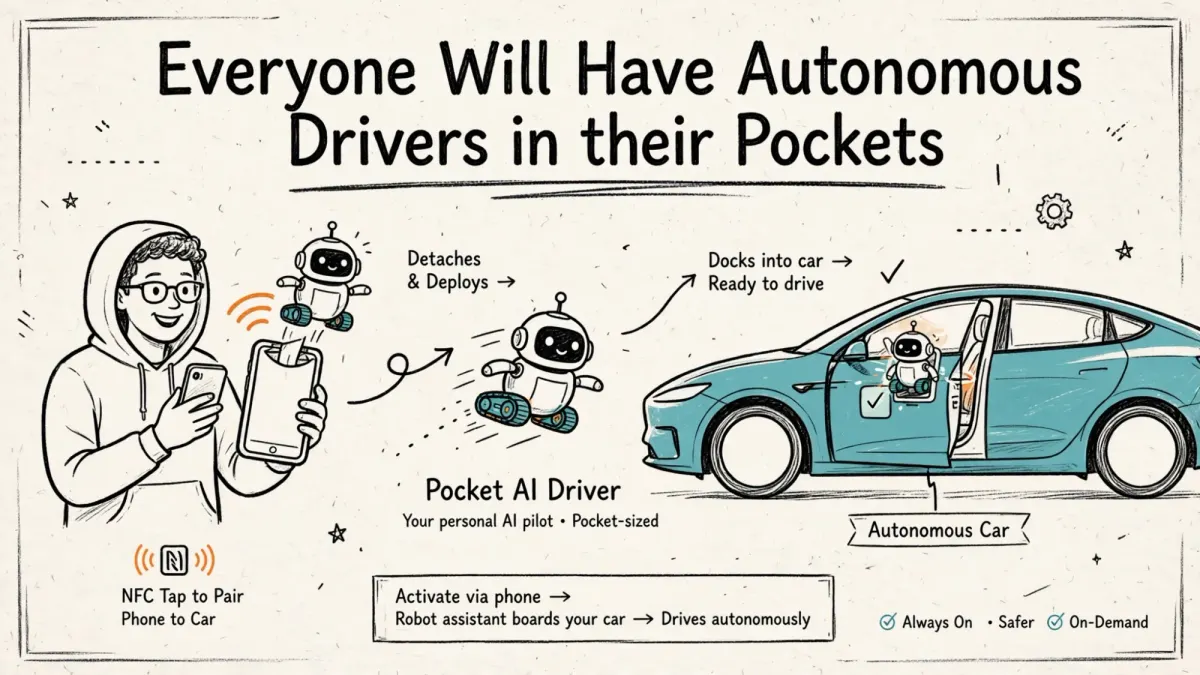
The car is becoming public transit. Your pocket is becoming the driver.
Think of R2-D2 sliding into an X-Wing. The jet does not own the droid. The pilot brings it. Same idea in Blade Runner, where the driver assistant detaches and keeps working outside the car.
That is the future of driving.
We are not going to log into ride-share cars with our Google account forever. We are going to carry our driver with us.
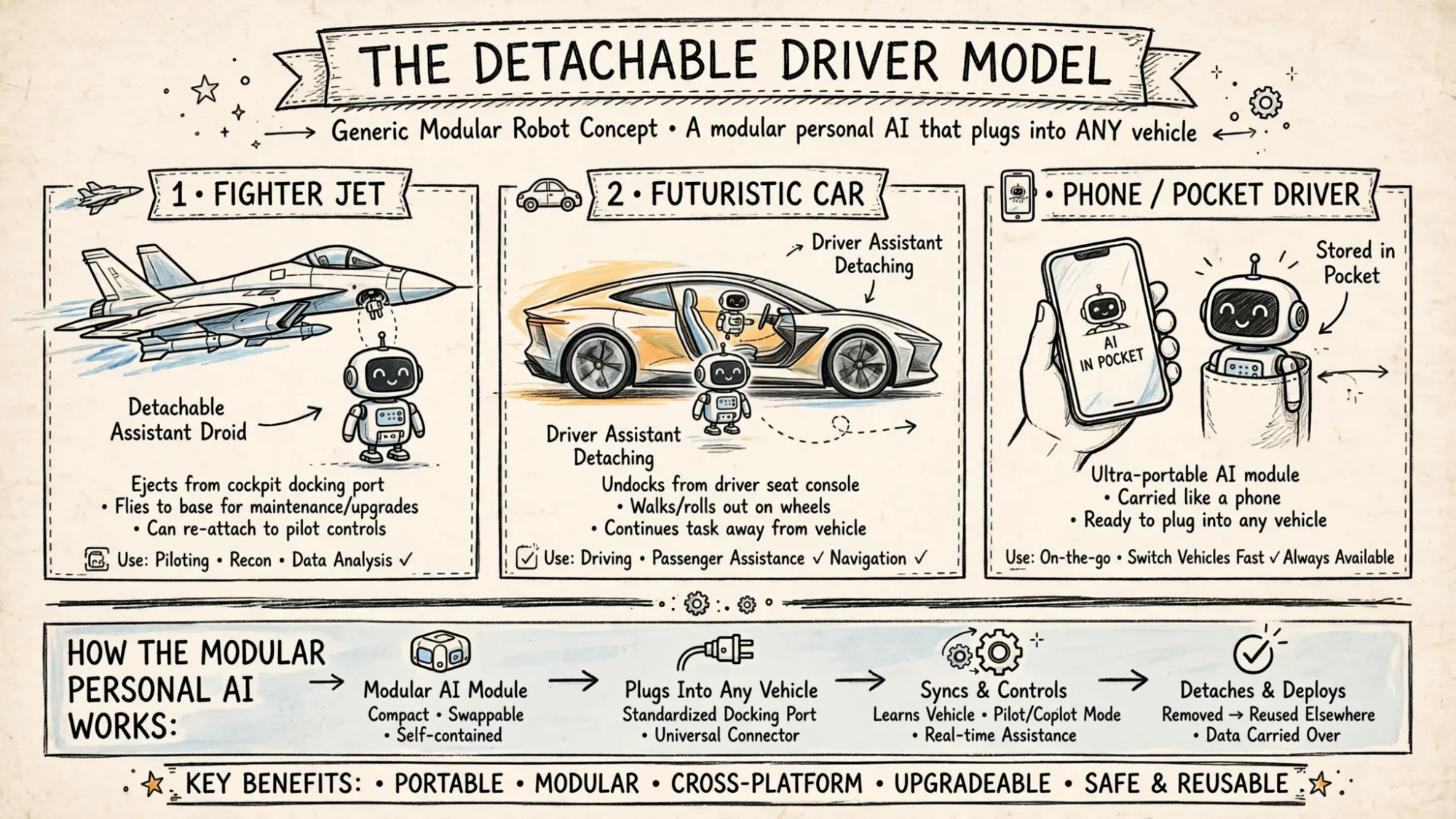
The Detachable Driver Model
Today you call a Waymo and you ride in Waymo's brain. Tomorrow you will bring your own.
A small personal AI, stored on your phone, is the model.
It knows your routes, your music, your preferred temperature, whether you like quiet streets or fastest route, whether you need wheelchair access or a child seat. When you tap a car, it docks and drives.
The car becomes dumb hardware. Your pocket is the smart part. You hop out, it undocks and follows you. No login, no history left behind.
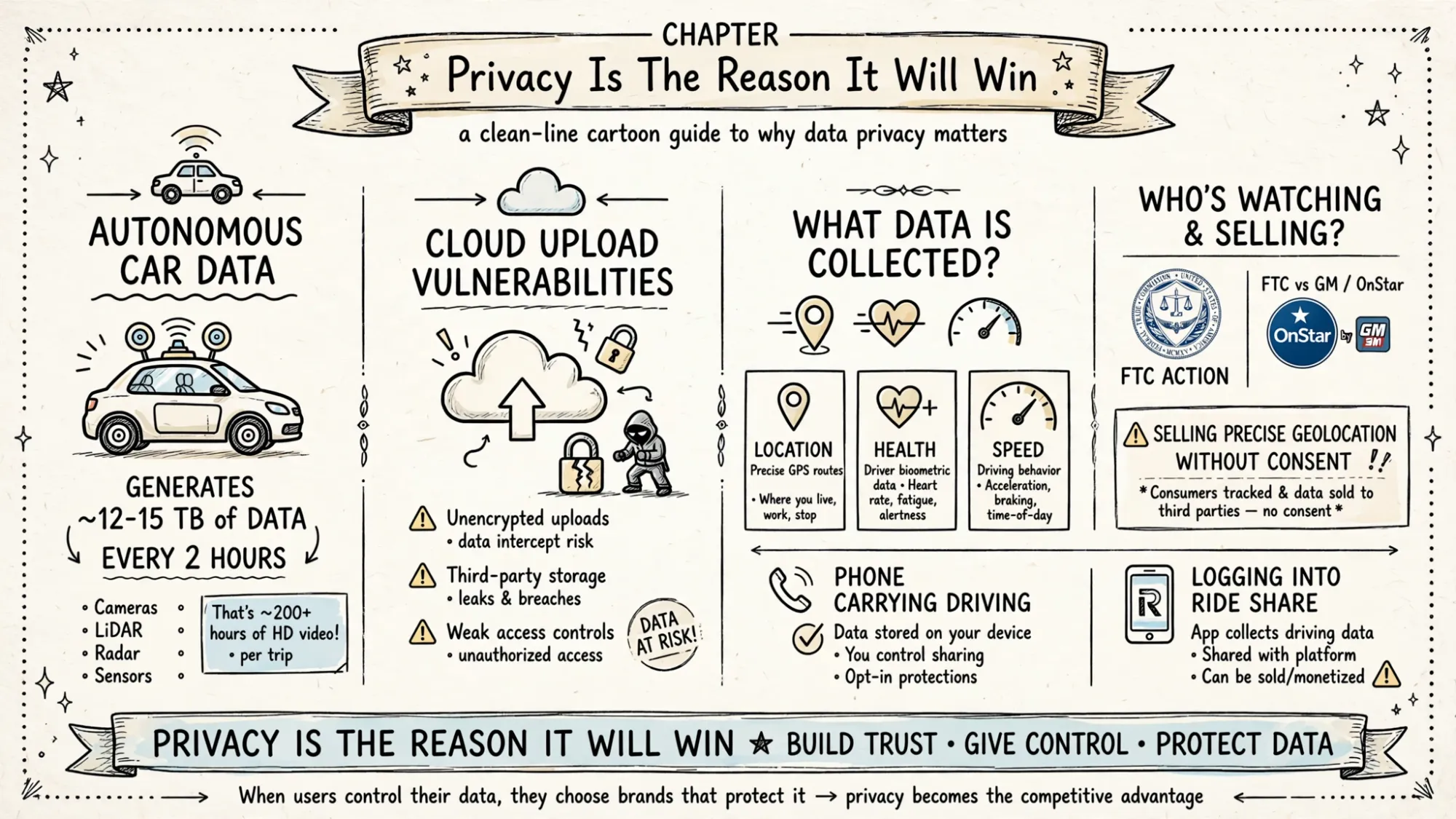
Privacy Is The Reason It Will Win
Autonomous vehicles are predicted to generate 12 to 15 terabytes of data for every two hours of driving, and all of it has vulnerabilities when it is uploaded to the cloud.
Smart vehicles gather location data, driving behaviors, vehicle health and personal preferences that can reveal intimate details about your life.
We have already seen what happens when that data stays in the car company cloud.
In January the US Federal Trade Commission took action against General Motors and OnStar over allegations they collected, used and sold drivers precise geolocation data and driving behavior from millions of vehicles without adequately notifying consumers and obtaining consent.
People will not accept that for every ride.
If your maps, your frequent places, your late night routes, your health data from the seat sensors live in Waymo or Uber's cloud, you have a profile problem.
If it lives on your phone, you have control. Your phone need not be handed to the verifier, unlike a plastic card. That is how Google describes its privacy-preserving approach for mobile driving licenses.
The shift is simple. Do not log into the car. Make the car log into you.
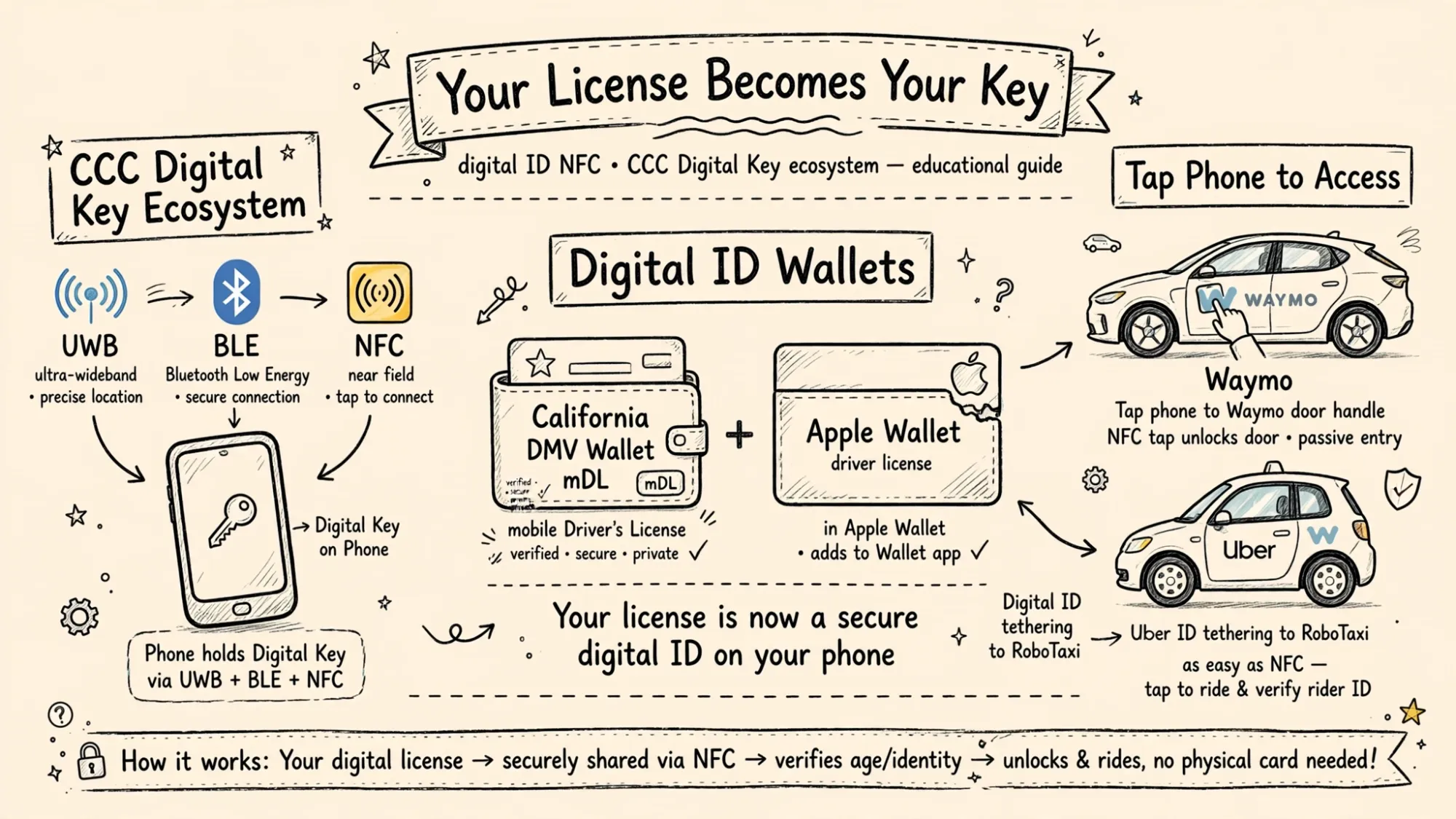
Your License Becomes Your Key
The tech for this is already here.
The CCC Digital Key is an ecosystem that allows mobile devices to store, authenticate and share the unique ID of a vehicle for secure access using UWB, BLE and NFC for phone to car access.
Certification for NFC was added in December 2023 and companies like BYD already let you generate a digital key and enable NFC unlock so your phone serves as the key.
At the same time your driver's license is moving into your phone.
Android has an IdentityCredential API that meets ISO standards for secure ID cards like digital driver's licenses and supports sending credentials securely via NFC with a direct access mode that could work even when the device cannot fully power on.
California DMV Wallet requires Android 9 or above with NFC hardware. Apple's version lives in Apple Wallet and at a TSA checkpoint you bring your phone close to an ID terminal and the two devices form a wireless connection via NFC.
So imagine this. You walk up to any autonomous car, Uber, Waymo or RoboTaxi.
You tap. Your digital ID verifies, your driving preferences sync, your payment is linked, your personal navigation graph loads. No account creation.
No data left in the car.
As easy as Apple Pay. But for moving you.
Roads Become Public Transit But Personal
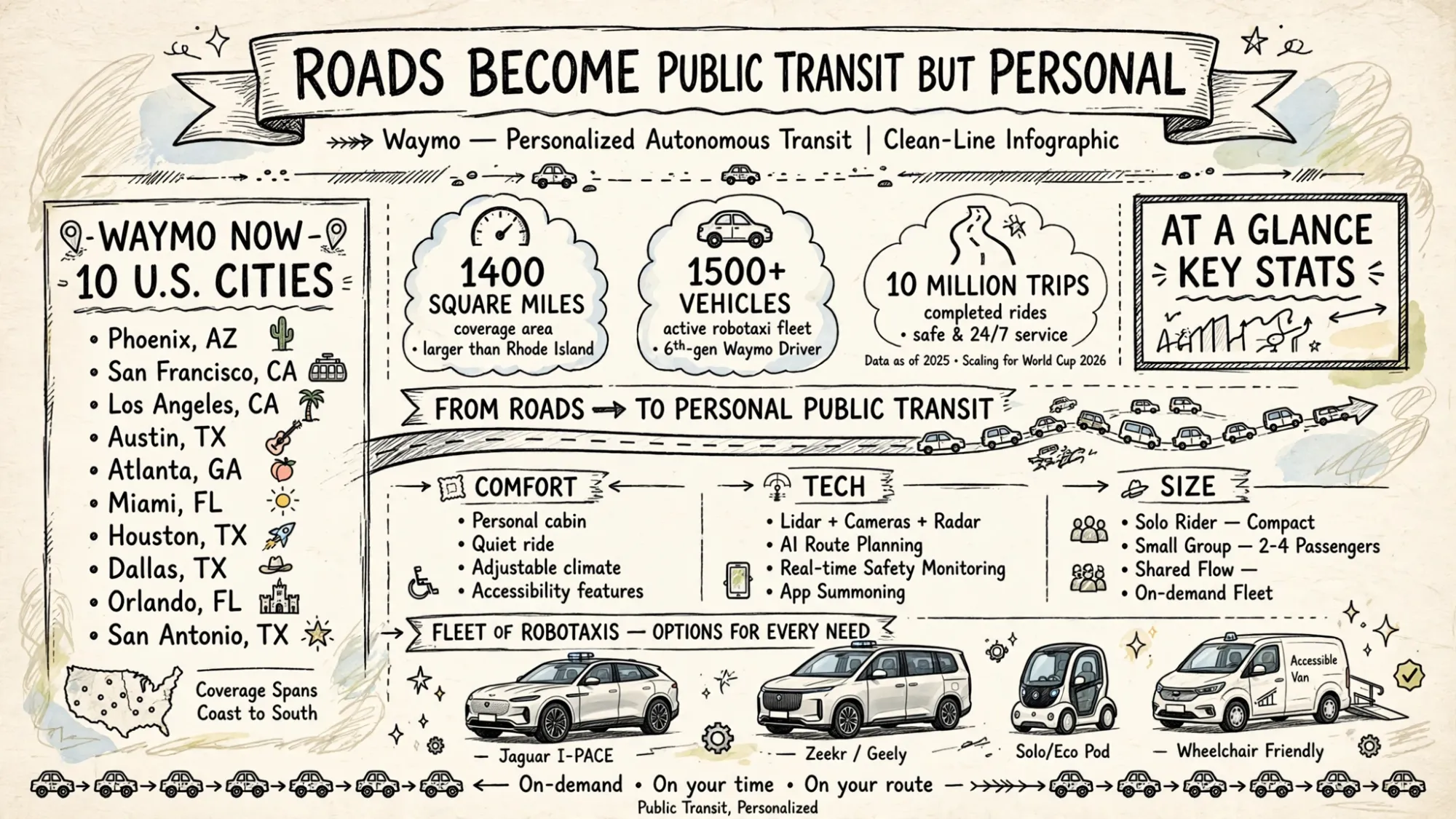
Waymo is already the proof. As of February 2026 it operates in 10 US cities after launching in Dallas, Houston, San Antonio and Orlando, with plans for 20 plus cities.
It now covers over 1,400 square miles across 11 US cities, larger than Rhode Island. Fleet exceeds 1,500 vehicles and it has completed more than 10 million trips. It is the only operator offering paid robotaxi rides in the US without safety drivers or in-vehicle monitors.
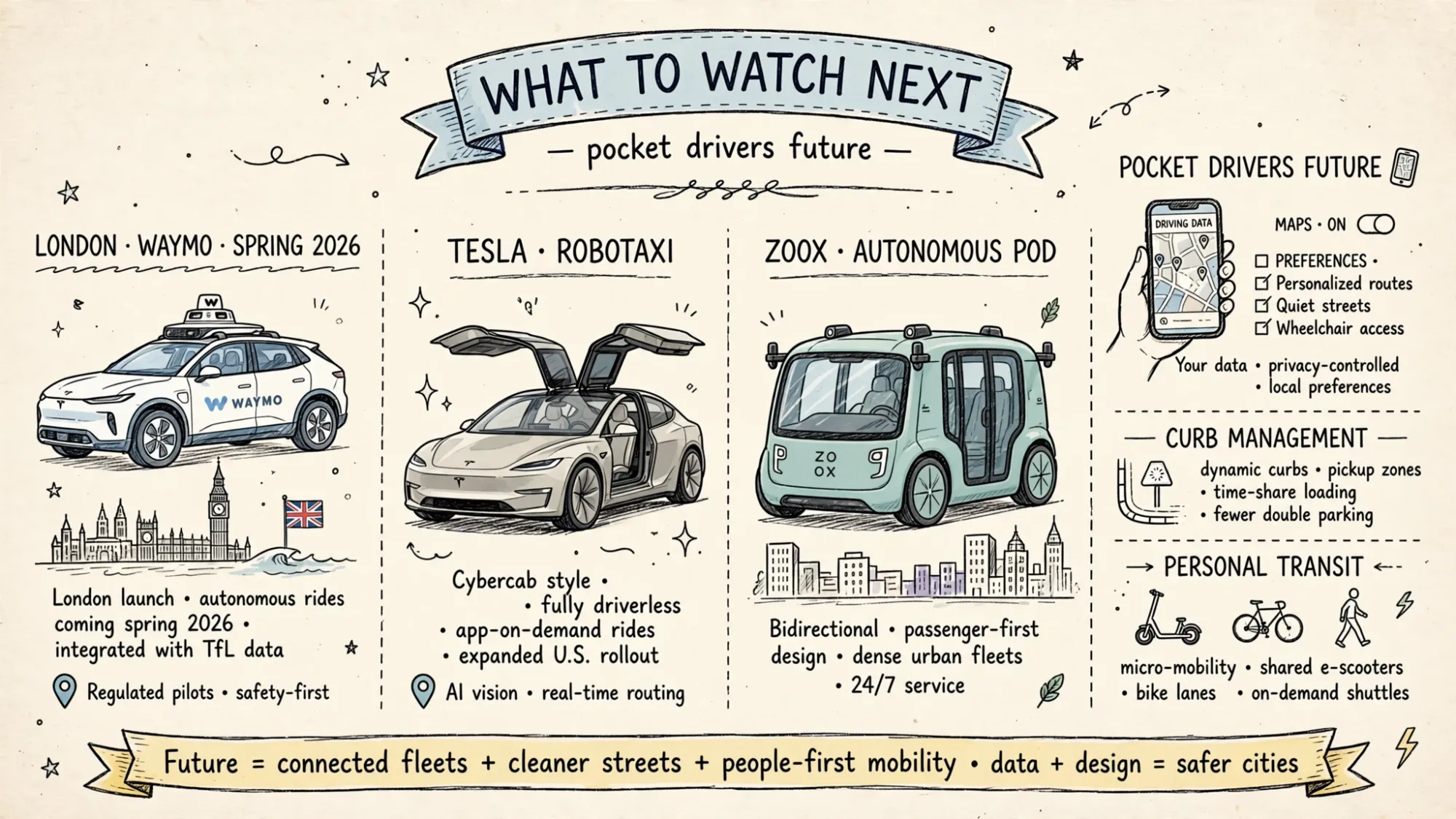
It is removing safety drivers in Miami ahead of a commercial launch, launching fully autonomous trips in London in spring 2026, and expanding to Las Vegas, San Diego and Detroit next.
When every car in those zones is automated, the road stops being a collection of private cars. It becomes a fleet of public transit pods you can summon, but with options.
Public transit today means one bus, one route, one comfort level. Pocket drivers mean you choose. Quiet ride or meeting mode.
Two seats or six. Basic or luxury tech.
Same road, many experiences.
Individual vehicles that work like public transit, except people have many more options in ride preferences, comfort, tech offered and passenger size.
Traffic jams go down because fleet routing is centralized. Not because people drive better, but because algorithms do not create phantom traffic.
The End Of Parking Lots
The need to store parked vehicles has turned a lot of potentially valuable real estate into parking lots.
Autonomous vehicles could transform that.
When people park cars, they need space to open doors and walk away.
Driverless cars do not need such space.
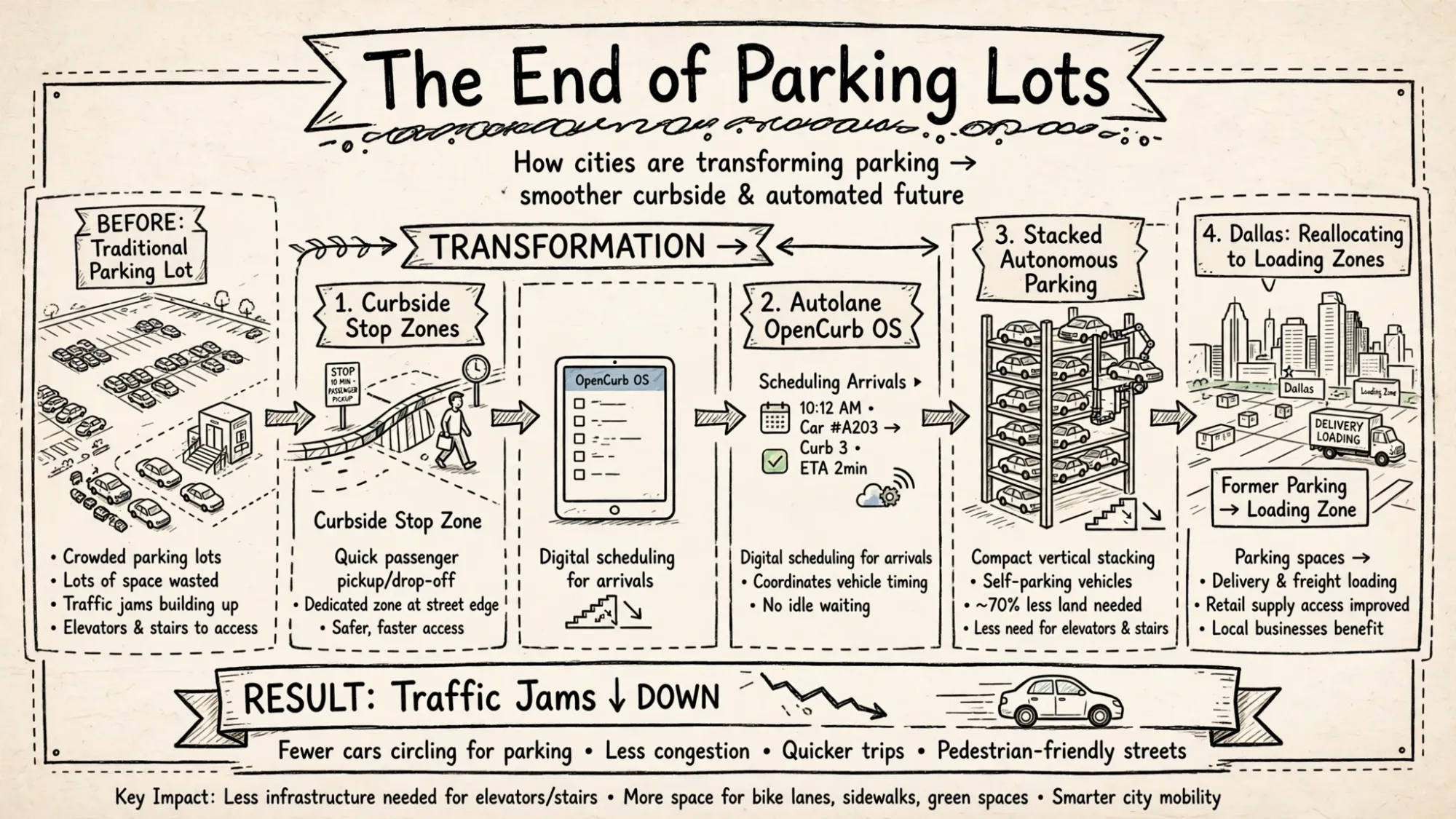
Parking lots devoted to autonomous vehicles would not require elevators and staircases.
Owners could simply be dropped off at the entrance and let vehicles park themselves.
Dallas has already written this into policy.
While the deployment of autonomous vehicles in ridesharing holds promise, it also increases demand for space to be reallocated from traditional parking spaces to loading zones.
That is where companies like Autolane come in.
They built OpenCurb OS, a curbside operating system for delivery and ride-hailing autonomous vehicles. It schedules autonomous vehicles to designated curb spaces, authenticates arrivals, guides parking and automates trunk access, minimizing congestion.
Parking does not disappear.
It moves to the edge and stacks.
What you get back in the city center are autonomous ridesharing stop zones. Former parking spaces become pickup zones, green logistics stations, recreational spaces.
Millions of square feet of mall parking lots will have to be redeveloped as online shopping and autonomous vehicles cut the need for parking.
You will not search for parking. Your car will leave and go serve someone else.
What To Watch Next
The pocket driver only works if three standards line up.
One, digital ID adoption. CA DMV Wallet, EU Digital Identity Wallet and Apple Wallet mDL are the start.
Once your license is NFC native, any car can read it securely without copying it.
Two, car key standards. CCC Digital Key with NFC plus UWB for precise location. If every Waymo, Zoox and Tesla RoboTaxi accepts the same tap, your pocket works everywhere.
Three, curb infrastructure. Cities that rewrite on-street parking and curb management policy to favor loading zones over storage will see the fastest transition.
We will know it is happening when you see a person tap a Waymo door handle with a phone and the car does not ask who you are, it asks where you want to go, in your language, with your playlist.
The car is no longer the product. The driver in your pocket is.