How RAM Prices and Kimi K3 Will Burst the AI Bubble (The Memory Cartel)
We assume the artificial intelligence bubble will burst because consumers stop using chatbots. The real catalyst is a global memory cartel driving up hardware costs just as Chinese open weight models force the price of intelligence to zero.
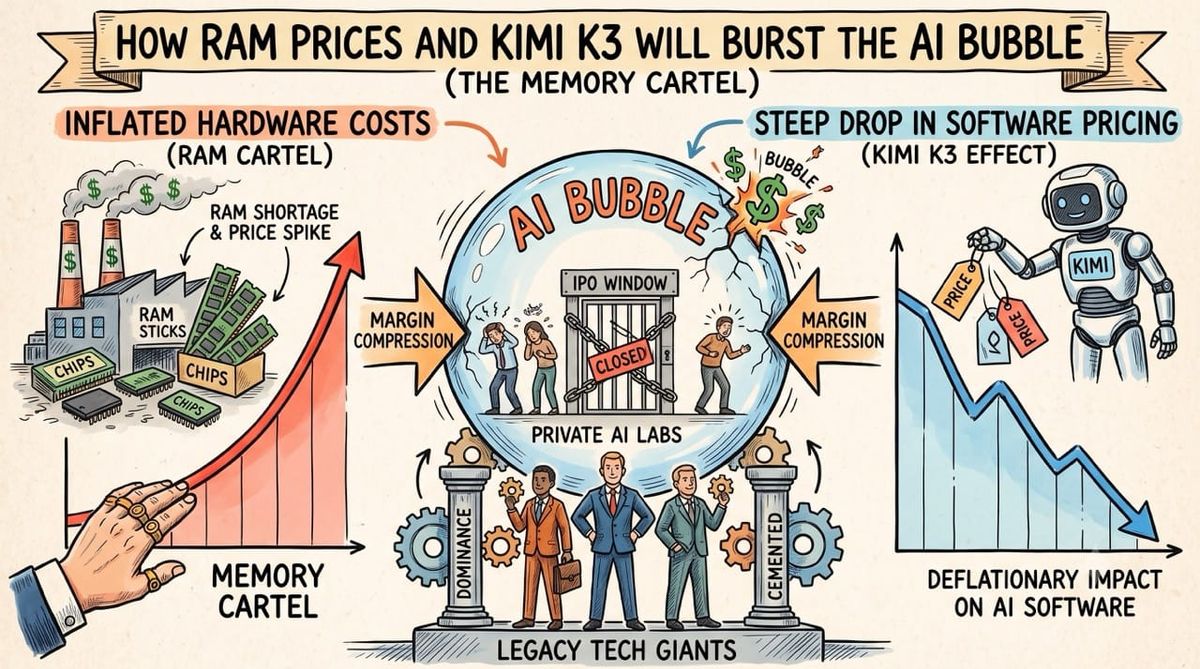
Inflated hardware costs are colliding with a steep drop in software pricing. This margin compression will crush private hyperscalers while cementing the dominance of legacy tech giants.
Inspiration: Analyzing the current memory shortage, cartel allegations in the RAM market, and the deflationary impact of the Kimi K3 model. Realizing this perfect storm of high CapEx and low pricing will permanently block the IPO window for private AI labs.
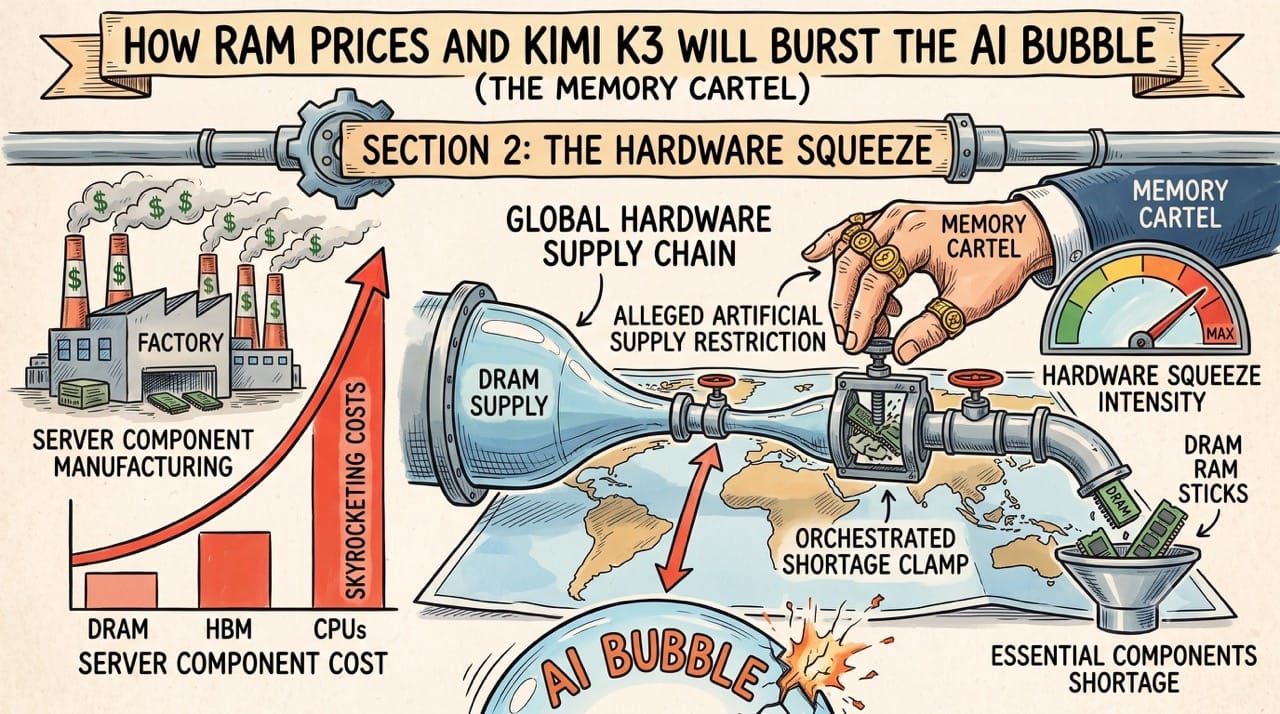
The Hardware Squeeze
We are currently watching a severe structural squeeze happen across the global hardware supply chain.
There are serious allegations that a memory cartel is artificially restricting the supply of dynamic random access memory.
This orchestrated shortage is driving the cost of essential server components through the roof.
The CapEx Panic
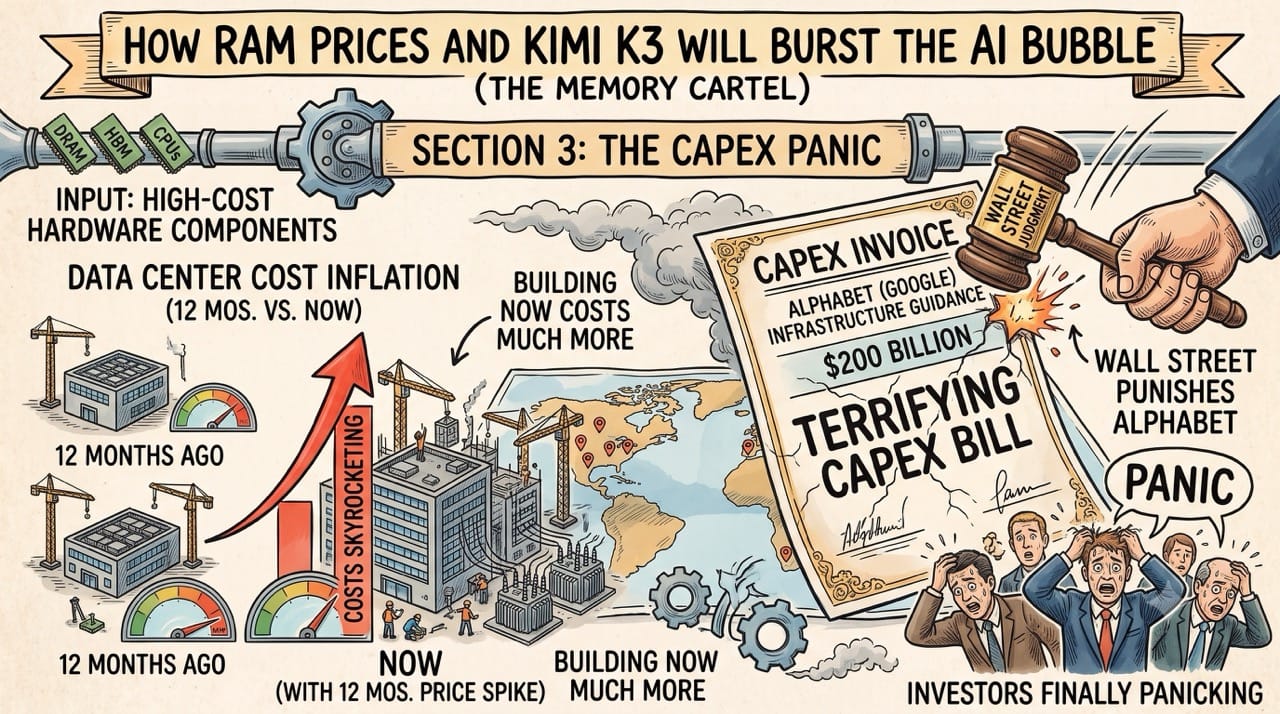
This hardware inflation directly explains the terrifying capital expenditure bills we are seeing from major technology monopolies.
We just watched Wall Street severely punish Alphabet for raising their infrastructure guidance to two hundred billion dollars.
Investors are finally panicking because they realize building a data center now costs significantly more than it did just twelve months ago.
The Chinese Deflation
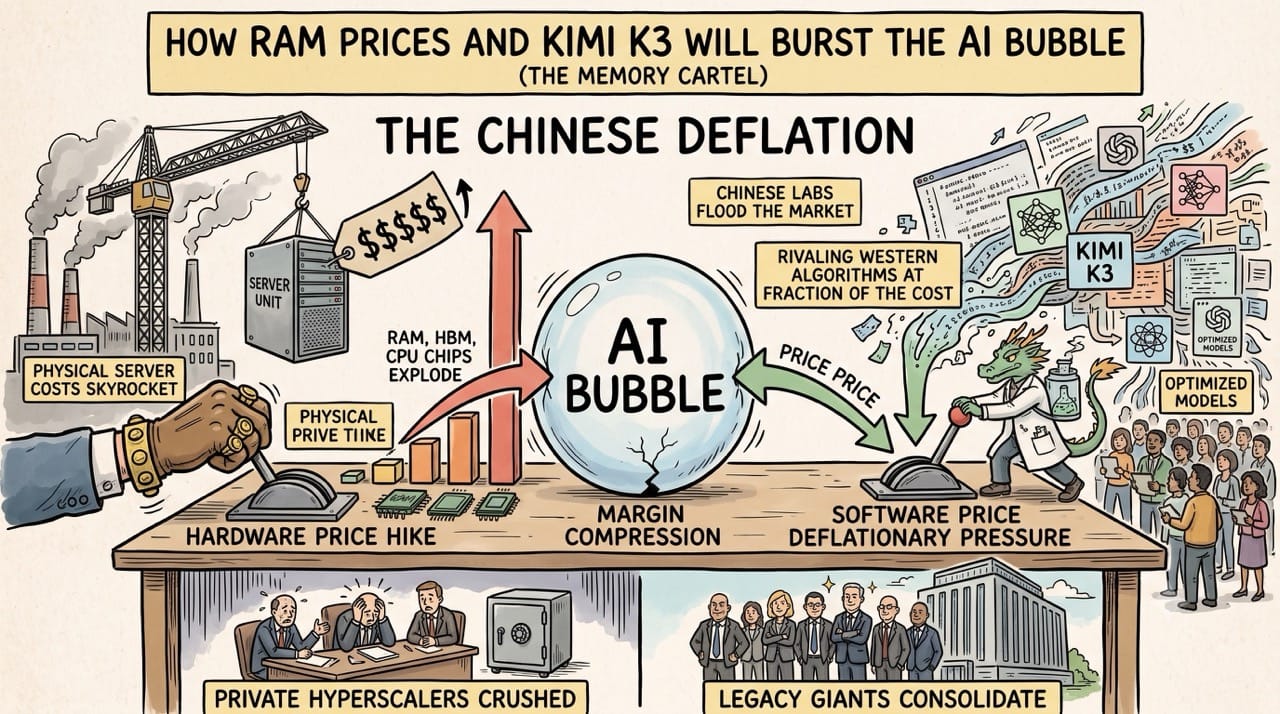
While the cost of physical servers is skyrocketing the actual price of software intelligence is plummeting.
As we discussed in our recent breakdown regarding Why China Should Not Restrict Its AI Models, the release of the highly optimized Kimi K3 model completely changes the global pricing structure.
Chinese laboratories are flooding the market with models that rival elite Western algorithms but operate at a fraction of the cost.
The Hyperscaler Nightmare
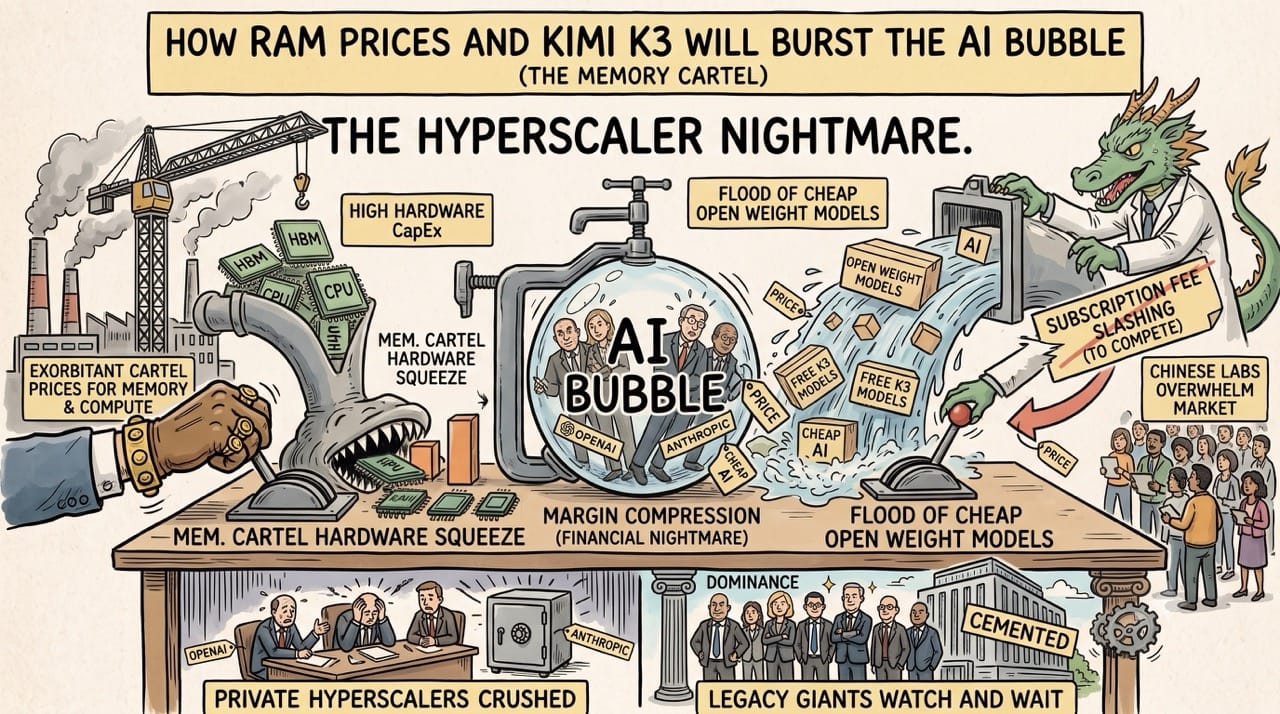
This creates a terrifying financial nightmare for private hyperscalers like OpenAI and Anthropic.
They are forced to pay exorbitant cartel prices for their memory and compute hardware just to keep their servers running.
Simultaneously they are being forced to slash their monthly subscription prices just to compete with the flood of cheap open weight models.
The IPO Blockade
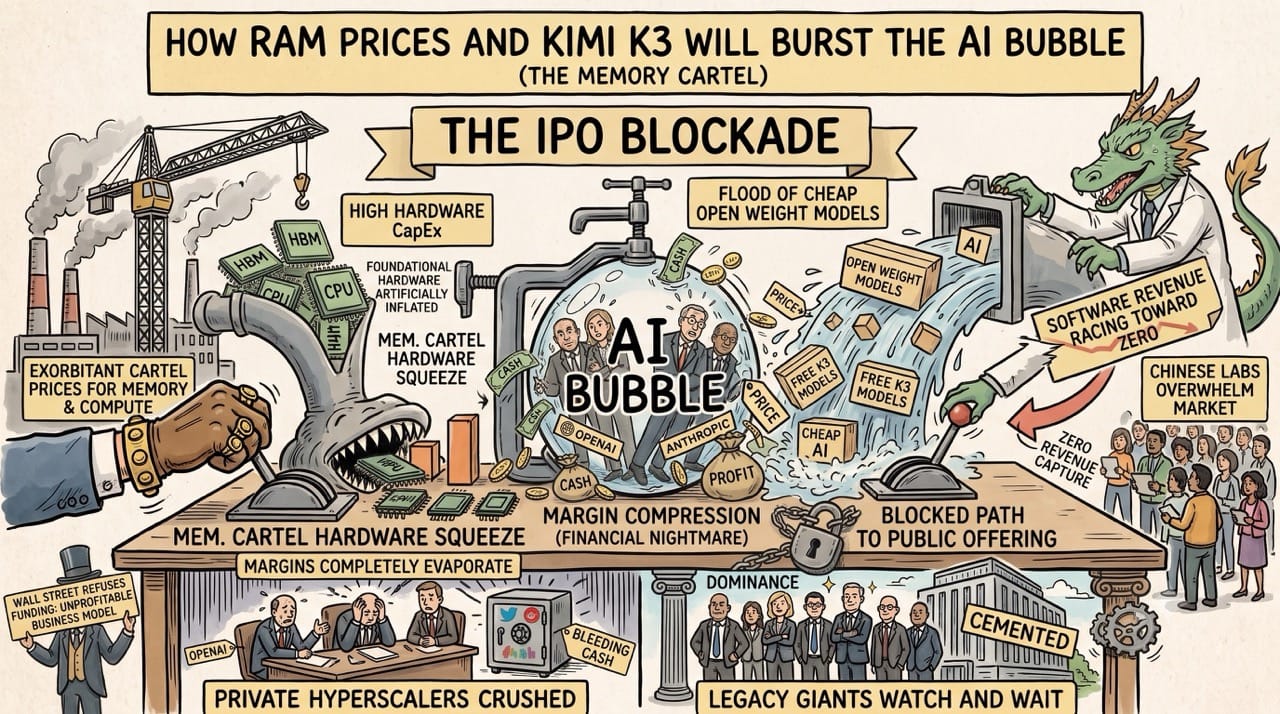
You cannot build a sustainable business when your foundational hardware costs are artificially inflated and your software revenue is racing toward zero.
These private laboratories are going to bleed cash at an unprecedented rate as their profit margins completely evaporate.
This brutal financial reality will effectively block their path to a public offering because Wall Street will refuse to fund a structurally unprofitable business model.
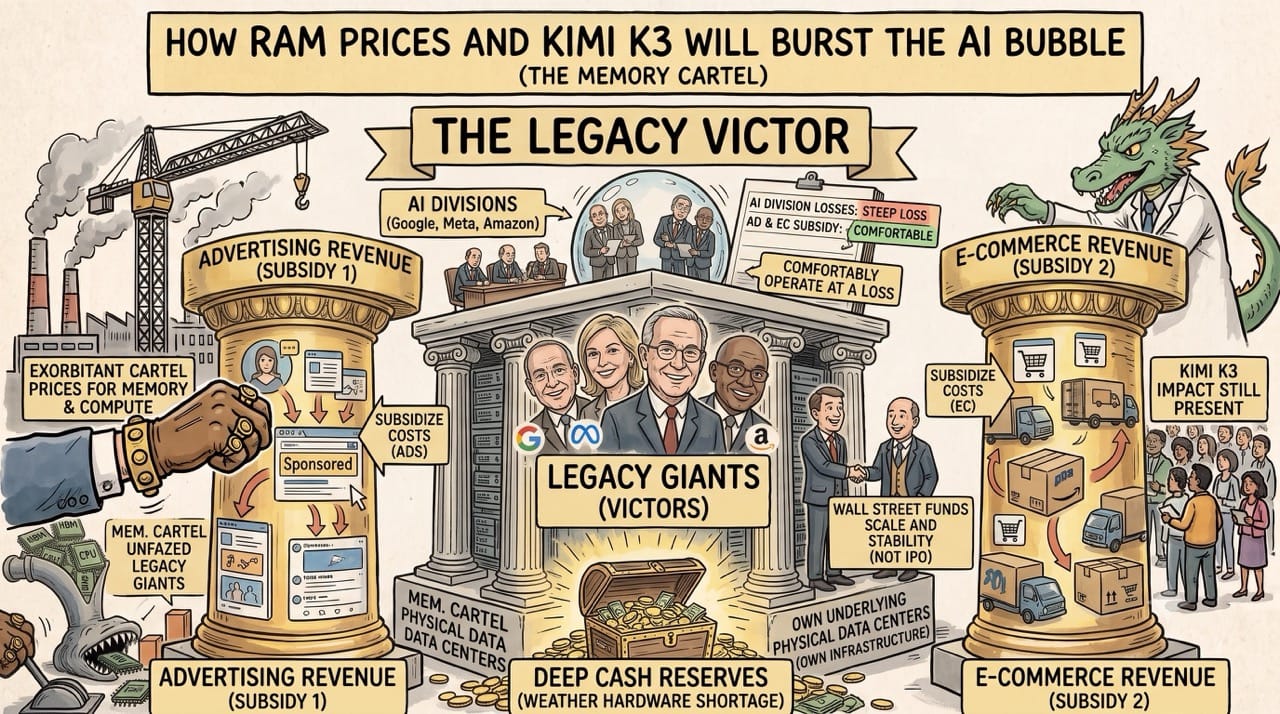
The Legacy Victor
The only companies capable of surviving this specific margin compression are the legacy giants like Google, Meta, and Amazon.
They already own the underlying physical data centers and have the deep cash reserves required to weather a prolonged hardware shortage.
They can comfortably afford to operate their artificial intelligence divisions at a steep loss because they subsidize those costs through advertising and ecommerce.
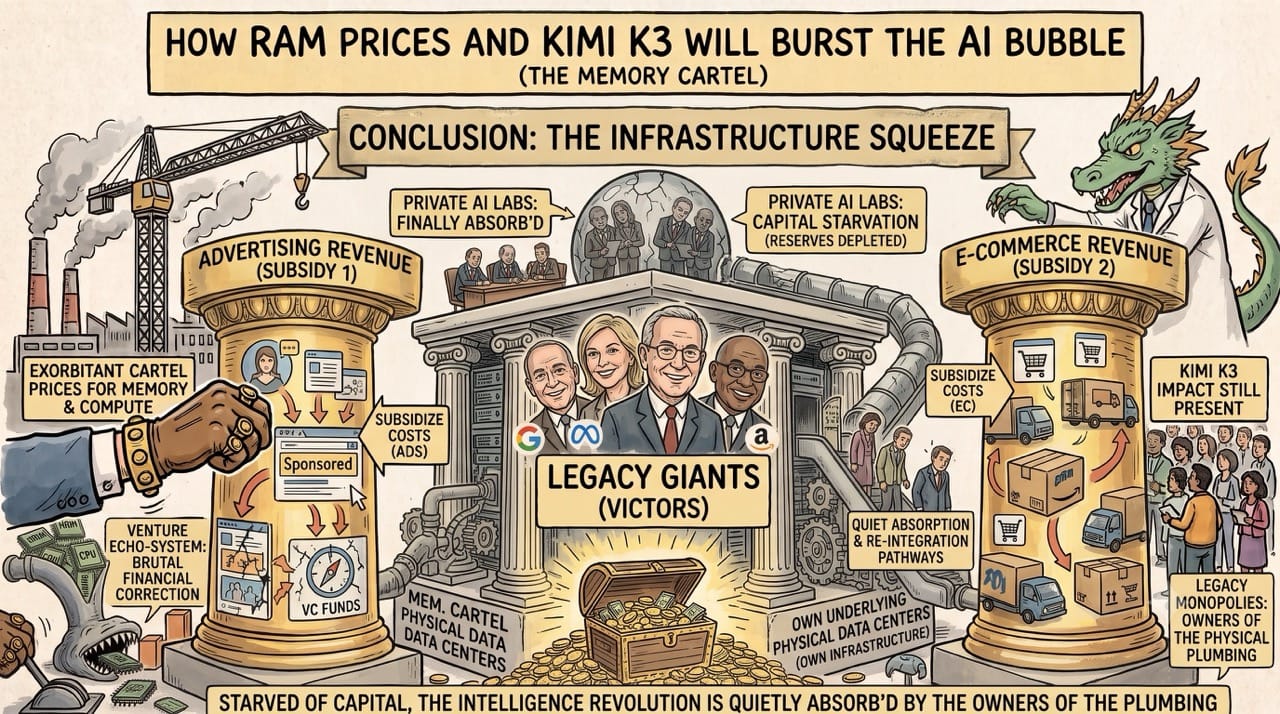
Conclusion: The Infrastructure Squeeze
We are about to witness a brutal financial correction across the entire venture ecosystem.
The private laboratories that started the intelligence revolution will inevitably be starved of capital and quietly absorbed by the legacy monopolies who actually own the physical plumbing.