How Parental Capital Engineers Unfair Advantage (The Financial Launchpad)
We assume entrepreneurs succeed purely through sheer grit and innate brilliance. The empirical reality is that parental financial support acts as a hidden insurance policy that completely rewires a child's capacity to take asymmetric risks.
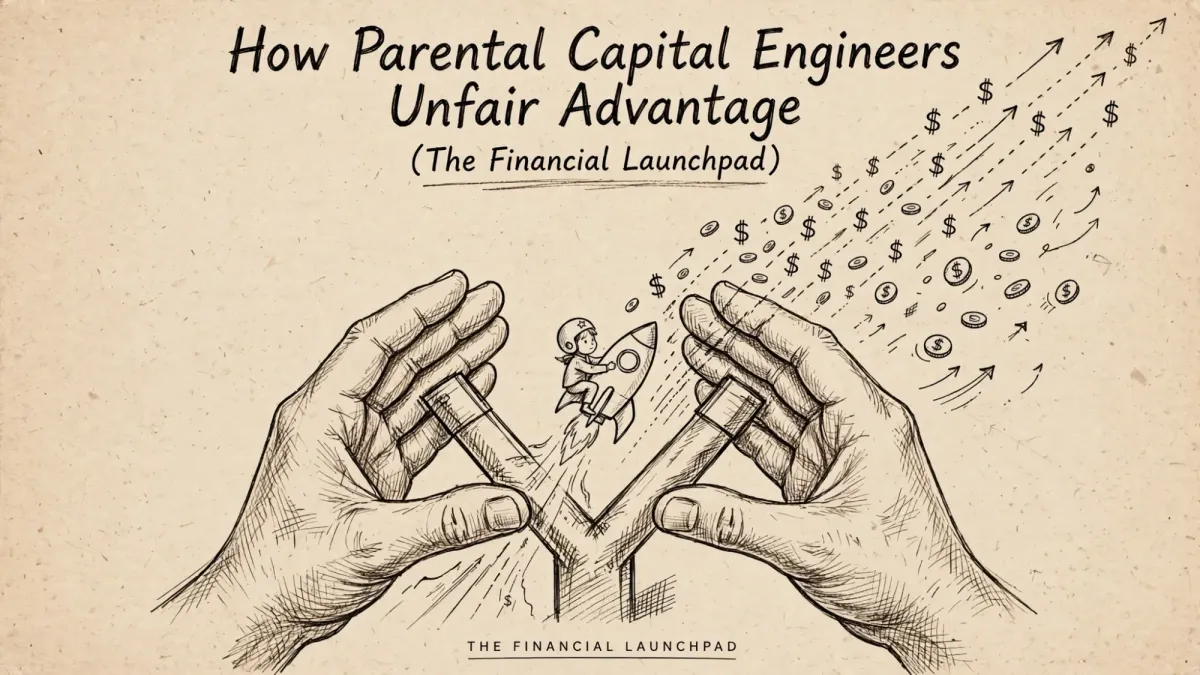
The greatest wealth transfer in history is underway. The parents who win will stop just passing down money and start passing down an operating system for risk.
Inspiration: Deconstructing the macroeconomic data behind the impending 124 trillion dollar generational wealth transfer. Realizing that parental financial support is not just about comfort but is a structural catalyst that alters cognitive bandwidth, risk tolerance, and entrepreneurial success.
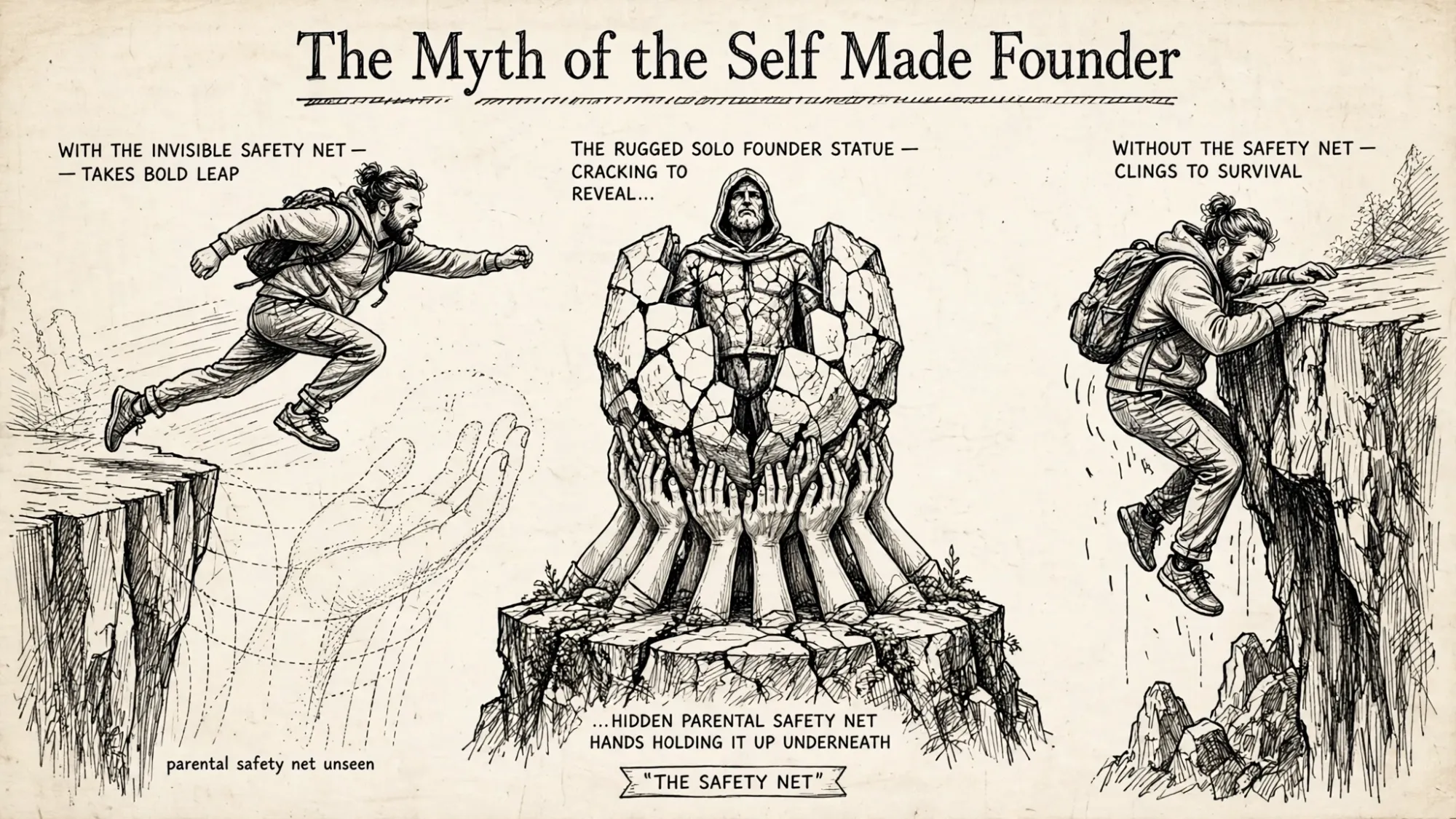
The Myth of the Self Made Founder
The business world loves the narrative of the rugged entrepreneur who builds an empire entirely from scratch.
A close look at the data completely shatters this romantic illusion.
Economic research consistently proves that starting a business is heavily dictated by the presence of a familial financial buffer.
When you know you have a safety net to fall back on you naturally make much bolder strategic decisions.
A founder without family wealth is forced to focus entirely on immediate personal survival which severely limits their ability to pursue long horizon innovations.
The Intelligence Paradox
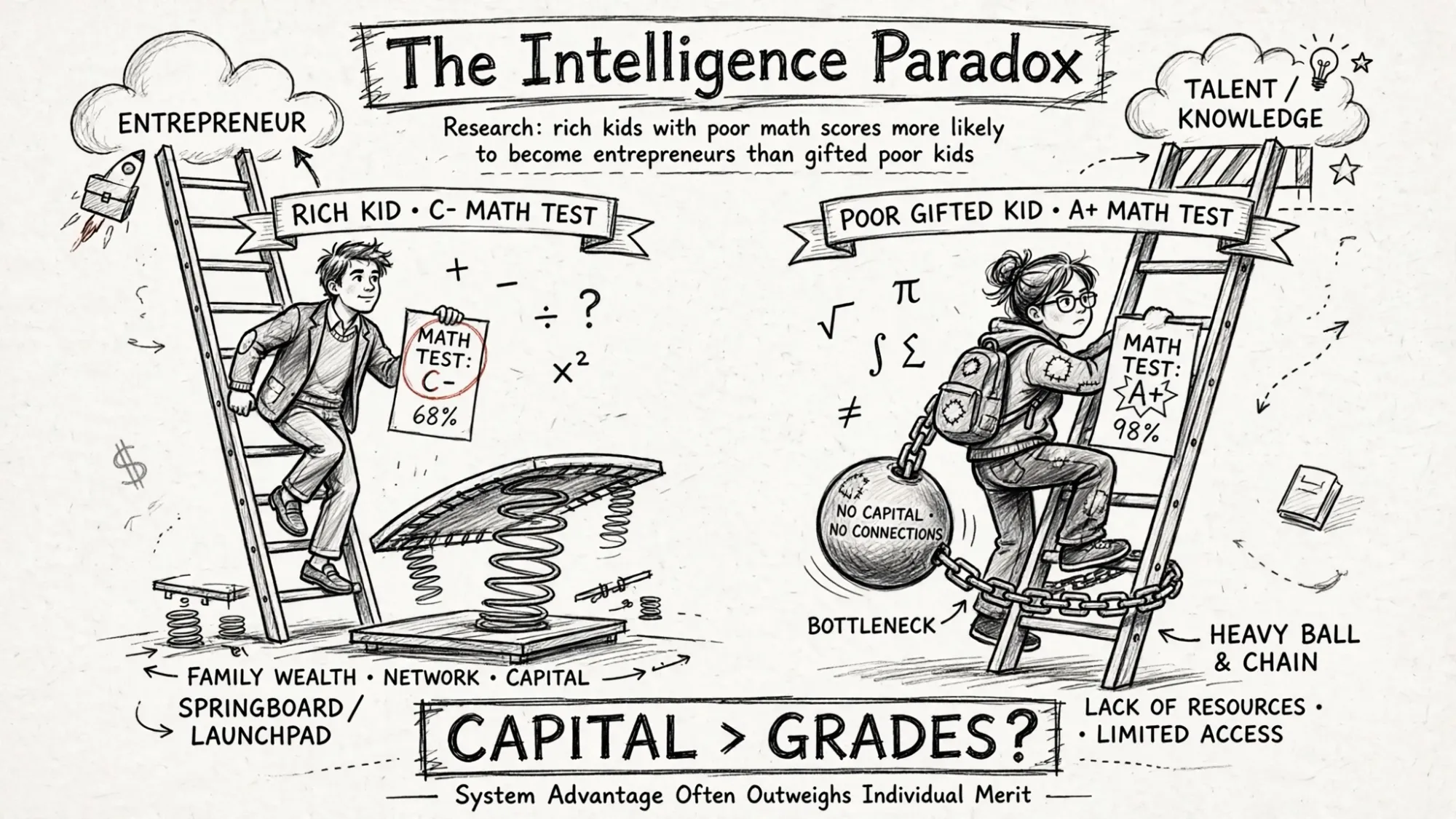
The advantage of this financial buffer is so powerful that it actually overrides innate cognitive ability.
A fascinating study from the Finance Ministry of Israel perfectly quantified this exact dynamic.
Researchers found that children from top earning families who scored poorly on math tests were actually more likely to become entrepreneurs than highly gifted math students from lower income families.
The capacity to act on latent potential is almost entirely bottlenecked by access to capital.
A brilliant mind cannot easily build a company if they cannot afford to take a year off from their hourly job.
The Smart and Illicit Premium
This dynamic becomes even more apparent when you analyze the behavioral traits of successful founders.
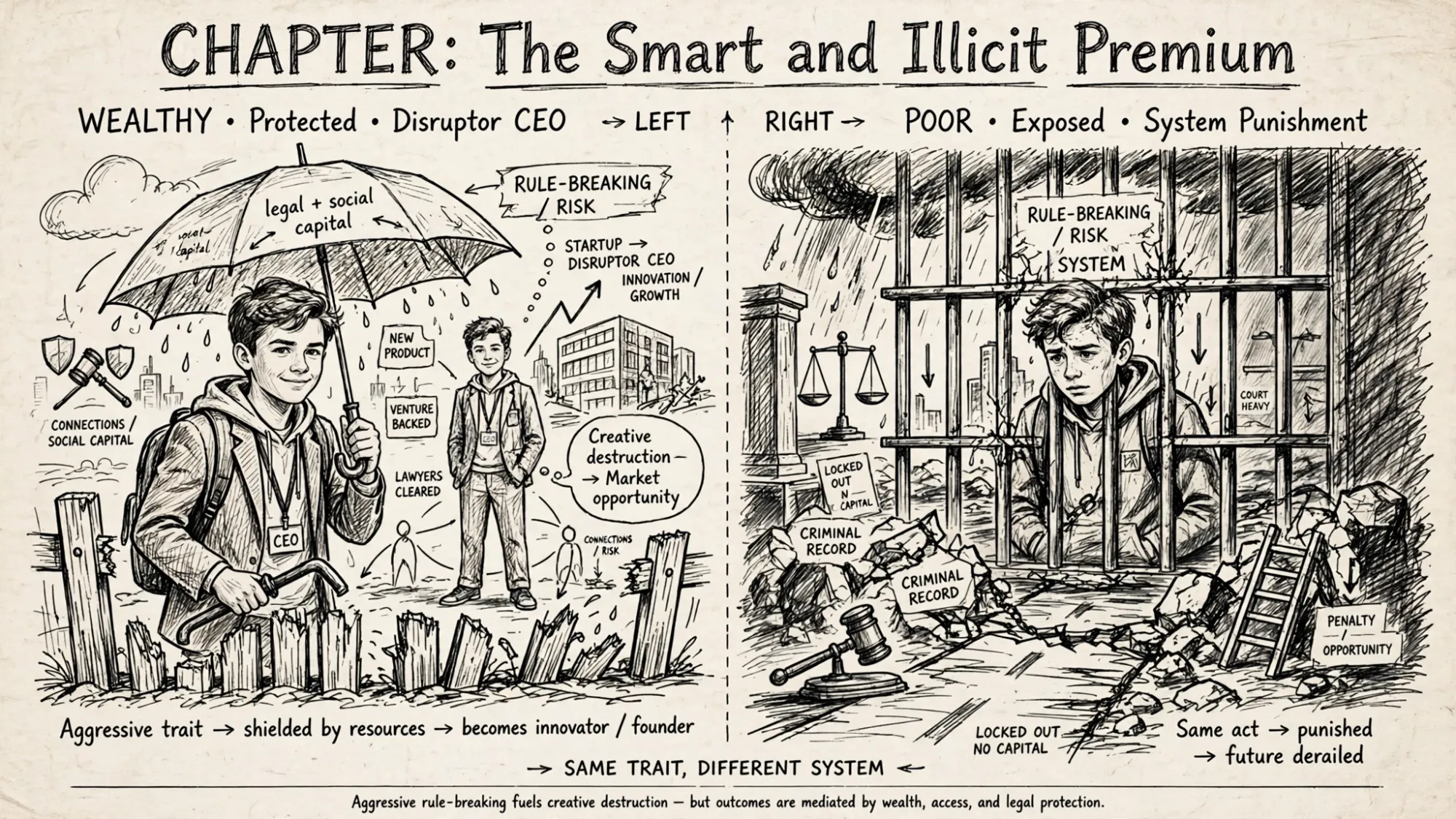
Incorporated business owners often exhibit highly aggressive and rule breaking tendencies during their adolescence.
This translates into the exact type of creative destruction required to disrupt legacy monopolies in the corporate world.
However the expression of these traits is heavily mediated by socioeconomic status. A teenager from a wealthy family who breaks the rules is protected by legal representation and social capital.
A teenager from a poor family exhibiting the exact same behavior is usually penalized by the justice system which permanently destroys their future earning potential.
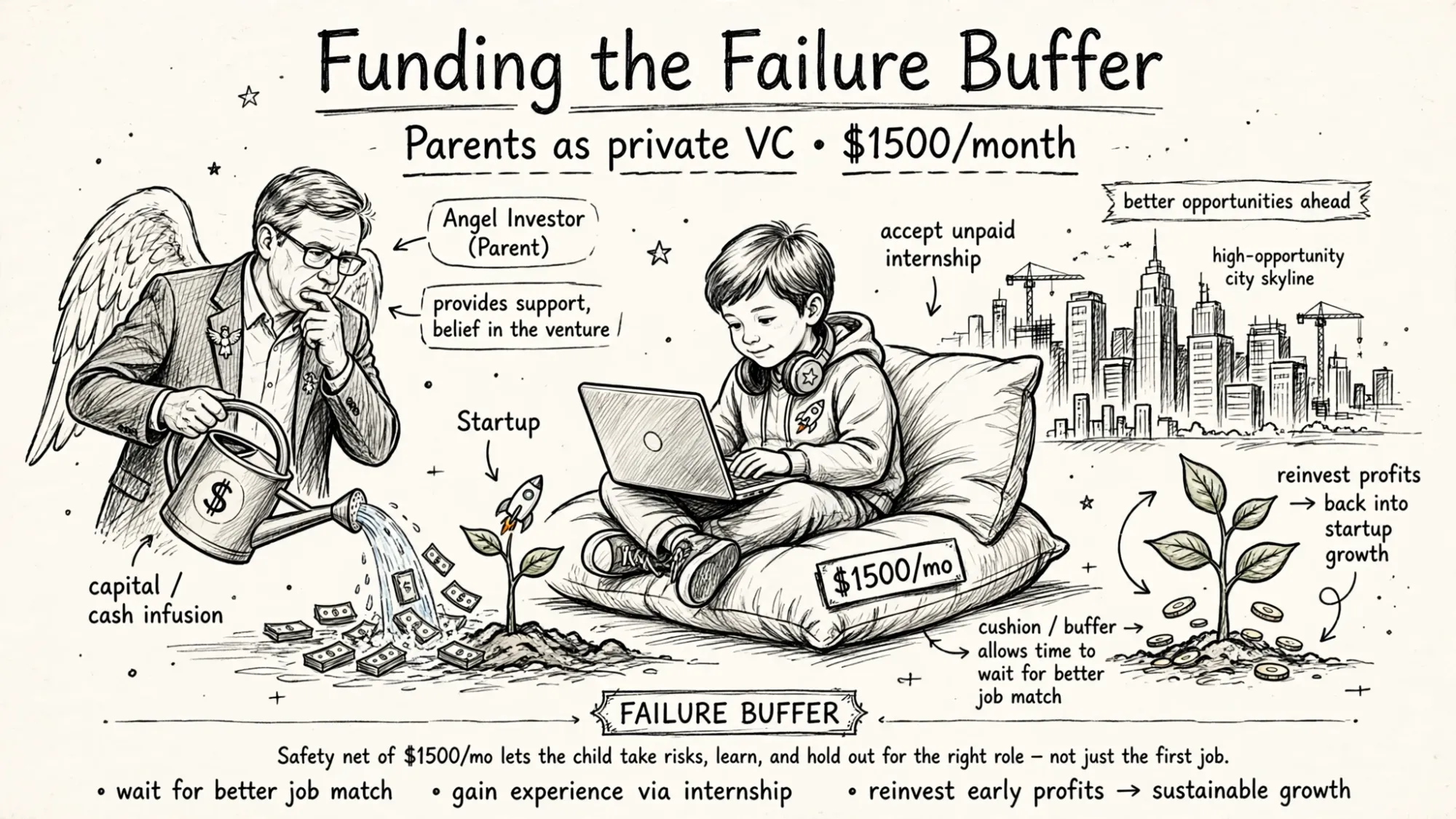
Funding the Failure Buffer
Modern parents are increasingly acting as private venture capital firms for their own children.
Recent data shows that half of parents with adult children now provide regular financial assistance averaging nearly fifteen hundred dollars a month.
This continuous cash flow acts as a vital failure buffer.
It allows a young adult to hold out for a better job match, accept an unpaid internship in a high opportunity city, or reinvest the early profits of a startup rather than draining the business to pay rent.
Giving this money early in life when it funds active career growth is infinitely more valuable than waiting to pass it down as a retirement inheritance.
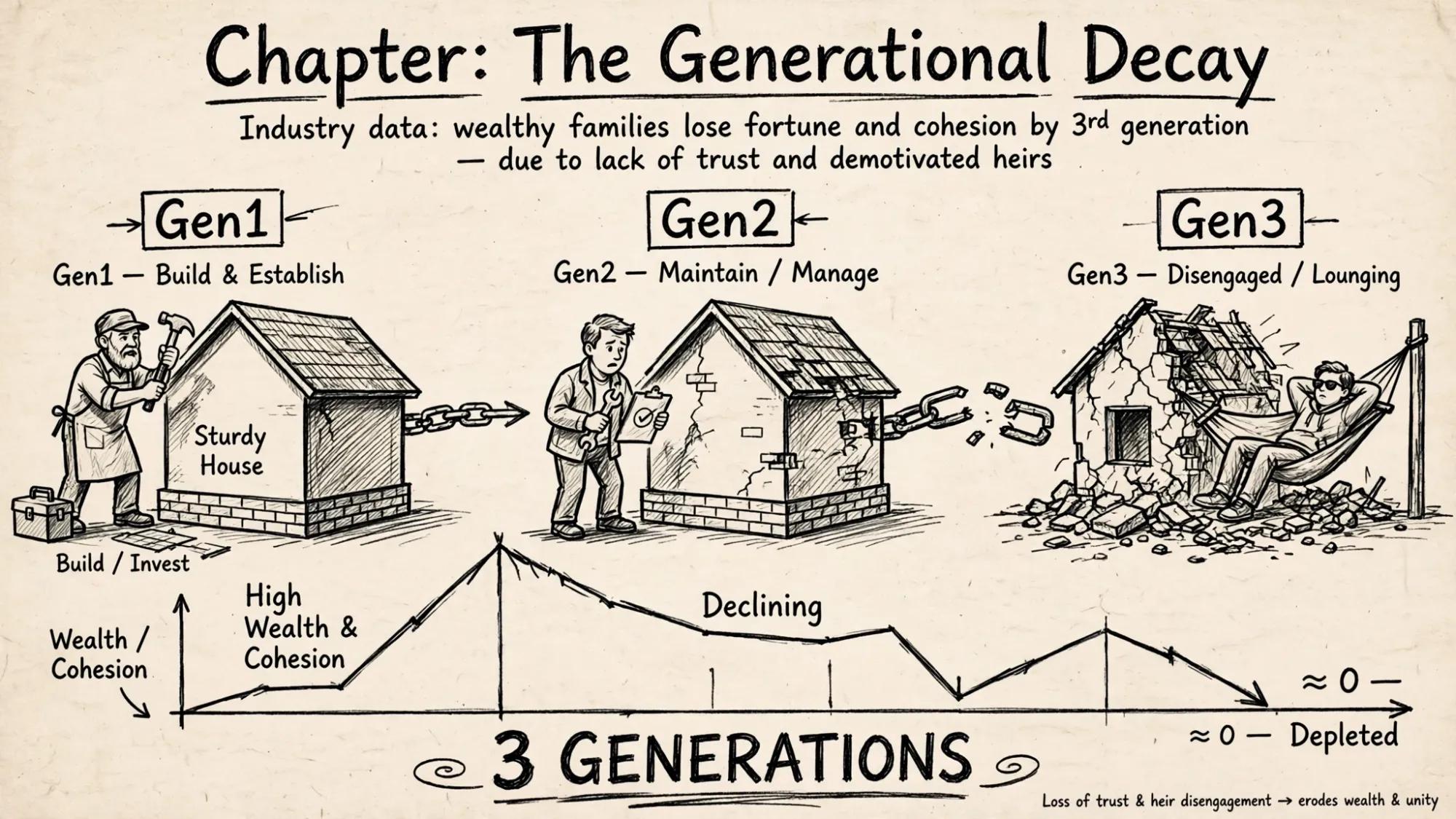
The Generational Decay
While this financial support provides an incredible structural advantage it also introduces a terrifying psychological risk.
Industry data reveals that a staggering percentage of wealthy families completely lose their fortune and their cohesion by the third generation.
This failure is rarely caused by bad investments or poor tax planning. It is almost entirely driven by a lack of trust and the creation of highly demotivated heirs.
When parents use their wealth to aggressively clear every single obstacle from a child's path they inadvertently destroy the friction required to build psychological resilience.
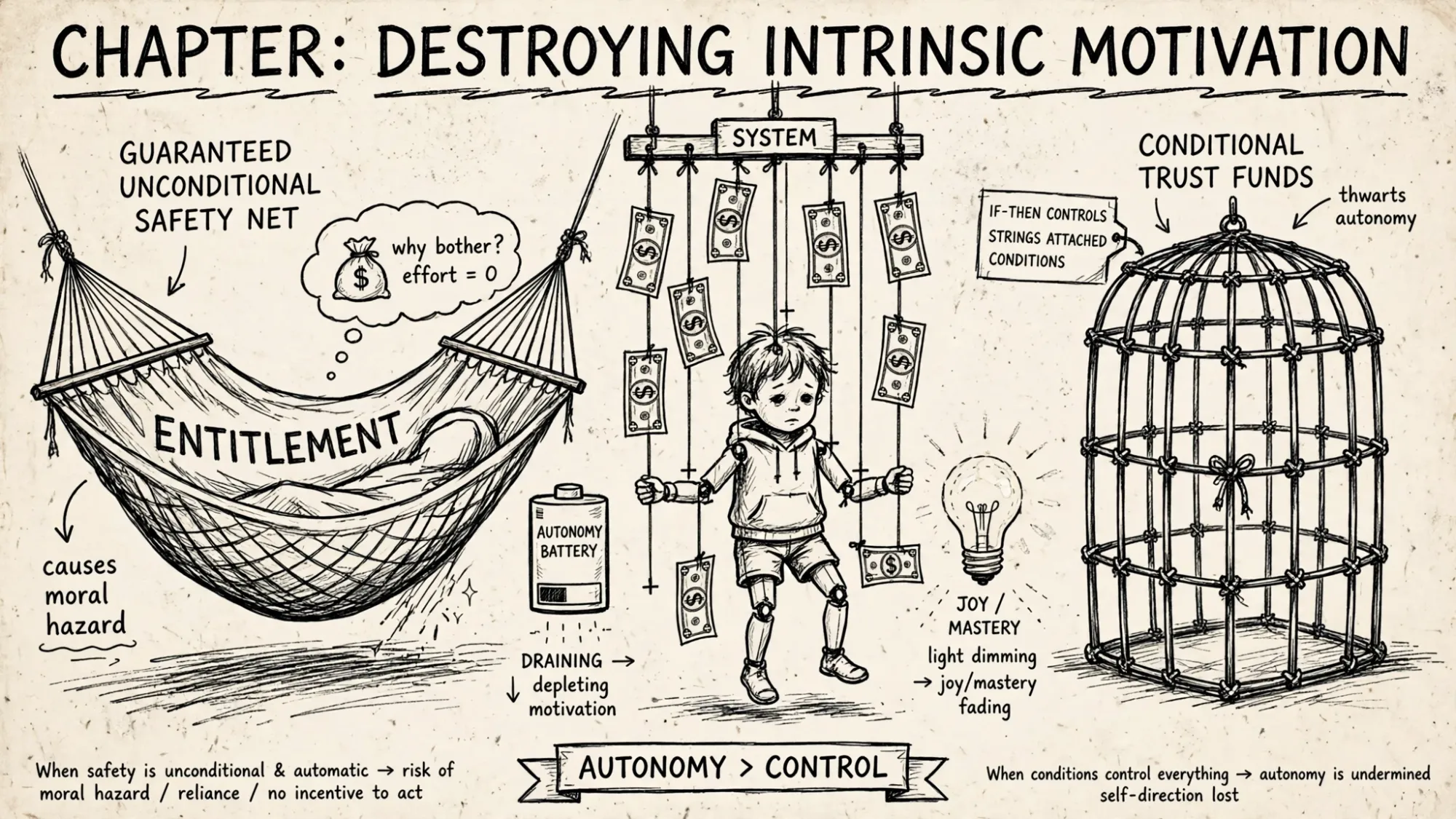
Destroying Intrinsic Motivation
If a child realizes their financial safety net is guaranteed and unconditional they suffer from severe moral hazard.
They never develop the emotional courage required to navigate real world failure.
When parents use money to control behavior through conditional trust funds they actively thwart the psychological need for autonomy.
The child stops pursuing excellence for the joy of mastery and starts acting purely to appease the wealth holder.
This transforms a dynamic family legacy into an environment of passive entitlement and deep resentment.
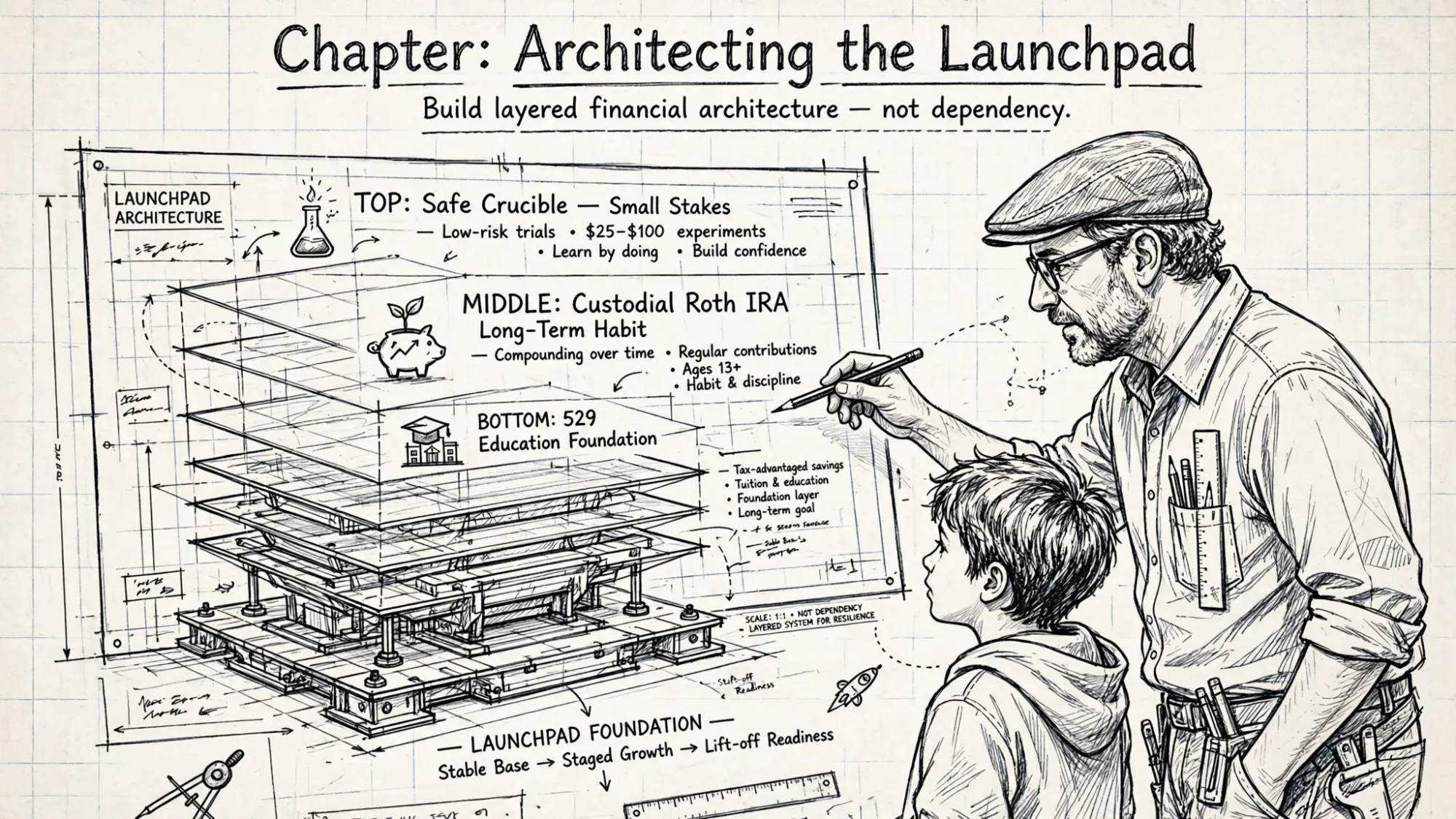
Architecting the Launchpad
To harness the advantages of wealth without triggering this psychological decay parents must shift their focus from transferring assets to cultivating human capability.
You have to build a layered financial architecture that encourages growth rather than dependency.
- The Educational Foundation: Utilize tax advantaged 529 plans to completely remove the burden of student debt without handing the child a blank check.
- The Long Term Habit: Open a Custodial Roth IRA the moment your child earns their first dollar. This introduces the power of tax free compounding decades before their peers understand investing.
- The Safe Crucible: Give children small stakes to manage early in life. Let them experience the natural consequences of market rejection and bad budgeting when the stakes are incredibly low.
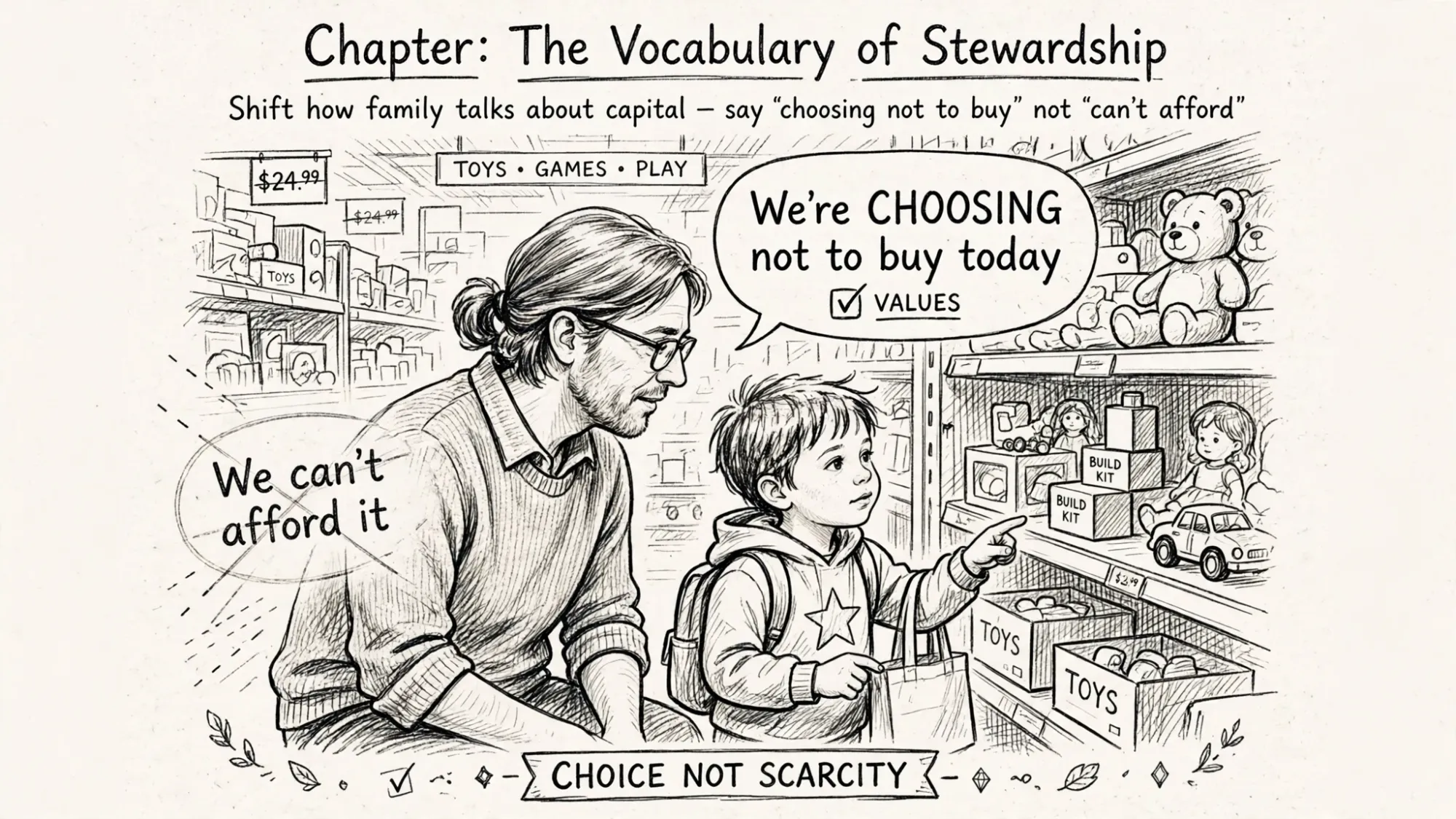
The Vocabulary of Stewardship
Implementing this environment requires a profound shift in how a family actually talks about capital.
The optimal parental posture demands ethical presence and intentional vocabulary.
When declining a purchase request a wealthy parent should avoid saying they cannot afford it because the child instinctively knows this is false.
They should reframe the boundary as a volitional choice by simply stating they are choosing not to buy that item today.
This subtle shift models financial discipline and values based decision making.
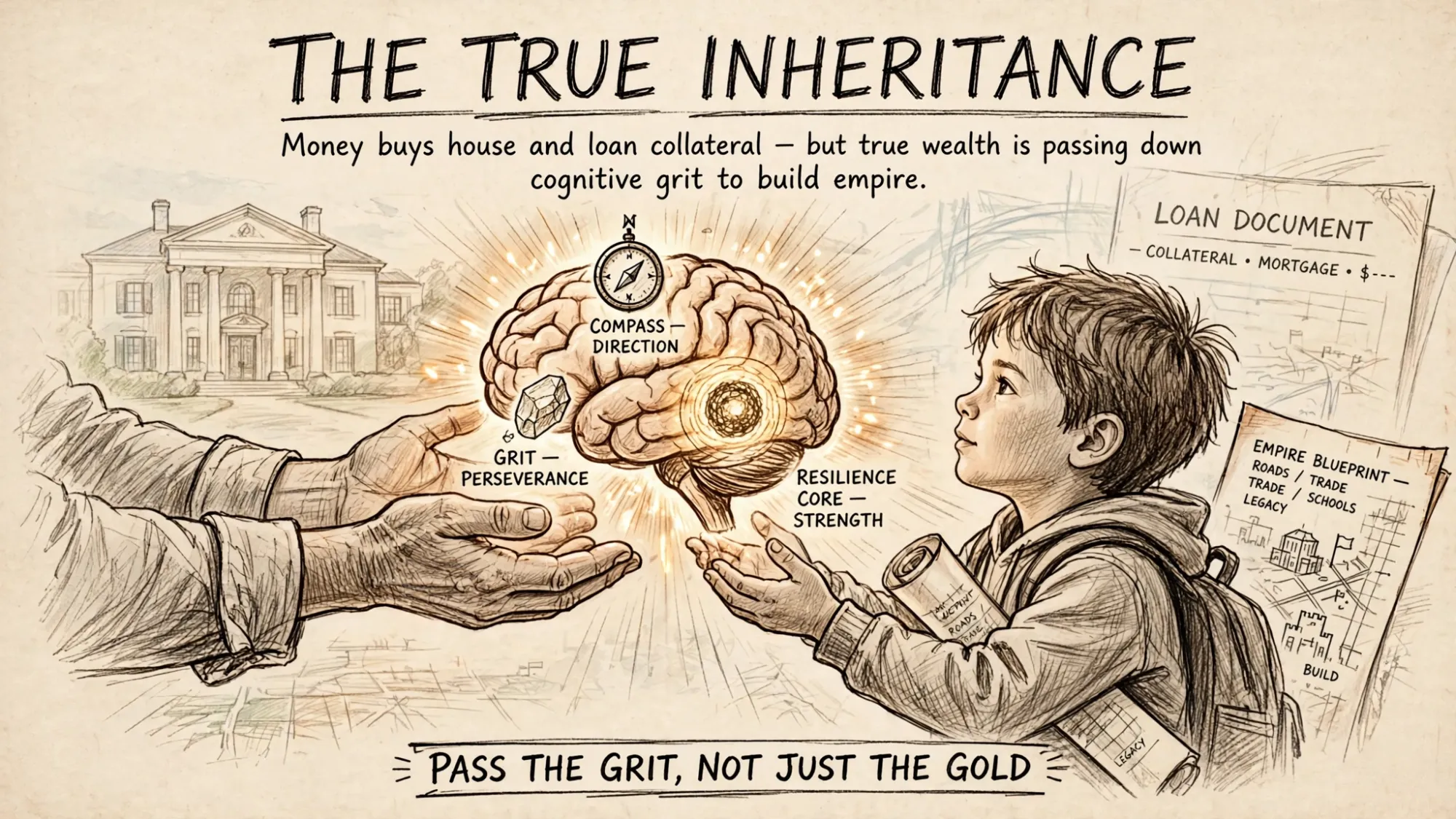
Conclusion: The True Inheritance
Money can easily buy residence in an elite neighborhood and collateral for a business loan.
The parents who successfully navigate the next century will realize that true intergenerational wealth requires passing down the cognitive grit required to actually build the empire.
Resources
Economics of Entrepreneurship and Wealth
- "Entrepreneurship and Household Saving" (NBER Working Paper No. 7894) -https://www.nber.org/system/files/working_papers/w7894/w7894.pdf.
- "Stock Market Wealth and Entrepreneurship" (NBER Working Paper 32643) -https://www.nber.org/be/20242/stock-market-wealth-and-entrepreneurship.
- "What Makes an Entrepreneur? Evidence on Inheritance and Capital Constraints" (NBER Working Paper 3252) -https://www.nber.org/papers/w3252.
- "Wealth Inequality and Intergenerational Links" by Mariacristina De Nardi -https://users.nber.org/~denardim/research/jpemar02.pdf.
- NBER Working Paper 34512 regarding venture capital returns and entrepreneurship -https://www.nber.org/papers/w34512andhttps://www.nber.org/system/files/working_papers/w34512/w34512.pdf.
- NBER Working Paper 4526 on liquidity constraints in the formation of entrepreneurial enterprises -https://www.nber.org/system/files/working_papers/w4526/w4526.pdf.
- "Scarcity Mindset" overview via Money365 -https://www.money365.market/articles/scarcity-mindset.
Psychological Traits and "Smart and Illicit" Behavior
- "Smart and Illicit: Who Becomes an Entrepreneur and Does it Pay?" (CEP Discussion Paper No. 1237) -https://ideas.repec.org/p/cep/cepdps/dp1237.html.
- "Smart and Illicit: Who Becomes an Entrepreneur and Do They Earn More?" (NBER Working Paper 19276) -https://www.nber.org/system/files/working_papers/w19276/w19276.pdfandhttps://ideas.repec.org/p/nbr/nberwo/19276.html.
- ResearchGate publication on the "Smart and Illicit" findings -https://www.researchgate.net/publication/318491000_Smart_and_Illicit_Who_Becomes_an_Entrepreneur_and_Do_They_Earn_More.
- LSE USAPP Blog discussing risky teenage behavior and successful entrepreneurship -https://blogs.lse.ac.uk/usappblog/2014/01/07/successful-entrepreneurs-risky-teens/.
- AEA Web presentation on the sorting of business owners and non-routine cognitive skills -https://www.aeaweb.org/conference/2015/retrieve.php?pdfid=1940&tk=tFDez3Bd.
- "Analyzing some miscited entrepreneurship research" via Zac Townsend's Blog -https://blog.zactownsend.com/analyzing-some-miscited-entrepreneurship-research.
Innovation, Social Capital, and Talent Misallocation
- "Who Becomes an Inventor in America? The Importance of Exposure to Innovation" (Opportunity Insights / QJE) -https://opportunityinsights.org/wp-content/uploads/2019/01/patents_paper.pdfandhttps://opportunityinsights.org/paper/losteinsteins/.
- "Nature Versus Nurture: A Look at American Inventors" (NBER Working Paper 24062) -https://www.nber.org/papers/w24062andhttps://www.nber.org/system/files/working_papers/w24062/w24062.pdf.
- "Atlas of Opportunity" detailing the impact of neighborhoods on social mobility -https://www.chandlerfoundation.org/social-investor/atlas-of-opportunity.
- RSA Journal interview with Raj Chetty on "Capital Gains" and social capital -https://www.thersa.org/rsa-journal/capital-gains/.
- "In Conversation with Raj Chetty" from Equitable Growth -https://equitablegrowth.org/in-conversation-with-raj-chetty/.
- Summary of Raj Chetty's keynote at the Third Annual Shared Action in Values Summit -https://planrva.org/third-annual-shared-action-in-values-summit/.
- "The Science of Economic Opportunity" PCAST presentation -https://bidenwhitehouse.archives.gov/wp-content/uploads/2023/09/Chetty_PCAST.pdf.
- "Misallocation of Talent and Innovation: evidence from China" (Applied Economics) -https://ideas.repec.org/a/taf/applec/v54y2022i14p1598-1624.html.
- "Misallocation versus Inequality" by Hsieh and Klenow -http://klenow.com/Misallocation_versus_Inequality.pdf.
- Research on economic efficiency loss and talent misallocation by Sevi Rodriguez Mora -https://sevirodriguezmora.com/papers/OPUSCLE_FINAL.pdf.
Thailand's Socioeconomic and Legal Context
- PIER Discussion Paper 144 on Thailand's income and wealth inequality -https://www.pier.or.th/files/dp/pier_dp_144.pdf.
- PIER Discussion Paper 117 on Thailand's labor income inequality -https://www.pier.or.th/files/dp/pier_dp_117.pdf.
- Paris School of Economics thesis on the "Dynamics of Thai Income Inequality" -http://piketty.pse.ens.fr/files/Jenmana2018.pdf.
- "Inheritance Tax and Gift Tax" legal update from Thanathip & Partners -https://www.thanathippartners.com/insights/legal-update/inheritance-tax-and-gift-tax-t2u2.html?show=5.
- "Thailand Inheritance & Gift Tax 2026: Complete Guide for Wealthy Expats" -https://thailand-elite.com/blog/thailand-inheritance-gift-tax-wealth-transfer-guide-2026.
- Siam Legal guide on the "Calculation of Inheritance Tax" -https://www.siam-legal.com/thailand-law/calculation-of-inheritance-tax/.
- Thailand Law Online overview on "Inheritance Tax" -https://www.thailandlawonline.com/inheritance-tax.
Wealth Transfer, Moral Hazard, and Family Governance
- "Talking Billions" podcast featuring James E. Hughes Jr. on family wealth -https://podcasts.apple.com/my/podcast/talking-billions-with-bogumil-baranowski/id1656293892?l=ms.
- "Family Wealth" advising stories from The Boston Foundation -https://www.tbf.org/advisors/advising-stories/family-wealth.
- "Redefining family wealth as well-being" by J.P. Morgan Insights -https://www.jpmorgan.com/insights/family-legacy/family-engagement-and-governance/redefining-family-wealth-as-well-being.
- "Complete Family Wealth: Wealth as Well-Being, 2nd Edition" (Wiley) -https://www.wiley.com/en-us/complete-family-wealth-wealth-as-well-being-2nd-edition-p-9781119820048.
- James E. Hughes Foundation article on navigating the legal complexities of wealth -https://jehjf.org/wp-content/uploads/2024/01/TE-Article-Part-1-Sept-2022-final.pdf.
- "How to Run Effective Family Meetings About Wealth and Governance" by TIGER 21 -https://tiger21.com/insights/how-to-run-effective-family-meetings-about-wealth-and-governance-a-practical-toolkit/.
- Reddit r/fatFIRE discussion regarding "The curse of successful families" -https://www.reddit.com/r/fatFIRE/comments/16xsxtb/the_curse_of_successful_families/.
- University of Pennsylvania repository document on moral hazard and agentic love -https://repository.upenn.edu/bitstreams/76ebacfc-d1ba-44a6-b5b9-c733666aca91/download.
- "On the motivational drivers of gray entrepreneurship" via ResearchGate -https://www.researchgate.net/publication/268577103_On_the_motivational_drivers_of_gray_entrepreneurship_An_exploratory_study.
- HCEO Progress Report on moral hazard and human capital -https://humcap.uchicago.edu/images/hceo_progress-report_2013-01-17a_jsb.pdf.
- MIT Economics paper on behavioral development economics and extrinsic incentives -https://economics.mit.edu/sites/default/files/2022-09/behavioral-development-economics.pdf.
- Universitas Pakuan document defining moral hazard -https://lib-pasca.unpak.ac.id/index.php?p=fstream-pdf&fid=3240&bid=15279.
Psychological Development and Self-Determination Theory (SDT)
- Wikipedia entry on "Self-determination theory" -https://en.wikipedia.org/wiki/Self-determination_theory.
- "The 'What' and 'Why' of Goal Pursuits: Human Needs and the Self-Determination of Behavior" by Deci and Ryan -https://selfdeterminationtheory.org/SDT/documents/2000_DeciRyan_PIWhatWhy.pdf.
- Ryan and Deci (2020) review of SDT -https://stial.ie/resources/Ryan%20and%20Deci%202020%20self%20determination%20theory.pdf.
- Guilford Press excerpt on the framework of SDT -https://www.guilford.com/excerpts/ryan.pdf.
- "A closer look at motivation: Self-Determination Theory" (NIH PMC) -https://pmc.ncbi.nlm.nih.gov/articles/PMC9530992/.
- "What Adolescents Need: A Self-Determination Theory" from Emerald Insight -https://www.emerald.com/books/edited-volume/19910/chapter/104923089/What-Adolescents-NeedA-Self-Determination-Theory.