
The Korean Blindspot: The Real Threat to the Global Chip Supply
Market consensus assumes a Chinese invasion of Taiwan is the ultimate threat to global technology. The actual catastrophic vulnerability is a North Korean conflict instantly wiping out the global memory chip supply chain located in South Korea.
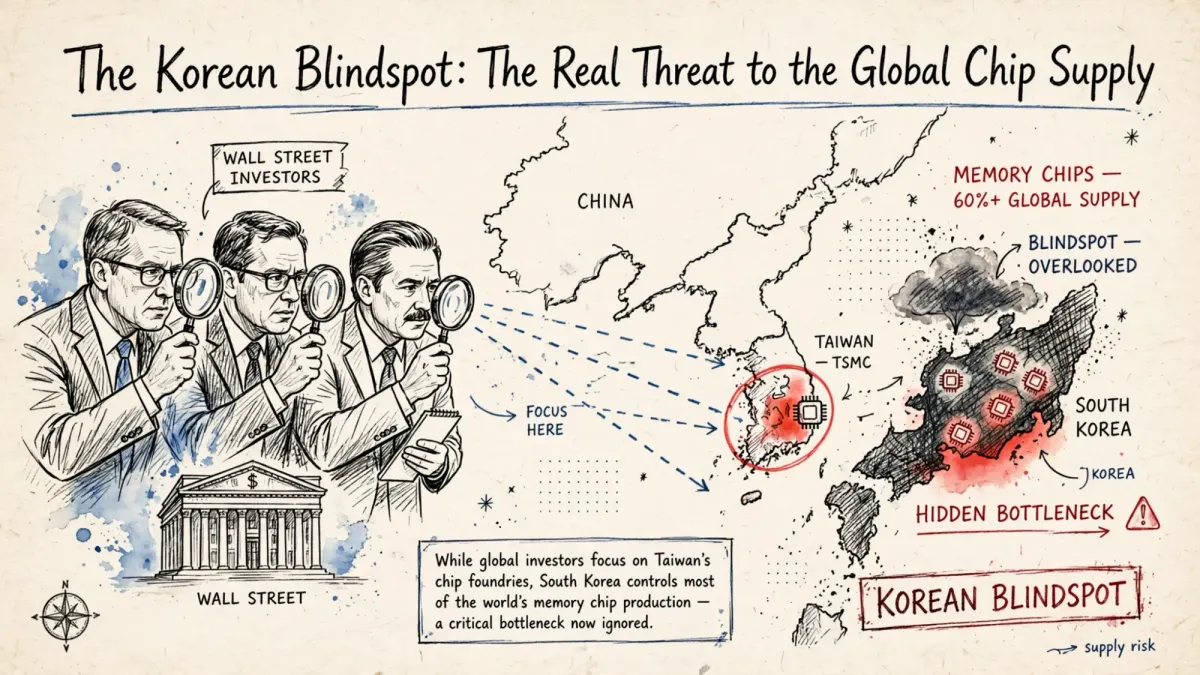
Wall Street is entirely fixated on TSMC and logic processors. They completely ignore that a smartphone or server cannot function without South Korean memory hardware.
Inspiration: Analyzing global geopolitical risk models and realizing the extreme market overreaction to Taiwan compared to the total apathy regarding the Korean peninsula. Understanding that memory chips are the hidden bottleneck of the entire digital economy.
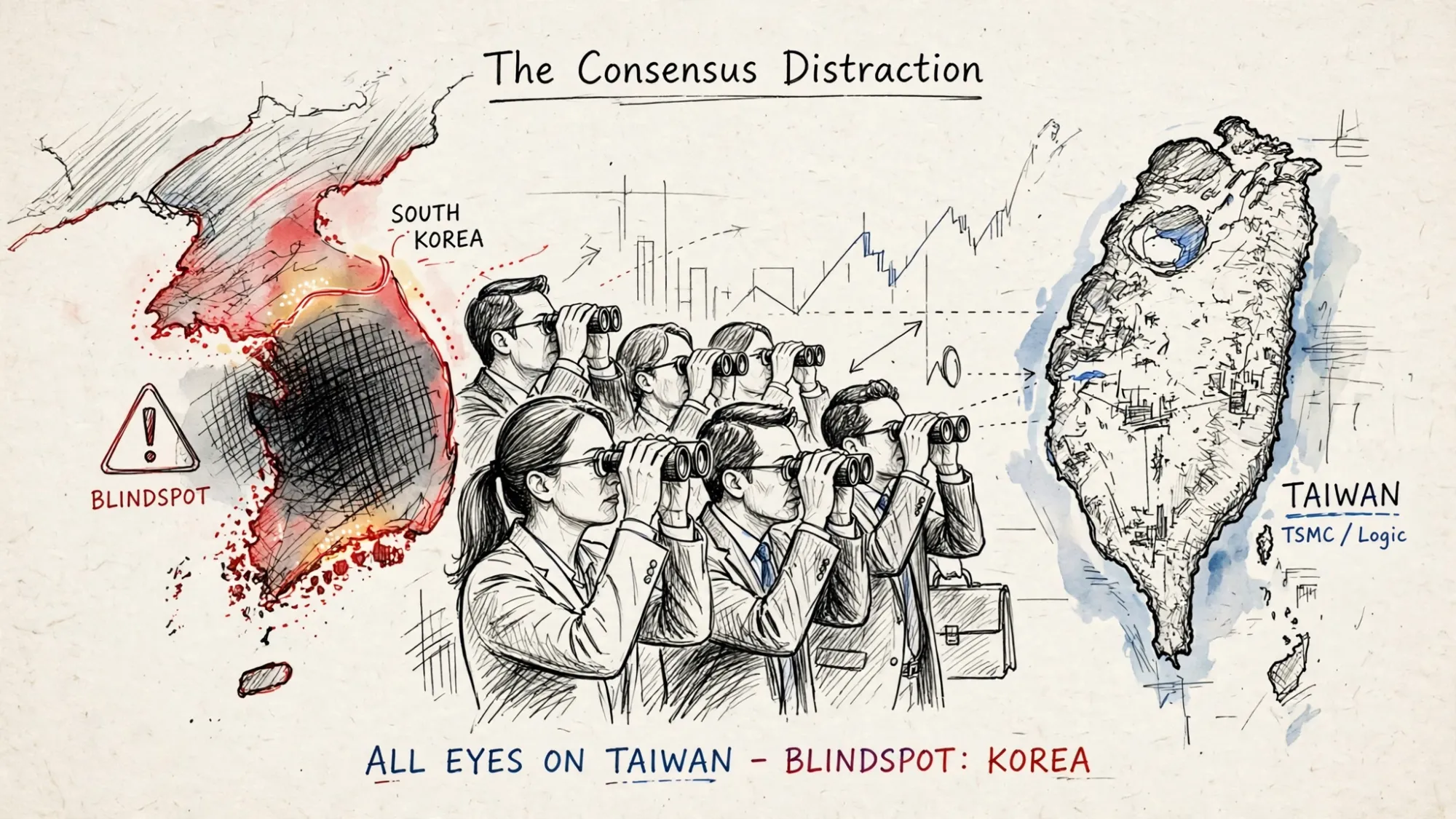
The Consensus Distraction
The consensus narrative in global finance is entirely fixated on the Taiwan Strait.
Investors assume a Chinese invasion of Taiwan is the single greatest geopolitical threat to the technology sector because TSMC manufactures the most advanced logic processors on earth.
This obsession has created a severe blind spot regarding an equally critical and far more volatile geography.
While everyone watches Taiwan the real supply chain vulnerability sits right next door in South Korea.
The market completely ignores the catastrophic reality of a potential conflict initiated by North Korea.
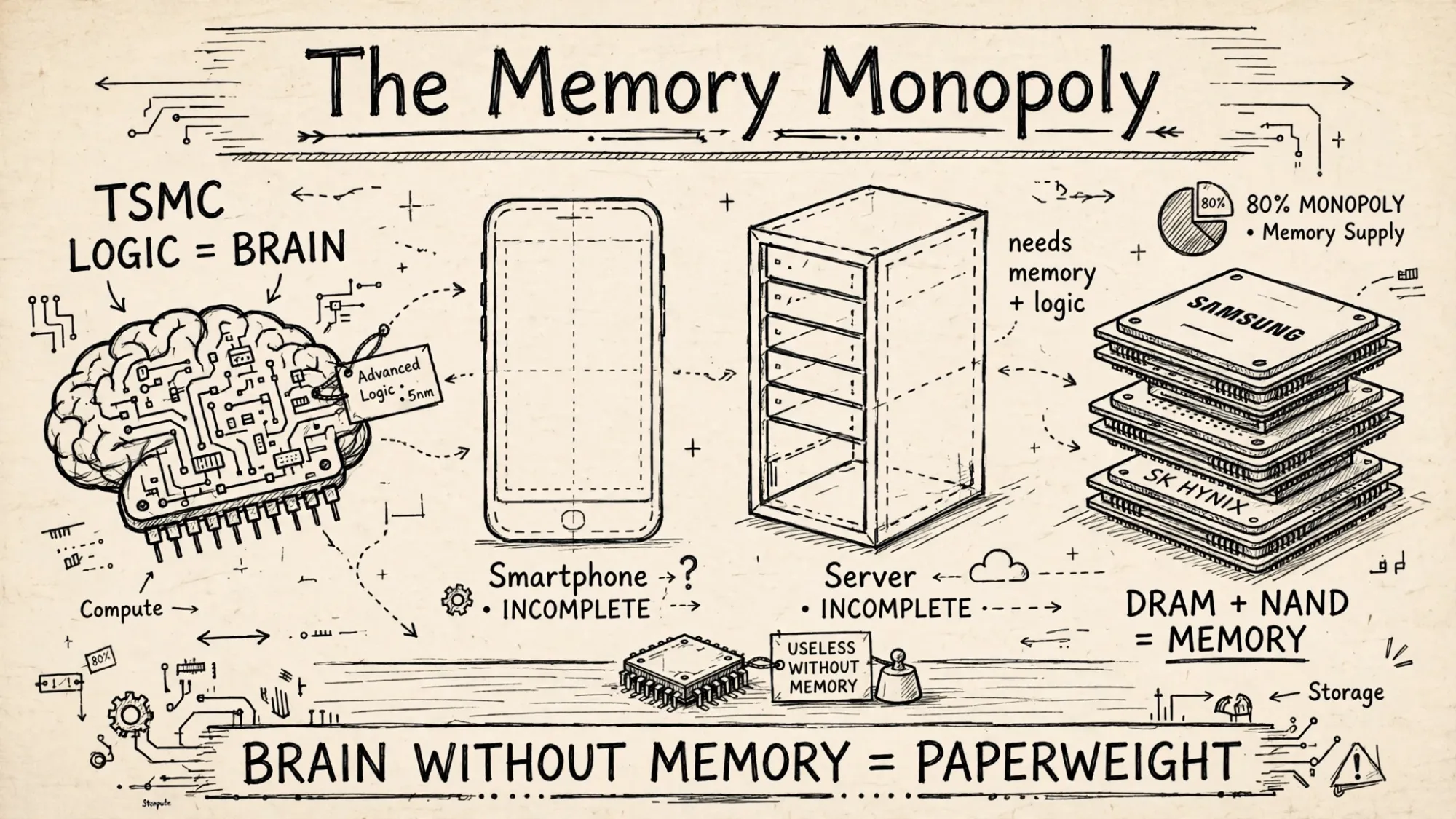
The Memory Monopoly
To understand this risk you have to understand basic computer architecture.
A logic chip built by TSMC is the brain of a device but it is completely useless without memory chips to store the data it processes.
You cannot build a computer an iPhone or a missile guidance system without both pieces.
South Korea operates an absolute monopoly on this secondary layer of hardware.
Companies like Samsung and SK Hynix produce the vast majority of the global supply of DRAM and NAND memory.
If you sever South Korea from the global market every logic chip produced in Taiwan simply becomes an expensive paperweight.
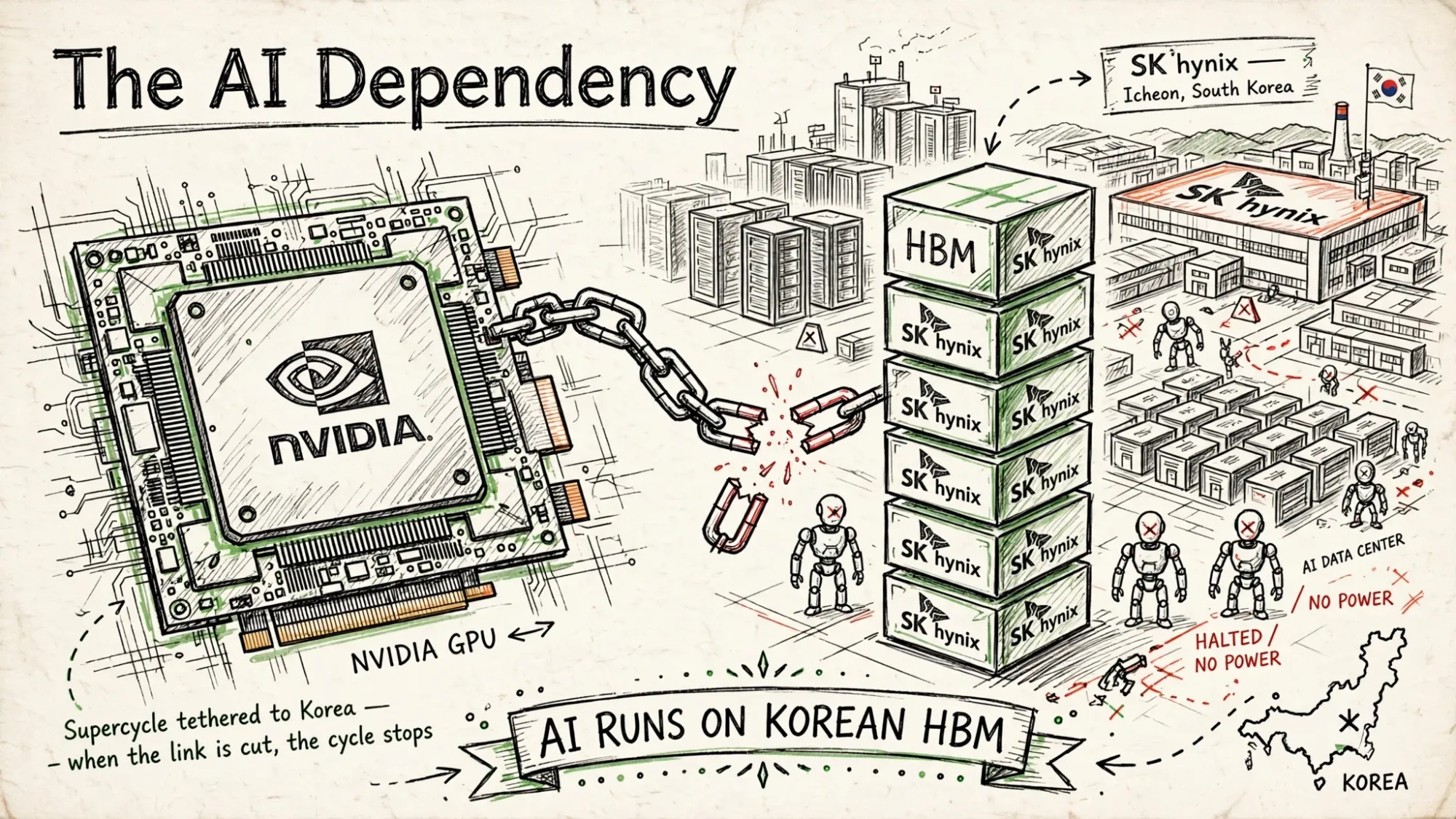
The AI Dependency
This dependency is even more severe in the artificial intelligence sector.
Those advanced Nvidia processors powering the current tech boom require specialized High Bandwidth Memory to function.
SK Hynix is the primary global supplier of this specific component.
The entire artificial intelligence supercycle is currently tethered to factories located in South Korea.
If those production lines stop moving the global expansion of artificial intelligence instantly halts.
The Threat Profile
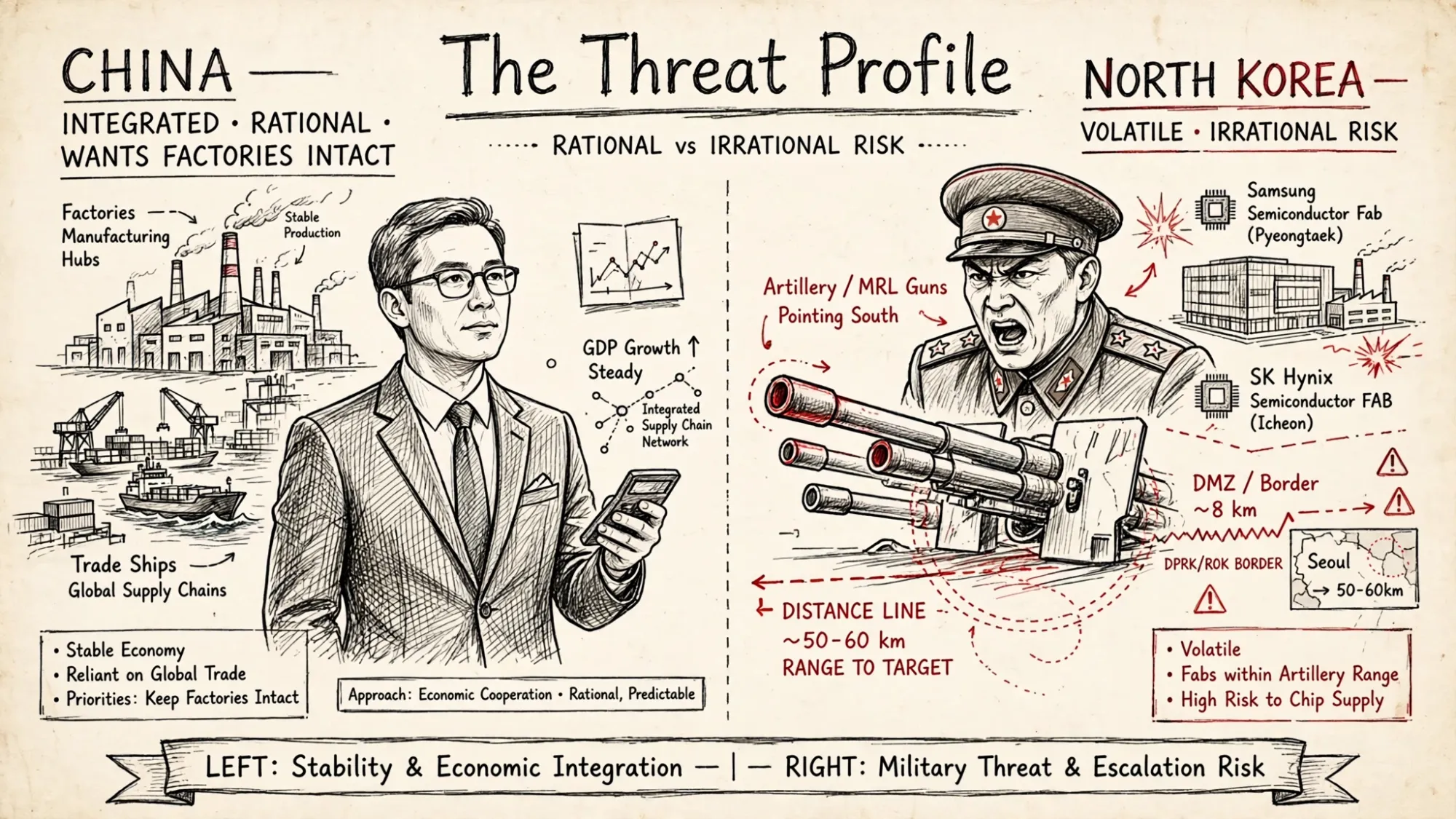
The financial markets fundamentally misprice the difference in threat profiles between China and North Korea.
China is a deeply integrated global economic superpower.
They have rational financial incentives to avoid kinetic warfare that would destroy the very factories and infrastructure they want to acquire.
North Korea operates under an entirely different set of incentives.
The regime does not rely on global trade and frequently uses military provocation to ensure domestic survival.
The primary manufacturing hubs for Samsung and SK Hynix are located dangerously close to the border and sit directly within range of North Korean conventional artillery.
The Immediate Fallout
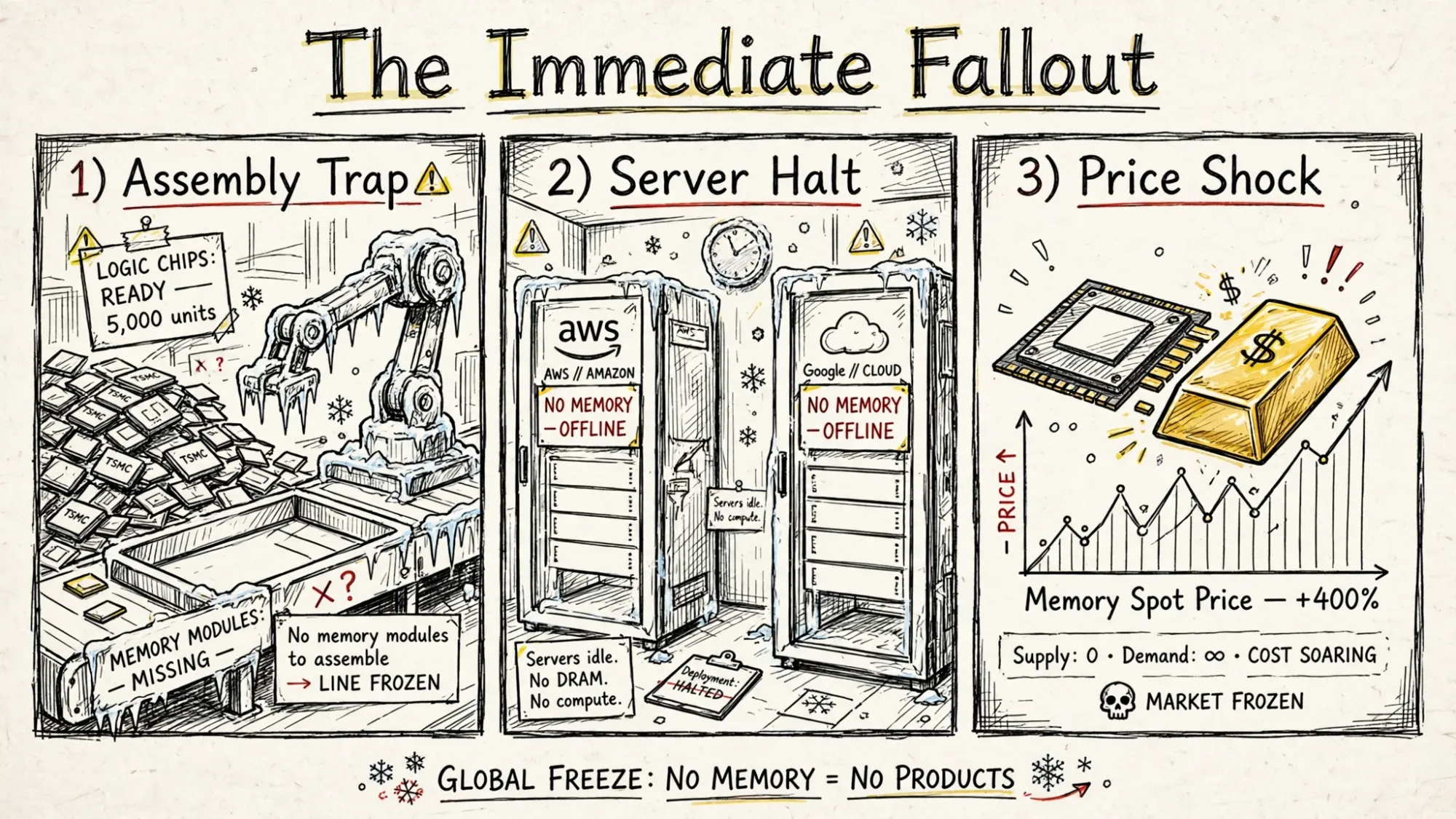
If a kinetic conflict breaks out on the Korean peninsula the global technology sector would experience an immediate freeze with compounding effects.
- The Assembly Trap: Companies holding large stockpiles of TSMC processors will be unable to assemble finished products because they cannot source the matching memory modules required to complete the circuit boards.
- The Server Halt: Enterprise cloud providers like Amazon and Google will be completely unable to build new data centers without a steady flow of South Korean server memory.
- The Price Shock: The remaining global inventory of memory hardware would instantly become the most valuable commodity on earth driving extreme inflation across the entire consumer electronics market.
Conclusion: The True Risk Premium
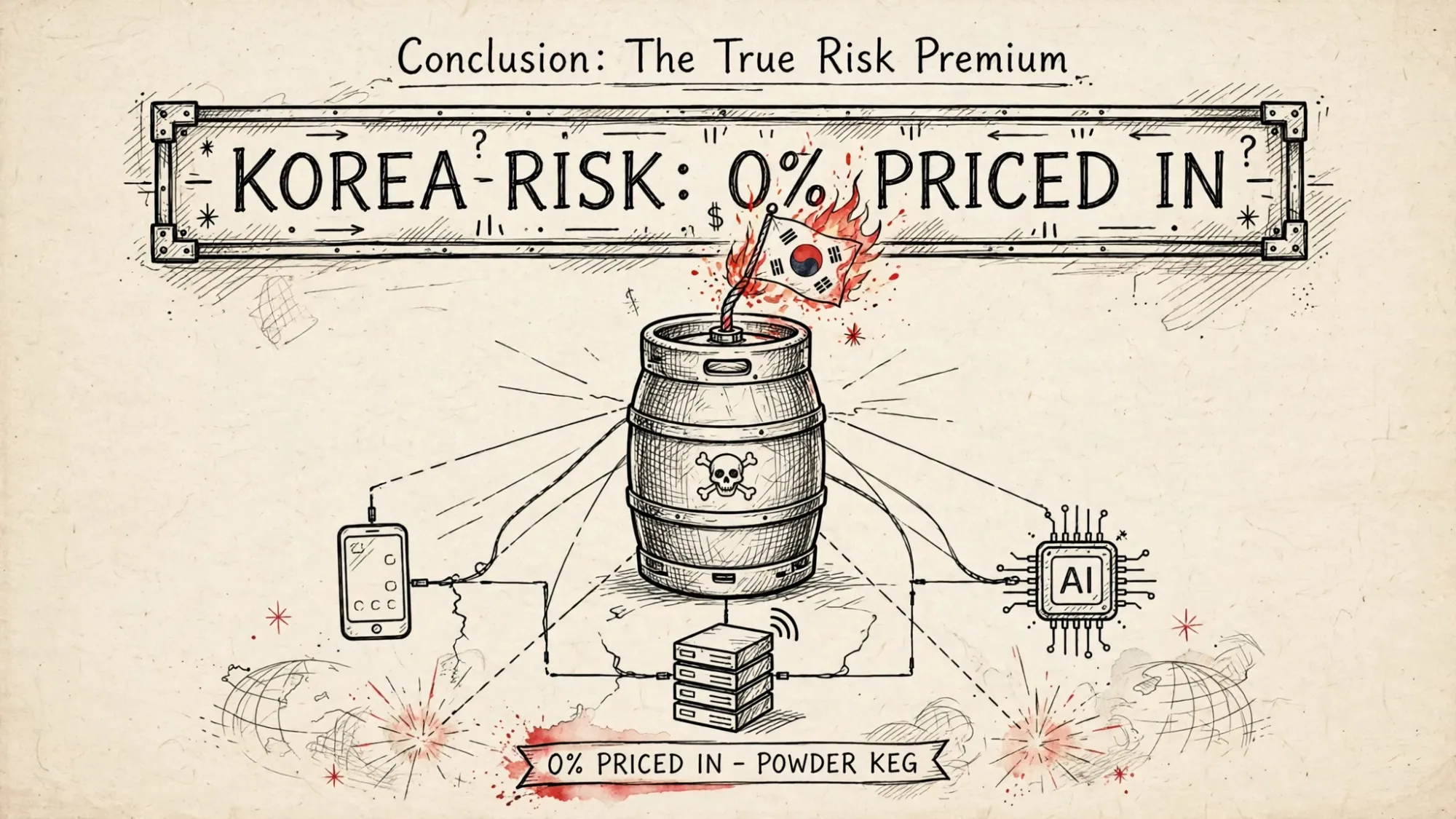
We spend all our time analyzing the rational geopolitical chess match over Taiwan while ignoring the active powder keg in Korea.
An attack by North Korea would paralyze the global digital economy just as effectively as a naval blockade of Taiwan but the market has priced in absolutely zero risk premium for this event.