How Lessons from Chinese Manufacturing Will Translate to the FIFA World Cup
We assume building a world class soccer team requires decades of organic cultural passion. China is treating the sport exactly like a hardware supply chain by engineering a specialized football city to manufacture a victory.
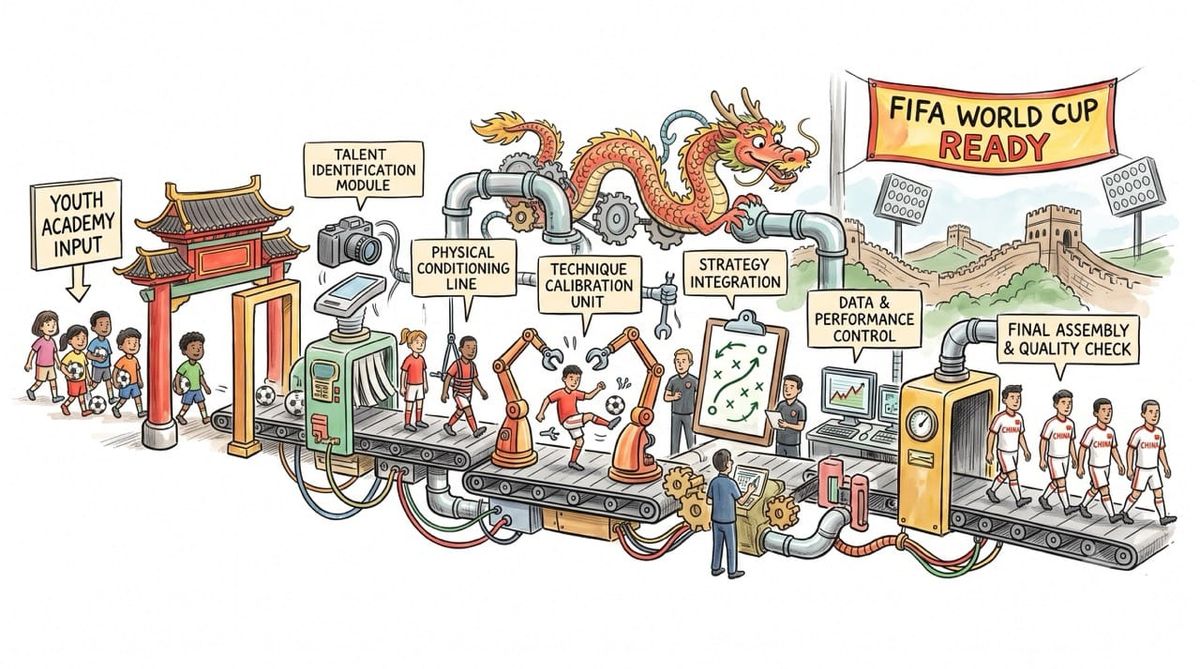
The country that perfected global electronics production is applying that exact same industrial optimization strategy to international soccer.
Inspiration: Analyzing China's unique approach to sports development and realizing they are treating athletic talent exactly like a physical manufacturing pipeline.
The World Cup Drought
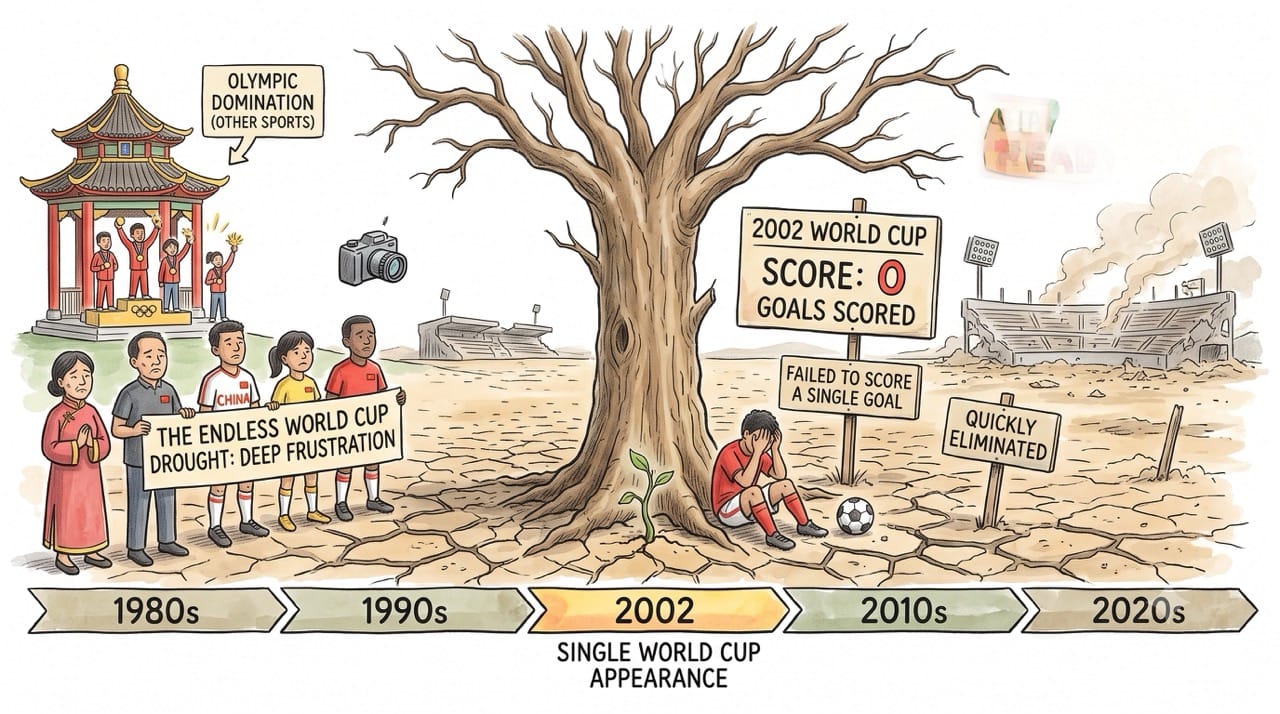
China has historically struggled to make any significant impact on the global soccer stage.
They have only qualified for the FIFA World Cup a single time back in the year two thousand and two.
During that singular appearance they failed to score a single goal and were quickly eliminated.
This historical underperformance is a deep point of frustration for a country used to dominating the Olympic games.
The Presidential Directive
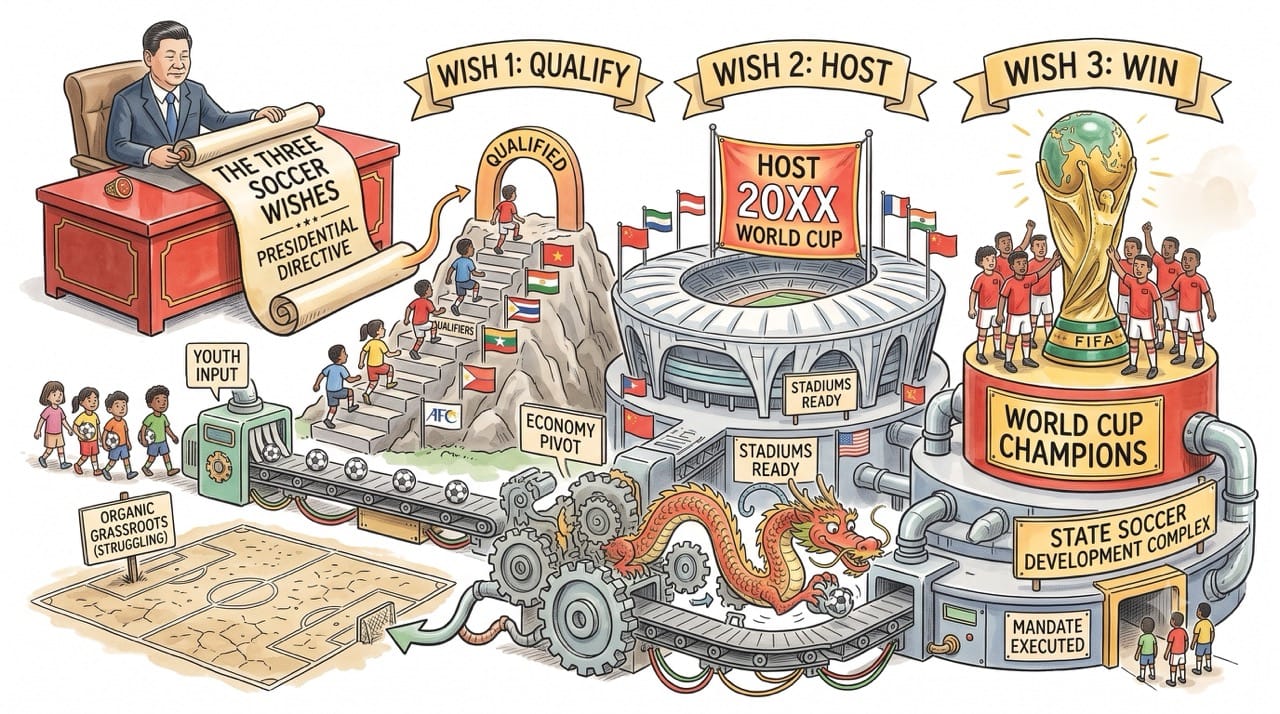
President Xi Jinping famously outlined three specific wishes for the future of Chinese soccer.
He wants the country to qualify for another tournament, host the event, and eventually win the entire World Cup.
When the leadership of that nation sets a concrete goal the entire domestic economy pivots to execute the mandate.
They do not rely on organic grassroots development to achieve these national targets.
The Guangzhou Blueprint
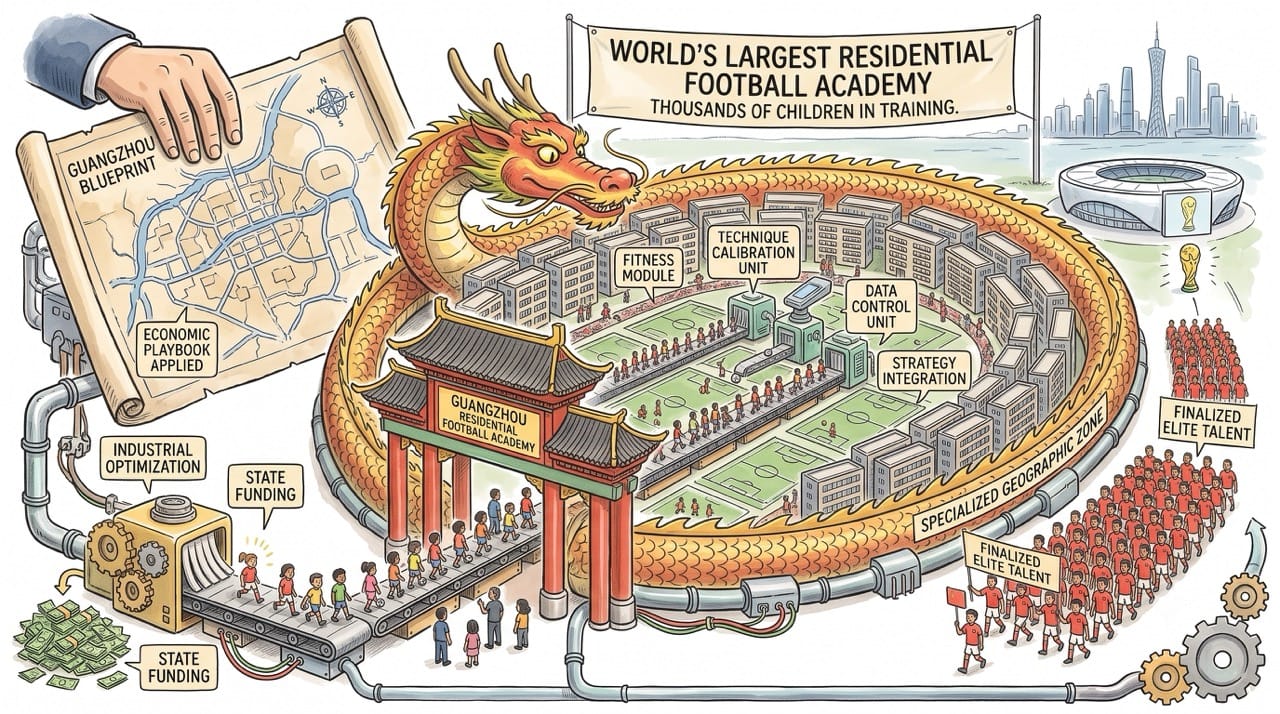
The country is tackling this athletic challenge by applying their most successful economic playbook.
They are building highly specialized geographic zones dedicated entirely to producing elite soccer talent.
The city of Guangzhou became the epicenter of this strategy by constructing the largest residential football academy on earth.
They built an entire city infrastructure dedicated exclusively to training thousands of children in a single location.
The Manufacturing Metaphor
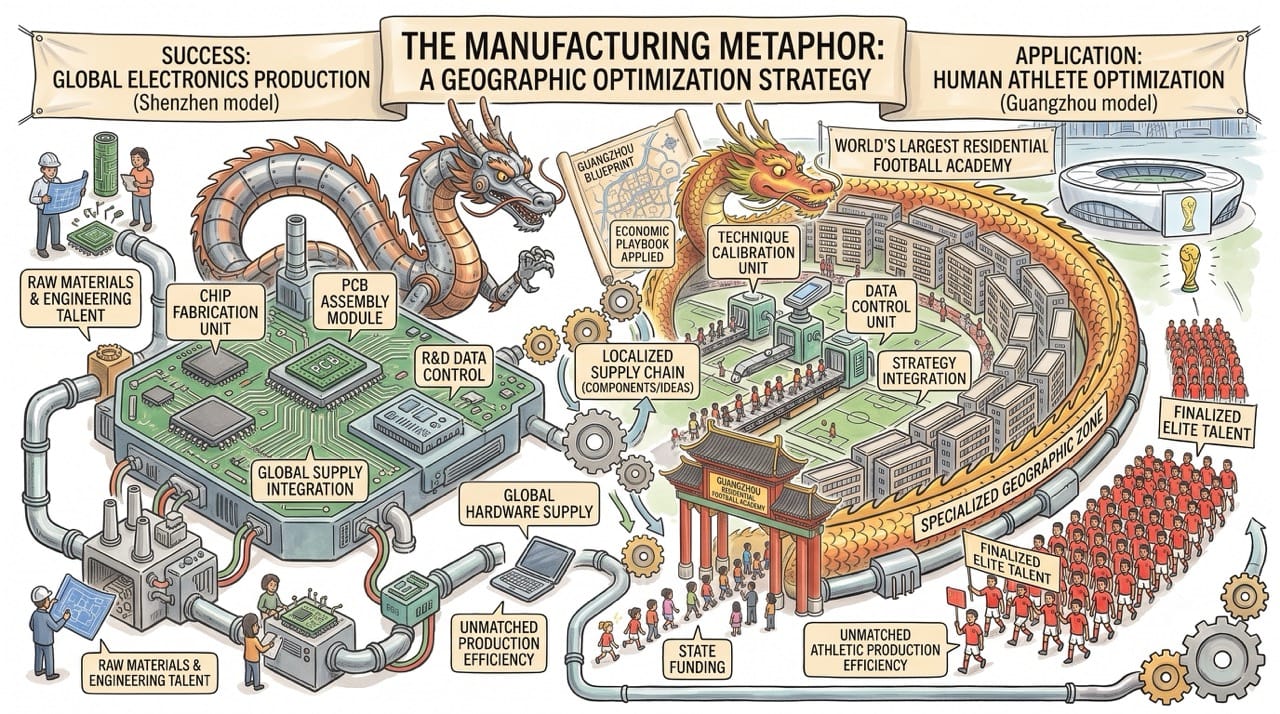
This approach perfectly mirrors how the country successfully conquered global electronics production.
They famously designated Shenzhen as a special economic zone to centralize the entire hardware supply chain.
By grouping all the raw materials and engineering talent in one localized city they created unmatched production efficiency.
They are now applying this exact same geographic optimization to human athletes.
The Industrial Pipeline
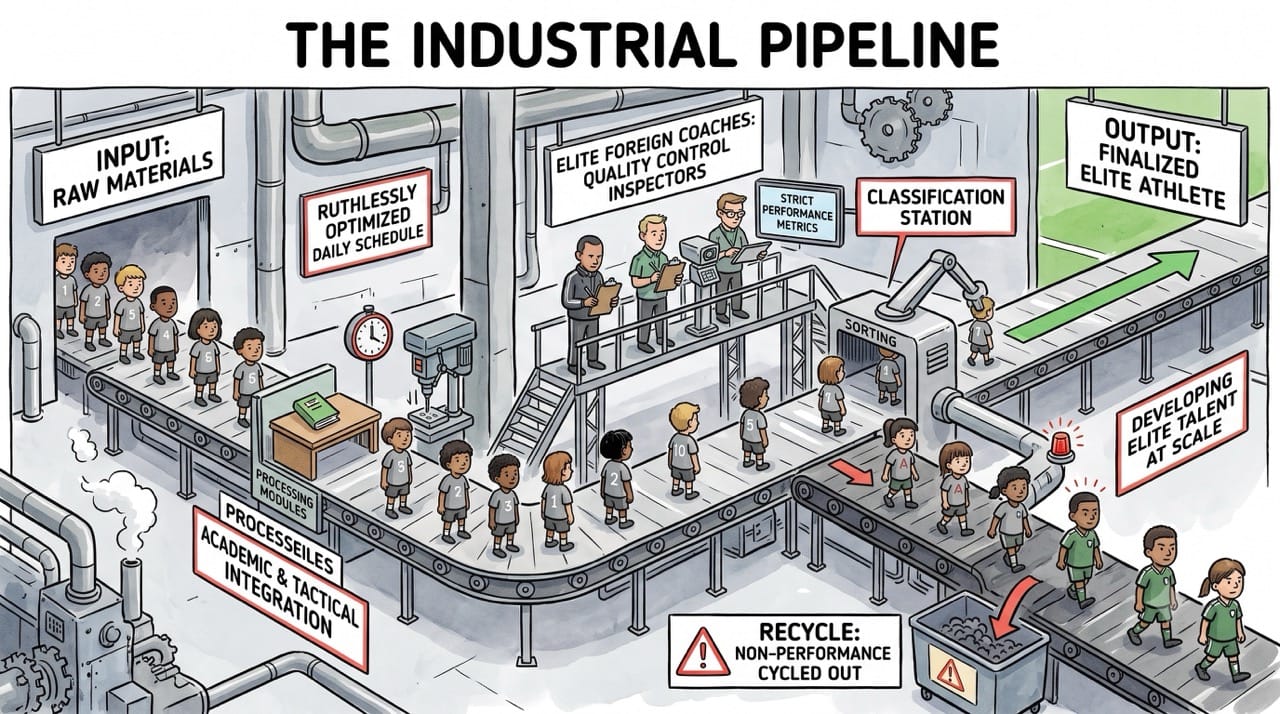
In these specialized soccer zones children are essentially treated as raw materials entering a highly refined assembly line.
The daily schedule is ruthlessly optimized to balance basic academics with intense tactical repetition.
They bring in elite foreign coaches to act as quality control inspectors for the developing players.
If a student does not meet the strict performance metrics they are simply cycled out of the production facility.
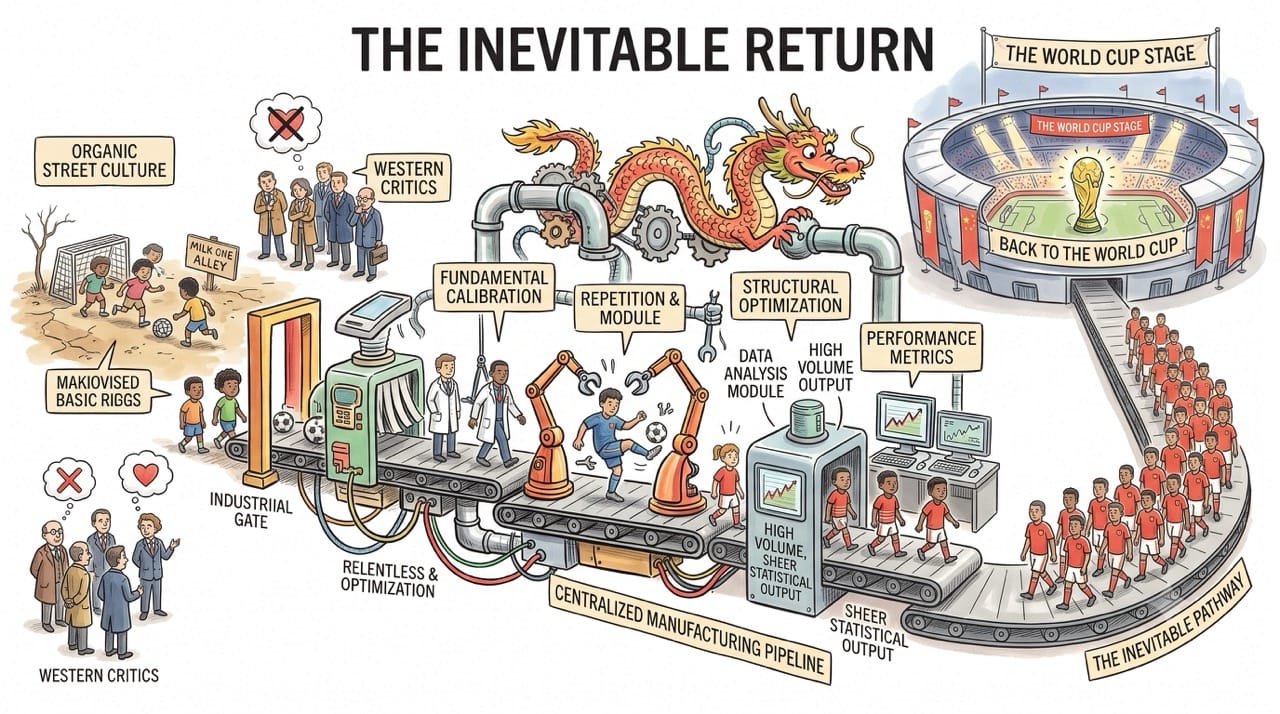
The Inevitable Return
Western critics often dismiss this industrial approach because it lacks the organic street culture of South American soccer.
However you cannot argue with the sheer statistical output of a centralized manufacturing pipeline.
By treating athletic development as an engineering problem they guarantee a high volume of fundamentally sound players.
This relentless structural optimization will inevitably carry them back to the World Cup stage.
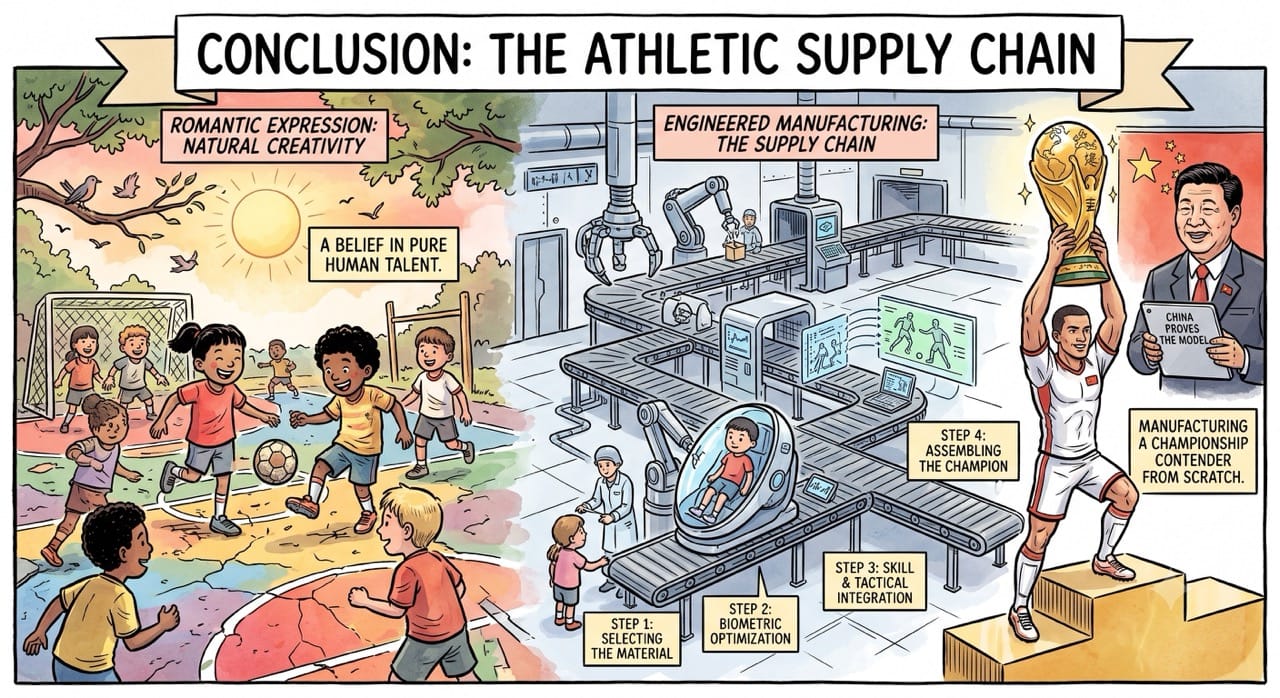
Conclusion: The Athletic Supply Chain
We romanticize sports as a pure expression of human creativity and natural talent.
China is about to prove that a perfectly engineered supply chain can successfully manufacture a championship contender from scratch.