Will Meta Pass Google in Ad Revenue in Q4 2026? How AI Closed the Gap
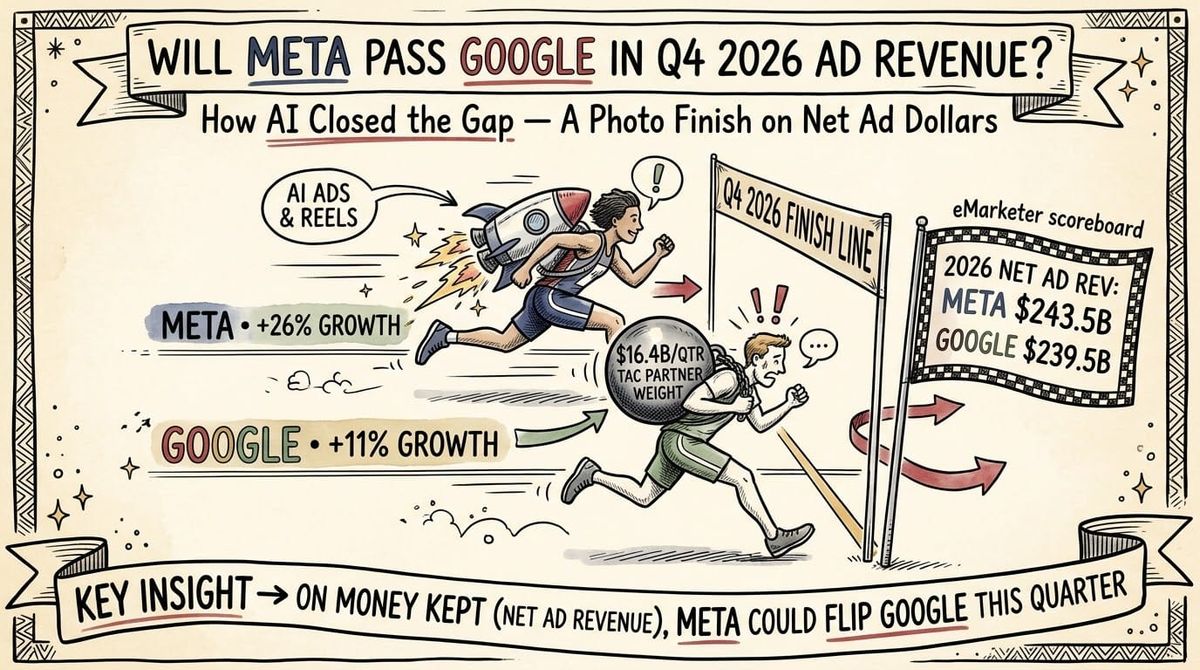
Meta's ad revenue is growing 26% a year and Google's 11%. On reported revenue Google is still far ahead, but once you subtract what Google pays its partners, Meta could pass it this quarter. Here's every reason why, from Andromeda and GEM to Reels, Threads and slower search.
Google has been the biggest advertising business in the world for most of the history of digital advertising.
That could change this quarter.
Meta's ad revenue grew 26% last quarter, while Google's grew about 11%.
Forecasters at eMarketer expect Meta to pass Google in worldwide ad revenue for the full year of 2026.
I buy ads on both platforms for a living, so I've watched this shift happen from inside the accounts.
I want to lay out how close the race really is, and every reason I can find for why AI helped Meta and hurt Google.
The Scoreboard: Two Ways To Count
The answer depends on how you count.
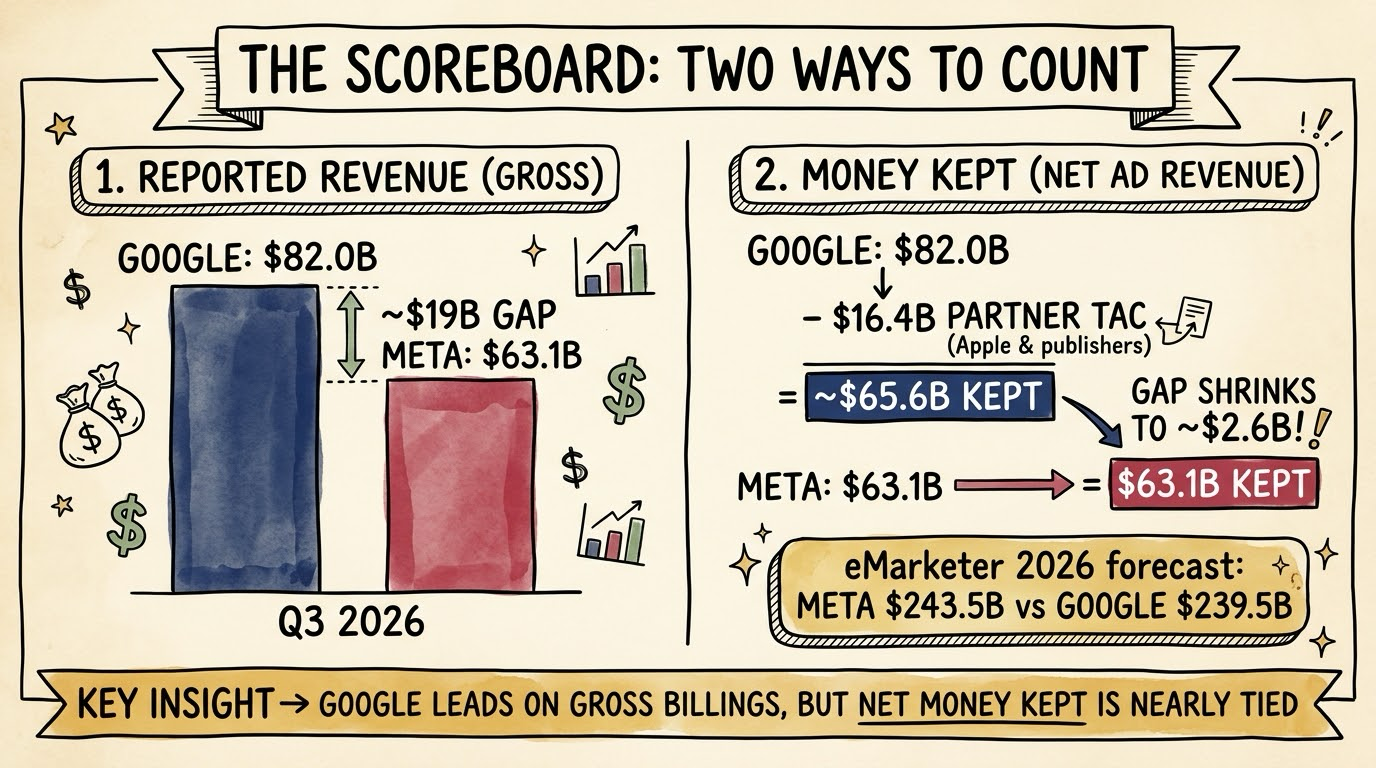
On reported revenue, Google is still well ahead.
In the third quarter, Google's advertising revenue was $82.0 billion.
That's a gap of about $19 billion.
But Google doesn't keep all of that money.
It pays partners like Apple and website owners to carry its ads, and those payments came to $16.4 billion in the quarter.
Subtract them, and Google kept about $65.6 billion.
On that basis, the gap shrinks to roughly $2.6 billion.
eMarketer's forecast is described as net ad revenue, which I understand to be this measure, and it projects $243.5 billion for Meta and $239.5 billion for Google in 2026.
So when people say Meta is passing Google, they usually mean the money each company keeps.
Why Q4 Is The Quarter To Watch
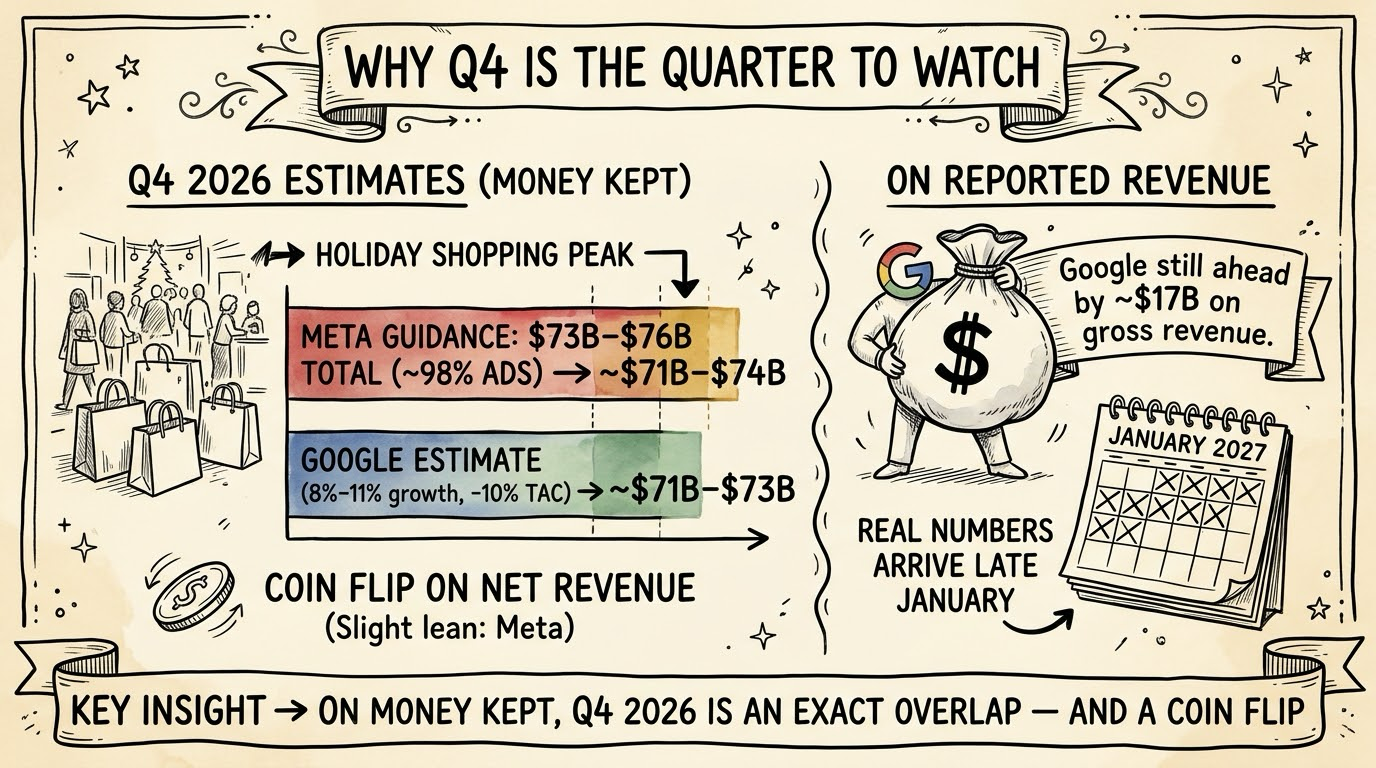
The fourth quarter is Meta's strongest, because holiday shopping suits its advertisers.
Meta has guided to total revenue of $73 to $76 billion for the quarter.
Advertising is about 98% of its revenue, which implies roughly $71 to $74 billion in ads.
Google doesn't give guidance, so I ran my own rough numbers.
A year ago, Google's fourth-quarter ad revenue was $82.3 billion, and it paid out $16.6 billion to partners.
If its ads grow 8% to 11% this year and partner payments grow about 10%, Google would keep around $71 to $73 billion.
Those two ranges overlap almost exactly.
So on the money-kept measure, the fourth quarter of 2026 is close to a coin flip, and I'd lean slightly toward Meta.
On reported revenue, Google will still be ahead by something like $17 billion.
That's my estimate, and the real numbers should arrive around the end of January.
How AI Made Meta's Ads Better
The biggest reason is that Meta rebuilt how it chooses which ad to show.
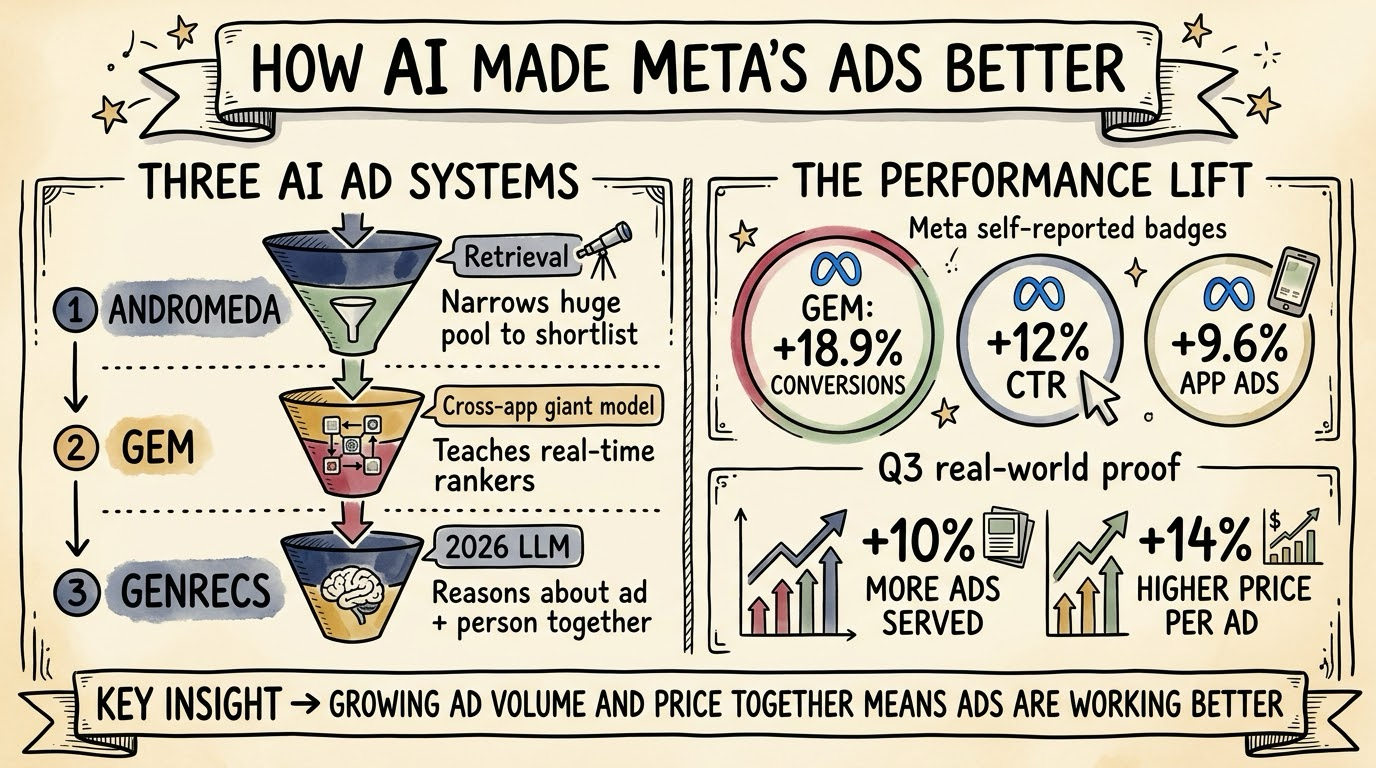
Three systems do most of the work.
Andromeda is the retrieval system that narrows a huge pool of ads down to a shortlist for each person.
GEM is a very large model that learns from activity across all of Meta's apps and teaches the smaller models that rank ads in real time.
GenRecs, introduced this year, uses language models to reason about an ad and a person together.
Meta says GEM has delivered an 18.9% improvement in conversions and a 12% improvement in click-through rates across its ad surfaces.
In its latest quarter, it said GEM lifted conversions on app ads by 9.6%.
These are Meta's own figures, and it hasn't published the method behind them.
The results still show up in the numbers that matter.
In the third quarter, Meta served 10% more ads and charged 14% more for each one.
Growing volume and price together is hard, and it usually means the ads are working better for the people buying them.
I've written before that the pixel and tag are the real AI moat for these platforms.
In my experience, Meta has been the better of the two at turning that data into ad performance.
Automation And Creative
The second reason is that Meta made advertising easier to run.
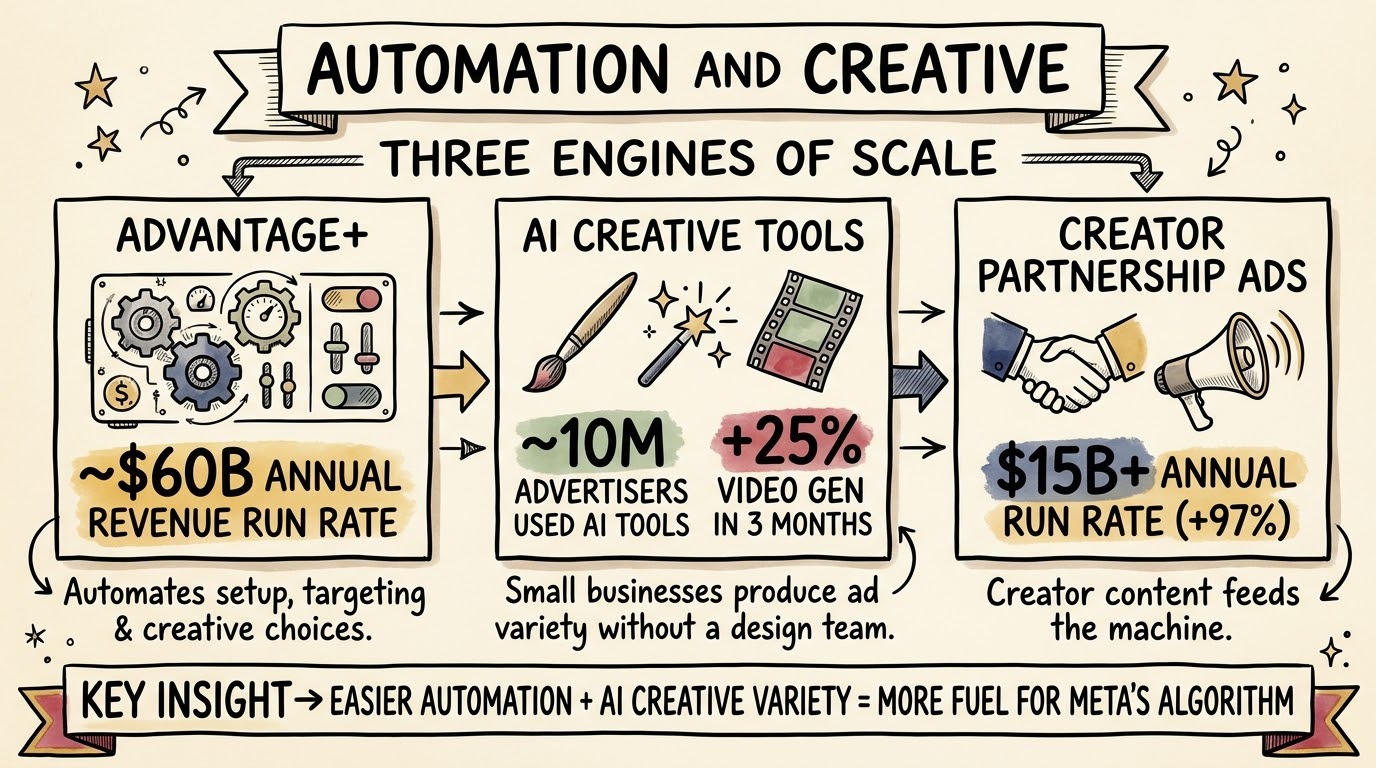
Advantage+ automates campaign setup, targeting and creative choices.
It's now reported to be running at about $60 billion in annual revenue.
Meta also put generative AI into the creative process.
Nearly 10 million advertisers used at least one of its AI creative tools last quarter, and use of its video generation features grew 25% in three months.
That matters because Meta's systems perform best when they have many different ads to test.
AI tools let a small business produce that variety without a design team.
Creator content is feeding the machine as well.
Partnership Ads, which run through creators' accounts, passed a $15 billion annual run rate, up 97%.
The Organic Side: Reels, Threads And Attention
Ads only earn money when people are there to see them.
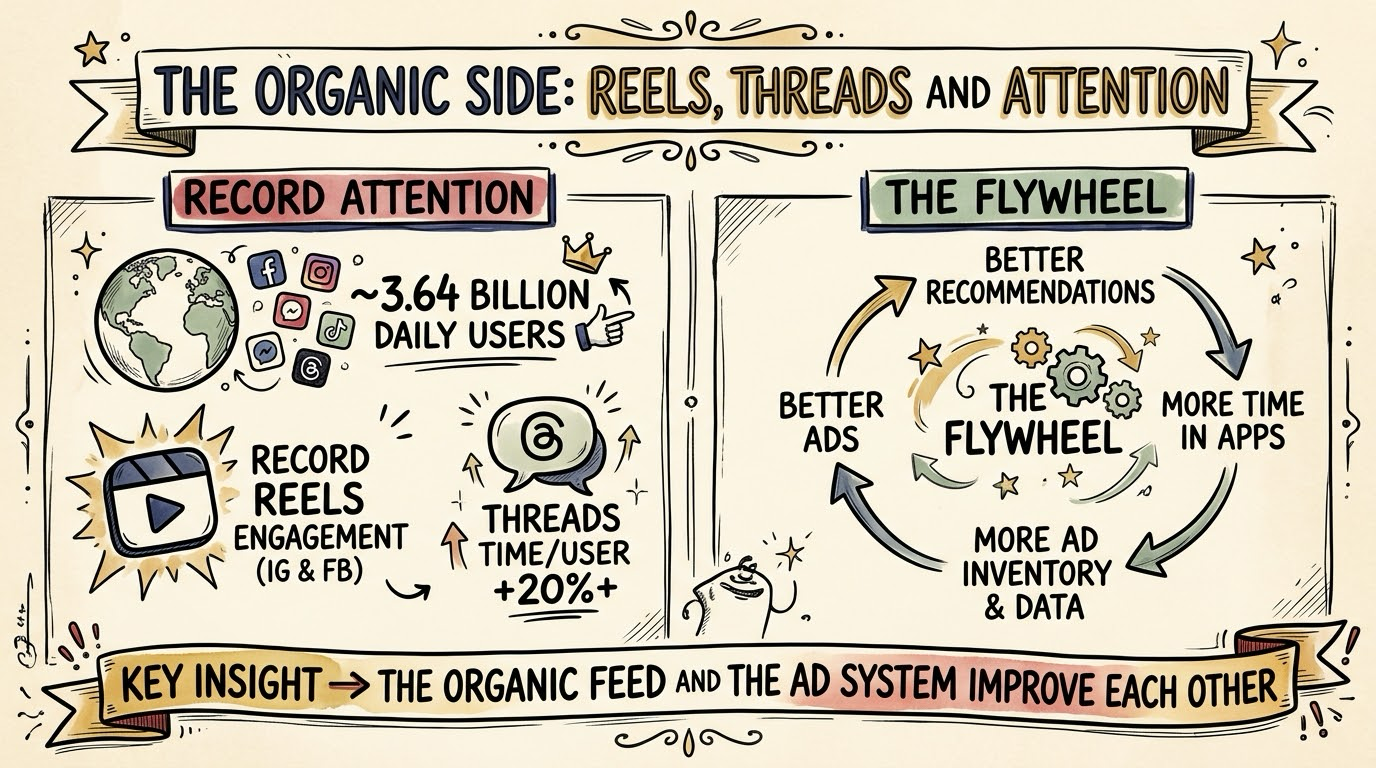
Meta has used the same recommendation technology to keep people in its apps longer.
It reported record engagement for Reels on Instagram and Facebook last quarter.
Time spent per user on Threads grew more than 20%.
About 3.64 billion people now use at least one Meta app every day.
More time means more places to show ads, and better recommendations mean more is known about what each person likes.
The organic feed and the ad system improve each other.
New Places To Put Ads
Meta has also opened inventory it never sold before.
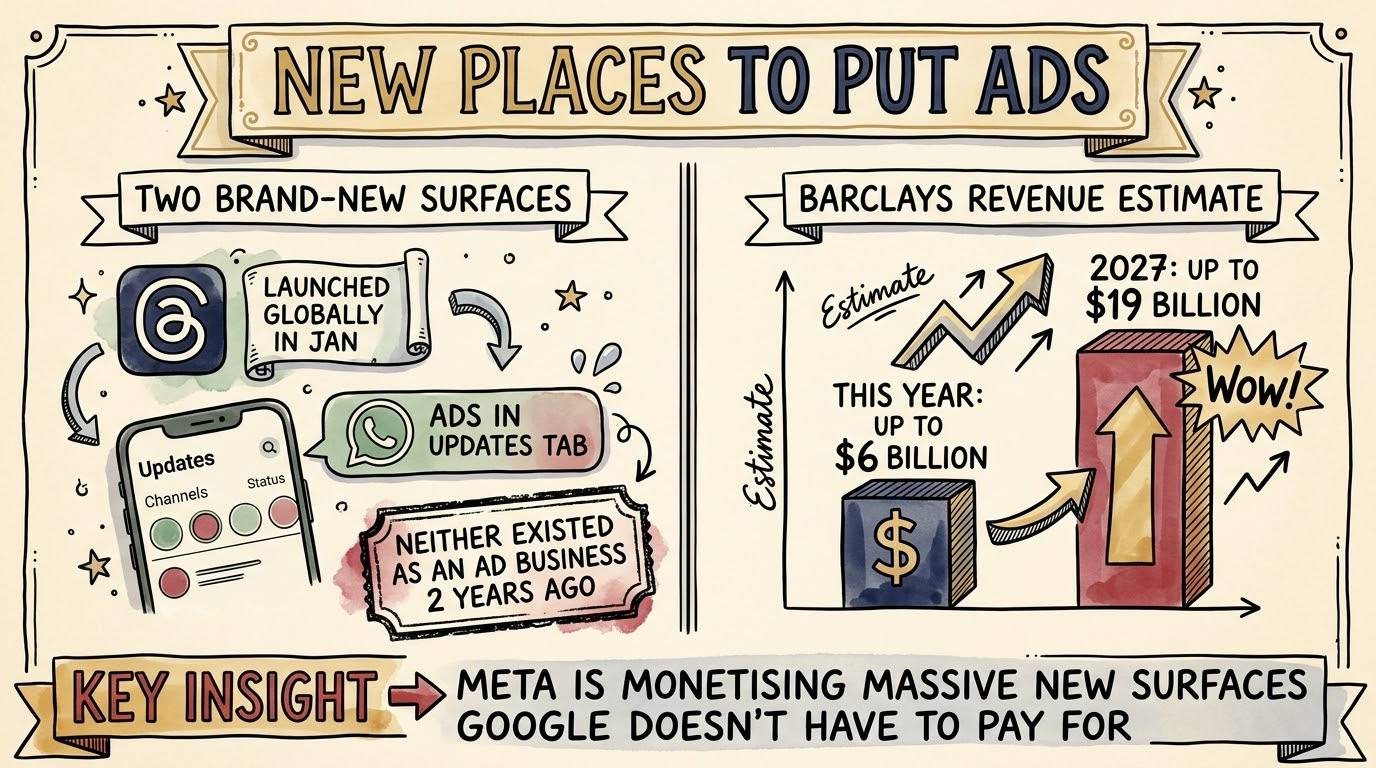
Ads launched globally on Threads in January.
They now appear in WhatsApp's Updates tab too.
Barclays estimates those two surfaces could add up to $6 billion this year and $19 billion in 2027.
Neither existed as an ad business two years ago.
Why Google Is Slowing
Google's ad business is still growing, but each part of it has a problem.
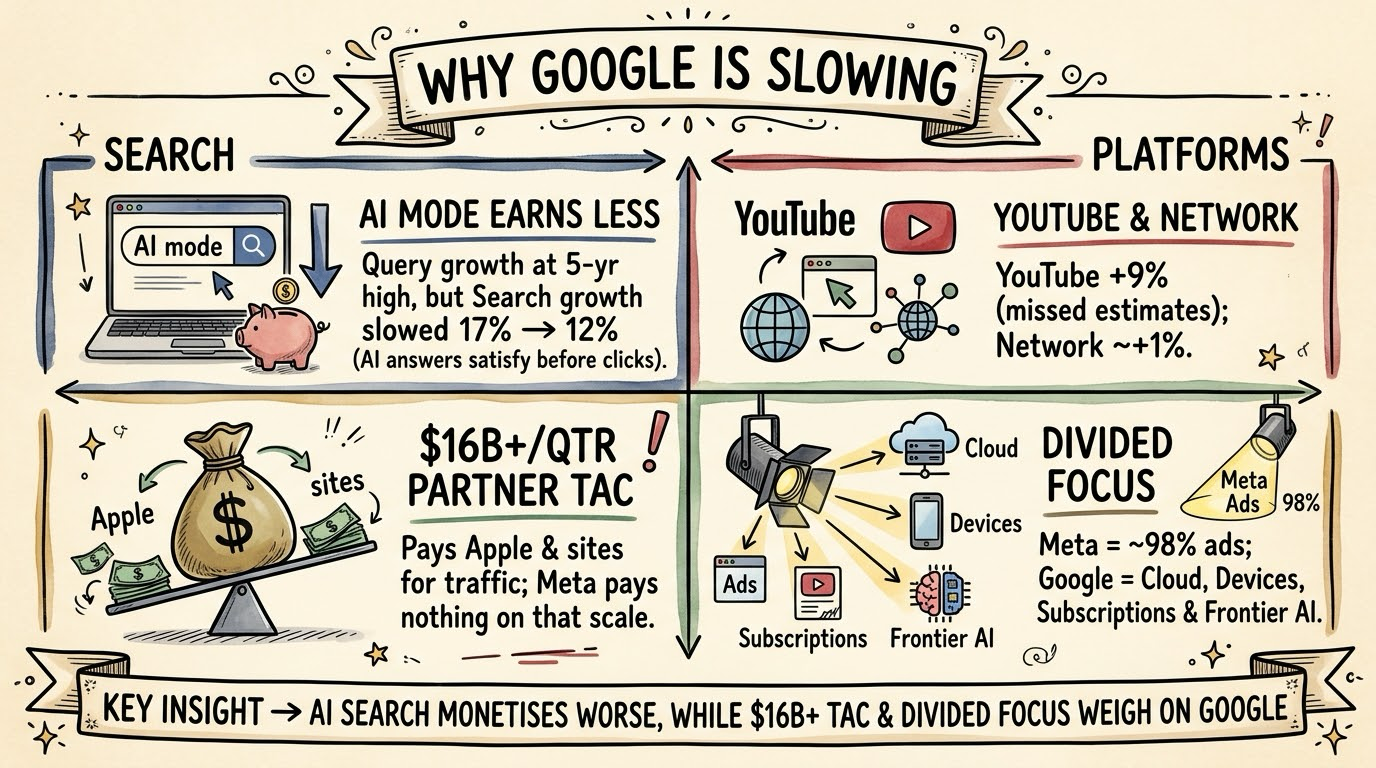
Search revenue grew 12% last quarter, down from 17% the quarter before.
It was almost flat compared with the previous three months.
People are searching more than ever, with query growth at a five-year high.
The trouble is that AI-style searches earn less.
Google's own business chief has said queries in AI Mode currently make less money than traditional ones.
Ads are being added to AI answers, but an AI summary often satisfies the question before anyone clicks.
YouTube's ad revenue grew 9% and missed analysts' expectations.
Google's Network business, which places ads on other websites, grew about 1%.
Google's finance chief has also warned that the fourth quarter faces a tough comparison with last year's strong search growth.
Then there's the cost of distribution.
Google pays more than $16 billion a quarter to partners for traffic.
Meta owns its apps and pays nothing on that scale.
There's a focus difference too.
Almost all of Meta's revenue comes from ads, so nearly every AI improvement goes straight into the ad business.
Google is spreading its attention across cloud, devices, subscriptions and a frontier model race.
I covered how both companies are adapting in Both Meta and Google Are Now Optimizing For Profit.
What It Means For Advertisers
Here's how I read this as someone who manages budgets on both.
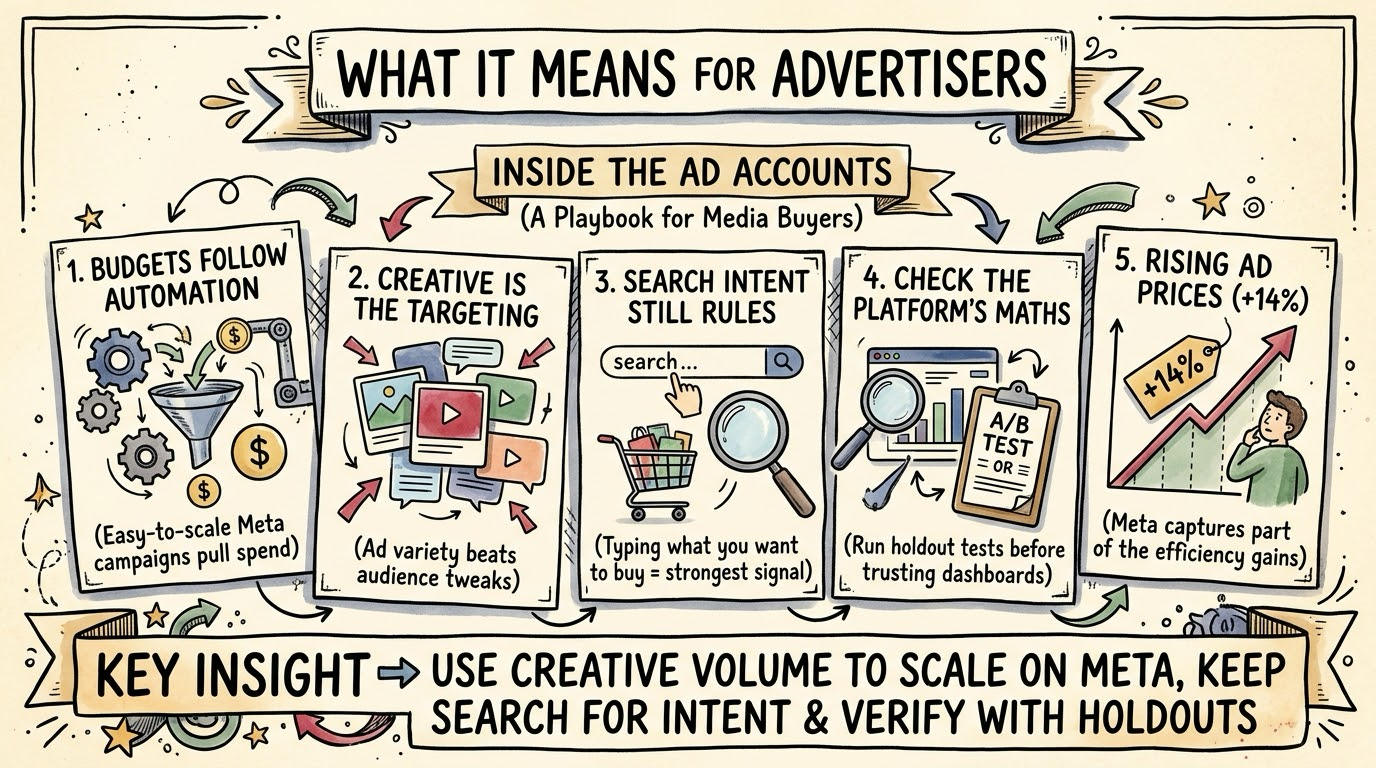
- Budgets follow automation that works. Advertisers are putting more into Meta because its automated campaigns have been easier to scale.
- Creative volume is now a targeting tool. The system finds audiences through the ads you give it, so variety matters more than audience settings.
- Search intent is still valuable. Someone typing what they want to buy remains the strongest signal in advertising, and Google still owns it.
- Check the platform's maths. Meta's reported results can run ahead of reality, so test with holdouts before trusting the dashboard.
- Prices are rising. A 14% increase in price per ad means efficiency gains are partly being captured by Meta.
Where This Argument Has Limits
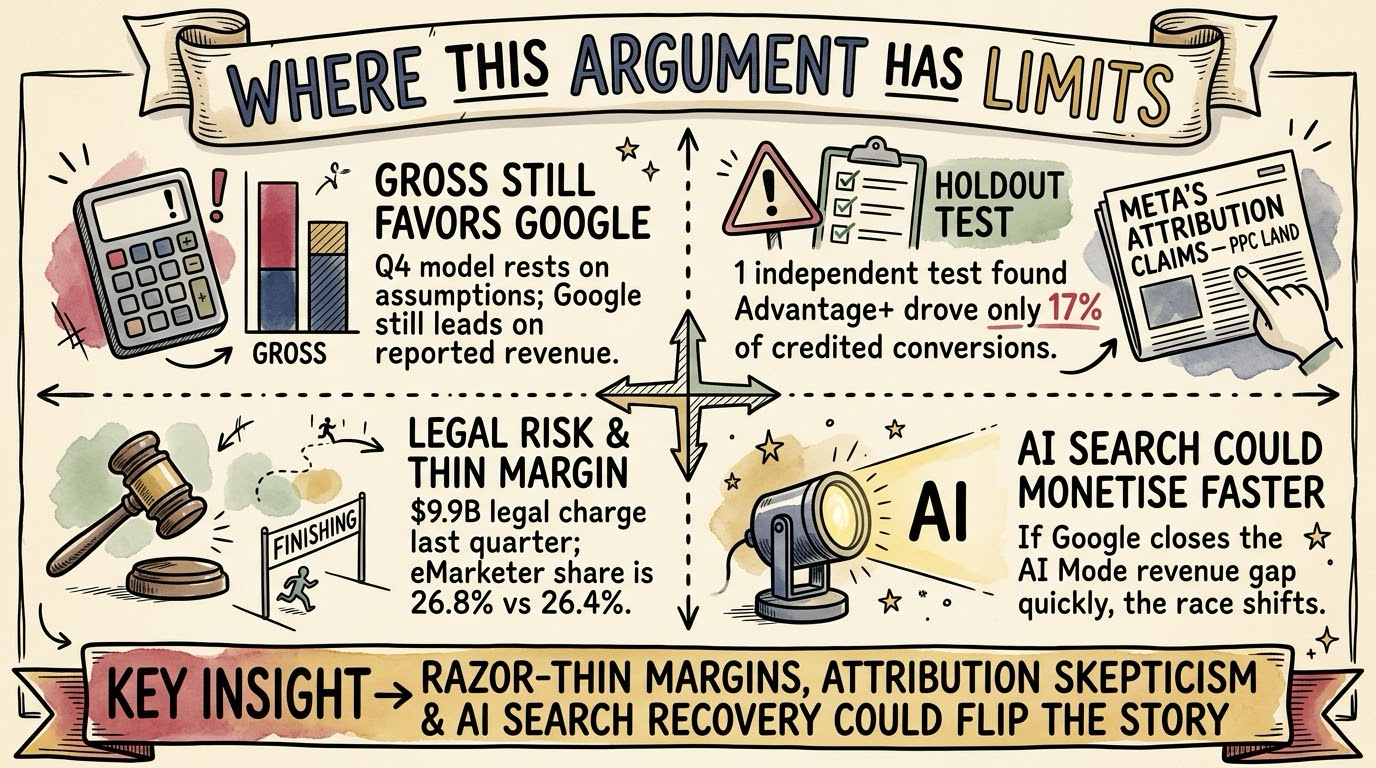
My fourth-quarter estimate rests on assumptions about Google's growth that could easily be wrong.
On reported revenue, Google remains the larger business by a wide margin.
Meta's performance claims are self-reported.
One independent test covered by PPC Land found Advantage+ had produced only 17% of the conversions Meta's own attribution credited to it.
Meta also carries legal risk, and it booked a $9.9 billion legal charge last quarter.
eMarketer's margin is thin as well, at 26.8% of global digital ad spending against 26.4%.
And Google could close the monetisation gap in AI search faster than expected, which would change the picture quickly.
Conclusion: A Photo Finish, Decided By AI
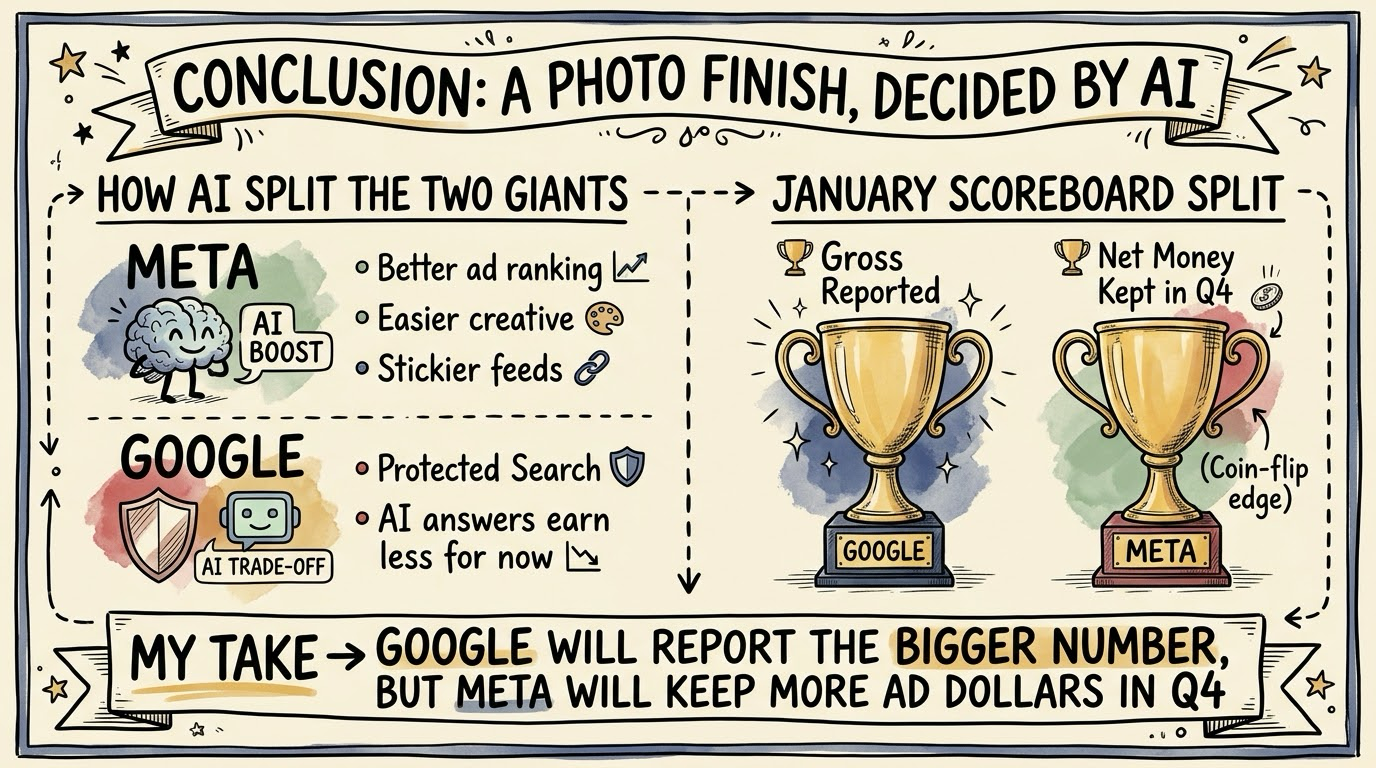
Meta used AI to make its ads perform better, its creative easier to produce and its apps harder to put down.
Google used AI to protect search, and found that the new kind of search earns less for now.
The result is a race that would have sounded absurd five years ago.
On the money each company keeps, it could flip this quarter.
My Take: Google will still report the bigger number in January, but I expect Meta to keep more ad dollars than Google in the fourth quarter, and I think AI is the reason on both sides of that comparison.
Disclosure: I manage advertising on both Meta and Google for clients, and I own a Nasdaq-100 index fund that holds both companies. This post is my opinion and isn't investment advice.
Sources
Pages I opened for the facts in this post:
- SEC: Alphabet Q3 2026 earnings release
- SEC: Alphabet Q4 2025 earnings release
- SEC: Meta Q3 2026 quarterly report
- SEC API: Financial analysis of Meta's Q3 2026 earnings
- The Next Web: Meta is about to overtake Google as the world's biggest advertising company
- PPC Land: Meta says its GEM ads model lifted conversions 18.9%
- Vanaxity: Meta Q3 2026 earnings, what they mean for advertisers
- ContentGrip: Google Q3 ads reach $82B as YouTube trails estimates
- Phandroid: Why Google's AI search problem is now Apple's problem too
- The Motley Fool: Alphabet Q3 2026 earnings call transcript