Both Meta and Google Are Now Optimizing For Profit. This Is How They Monetize AI Fastest
Meta just added Purchase Profit. Google just launched Product Value Optimization. Same week. Same message. AI will no longer optimize for volume. It will optimize for margin. And it needs your first party data to do it.
Purchase value vs Profit. Tooltip says: The profit margin, or total amount after costs, your business assigned to a completed purchase.
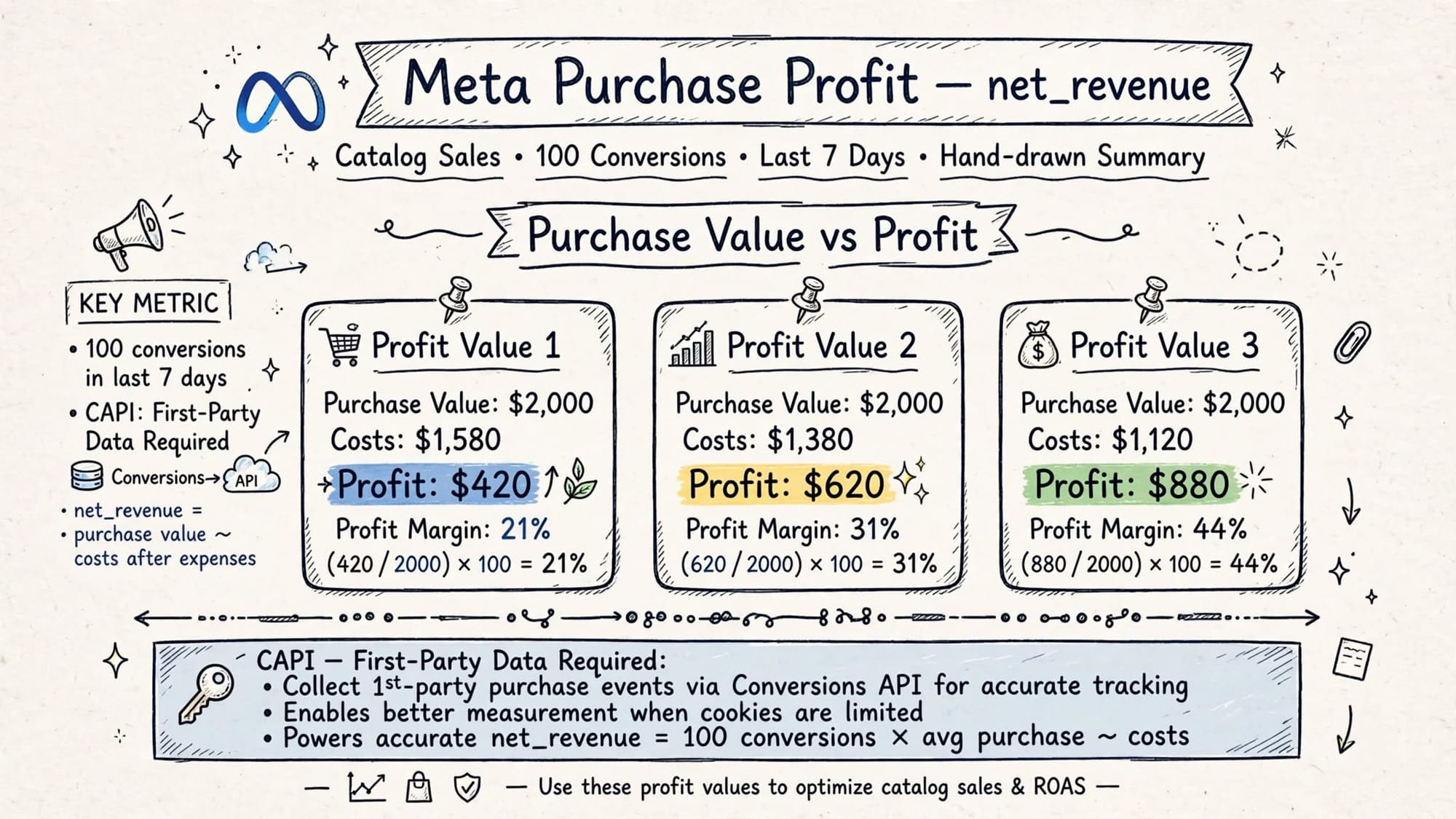
Requirement: 3 different profit values set up using the net_revenue parameter. 100 conversions in the last 7 days.
This is not a small UI update. This is the new monetization model.
1. What Meta Launched
Meta Catalog Sales now has two Conversion Value options:
- Purchase value: total amount of transaction
- Purchase profit: profit margin after costs, fees, COGS
To unlock profit, Meta requires first party data:
- 3 different profit values set up using the net_revenue parameter
- 100 conversions in the last 7 days
- Clean CAPI connection
Why? Meta needs to learn which products generate real business profit, not just revenue. A $2,000 sale with $1,580 cost is $420 profit, 21 percent margin.
A $2,000 sale with $1,120 cost is $880 profit, 44 percent margin. Same revenue, very different value. Old optimization treated them same. New optimization does not.
2. What Google Launched Same Week
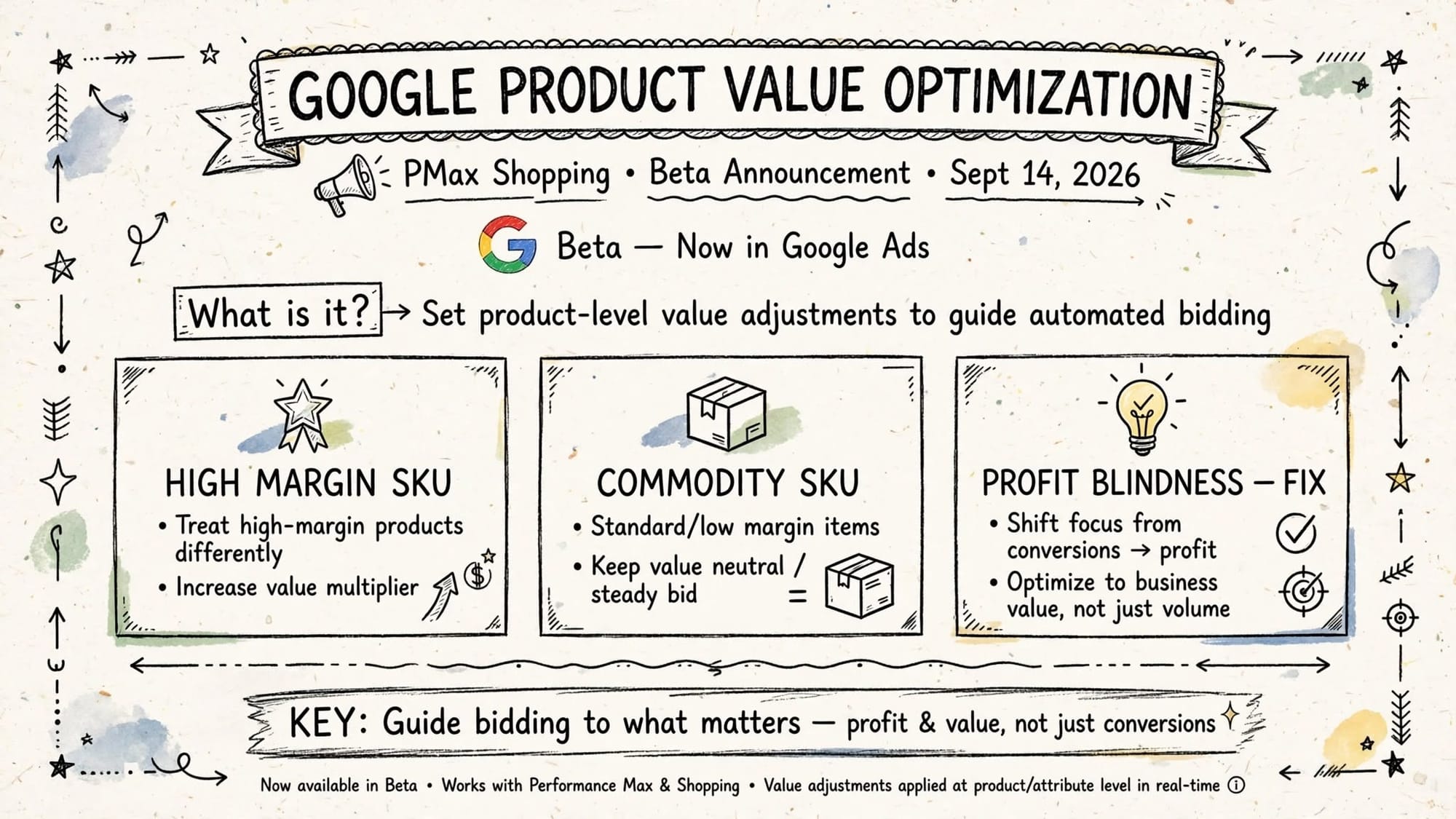
On September 14, 2026, Google Ads announced Product Value Optimization, a new beta feature for Performance Max and Shopping campaigns that lets advertisers set product level value adjustments to guide automated bidding.
For ecommerce brands where margin varies by 2 to 5x across a catalog, this means tROAS and Maximize Conversion Value bidding can now treat a high margin product differently from a commodity SKU, without building separate campaigns for each.
This fixes a known flaw. Google's algorithm naturally gravitates toward driving conversion volume and has no inherent preference for your profitable products over ones that drive volume.
It treats $500 in sales from a low margin product exactly the same as $500 in sales from a high margin luxury item.
The problem with PMax is its profit blindness. If the easiest path to your revenue target is selling high volumes of low margin goods, PMax will dump your budget there, potentially starving your high margin inventory that could be more profitable if the algorithm were willing to bid more aggressively for it.
Old workaround was custom label 0 margin tier.
High margin over 50 percent, medium 20 to 50 percent, low under 20 percent, with separate campaigns per tier and higher ROAS target for high margin.
New feature makes this native: set product level value adjustments to guide automated bidding.
3. Why This Is How They Monetize AI Fastest
Two platforms, same playbook, same quarter. Why now?
AI monetization is stuck.
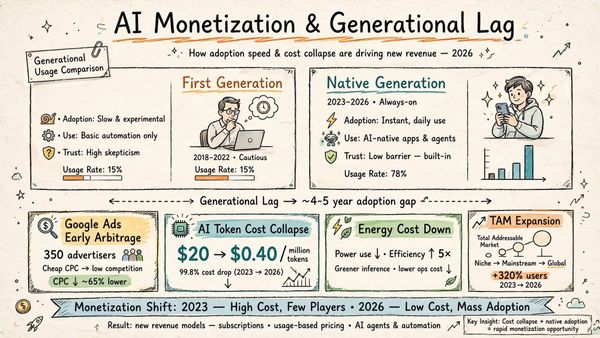
Token costs are falling 67 percent year over year, $18.40 to $6.07 per million, and inference is dropping toward $0.001 to $0.020 per million by 2027 to 2028. But ad revenue still needs to grow.
How to grow without more clicks? Grow profit per click.
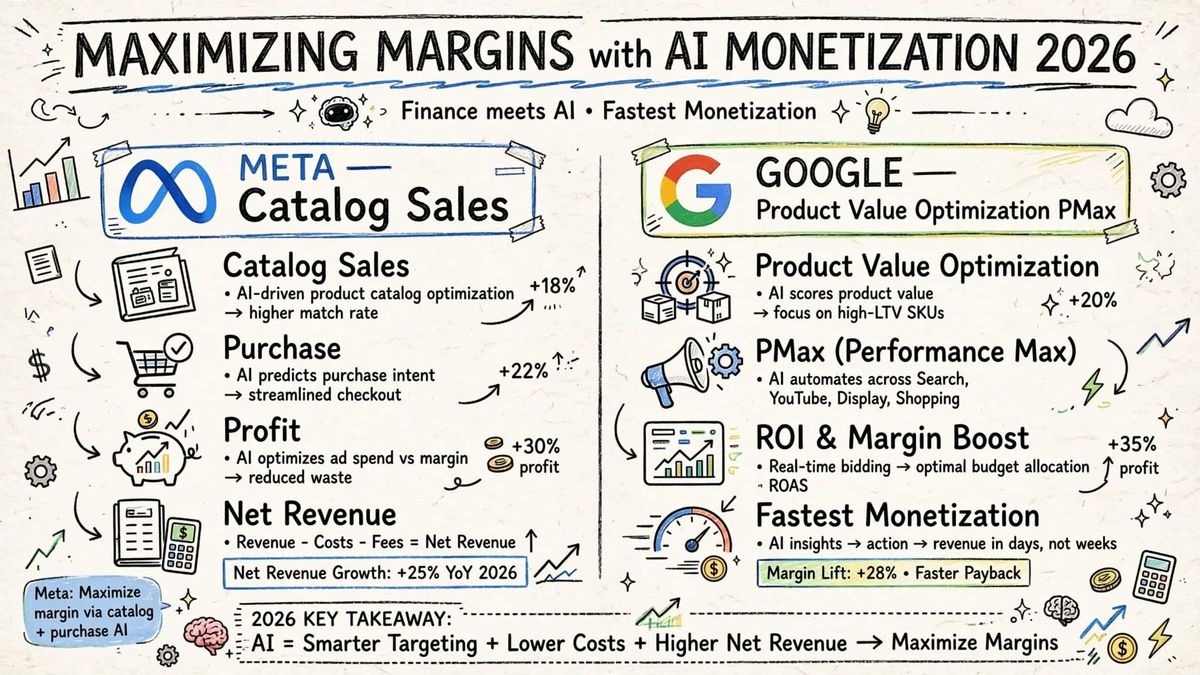
If AI can predict which user will buy your $880 profit product vs your $420 profit product, it can bid 2x more for the first user and still improve your margin.
You pay more per click, Meta and Google earn more per click, and you earn more per sale. Win win win.
This is finance meets performance marketing.
Advantage+ already generates over $75 billion annualized revenue with $4.52 for every dollar spent, 22 percent more than manually structured campaigns. Now add profit signal and that $4.52 becomes profit aware, not revenue aware.
4. What This Means For Advertisers: First Party Data Becomes Non Negotiable
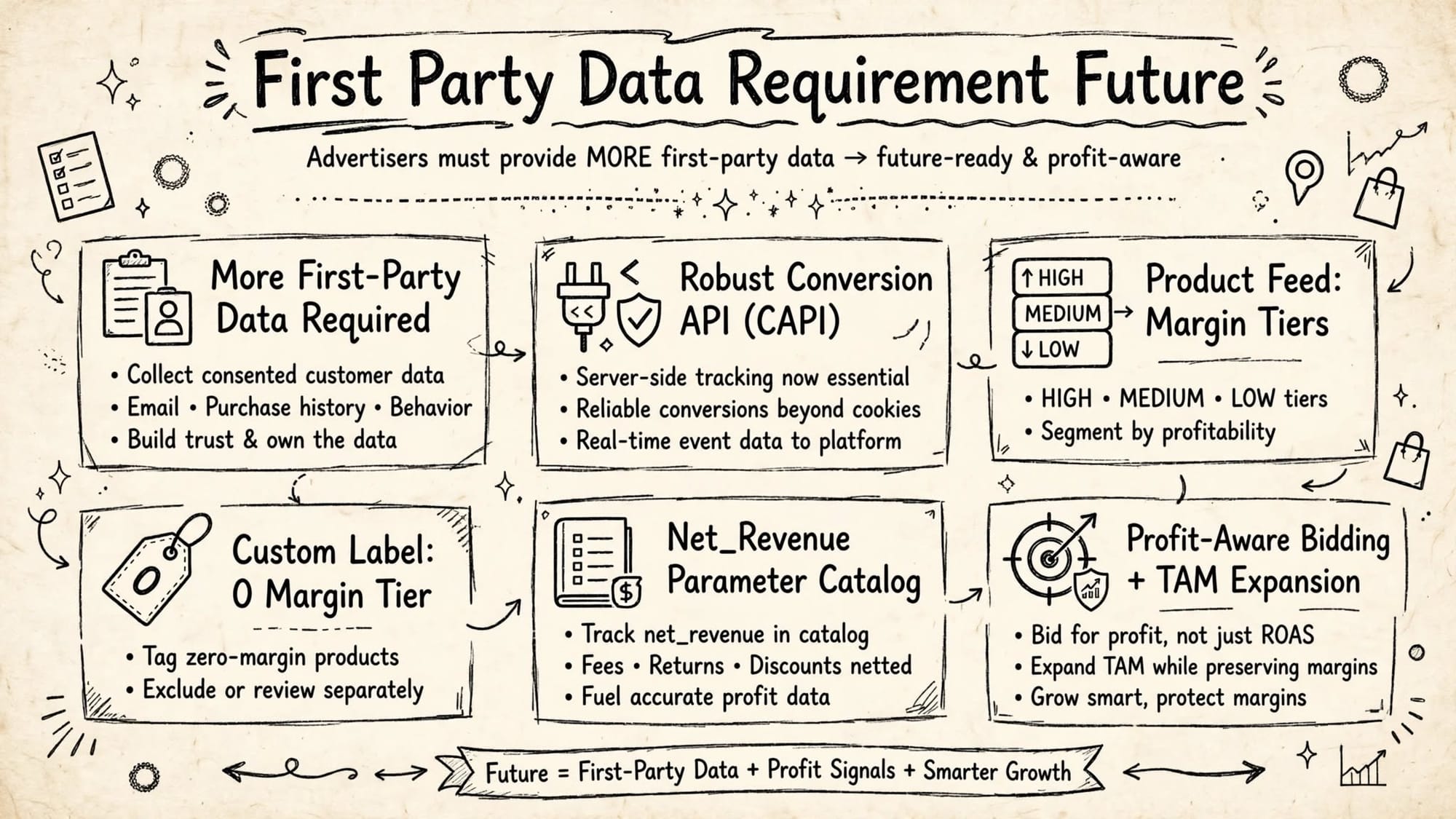
Both features have same gate: you must provide profit data via first party pipeline.
Meta: Implement Conversion API robustly. This first party data connection is non negotiable for accurate attribution, especially with iOS changes.
Google: Advertisers who invest now in clean data pipelines and complete conversion uploads stand to gain an edge as AI optimization grows more sophisticated.
Checklist for next 14 days:
- Feed: Add net_revenue or profit field to catalog feed. Google Merchant Center custom label 0 = margin tier. Meta catalog = net_revenue parameter.
- Pixel + CAPI: Send content_ids, content_type, value, and net_revenue on Purchase. Deduplicate. Validate in Events Manager that events with correct parameter values are being recorded.
- Volume: Hit 100 conversions in last 7 days with 3 different profit values to unlock Meta profit option. Takes up to 7 days to update.
- Bidding: Switch Catalog Sales to Maximize value of conversions with Conversion value = Purchase profit, Attribution model = Incremental, ROAS goal = None for learning. On Google, set Product Value Optimization adjustments, high margin +30 percent, low margin -10 percent.
If you do not send profit, AI will optimize for what it sees: revenue.
That means it will sell your low margin bestsellers and starve high margin heroes. In 2026, not sending first party profit data is like running PMax without a product feed.
This is the fastest path to AI monetization for Meta and Google. Not more ads, but more profitable ads. And the cost of entry is your first party margin data.