Why Wall Street is Completely Misreading Google (The Physical AI CapEx)
We assume Alphabet is burning hundreds of billions of dollars just to compete in a digital chat bot war. In reality they are aggressively stockpiling the compute required to power physical robotics and autonomous global mobility.
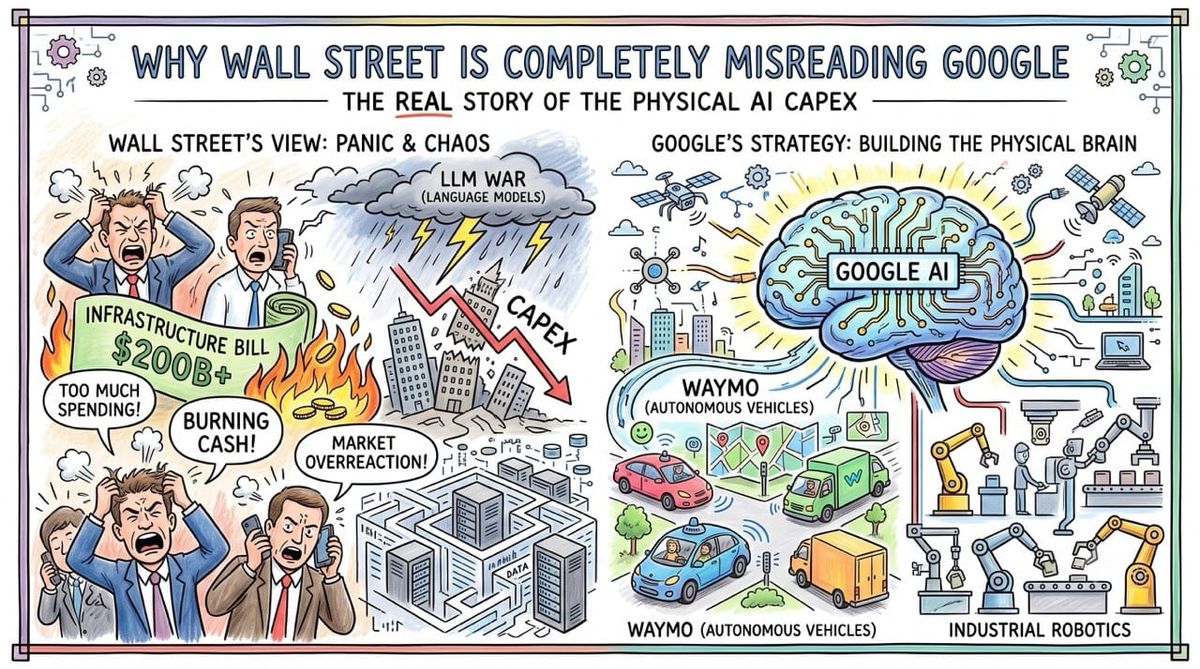
Investors are panicking over a two hundred billion dollar infrastructure bill. They assume this capital is burning in a language model war but Google is actually building the brain for the physical economy.
Inspiration: Analyzing the severe market overreaction to Alphabet raising its 2026 capital expenditure guidance. Realizing that Wall Street completely misunderstands how this compute will be deployed across physical subsidiaries like Waymo and industrial robotics.
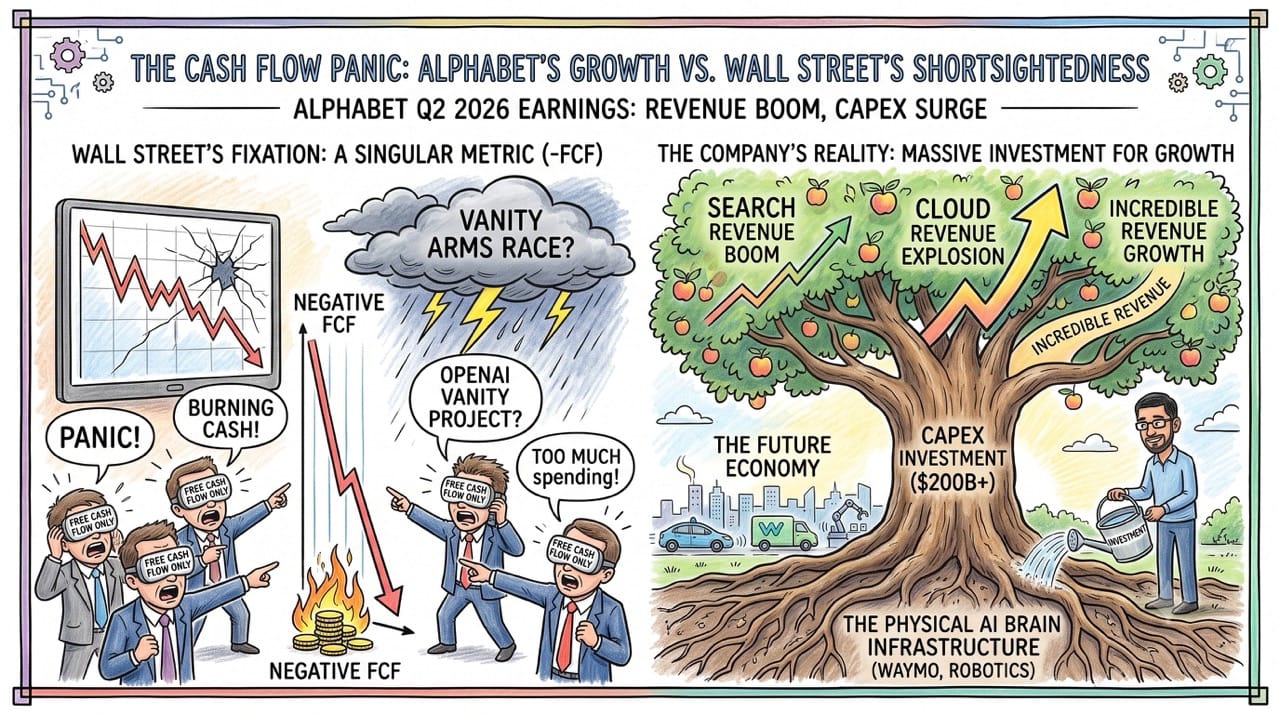
The Cash Flow Panic
Alphabet just reported its second quarter earnings for the year 2026 and Wall Street immediately punished the stock.
Despite posting incredible revenue growth across Search and Cloud the financial media fixated entirely on a singular metric.
The company raised its annual capital expenditure guidance to roughly two hundred billion dollars which temporarily pushed their free cash flow into negative territory.
Investors are treating this spending surge like a catastrophic unforced error.
The current narrative assumes Sundar Pichai is desperately burning cash on a vanity arms race just to build a slightly better language model than OpenAI.
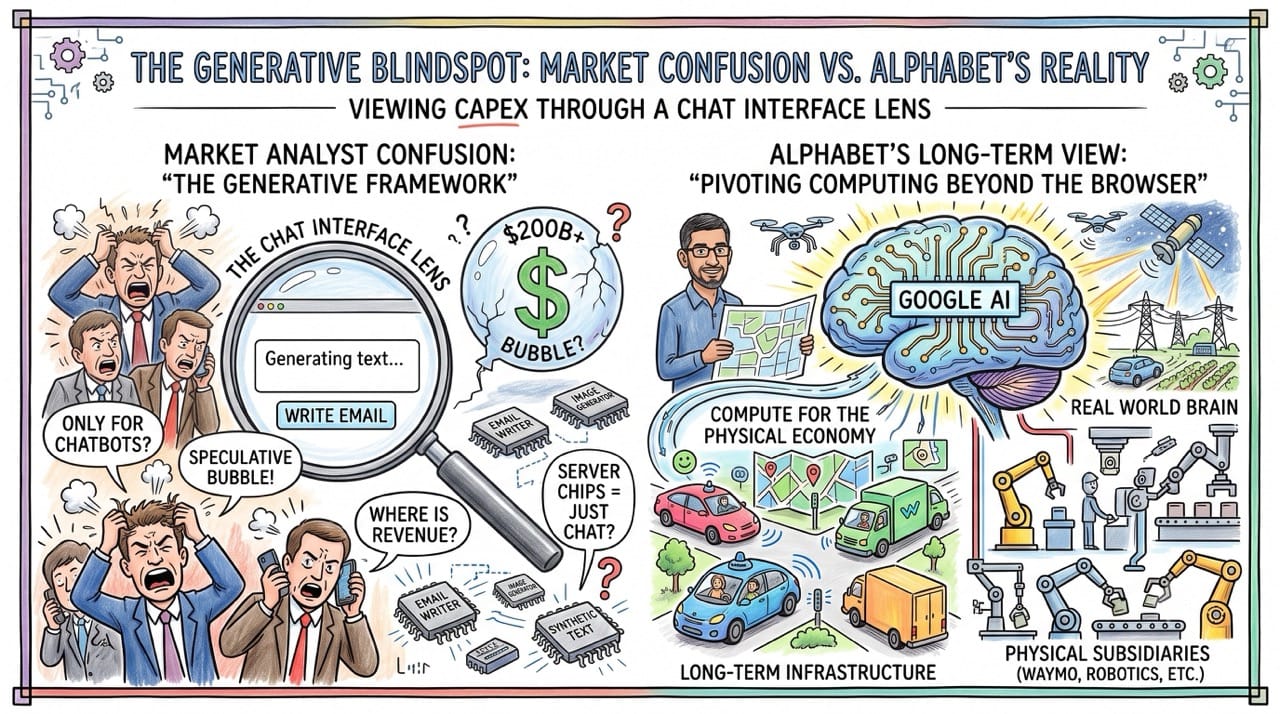
The Generative Blindspot
This market reaction reveals a severe misunderstanding of how Alphabet actually views the future of artificial intelligence.
Financial analysts are stuck in a purely generative framework where they assume every single server chip is dedicated exclusively to writing emails or generating synthetic images.
If you view capital expenditure purely through the lens of a chat interface then spending two hundred billion dollars absolutely looks like a speculative bubble.
The reality is that Alphabet is quietly pivoting its computing resources far beyond the traditional web browser.
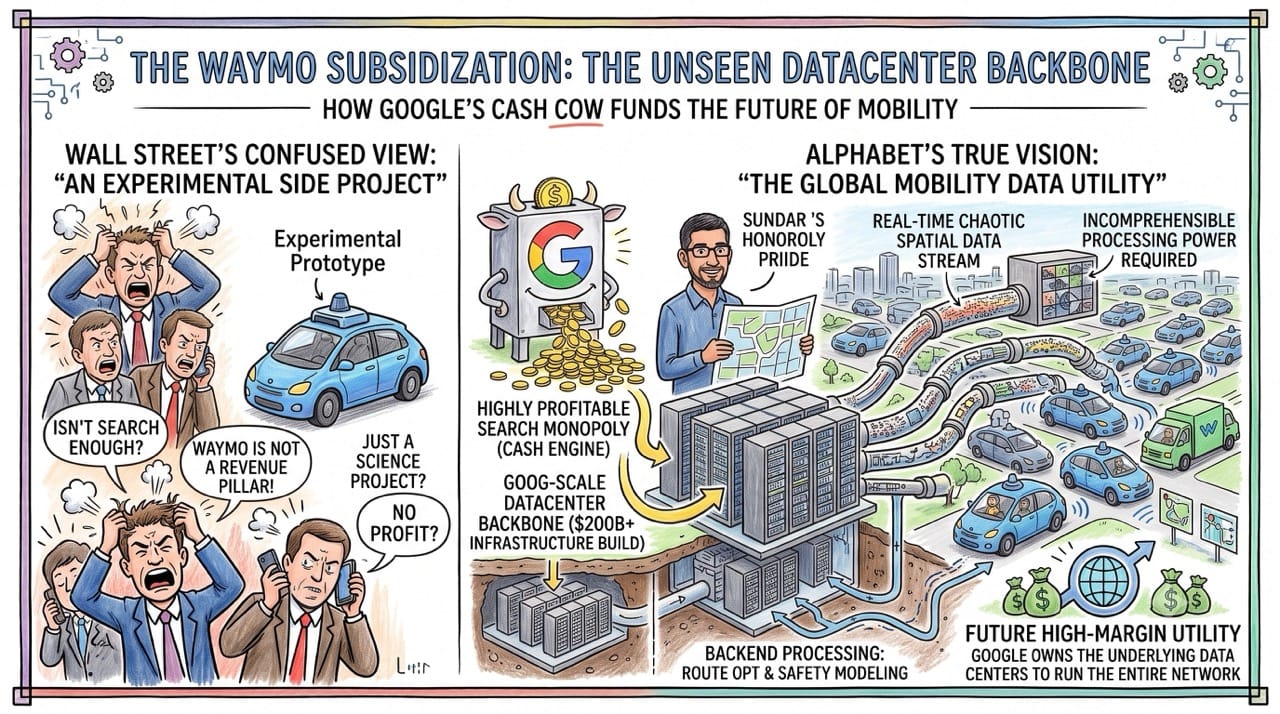
The Waymo Subsidization
The most obvious beneficiary of this heavy infrastructure buildout is Waymo.
Scaling an autonomous robotaxi network across major global cities requires an incomprehensible amount of backend processing power.
Every single vehicle on the road constantly streams chaotic spatial data back to the cloud for real time route optimization and safety modeling.
Wall Street currently treats Waymo as an experimental side project rather than a core revenue pillar.
They fail to realize that Google is using its highly profitable search monopoly to quietly subsidize the exact server infrastructure required to dominate global mobility.
When autonomous ride hailing eventually becomes a high margin utility Google will already own the underlying data centers required to run the entire network.
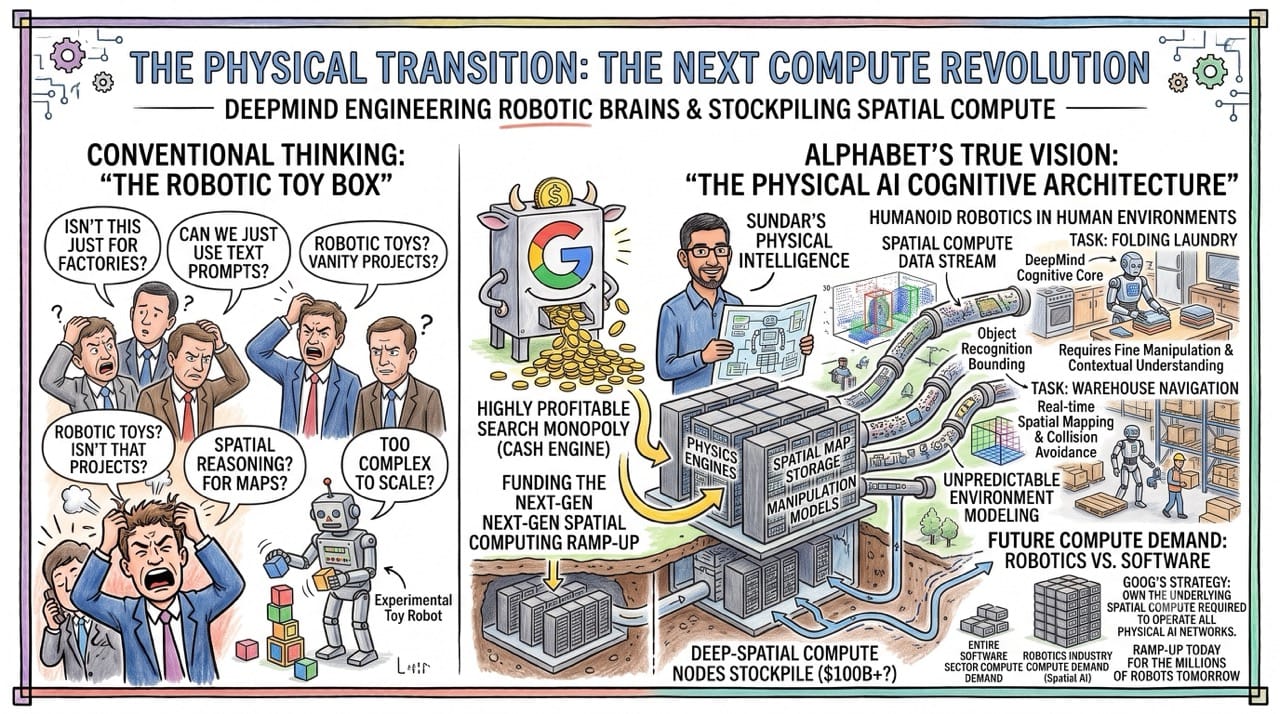
The Physical Transition
Beyond autonomous vehicles Google is heavily investing in the broader transition toward physical artificial intelligence.
DeepMind is actively engineering the cognitive architecture required to successfully operate humanoid robotics in unpredictable human environments.
Teaching a metal machine how to fold laundry or navigate a busy warehouse requires a completely different scale of spatial processing than simply answering a text prompt.
The company is stockpiling server capacity today because they know the robotics industry will soon demand more compute than the entire software sector combined.
Bypassing the Screen
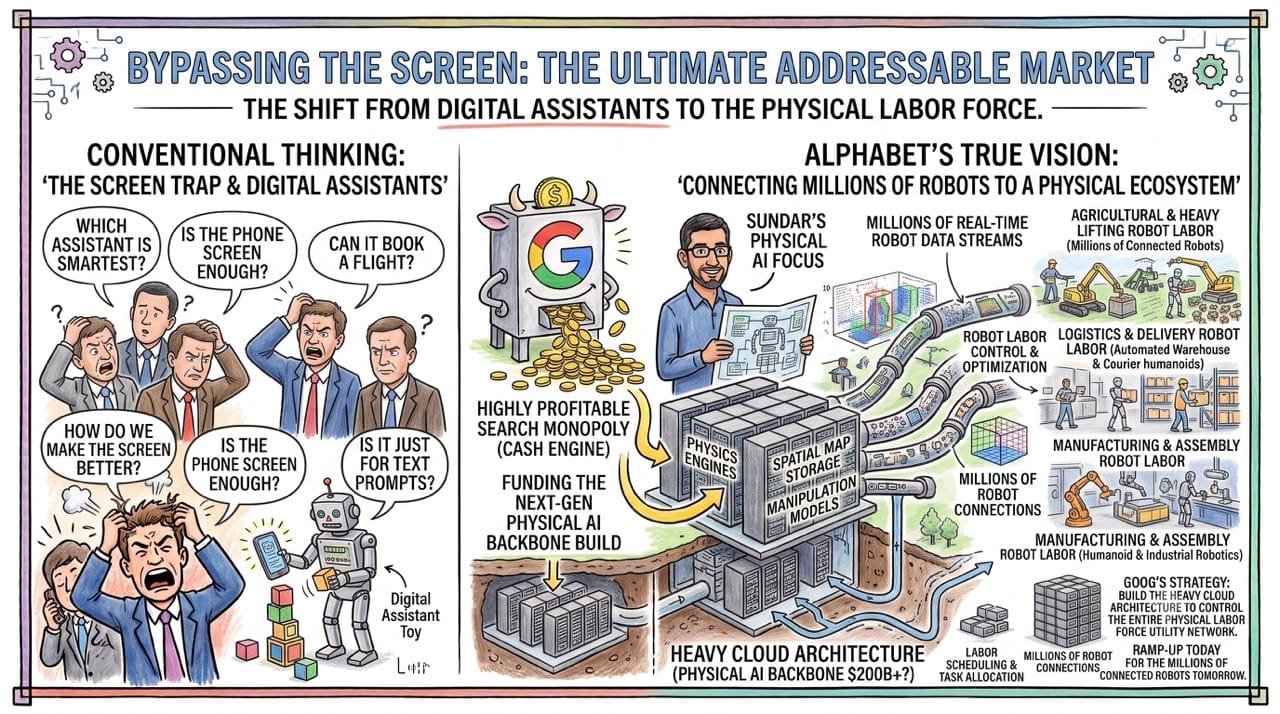
The technology companies that win the next decade will not compete on who has the smartest digital assistant trapped behind a piece of glass.
They will compete entirely on who controls the physical labor force of tomorrow.
Google recognizes that physical artificial intelligence represents the ultimate total addressable market.
They are building the heavy cloud architecture required to seamlessly connect millions of physical robots directly into their digital ecosystem.
Conclusion: The Infrastructure Premium
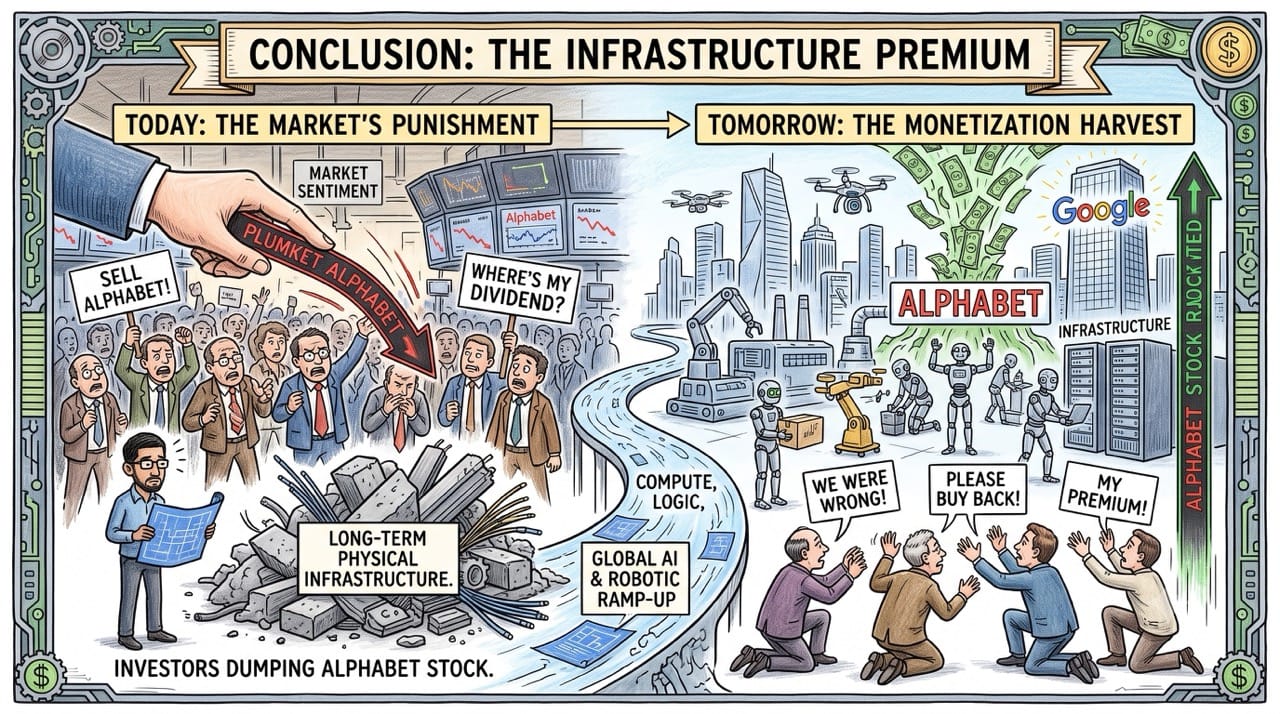
We frequently watch public markets punish visionary companies for prioritizing long term physical infrastructure over short term cash dividends.
The investors dumping Alphabet stock today will be the exact same people begging to buy it back when Google officially monetizes the global robotic workforce.