Why US Government Should Worry About the Commoditization of LiDAR
Washington thinks the AI war is about chatbots and GPUs. The real war is about who builds cheap eyes for robots, and China already owns 93 percent of that market.

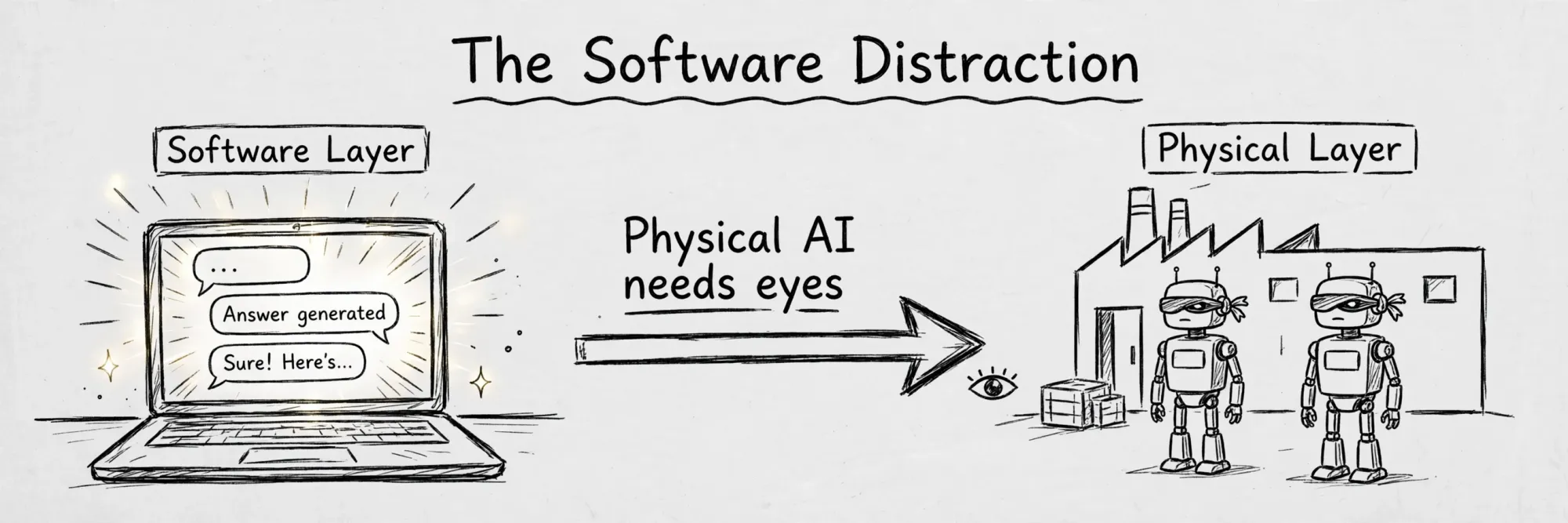
We assume the AI race is about who writes better software. In reality, it will be decided by who owns the cheap eyes that let robots see.
Inspiration: Watching Hesai announce 4 million units of annual capacity the same week Luminar filed its final wind-down. Realizing Washington is guarding the brain while giving away the eyes.
The Software Distraction
Every sovereign AI strategy looks the same right now.
A large language model, a GPU cluster, a national chatbot. It feels strategic, but it is incomplete.
Physical AI is where economic value actually compounds. China operates over 30,000 smart factories as of early 2026, making it the world's dominant force in industrial AI deployment. Those factories do not run on chatbots. They run on robots that can see, pick, weld, and move without a human in the loop.
Eyes come before brains. If you do not own the eyes, your software has nowhere to go.
The 93 Percent Problem
The numbers are already lopsided.
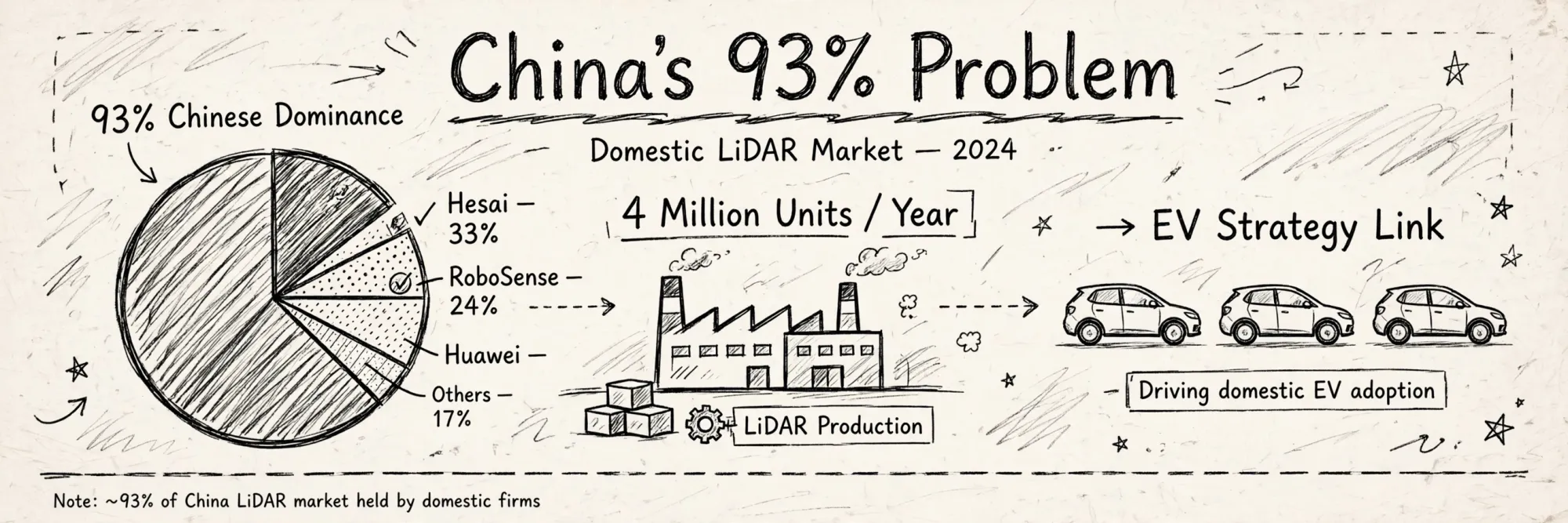
Chinese lidar firms were found to have captured 93 per cent of the market in 2024, thanks to manufacturing scale, government support, and aggressive pricing. That rise has been led by Chinese lidar firms, with Hesai Technology which shipped more than half a million lidar units last year still leading the way.
Boulay's figures show Hesai with a market share of 33 per cent in 2024, down from 38 per cent in 2023. Its closest rival, RoboSense, has moved up from 22 per cent to 24 per cent, with Huawei rising rapidly from 6 per cent to 19 per cent last year.
This is not a market fluctuation. As Yole's analyst put it: China's dominance in automotive lidar is not accidental. It is the result of deliberate industrial policy, fast product cycles, and bold integration strategies.
Look at the capacity moves:
- Hesai announced plans to double its production capacity from 2 million units to 4 million units this year, well up from the 1 million-plus unit mark that Hesai hit in 2025
- RoboSense reported robotic LiDAR volumes surged 1,458.8 percent year on year to 185,500 units in Q1 2026, accounting for approximately 56 percent of total shipments
- Hesai has also helped drive down the cost of lidar sensors by 99.5 percent in just eight years
When cost drops 99.5 percent, commoditization is not a risk. It is the business model.
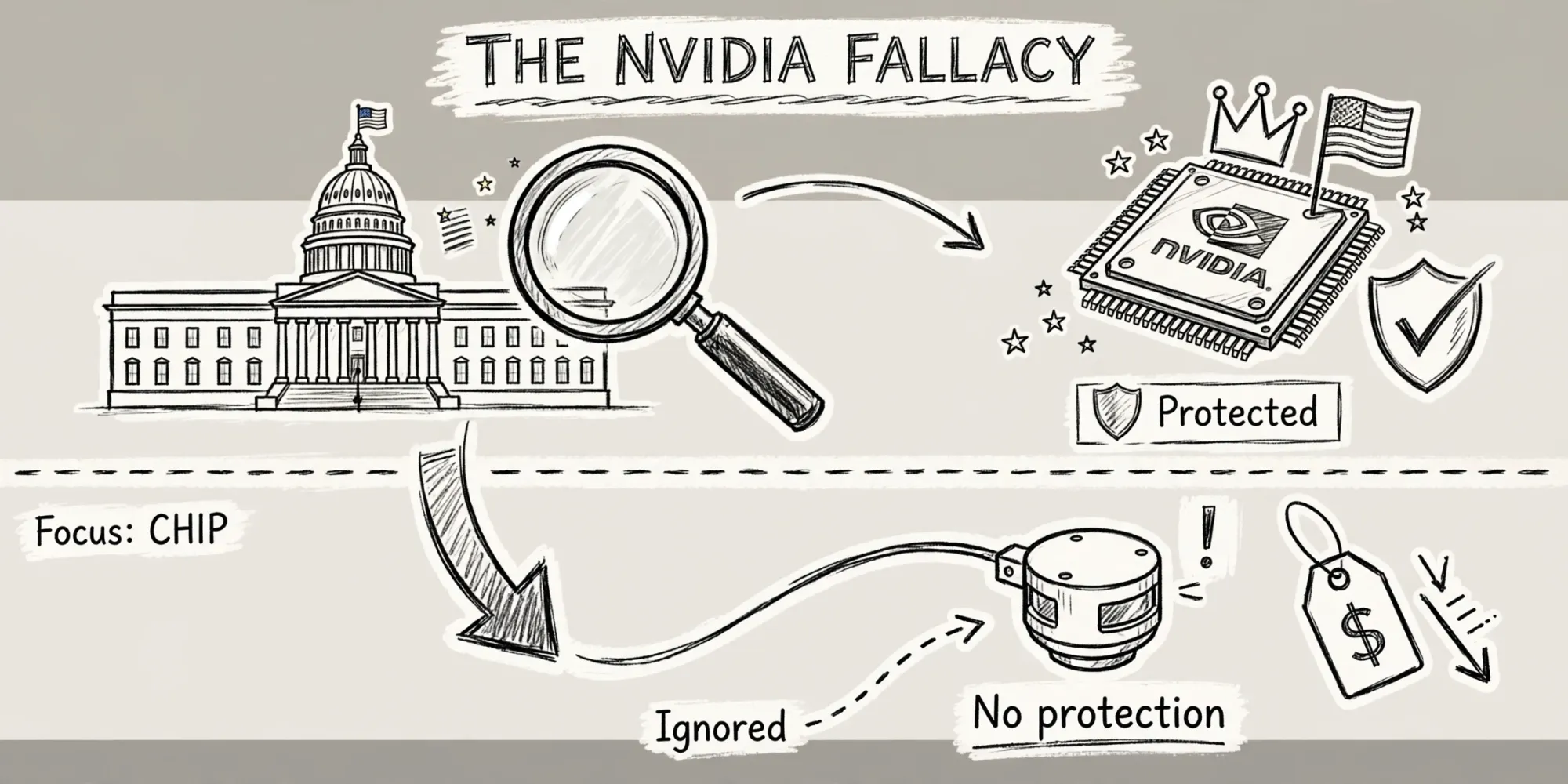
The Nvidia Fallacy
Washington spent the last two years learning to care about chips. It learned the wrong lesson.
We put export controls on Nvidia GPUs as if the GPU is the final chokepoint. It is not. The GPU is the brain. LiDAR is the eye. A robot with a smuggled GPU and no eyes is a paperweight. A robot with cheap Chinese eyes and a decent local chip can still work in a factory.
The US should worry about LiDAR more than it worries about software, and more than the care it has shown for Nvidia chips. Here is why:
- Chips are defensible, eyes are not: Nvidia has a software moat with CUDA. LiDAR is now a manufacturing scale game. Once price falls below 100 dollars, performance is good enough for most use cases, and scale wins over specs.
- Chips are concentrated, eyes are distributed: You can track a few fabs. You cannot track 4 million LiDAR units going into forklifts, tractors, and humanoids in 30,000 factories.
- Chips are already nationalized in the narrative, LiDAR is not: We talk about chip sovereignty every week. We almost never talk about sensor sovereignty, which is the input to every physical AI system.
If we lose eyes, we will still buy brains from Nvidia, but the robots that use them will be built elsewhere.
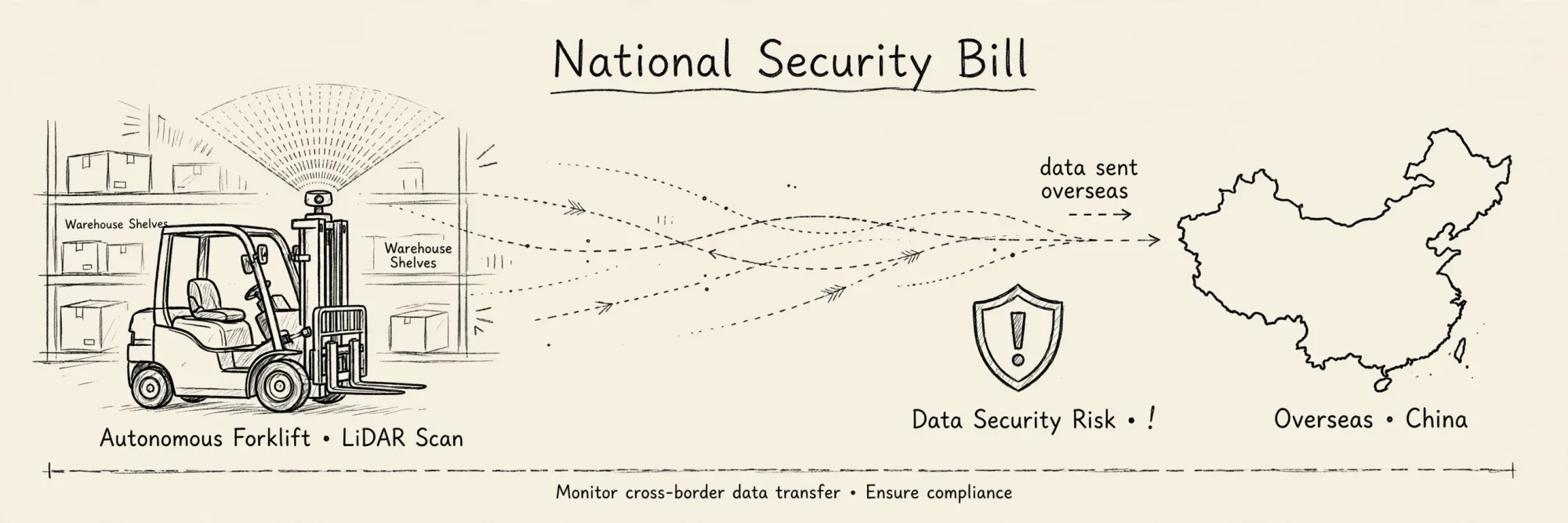
When Cheap Eyes Become a National Security Bill
This is where the EV parallel becomes uncomfortable.
China did not win EVs because it built a better car first. It won because it built a cheaper supply chain and scaled it until Western automakers had to buy Chinese batteries to stay price competitive. Then the dependence became the strategy.
LiDAR is following the exact same curve, but with higher stakes.
If US companies rely on Chinese LiDAR to make their warehouses work, three problems appear:
- Mapping risk: Every LiDAR unit is a 3D mapper. Put 185,000 units in US warehouses and you have a real time point cloud of US logistics infrastructure sitting on servers you do not control.
- Kill switch risk: Even if you trust the vendor, you are trusting a supply chain that can be throttled in a crisis. When you need spare parts during a contingency, you will not get them.
- Standards risk: Whoever ships 93 percent of the market sets de facto standards for data formats, interfaces, and safety testing. US startups then design to Chinese standards by default.
Washington would never allow 93 percent of fighter jet engines to come from a subsidized adversary. Why allow it for robot eyes?
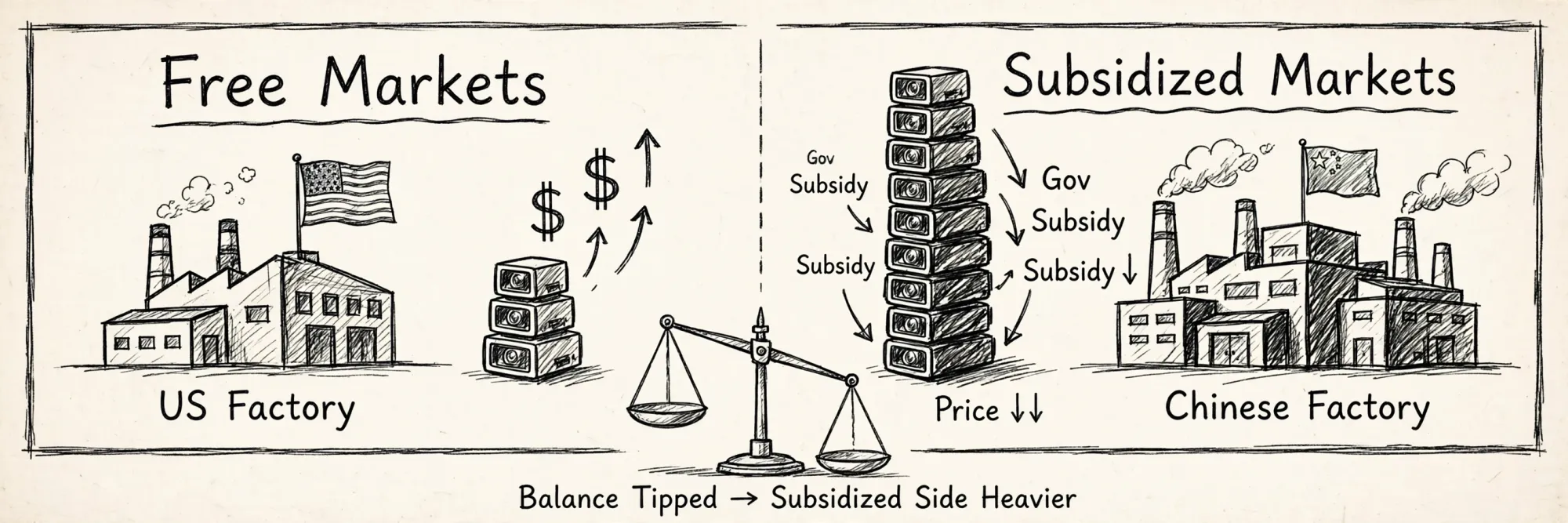
Free Markets Do Not Compete With Subsidized Markets
I am a free market person. I want US companies to win because they build better products, not because they get a handout.
That argument breaks when the other side is not playing the same game.
- Pressure to reduce costs due to lower price points of China-based competitors has been regularly listed in Luminar's bankruptcy filings as the second most important factor that explains why the US company found it so hard to build up a self-sustaining business
- Luminar went from a 13 billion dollar peak to a court confirmed liquidation on April 1, 2026, marking the final chapter for the lidar pioneer, with total wipeout of common equity leaving investors with no recovery
- Meanwhile, Hesai is listed on both Nasdaq and Hong Kong and can raise capital on both sides while receiving indirect domestic support, and is now expanding into robotics while US players consolidate
This is not about out innovating. It is about surviving a pricing structure that was designed to clear the field. When Hesai can double capacity to 4 million units while Luminar files Chapter 11, you are not watching a product cycle. You are watching an industrial policy cycle.
Free markets work when costs are real. When costs are subsidized, the market clears US players first.
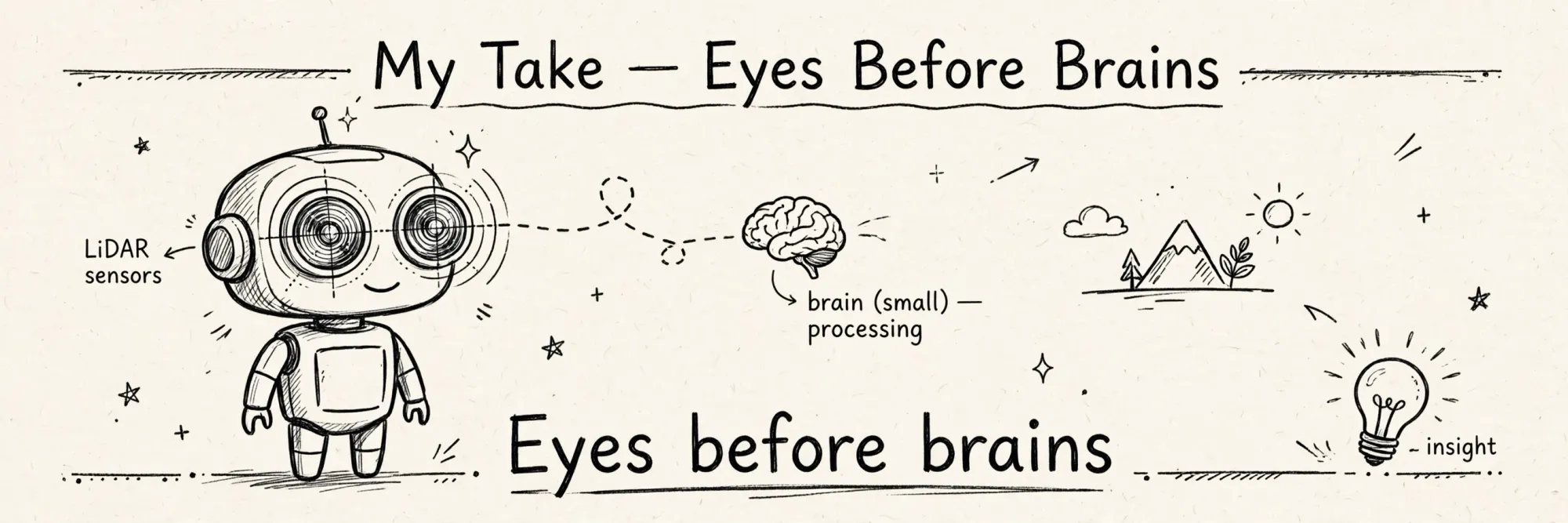
My Take: Eyes Before Brains
The US government should worry about LiDAR commoditization for one simple reason. Eyes are infrastructure.
We got this wrong with batteries, and we are repeating it with sensors. We protected the high margin brain and gave away the low margin eye, thinking margin equals strategic value. In physical AI, it is the opposite. The low margin eye that ships in millions of units determines who builds the factory, who owns the data, and who sets the standard.
My take is pragmatic:
- Treat LiDAR like batteries, not like apps. Put it on the critical supply chain list, not just the chip list.
- Fund scale, not just research. The US does not need another lab prototype that costs 1000 dollars. It needs a factory that can ship 500,000 units at 80 dollars.
- Tie procurement to security. If a warehouse automation grant uses federal dollars, require a non adversarial sensor bill of materials.
If we do not, US companies will end up relying on Chinese eyes to automate US factories, while China uses those same eyes to dominate the rest of the world like it did with EVs. That is not a market outcome. That is a policy choice.