Why the Robotics Race Will Overtake Silicon and Space: The Physical AI War
We are entirely distracted by cloud algorithms and orbital rockets. The true geopolitical war of the next decade is the race for "Physical AI," and the government is about to deploy sweeping tax incentives to guarantee America builds it.
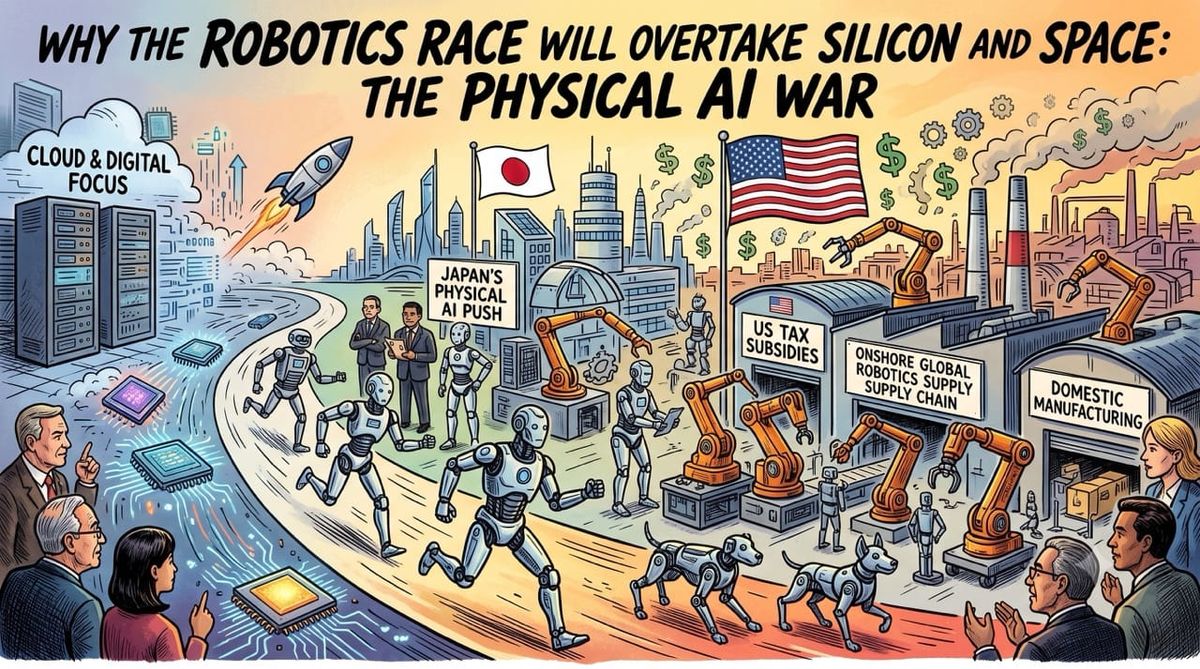
We assume the future of technology will be won in the cloud. In reality, the ultimate geopolitical prize belongs to the nation that successfully engineers the physical labor force of tomorrow.
Inspiration: Analyzing recent global moves, like Japan doubling down on "Physical AI", and realizing that the United States will inevitably deploy aggressive EV-style tax subsidies to onshore the global robotics supply chain.
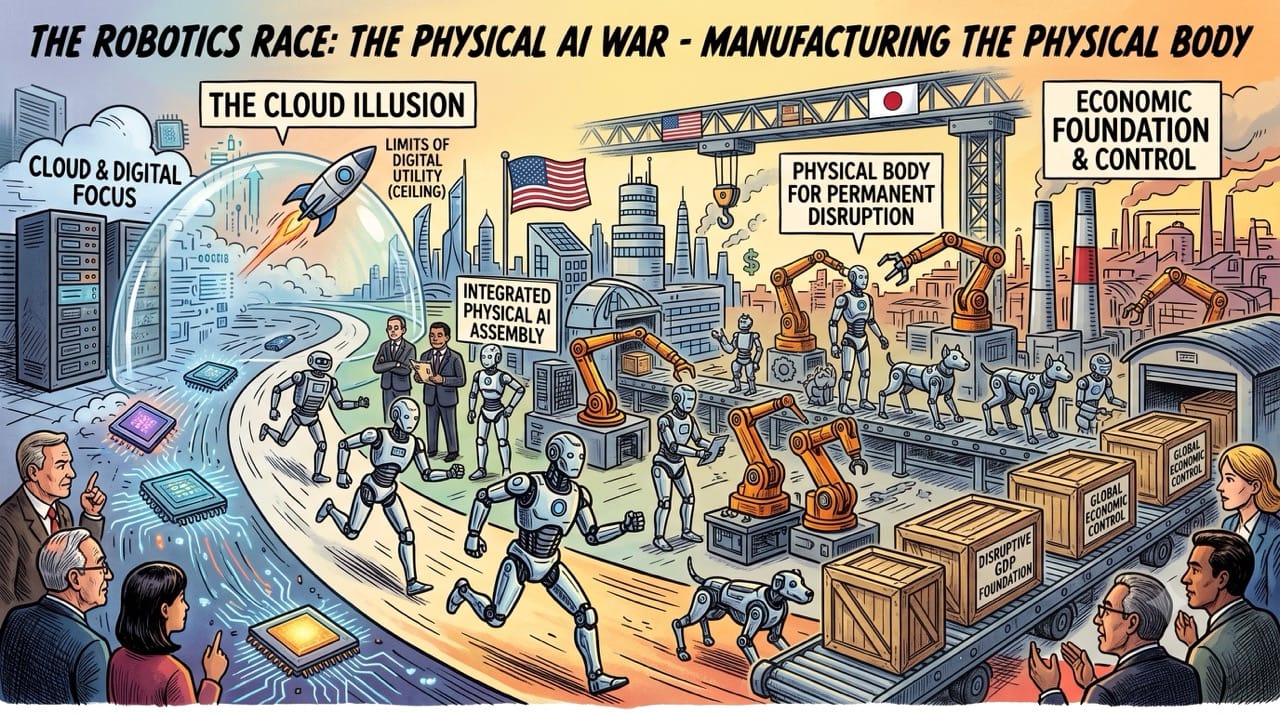
The Cloud Illusion
Tech investors are currently pouring endless capital into server farms and orbital logistics.
But an algorithm trapped behind a glass screen has a very hard ceiling on its true economic utility.
To permanently disrupt global gross domestic product, artificial intelligence needs a physical body.
The nation that successfully manufactures that body will control the foundation of the modern economy.
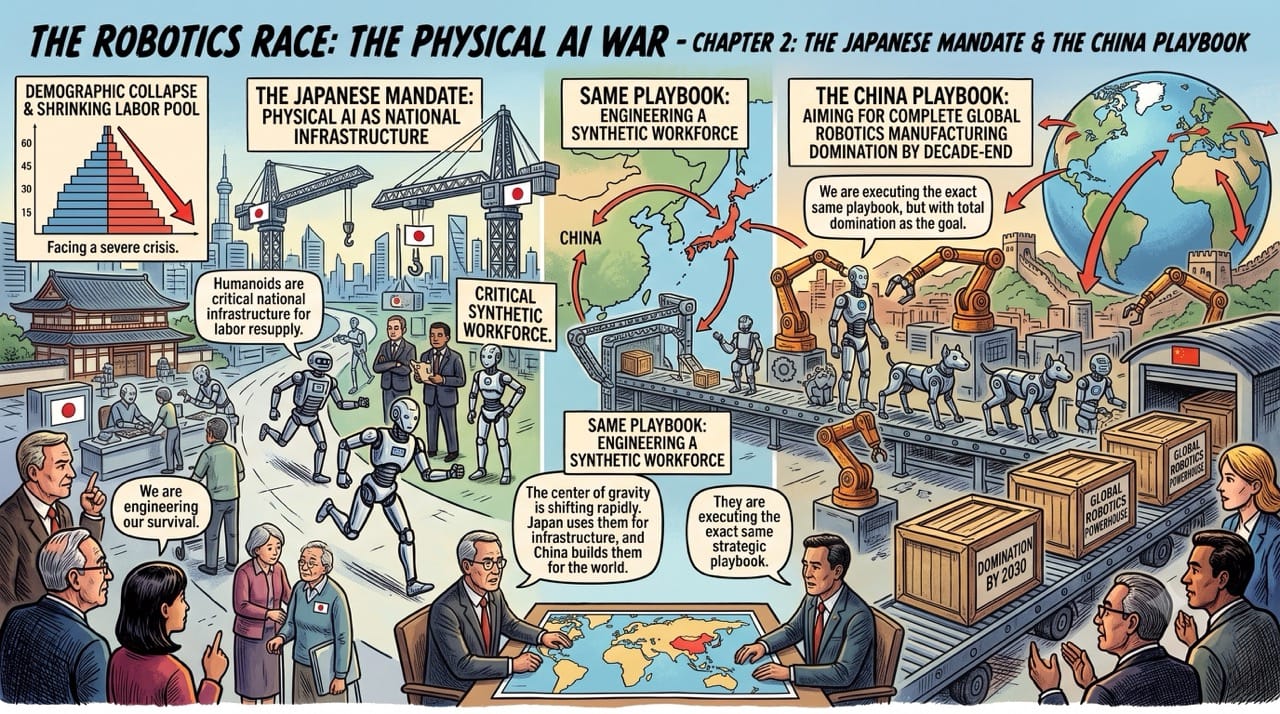
The Japanese Mandate
If you want to see where the global economy is heading, look at the recent strategic moves coming out of Asia.
Japan is aggressively doubling down on the concept of "Physical AI", treating humanoid robotics not as a fun tech experiment, but as critical national infrastructure.
Facing a severe demographic collapse and a shrinking labor pool, they are intentionally engineering a synthetic workforce to maintain their industrial output.
China is executing the exact same playbook, aiming to completely dominate global robotics manufacturing by the end of the decade.
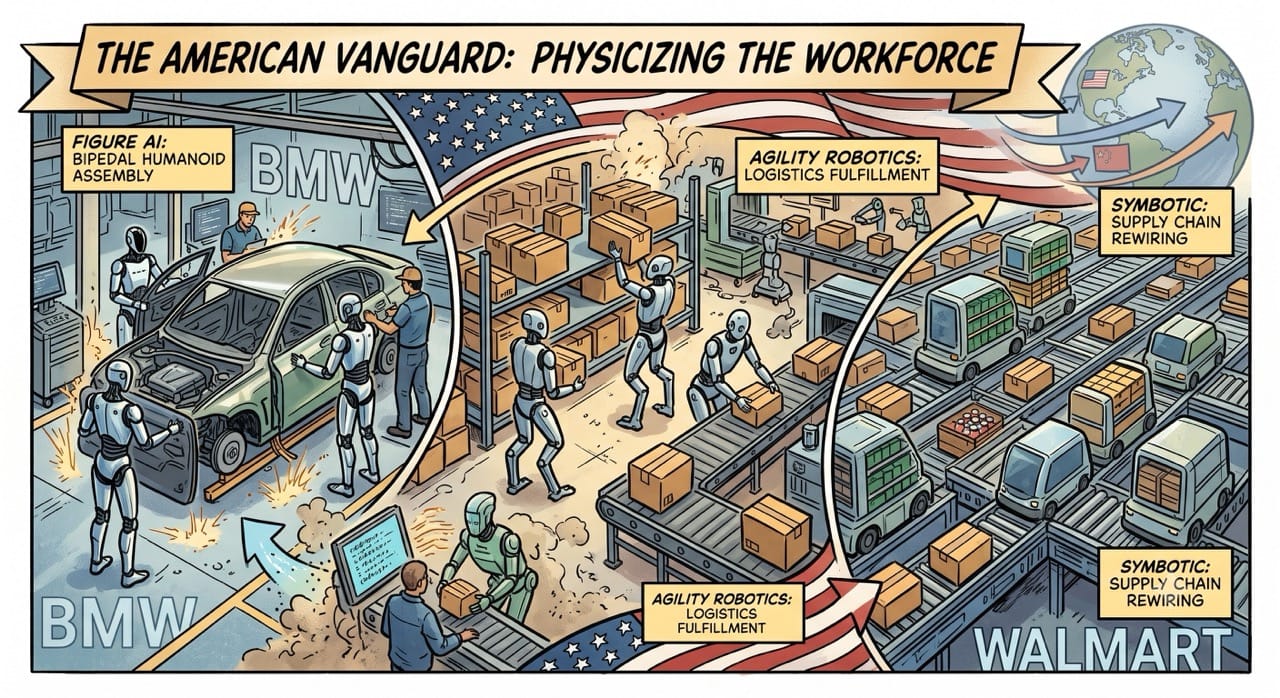
The American Vanguard
The United States is quietly assembling its own arsenal of physical AI to counter this foreign dominance.
This transition naturally begins on the industrial floor, where the return on investment is immediate and highly measurable for corporate executives.
- Figure AI: They are partnering directly with automotive giants like BMW to integrate autonomous, bipedal humanoids onto the assembly line, proving that robots can safely operate in spaces originally designed for humans.
- Agility Robotics: They are currently deploying their specialized hardware into Amazon fulfillment centers to conquer the repetitive, physically exhausting chaos of warehouse logistics.
- Symbotic: They are completely rewiring the internal supply chains of retail titans like Walmart, utilizing high-speed automated sorting fleets to drastically lower consumer distribution costs.
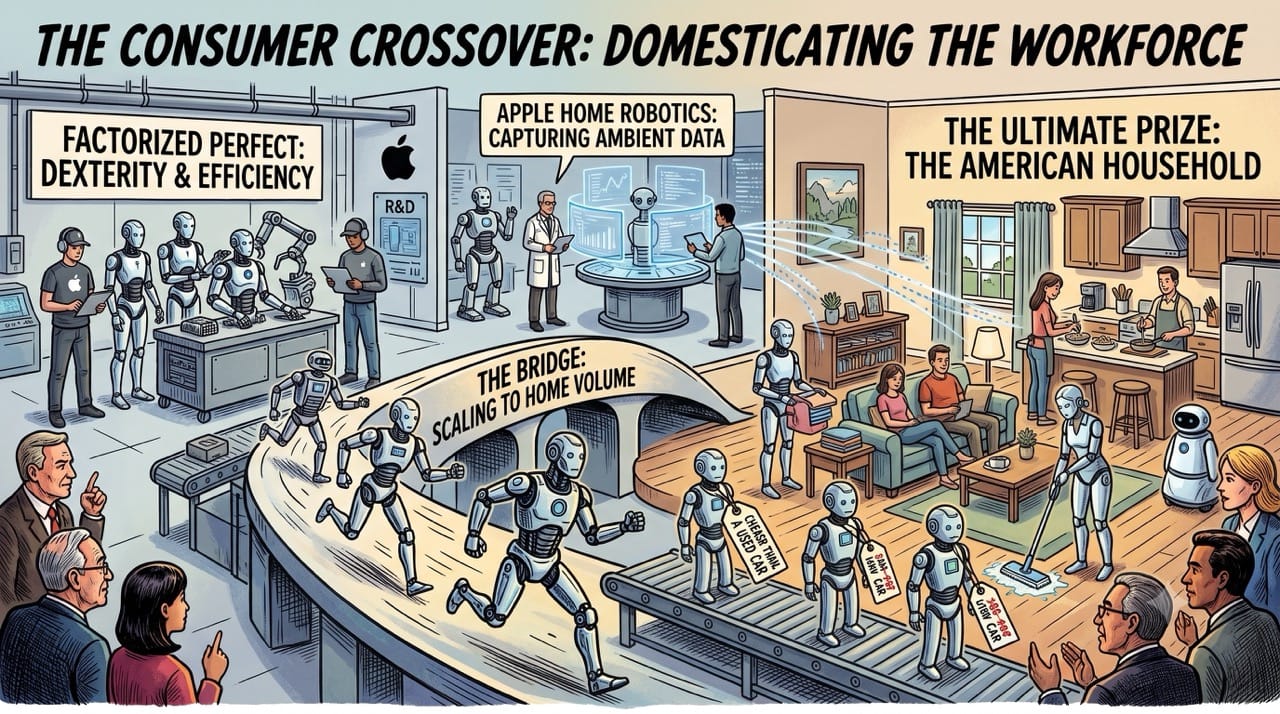
The Consumer Crossover
Once these platforms perfect their dexterity and battery efficiency in a controlled factory environment, they will inevitably pivot toward the ultimate prize, the consumer home.
Tesla is positioning its Optimus program to bridge this exact gap, aiming to scale manufacturing volumes so aggressively that a robotic assistant becomes cheaper than a used car.
Even Apple is quietly redirecting its cancelled automotive engineering talent straight into home robotics, desperate to capture the ambient biological data of the American household.
The Geopolitical Threat
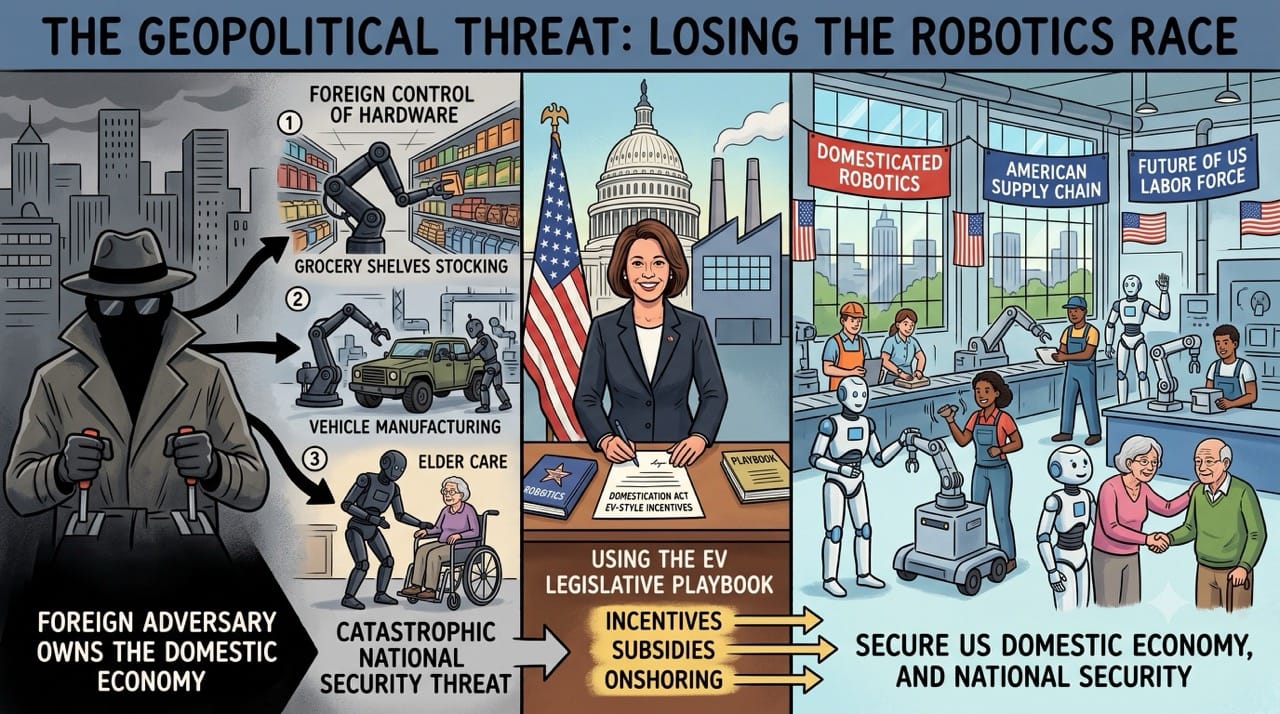
The American government is highly aware that losing the robotics race is a catastrophic national security threat.
If a foreign adversary controls the hardware that stocks our grocery shelves, builds our vehicles, and cares for our elderly, they effectively own the domestic economy.
To prevent this, lawmakers will inevitably deploy the exact same legislative playbook they used to domesticate the electric vehicle industry.
The Inevitable Subsidy
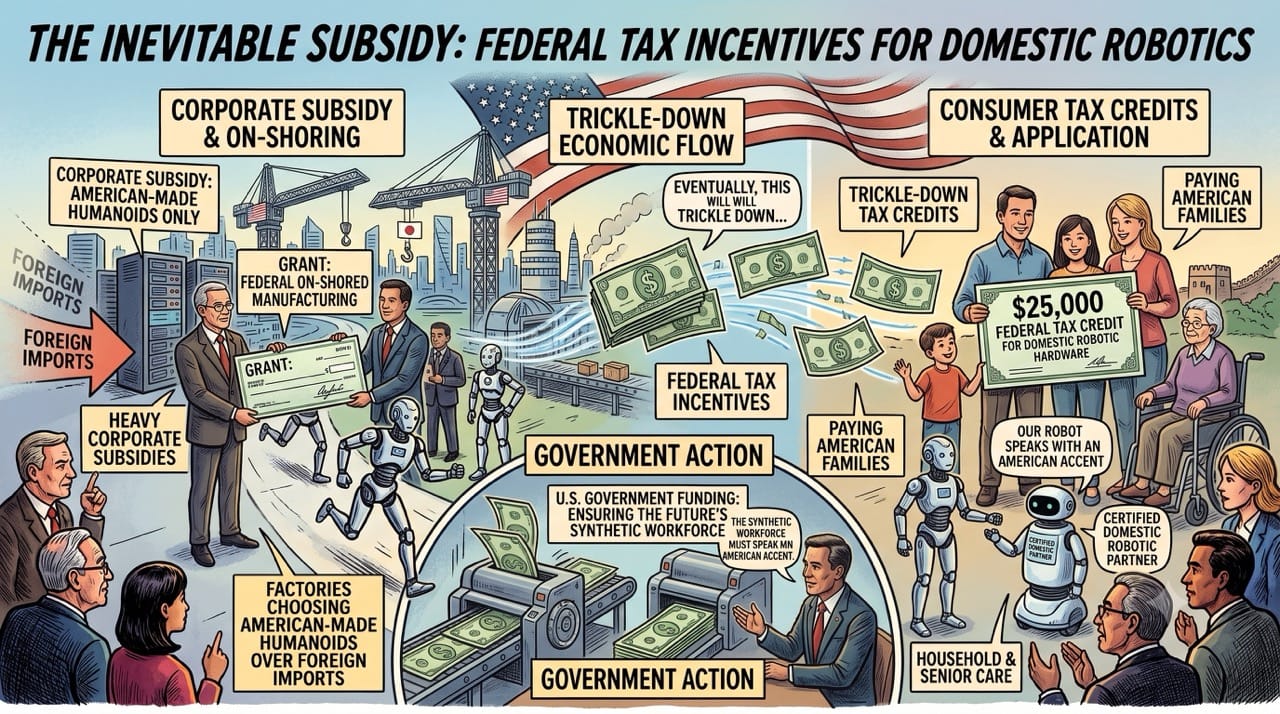
We are about to witness sweeping federal tax incentives designed specifically to onshore robotic manufacturing.
Expect heavy corporate subsidies for factories that choose to deploy American-made humanoids over foreign imports.
Eventually, this will trickle down into highly lucrative tax credits for everyday consumers, essentially paying American families to purchase domestic robotic hardware for household and senior care.
The government will happily print money to ensure the synthetic workforce of the future speaks with an American accent.
Conclusion: The Tangible Future
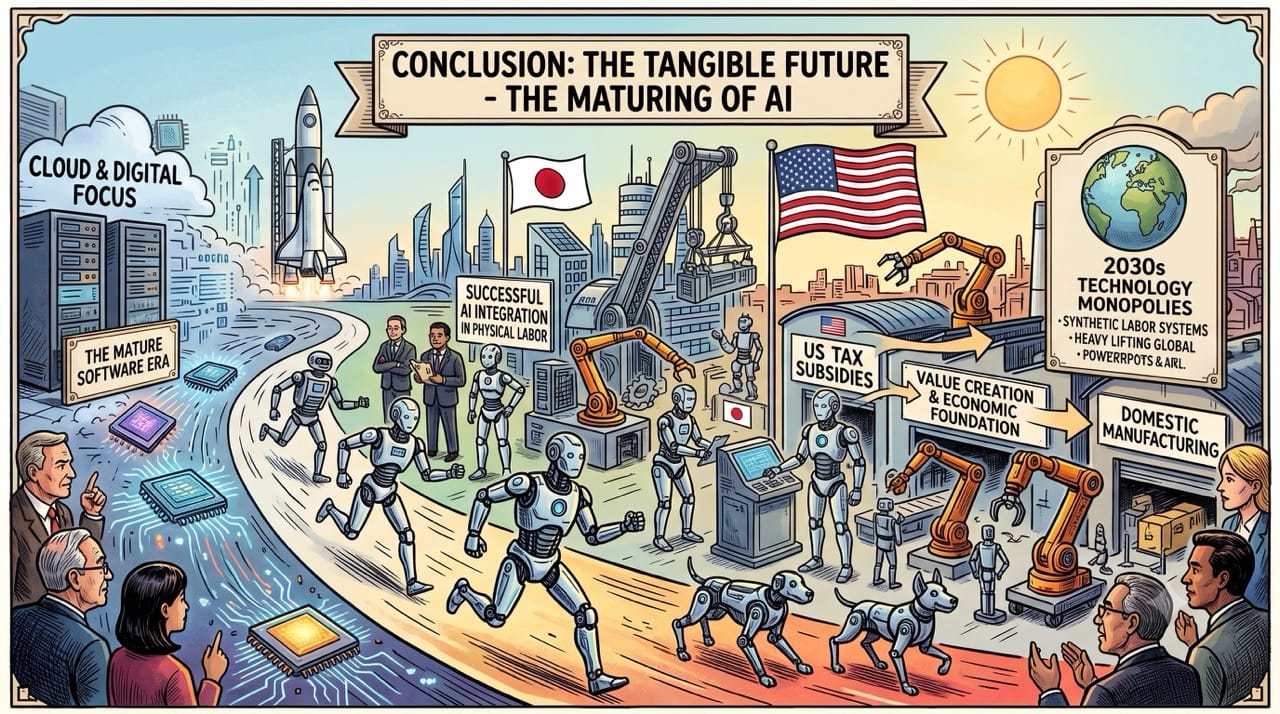
The software era is officially maturing.
The most valuable technology monopolies of the 2030s will simply be the companies that successfully pull artificial intelligence out of the cloud and force it to do our heavy lifting.