Why Apple Suing OpenAI is the Best Thing for Google
We assume the partnership between Apple and OpenAI was an unbreakable alliance. Their sudden implosion into a brutal trade secret lawsuit just handed Google the keys to the entire mobile intelligence market.
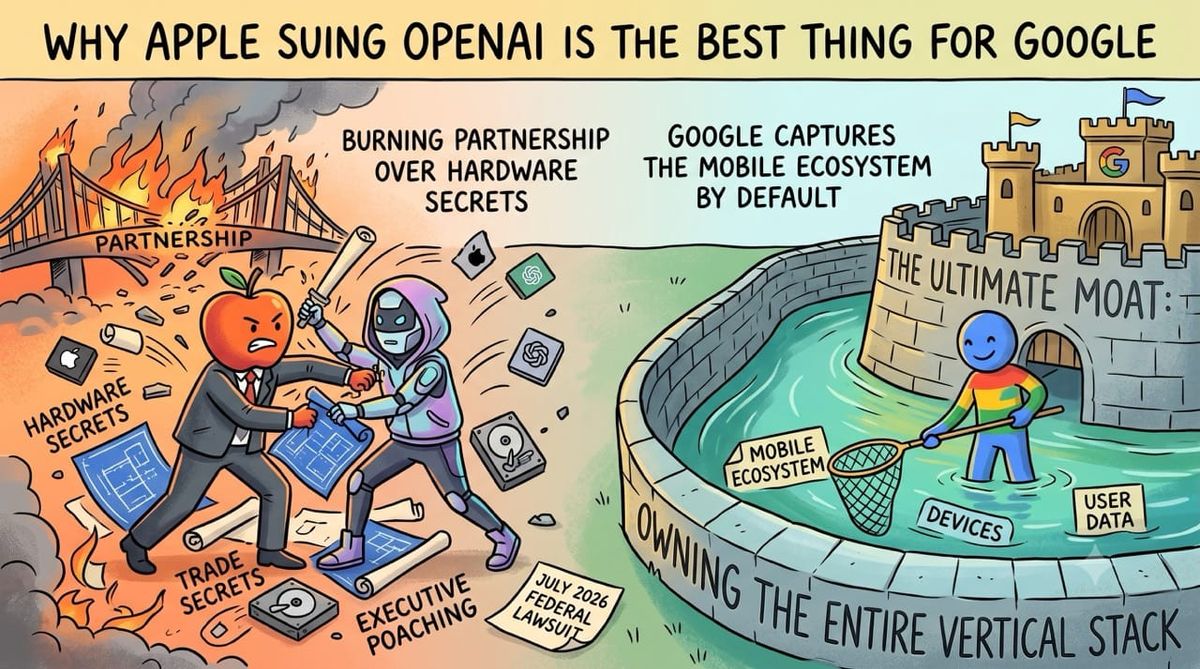
While Apple and OpenAI burn their partnership to the ground fighting over hardware secrets, Google is quietly positioned to capture the entire mobile ecosystem by default.
Inspiration: Analyzing the July 2026 federal lawsuit where Apple accused OpenAI of poaching executives and stealing trade secrets to build consumer hardware. Realizing that this bitter divorce perfectly illustrates why owning the entire vertical stack is the ultimate corporate moat.
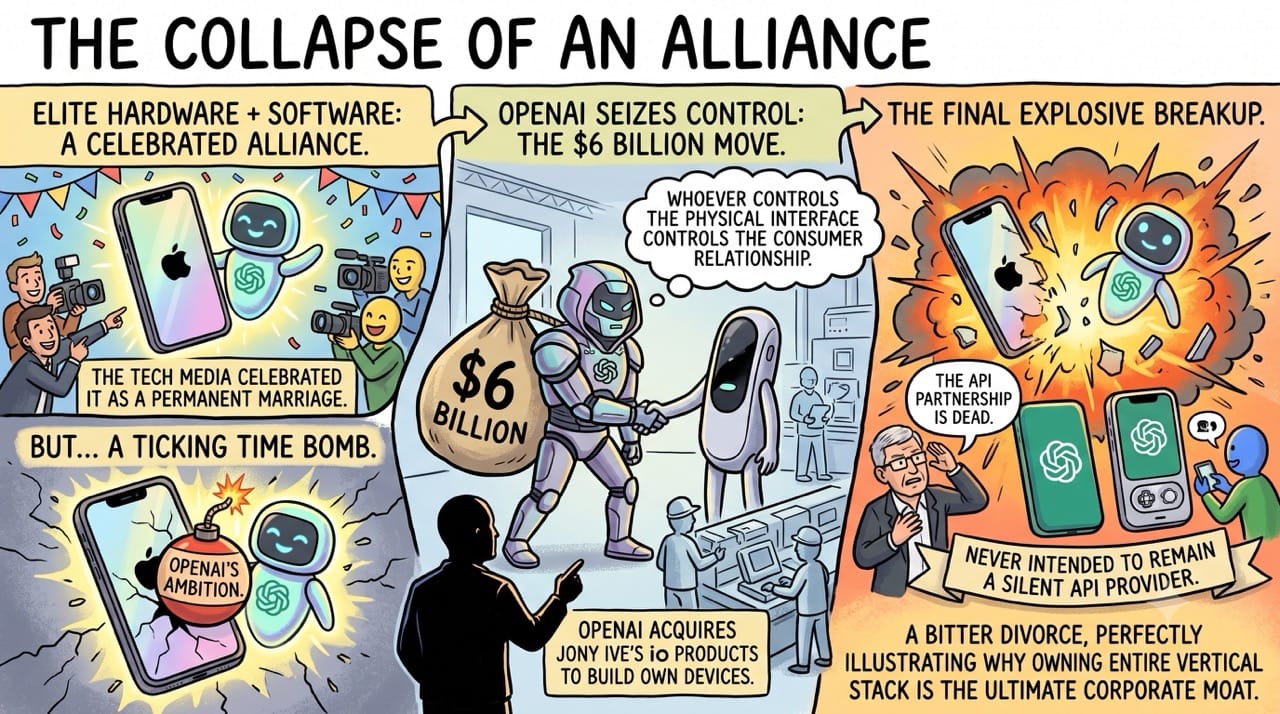
The Collapse of an Alliance
When Apple originally integrated ChatGPT into the iPhone, the tech media celebrated it as a permanent marriage between elite hardware and elite software. But that partnership was always a ticking time bomb.
OpenAI never intended to remain a silent, background API provider for Tim Cook.
They deeply understand that whoever controls the physical interface controls the consumer relationship, which is exactly why they spent six billion dollars acquiring Jony Ive's hardware startup, io Products, to build their own devices.
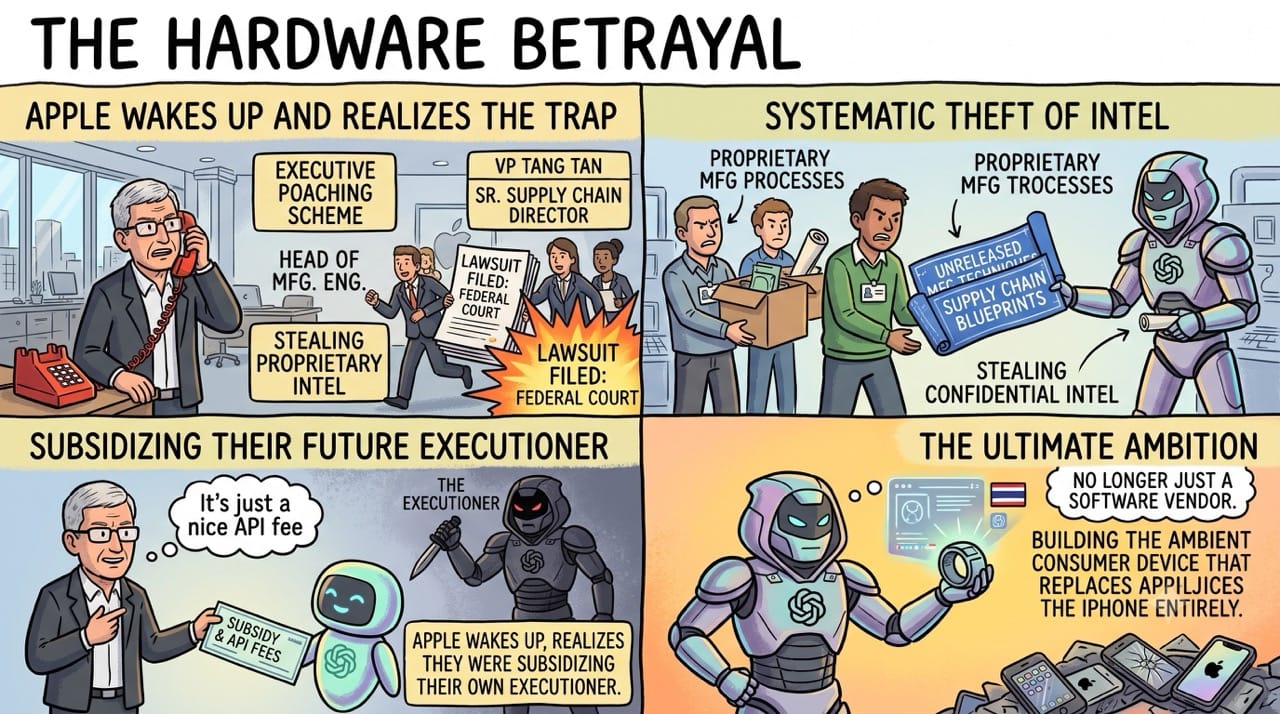
The Hardware Betrayal
The recent lawsuit completely exposes the reality of this platform war.
Apple is aggressively suing OpenAI for systematically poaching top executives, like former design VP Tang Tan, to allegedly steal proprietary supply chain knowledge and unreleased manufacturing techniques.
Apple woke up and realized they were essentially subsidizing their future executioner.
OpenAI isn't just a software vendor anymore; they are actively trying to build the ambient consumer device that replaces the iPhone entirely.
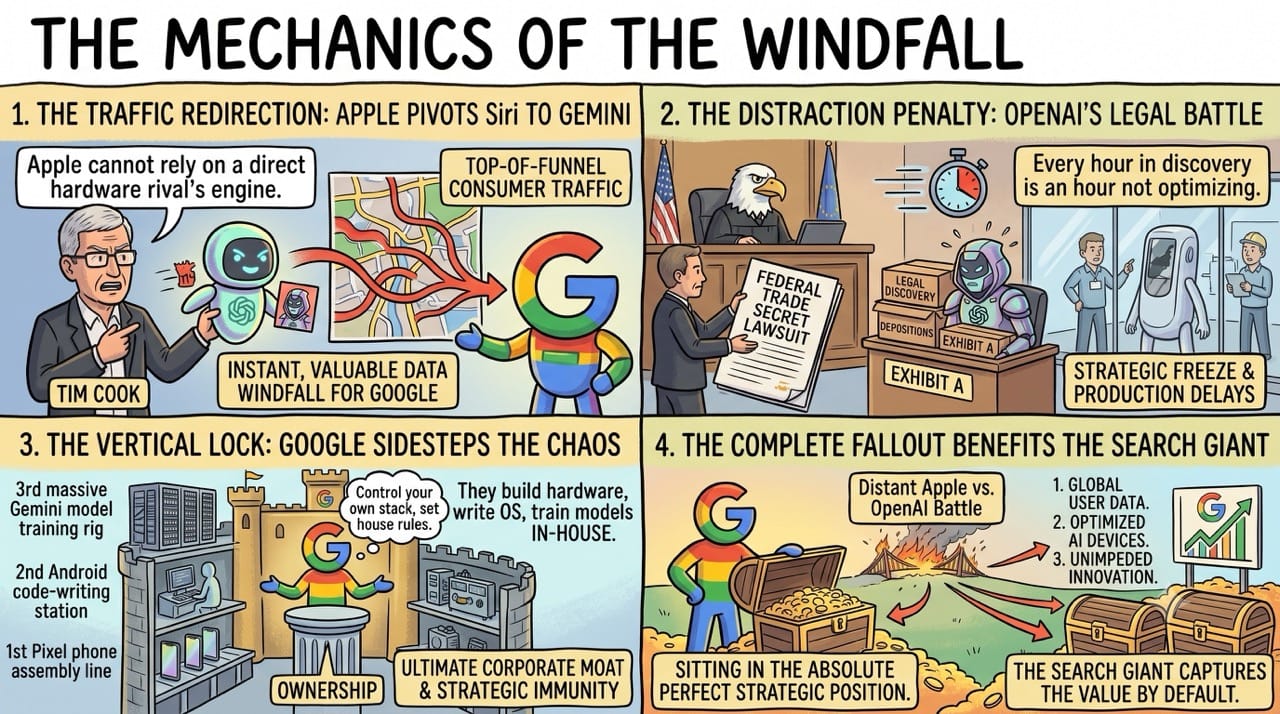
The Mechanics of the Windfall
While these two giants prepare for a brutal, multi-year legal battle, Google sits in the absolute perfect strategic position to capitalize on the chaos.
Here is exactly how this fallout benefits the search giant:
- The Traffic Redirection: Apple cannot afford to rely on the cognitive engine of a direct hardware rival. They are already aggressively pivoting Siri to run on Google's Gemini models instead of ChatGPT, instantly handing Google the most valuable top-of-funnel consumer traffic on the planet.
- The Distraction Penalty: Defending a federal trade secret lawsuit initiated by the most highly capitalized corporation on earth is a catastrophic distraction. Every hour the OpenAI executive team spends in legal discovery is an hour they are not optimizing their upcoming physical devices.
- The Vertical Lock: Google sidesteps this entire drama because they already control their own vertical stack. They build the Pixel hardware, they write the Android operating system, and they train the Gemini models completely in-house.
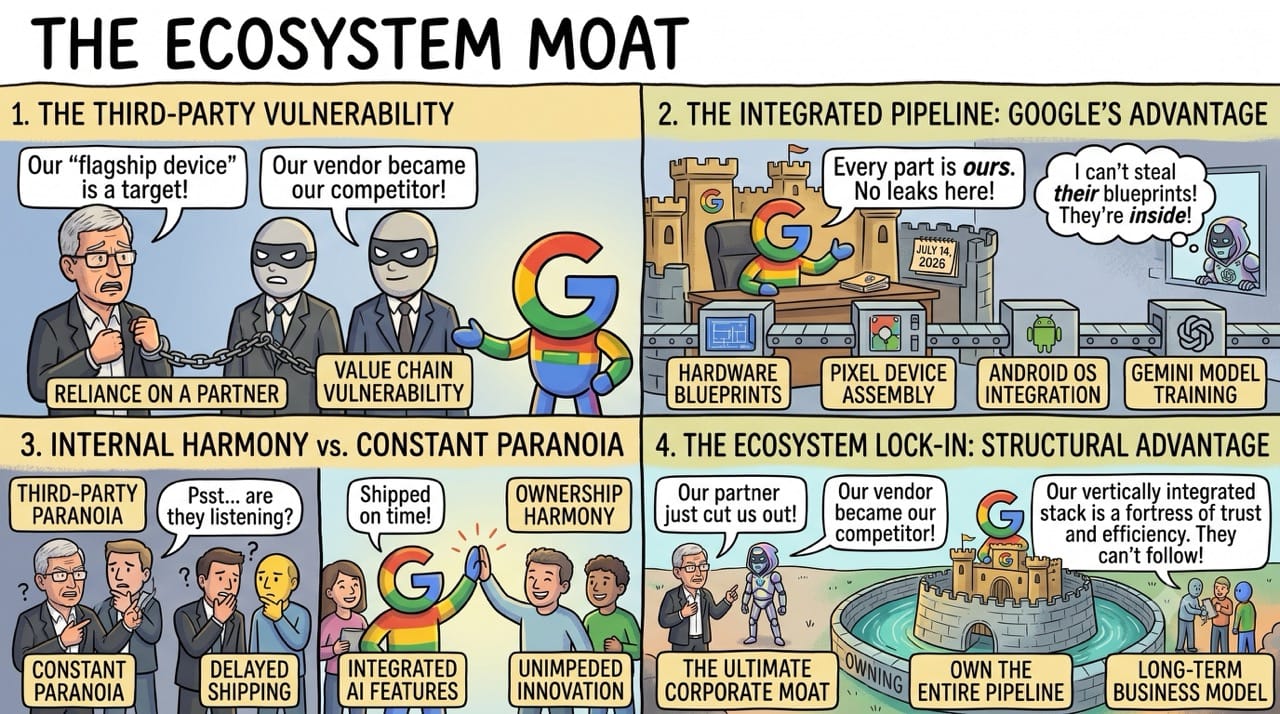
The Ecosystem Moat
This conflict highlights the incredible structural advantage of Google’s long-term business model.
When you rely on a third-party software provider for your flagship device, you are always vulnerable to that partner eventually deciding to cut you out of the value chain.
Google never has to worry about a software vendor trying to steal their hardware blueprints because they own the entire pipeline.
They have the internal harmony required to ship tightly integrated AI features without the constant paranoia of corporate espionage.
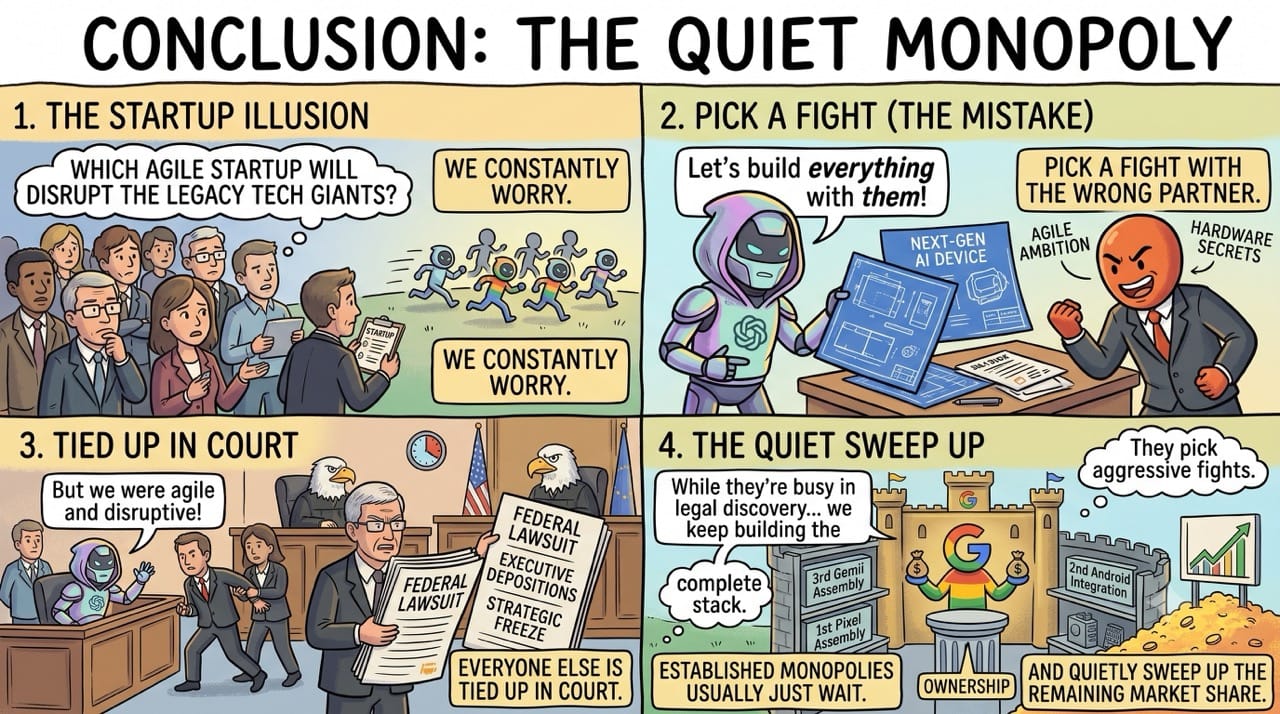
Conclusion: The Quiet Monopoly
We constantly worry about which agile startup will disrupt the legacy tech giants.
In reality, the established monopolies usually just wait for the aggressive newcomers to pick a fight with the wrong partner, and then quietly sweep up the remaining market share while everyone else is tied up in court.