Why Single Purpose Robots Will Win the Automation War (The Humanoid Illusion)
We assume the future of automation requires a walking and talking humanoid robot to replace human labor. The reality is that the most lucrative robotics companies are building highly specialized, single purpose machines that print cash from day one.
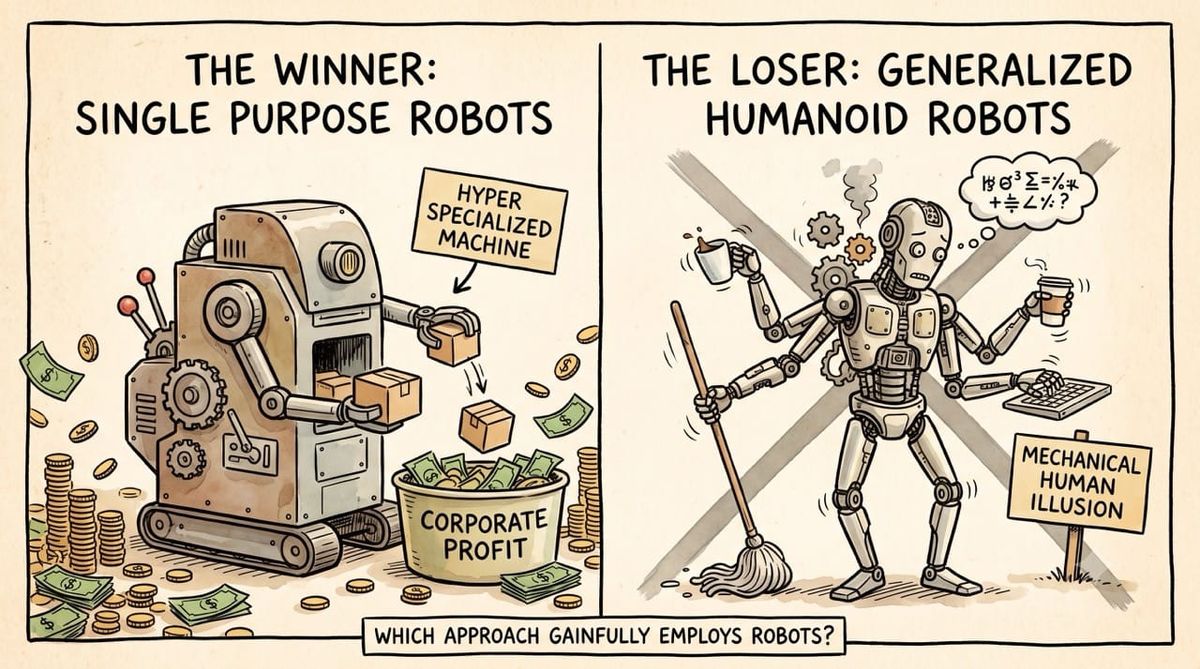
Elon Musk wants to build a generalized mechanical human. Travis Kalanick is building hyper specialized machines that actually generate immediate corporate profit today.
Inspiration: Analyzing the concept of "gainfully employed robots" introduced by Travis Kalanick at Atoms, and contrasting it with the generalized humanoid robotics vision championed by companies like Tesla.

The Humanoid Obsession
Silicon Valley is currently captivated by the idea of the general purpose humanoid robot.
Investors are pouring billions of dollars into companies trying to perfectly replicate the physical form of a human being.
The overarching goal is to build a bipedal machine with articulated fingers that can theoretically perform any task a human worker can do.
The Biological Inefficiency
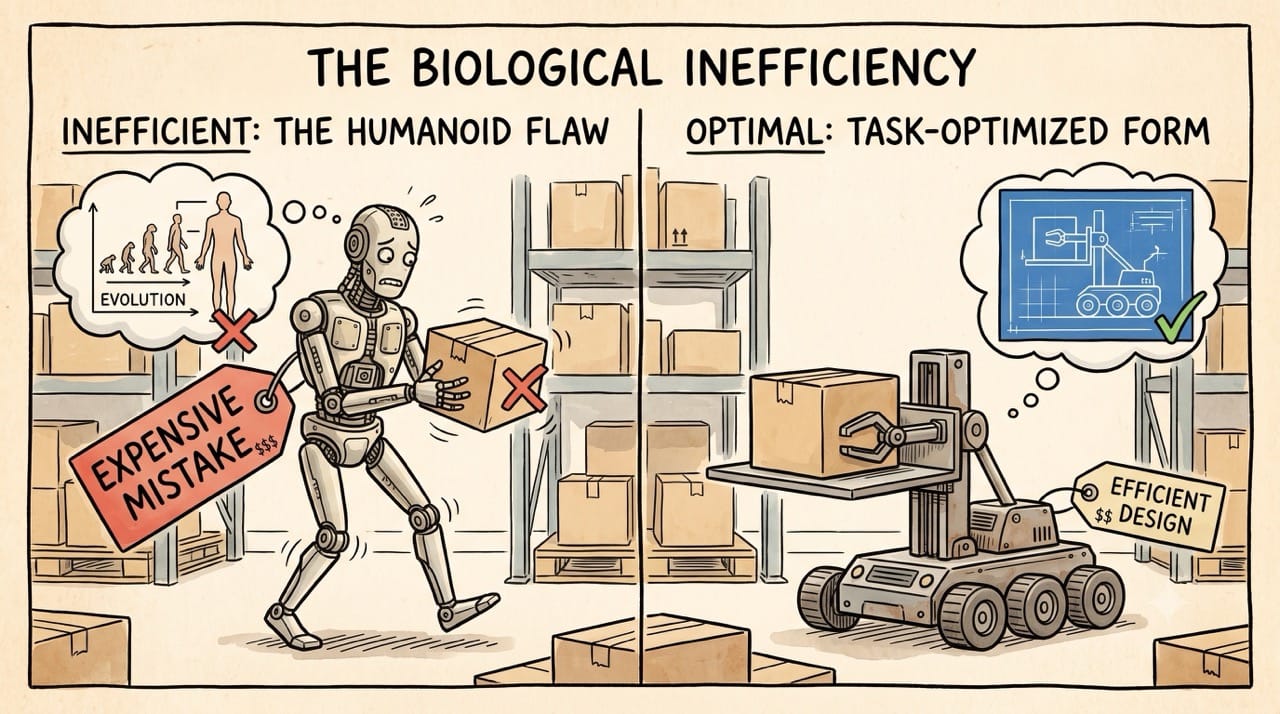
The fundamental flaw in this thesis is that the human body is actually a terrible mechanical design for industrial labor.
We only rely on balancing on two legs and using fragile fingers because of evolutionary biology.
Trying to force a metal machine to replicate this specific anatomical structure just to carry a box across a warehouse is a highly expensive engineering mistake.
Form should always follow function in industrial design, and a humanoid shape is rarely the optimal form for a specific commercial task.
The Gainfully Employed Pivot
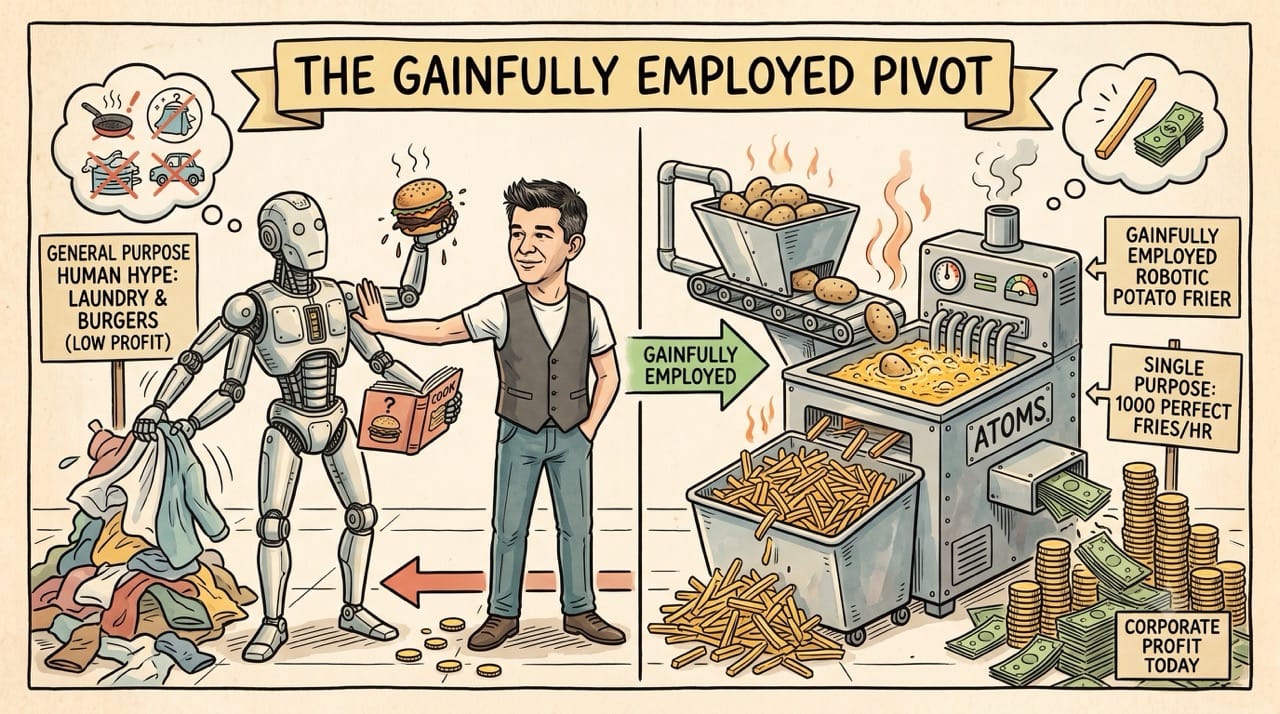
Travis Kalanick is actively rejecting this humanoid trend through his new robotics holding company Atoms.
He is aggressively promoting the concept of gainfully employed robots. These are highly specialized machines designed from the ground up for incredibly narrow commercial execution.
He is not trying to build a mechanical human that can fold your laundry and eventually learn how to cook a burger.
He is building a specialized, single purpose appliance that only knows how to fry a potato perfectly a thousand times an hour.
The Unit Economics of Specialization
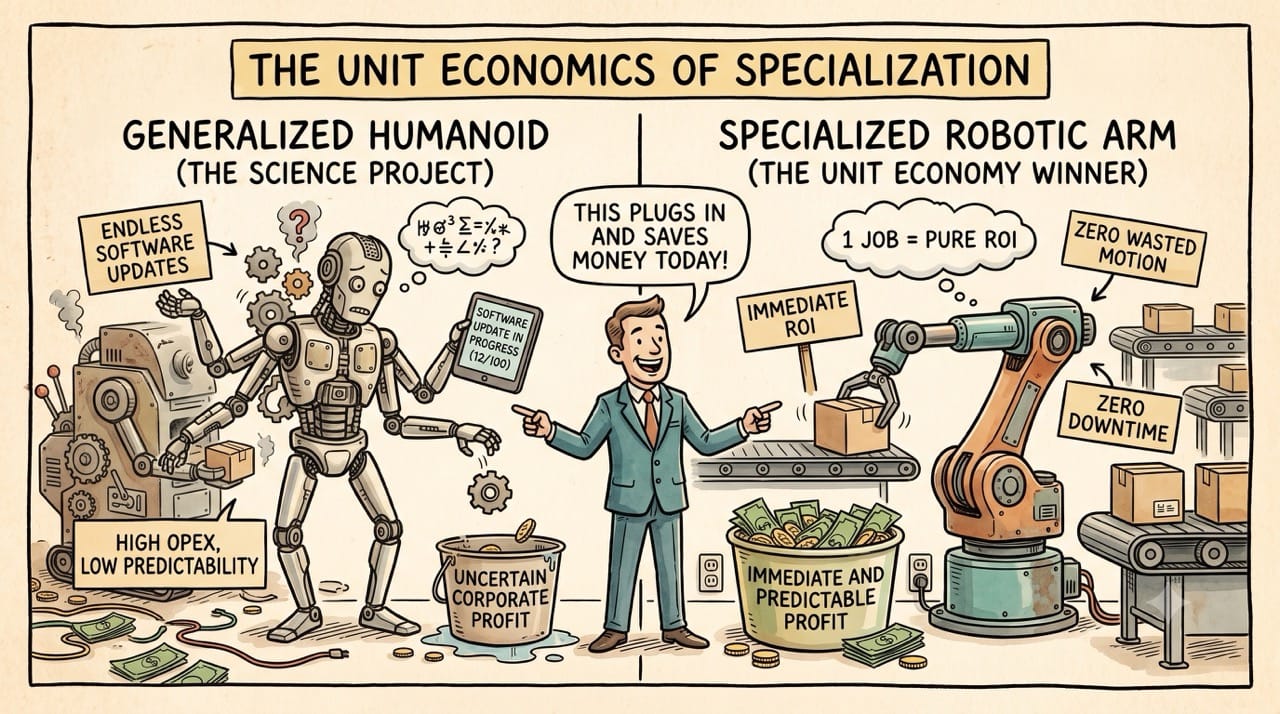
Corporate executives do not want to purchase a fragile science project that requires endless software updates to learn a basic factory task.
They want to buy a piece of hardware that immediately lowers their operating costs the very second it is plugged into the wall.
Single purpose robots offer incredibly clean unit economics.
A specialized robotic arm built exclusively to sort packages in a logistics hub generates an immediate and highly predictable return on invested capital.
It does exactly one job with zero wasted physical movement and practically zero downtime.
Bypassing the Intelligence Bottleneck
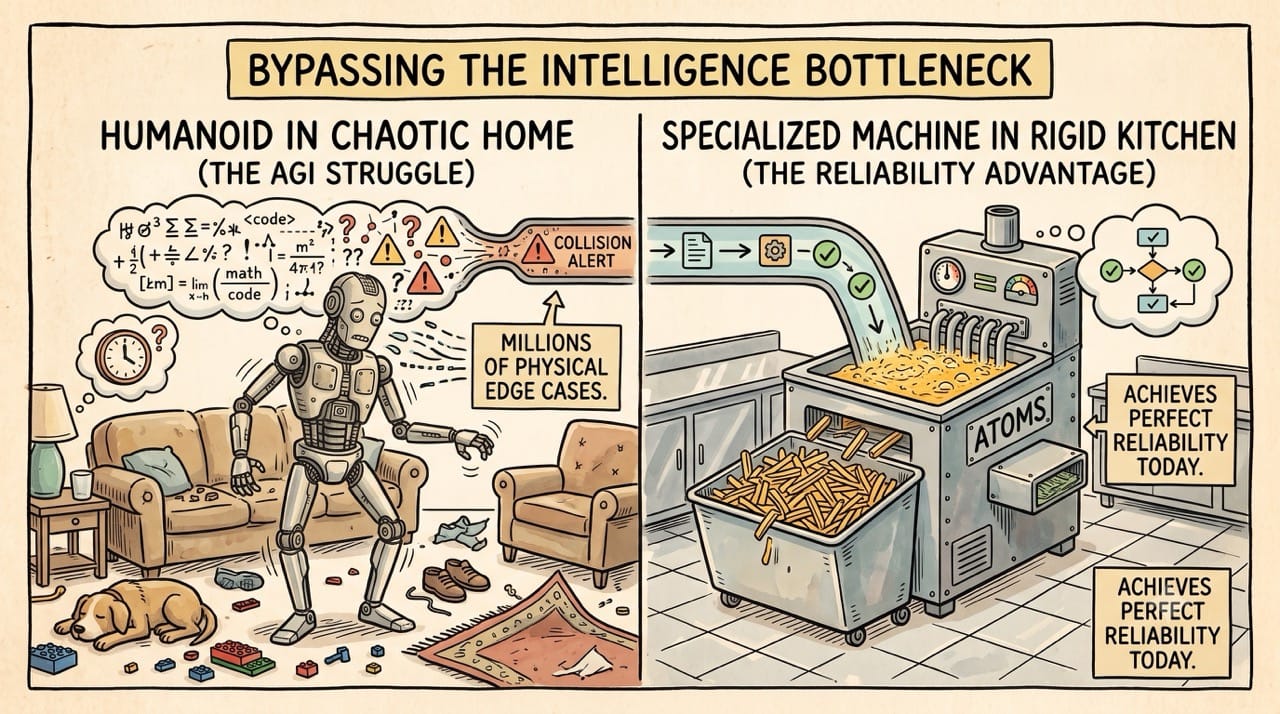
Humanoid robots require a terrifying amount of artificial general intelligence to safely navigate chaotic human environments.
A robot trying to walk through a messy living room on two legs has to process millions of unpredictable physical edge cases in real time just to avoid falling over.
A single purpose robot operating inside a controlled commercial kitchen completely bypasses this cognitive bottleneck.
The commercial environment is rigid and the physical variables are strictly limited.
This allows the specialized machine to achieve perfect operational reliability today without waiting another decade for software intelligence to catch up.
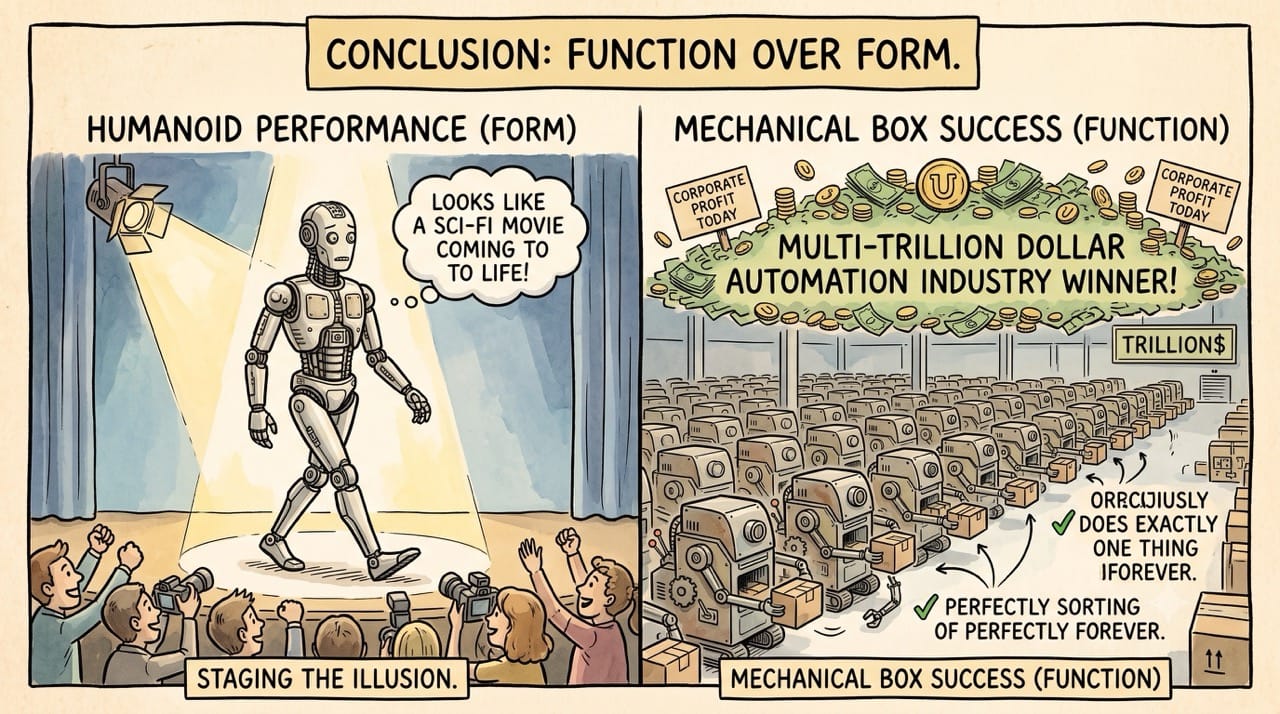
Conclusion: Function Over Form
We love watching humanoid robots walk across a stage because it looks like a science fiction movie finally coming to life.
The actual multi trillion dollar automation industry will be quietly conquered by boring mechanical boxes that do exactly one thing perfectly forever.