AI Native Generation and Thinking Frameworks
Two interviews explain the shift. One startup fixes documents so agents can work. One generation dumps raw thoughts into AI and trusts it to organize. The next natives will think differently.
1. Inspiration
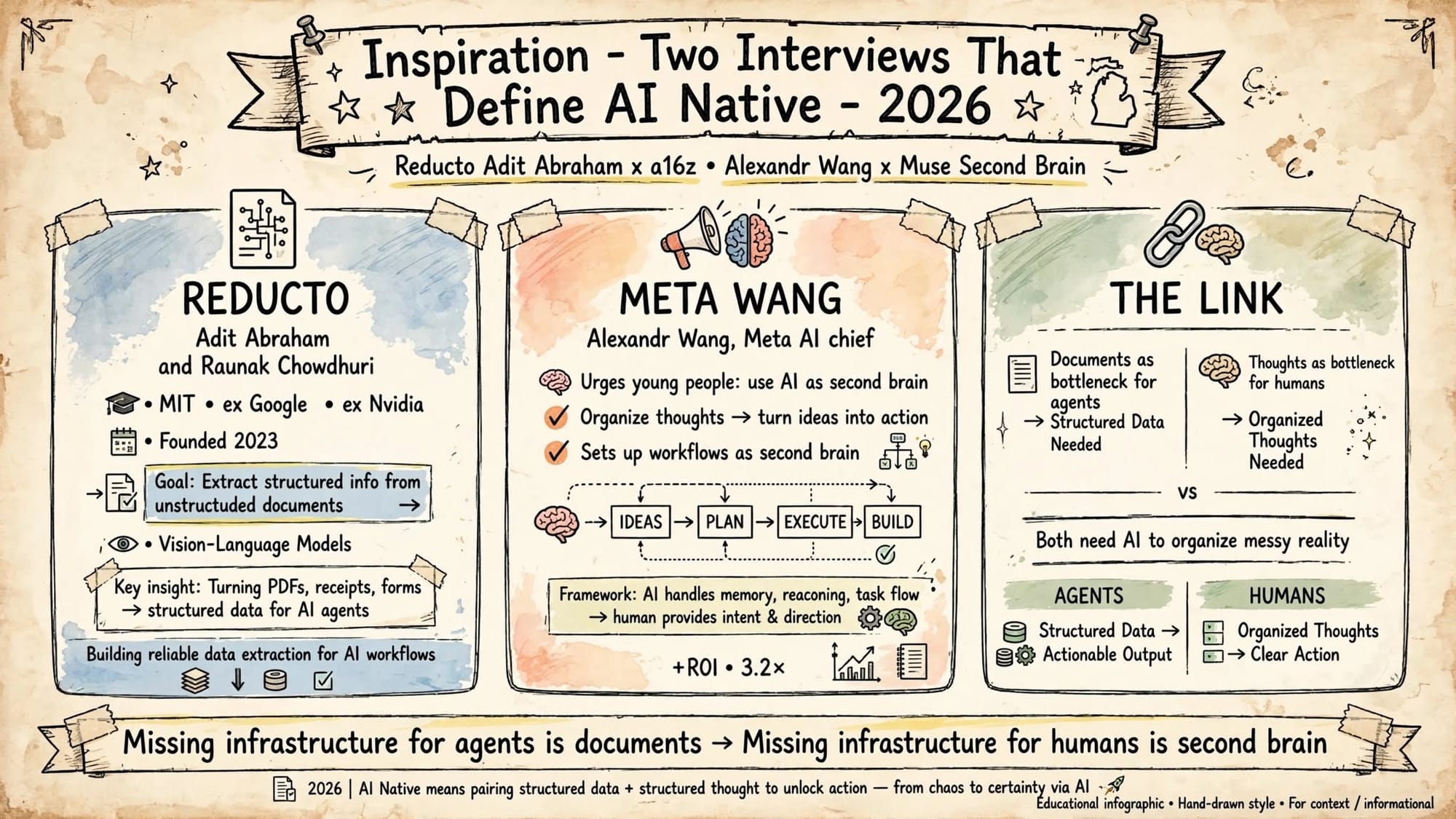
This piece connects two recent interviews.
On one side, Reducto co-founder and CEO Adit Abraham with a16z Deep Dives in October 2026.
On the other, Meta AI head Alexandr Wang on using Muse as a second brain.
Both point to same bottleneck. Real work is trapped in messy reality, whether documents or thoughts. Solving that layer unlocks everything else.
2. Reducto: The Trillion Page Bottleneck
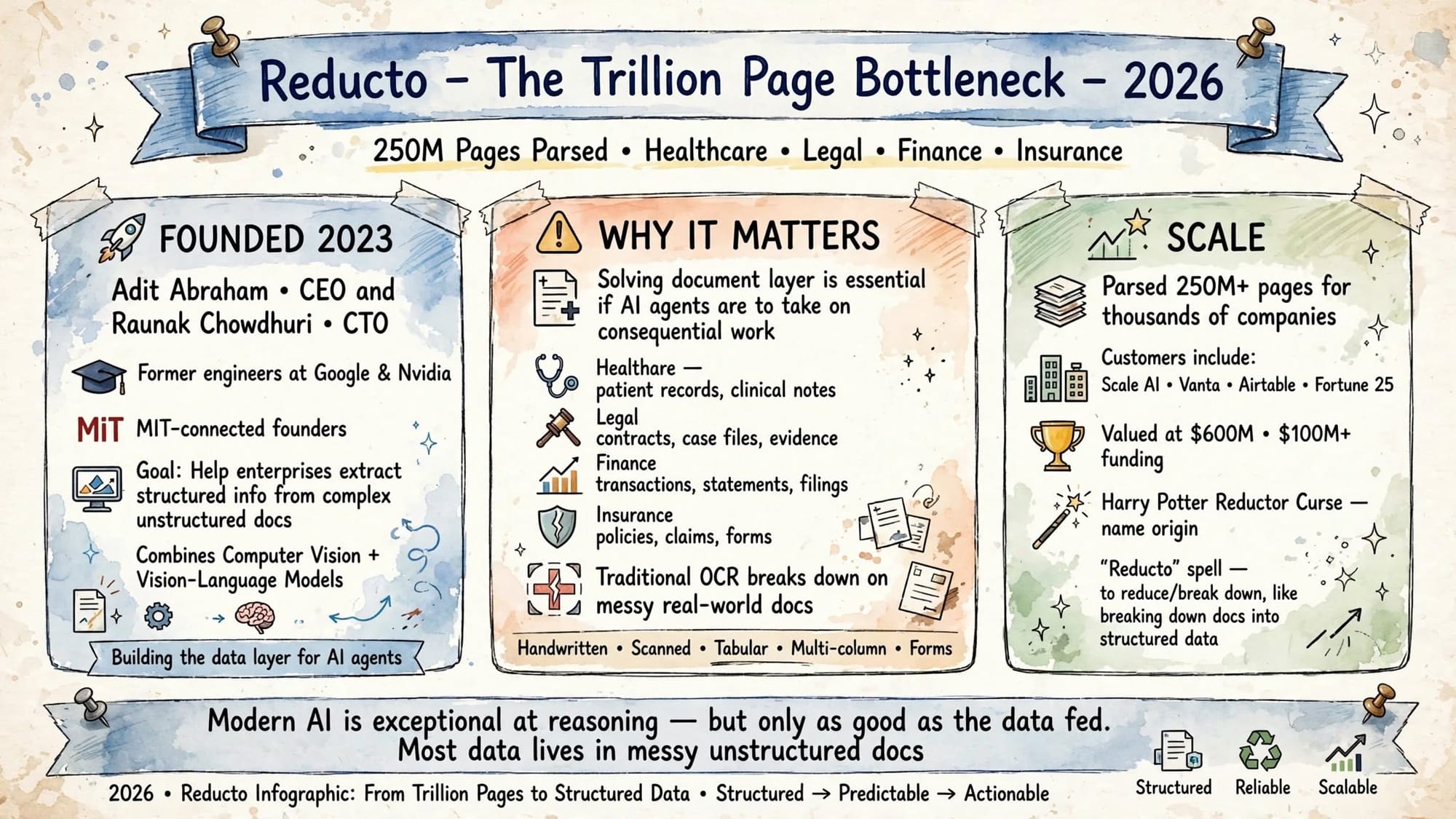
Reducto was founded in 2023 by Adit Abraham and Raunak Chowdhuri, both former engineers at Google and Nvidia, with the goal of helping enterprises extract structured information from complex unstructured documents.
The company combines traditional computer vision methods with new Vision-Language Models to create a parsing platform that achieves higher accuracy and reliability.
Founded in San Francisco by Adit Abraham and Raunak Chowdhuri, both MIT-connected, Abraham shipped products at Google and did ML research at Media Lab.
Why it matters: Reducto co-founder argues that solving this document layer is essential if agents are going to take on consequential work in healthcare, legal, finance, and insurance.
Since launching, Reducto has parsed over 250 million pages for thousands of companies.
Name comes from Harry Potter's Reductor Curse, chosen for building magical tools that shatter objects into usable pieces.
Today valued near $600 million, used by Scale AI, Vanta, Airtable.
3. How Reducto Was Created
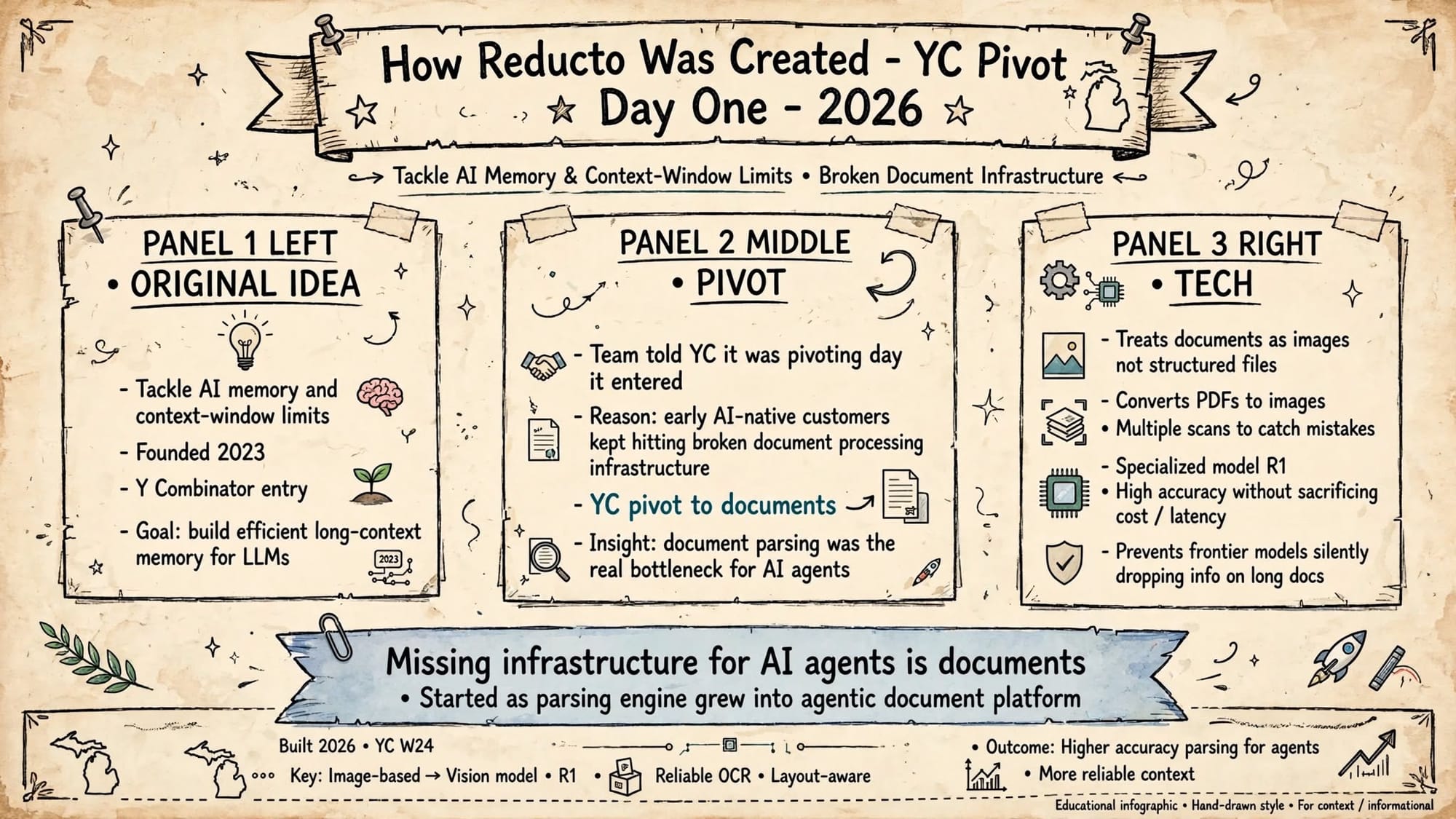
Key takeaways from the a16z Deep Dives interview: Reducto was founded in 2023 to tackle AI memory and context-window limits, the team told YC it was pivoting the day it entered, after early AI-native customers kept hitting broken document processing infrastructure.
Instead of parsing PDFs as structured files, they treat PDFs as images.
As CEO Adit Abraham explained, they convert them to images and scan multiple times to catch and fix mistakes.
Frontier models can silently drop information on long documents.
Specialized infrastructure plus vision language models prevents that.
What started as parsing engine grew into complete agentic document platform.
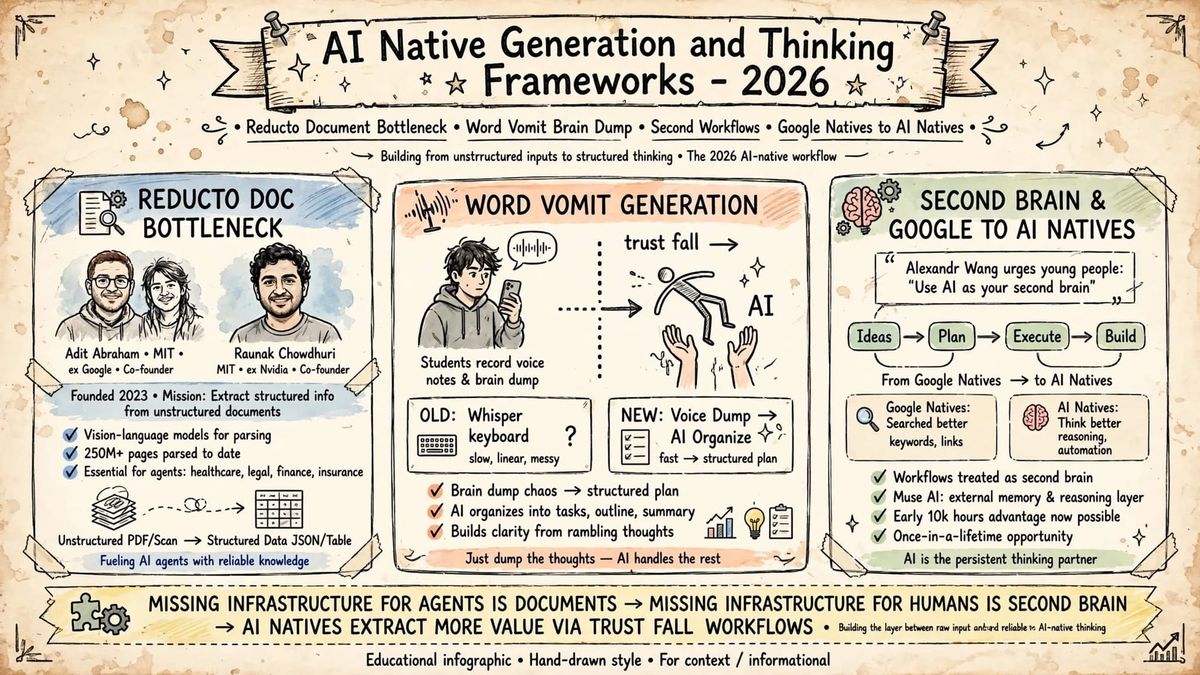
4. The Word Vomit Generation
Wang describes a shift in college usage that is easy to miss.
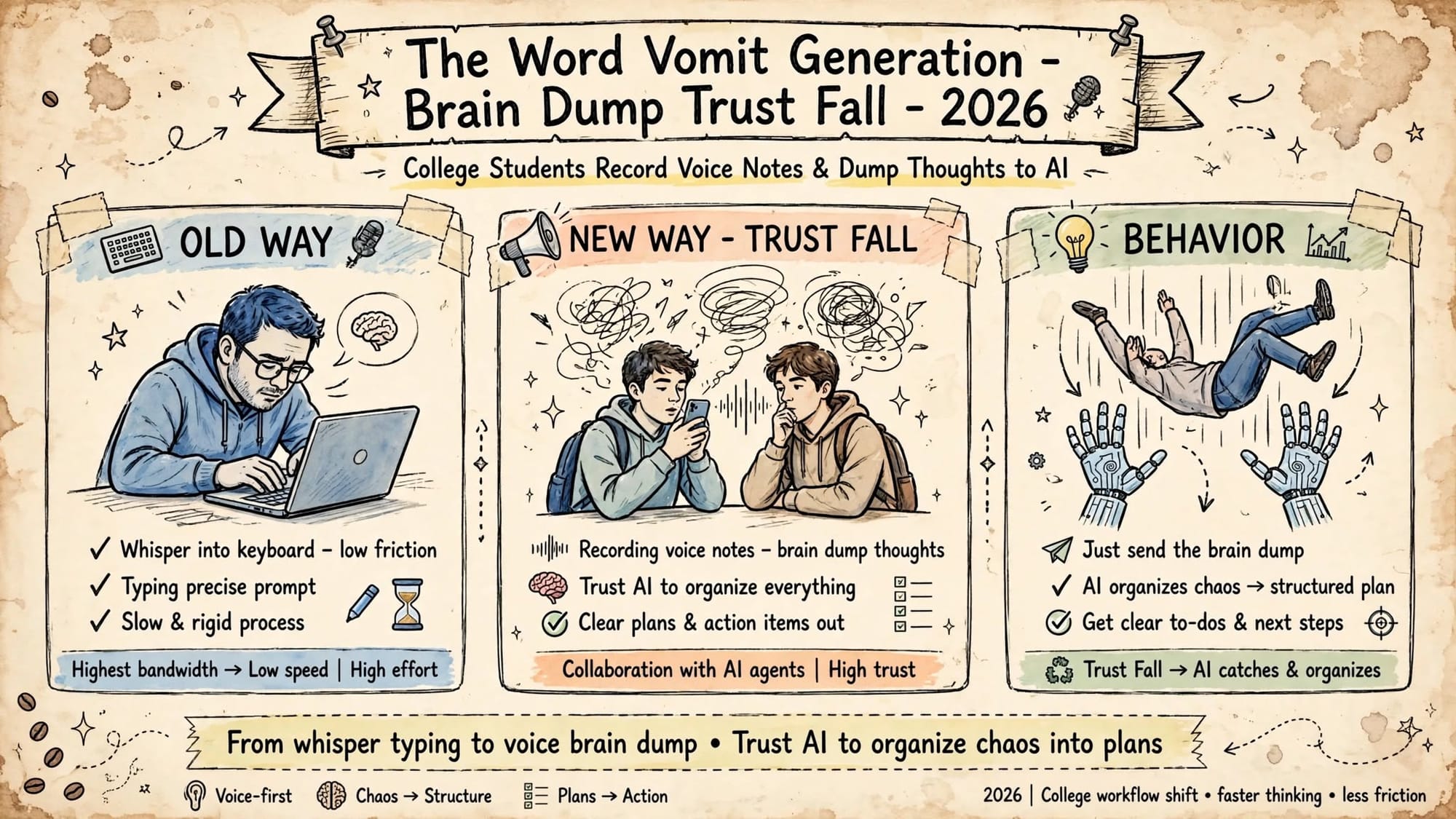
They just are recording voice notes and brain dumping to the AI, and they send it, and they just trust the AI to organize all the thoughts and give them clear plans and clear things to do.
When I talk to college students, some are already in a state of complete trust-fall with AI: they just record voice notes, dump all their thoughts to AI, and trust AI to organize all ideas, giving them clear plans and action items.
College students particularly demonstrate full trust fall usage, recording voice notes and brain dumping to AI agents, trusting them to organize thoughts and provide clear plans.
This is not prompting. It is word vomit, brain dump, full trust fall. Old researchers whisper into keyboard because it is highest bandwidth, lowest friction way to get thoughts out.
New generation skips typing entirely.
Voice is now big.
5. AI Native Thinking Frameworks
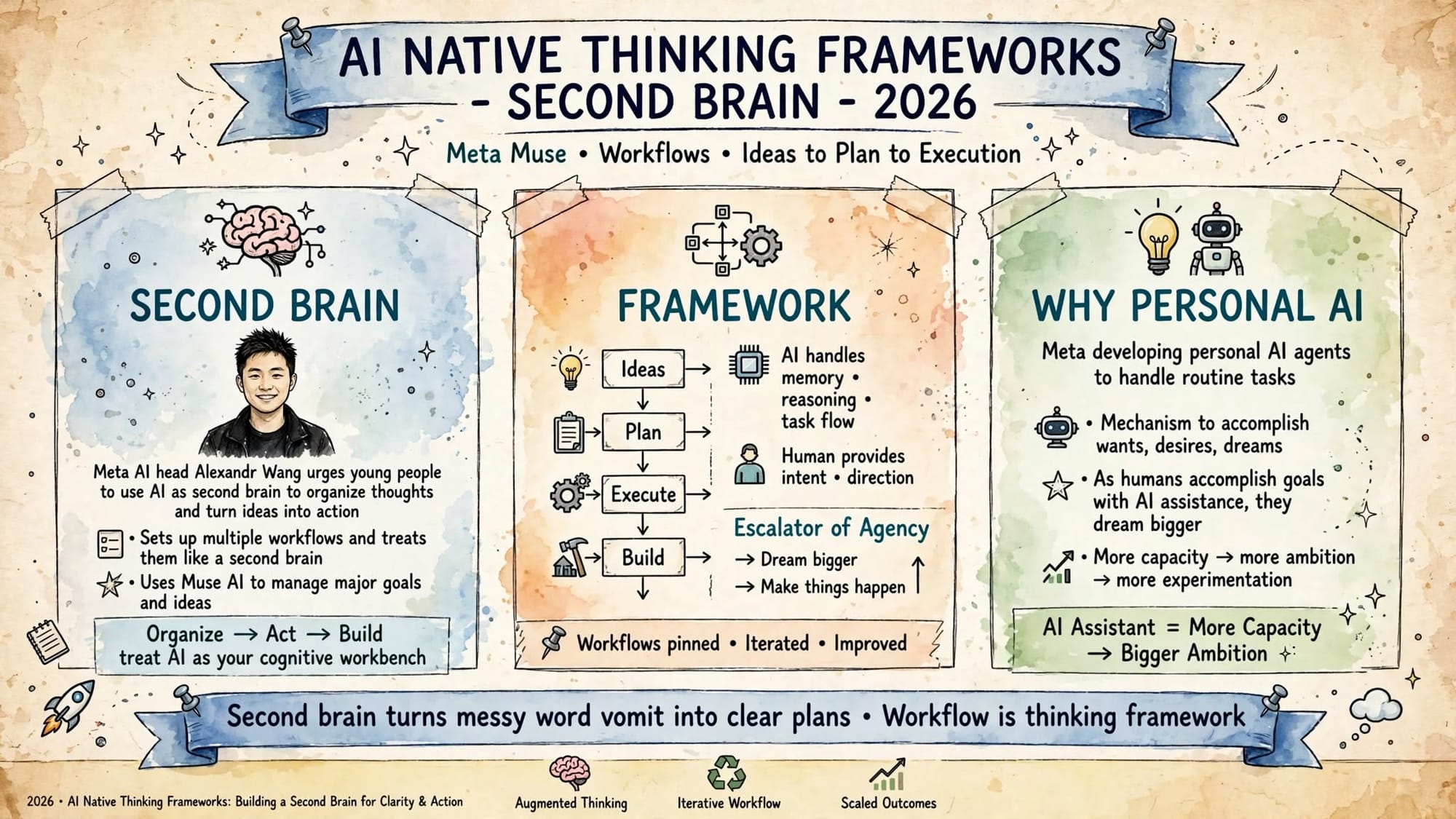
Wang's own practice shows the framework. Meta AI head urges young people to use AI tools as a second brain to organise thoughts and turn ideas into action.
He said he uses Muse AI for major goals, saying, I set up a bunch of workflows and kind of treated them like a second brain.
He also said Meta is developing personal AI agents to handle routine tasks.
The framework is simple: Ideas to Plan to Execute to Build. Human provides intent and direction. AI handles memory, reasoning, task flow.
Result is escalator of agency. As humans accomplish goals with AI assistance, they dream bigger.
Second brain turns messy word vomit into clear plans.
Workflow is thinking framework. Personal AI becomes mechanism to accomplish wants, desires, dreams.
6. Google Natives vs AI Natives
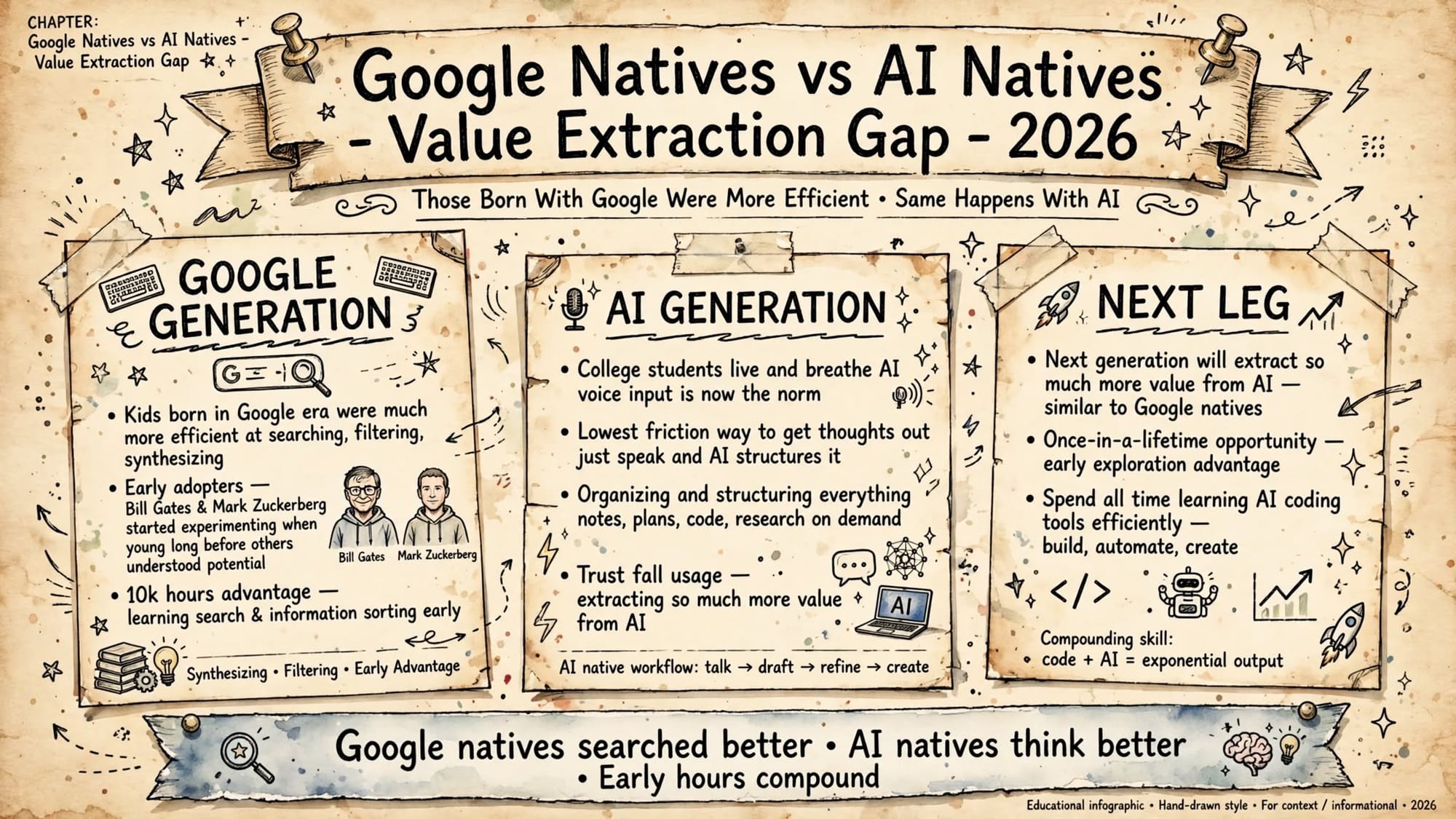
Those who were born in the era of Google were much more efficient at searching, filtering, synthesizing. Early icons like Bill Gates and Mark Zuckerberg started experimenting when young long before most people understood potential.
Same pattern now. Wang notes those who dedicate 10,000 hours to learning and experimenting with AI tools gain significant advantage.
Teenagers have time to live and breathe AI.
Google natives searched better. AI natives think better. They record voice notes as norm, lowest friction way to get thoughts out, just speak and AI structures it, organizing and structuring everything, notes, plans, code, research on demand.
Spend all time learning AI coding tools efficiently, build, automate, create. Compounding skill: code plus AI equals exponential output.
Next generation will extract so much more value from AI, similar to Google generation. Once in a lifetime opportunity. Early hours compound.