Beginner's Mind and AI: Why Outsiders Solve What Insiders Cannot
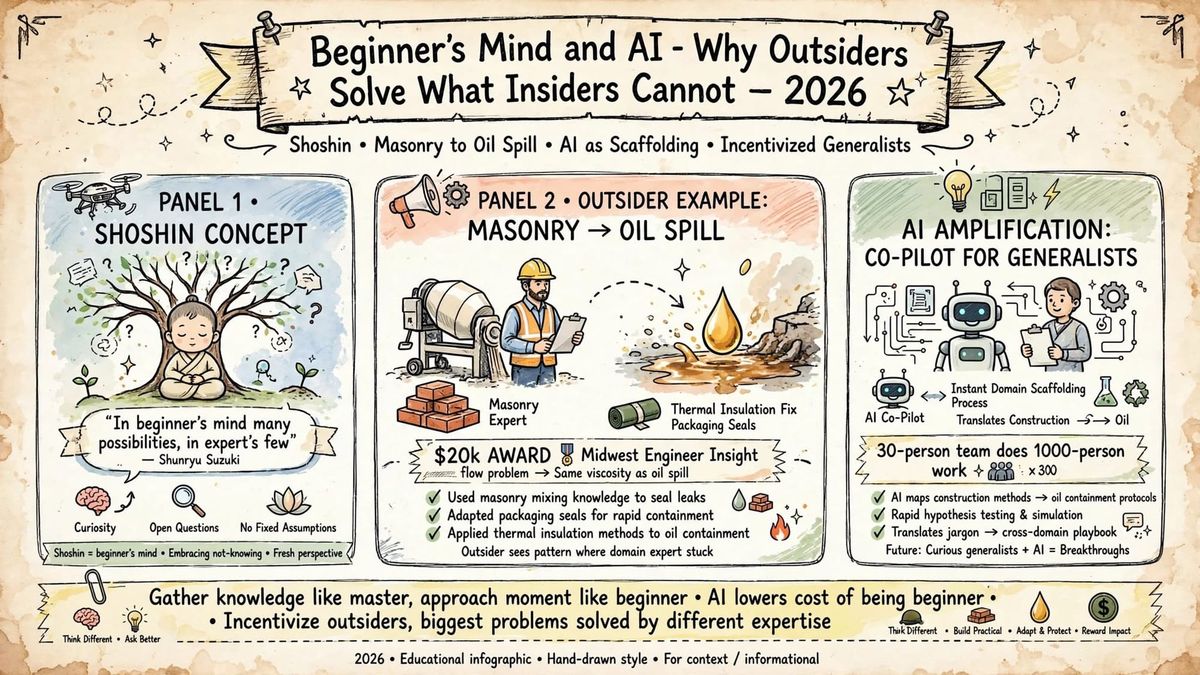
The most powerful solver is not always the expert. With AI as scaffolding and incentives as fuel, a masonry expert can fix an oil spill and a construction technique can keep rations fresh.
1. What Is Beginner's Mind
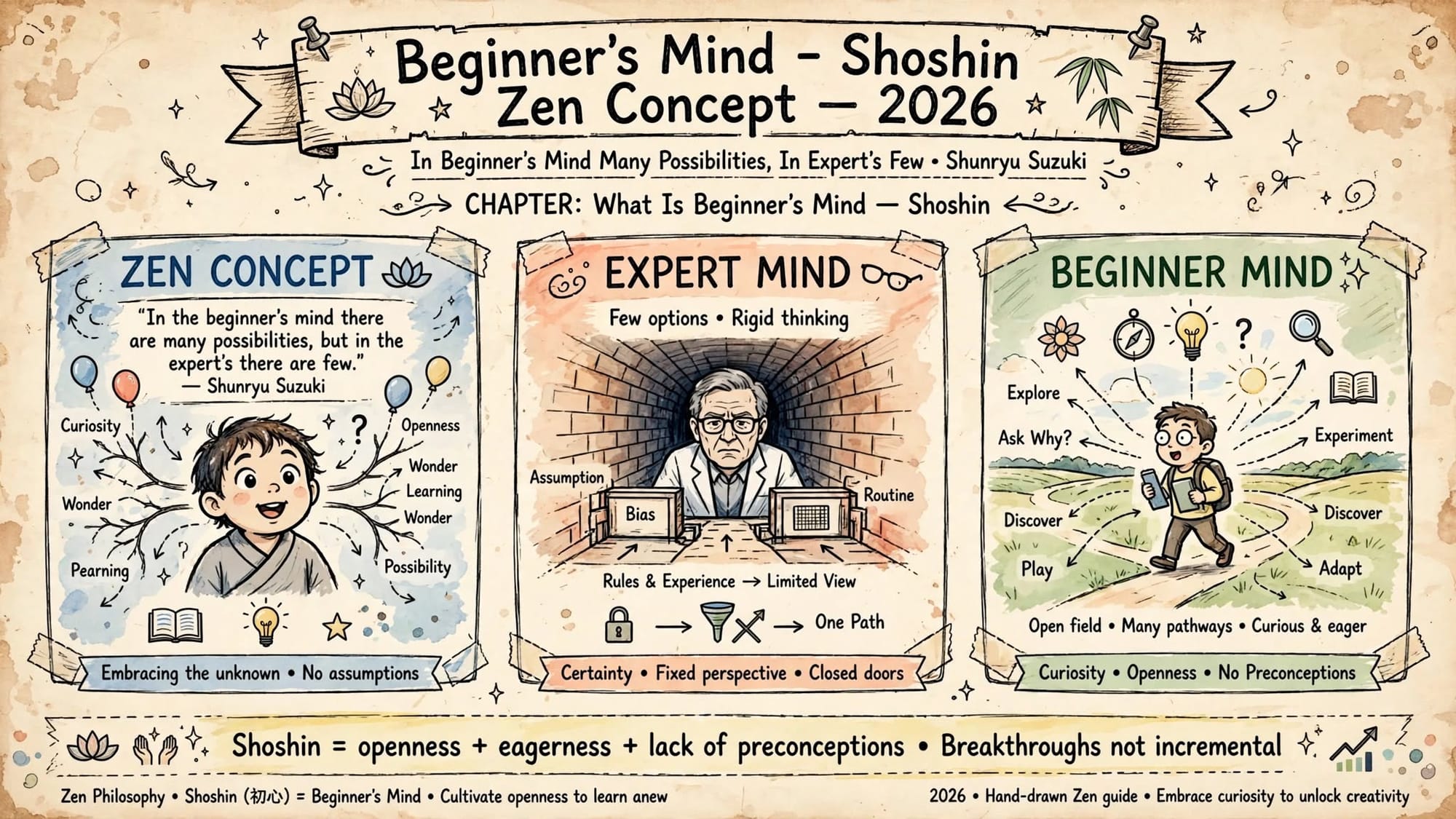
Zen Buddhism calls it Shoshin. Shunryu Suzuki summarized it simply: in the beginner's mind there are many possibilities, but in the expert's there are few.
Beginner's mind is not ignorance. It is a practice of openness, eagerness and lack of preconceptions even when knowledge is advanced.
The expert builds necessary foundation.
You cannot transcend conventions you do not understand. The beginner prevents that foundation from calcifying into dogma.
The rhythm is clear: gather knowledge like a master, then approach each moment like a beginner. Iterate, reflect, adapt quickly. Model the behavior by engaging openly without preconceptions.
2. The Masonry Expert Who Solved The Impossible
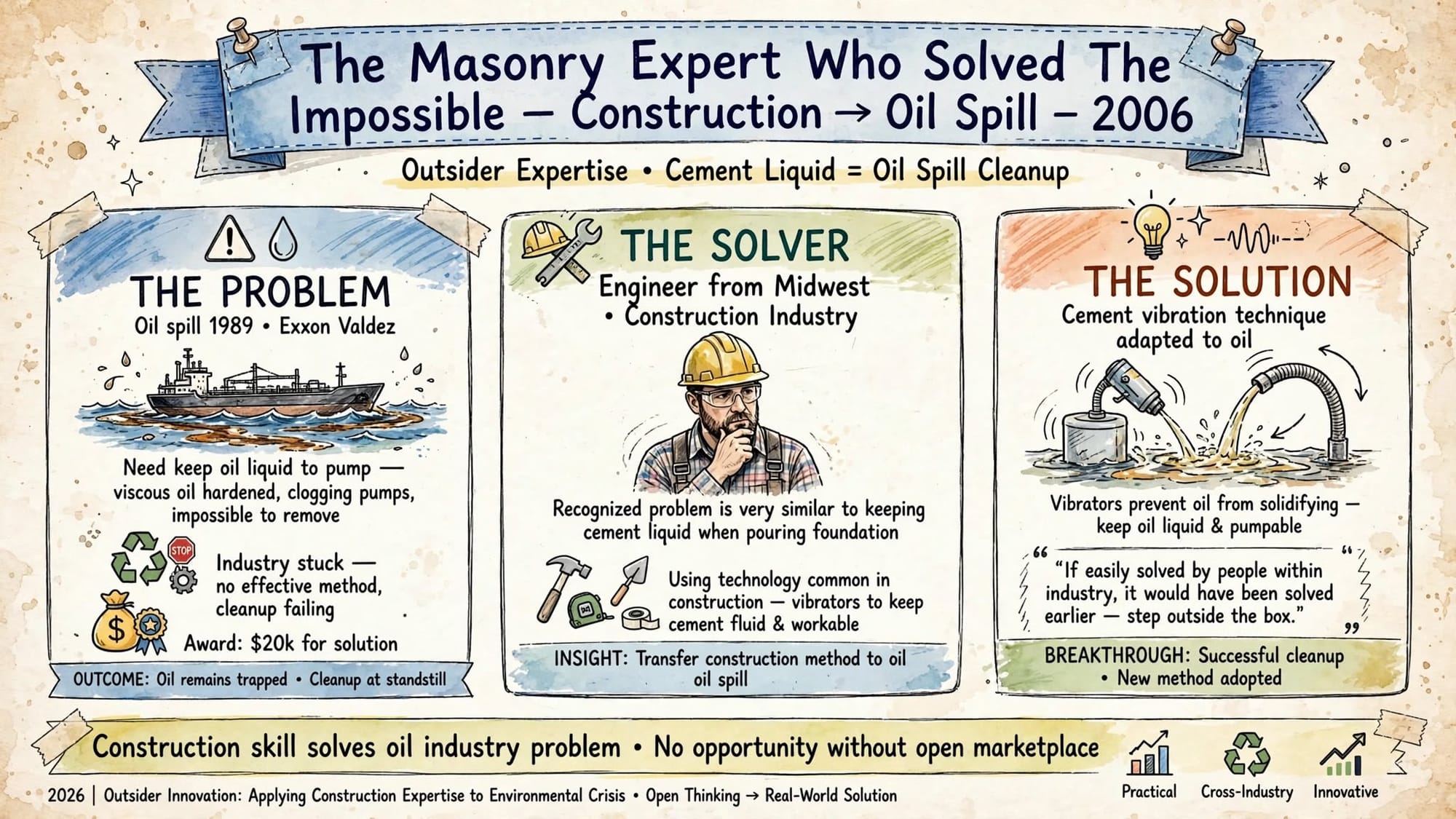
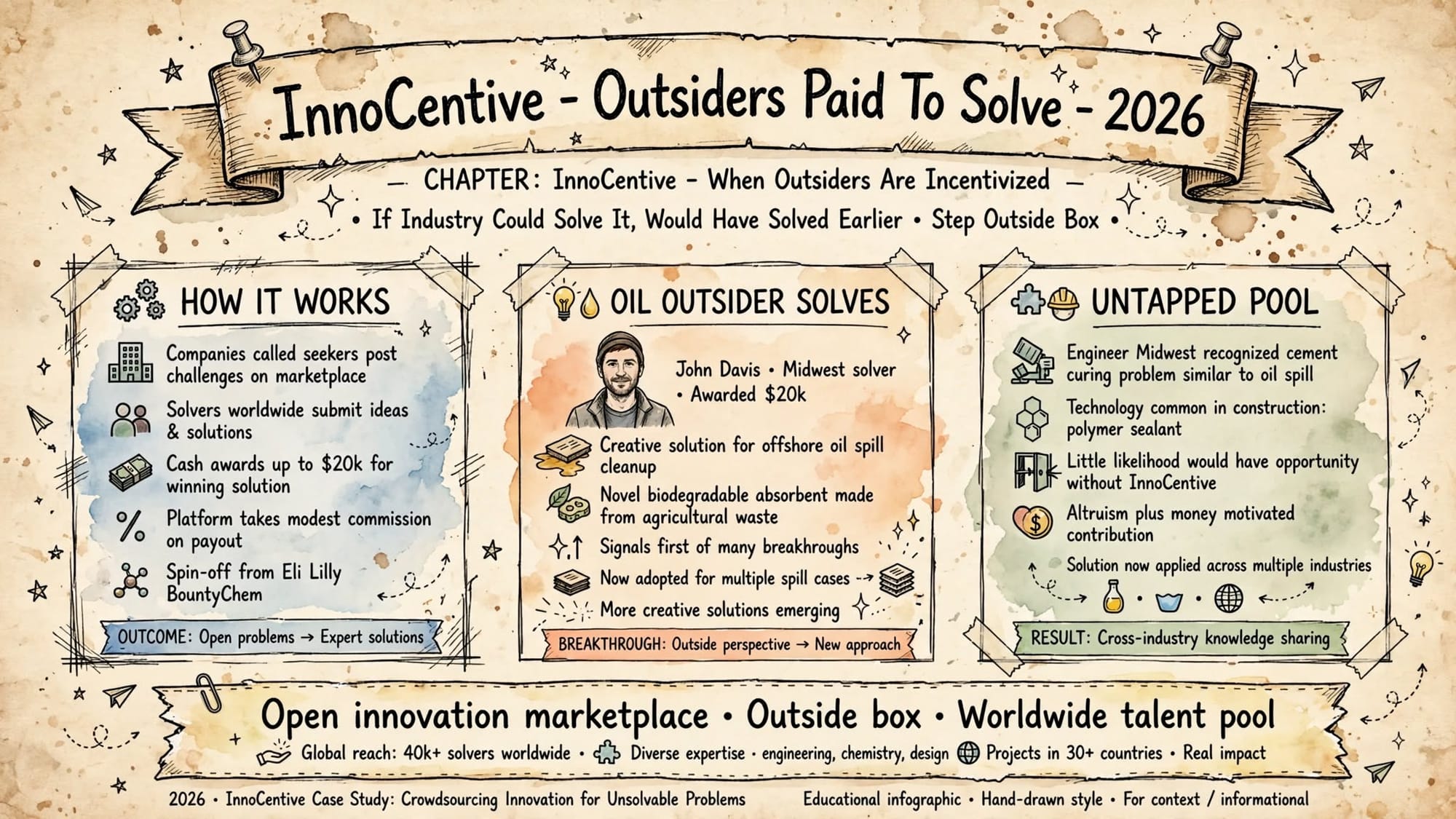
In 2007, the Oil Spill Recovery Institute faced a problem that had lingered since the 1989 Exxon Valdez disaster.
How to keep recovered oil liquid enough to pump when it emulsifies.
Industry insiders were stuck. The solution came from John Davis, a solver from the central United States on InnoCentive.
He was awarded $20,000 for his creative solution. The signal was the first of many breakthroughs the institute hoped would come from an open marketplace.
The solver ended up being an engineer out of the Midwest and he recognized a way to solve that problem using technology that is fairly common in the construction industry.
He recognized that was very similar to the problem of keeping cement liquid when you are pouring a foundation.
There is very little likelihood he would have had an opportunity to use his skills in this philanthropic way without InnoCentive. A vibration method used to keep cement flowing became a method to keep oil flowing.
3. Why Insiders Get Stuck
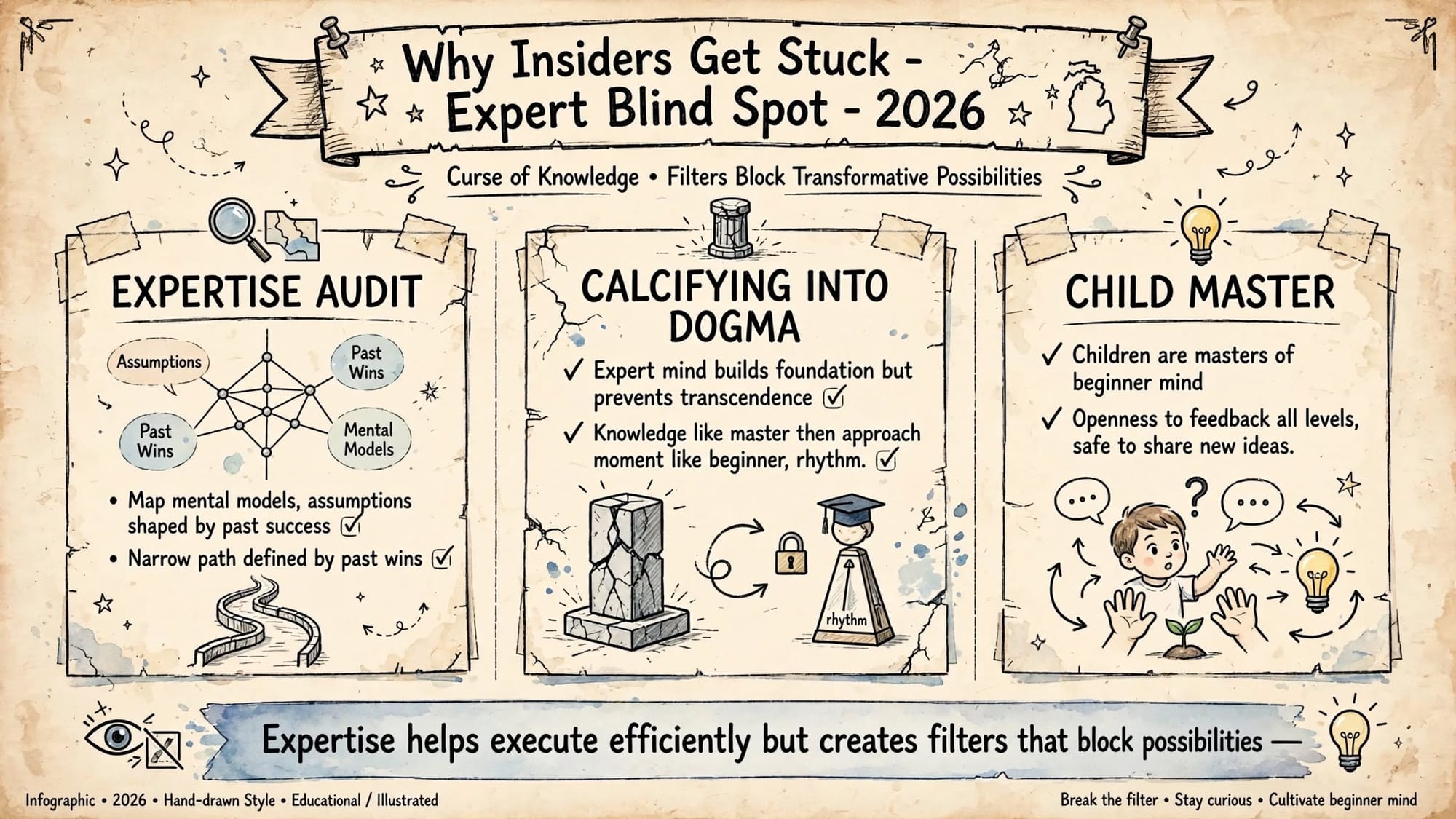
Expertise helps execute efficiently. It also creates filters that block transformative possibilities.
The expert's path is often narrow, defined by past successes.
Inside a domain, mental models harden.
Assumptions become invisible.
The art of maintaining enthusiasm to explore alongside eagerness to learn gets lost.
Children are masters of the beginner's mind because they have no reputation to protect.
Leaders who practice Shoshin model openness, actively seek diverse perspectives, and create environments where team members feel safe to share new ideas.
An expertise audit maps those hidden assumptions before they block progress.
4. InnoCentive: When Outsiders Are Incentivized
InnoCentive was spun out of Eli Lilly's internal R&D under the name BountyChem.
The idea was simple: if a firm cannot solve a problem on its own, why not use the reach of the internet to see if someone else can come up with the answer.
Companies called seekers post challenges.
Solvers worldwide submit ideas.
Cash awards, often $20,000 for winning solutions, go to winners. Platform takes modest commission.
The results are consistent.
If the challenge were easily solved by people within the industry, it would have been solved earlier.
The marketplace allows stepping outside the box and looking at more creative solutions.
Examples compound. Precyse, struggling to improve battery life of an RFID device, received more than 300 ideas from global experts after turning to InnoCentive.
Unilever, NASA, and nonprofits found breakthroughs they might never have discovered through conventional channels.
5. How AI Amplifies Beginner's Mind
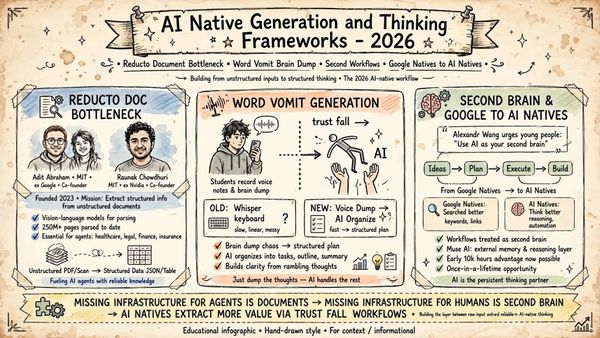
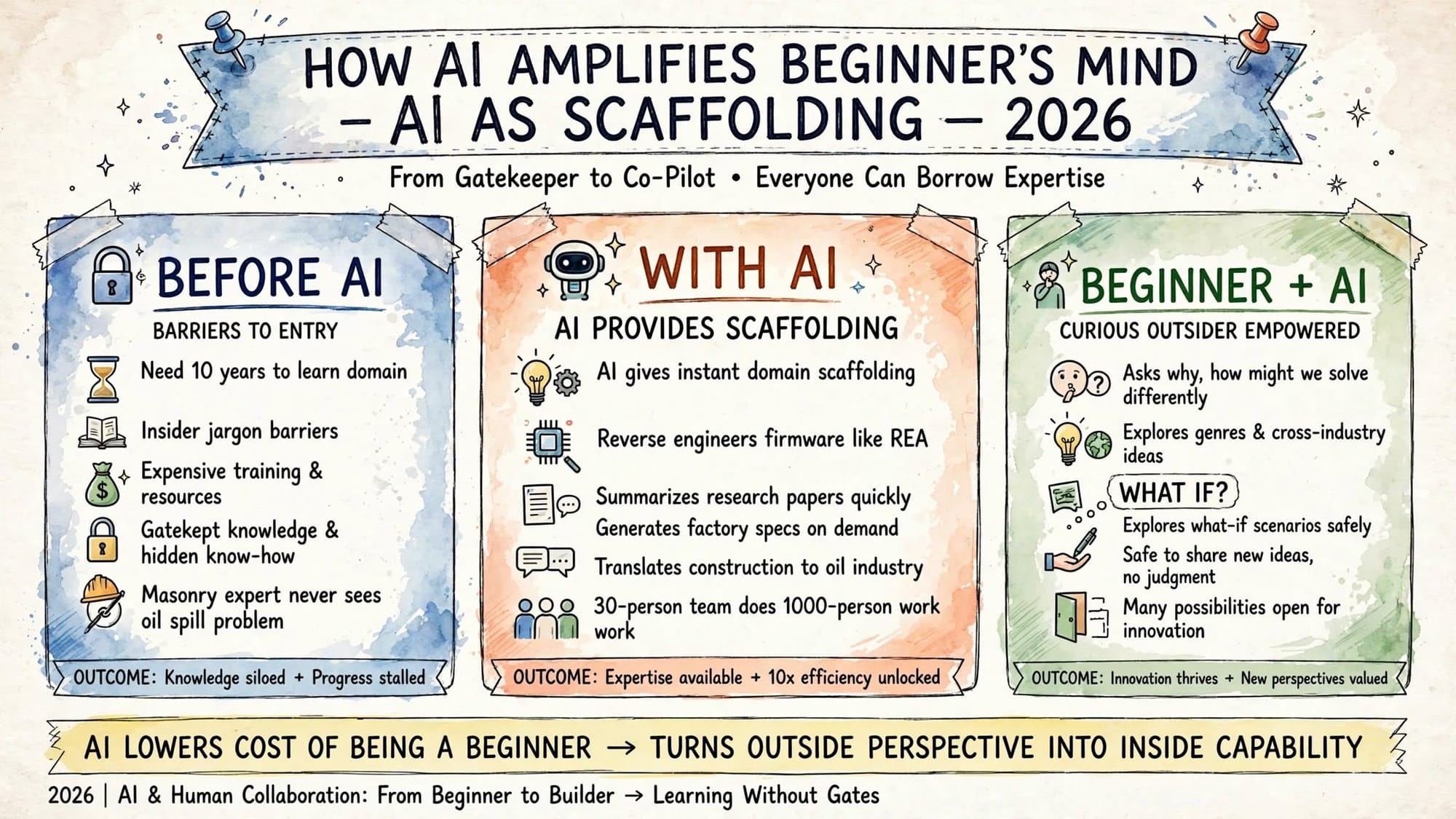
Before AI, barriers were high. Ten years to learn domain, insider jargon, expensive training, gatekept knowledge.
A masonry expert never saw the oil spill problem. A military logistics problem never reached a construction specialist.
With AI, the scaffolding is instant.
AI gives domain summaries in minutes.
Tools like REA, Reverse Engineer Anything, point a model at hardware, decompile logic, write new firmware and install a custom interface on the spot.
Research papers get summarized, factory specs generated on demand, construction translated to oil industry.
A 30 person team does 1000 person work.
The curious outsider can now ask why and how might we solve this differently, explore genres and cross industry ideas, test what if scenarios safely.
Many possibilities open because cost of being a beginner collapsed.
AI lowers cost of being a beginner and turns outside perspective into inside capability.
6. Future: Everyone Can Be An Outsider
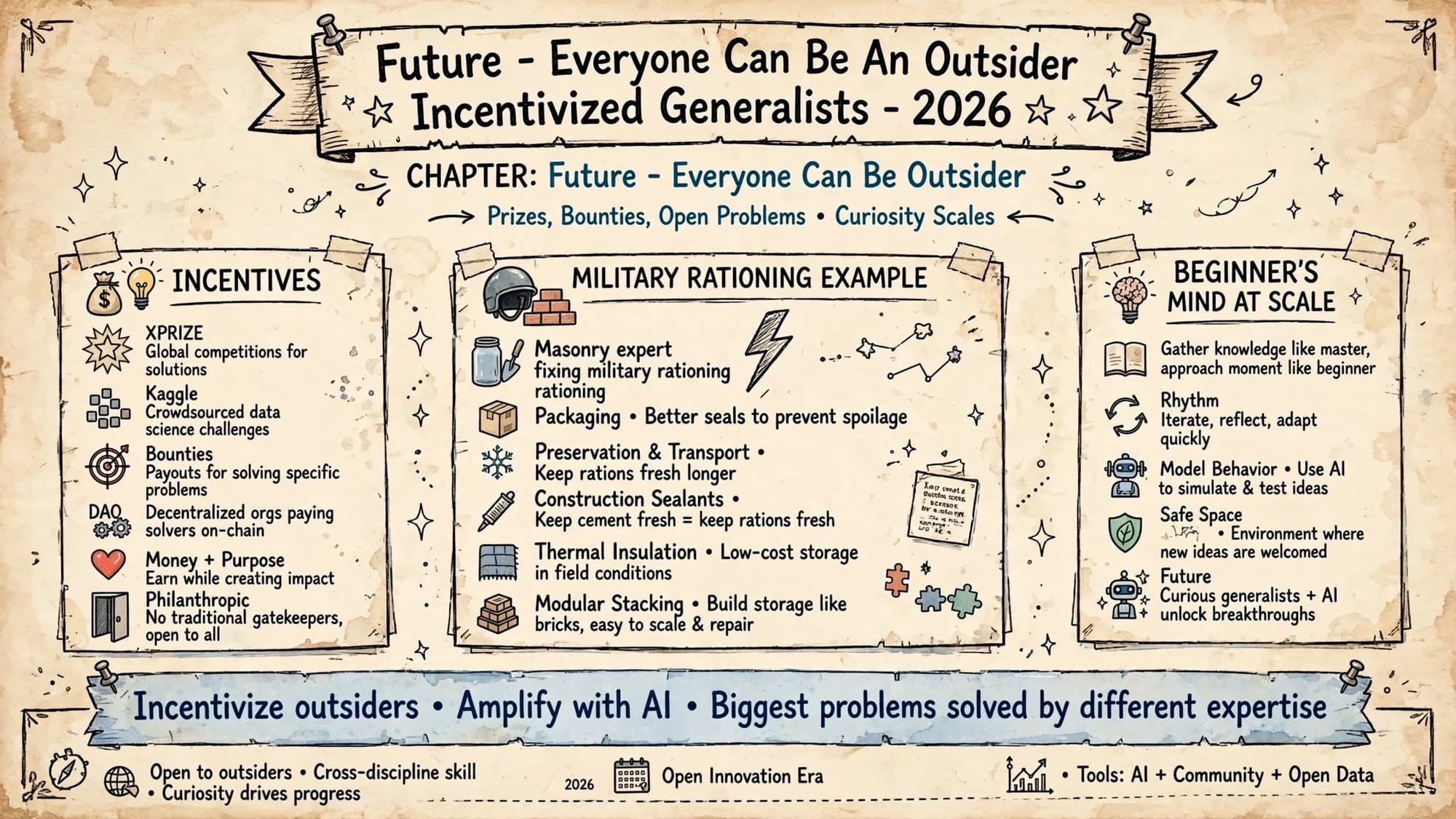
Incentives scale curiosity. XPRIZE runs global competitions. Kaggle crowdsources data science challenges.
Bounties pay for specific problems. DAOs pay solvers on chain.
Money plus purpose creates philanthropic way without traditional gatekeepers.
Take the military rationing example that inspired this post.
A masonry expert fixing rationing sounds odd until broken down:
Packaging needs better seals to prevent spoilage, a skill from keeping cement fresh. Preservation and transport need to keep rations fresh longer, similar to keeping materials viable on site.
Construction sealants that keep cement fresh map to keeping rations fresh. Thermal insulation for low cost storage in field conditions comes from building science. Modular stacking like bricks allows storage that is easy to scale and repair.
Same pattern: different expertise, incentivized, amplified by AI.
Gather knowledge like a master, approach moment like a beginner. Model behavior, create safe space, use AI to simulate and test ideas.
Future belongs to curious generalists plus AI unlocking breakthroughs that narrow experts miss.
Incentivize outsiders, amplify with AI, biggest problems solved by different expertise.