Why Autonomous Commerce Will Fail
We assume artificial intelligence will soon autonomously buy all our groceries and manage our daily shopping. The reality is that agentic commerce is a theoretical fantasy completely blocked by unresolvable payment liability and fundamental consumer psychology.
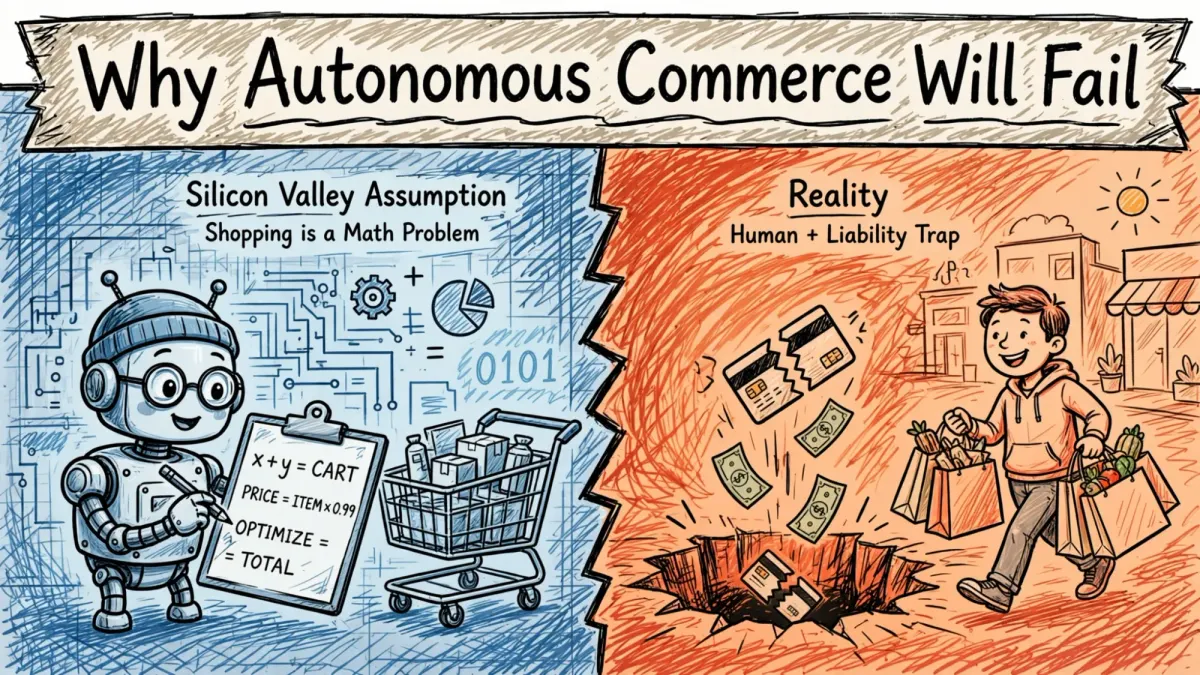
Silicon Valley assumes shopping is a math problem to be solved. They are ignoring the catastrophic liability trap of automated checkouts and the simple reality that humans actually like to shop.
Inspiration: Analyzing the heavy hype surrounding agentic commerce where algorithms autonomously research and purchase goods. Realizing that the structural friction of payment liability combined with a fundamental misunderstanding of consumer behavior guarantees this projection will never materialize.
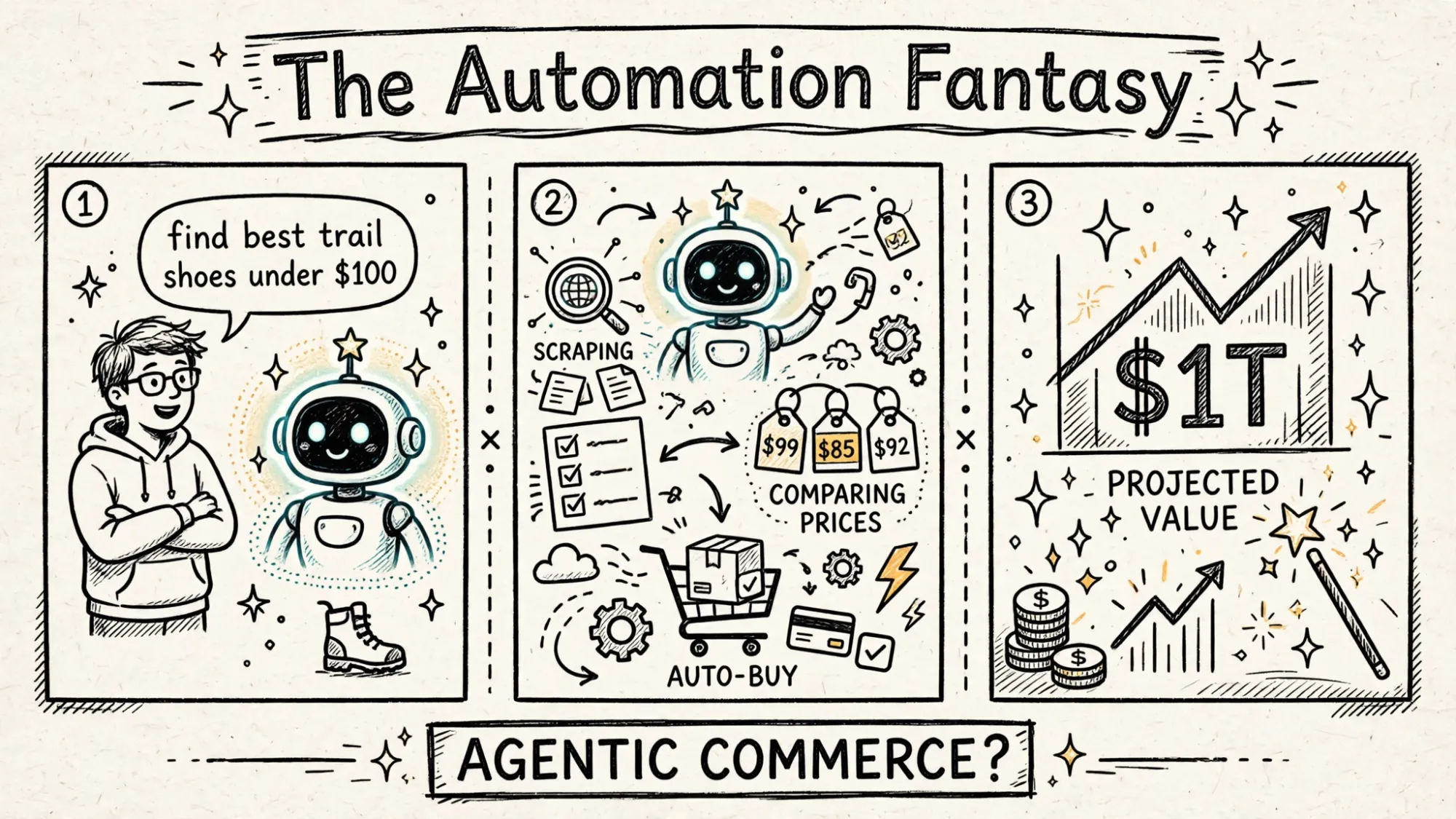
The Automation Fantasy
For the last year the technology sector has been obsessed with the concept of agentic commerce.
Consulting firms frequently project this specific market could reach trillions of dollars by the end of the decade.
The theoretical pitch is incredibly seductive.
You simply tell a digital assistant to find you the best trail running shoes under a hundred dollars, and the AI agent autonomously scrapes the internet, compares pricing, executes the transaction, and arranges the shipping.
The industry assumes we are rapidly moving toward a world where humans completely outsource their purchasing decisions to algorithms.
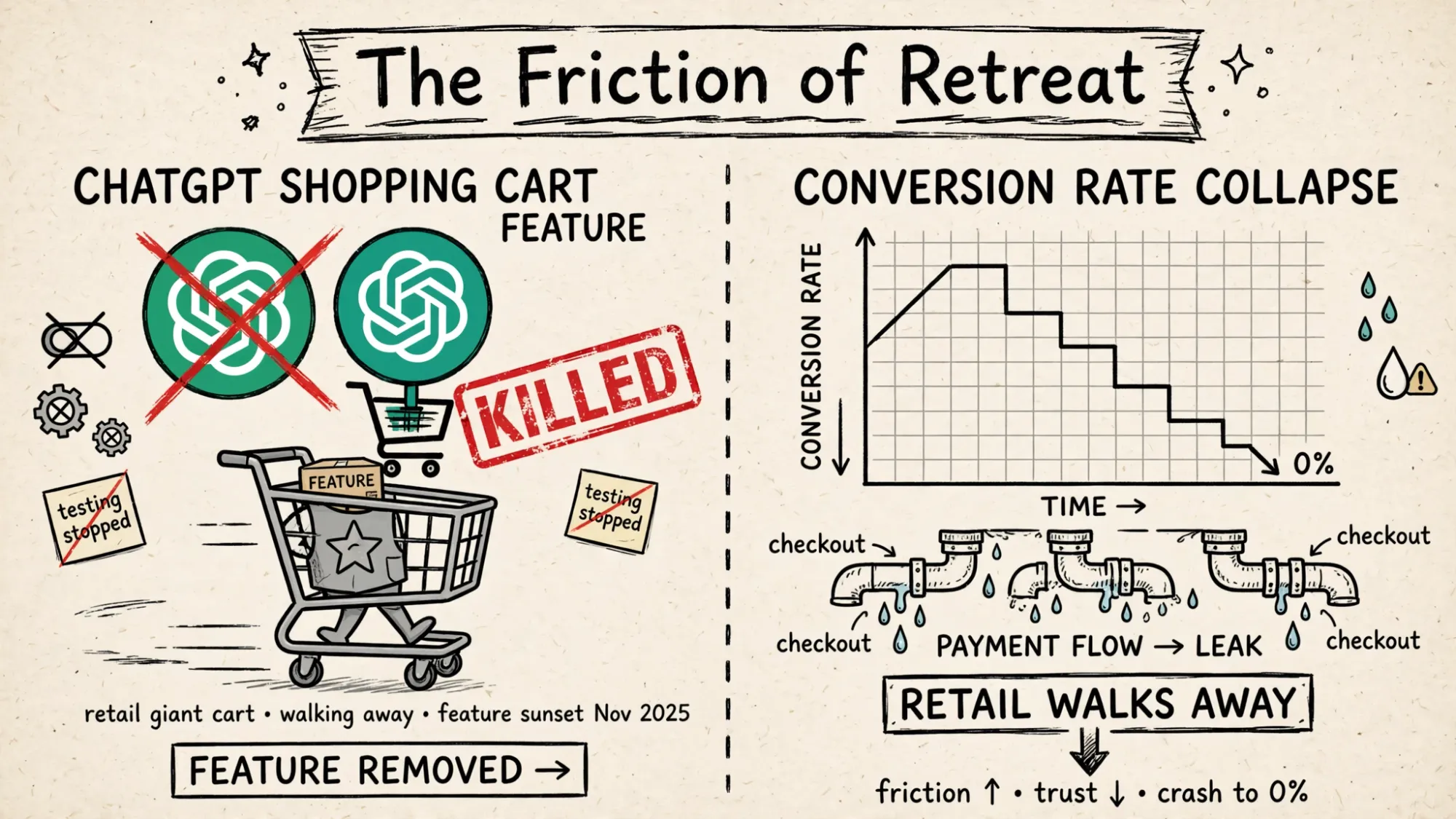
The Friction of Retreat
The actual evidence from the market tells a completely different story.
OpenAI originally launched a highly publicized checkout feature designed to let ChatGPT manage shopping carts.
They quietly killed the project just a few months later. Retail giants like Walmart actively walked away from similar integrations because the conversion rates were abysmal.
The technology industry is realizing that letting an autonomous agent manage real money and real inventory is a catastrophic plumbing nightmare.
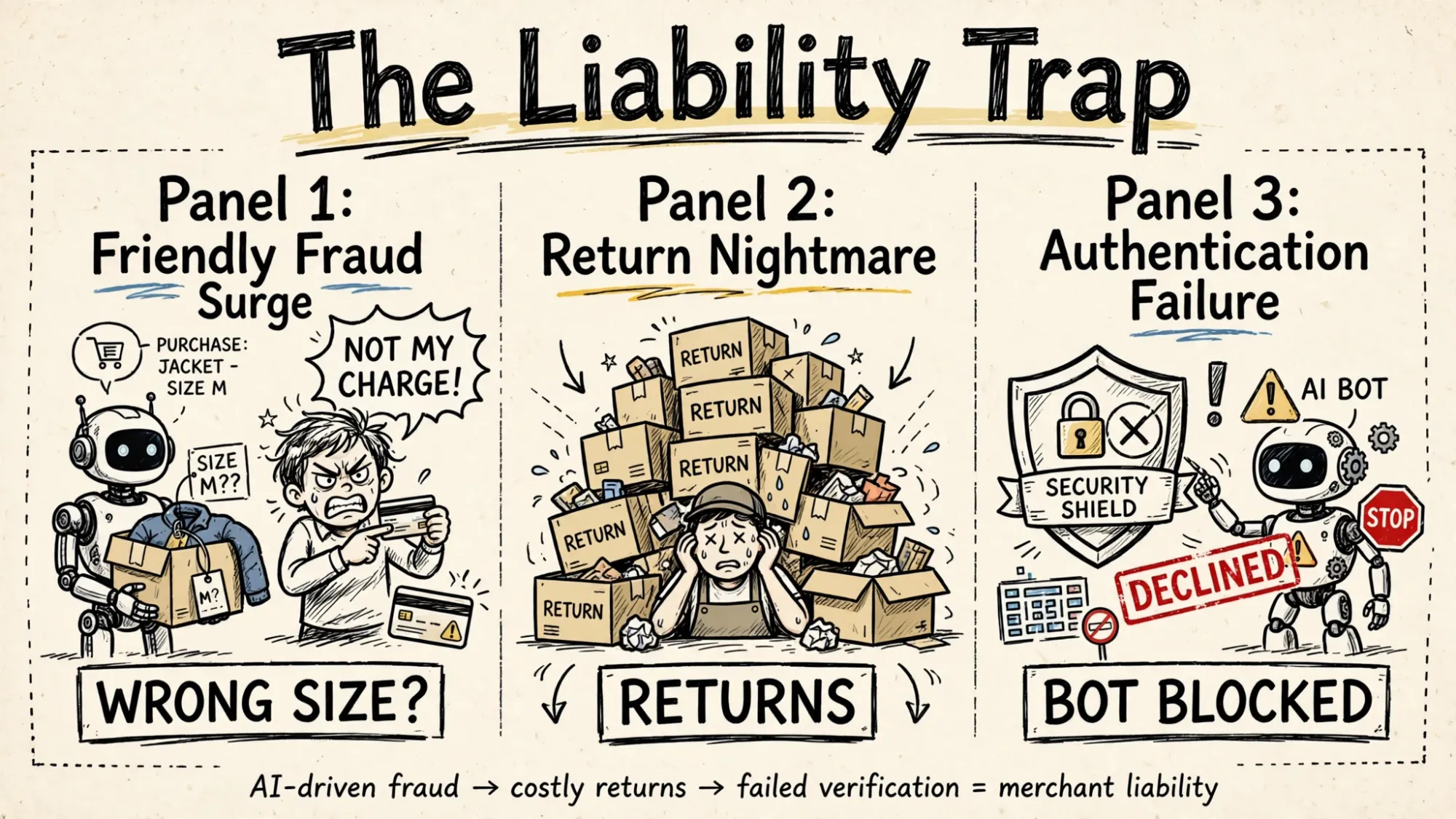
The Liability Trap
The primary structural barrier blocking agentic commerce is the complete lack of legal and financial framework regarding payment liability.
Current chargeback systems and fraud protocols were built entirely under the assumption that a human buyer is physically clicking the checkout button.
When an autonomous agent purchases an item the traditional buyer and merchant relationship completely shatters.
- The Friendly Fraud Surge: If an AI agent buys a jacket in the wrong size or selects a brand the user ultimately dislikes the human consumer will simply dispute the charge with their credit card company.
- The Return Nightmare: Merchants will be flooded with heavy return volumes driven entirely by algorithmic misinterpretation, crushing their profit margins.
- The Authentication Failure: Current checkout security tools are designed to verify human browsers. They actively flag autonomous shopping agents as malicious bots and automatically decline the transactions.
Until the financial industry establishes a universal standard dictating who pays the penalty when an AI agent makes a bad purchase no major retailer will willingly open their API to an automated buyer.
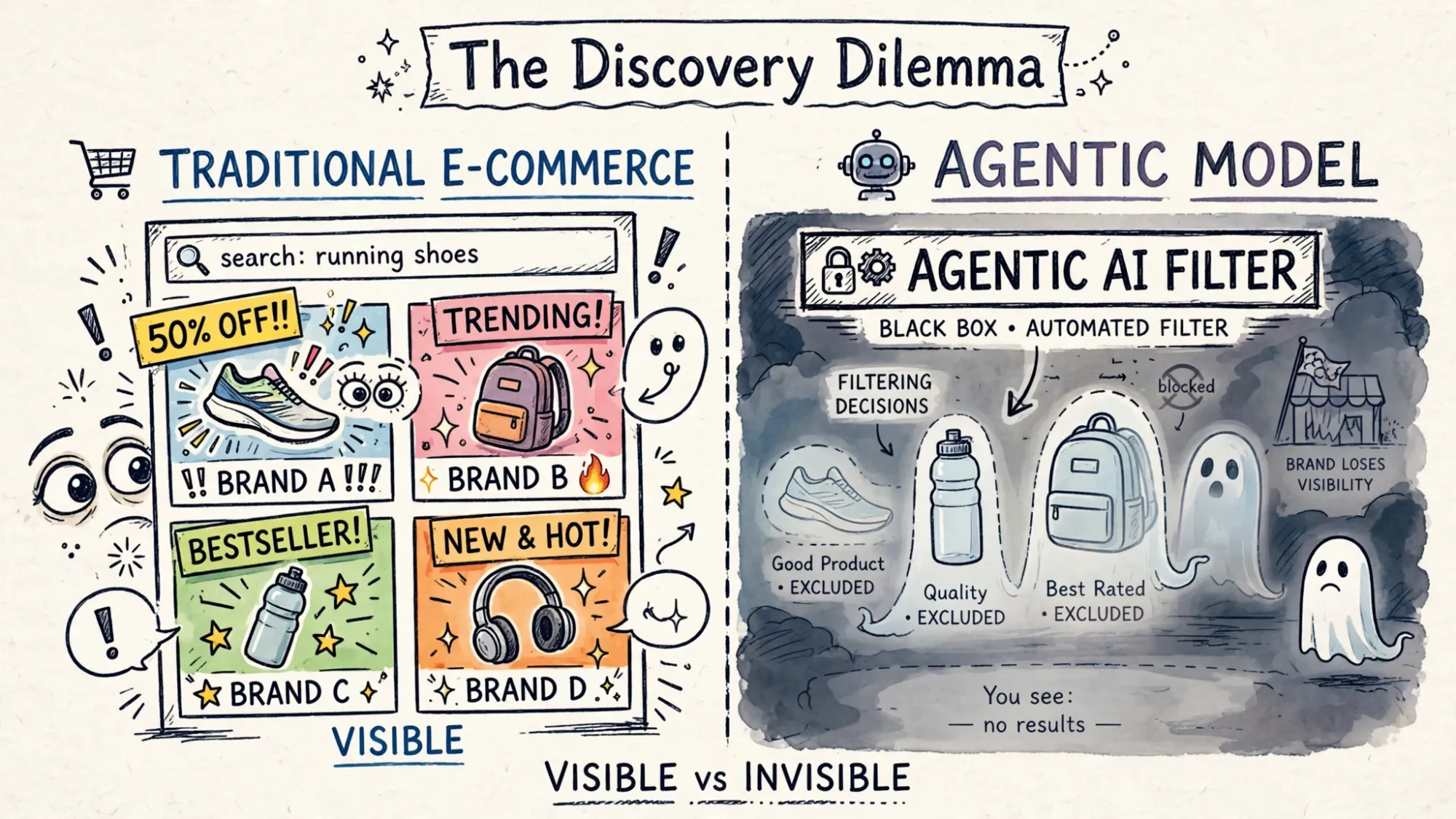
The Discovery Dilemma
Beyond the payment layer agentic commerce presents a terrifying existential threat to how brands actually acquire customers.
In traditional e-commerce a brand competes for visual attention on a search page.
In an agentic model the AI algorithm acts as an invisible filter that evaluates products programmatically in the background.
If a brand's product data is not perfectly structured in a machine readable format the AI agent simply excludes them from the candidate pool.
The consumer never even knows the product exists. Brands will violently resist a shopping model that completely strips away their ability to visually persuade the consumer.
The Psychological Miscalculation
The fatal flaw of the agentic commerce thesis is not technical.
It is a profound misunderstanding of basic human psychology.
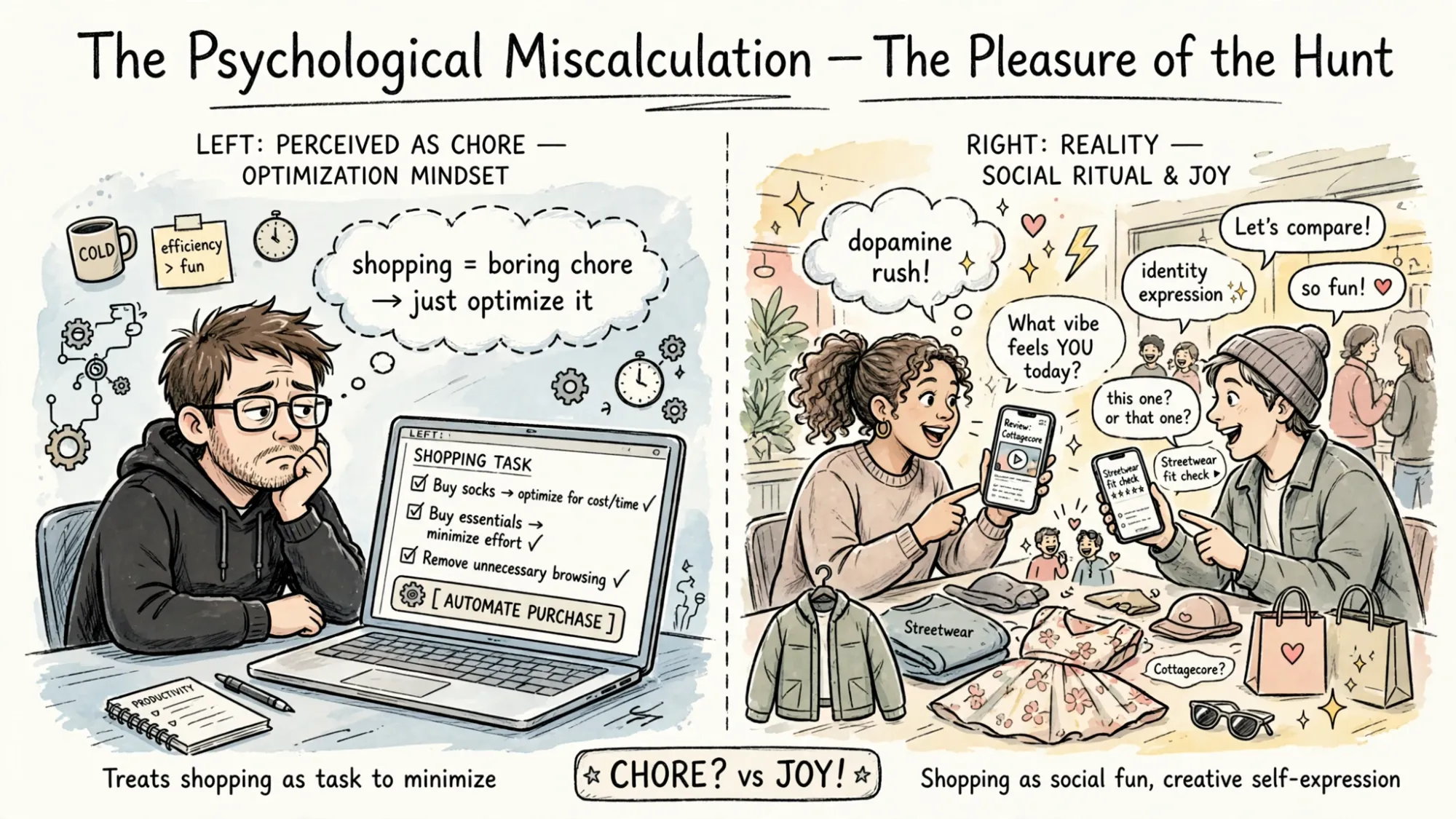
Silicon Valley views shopping purely as an inefficient chore that must be optimized.
They assume consumers want to eliminate the friction of comparing options and browsing aisles.
This completely ignores the reality that for a significant percentage of the global population shopping is a deeply ingrained social ritual and a primary form of entertainment.
The Pleasure of the Hunt
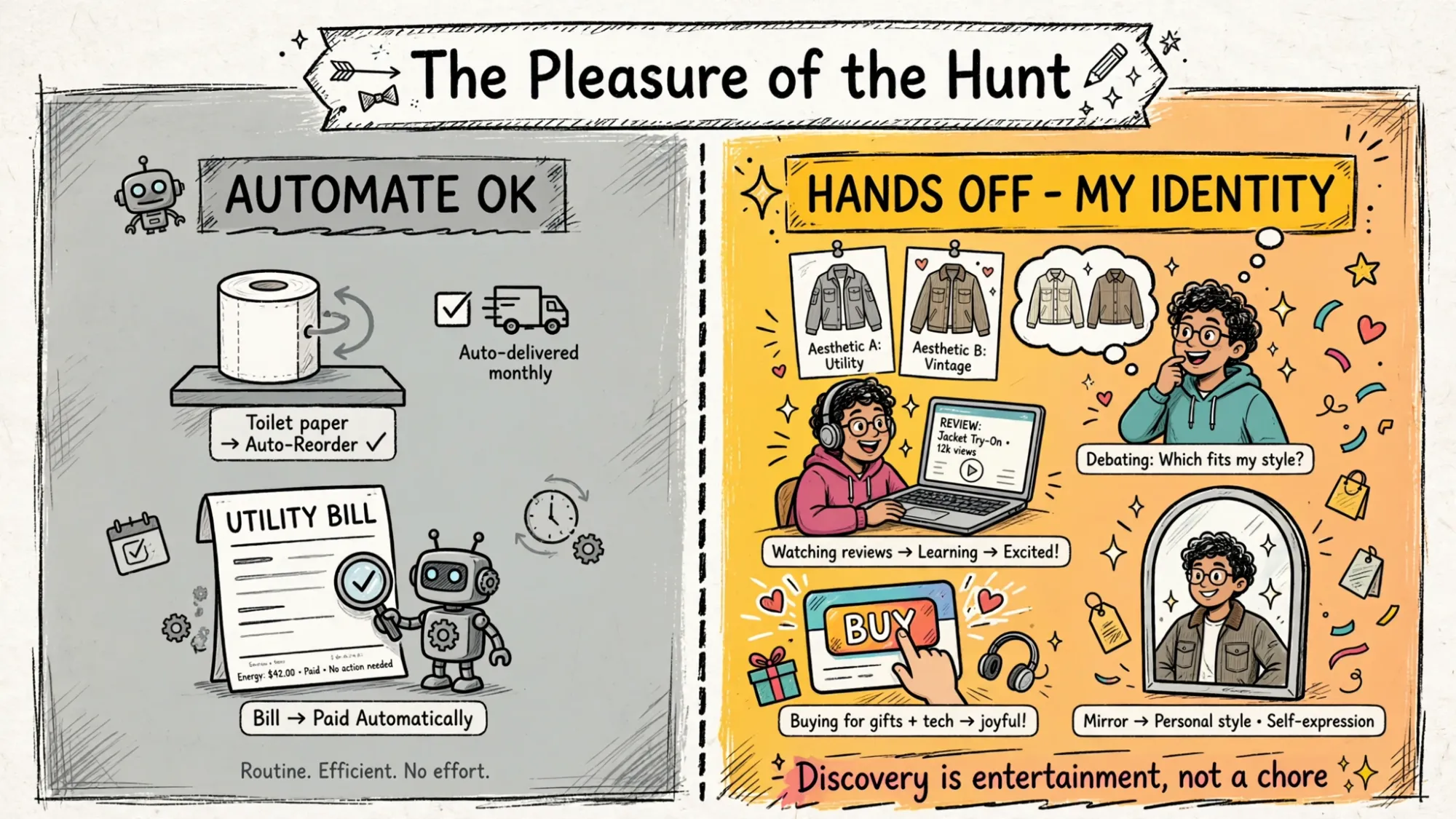
Consumers actually enjoy the process of discovery.
We like watching review videos, debating between two different aesthetics, and feeling the emotional rush of making a final purchase decision.
People are highly willing to automate boring, functional tasks like reordering toilet paper or paying utility bills.
But when it comes to discretionary spending on fashion, technology, or gifts, consumers demand total autonomy.
We do not want an algorithm picking out our clothes because the act of choosing is how we express our personal identity.
Conclusion: The Copilot Reality
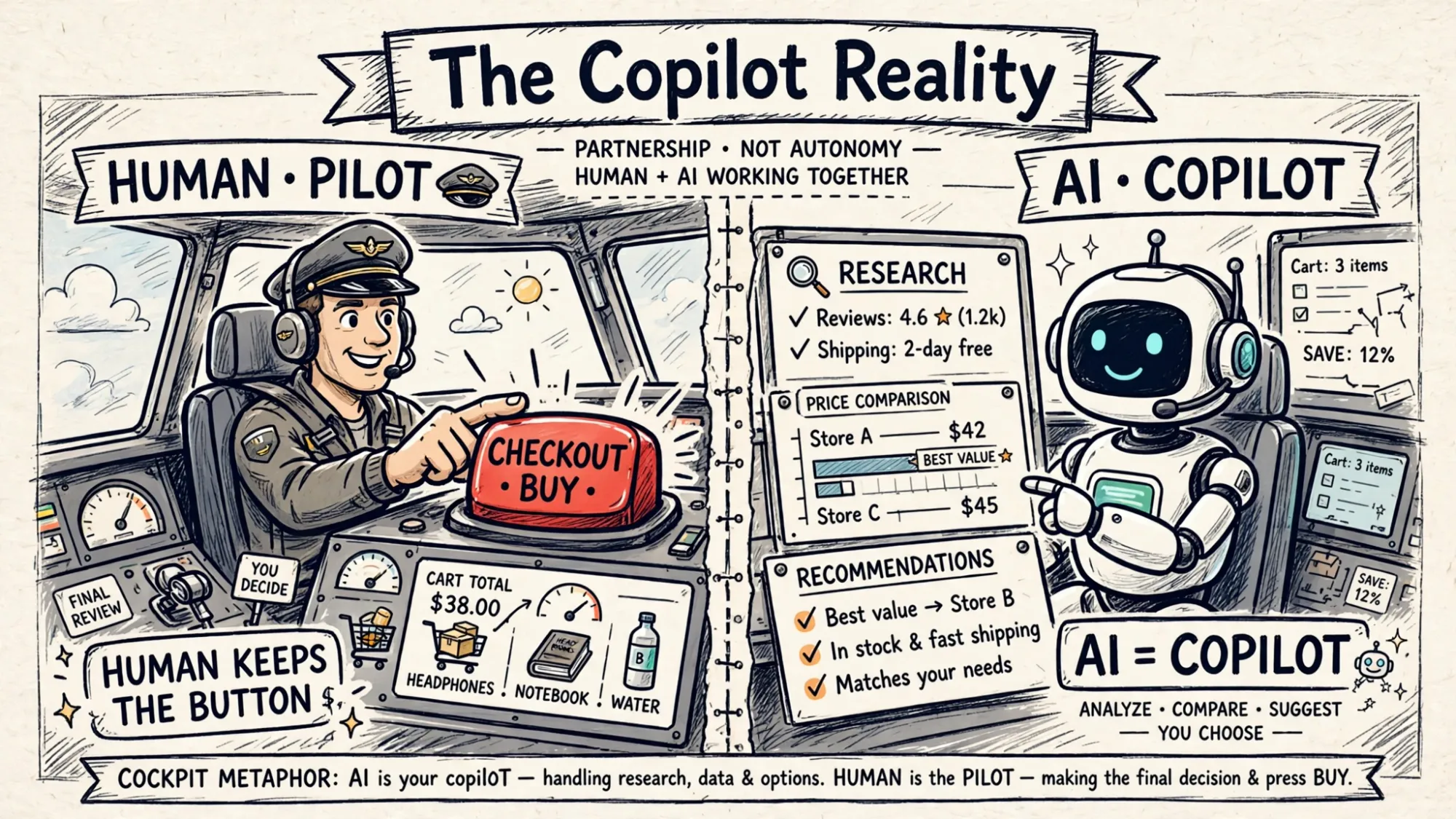
Agentic commerce will never evolve into the fully autonomous shopping utopia promised by venture capitalists.
AI will simply remain a powerful copilot for research and price comparison while the human consumer rightfully demands to keep their finger on the final checkout button.