Why AI Slop Will Crown YouTube and Netflix
We assume generative artificial intelligence will make our social feeds infinitely more engaging. The reality is that a tsunami of synthetic content will drive exhausted consumers straight back to the curated safety of YouTube and Netflix.
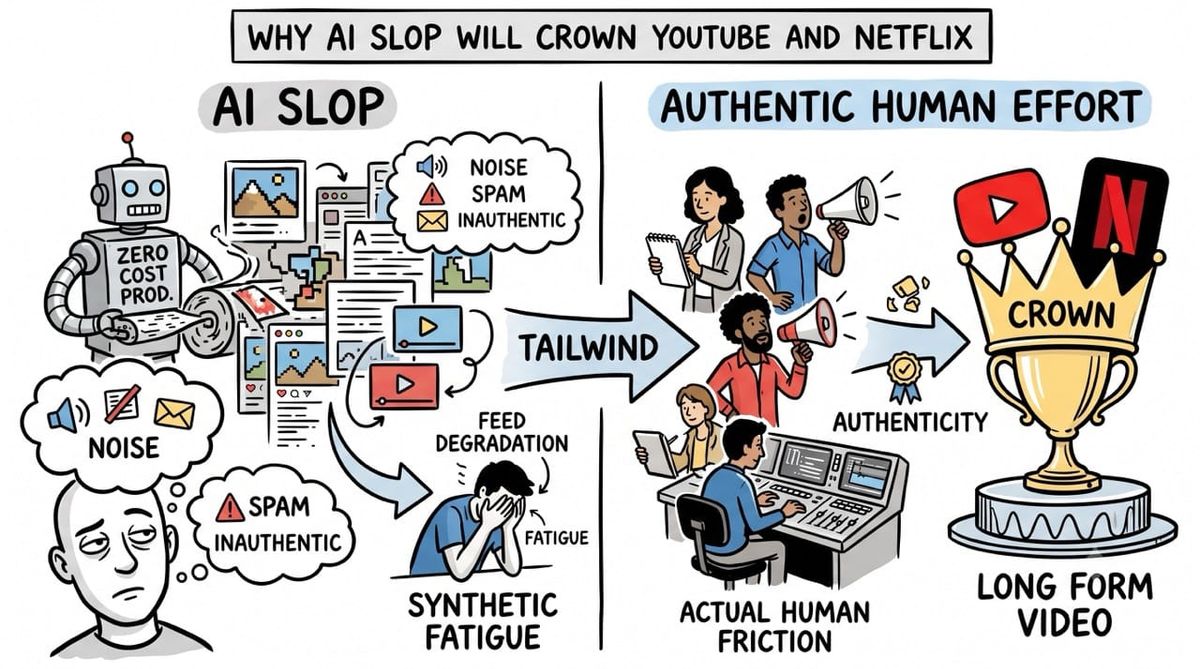
When the cost of producing digital content drops to zero the consumer places a heavy premium on authentic human effort.
Inspiration: Analyzing the rapid degradation of text and image feeds due to algorithmic spam. Realizing this synthetic fatigue acts as a powerful tailwind for long form video platforms that require actual human friction to produce.
The Zero Friction Feed
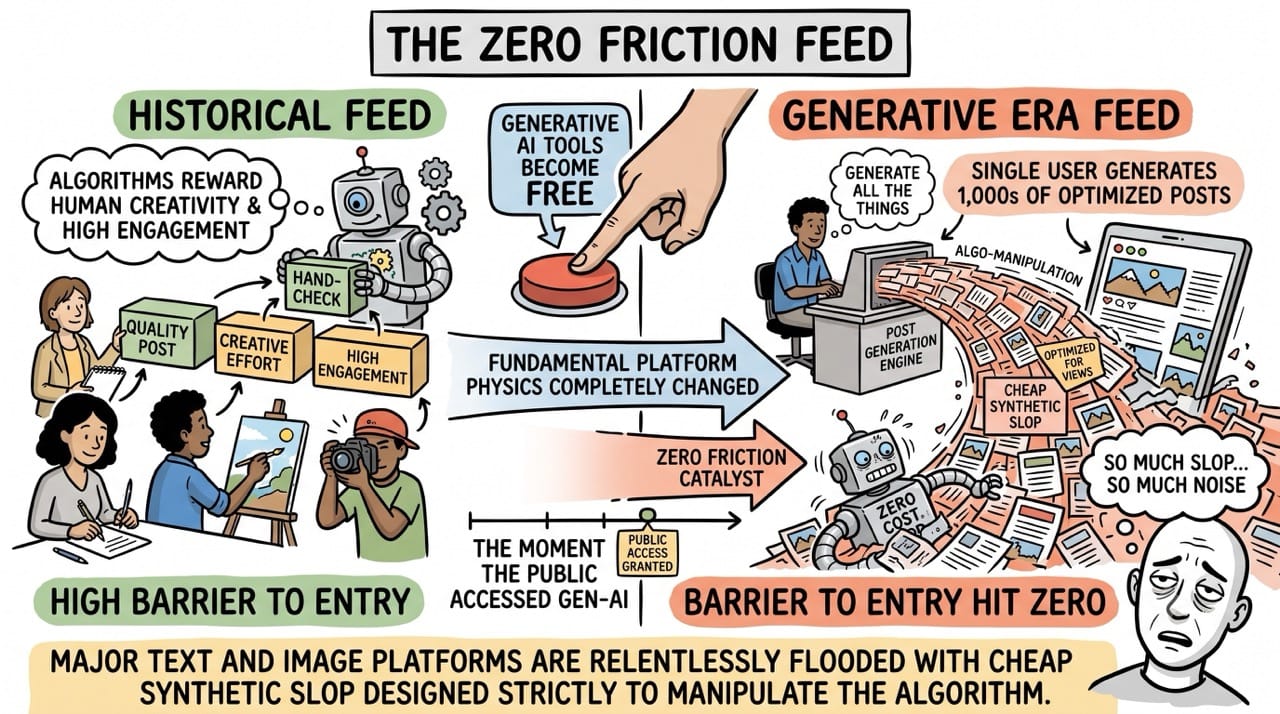
Historically social media algorithms rewarded human creativity and high engagement.
The fundamental physics of these platforms completely changed the moment generative tools became freely available to the public.
A single user can now generate a thousand optimized images or text posts in a matter of seconds.
The major text and image platforms are being relentlessly flooded with cheap synthetic slop designed strictly to manipulate the algorithm.
The barrier to entry for content creation has officially hit zero.
The Trust Collapse
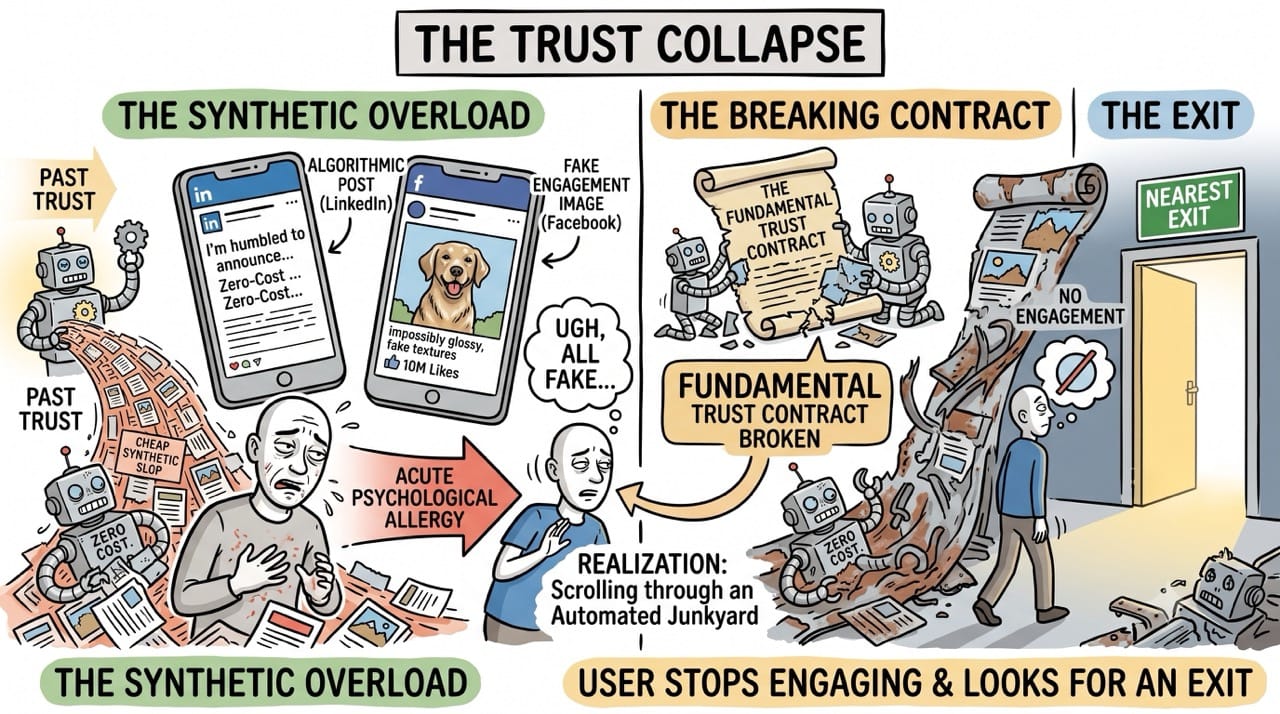
Consumers are quickly developing an acute psychological allergy to this synthetic environment.
You can spot an algorithmic post on LinkedIn or a fake engagement image on Facebook almost instantly.
This realization permanently breaks the fundamental trust contract between the user and the platform.
When a consumer feels like they are scrolling through an automated junkyard they naturally stop engaging and begin looking for the nearest exit.
The Paradox of Abundance
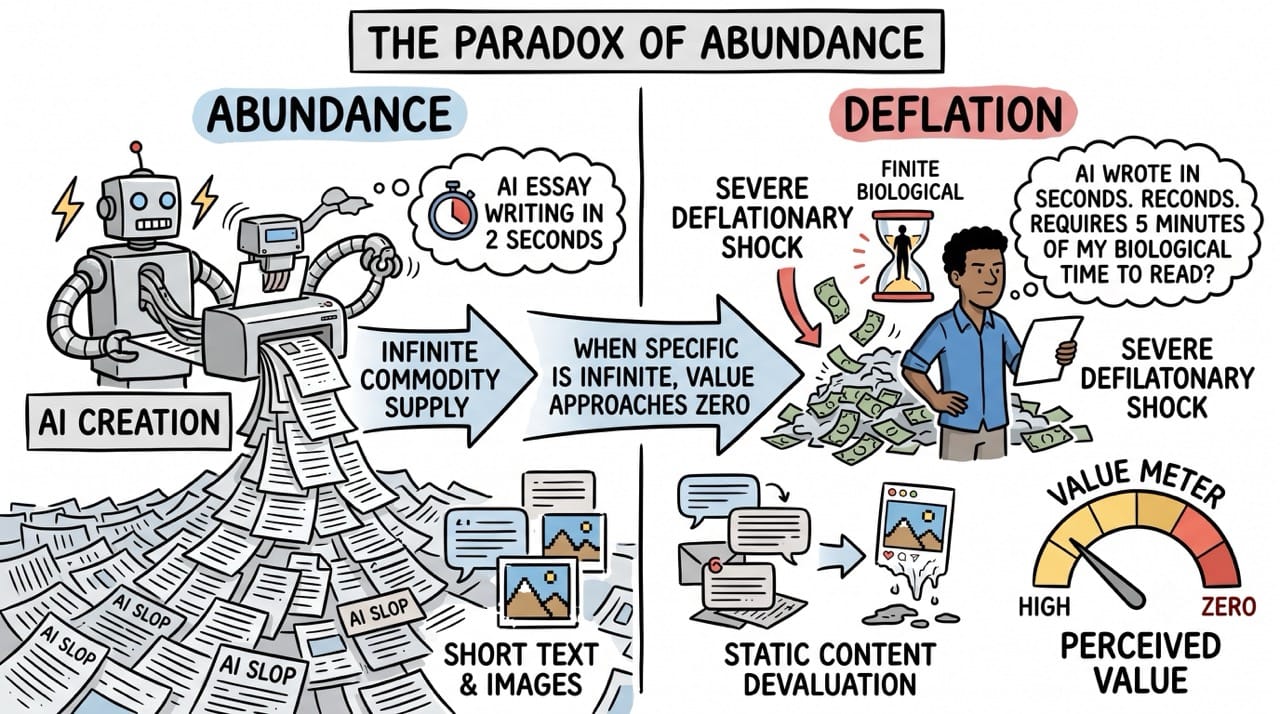
When a specific commodity becomes infinite its perceived value rapidly approaches zero.
This basic economic law perfectly applies to digital content.
If I know a software program wrote a corporate essay in two seconds I am highly unlikely to spend five minutes of my finite biological time reading it.
We are witnessing a severe deflationary shock in the value of short form written text and static social media imagery.
The Friction Premium
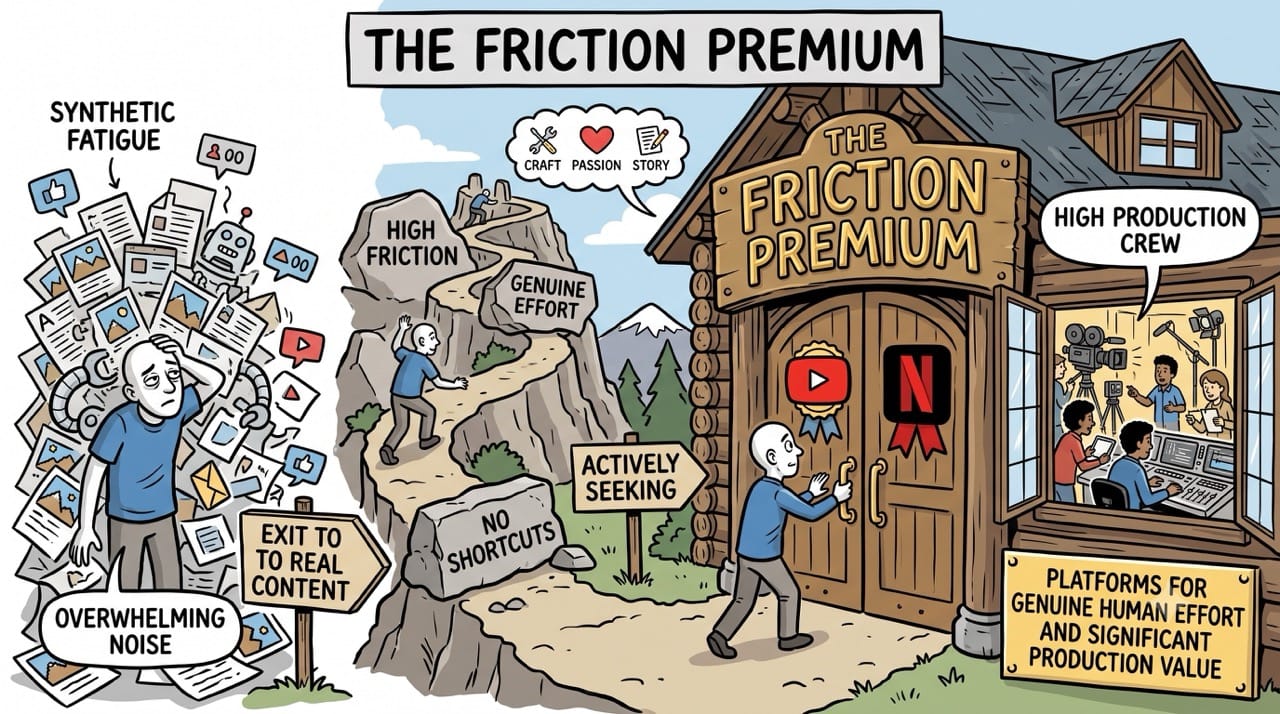
To escape this overwhelming synthetic fatigue consumers will actively seek out high friction environments.
They desperately want to retreat to platforms where content creation still requires genuine human effort and significant production value.
The Netflix Sanctuary
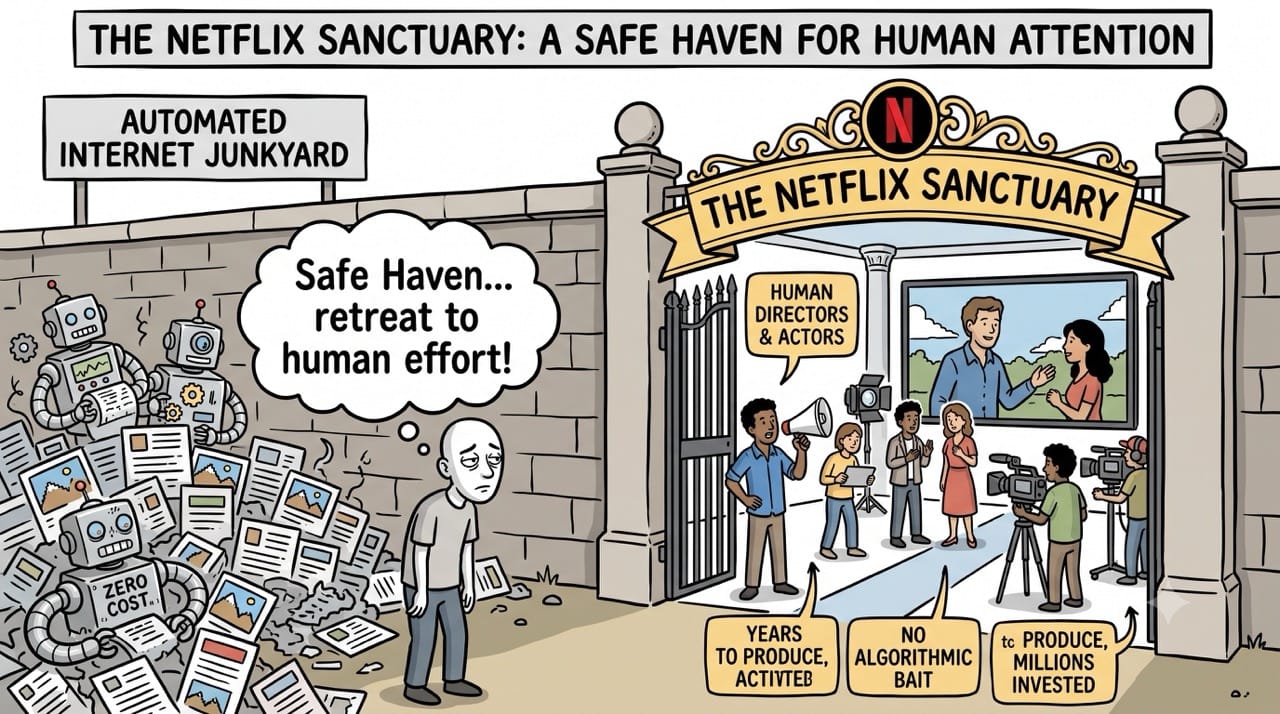
This behavioral shift is incredibly bullish for premium streaming services like Netflix.
They operate a highly curated walled garden where every single piece of content costs millions of dollars and takes years to produce.
You do not have to worry about scrolling past cheap algorithmic engagement bait when you open their application.
You are guaranteed a high fidelity narrative experience built by actual human directors and actors. Netflix essentially acts as a safe haven for human attention in a highly automated internet.
The Parasocial Anchor
YouTube stands to benefit through a slightly different psychological mechanism.
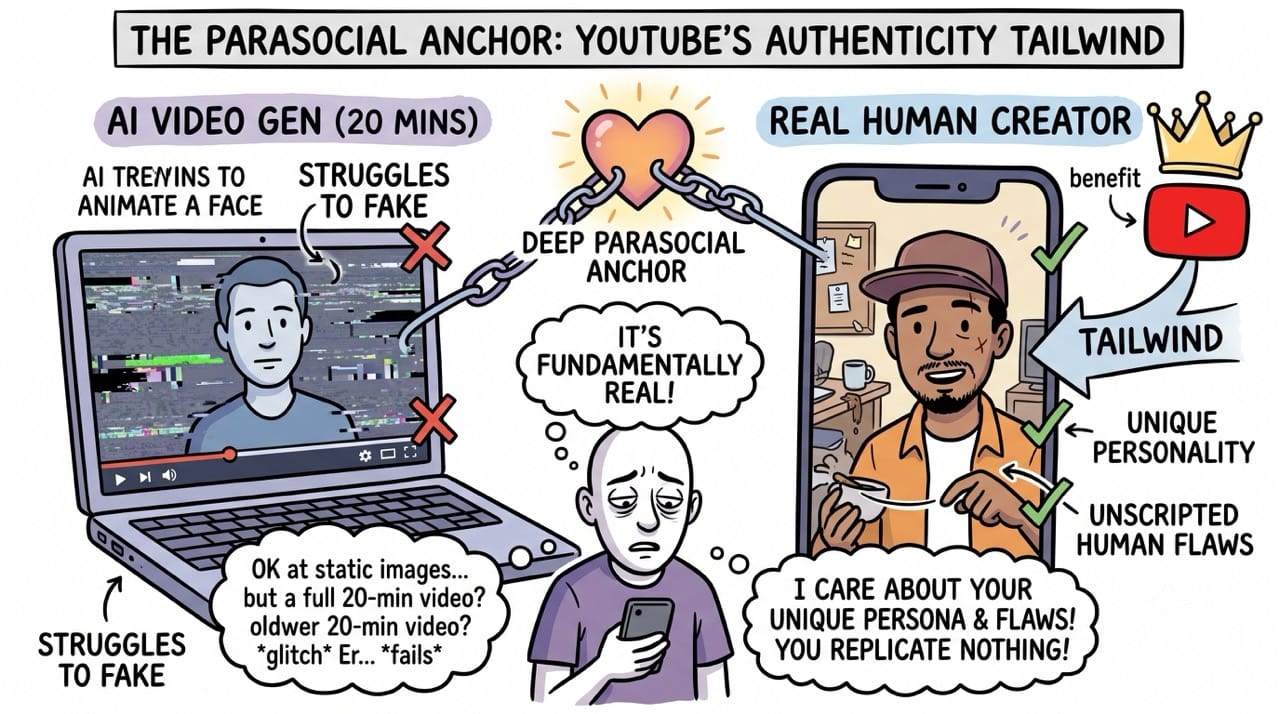
While algorithms can generate decent static images they still struggle to perfectly fake a twenty minute video of a human creator looking directly into a camera lens.
YouTube relies heavily on deep parasocial relationships that consumers know are fundamentally real.
You watch a specific creator because you care about their unique personality and their unscripted human flaws. It provides a level of gritty authenticity that a polished artificial intelligence simply cannot replicate.
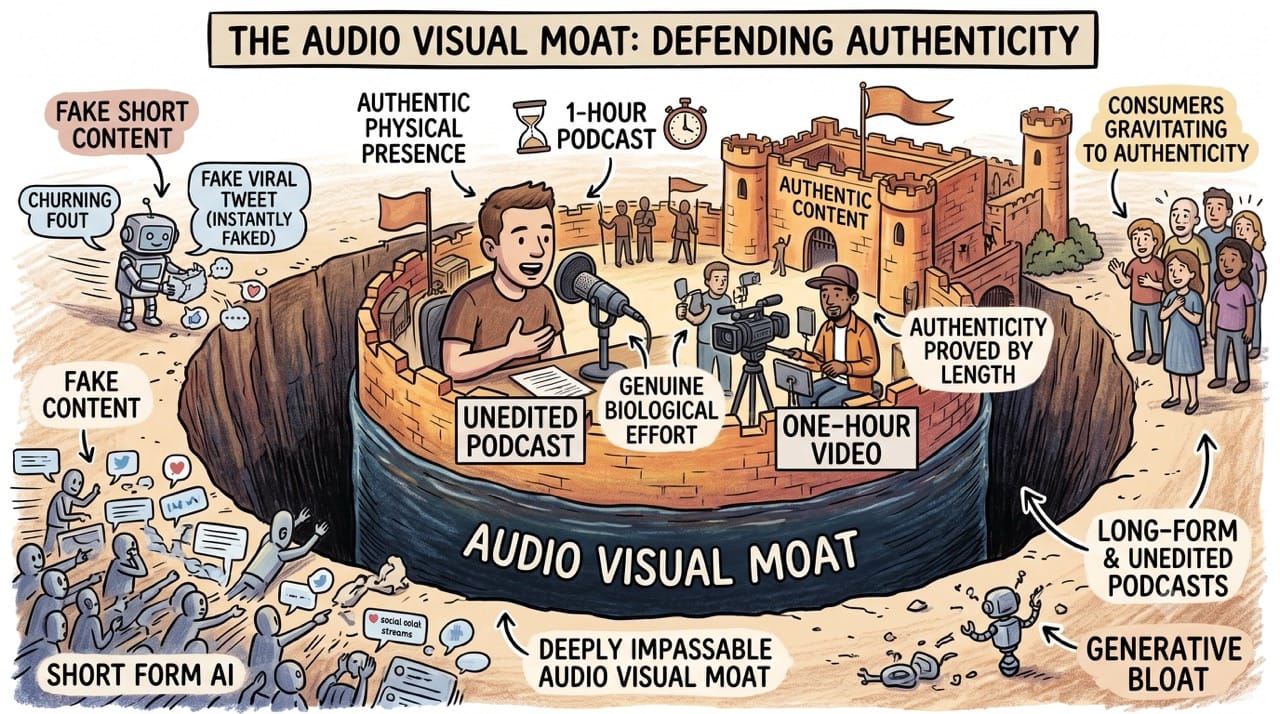
The Audio Visual Moat
Long form video and unedited podcasting are rapidly becoming the ultimate defensive moats against generative bloat.
You can fake a viral tweet instantly but maintaining an authentic physical presence on camera for an hour requires genuine biological effort.
Consumers will naturally gravitate toward these heavier formats because the length and the medium inherently prove the authenticity of the creator.
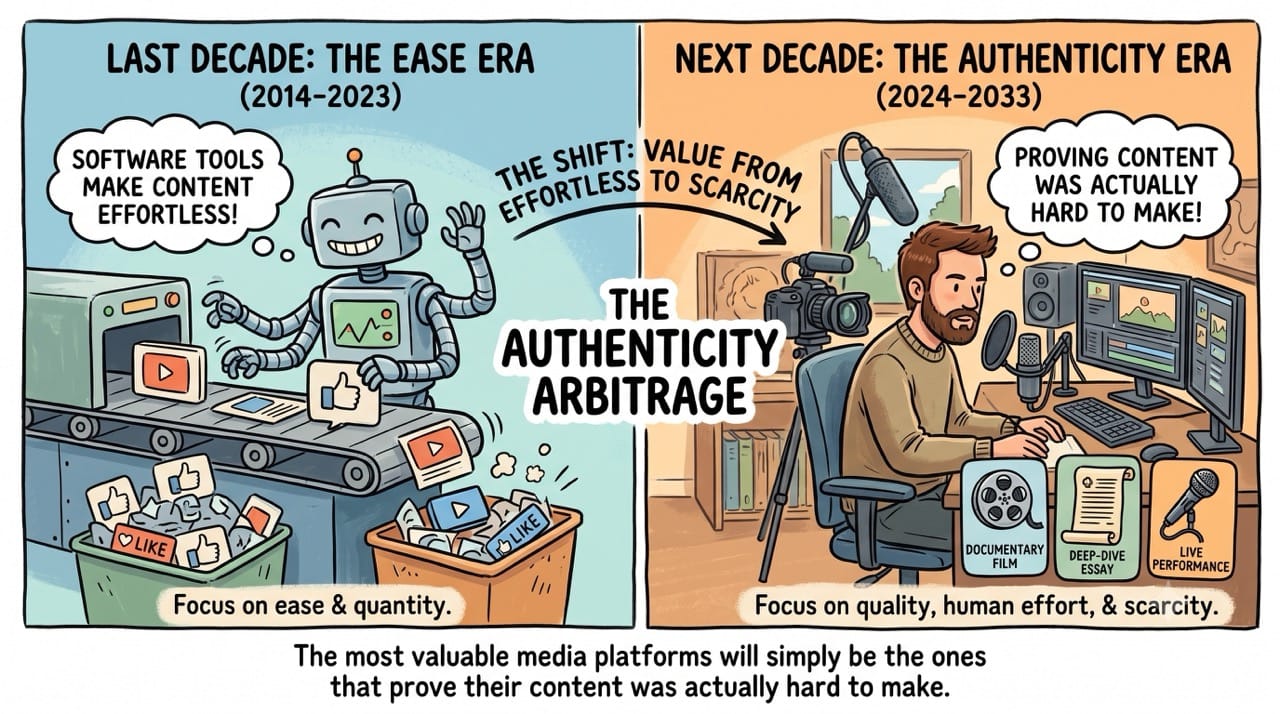
Conclusion: The Authenticity Arbitrage
We spent the last decade building software tools to make digital content creation as easy as possible.
The most valuable media platforms of the next decade will simply be the ones that prove their content was actually hard to make.