The RAM Shortage That Saves Data Center Investors?
Everyone sees the RAM shortage as a risk for AI. For the people funding chips and data centers, it actually fixes the biggest risk in their model. Slower cycles mean longer useful life.
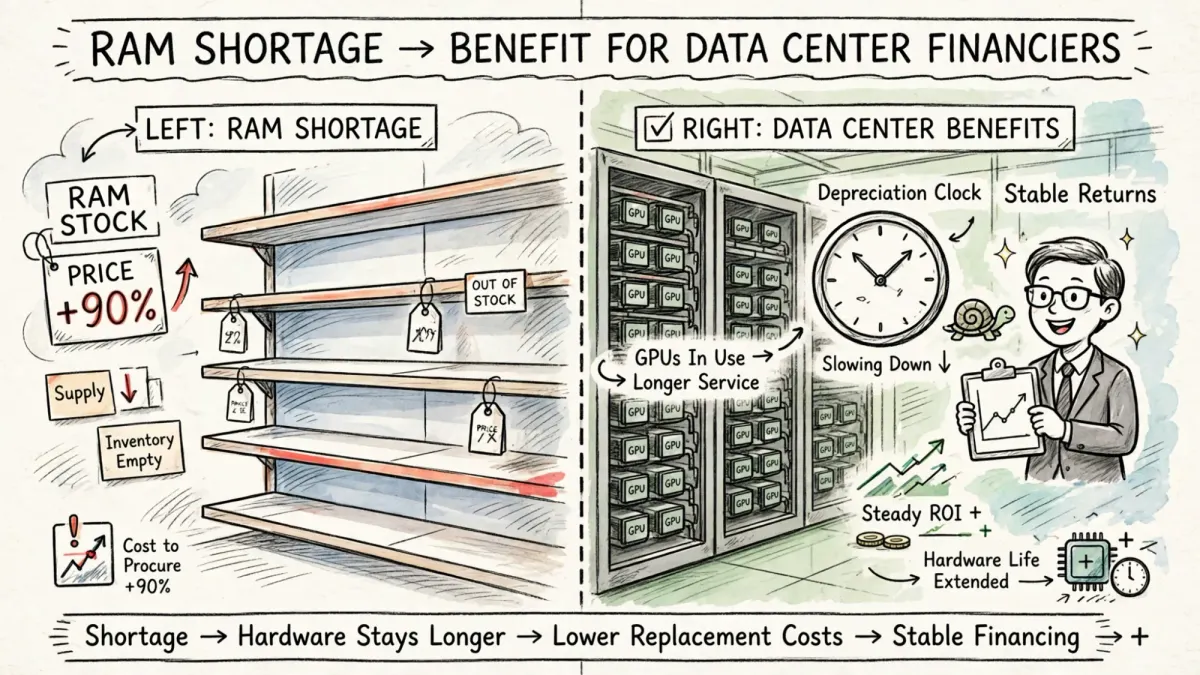
Everyone sees the RAM shortage as a risk for AI. For the people funding chips and data centers, it actually fixes the biggest risk in their model. Slower cycles mean longer useful life.
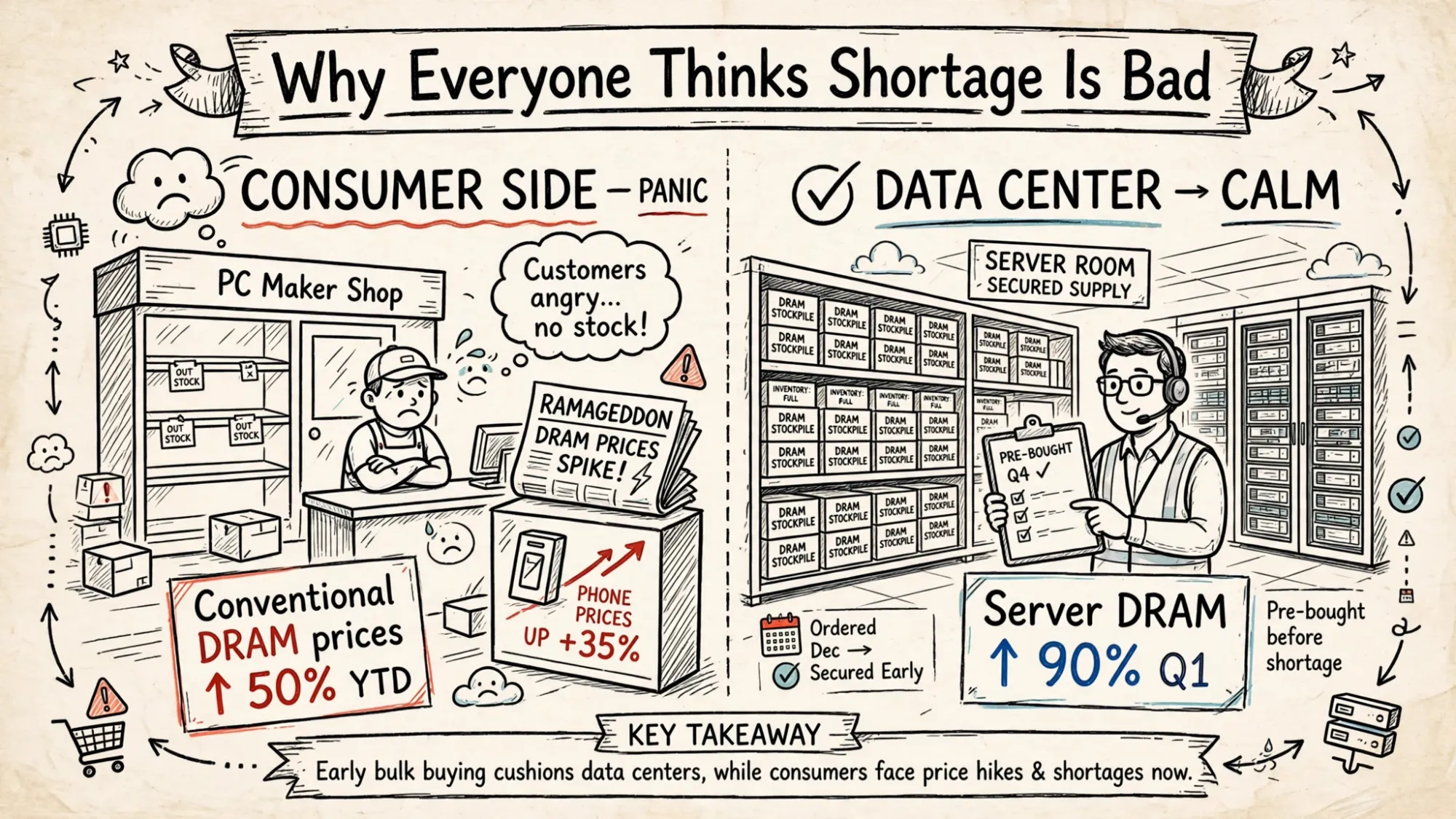
Why Everyone Thinks Shortage Is Bad
On the consumer side it is bad.
IDC said worldwide PC shipments fell 4.9 percent year over year to 68.2 million units in Q2 as memory shortage disrupted production. PC makers warned of 20 percent price hikes.
Apple raised MacBook and iPad prices as memory costs jumped.
TrendForce called it RAMageddon. Conventional DRAM contract prices rose 55 to 60 percent quarter over quarter.
DDR5 64GB RDIMM modules used in enterprise data centers could cost twice as much by end of 2026 as in early 2025.
So the headline looks like cost pressure.
But data centers did not buy on spot.
They bought early and in bulk. The pain is concentrated in phones, PCs and smaller OEMs who only get 35 to 40 percent of their orders filled. Big AI buyers locked supply years in advance.
How Depreciation Was Being Stretched
Here is the real problem financiers were worried about before the shortage.
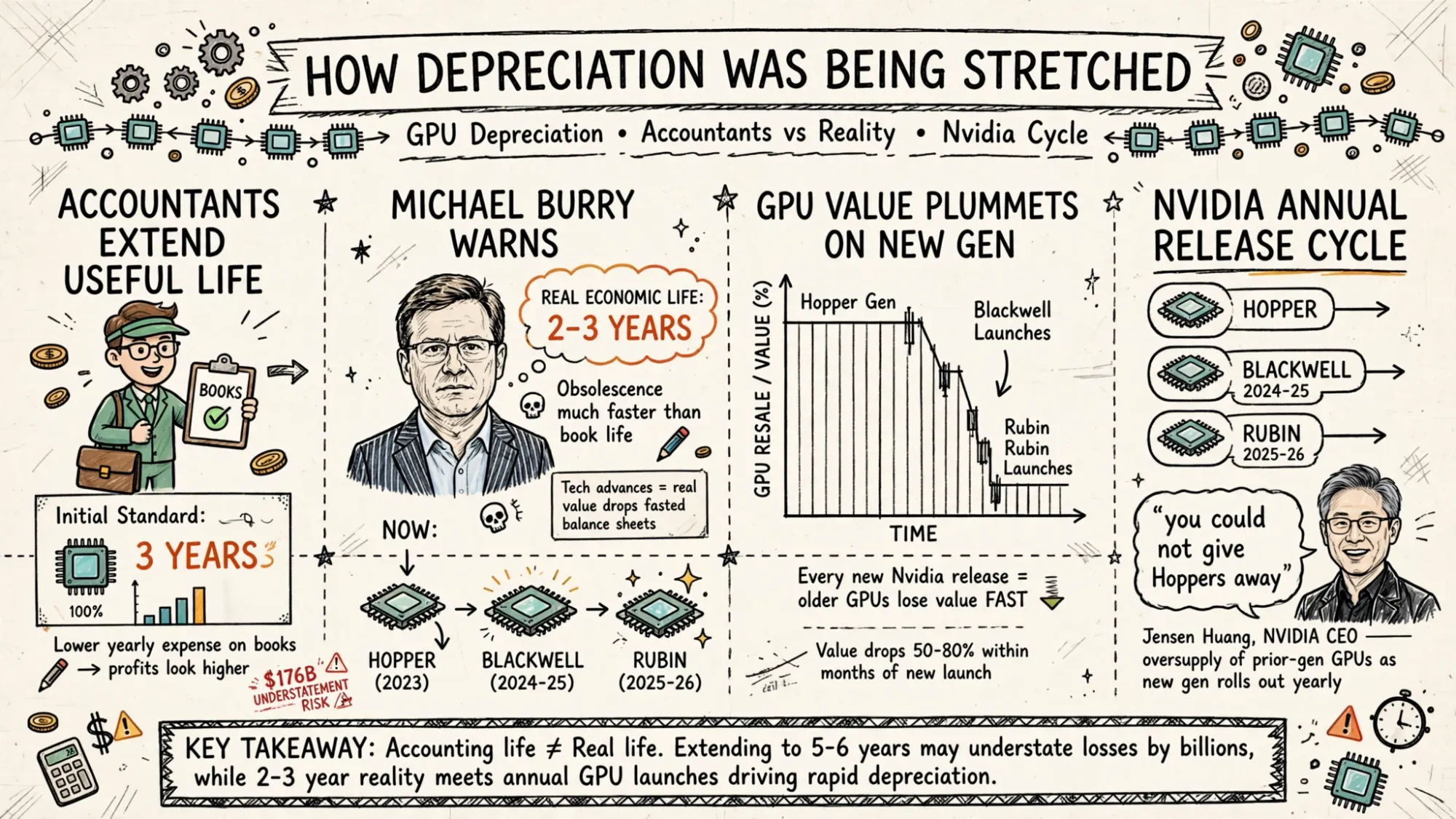
Normally servers are modeled for three to five years.
In AI, hyperscalers quietly stretched useful life to five and six years.
That lets them spread a huge upfront spend over more years and show higher profit even if revenue does not catch up.
Michael Burry flagged this.
He said actual useful life of an AI chip is closer to two to three years and that companies would understate depreciation by 176 billion between 2026 and 2028.
He has a point. Nvidia pushes annual releases, plus Ultra versions.
H100 to H200 to GB100. Jensen Huang said when Blackwell was available, you could not give Hoppers away. That is not literally true,
Hoppers are still used, but resale value drops fast. Neoclouds like CoreWeave spent over 14 billion in 2025 and plan to double in 2026 using GPUs as collateral for loans.
If next gen is 50 percent faster and 30 percent more efficient, last gen hardware stops being profitable and collateral value collapses.
That is stranding risk.
The market was pricing hardware as if it would last six years. The technology was moving as if it would last two.
What The RAM Crunch Changes
The RAM crunch slows everything down, and that is what makes the six year model realistic.
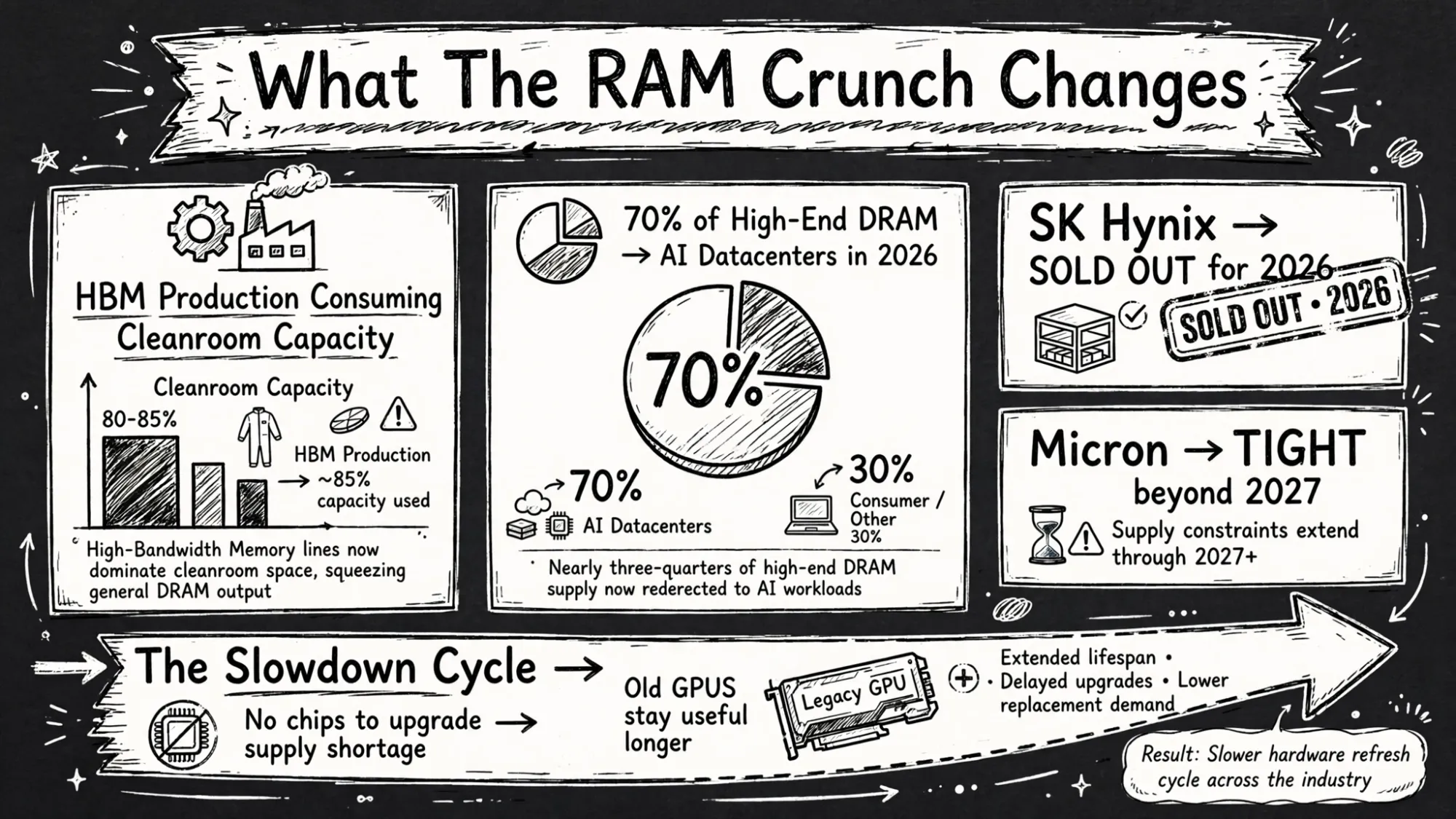
High bandwidth memory production permanently consumes cleanroom capacity.
Every wafer shifted to HBM displaces about three wafers of standard DRAM. Samsung, SK hynix and Micron control over 90 percent of DRAM.
All three are spending, about 54 billion combined, but it goes to HBM performance, not to more bits of conventional DRAM.
SK hynix said its entire 2026 production is sold out.
Micron said it has no line of sight when supply will catch up and that tight conditions will persist beyond 2027.
AI data centers will use 70 percent of all high end DRAM production in 2026.
Server DRAM contract prices jumped 50 percent and TrendForce revised Q1 2026 forecast to 90 to 95 percent quarter over quarter, with another 70 percent surge expected in Q2.
Some distributors moved to hourly pricing.
When you cannot get memory, you cannot build servers. When you cannot build servers, you cannot upgrade.
So the upgrade cycle that was supposed to be 12 months becomes 24 or 36 months. Older GPUs stay in service because there is no replacement to buy.
That extends useful life without anyone having to change accounting assumptions.
Who Benefits When Cycles Get Longer
Longer cycles are good for the lender.
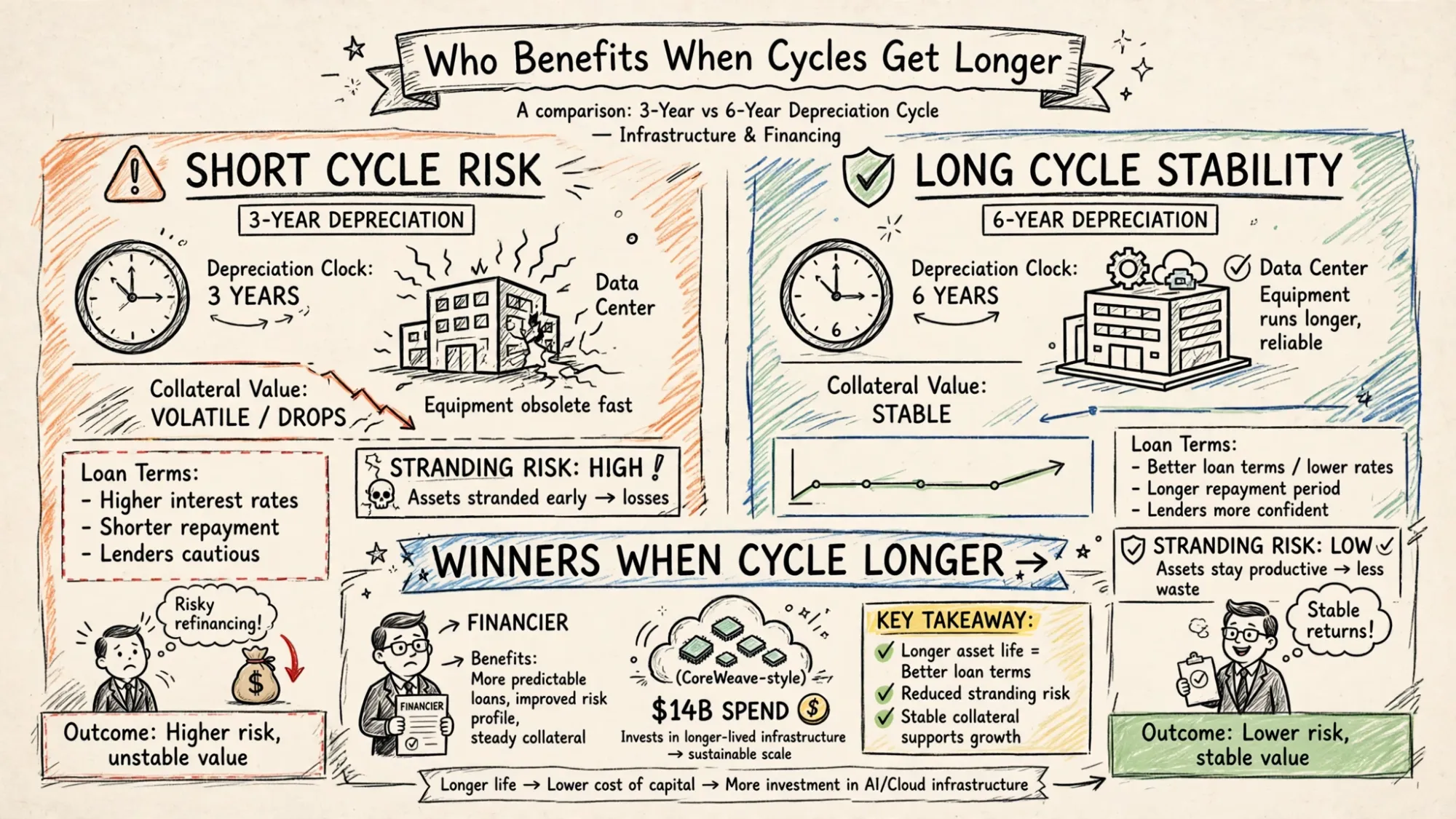
If a GPU is useful for six years instead of three, a few things happen. Collateral value stays stable longer. Loan terms get better.
Repayment can be longer. Interest rates can be lower because lenders are less worried about obsolescence.
The neocloud model that relies on hardware as collateral suddenly looks less circular and less fragile.
For the hyperscalers, it also helps. Google, Amazon, Microsoft and Meta have diverse cash flows, but they still face the same GPU depreciation math.
A slower cycle means less forced capex each year, less pressure to dump last gen cards into a weak secondary market, and less chance that lease rates drop 25 to 35 percent quarter over quarter as they did in late 2024.
In short, shortage turns a risky two year asset into a more predictable six year asset. Financiers love predictability.
The New Financing Model
Micron just showed how this reprices financing.
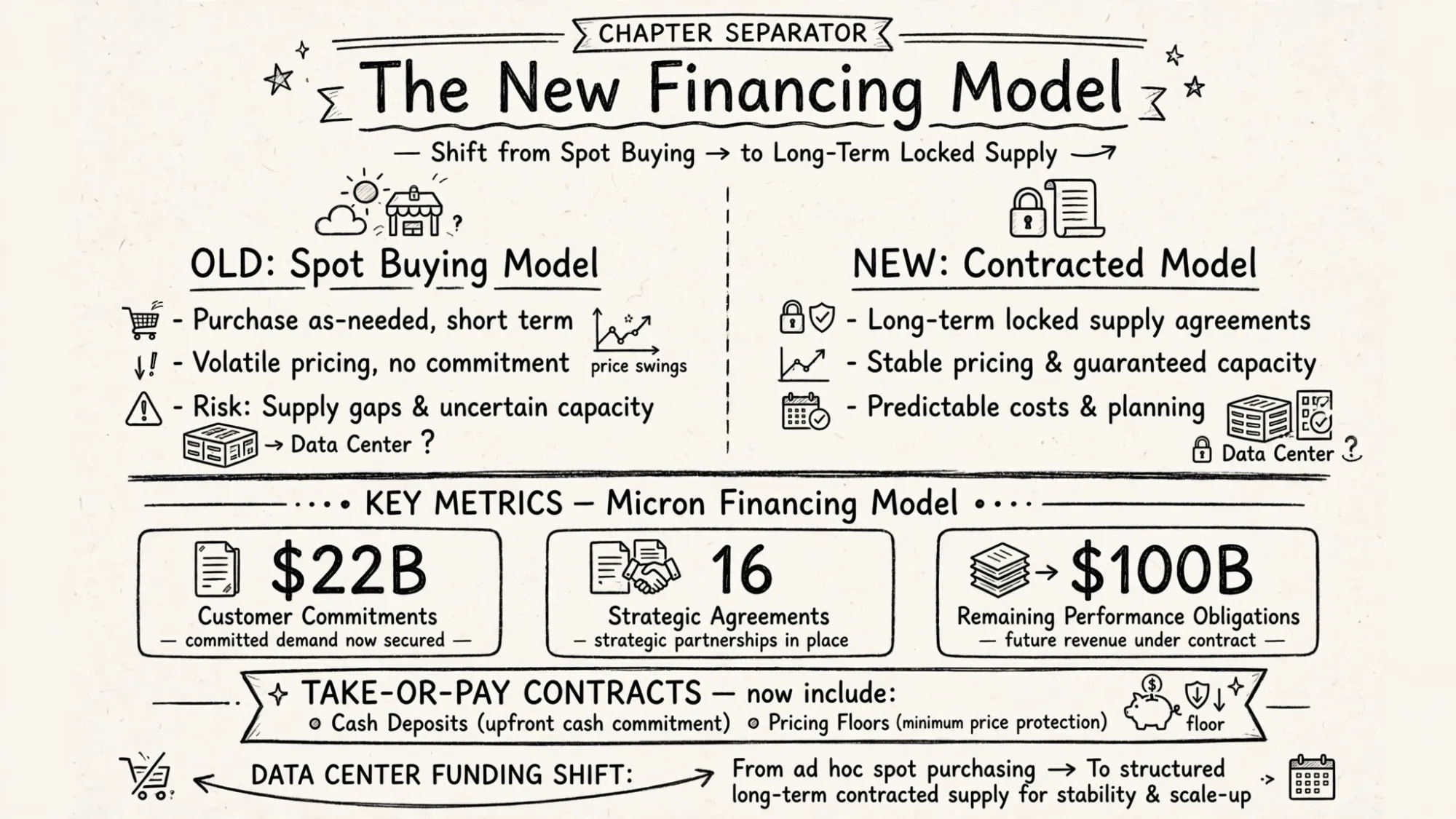
Customers committed 22 billion to lock in future supply.
That came from 16 strategic agreements with take or pay terms, cash deposits and pricing floors. Remaining performance obligations on those deals are around 100 billion. This is not spot buying.
This is long term contracted revenue that protects margins and makes demand less cyclical.
It mirrors what happened in LNG and solar.
When supply is tight, buyers fund capacity upfront to secure allocation.
Chipmakers shift from boom and bust to contracted, deposit backed sales. That is a better model for anyone funding a data center.
You are not guessing at spot DRAM next year. You have a floor price and a committed supply.
Morgan Stanley warned of chipflation spreading from data centers to the wider economy.
That is inflation for consumers.
For data center investors it is pricing power staying with suppliers who are now funded by customers.
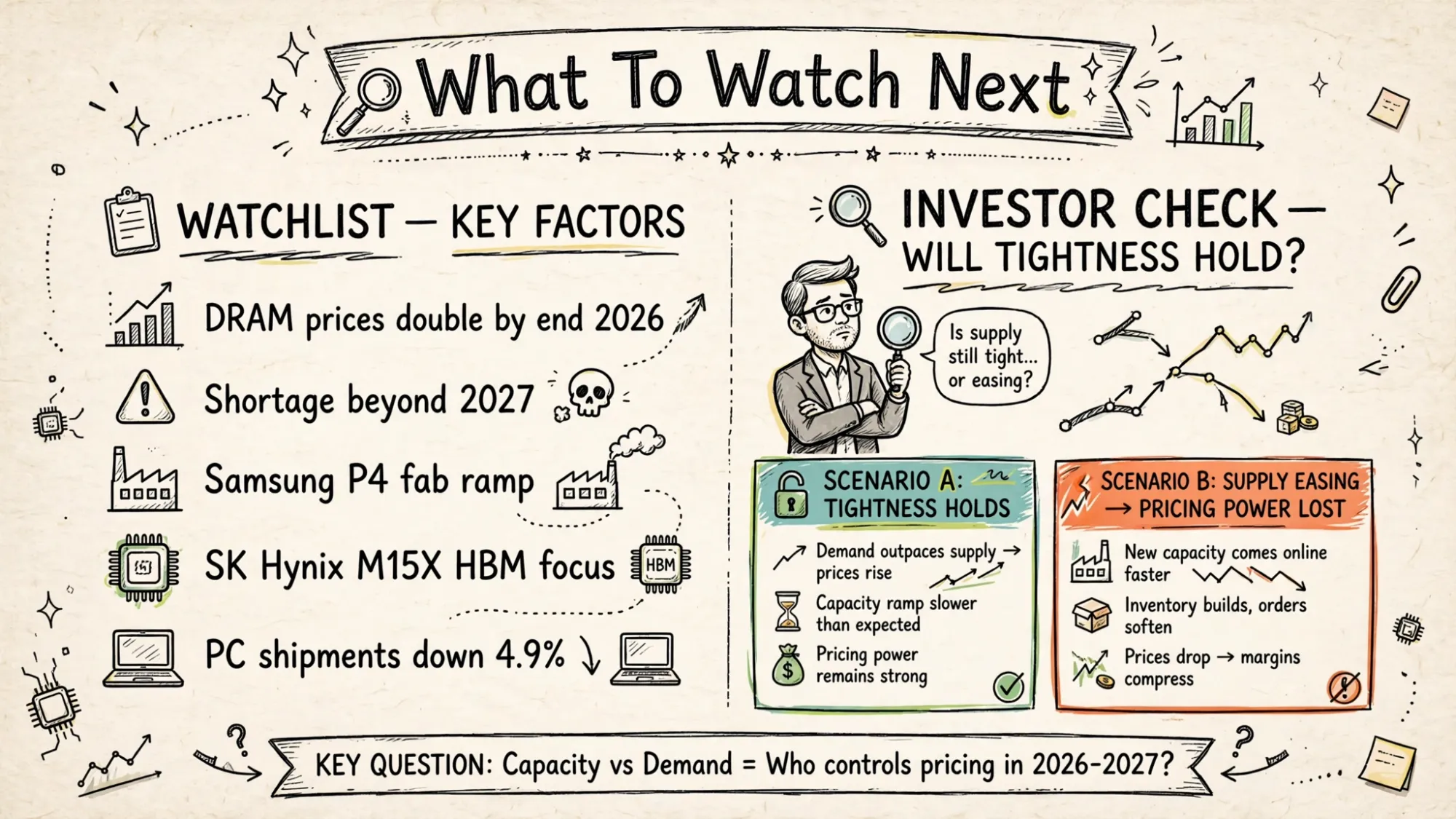
Three numbers will tell you if this benefit holds.
First, does tightness persist beyond 2027 as Micron guides, or does new capacity like Samsung P4 fab ramp actually add net wafer output.
Most capex today is going to HBM lines, not to more mainstream output, so relief is unlikely soon.
Second, do contract prices keep their floor.
If server DRAM stays at double early 2025 levels, the six year model holds.
If supply eases, pricing power is the first thing at risk and depreciation worries come back.
Third, watch secondary market GPU lease rates. If they stop falling and stabilize, that confirms longer cycles are real.
If they start dropping again because Rubin or Blackwell Ultra floods the market, financiers will have to reprice risk.
The shortage hurts phone and PC buyers. It helps the people who own the picks and shovels and funded them with long term contracts.
Slower cycles do not sound exciting, but they make depreciation honest.
Honest depreciation is what lets you build 725 billion in data center spend in a single year without blowing up the model.