Google Health Is Done Selling Trackers
Google just turned the Fitbit app into Google Health and plugged Abbott's Lingo CGM into a Gemini-powered coach. The real story isn't glucose, it is who gets to own the interpretation layer for all your health data.
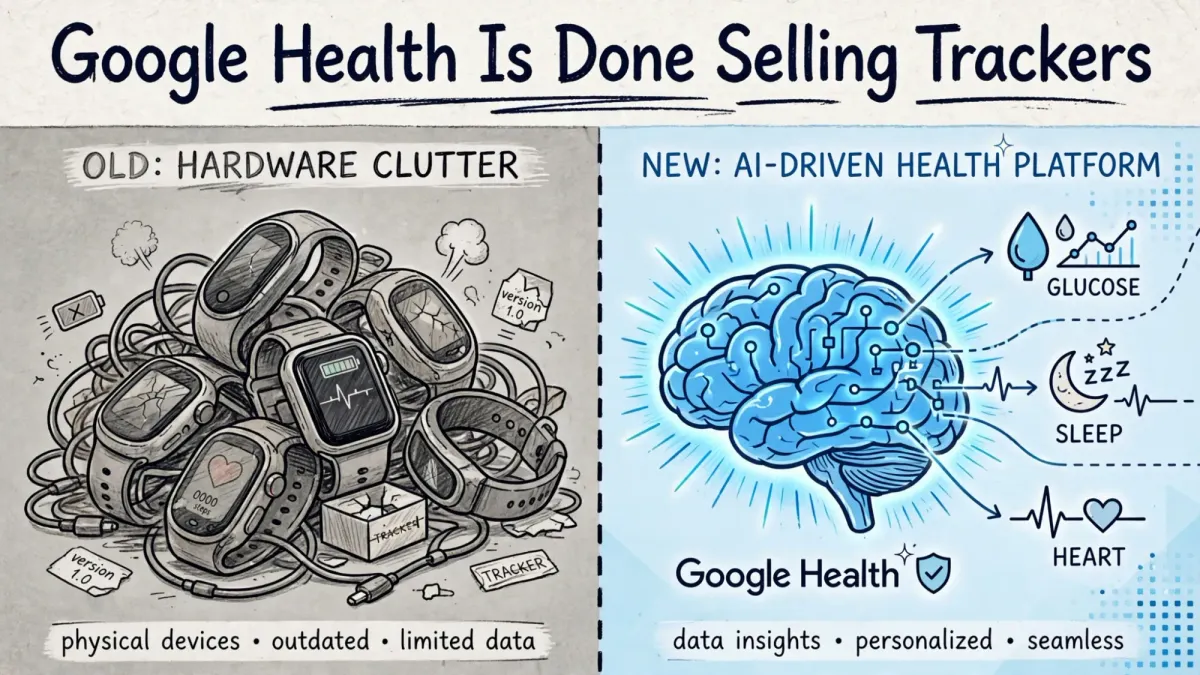
The Abbott Lingo deal looks like a wearable partnership. In reality it is Google building the brain on top of every biowearable.
We assume the wearable wars will be won by whoever builds the most accurate sensor. In reality the sensor race is already over.
Everyone can track steps, sleep and heart rate now.
The next margin is in who gets to tell you what it all means.
That is exactly what Google Health just did.
The Announcement That Looks Small
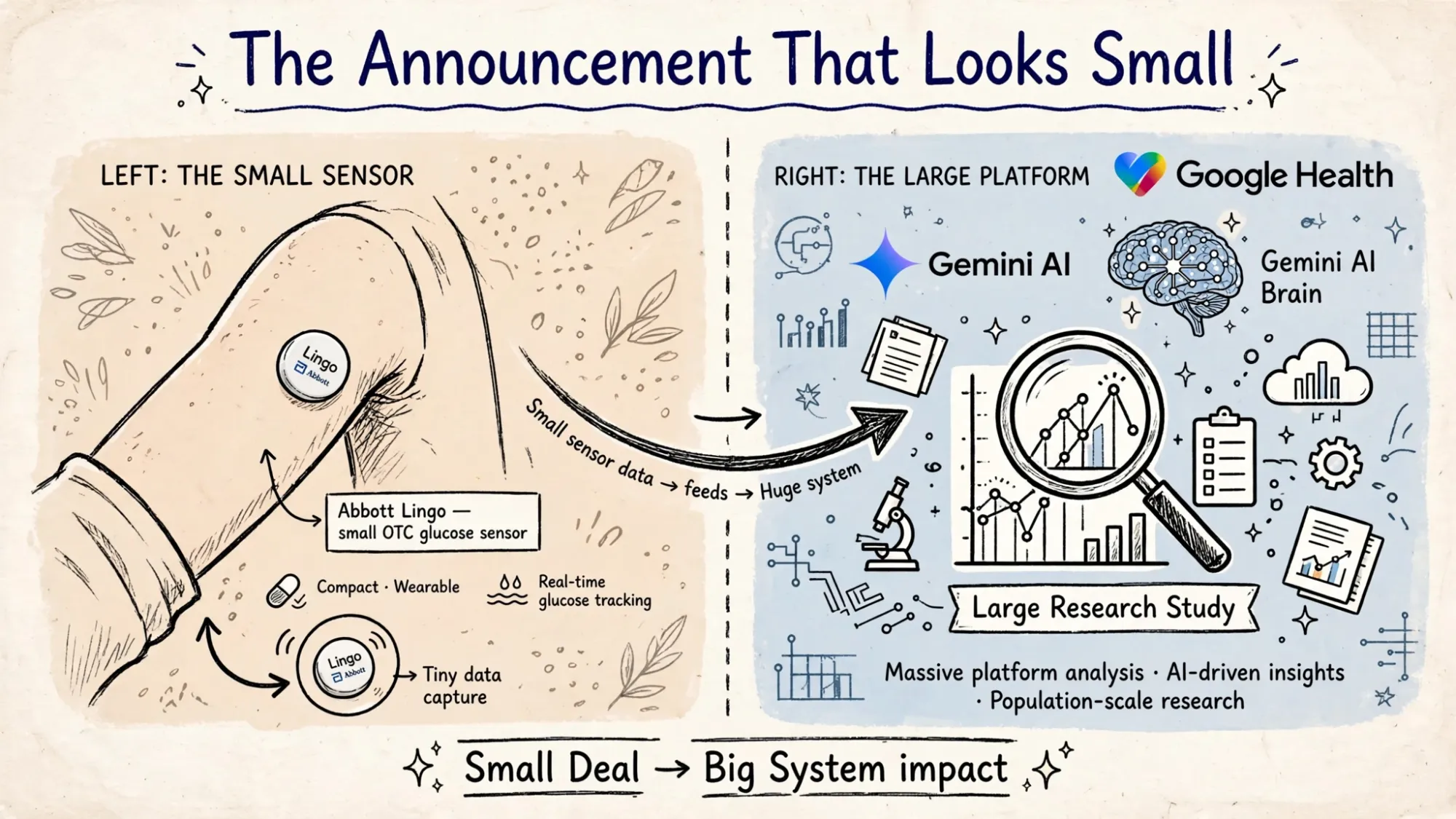
On August 11, Abbott announced a first of its kind, multi year partnership with Google Health.
Ongoing glucose insights from Abbott's Lingo biowearable, the OTC CGM for non diabetic users, will combine with Google's AI and consumer apps to create a more comprehensive view of personal health.
The detail most people missed:
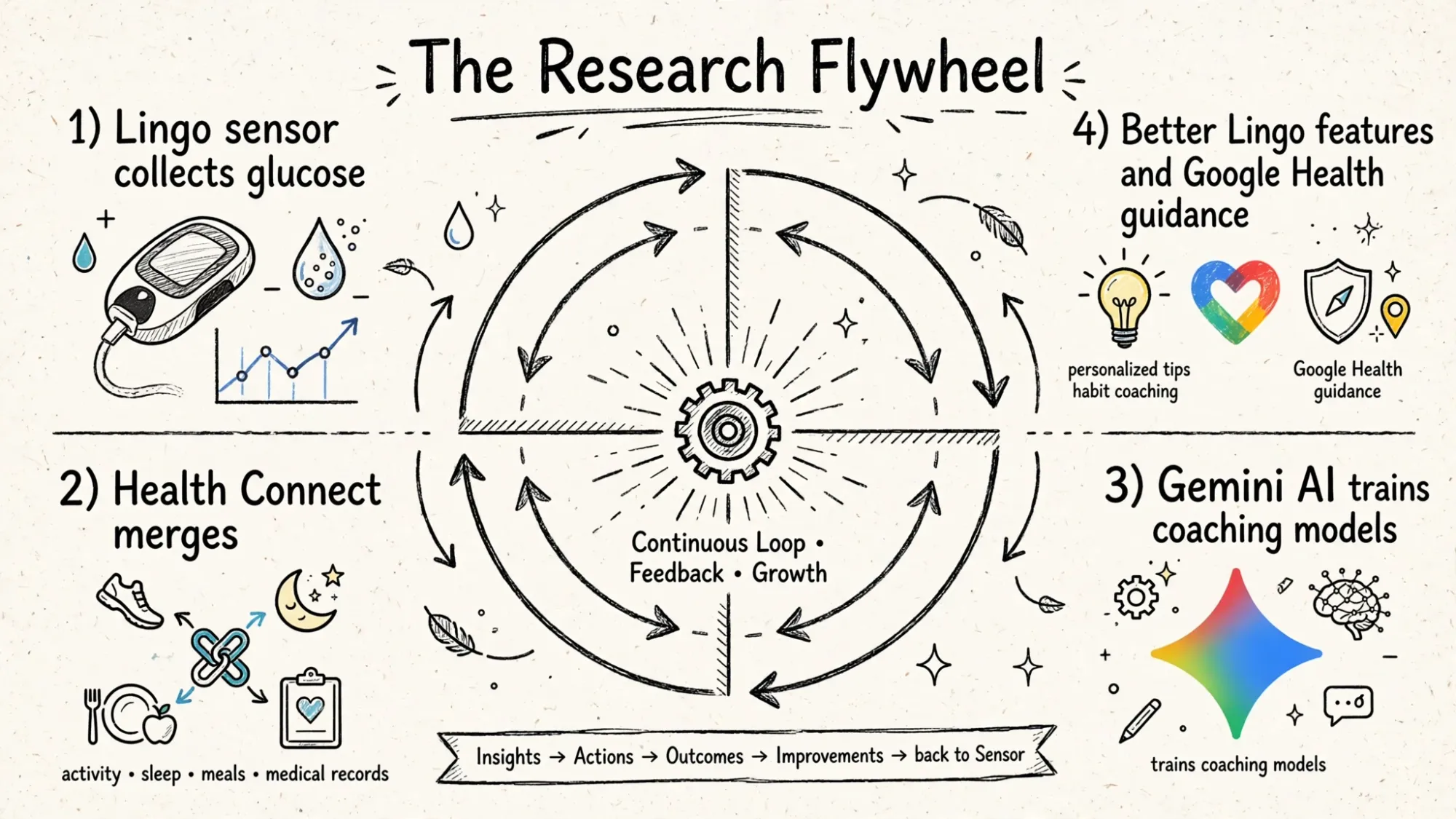
It includes a large scale research study on metabolic health that will feed data into future AI coaching models in the Google Health app and future Lingo product features.
On its own it reads like another device integration. In context it is the fourth move in a very deliberate platform turn.
Why Google Stopped Competing on Hardware
Google acquired Fitbit in 2021 for the hardware footprint.
For years it treated it like a standalone tracker brand.
In the last five months that changed.
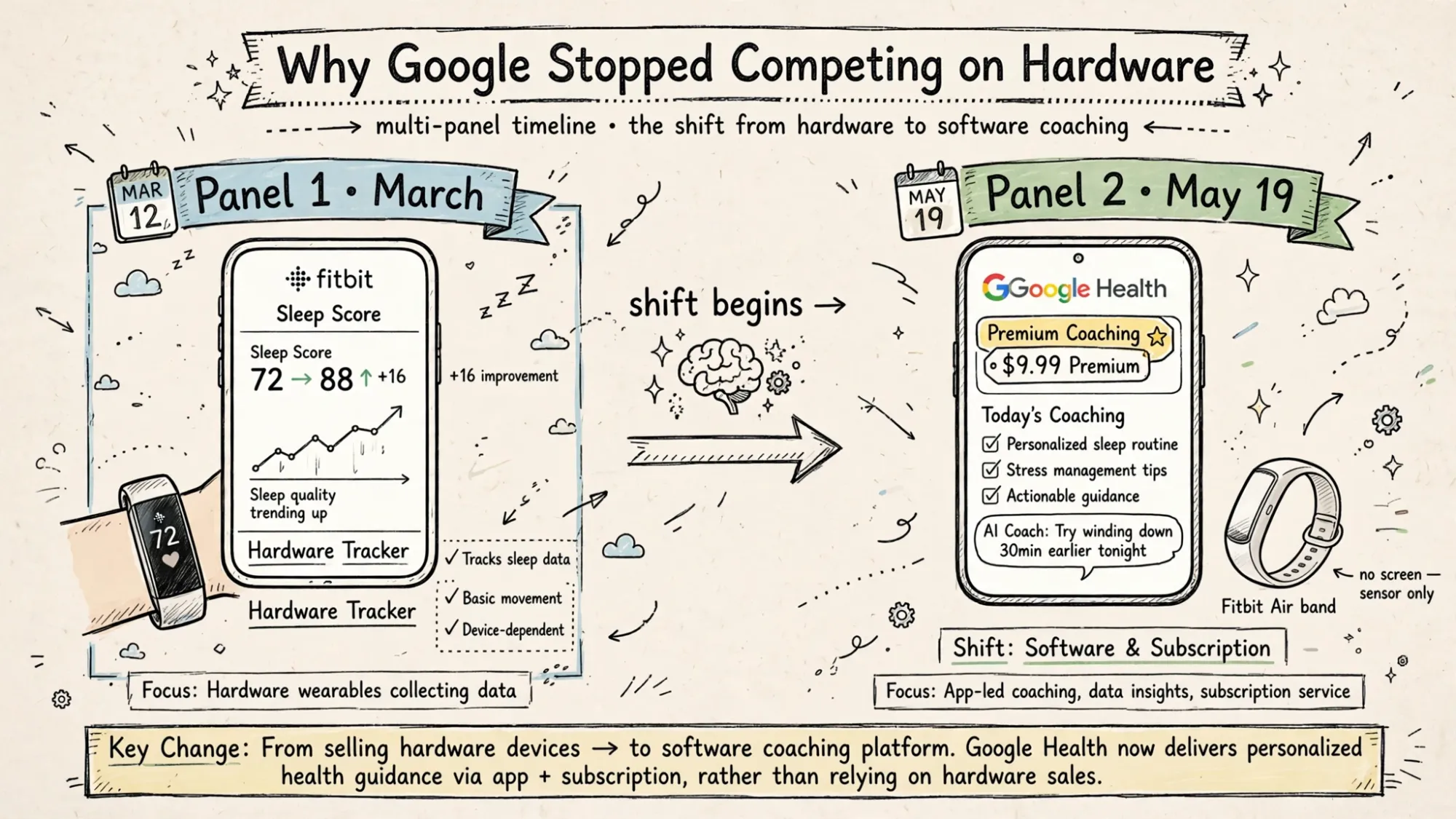
At The Check Up on March 17, Google announced a 10 million dollar commitment to train future clinicians in AI, plus three quiet but important updates to Fitbit.
Improved sleep stage accuracy by 15 percent, the ability to connect a CGM through Health Connect starting in April so you can ask how a workout or meal affected glucose, and the ability to securely link medical records, labs and medications, directly to the app.
On May 19, the Fitbit app officially becomes Google Health.
Fitbit Premium becomes Google Health Premium at 9.99 per month.
The hero feature is the Personal Health Coach built on Gemini, living in the Today tab, designed to combine fitness, sleep, nutrition, cycle tracking, mental well being, environmental signals and clinical data into actual guidance, not just charts.
It also launched alongside Fitbit Air, a Whoop style band.
But the hardware is almost secondary. Google learned what Whoop and Oura already know.
People do not churn because of sensors. They churn because they do not know what to do with the data.
The Ecosystem Play No One Prices In
This is where the Abbott deal makes sense.
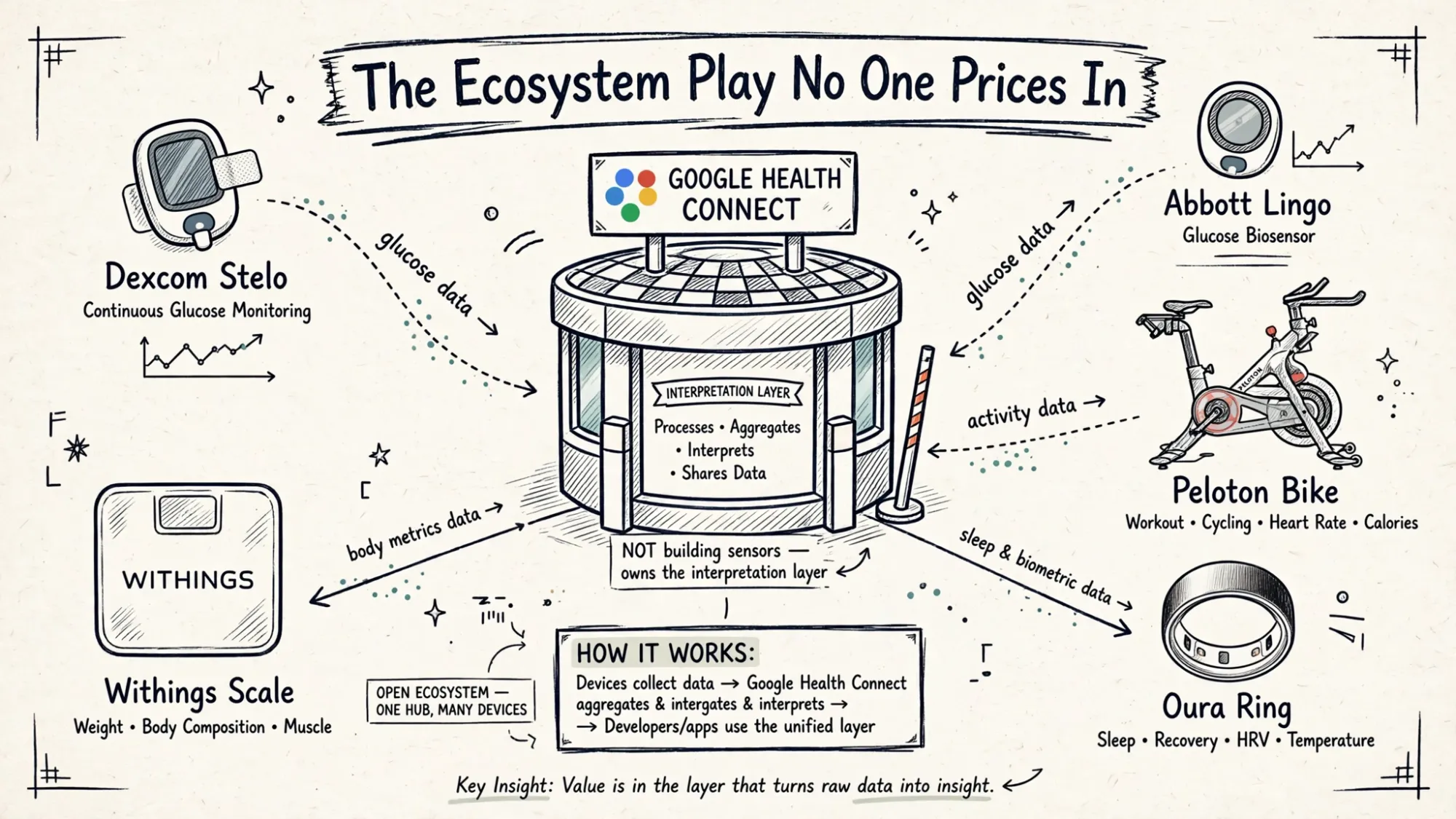
Google is not building its own CGM. It is letting everyone else build it, then making Google Health the place where it all gets interpreted.
- Dexcom already built its generative AI platform for its Stelo OTC biosensor on top of Google Cloud's Vertex AI and Gemini models to generate weekly insights.
- Withings announced at CES that it will sell Lingo sensors on its U.S. site and pipe Lingo data directly into the Withings app via an API, initially through Apple Health and Health Connect, then direct.
- Health Connect itself is already in beta with Oura, Peloton, MyFitnessPal, Samsung Health, Flo and Fitbit.
Google's business model here is not a device margin. It is a tollbooth margin.
Lingo is 49 dollars for two weeks, 89 dollars for four weeks, 249 dollars for twelve, built for people who want to understand nutrition, activity, sleep and stress, not for insulin dosing.
To work it needs coaching and habit change, which is expensive to build.
Google already has the coaching layer, the onboarding that learns your goals, injuries, equipment and routine, and lets you update it in natural language, plus the distribution via AI Pro and Ultra subscribers getting Premium included.
Abbott brings more than 6 million existing Libre users globally and an OTC wellness channel that Google could never build alone.
Google brings the brain that makes Lingo sticky past week two.
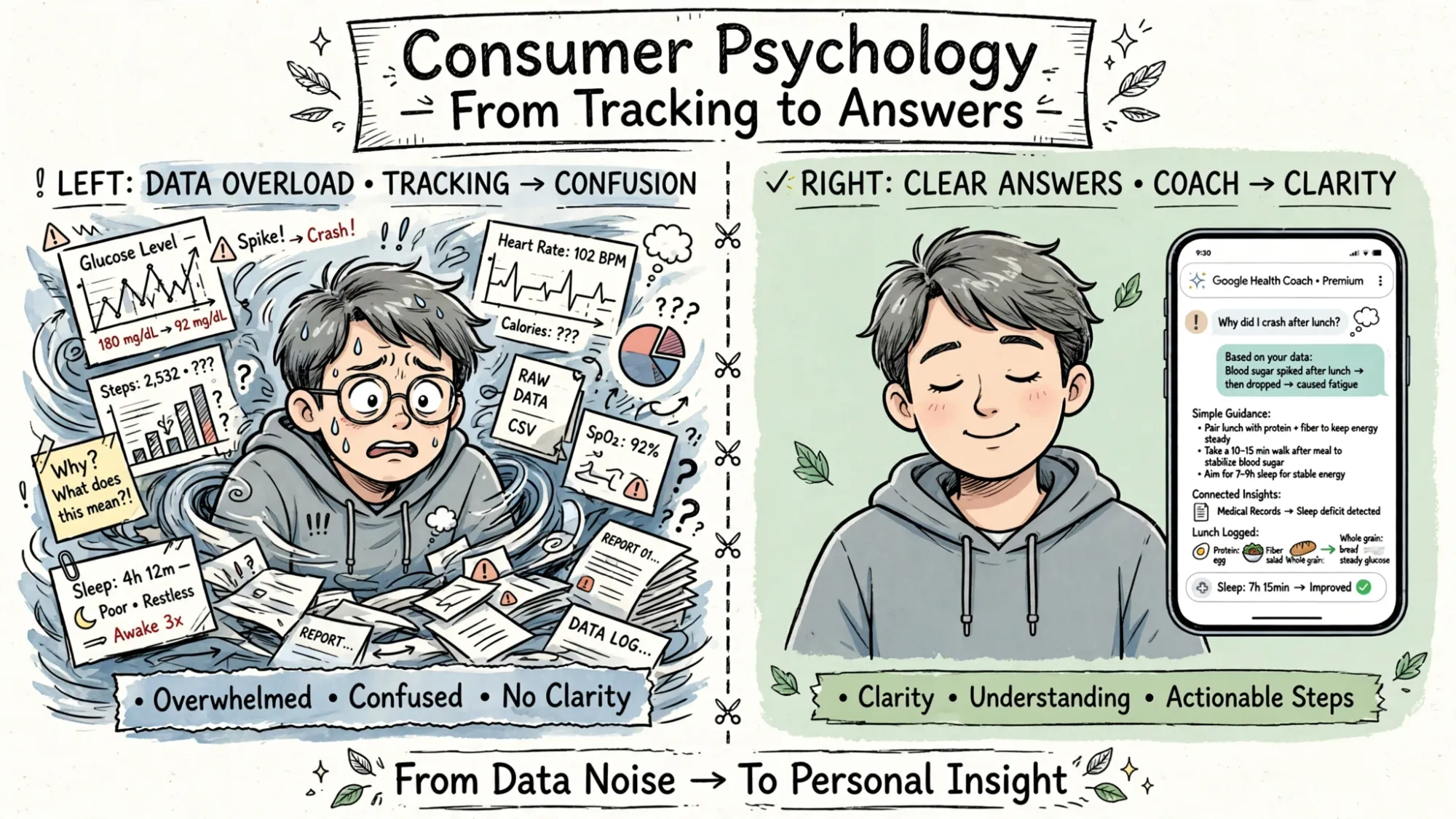
Consumer Psychology: From Tracking to Answers
The shift is subtle but important for retention.
The old promise was we will show you more data. The new promise is we will answer a question you actually have, like why did I crash after that lunch.
That is why the medical records link matters more than it sounds.
When the coach can see your cholesterol labs alongside your sleep and glucose, it moves from a fitness feature to a health companion.
It is a classic bundling move. Take fragmented data sources and reduce the cognitive load to one conversational surface.
The Research Flywheel
The research study is the tell that this is not a PR integration.
Google has done this before with Search and YouTube. Partner to get real world data at scale, use it to train more personalized models, then productize the learnings back into the app.
Abbott gets better Lingo features, Google gets a metabolic dataset that no single wearable company has.
That is glucose plus activity plus sleep plus meals plus clinical context.
Dexcom gets weekly insights.
Abbott wants continuous coaching. Same infrastructure, different sensor.
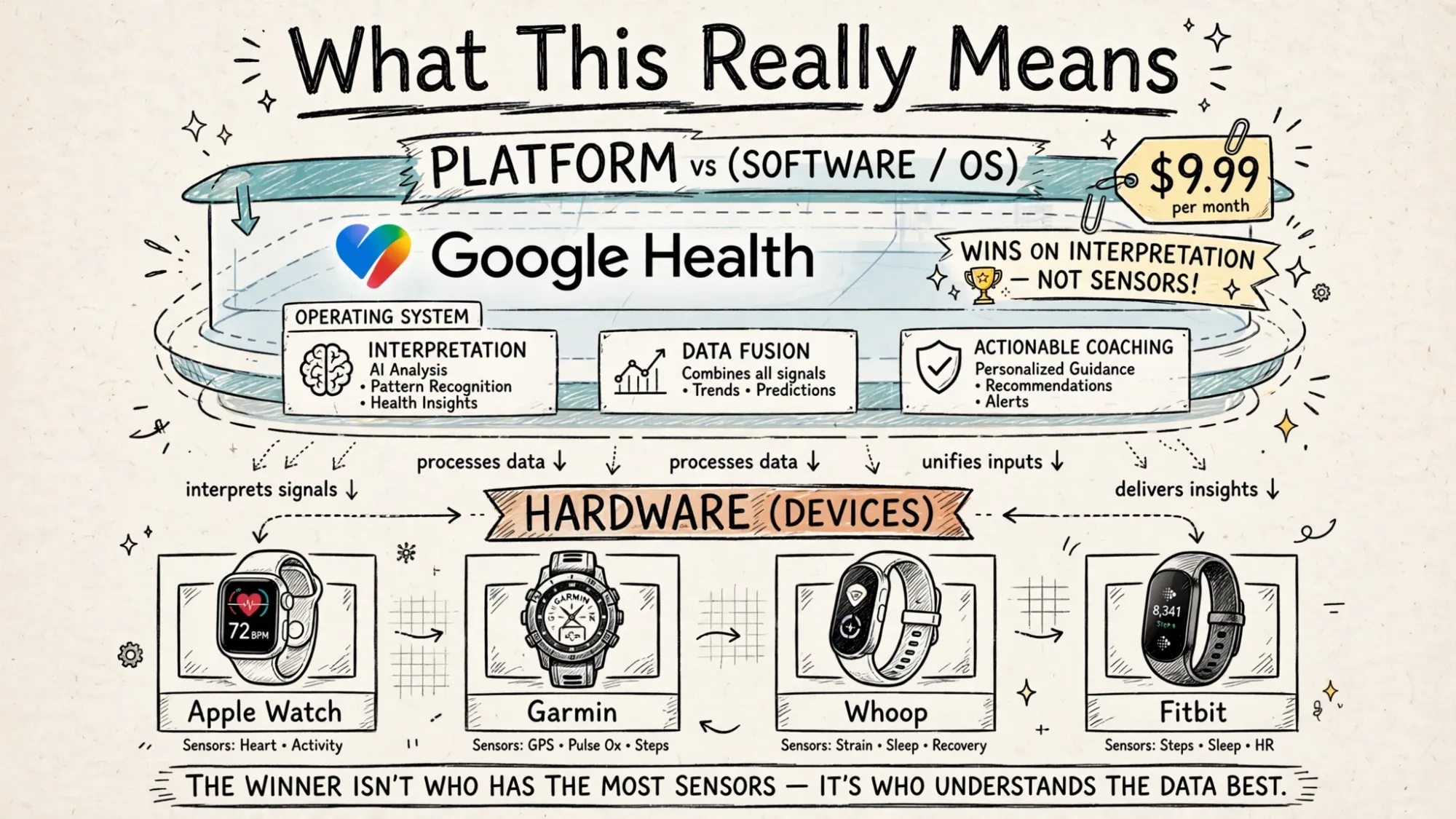
What This Really Means
If you read the headline as Abbott partners with Google, you think hardware.
If you read it as strategy, Google Health just flipped from being a tracker that competes with Apple Watch and Oura to a platform that sits on top of all of them.
Apple, Garmin and Whoop still have to win on sensors, batteries and design. Google is betting it can win on interpretation, where margins are software like and switching costs come from personalization, not from a strap on your wrist.
The next signal to watch is not another CGM deal. It is how fast Google opens the AI Coach beyond Fitbit and Pixel Watch users, and which data type it adds next to glucose.
That is when 9.99 stops being a fitness subscription and starts being the default health operating system.