Elon's Supporters Will Slowly Tank Tesla to Make the Acquisition Easier for SpaceX
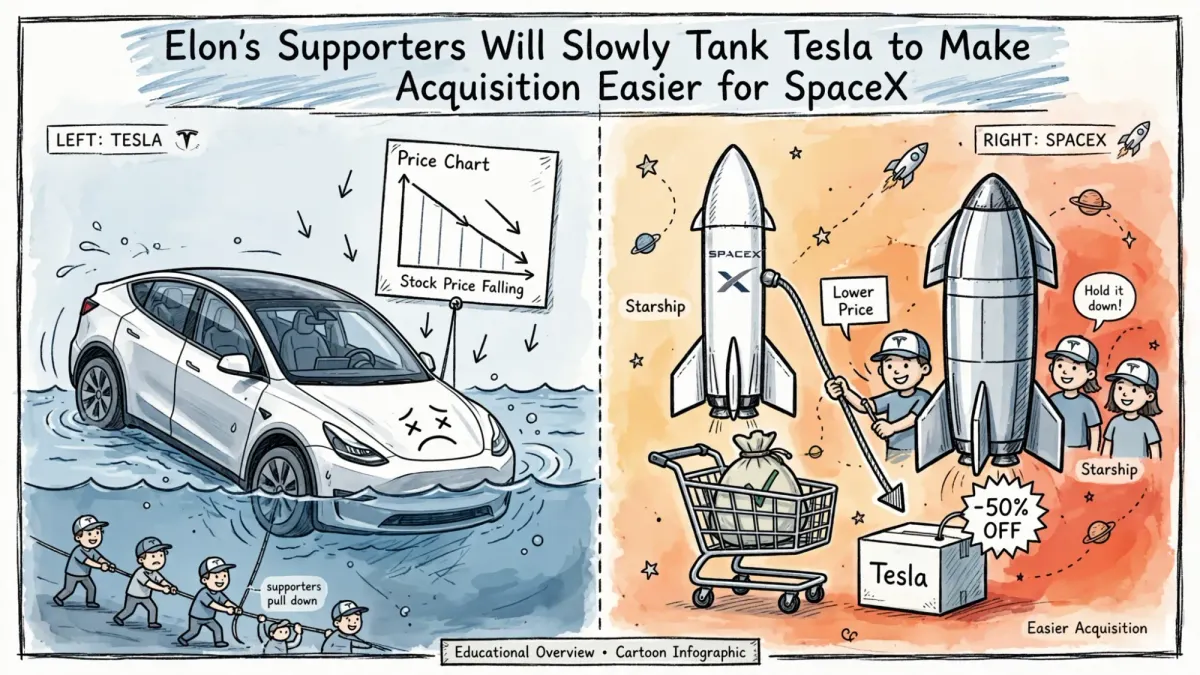
SpaceX is now public, Tesla is down 20 percent this year, and everyone close to Elon is suddenly talking about overlap. The cheaper Tesla gets, the less SpaceX has to dilute to buy it.
SpaceX is now public, Tesla is down 20 percent this year, and everyone close to Elon is suddenly talking about overlap. The cheaper Tesla gets, the less SpaceX has to dilute to buy it.
The Setup No One Wants to Say Out Loud
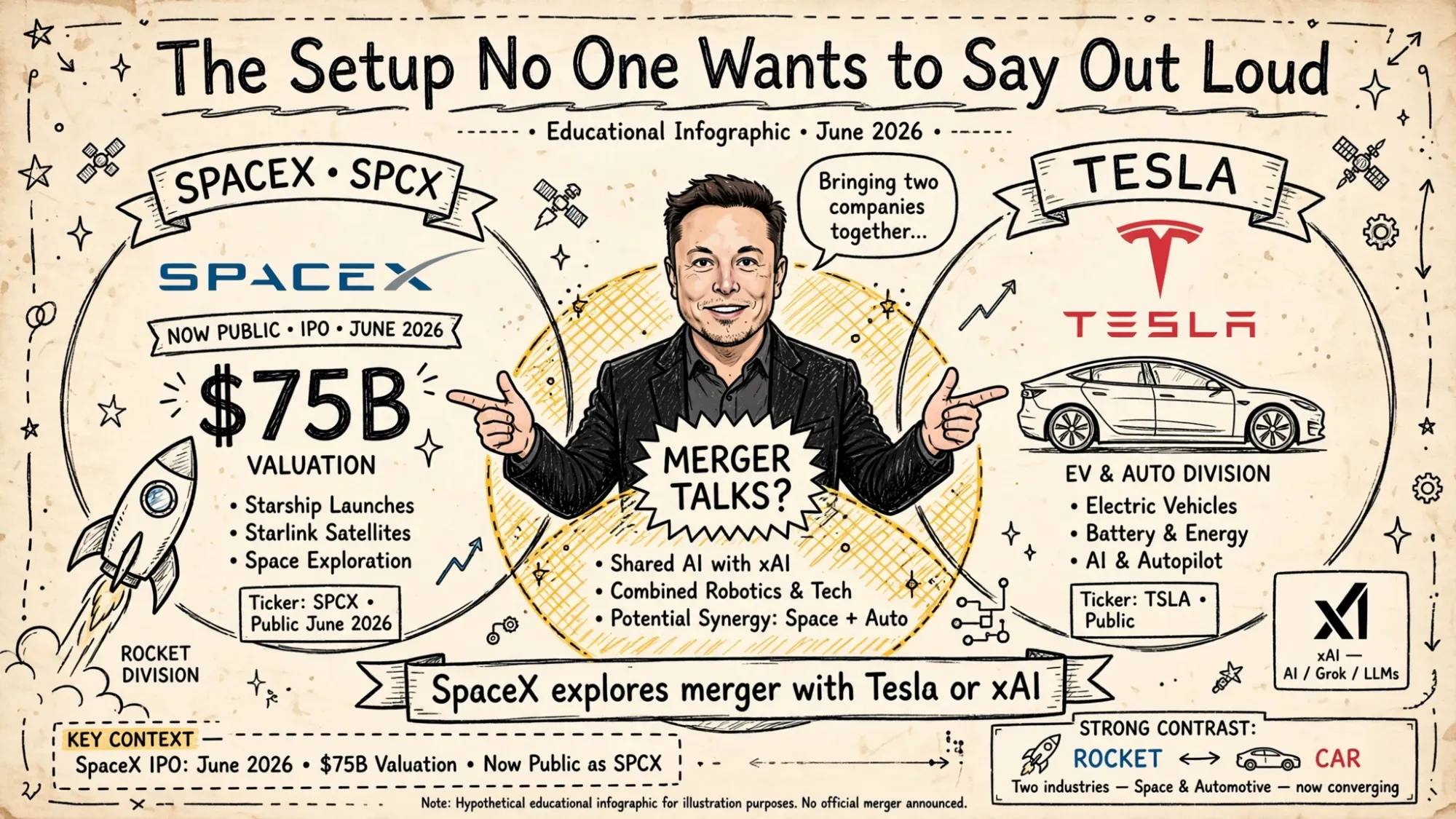
In January, Bloomberg and Reuters reported SpaceX is exploring a merger with Tesla or xAI, aiming to unite rockets, Starlink, X and Grok AI before a major IPO. Tesla shares rose 3 percent after the bell.
Then SpaceX actually did it with xAI.
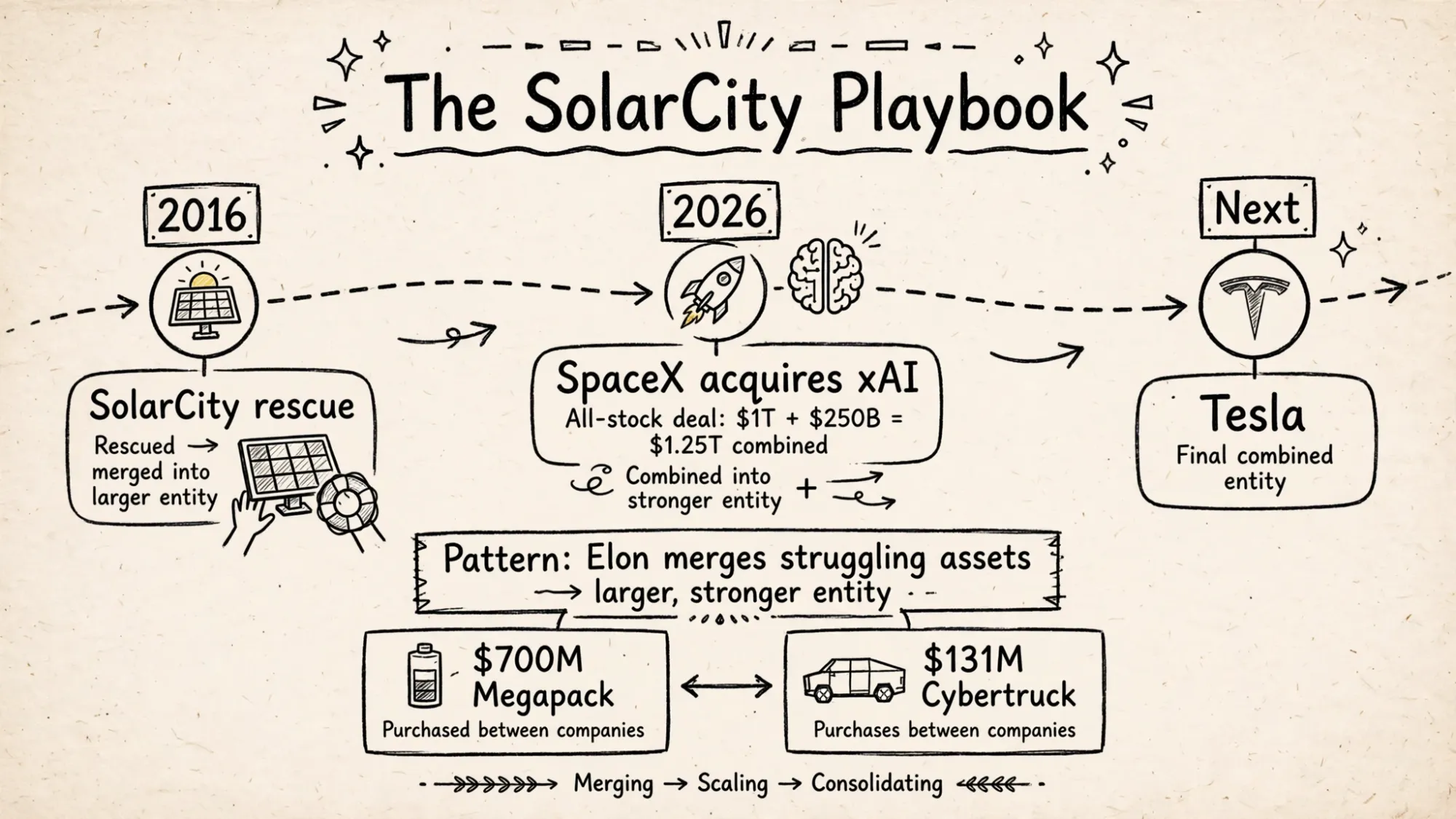
;An all stock deal that valued the rocket maker at 1 trillion and xAI at 250 billion, creating a combined entity reportedly at 1.25 trillion ahead of IPO.
In June, SpaceX went public as SPCX, raising a reported 75 billion.
On the July 22 Tesla earnings call, Elon left the door open.
Quote: As you can tell from the many collaborations on so many fronts with SpaceX, there is more and more overlap.
He deferred to general counsel and appropriate process.
He did not say no.
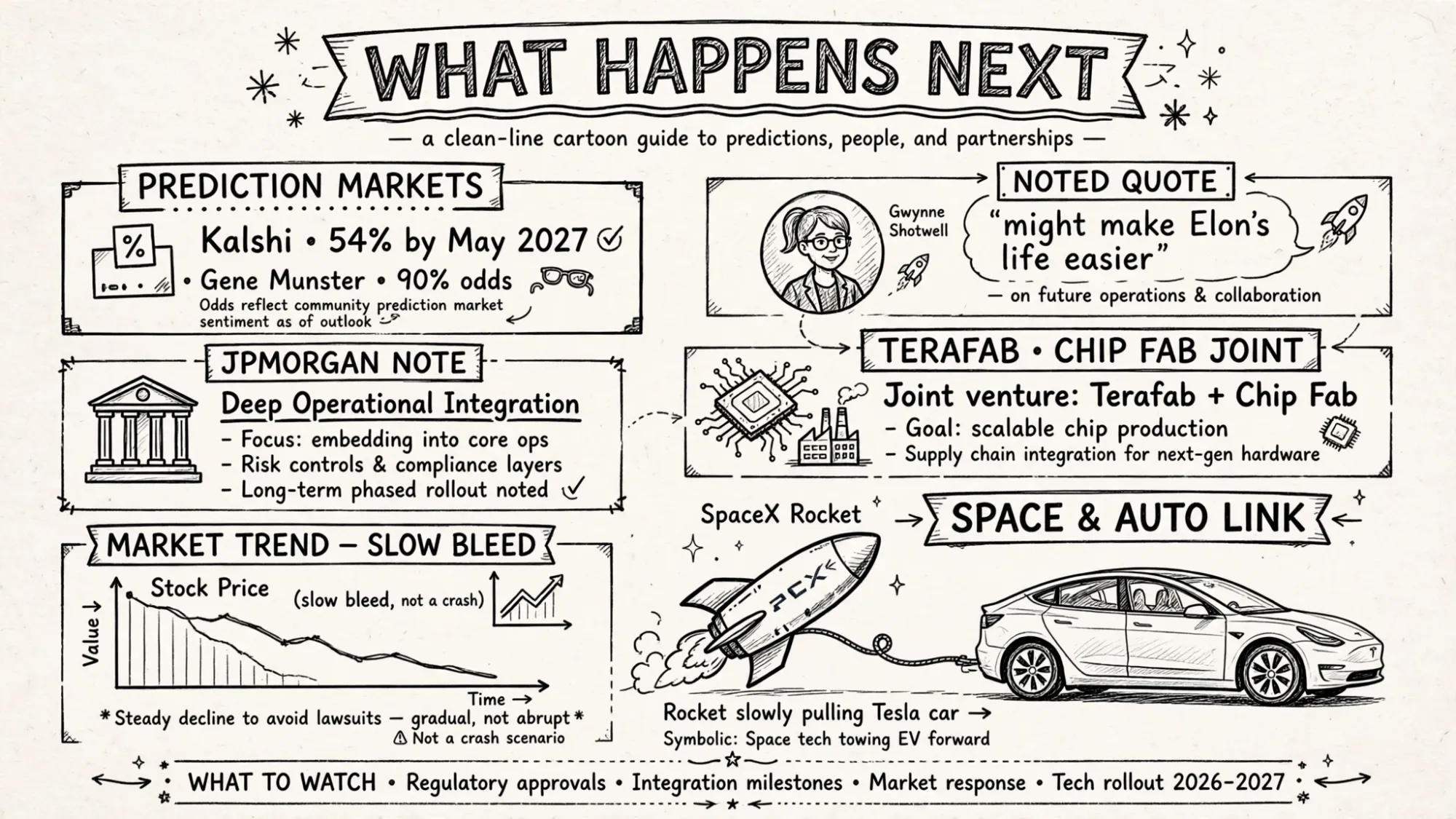
Gene Munster said that pushed his odds from 80 percent to 90 percent. Gwynne Shotwell said combining might make Elon's life a little easier. Prediction market Kalshi puts a SpaceX Tesla deal before May 1, 2027 at 54 percent.
So the setup is public. SpaceX is public, it can issue stock, and Tesla is the obvious next piece.
The Numbers Already Point Down
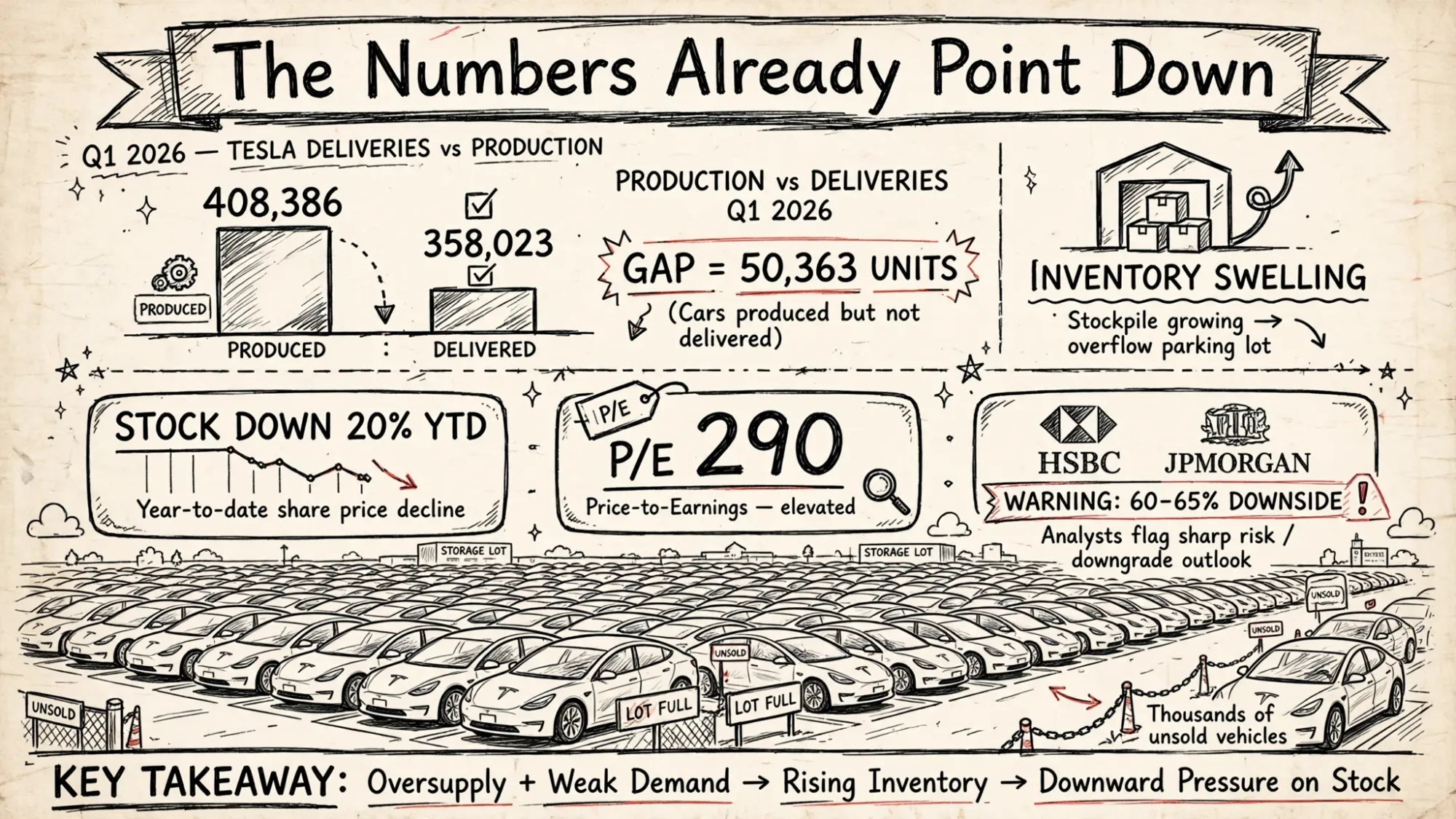
Tesla reported Q1 2026 deliveries of 358,023 against production of 408,386.
That is a 50,363 unit gap, the widest production over delivery spread ever posted in a single quarter, and the largest inventory build in company history.
It also marked the weakest delivery quarter in a year.
The stock reflects it.
Tesla is down roughly 20 percent year to date in 2026, down about 30 percent in some stretches, even while trading at a trailing P/E around 290. HSBC has floated 65 percent downside.
JPMorgan warned of 60 percent downside, citing deteriorated financial expectations and a Q1 miss.
Options support that propped up the stock in past years has waned in 2026. The market has stopped paying Tesla for cars.
It wants robotaxi and Optimus.
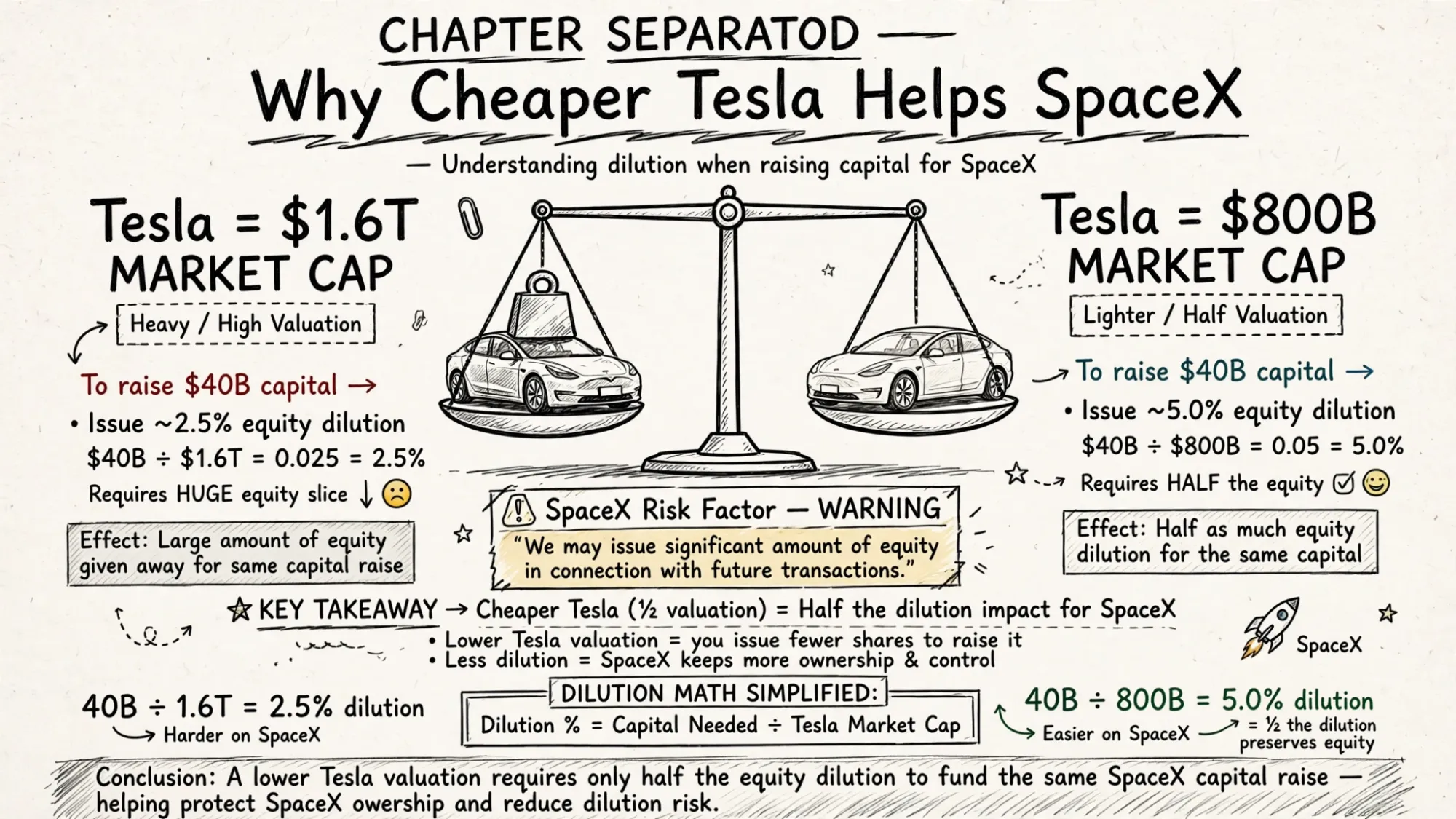
This matters for deal math. Tesla still carries a 1.6 trillion market cap.
At that price, SpaceX has to issue a huge amount of equity to buy it.
If Tesla reprices to 800 billion, SpaceX issues half the equity.
Same asset, half the dilution.
You do not need a crash to achieve that. You need a slow bleed.
A steady drip of delivery misses, robotaxi delays versus Waymo, and margin questions does the job without triggering a shareholder lawsuit.
The Governance Map That Makes It Possible
Look at the control structure, not just the headlines.
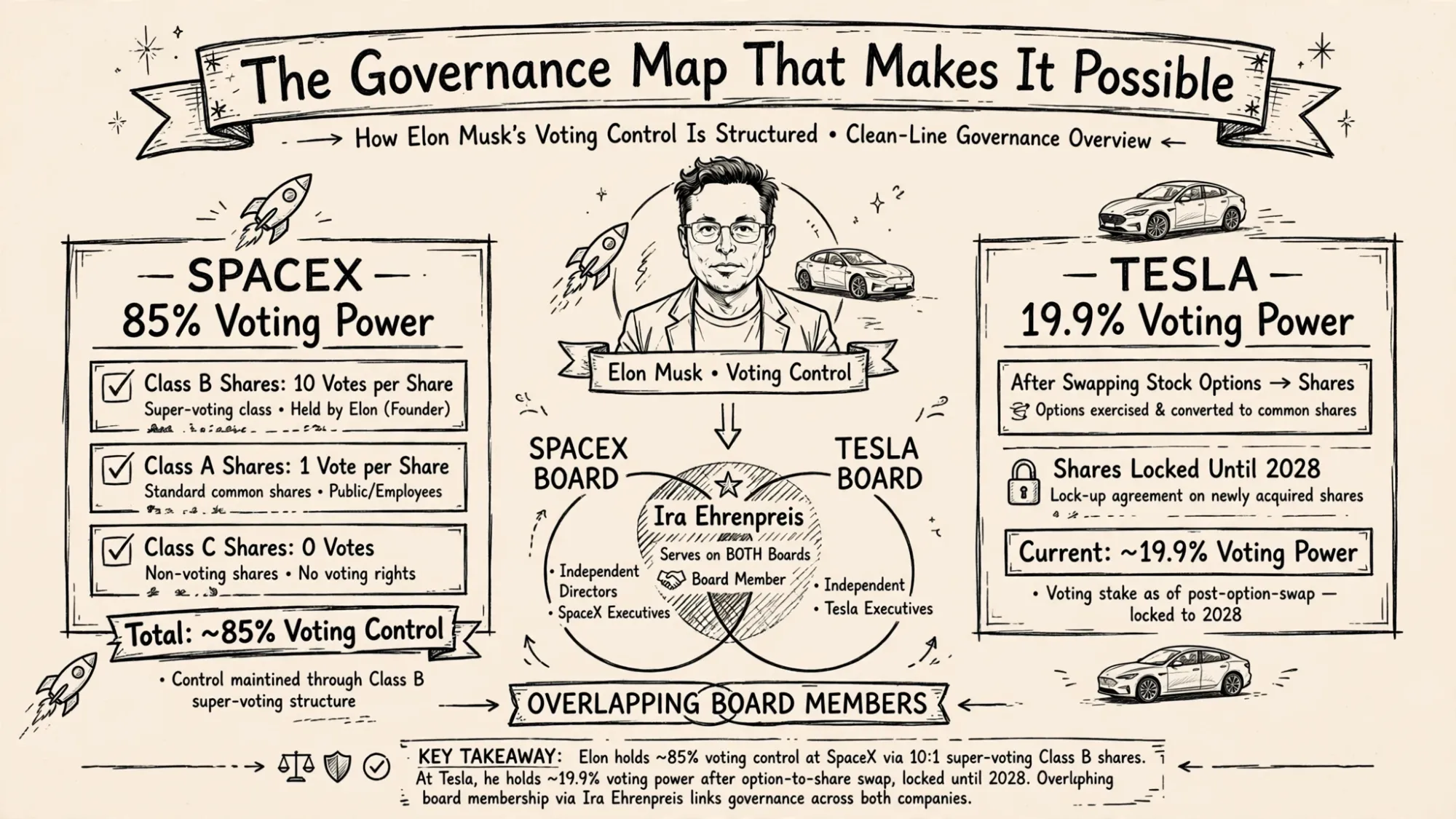
At SpaceX, Elon controls about 85 percent of voting power.
The share classes make it explicit. Class A has one vote and is sold to the public.
Class B is owned by Elon and has 10 votes per share. Class C has no voting rights and can be used for M and A and comp.
That means Elon can issue a significant amount of equity for future transactions without losing control. SpaceX put that exact language in its IPO filing risk factors on June 1.
That language is what lit up the Tesla merger talk.
At Tesla, Elon just lifted his voting stake to nearly 20 percent, about 19.9 percent, by swapping options for shares he can vote but cannot sell until 2028 and in some tranches until 2033.
That is not a cash out. It is structural collateral for a vote.
The boards overlap deeply. Ira Ehrenpreis sits on both.
Antonio Gracias and Steve Jurvetson were previously on both. Kimbal Musk and James Murdoch are on Tesla.
This is the same board pattern that approved SolarCity in 2016 and the xAI deal in 2026.
In other words, the only person who could block a merger on the SpaceX side is Elon. On the Tesla side, you need a shareholder vote, but with 19.9 percent locked, plus retail and friendly institutions, the path is there.
Why Cheaper Tesla Helps SpaceX
This is basic corporate finance.
SpaceX and Tesla already buy from each other.
SpaceX bought nearly 700 million in Tesla Megapack energy storage in 2024 and 2025 and 131 million in Cybertrucks.
They are jointly developing Terafab, a chip fab for AI chips for both companies. JPMorgan wrote that operational integration is already deep, citing shared engineering talent, AI infrastructure and Terafab.
If you are a SpaceX investor who just watched the company warn about future dilution, you want Tesla as cheap as possible before the stock for stock exchange ratio is set.
Lower Tesla price means fewer SpaceX shares issued, less dilution to your new public float, and a higher pro forma ownership.
If you are a Tesla long who is also long SpaceX, which many of the same funds are, you prefer to take a small paper loss on Tesla now to get a larger slice of a combined entity that can be marketed as one futuristic company doing solar powered orbital data centers, robotics with Optimus assembling those data centers, and AI with Grok.
Stifel phrased it as inevitable, with the question being not if but when. When is a pricing question.
The SolarCity Playbook
Elon has done this twice before.
In 2016, SolarCity was highly indebted and struggling, founded by his cousins and 22.5 percent owned by Elon. Tesla rescued it.
Elon recused himself, the board approved it, and he beat back the shareholder lawsuit about self dealing.
In February 2026, SpaceX acquired xAI, Elon's money losing AI company, right before IPO. Tesla had just invested 2 billion in xAI the month before.
Then SpaceX absorbed it in an all stock deal.
The pattern is consistent. Merge the struggling or capital hungry asset into the larger, stronger entity that can carry the story. SolarCity into Tesla.
xAI into SpaceX.
Tesla into SpaceX plus xAI would be the final combined entity.
This is not about product synergy on day one. It is about simplifying Elon's empire into one public company that can raise 75 billion at a time and allocate it across rockets, robots, cars and AI without doing related party transactions every quarter.
What Happens Next
No one needs to publicly tank Tesla. They just need to stop defending it.
That means letting Q1 style delivery misses sit without a heroic narrative, letting robotaxi miles ramp 10 percent week over week since January but still lag Waymo's city expansion, and letting energy storage lumps be called lumpy instead of explained away.
It means the board does not rush to approve a new pay package that would force a higher valuation mark.
SpaceX already did its part by adding the significant equity for future transactions language. That prepares new public shareholders for dilution and lowers the shock when an S-1 amendment includes Tesla.
Watch three triggers:
- Another quarter of inventory build over 40,000 units
- SpaceX filing an amendment that adds Tesla as a related party transaction
- A Tesla shareholder vote where Elon votes his 19.9 percent as a bloc
If Tesla drifts from 380 down toward 200, the exchange ratio becomes far more palatable for SpaceX investors, and the deal becomes accretive to the story SpaceX wants to sell: one company taking various shots on goal across space, AI, robotics and energy.
In that world, Elon's supporters are not hurting Tesla because they lost faith. They are letting it reprice because they have not lost faith in the combined entity.