
The Compute Crisis: Starlink and Energy Arbitrage
We think the artificial intelligence bubble is a repeat of the early internet boom. It is actually a debt fueled infrastructure race utilizing satellite connectivity and physical energy arbitrage.
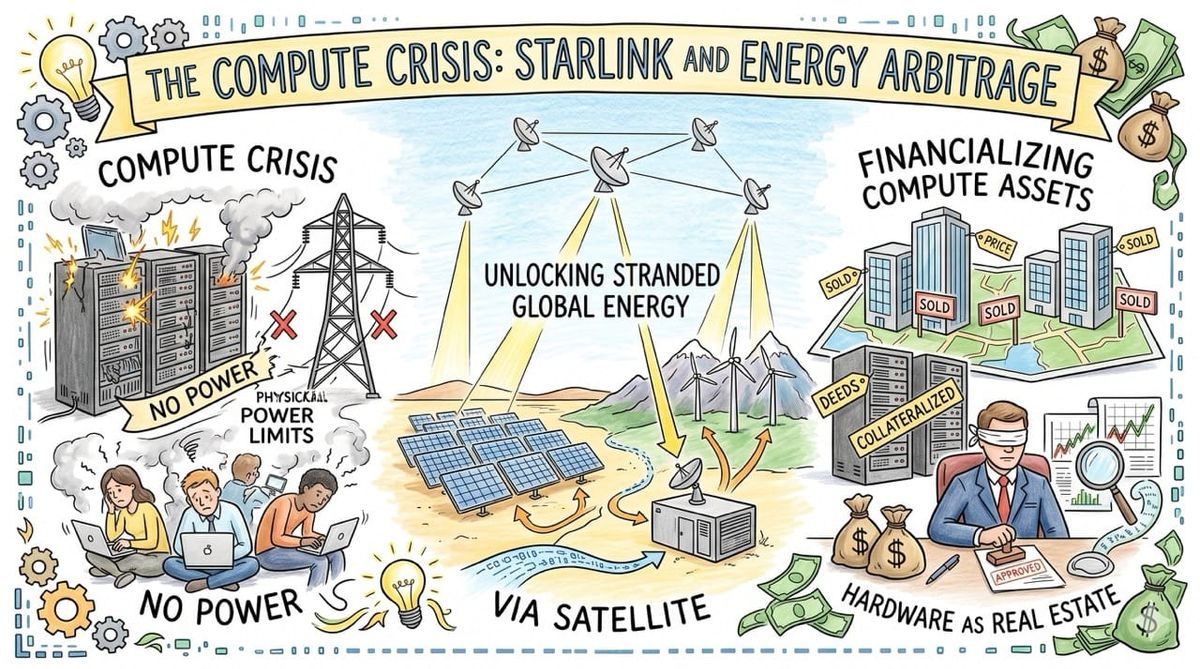
The primary bottleneck for algorithmic expansion is physical electricity rather than processing chips. This energy deficit is creating a highly leveraged secondary market where hardware is securitized exactly like physical real estate.
Inspiration: Analyzing the rapid deployment of capital into processing infrastructure and the corresponding grid limitations. Realizing that satellite connectivity unlocks stranded global energy while Wall Street blindly collateralizes the underlying hardware.
The Power Bottleneck
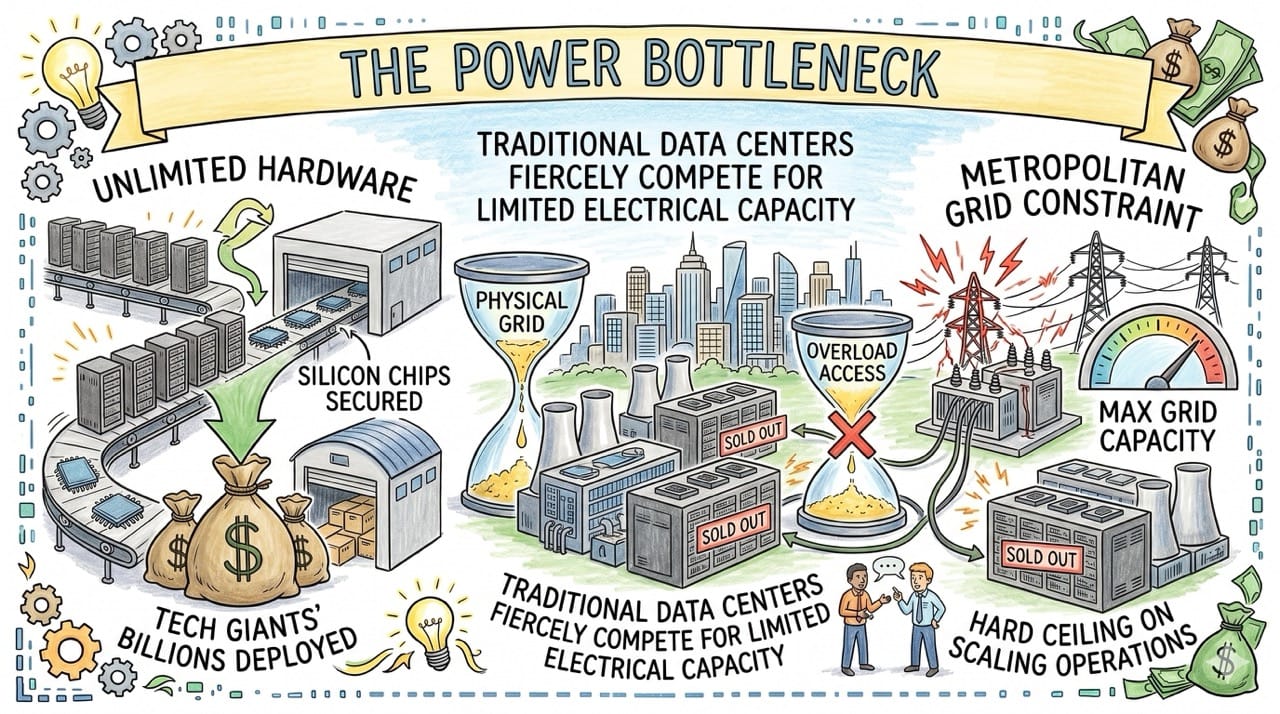
Technology giants are currently deploying hundreds of billions of dollars annually into processing infrastructure.
The fundamental bottleneck for this expansion is no longer securing silicon chips but accessing the physical power grid.
Traditional data centers are fiercely competing for limited electrical capacity in major metropolitan areas.
This geographic constraint creates a hard ceiling on how fast these companies can actually scale their commercial operations.
The Stranded Arbitrage
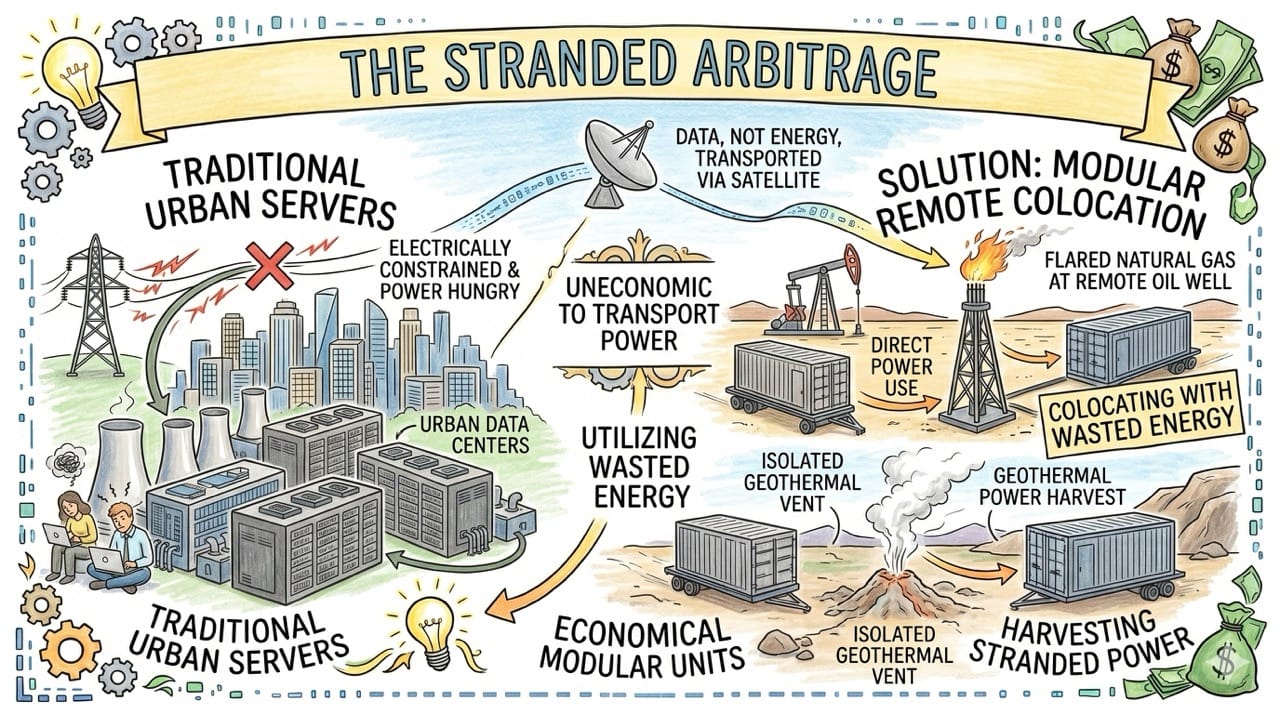
The solution requires moving away from traditional urban server farms entirely.
We must begin colocating modular computing units directly at the site of wasted global energy.
There are vast pockets of energy worldwide that remain economically impossible to transport to populated areas.
This includes flared natural gas at remote oil wells and isolated geothermal vents.
The Starlink Bridge
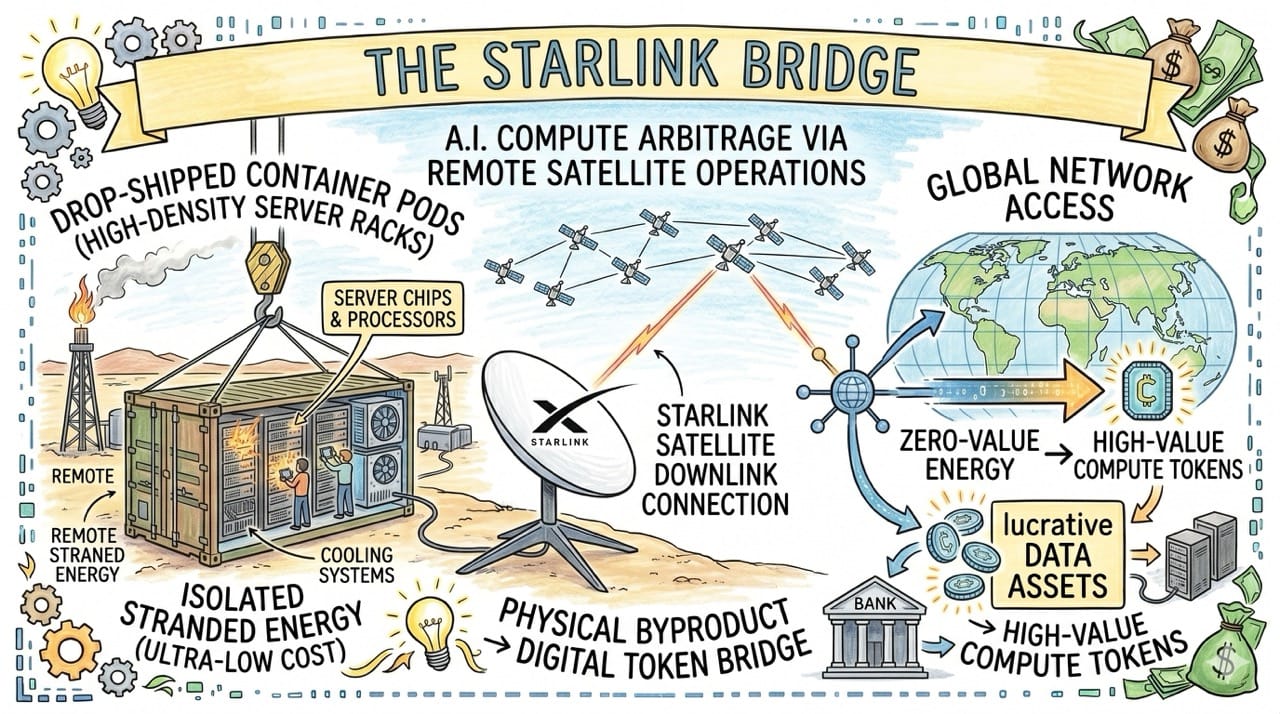
The true arbitrage involves dropping shipping containers filled with high density processors directly onto these remote energy sites.
These isolated operations can generate electricity at a fraction of a cent per kilowatt hour.
They use satellite downlinks like Starlink to connect these remote servers back to the global network.
You are taking a physical byproduct with zero market value and converting it directly into highly lucrative compute tokens.
The Real Estate Pivot
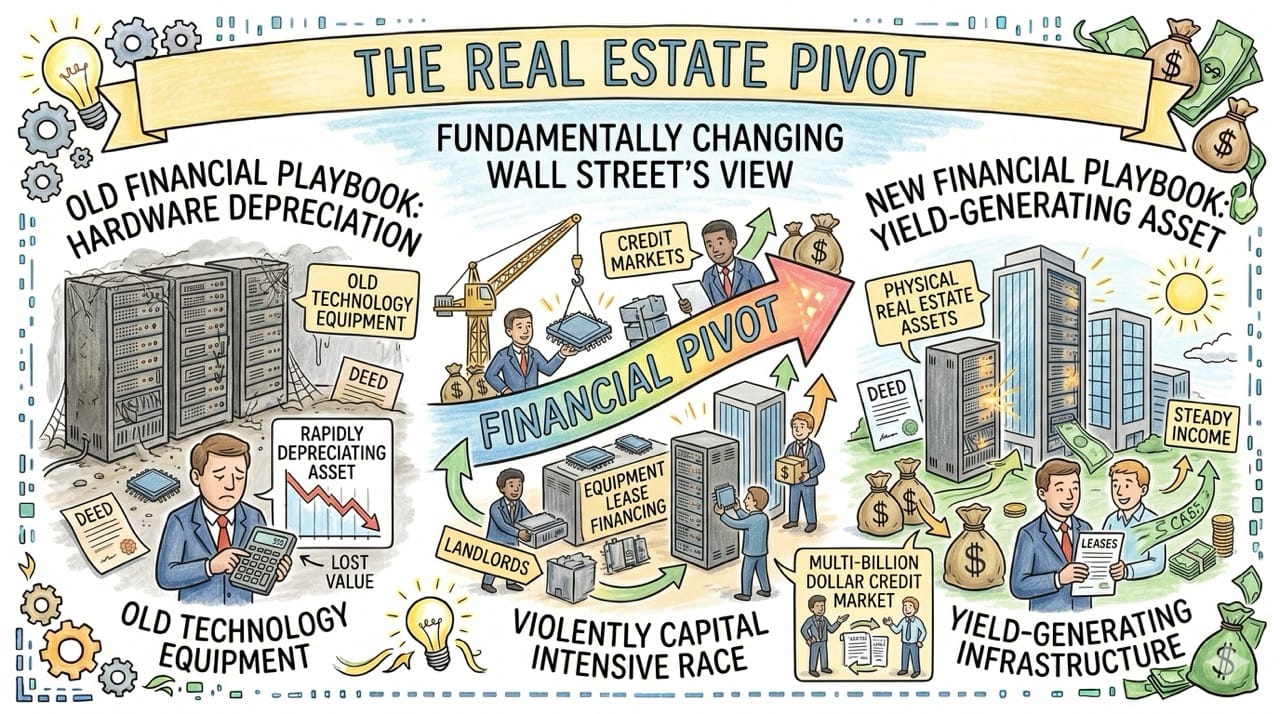
This violently capital intensive infrastructure race is fundamentally changing how Wall Street views hardware.
Traditional finance historically viewed server equipment strictly as a rapidly depreciating technology asset.
The new financial playbook involves treating these processing units as yield generating real estate.
A multi billion dollar credit market is rapidly forming around equipment lease financing.
Securitizing Compute
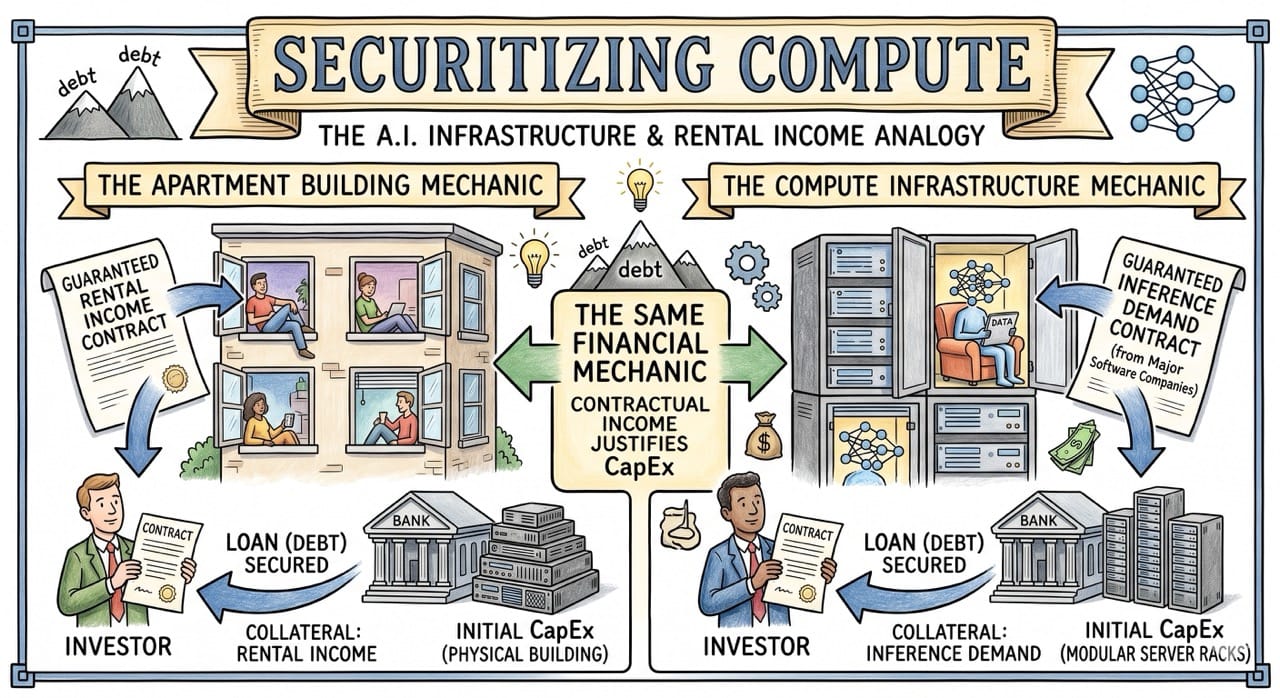
Investors are securing guaranteed inference contracts from major software companies to justify their initial capital expenditure.
They use these guaranteed revenue streams to collateralize the heavy debt required to purchase the hardware.
It is the exact same financial mechanic as buying an apartment building with guaranteed rental income.
In this specific scenario the tenant is a neural network and the physical building is a modular server rack.
Conclusion: The Mortgage Parallel
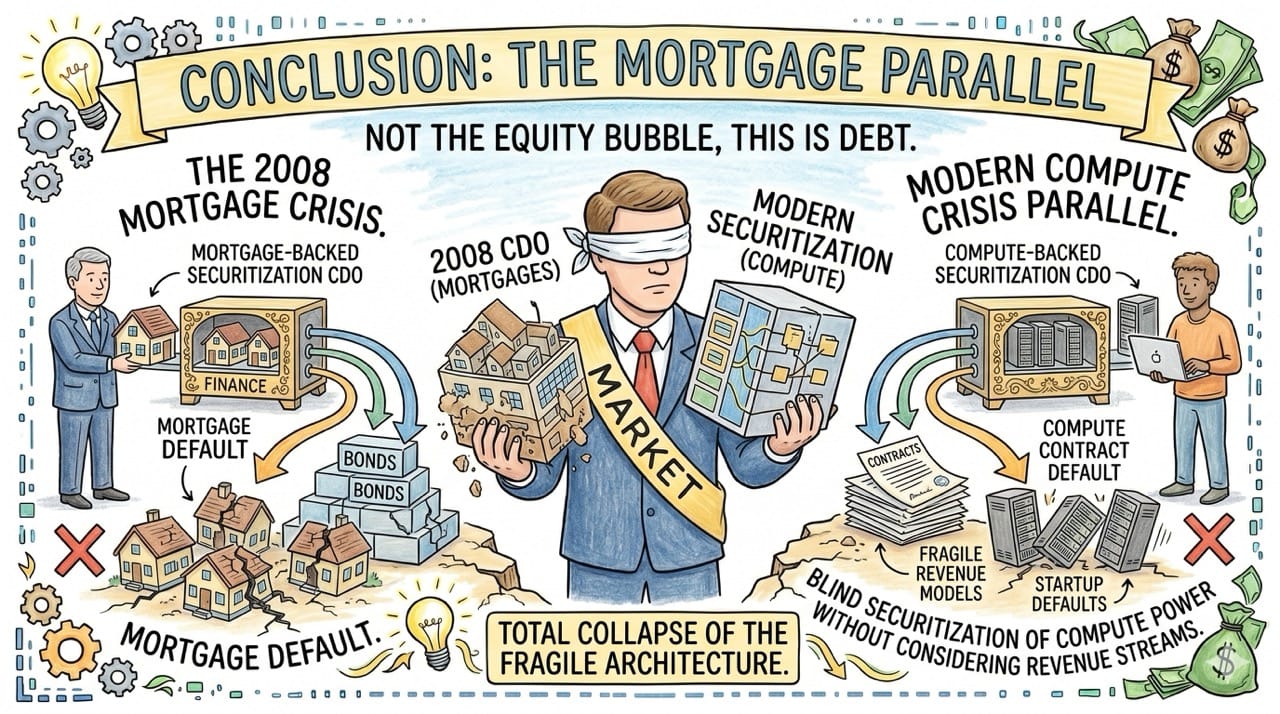
We are not experiencing a repeat of the early internet equity bubble.
This is a debt fueled securitization market that closely mirrors the two thousand eight mortgage crisis.
If these software startups default on their expensive computing contracts the underlying debt structure will instantly collapse.
The market is blindly securitizing computing power without considering the fragile revenue models supporting the entire architecture.