The Multi-Cloud Mandate: Why the Tech Duopoly Could Be Dead
We assume Amazon and Microsoft will forever control the internet through a rigid server duopoly. The reality is that terrified corporate executives are aggressively splitting their infrastructure to avoid catastrophic vendor lock-in.
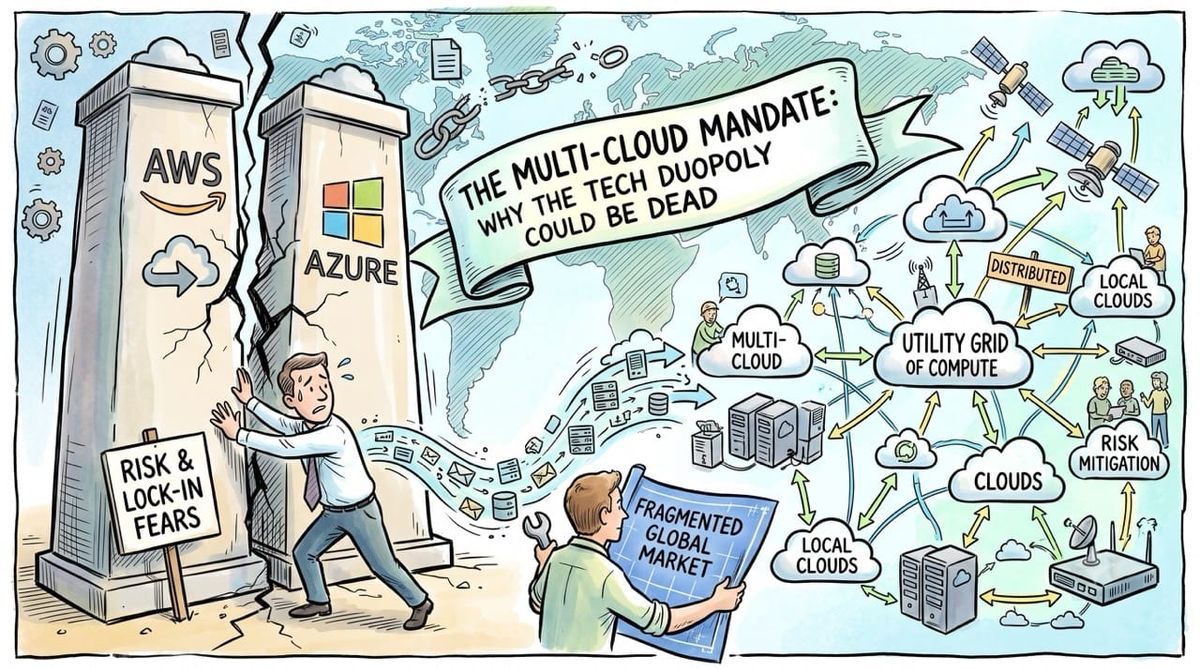
AWS and Azure dominated the last decade of enterprise software. The next era of compute will be a highly fragmented utility grid driven entirely by corporate paranoia.
Inspiration: Analyzing the rapid shift toward multi-cloud enterprise architectures and realizing that risk management will artificially force a highly distributed global server market.
The Legacy Duopoly
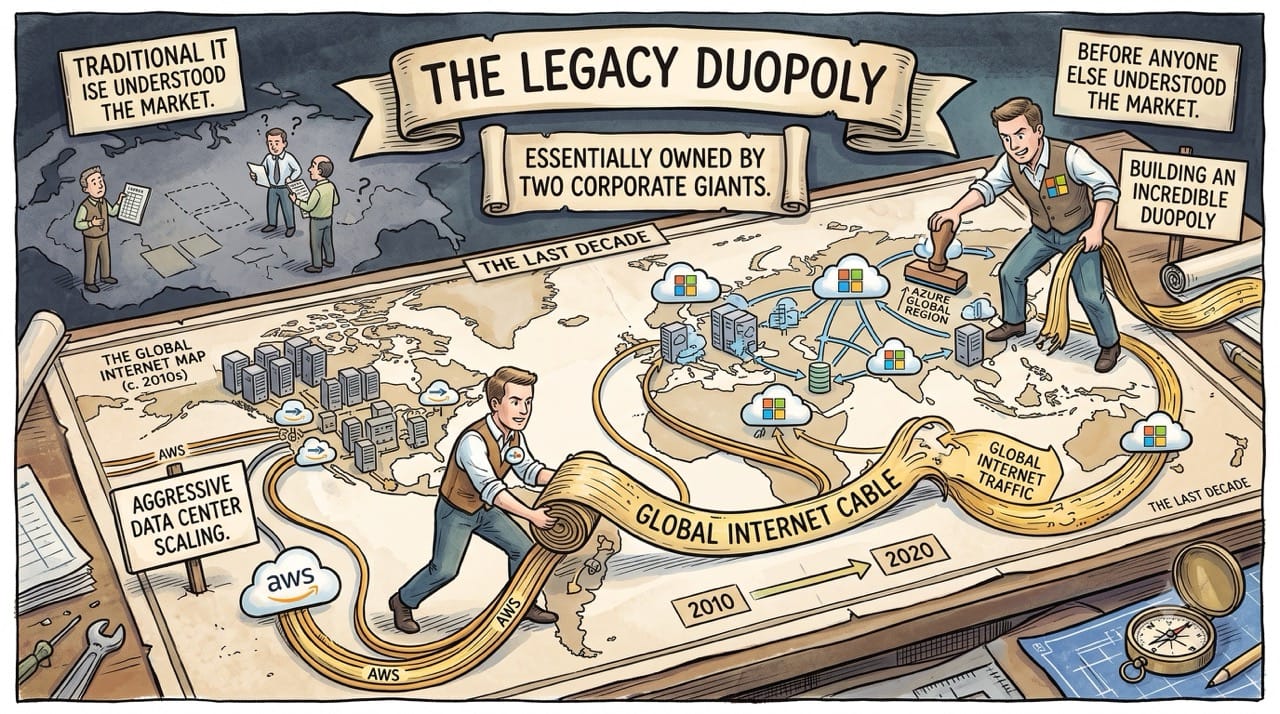
For the last decade the global internet was essentially owned by two corporate giants.
Amazon Web Services and Microsoft Azure built an incredible duopoly by aggressively scaling their data centers before anyone else understood the market.
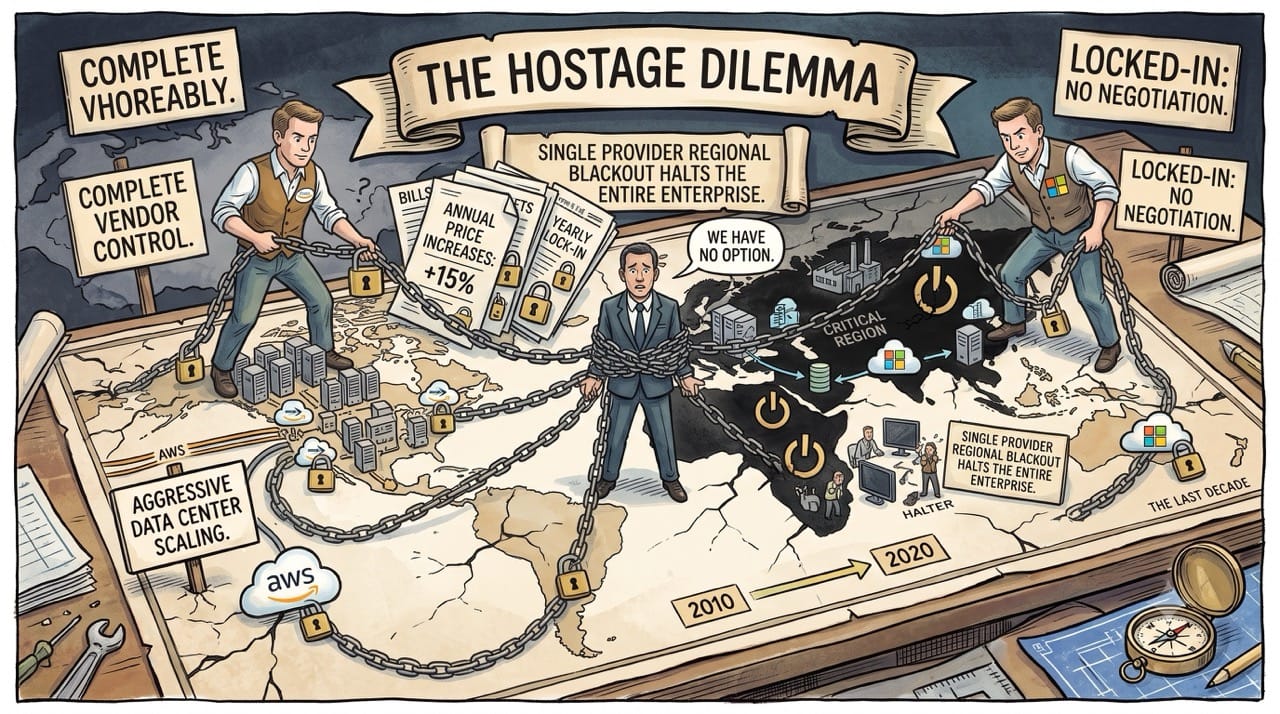
The Hostage Dilemma
This early market concentration created a terrifying scenario for modern enterprise executives.
Chief information officers suddenly realized they had handed complete control of their digital infrastructure to a single corporate vendor.
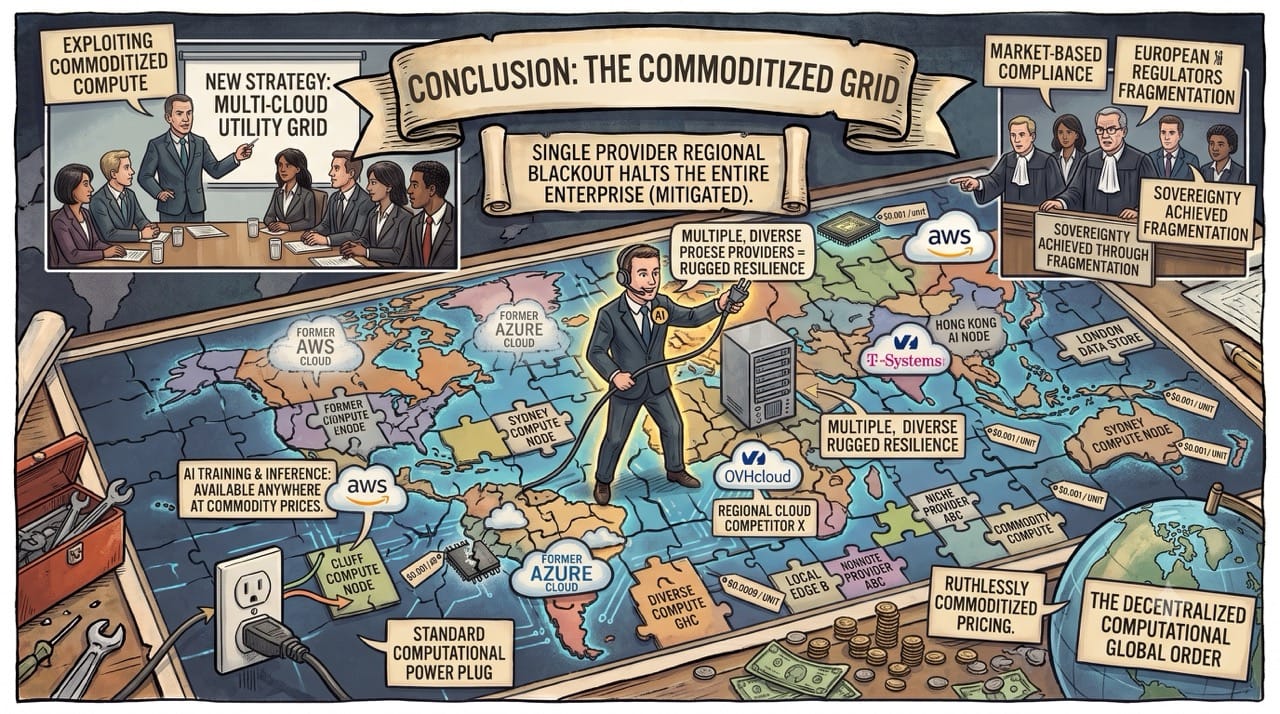
If that single provider experiences a regional blackout the entire enterprise halts operations.
Furthermore being locked into one ecosystem completely destroys your ability to negotiate against annual price increases.
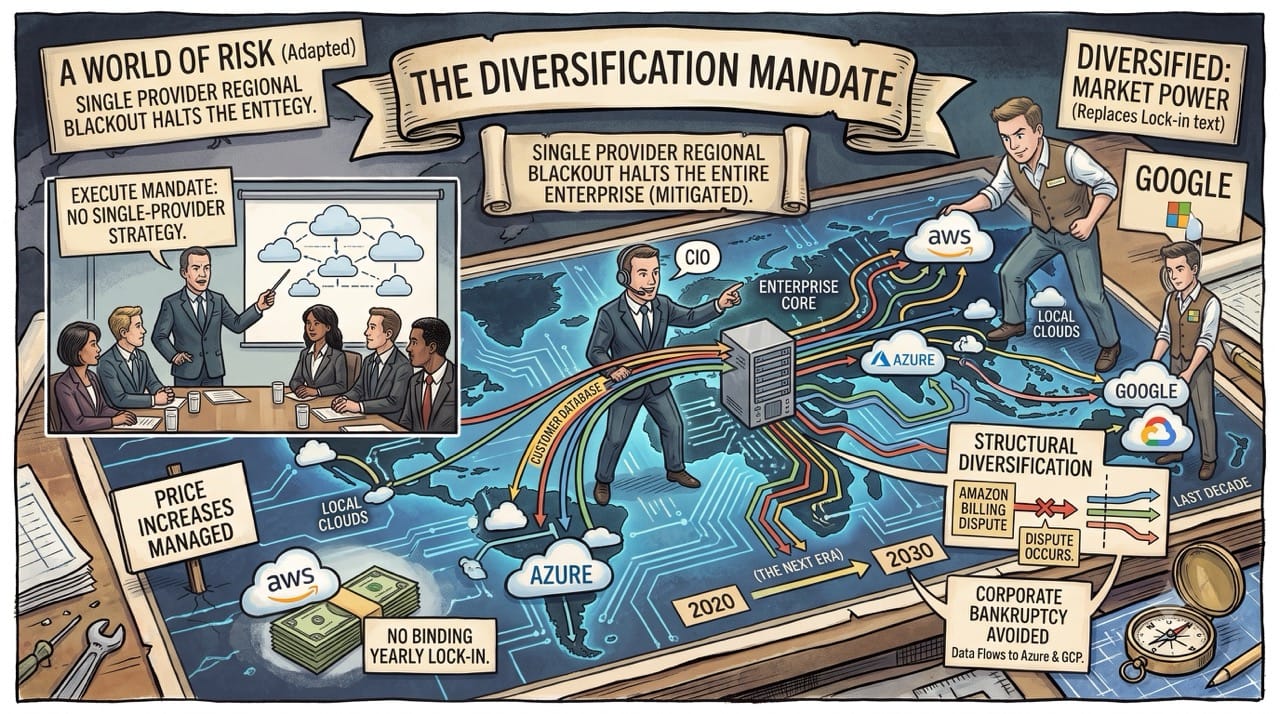
The Diversification Mandate
To survive this vulnerability corporate boardrooms are actively mandating a strict multi cloud strategy.
No intelligent executive will ever allow their entire customer database and product suite to sit on a single server farm.
They are intentionally distributing their workloads across three or more separate providers.
This structural diversification guarantees that a billing dispute with Amazon does not result in total corporate bankruptcy.
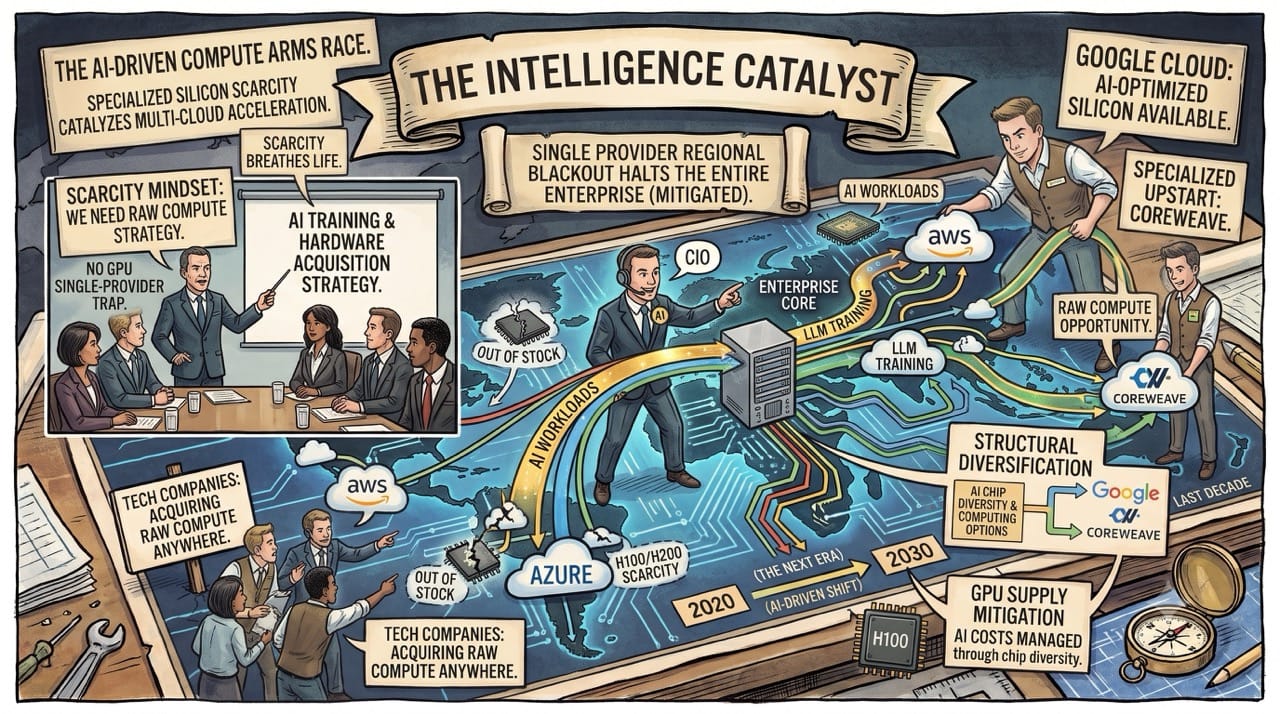
The Intelligence Catalyst
The rapid acceleration of artificial intelligence is breaking this duopoly even faster.
Training complex language models requires highly specialized silicon that the legacy providers constantly struggle to keep in stock.
Desperate technology companies are buying raw compute power anywhere they can find it.
This specific hardware scarcity is breathing incredible life into Google Cloud and aggressively funding specialized upstarts like CoreWeave.
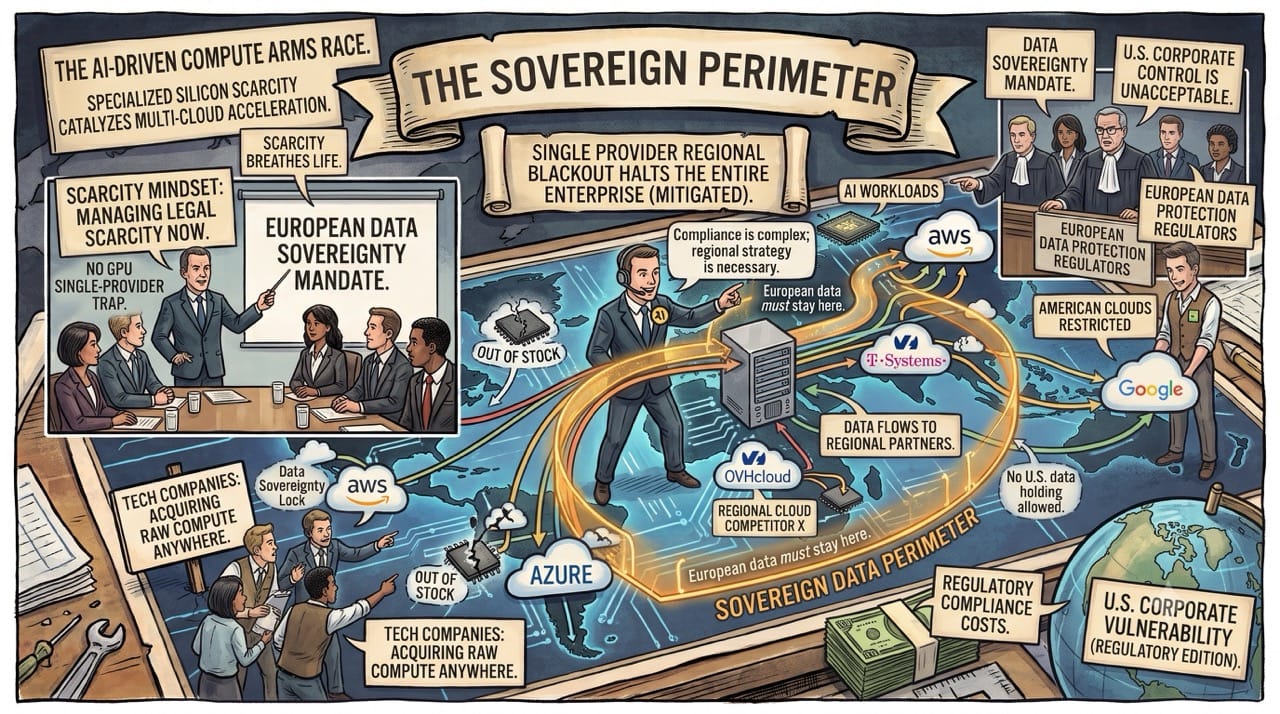
The Sovereign Perimeter
We also have to factor in the heavy hand of global government regulation.
European regulators are deeply uncomfortable with American corporations holding all of their domestic financial and healthcare records.
They are passing strict data sovereignty laws requiring localized data storage.
This legal friction artificially forces the market to support regional cloud competitors just to maintain basic legal compliance.
The Aggregation Layer
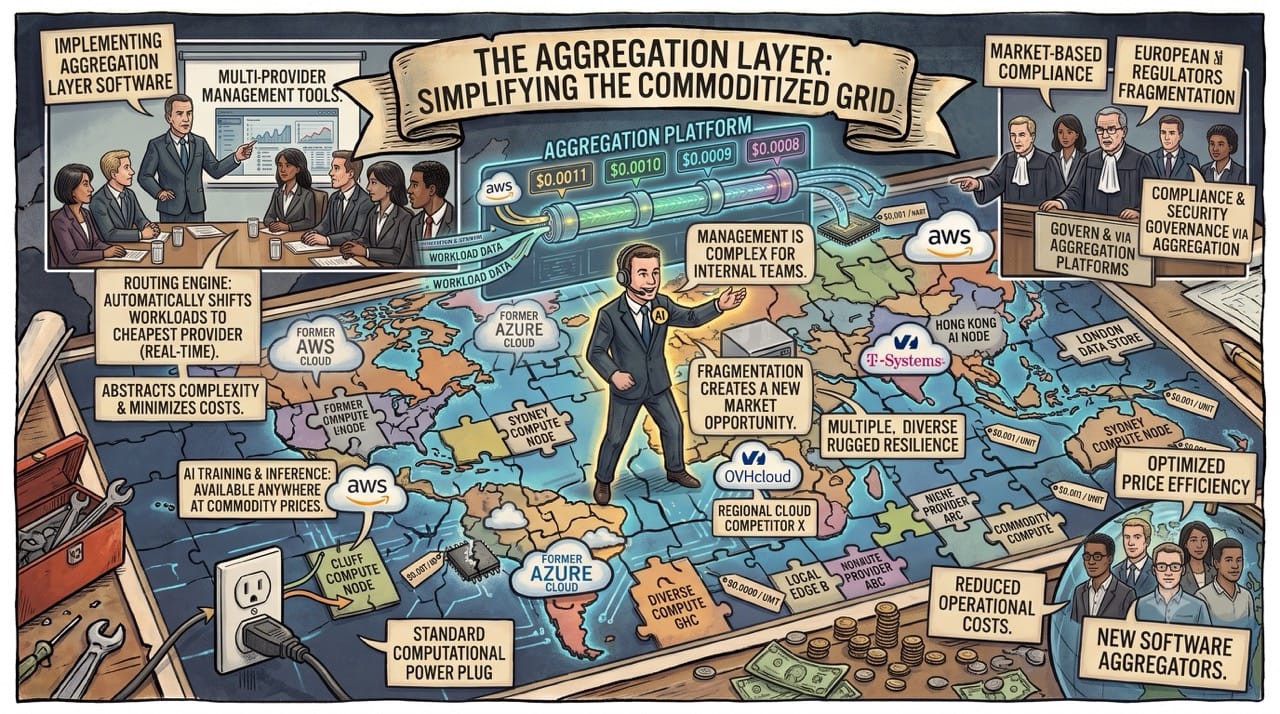
This fragmentation creates a highly lucrative opportunity for a completely new type of software company.
Managing billing and security across four different cloud providers is a logistical nightmare for internal engineering teams.
We are seeing a boom in aggregation platforms designed specifically to abstract this complexity.
These routing engines sit on top of the major clouds and automatically shift workloads to whichever provider is cheapest at that exact second.
Conclusion: The Commoditized Grid
The era of a polite two player cloud monopoly is officially over.
The future of computational power is a highly fragmented and ruthlessly commoditized utility grid.