Amazon’s Smart Glasses Opportunity: Back to the Roots (of Selling Books)
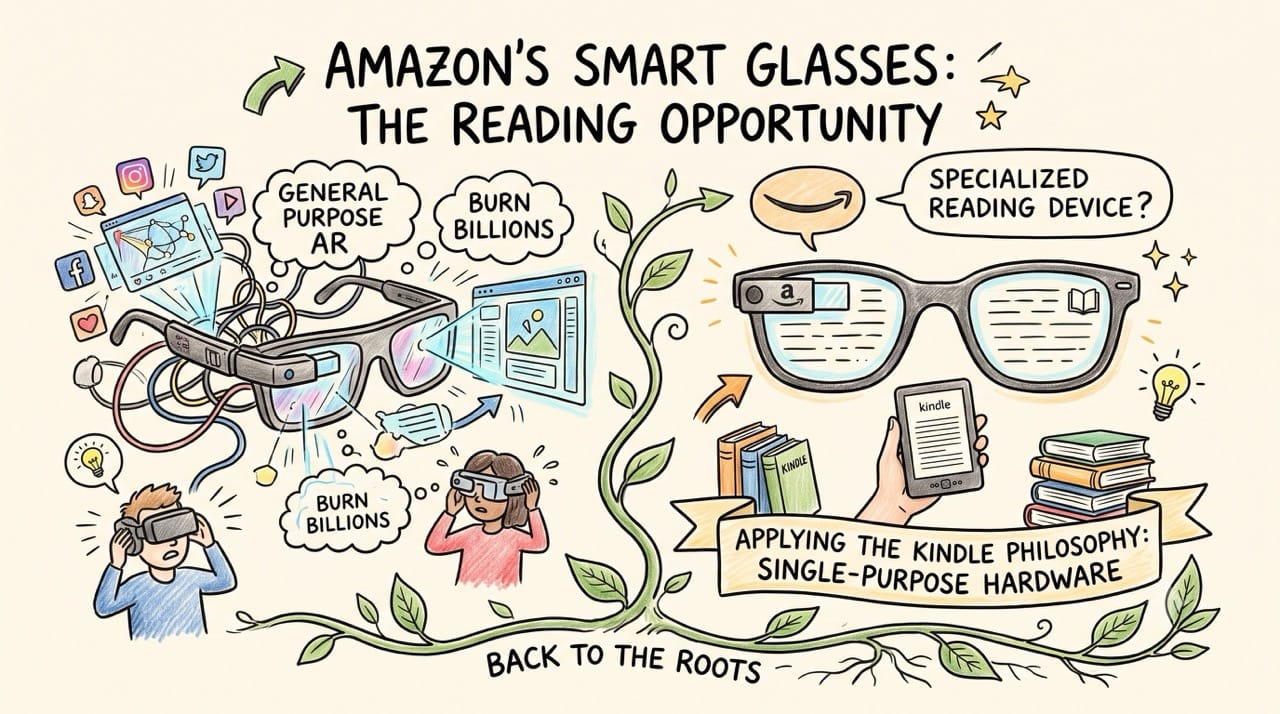
We assume the smart glasses market requires building a complex wearable computer that tries to do everything. Amazon can easily capture significant market share by simply building a highly specialized device dedicated entirely to reading.
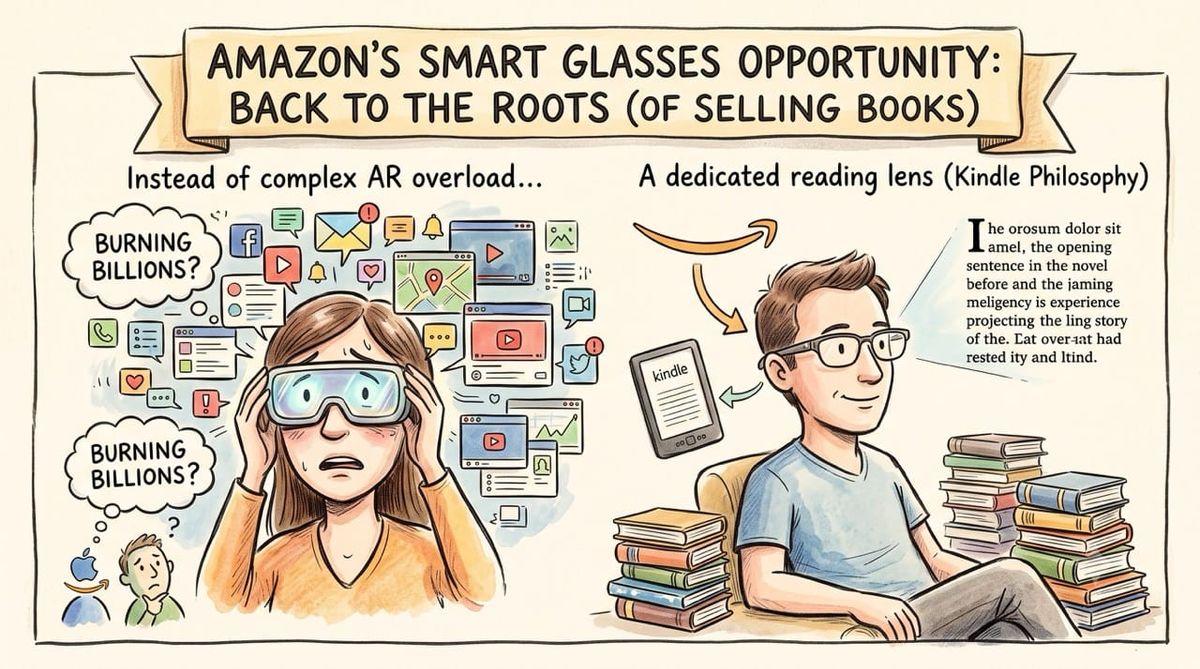
While tech monopolies burn billions trying to build a general purpose ambient computer, Amazon can quietly conquer the market by building a specialized reading device.
Inspiration: Analyzing the impending smart glasses war and realizing Amazon should apply the single purpose hardware philosophy of the Kindle to wearable technology. Realizing that a dedicated reading lens is a much smarter play than competing in the general augmented reality space.
The Generalist War
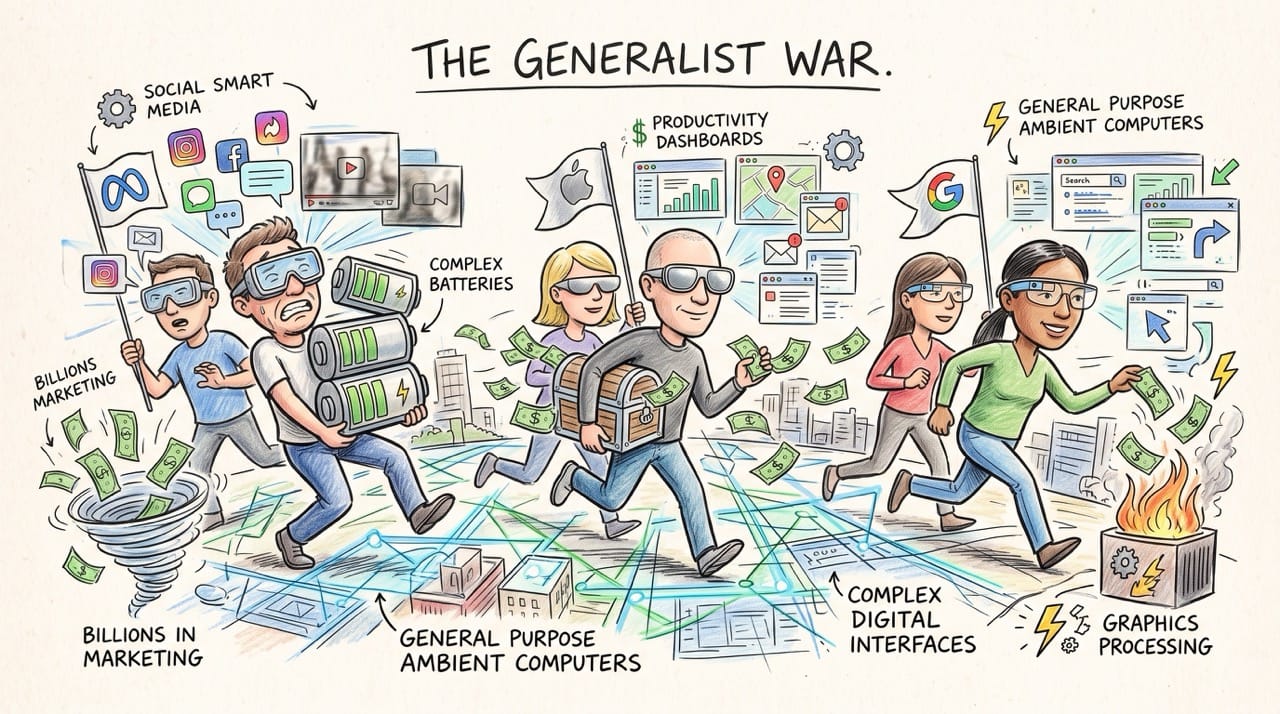
Meta, Apple, and Google are currently preparing to spend billions of dollars marketing the next generation of smart glasses.
They are desperately trying to build general purpose ambient computers that overlay complex digital interfaces onto the real world.
This requires terrifying levels of capital expenditure for heavy graphical processing and complicated battery technology.

The Hardware Curse
Amazon historically struggles when they try to compete directly against Apple and Google in the premium consumer hardware space.
The spectacular failure of the Fire Phone proved that consumers do not want a general purpose Amazon device in their pockets.
Competing directly in this upcoming augmented reality war would be a highly expensive unforced error for the retail giant.
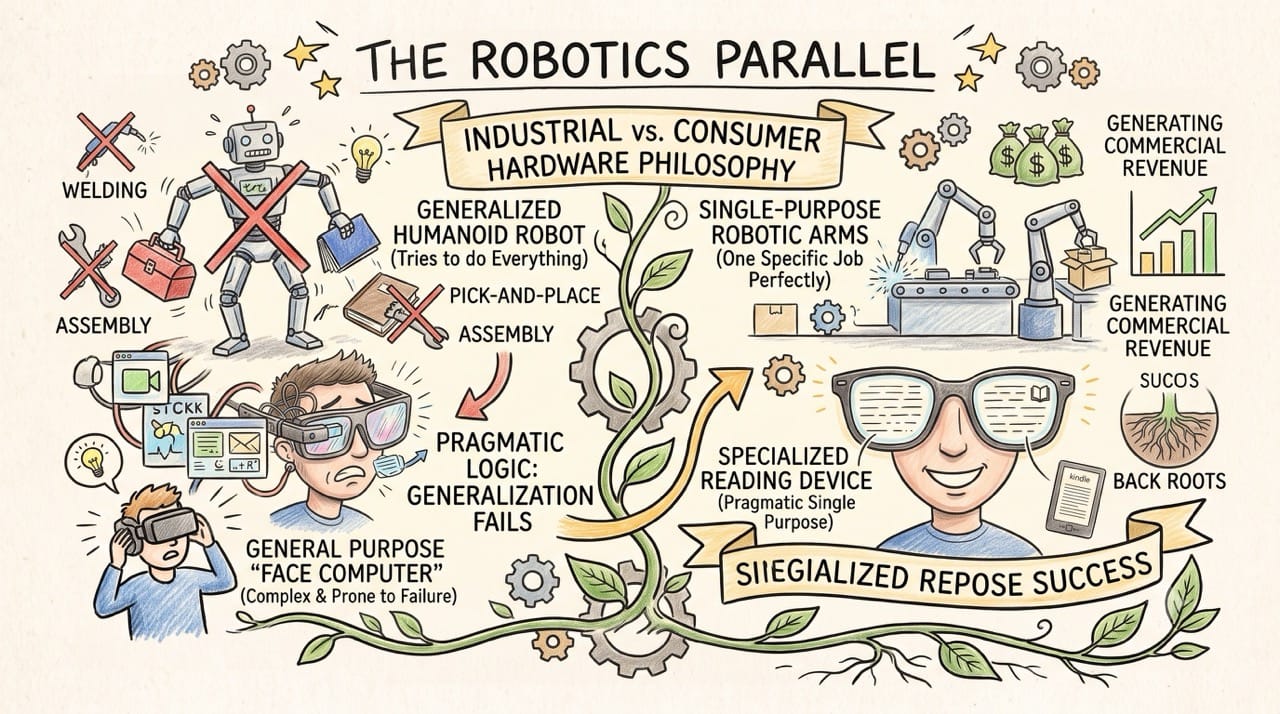
The Single Purpose Pivot
The smartest strategy for Amazon is completely ignoring the generalist approach and returning directly to their original corporate roots.
They need to treat smart glasses exactly like they treated the original Kindle e-reader.
Instead of trying to build a computer for your face they should build a highly specialized lens dedicated entirely to projecting readable text.
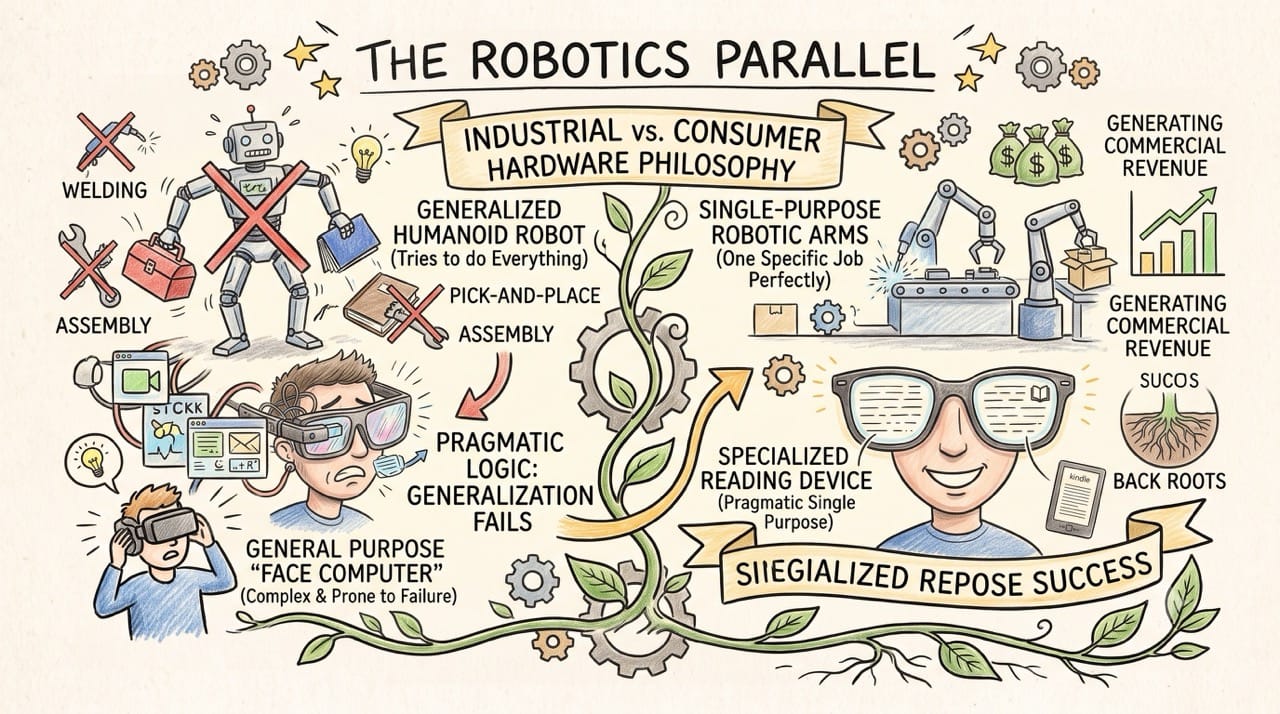
The Robotics Parallel
This specific hardware philosophy perfectly mirrors the current divide happening in the industrial robotics sector.
We constantly see startups trying to build generalized humanoid robots that can theoretically do everything but usually fail at basic tasks.
The companies actually generating commercial revenue today are building single purpose robotic arms that do one highly specific job perfectly.
Consumer hardware should follow this exact same pragmatic logic.
The Reading Utility
A pair of glasses designed exclusively for reading completely bypasses the complex engineering bottlenecks of modern augmented reality.
You do not need expensive color displays or heavy internal processors just to project crisp black text into the corner of your eye.
A consumer could seamlessly read a novel while commuting on a crowded train or lying in bed without ever having to hold a physical device.
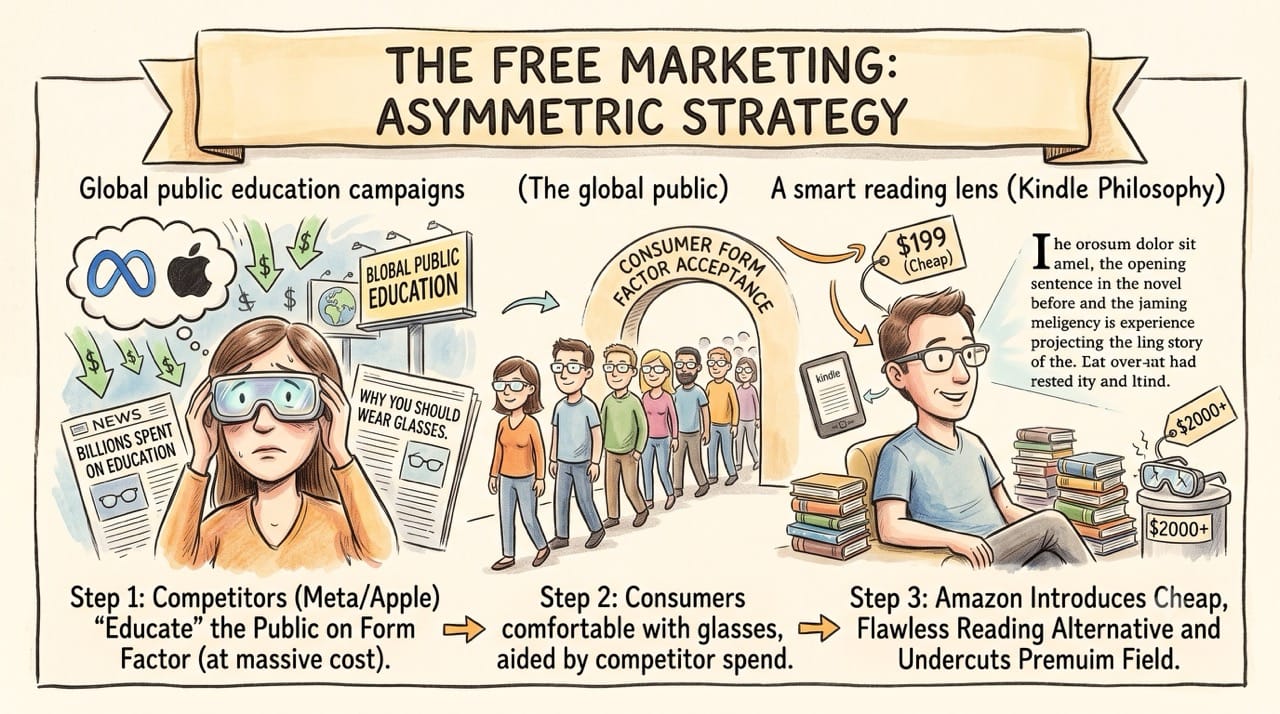
The Free Marketing
This specialized approach allows Amazon to execute a brilliant asymmetric marketing strategy.
They can simply let Meta and Apple spend billions of dollars educating the global public on why they should wear digital glasses.
Once the consumer is finally comfortable with the form factor Amazon can quietly introduce a cheap and flawless reading alternative that completely undercuts the premium competition.
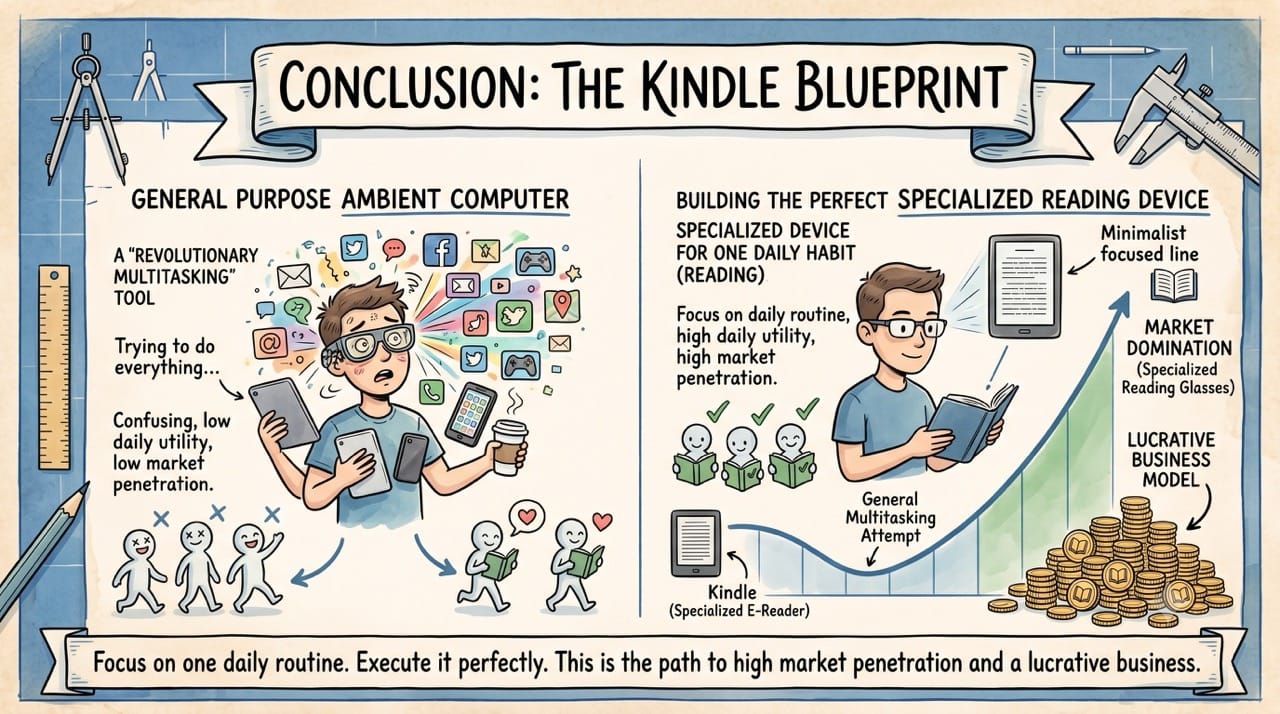
Conclusion: The Kindle Blueprint
Consumer hardware does not always need to be a revolutionary multitasking tool to achieve high market penetration.
Sometimes the most lucrative business model is simply finding a single daily habit and building the perfect specialized device to execute it.