Organ-by-Organ Biological Aging: Your Heart Might Be Older Than Your Brain
Stanford researchers can now calculate the distinct biological age of each organ from blood plasma proteins. Your heart might be 48 while your brain is 52. This shift from systemic to organ-specific aging enables truly personalized, targeted interventions years before disease appears.
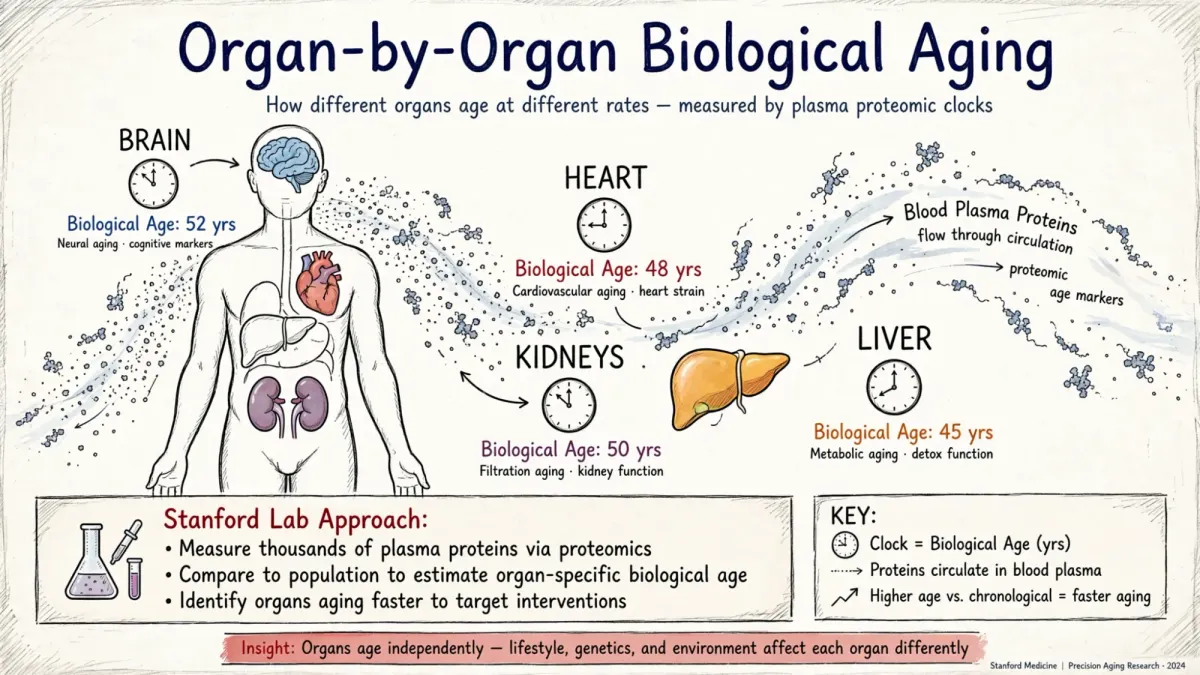
For years we've measured aging as a single number. Epigenetic clocks, telomere length, a "systemic" biological age. The paradigm shift highlighted in this week's Time Longevity Leaders 2026 index is different: aging is not uniform. Your organs are on different timelines.
New research from Stanford is making that visible — and actionable — from a single blood draw.
How Stanford Cracked It
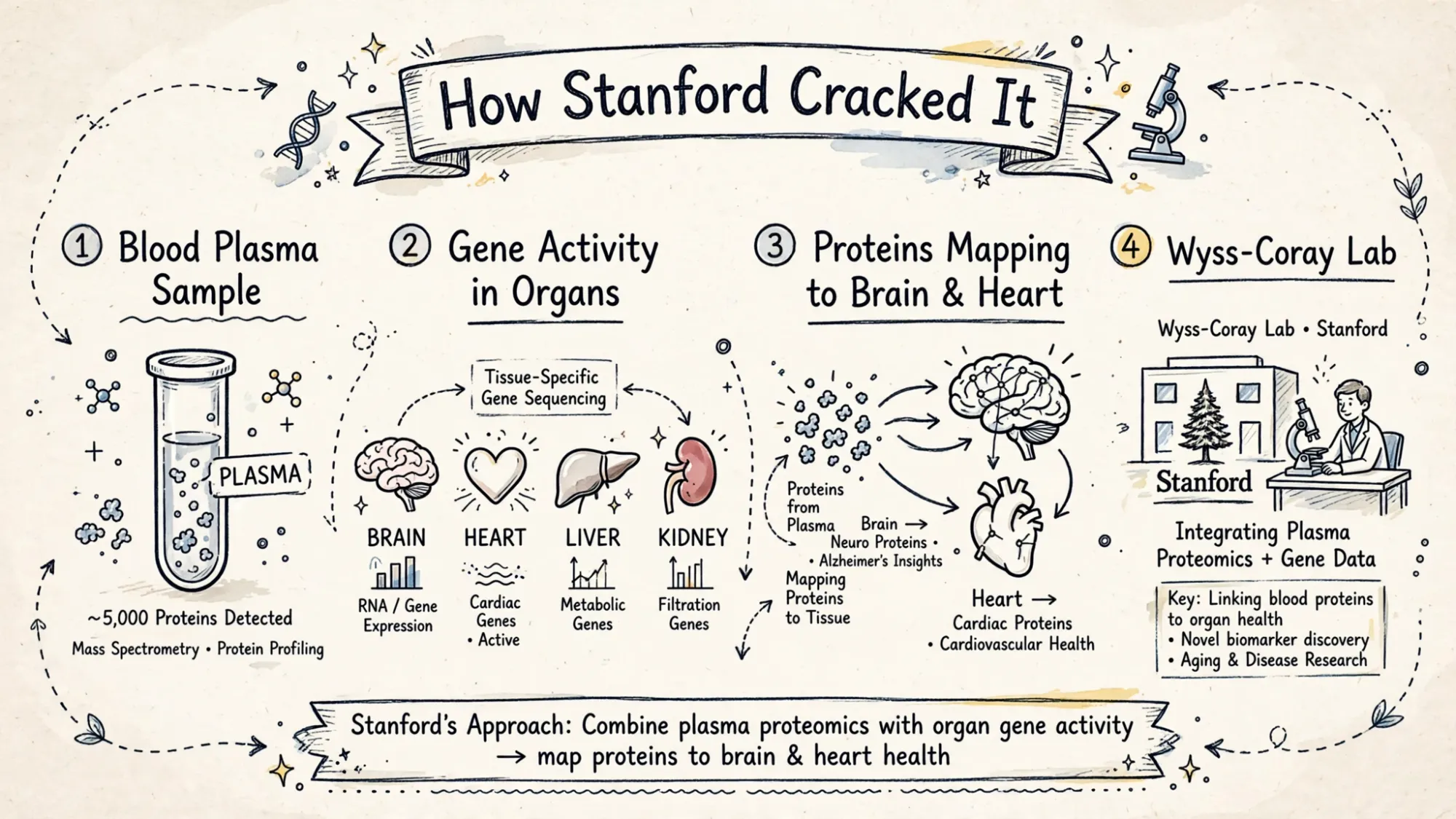
An NIH-funded team led by Dr. Tony Wyss-Coray at Stanford set out to develop a way to track the aging of various organs in the human body.
They analyzed gene activity in different organs and measured levels of almost 5,000 proteins in blood plasma from more than 5,600 people across the adult lifespan, with results published in Nature on December 6, 2023.
The core insight: they utilized levels of human blood plasma proteins originating from specific organs to measure organ-specific aging differences in living individuals.
As Wyss-Coray explains it: "We could say with reasonable certainty that [a particular protein] likely comes from the brain and somehow ends up in the blood".
When those proteins varied from the expected concentration for a particular chronological age, that indicated accelerated aging in the corresponding organ.
Biological age, in this model, "indicates the health and state of an organ by reflecting how well it's functioning, how much it's declining, and how likely it is to develop disease".
Your skin, for instance, may be biologically younger than your chronological age, while your heart could be aging faster.
From Systemic to Specific: 11 Organ Clocks
The evolution has been rapid:
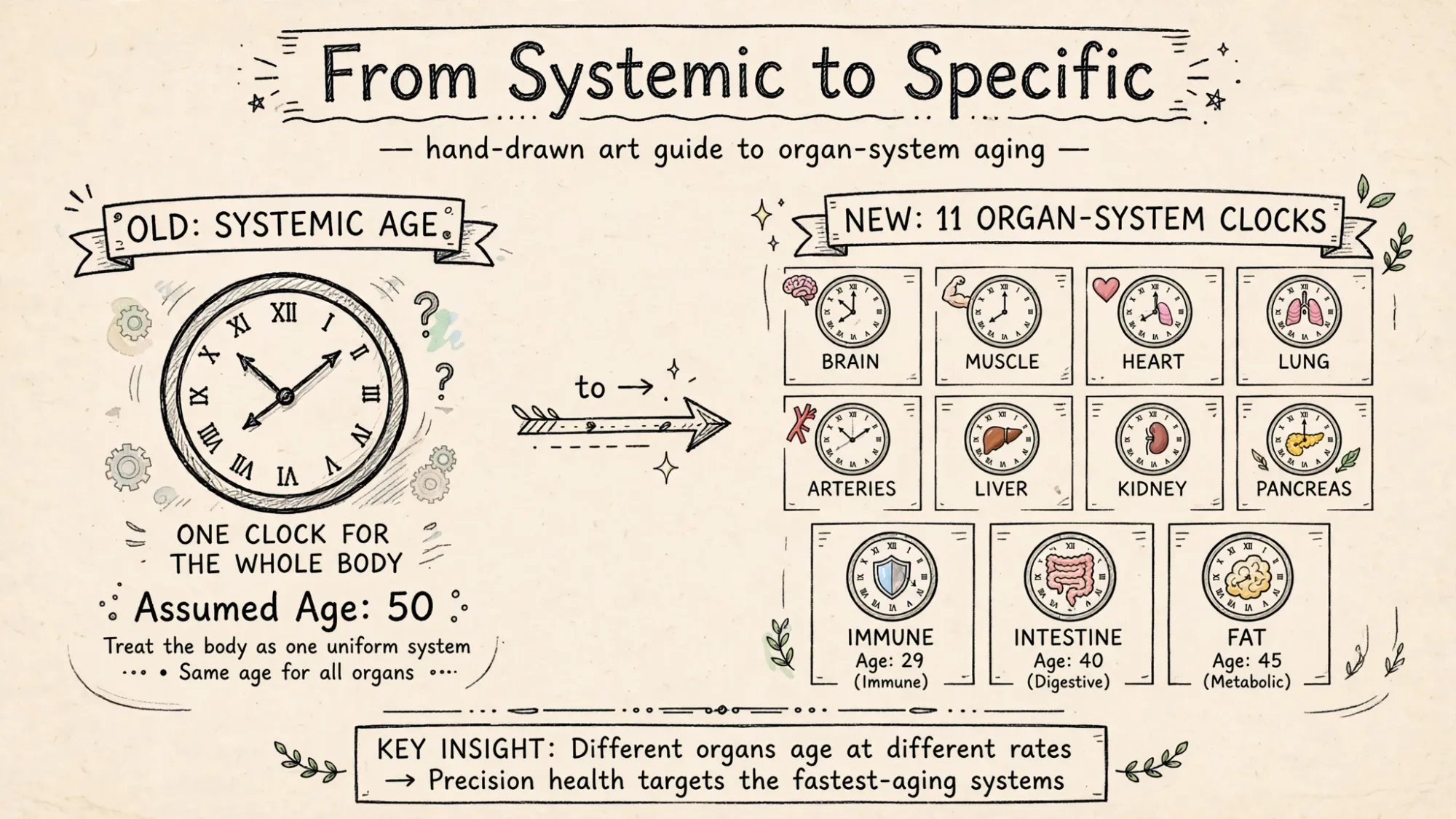
A Stanford Medicine study published in Nature Medicine developed a blood-based method for assessing the biological age of 11 distinct organ systems.
The team measured nearly 3,000 proteins in each participant's blood, using the levels of organ-specific proteins to generate a biological age estimate for each of 11 organ systems: brain, muscle, heart, lung, arteries, liver, kidneys, pancreas, immune system, intestine and fat.
The latest extension, published June 15, 2026 as "Blood test estimates biological ages of 11 separate organ systems to predict disease risk years ahead", scaled to over 7,000 proteins across more than 60,000 people, finding that the biological age of your heart, your brain's immune cells, your lungs, and dozens of other tissue types can each be tracked separately, and that a handful of people are aging dramatically faster in one specific organ while the rest of their body ages normally.
What that heterogeneity means:
- ∼20% of healthy adults over age 50 showed accelerated aging in at least one organ system
- Accelerated kidney aging associates with diabetes and hypertension, heart aging with cardiac events, and brain aging with neurological disorders
- Faster aging is evident for multiple organ systems in ischemic heart disease, hypertensive diseases, diabetes, osteoarthritis and cancer
- Biological organ age predicts mortality risk
Why It Matters: The Precision Longevity Playbook
This transition from measuring "systemic age" to "organ-specific biological age" is what moves longevity from philosophy to precision medicine.
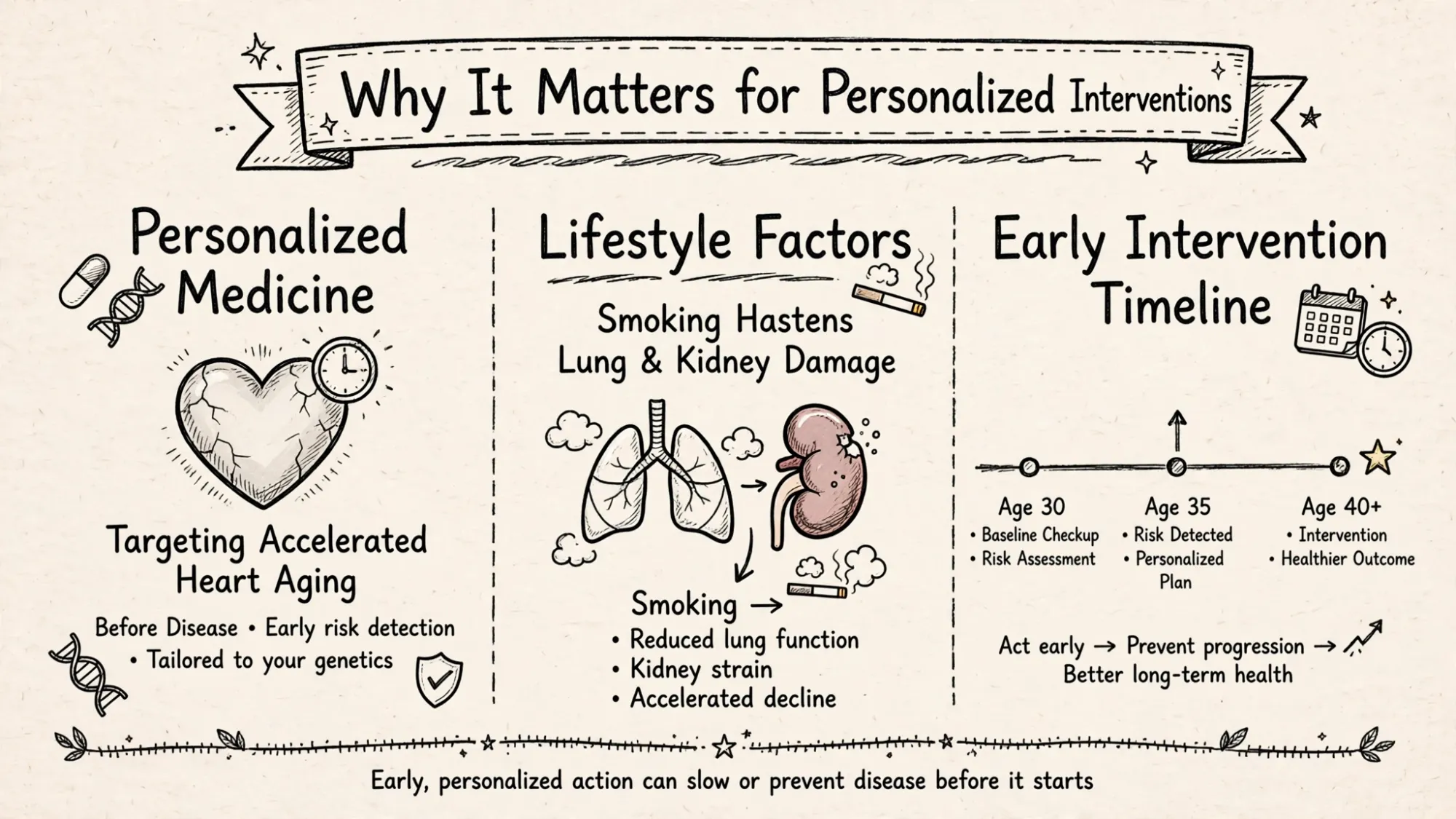
- Early Warning, Years Before Diagnosis. Instead of waiting for a creatinine rise or an echo finding, you see a kidney or heart age gap 5-10 years before clinical thresholds.
- Targeted Intervention. If your brain age is +4 years but your liver is -2, you don't need a generic anti-aging protocol. You need brain-specific exercise, sleep, vascular health, and inflammatory control. Research is already linking modifiable factors: smoking hastens aging in the lung and kidney, for example.
- Measuring What Matters. Lifestyle and pharmacologic trials can now use organ age gaps as an endpoint — did this intervention actually make your heart younger, not just lower a biomarker?
This is exactly why we're tracking it in the Time Longevity Leaders 2026 index: the companies building organ-specific proteomic clocks are no longer selling a curiosity metric. They are building the infrastructure for organ-targeted prevention.
The future isn't "How old are you?". It's "Which organ needs you most right now?"