Why AI Will Not Cure Cancer First
Cancer hits older people hardest. Curing it adds 10 years of life. That breaks pensions. So it will not be prioritized.
Cancer Is An Old Age Disease
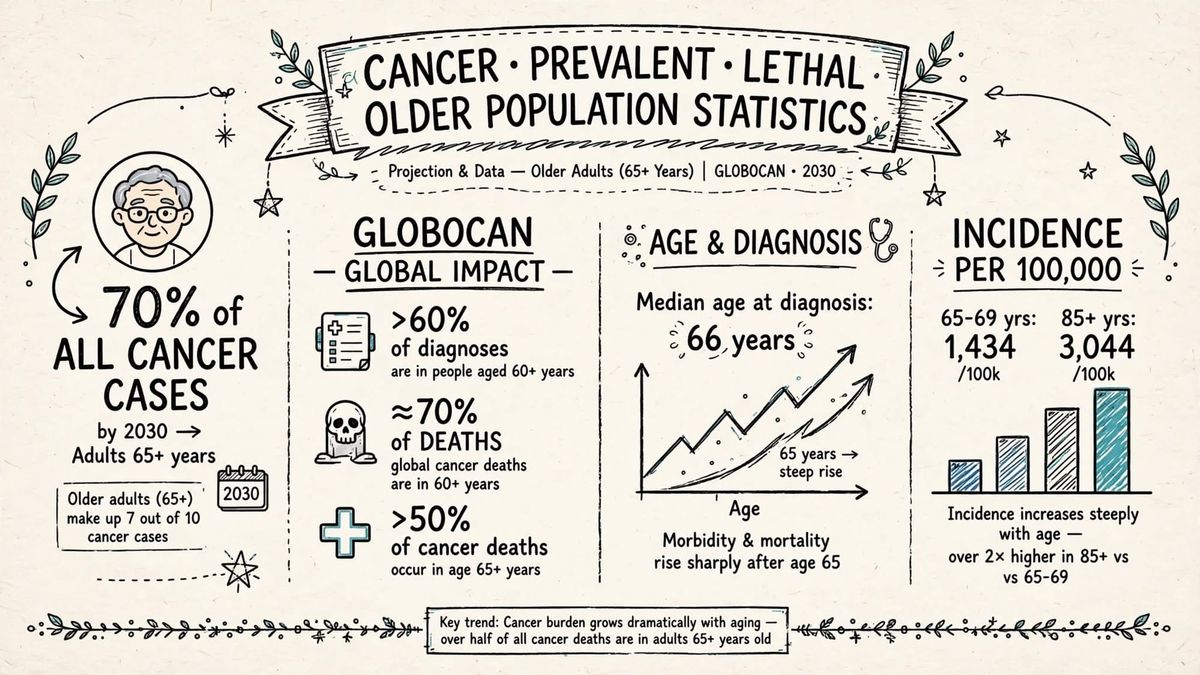
Cancer is publicly considered a common disease of aging. Adults aged 65 years and older are estimated to make up 70% of all cancer cases by 2030.
According to published statistics, cancer morbidity and mortality increase dramatically with aging, a steep elevation was observed upon aging no less than 65 years.
Global data matches. GLOBOCAN 2020 showed that the over 60 population accrued more than 60% of all cancer diagnoses and 70% of all cancer related deaths globally.
Currently, about 60 percent of all cancer diagnoses occur among individuals age 65 and older.
One of largest global cancer studies found that more than half of cancer deaths are in people aged 65 or older.
Incidence rate tells story. 65 to 69 years 1,434 per 100k, 85 plus 3,044 per 100k.
It doubles with age. Cancer is lethal in older population because it is concentrated there.
If AI Fixes Cancer, Pensions Collapse
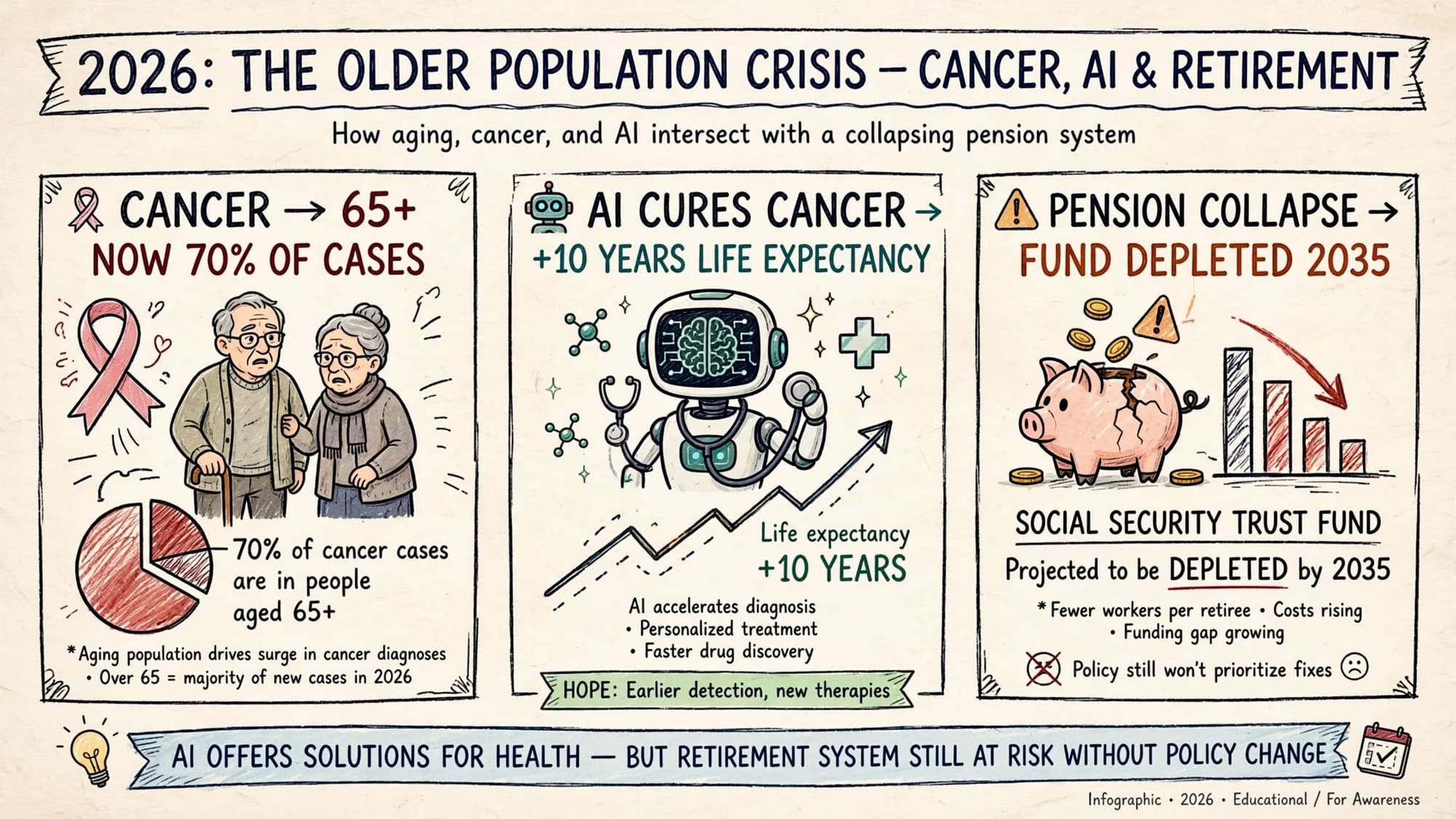
AI driven medical breakthroughs will change life expectancy fast.
The AI Driven Longevity scenario assumes a 10 year increase in life expectancy, fueled by breakthroughs in AI enabled medical research, such as personalized medicine and early diagnostics.
This accelerated improvement creates significant risks for pension systems, as liabilities grow rapidly and necessitate changes to retirement ages or contribution levels.
Actuaries already warn.
Actuaries need to seriously consider potential impacts of AI when modeling future life expectancy.
Longevity risk management, life insurers and pension plans face major longevity risk if mortality rates decline faster than anticipated.
What happens if cancer is cured?
Eradication of cancer as a terminal condition between 2025 and 2035 would bring about a step change in longevity, meaning that well off men and women retiring at age 65 in 2040 could expect to live another 25.1 and 26.5 years.
Add 10 years to millions of retirees. Pension liabilities explode.
Bad News for Social Security: There May Be a Cure for Cancer. Any breakthrough that increases the life expectancy of the population is a serious threat to Social Security. But any cure for cancer will be a serious threat to the life of Social Security.
That is not speculation. That is math of pay as you go systems.
Social Security Already Breaking
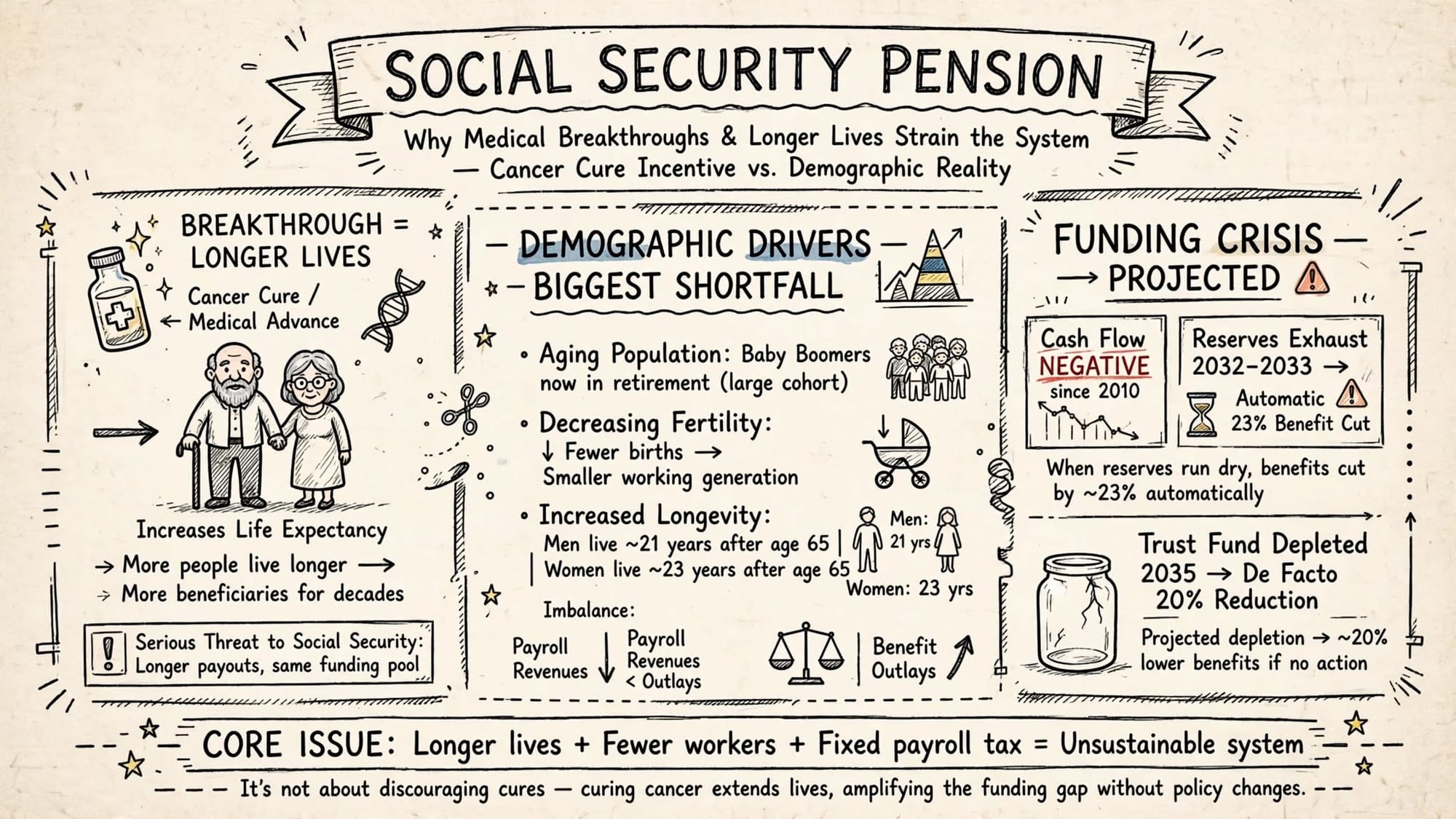
Demographic factors are the biggest drivers of Social Security's projected shortfall, primarily the aging of the US population caused by decreases in fertility and increases in longevity.
Currently the program's asset reserves are projected to be depleted in 2035. At that time beneficiaries would receive a de facto reduction in benefits of about 20 percent.
Other projections are worse.
The larger Baby Boomer generation is aging out, systems are being depleted rapidly.
According to projections the retirement trust fund will exhaust its reserves in 2032, leaving enough incoming revenue to cover only 78 percent of scheduled benefits. Social Security has been cash flow negative since 2010.
Improvements in health care and quality of life have led to ageing.
The higher cost of the pension system is jeopardising its stability, even in short term.
Men are now expected to live 21 additional years after age 65, and women 23 years. These trends create a growing imbalance between payroll tax revenues and benefit outlays.
Old Age and Survivors Insurance Trust Fund by 2033 triggering automatic 23 percent benefit cut unless Congress intervenes.
US Social Security could run out of money by 2035.
System is built on ratio. Fewer workers per retiree, costs rising, funding gap growing. Add 10 years of life from curing cancer and ratio collapses.
Therefore They Will Not Prioritize It
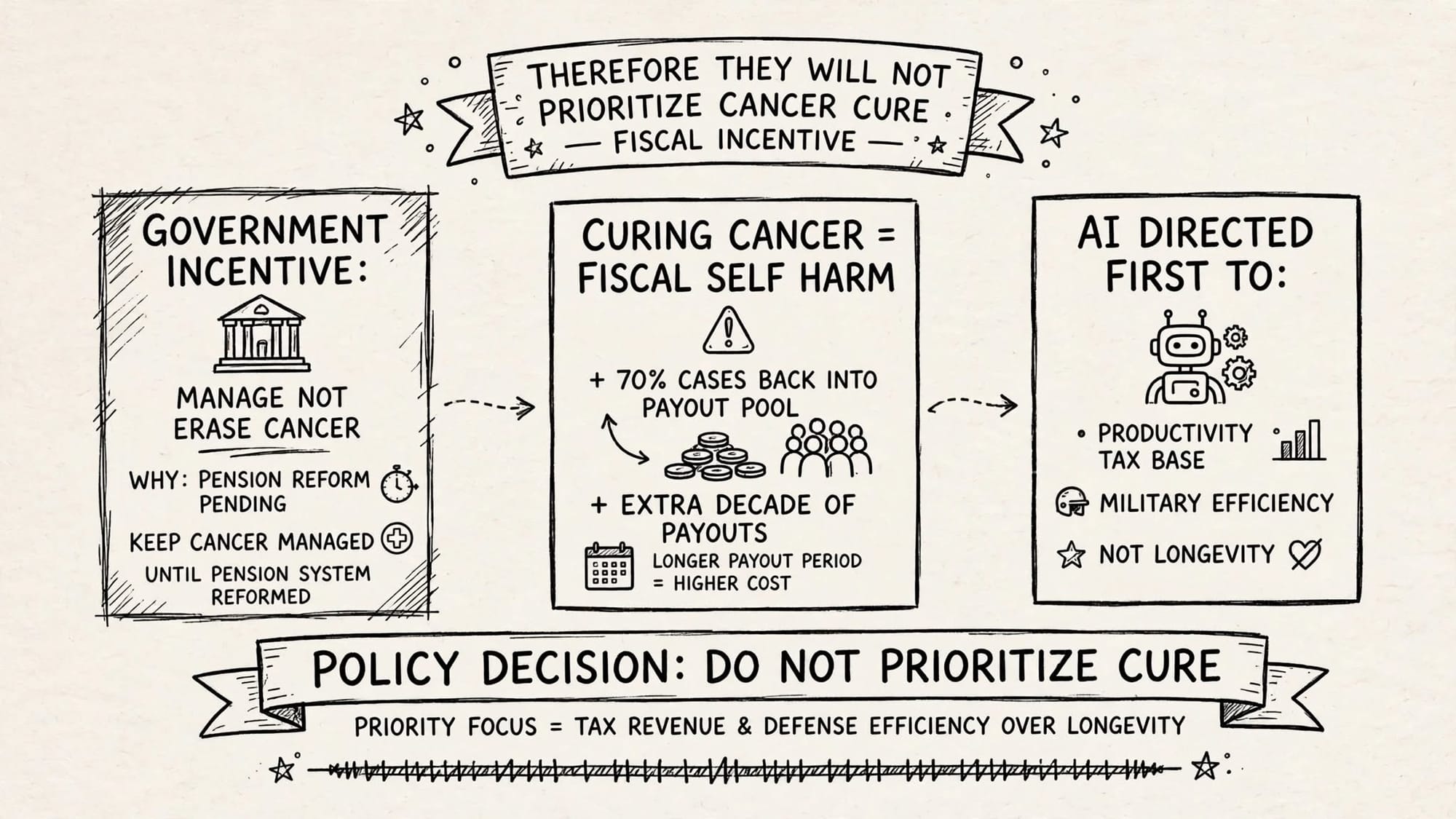
If you run a government that funds pensions from payroll, curing cancer in 65 plus population is fiscal self harm.
You add 70 percent of cancer cases back into long term payout pool, for an extra decade.
That is why AI will be directed first to productivity, to tax base expansion, to military, to efficiency that increases revenue, not to longevity that increases liabilities.
Cancer is more prevalent and lethal in older population.
If AI fixes it, it will collapse the social security and pension system.
Therefore they will not prioritize it as the priority of solutions AI will provide.
The incentive is to manage cancer, not erase it, until pension system is reformed to handle 90 to 91 year old average retiree.